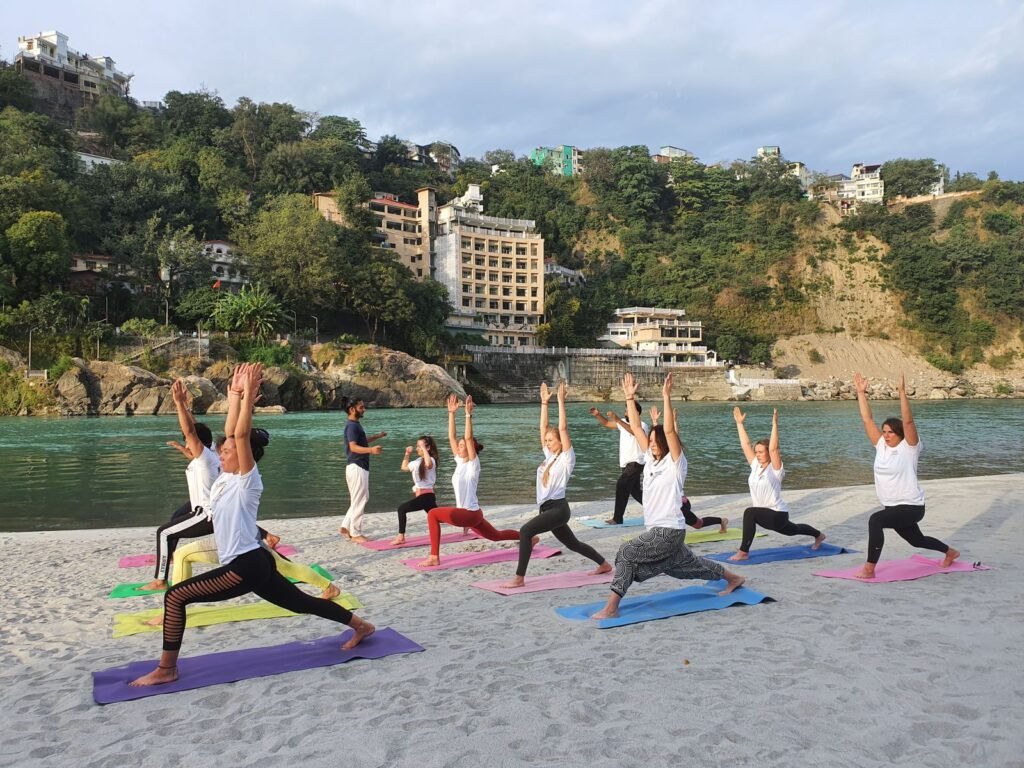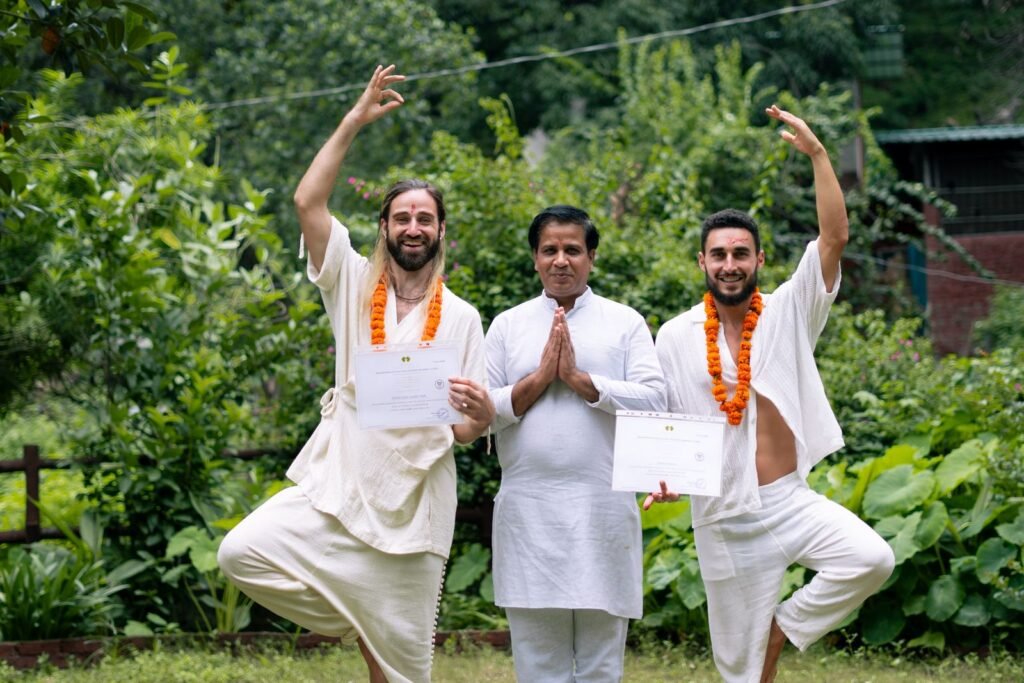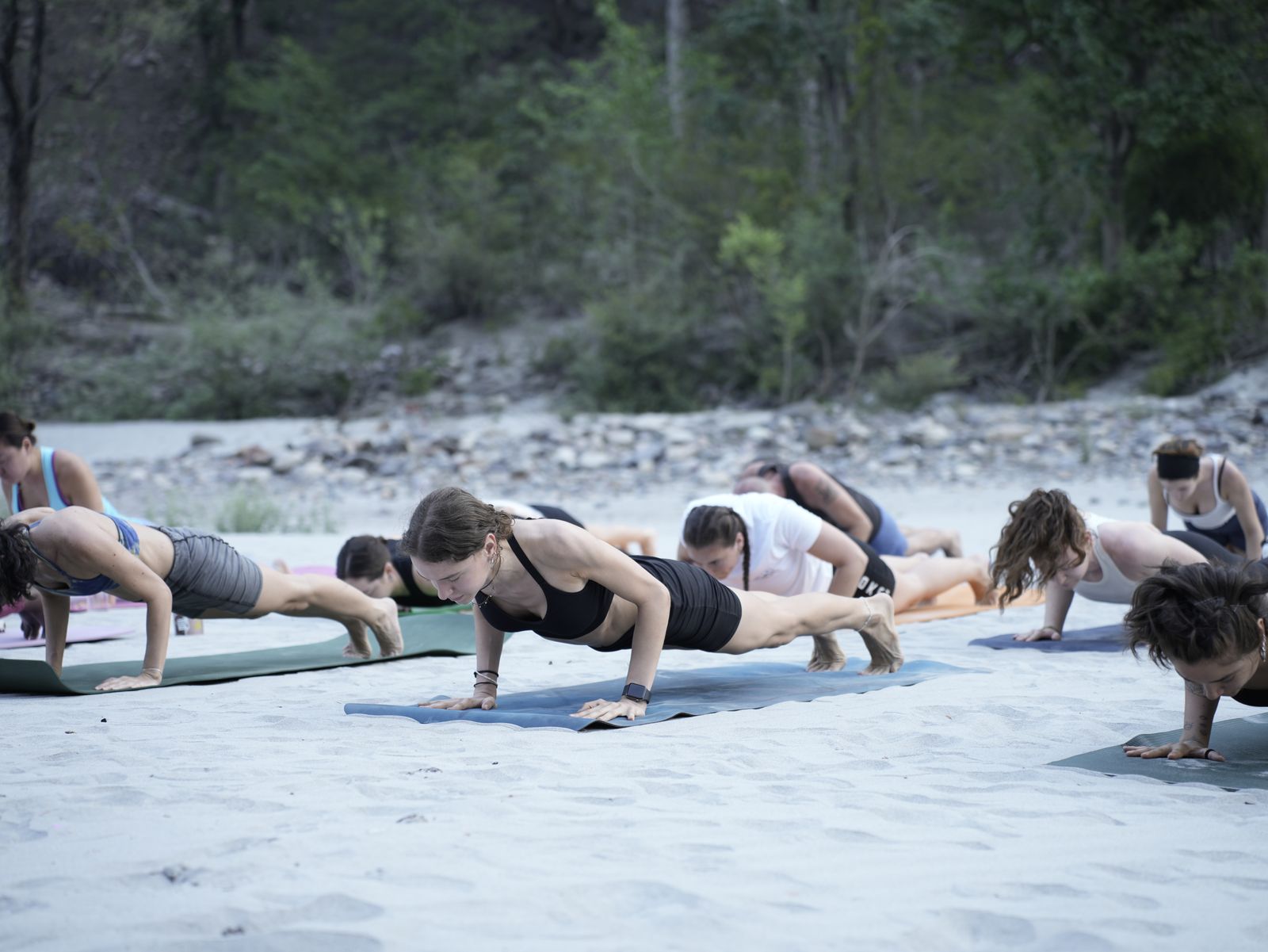
Yoga teacher training (YTT) is a structured course, usually 200, 300, or 500 hours, that teaches you the technical, philosophical, and practical skills to teach yoga safely and confidently. Most programs follow Yoga Alliance’s curriculum categories: asana, anatomy, teaching methodology, philosophy, and practicum, and are delivered as an intensive residential retreat (often in Rishikesh, Bali, or Goa), a weekend-format course over several months, or a self-paced online track. A 200-hour course is the standard entry point for anyone who wants to teach yoga professionally or simply understand their own practice at a much deeper level.
Whether you are eyeing a beach-side yoga teacher training in Bali, a Sivananda ashram program, or a diploma course closer to home, this guide breaks down what these courses actually involve, how to choose the right one, and what happens after you graduate.
What Is Yoga Teacher Training and Who Is It For?
Yoga teacher training is a formal course that certifies you to teach yoga to others, but it attracts far more people than those planning to become full-time instructors. In most YTT cohorts, a large share of participants are long-time practitioners who want to refine their alignment, understand the anatomy behind the poses, and explore the philosophical roots of the practice covered in yoga philosophy and texts like the Yamas and Niyamas. Others come from corporate wellness backgrounds, physiotherapy, or dance, looking to add a credential to an existing career.
A typical program blends four pillars: technique and practice (asana, pranayama, and meditation), teaching methodology (sequencing, cueing, hands-on adjustments), anatomy and physiology, and yoga philosophy and lifestyle (ethics, the eight limbs of yoga, and history). You do not need to be able to do a full backbend or an advanced arm balance to enroll; most schools care more about consistency, curiosity, and a baseline familiarity with foundational poses like downward dog and warrior poses than about flexibility.
What Is the Difference Between a 200-Hour and 300-Hour Course?
The 200-hour certification (often written as RYT-200) is the foundational teaching credential recognized internationally and is a prerequisite for almost every advanced training. It covers the essentials: how to teach a safe general class, basic anatomy, foundational philosophy, and enough practicum hours to graduate with real teaching reps under your belt. A 300-hour course is an advanced training that builds on the 200-hour foundation, going deeper into subtle anatomy, therapeutic applications, advanced asana (think arm balances and inversions), and more nuanced philosophy. Completing both a 200-hour and a 300-hour program, and logging the required teaching hours, allows you to apply for the 500-hour RYT credential, the highest standard tier most schools offer.
There is no requirement to rush into a 300-hour course immediately. Many teachers spend one to three years teaching on their 200-hour certification, gaining real classroom experience, before pursuing an advanced training. Some later specialize further with a yin yoga teacher training, a prenatal certification, or a therapeutic track focused on conditions like back pain or anxiety.
What Is Sivananda Yoga Teacher Training?
Sivananda yoga teacher training is one of the oldest and most structured YTT lineages in the world, founded by Swami Vishnudevananda, a direct disciple of Swami Sivananda of Rishikesh, who established the International Sivananda Yoga Vedanta Centres in the late 1950s and 1960s. The Sivananda method is built around five core principles: proper exercise (asana), proper breathing (pranayama), proper relaxation (savasana), proper diet, and positive thinking paired with meditation. Its teacher training format is famously immersive: a strict daily schedule beginning before dawn with meditation, followed by asana classes, karma yoga (selfless service like cleaning or kitchen duty), lectures on philosophy, and satsang (chanting and reflection) in the evening.
This lineage is deliberately traditional and residential; you will not find a casual weekend Sivananda course. If you are drawn to a devotional, ashram-style immersion rather than a fitness-studio approach to teacher training, Sivananda is worth researching specifically, alongside related traditional styles such as Hatha yoga and Iyengar yoga, which share some philosophical roots but differ significantly in teaching style and pace.
How Do You Choose Between Yoga Teacher Training in Bali, Goa, or Rishikesh?
Location shapes the entire experience of a residential YTT far more than most first-time applicants expect. Here is how the three most popular destinations compare:
| Location | Atmosphere | Typical Price Point | Best For |
|---|---|---|---|
| Bali (Ubud, Canggu) | Strong studio infrastructure, a large international teacher community, and a wellness-tourism ecosystem with cafes and co-working spaces nearby | Mid-to-premium | Modern styles like Vinyasa or power yoga alongside traditional Hatha |
| Goa (Arambol, Mandrem) | Relaxed, beach-town atmosphere with a mix of backpackers and dedicated practitioners | Lower than Bali or Rishikesh’s premium schools | Affordable, no-frills intensives |
| Rishikesh | Spiritual and historical home of modern yoga education, on the Ganges in the Himalayan foothills, with hundreds of registered schools | Among the more affordable options internationally | Classical Hatha and Sivananda-style teaching, plus the annual International Yoga Festival |
None of these locations is objectively “better” — the right choice depends on whether you want an immersive spiritual retreat, a social wellness-travel experience, or an affordable, no-frills intensive.
What Does a 200-Hour Yoga Teacher Training in Bali Actually Include?
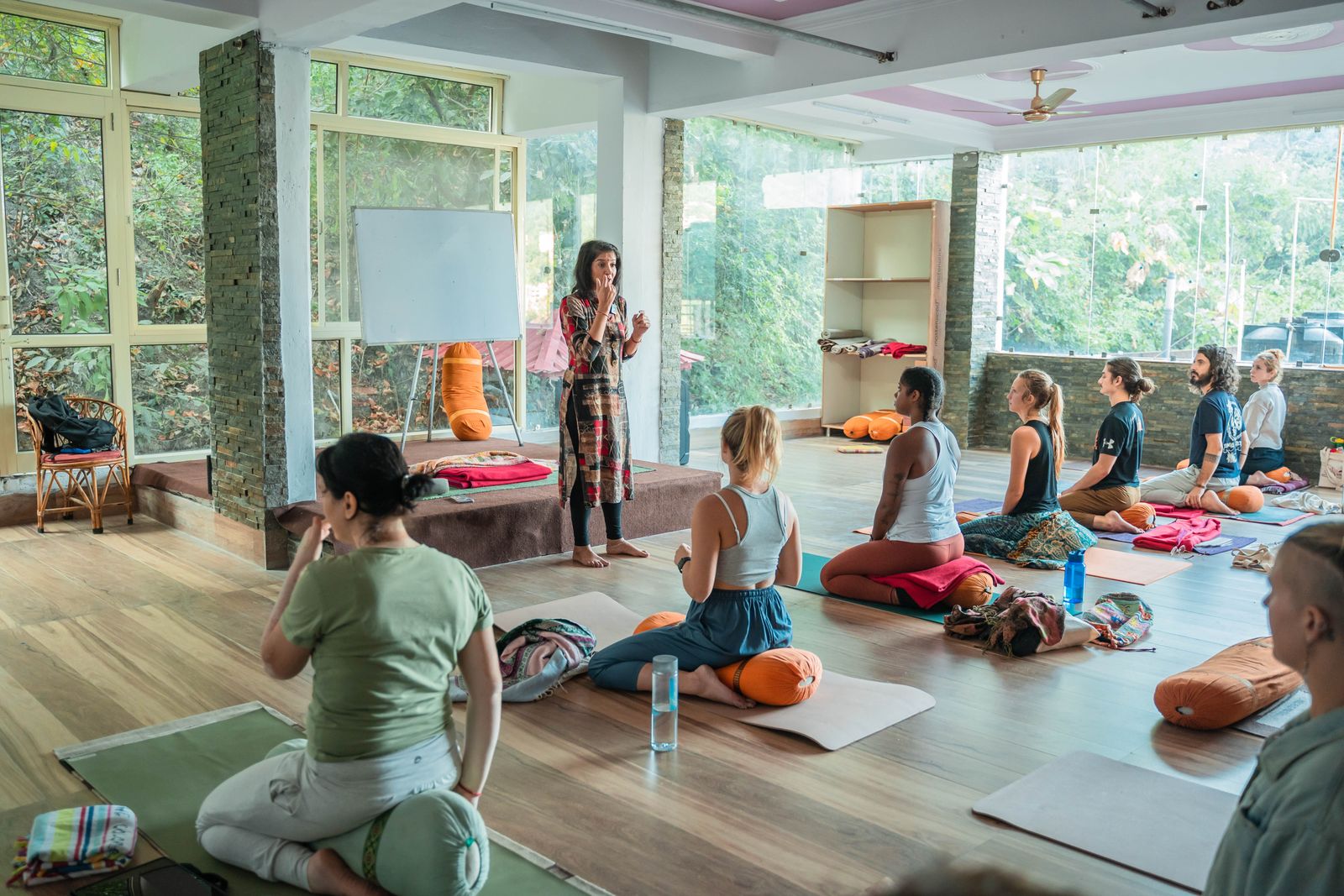
A 200-hour yoga teacher training in Bali typically runs three to four weeks as a full-time residential intensive, though some schools now offer part-time formats spread across two to three months for students who cannot take a month off work. Daily schedules usually start with a 6 or 6:30 a.m. practice, followed by breakfast, anatomy or philosophy lectures, a second asana or alignment-focused session, teaching methodology workshops, and practicum time where trainees teach each other under supervision.
Most Bali-based 200-hour programs are Yoga Alliance-registered (RYS 200), meaning the curriculum meets the minimum required hours across five categories: techniques/training/practice, teaching methodology, anatomy and physiology, yoga philosophy/lifestyle/ethics, and practicum. Expect to also cover sequencing principles for a full class, hands-on and verbal adjustment techniques, the fundamentals of pranayama and chakra theory, and often a module on running a yoga business or building an online teaching presence.
What Should You Expect From a Yoga Teacher Training Course Near Me?
If flying overseas for a residential program is not realistic, searching for a “yoga teacher training course near me” usually surfaces two formats: local studio-based weekend or evening courses spread over 4 to 9 months, and hybrid programs that combine online theory modules with in-person weekend intensives. Local courses tend to suit people balancing a job or family, since you are not withdrawing from daily life for a month. The trade-off is pace: a weekend-format 200-hour course extends the same curriculum over a much longer calendar window, so the immersive, fast-transformation feeling of a residential retreat is traded for flexibility.
When evaluating a “yoga teacher training near me,” check three things before enrolling: whether the school is Yoga Alliance-registered (RYS), the credentials and teaching experience of the lead trainers (not just their years of personal practice), and whether alumni actually go on to teach, which local studios often disclose if you ask directly. A strong local program will also connect you to real teaching opportunities afterward, whether through the studio itself or partner gyms and wellness centers.
Is an Online Yoga Teacher Training Course Legitimate?
Online yoga teacher training has grown substantially since 2020, and Yoga Alliance now permits registered schools to deliver a portion of contact hours through live, interactive online instruction under its RYS 2.0 standards. A legitimate online YTT course still requires live practicum where you teach and receive feedback in real time, not just pre-recorded video lectures you watch passively. Fully self-paced, no-live-interaction “certificates” that promise a credential in a weekend are the ones to be cautious of; they may issue a certificate of completion, but that is different from a recognized teaching credential built on the required contact hours and assessed practicum.
For many working adults, a hybrid model, self-paced philosophy and anatomy modules paired with scheduled live sessions for asana refinement and teaching practice, offers a realistic middle ground between a full career break and a purely passive online course. If you are already comfortable teaching over video, our guide to online yoga classes covers the technical setup that also applies well to teaching virtual practicum sessions.
What Is a Diploma in Yoga Teacher Training?
A diploma in yoga teacher training generally refers to a longer, more academically structured qualification, often one offered through a university, government-recognized institute, or a national yoga board rather than a private studio. In India, for example, several universities and government-affiliated yoga institutes offer diploma and certificate programs in yoga science that combine practical training with theoretical study of yoga’s history, Sanskrit terminology, and therapeutic applications, sometimes assessed with formal examinations rather than only practicum evaluation.
A diploma track can be a strong option if you want a credential recognized by educational institutions or government bodies, or if you are aiming to teach in school systems, government wellness programs, or clinical settings where a private studio certificate may carry less institutional weight. It is a different pathway from a standard Yoga Alliance RYT credential, and the two are not always interchangeable, so check the specific requirements of wherever you intend to teach before choosing one over the other.
What Are the Different Types of Yoga Teacher Training Programs?
Yoga teacher training programs vary along several dimensions beyond just length and location:
- Style-specific programs focus a full 200 or 300 hours on one tradition, such as Ashtanga, Kundalini, or Yin yoga, rather than a general multi-style curriculum.
- Population-specific programs train you to teach a particular group, such as prenatal yoga, yoga for seniors, or kids’ yoga, and often layer additional certification on top of a base 200-hour credential rather than replacing it.
- Fully residential retreat-style courses deliver the full curriculum as an immersive, full-time intensive abroad or at an ashram.
- Part-time local studio courses spread the same curriculum across evenings and weekends over several months.
- Hybrid online-plus-intensive formats combine self-paced theory with in-person or live-online practicum.
- Modular courses let you complete anatomy, philosophy, and practicum in separate blocks over a year or more.
None of these formats is inherently superior; the right program depends on your schedule, budget, learning style, and whether you want a style-specific deep-dive or a broad, general teaching foundation.
How Much Does Yoga Teacher Training Cost?
Costs vary enormously by location and format. Residential 200-hour programs in Rishikesh or Goa are often among the more affordable options internationally, reflecting lower accommodation and staffing costs, while Bali programs, particularly in popular hubs like Ubud, sit at a mid-to-premium range once you factor in accommodation, meals, and the wellness-tourism market around them. Studio-based courses in major Western cities are typically the most expensive option, though they let you avoid international travel and visa costs. Local weekend-format and online hybrid courses often land in a similar cost range to residential programs once flights and weeks of accommodation abroad are added up, so it is worth comparing total cost of attendance, not just the advertised course fee, before deciding.
Beyond tuition, budget for a physical exam or health clearance some schools require, a personal mat and props (though most studios provide these during the course), and course materials or manuals. Some programs bundle accommodation and meals into the fee; others charge separately, so always ask for an itemized breakdown before committing a deposit.
What Happens After You Complete Your Yoga Teacher Training?
Finishing a 200-hour certification does not automatically produce a full teaching schedule; most new teachers spend the first several months substitute teaching, offering donation-based community classes, or teaching friends and family to build confidence and a portfolio. Many graduates start by assisting a senior teacher, which lets you observe real classroom management while gradually taking on small teaching segments. If you are exploring where the work actually is, our breakdown of yoga instructor jobs covers studio employment, corporate wellness contracts, private one-on-one clients, and building an online teaching business.
It is also common, and often recommended, to keep training after your first certificate. Continuing education units (CEUs), workshops in specific techniques like Yoga Nidra or restorative yoga, and eventually a 300-hour advanced training all deepen your teaching over time. Many successful teachers describe their first 200-hour course as the beginning of a much longer education, not the end of one.
What Skills Do You Actually Learn in a Yoga Teacher Training Course?
Beyond memorizing pose names, a solid yoga teacher training course teaches you to read a room: adjusting a sequence in real time when half the class is clearly fatigued, offering modifications for a student with a knee injury without singling them out, and pacing breath cues so a class of mixed levels stays together. You will also study functional anatomy in enough depth to explain why a child’s pose works as a reset, why alignment matters in a triangle pose, or how to sequence toward a peak pose like a crow pose without injury.
Voice projection, clear verbal cueing without over-talking, and the ethics of hands-on assisting (including consent-based touch) are now standard parts of most reputable curriculums. Many programs also dedicate time to the business side: building a class plan, pricing private sessions, and creating a simple website or social presence, skills that matter just as much as your asana knowledge once you start teaching independently.
Questions People Ask About Yoga Teacher Training
Do I need to be flexible to start yoga teacher training?
No. Schools care far more about consistency of practice, willingness to learn anatomy and teaching methodology, and genuine interest in the philosophy than about how deep your backbend is. Most 200-hour courses assume a working familiarity with basic poses, not advanced flexibility, and modifications are taught precisely so future teachers can serve every body type.
How long does it take to become a certified yoga teacher?
A residential 200-hour course typically takes 3 to 4 weeks full-time, while part-time local or online-hybrid formats spread the same 200 hours across 4 to 9 months. The credential itself, RYT-200 through Yoga Alliance, is awarded once you complete all required contact hours across the five curriculum categories and pass practicum assessment.
Can I teach yoga without completing a 200-hour training?
In most countries, yoga teaching is not a legally licensed profession, so there is no law preventing you from teaching without certification. However, most studios, gyms, and corporate wellness programs require at least an RYT-200 credential for insurance and hiring purposes, so completing a recognized program is close to essential if you want paid, structured teaching work.
What is the difference between Yoga Alliance registration and a diploma?
Yoga Alliance registration (RYT/RYS) is an international credentialing system recognized primarily by yoga studios and wellness businesses. A diploma in yoga teacher training is usually issued by a university or government-recognized institute and may be better suited for teaching in academic, government, or clinical settings. Check the requirements of your intended workplace before choosing between them.
Is Sivananda yoga teacher training suitable for complete beginners?
Yes, though it demands commitment. Sivananda courses are residential and intensive, with a strict daily schedule including pre-dawn meditation and karma yoga duties. Beginners are welcome, but the traditional, devotional structure suits people open to an ashram-style lifestyle more than those wanting a purely fitness-oriented certification.
Should I choose an in-person or online yoga teacher training course?
Choose in-person or a hybrid format if you want live feedback on your alignment and cueing and the immersive experience of a residential retreat. Choose an online or hybrid course if you cannot take extended time off but can commit to scheduled live practicum sessions, since a legitimate credential still requires live, assessed teaching hours rather than passive video-only learning.
Try This for Yourself
If a full teacher training feels like a big first step, start by deepening your personal practice with guided sessions you can do anywhere. Try FitStrot’s online yoga classes to build the consistency, alignment awareness, and confidence that make the transition into teacher training far smoother.
Related reading: Yoga Instructor Jobs, Yoga Teacher Training in Rishikesh, Yoga Courses, Yoga Certificate Course, and Online Yoga Classes.