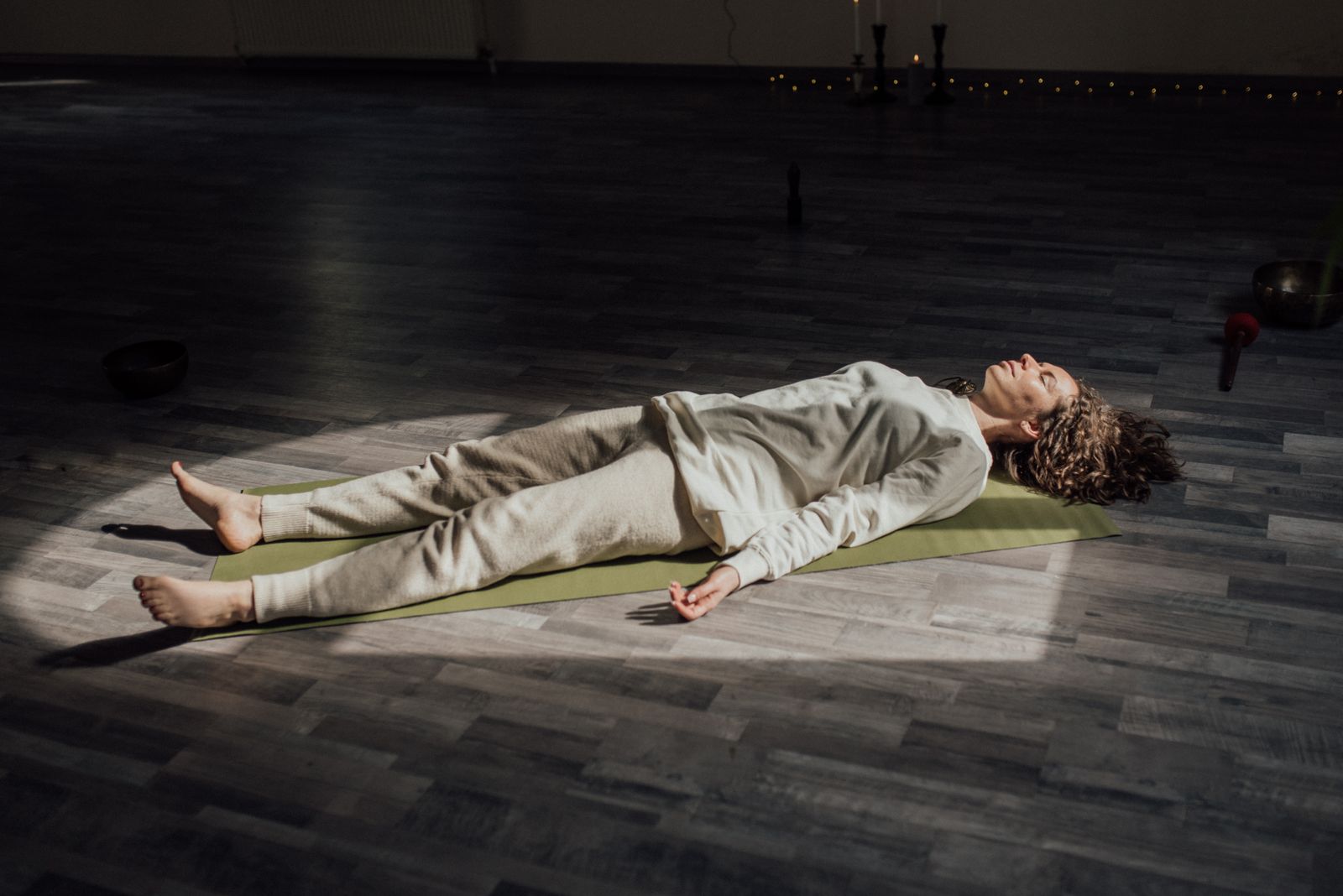
Yoga nidra, often translated as “yogic sleep,” is a guided meditation practice done lying down in savasana (corpse pose) that leads the body into deep physical relaxation while the mind stays quietly aware, hovering in the space between waking and sleeping. Unlike seated meditation, you don’t have to concentrate or control your breath. A teacher’s voice walks you through body awareness, breath awareness, and visualization, and the practice typically lasts 20 to 45 minutes. Practitioners commonly describe it as one of the most efficient tools for stress reduction, better sleep, and mental clarity, because a single session is often compared to two to four hours of ordinary sleep in terms of how rested the body feels afterward.
What Is Yoga Nidra, Exactly?
Yoga nidra is a structured, guided relaxation technique rooted in tantric yoga traditions. The name comes from two Sanskrit words: “yoga,” meaning union, and “nidra,” meaning sleep. But the practice is not sleep in the ordinary sense. Instead, it deliberately guides awareness through a fourth state of consciousness that yogic philosophy calls “turiya,” distinct from waking, dreaming, and deep sleep. In this state, the body is fully relaxed and nearly immobile, brainwave activity slows toward theta and delta ranges typically associated with light sleep, yet a thread of awareness remains present enough to hear and follow the guide’s instructions.
Because the practitioner remains lying down and simply listens, yoga nidra is accessible to almost anyone, including people who find seated meditation physically uncomfortable or mentally restless. It’s commonly taught at the end of a hatha or restorative yoga class, but it also stands on its own as a complete practice. If you’re new to contemplative movement generally, our guide on types of yoga is a useful starting point before exploring quieter practices like this one.
What Does “Yoga Nidra” Mean in Hindi and Sanskrit?
In Hindi and Sanskrit, “yoga nidra” (योग निद्रा) literally means “yogic sleep.” “Nidra” is the standard Sanskrit and Hindi word for sleep, while “yoga” here signifies a disciplined, conscious method rather than a passive state. Traditional texts also describe it in Tamil-speaking yoga communities and across South Indian ashrams under similar names tied to conscious rest, since the underlying tantric root texts were composed in Sanskrit and later transmitted through regional languages including Hindi, Tamil, and Kannada. The core idea across languages stays consistent: this is sleep entered with awareness intact, not unconscious sleep. That distinction is what separates yoga nidra from an afternoon nap and from lighter relaxation techniques like yoga for relaxation.
How Did Yoga Nidra Originate?
Yoga nidra draws on ancient tantric relaxation techniques described in texts on subtle body awareness and rotation of consciousness through the body. The modern, systematized form widely taught today is commonly credited to Swami Satyananda Saraswati, founder of the Bihar School of Yoga in Munger, India, who structured the practice into the sequential method most teachers now use: preparation, resolve (sankalpa), body rotation, breath awareness, sensation and visualization, and a closing return to waking awareness. Since then, numerous lineages and teachers have adapted the sequence, which is why you’ll find meaningful variation between a class taught in the Satyananda style, one taught through the Art of Living Foundation, and one taught by a Western trauma-informed teacher, even though all fall under the same “yoga nidra” name.
What Happens in the Body and Brain During Yoga Nidra?
During yoga nidra, the body shifts from sympathetic “fight or flight” dominance toward parasympathetic “rest and digest” activity. Muscles relax progressively, heart rate and breathing typically slow, and research using EEG monitoring has associated the state with a mix of alpha and theta brainwave activity, patterns generally linked to relaxed alertness and light sleep stages respectively. This is also the physiological territory that neuroscientist Andrew Huberman and others have popularized under the term “Non-Sleep Deep Rest” (NSDR), a modern label for practices that share substantial overlap with traditional yoga nidra, even though NSDR scripts are often simplified and secularized versions without the sankalpa or spiritual framing. If you’re curious how this compares to breath-focused practices, see our guide on pranayama, which works through a different physiological pathway toward a similar calming outcome.
What Are the Benefits of Yoga Nidra?
Yoga nidra is associated with a wide range of reported benefits, though it’s worth noting that research quality varies and larger, well-controlled trials are still relatively limited compared to more established interventions. Commonly cited benefits include:
- Deeper, more restorative rest: a 30 to 45 minute session is frequently described by practitioners and teachers as feeling equivalent to several hours of sleep, since the nervous system gets an extended window of low-arousal recovery.
- Reduced stress and anxiety: slower breathing and muscular release lower cortisol-related stress signaling, which is why the practice is often recommended alongside broader yoga for anxiety approaches.
- Improved sleep quality: because the technique trains the body to downshift quickly, regular practitioners often report falling asleep faster and waking less during the night.
- Better emotional regulation: the body-scan and witnessing components build interoceptive awareness, helping some practitioners notice and process emotions before they escalate.
- Support for chronic pain and fatigue management: some hospital and veteran-care programs have piloted yoga nidra-style protocols (sometimes under the iRest name developed by psychologist Richard Miller) as an adjunct for pain-related distress, though this should complement, not replace, medical care.
These benefits build on the same nervous-system principles explored in our piece on the broader benefits of yoga, and pair naturally with restorative styles like restorative yoga and yin yoga.
What Are the Steps of a Yoga Nidra Practice?
Most traditional yoga nidra sessions follow a consistent sequence of stages, even when the exact wording differs between teachers:
- Settling and preparation: lie down in savasana on a mat or bed, using a blanket or bolster for comfort, and allow the body to become still.
- Setting a sankalpa (resolve): a short, positive, present-tense intention repeated silently, such as “I am calm and confident,” planted at the start when the mind is most receptive.
- Body rotation (rotation of consciousness): awareness is guided systematically through body parts, from fingers to toes to face, without physically moving.
- Breath awareness: attention shifts to the natural rhythm of the breath, sometimes counting breaths backward from a set number.
- Sensation and opposites: the guide introduces pairs of contrasting sensations, such as heat and cold or heaviness and lightness, to deepen the witnessing state.
- Visualization: a sequence of images or symbols is presented mentally, encouraging the mind to stay engaged without analyzing.
- Repeating the sankalpa: the original intention is silently repeated a second time near the end, when the subconscious is considered especially receptive.
- Returning to waking awareness: attention gradually returns to the body, the room, and ordinary alertness, often finishing with gentle movement before sitting up.
Beginners often find it easier to follow this sequence with a recorded or live guide rather than attempting it unscripted, since the sequencing and pacing take practice to internalize.
How Do You Do Yoga Nidra at Home?
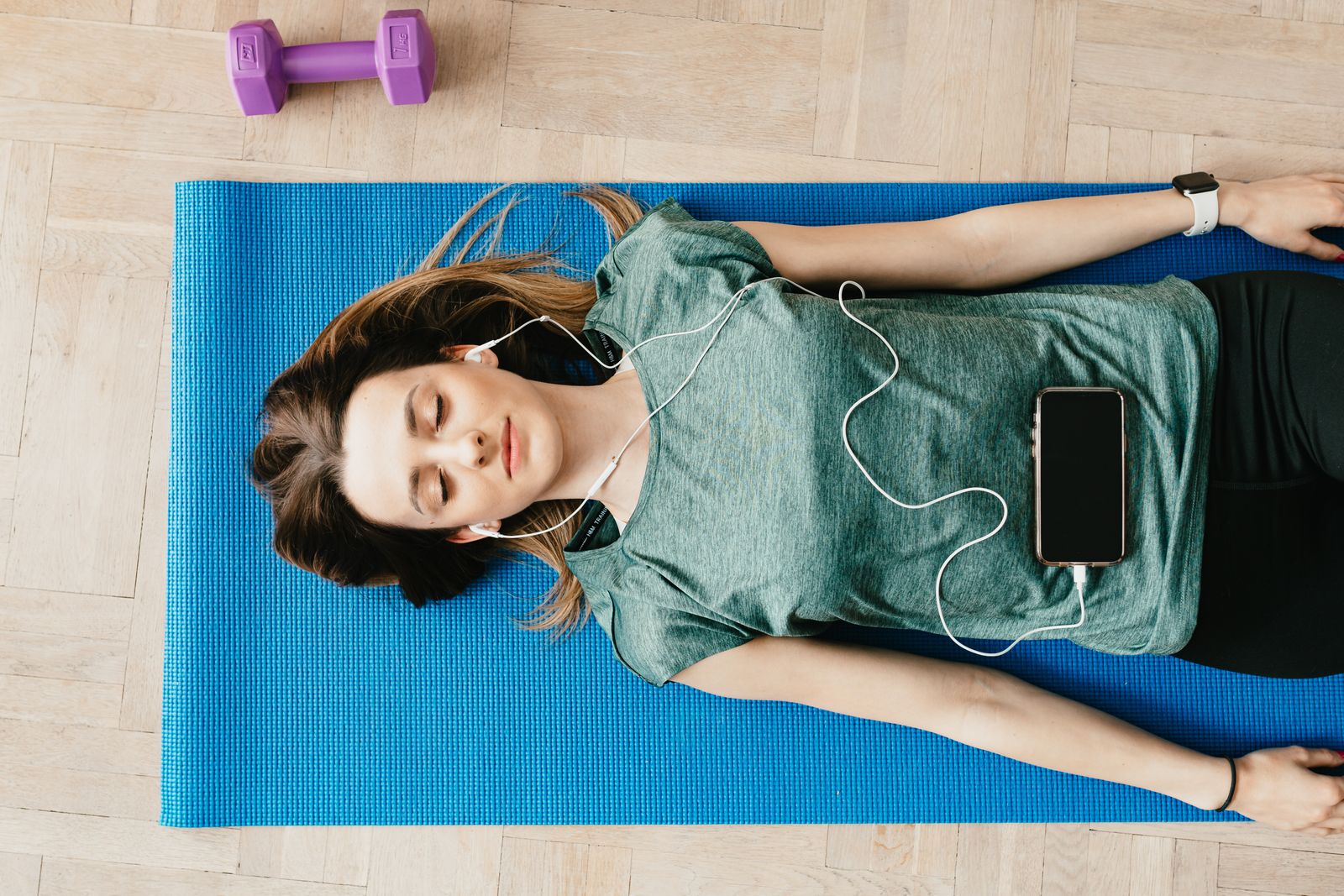
To practice yoga nidra at home, set aside 20 to 45 minutes where you won’t be interrupted. Lie on your back on a mat, rug, or bed, using a pillow under the knees and a folded blanket under the head if that’s more comfortable. Cover yourself with a light blanket, since body temperature tends to drop as you relax. Play a guided audio or video recording rather than trying to narrate the sequence to yourself, since self-guiding pulls you back into an active, thinking mode that works against the goal. Keep your eyes closed throughout, and resist the urge to adjust your position once the practice begins, since stillness is part of what allows the nervous system to downshift. If you tend to fall fully asleep and miss the ending, try practicing earlier in the day, or in a slightly less horizontal position, until your nervous system learns to stay in that in-between state deliberately. Complementing this with a structured beginner yoga routine earlier in the day can also make the evening relaxation practice more effective.
What Is the Sri Sri Yoga Nidra Practice from the Art of Living?
The Art of Living Foundation, founded by Sri Sri Ravi Shankar, teaches its own guided yoga nidra as part of Sri Sri Yoga programs and courses. This version follows the same broad architecture as the classical Satyananda-style sequence, body awareness, breath awareness, and visualization, but is typically delivered with Sri Sri Ravi Shankar’s own guided narration and integrated into the organization’s broader breathing and meditation curriculum, including Sudarshan Kriya. Many practitioners are introduced to yoga nidra for the first time through this route, since Art of Living courses are widely offered across India and internationally. If a guided track from this or a similar lineage resonates with you, it’s worth exploring how it complements other guided formats covered in our overview of guided meditation.
Who Is Tim Rowe and What Is His Yoga Nidra Recording?
Tim Rowe is known among longtime practitioners for a widely circulated guided “Yoga Nidra” audio recording that has been shared and archived online, including on platforms like the Internet Archive, for many years. It’s one of several long-running independent recordings, alongside teacher-led sessions from lineages like Satyananda and iRest, that introduced Western audiences to the practice before yoga nidra became widely available through apps and studio classes. As with any recording you find online, it’s worth confirming the source and teacher lineage before treating any single guided track as the definitive version, since the practice has been adapted many times over by different teachers with different training backgrounds.
Is Yoga Nidra Good for Sleep and Insomnia?
Yoga nidra is frequently recommended as a pre-sleep or middle-of-the-night practice because it activates the same parasympathetic relaxation response that supports natural sleep onset. Preliminary studies and sleep clinics, including material published by organizations focused on sleep health, describe yoga nidra as a promising complementary tool for people with mild to moderate insomnia symptoms, generally working best alongside good sleep hygiene rather than replacing it. It is not a substitute for treating diagnosed sleep disorders, and anyone with chronic or severe insomnia should still consult a physician or sleep specialist. For a broader toolkit of evening practices, see our article on yoga for better sleep, which pairs well with a short yoga nidra session.
How Is Yoga Nidra Different from Meditation and Savasana?
Yoga nidra, seated meditation, and savasana are related but distinct. Savasana is typically a shorter, unguided resting pose used to close a physical yoga class, usually 5 to 10 minutes, with minimal instruction beyond “relax and breathe.” Seated meditation generally requires the practitioner to actively direct attention, whether to the breath, a mantra, or open awareness, while staying upright and often more alert. Yoga nidra sits between these two: it uses the reclined, fully supported posture of savasana, but stretches the experience into a longer, more structured, externally guided journey through the body, breath, and visualization. If you want to compare approaches directly, our guide to meditation vs yoga breaks down these distinctions in more depth, and our piece on yoga mudra explores another complementary tool often layered into meditative practice through hand gestures.
Who Should Be Cautious with Yoga Nidra?
Yoga nidra is low-impact and generally considered safe for most people, but a few groups should approach it thoughtfully. People with a history of trauma may find that extended stillness and body awareness bring up difficult sensations or memories; trauma-informed teachers (such as those trained in Richard Miller’s iRest protocol) build in extra safeguards like keeping eyes open as an option and offering clear opt-outs. People prone to severe drowsiness while driving afterward should allow a few minutes to fully reorient before getting up and resuming activity. As with any relaxation or meditation practice, anyone managing a diagnosed mental health condition should check with their treatment provider about whether yoga nidra fits appropriately alongside their care plan.
How Often Should You Practice Yoga Nidra?
Most teachers suggest three to five sessions a week for noticeable benefits, though even one session can measurably lower perceived stress in the hours afterward. Many practitioners build it into a wind-down routine before bed, while others use a shorter 20-minute version as a midday reset to combat the early-afternoon energy dip. Consistency tends to matter more than session length: a regular 20-minute practice generally outperforms an occasional 60-minute one for building the nervous system’s capacity to downshift quickly. Pairing yoga nidra with a lighter physical practice like gentle yoga a few times a week can round out a sustainable weekly rhythm.
Questions People Ask About Yoga Nidra
Is yoga nidra the same as taking a nap?
No. A nap is unstructured, unconscious sleep, while yoga nidra deliberately keeps a thread of awareness present so you can follow the guide’s voice even while the body is deeply relaxed. Many practitioners do drift into brief true sleep during a session, especially early on, but the intended state is the conscious, in-between space between waking and sleeping, not full unconsciousness.
Can beginners do yoga nidra without a teacher?
Yes. Because the practice is fully guided, beginners can start immediately using a recorded audio or video session rather than needing in-person instruction first. The main skill to develop over time is staying awake enough to hear the guide’s voice through the entire session, which usually improves with regular practice rather than requiring formal training.
How long does a typical yoga nidra session last?
Sessions commonly range from 15 to 45 minutes, with 20 to 30 minutes being the most widely used length for a daily practice. Shorter 10-minute versions exist for quick midday resets, while longer 45 to 60 minute sessions are more common in workshop or retreat settings where deeper, extended relaxation is the goal.
What is a sankalpa in yoga nidra?
A sankalpa is a short, positive, present-tense personal resolve, such as “I am healthy and at peace,” that’s silently repeated at the start and end of a yoga nidra session. It’s planted when the mind is considered most receptive to positive suggestion, and traditional teaching holds that repeating the same sankalpa consistently over weeks or months helps it take root as a genuine intention rather than a passing thought.
Does yoga nidra actually reduce cortisol and stress hormones?
Some smaller studies and pilot programs have measured reduced self-reported stress and anxiety after yoga nidra sessions, and the practice’s emphasis on slow breathing and muscular relaxation is consistent with known parasympathetic activation. However, robust, large-scale research specifically measuring cortisol changes from yoga nidra is still limited, so it’s more accurate to describe the effect as promising and consistent with the practice’s mechanism rather than definitively proven at scale.
Try This for Yourself
Reading about yoga nidra only goes so far. The real shift happens when you actually lie down, close your eyes, and let a trained guide walk you through it. FitStrot’s online yoga classes include guided relaxation and yoga nidra sessions led by experienced teachers, structured around your schedule and goals, whether you’re managing stress, chasing better sleep, or simply looking for twenty quiet minutes in an otherwise loud day.
Related reading: yoga mudra, pranayama, restorative yoga, yoga for anxiety, and FitStrot’s online yoga classes.