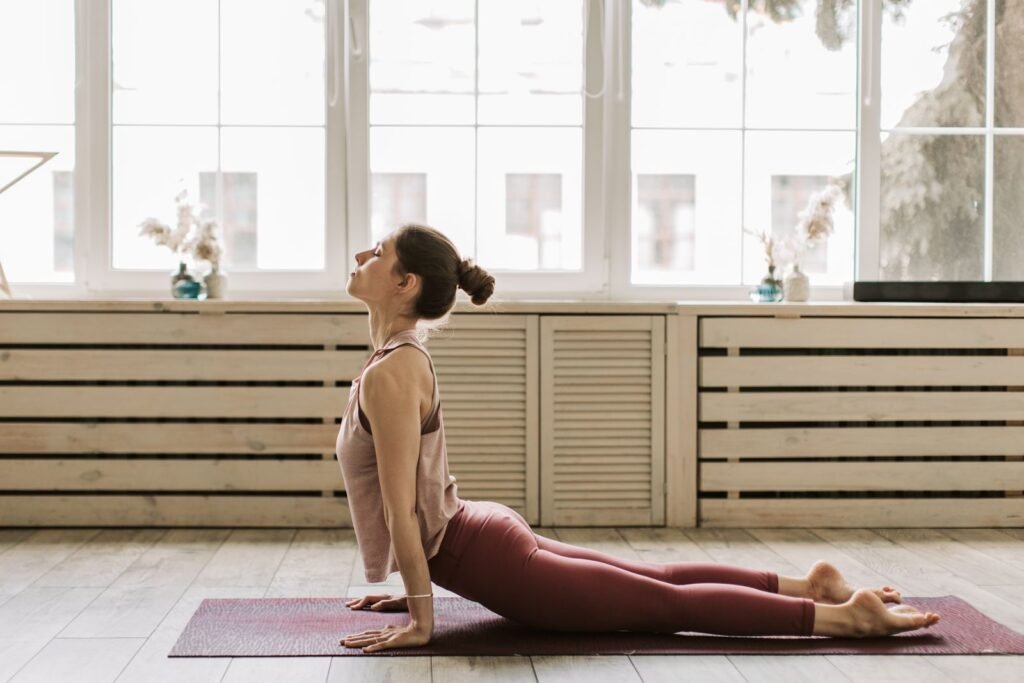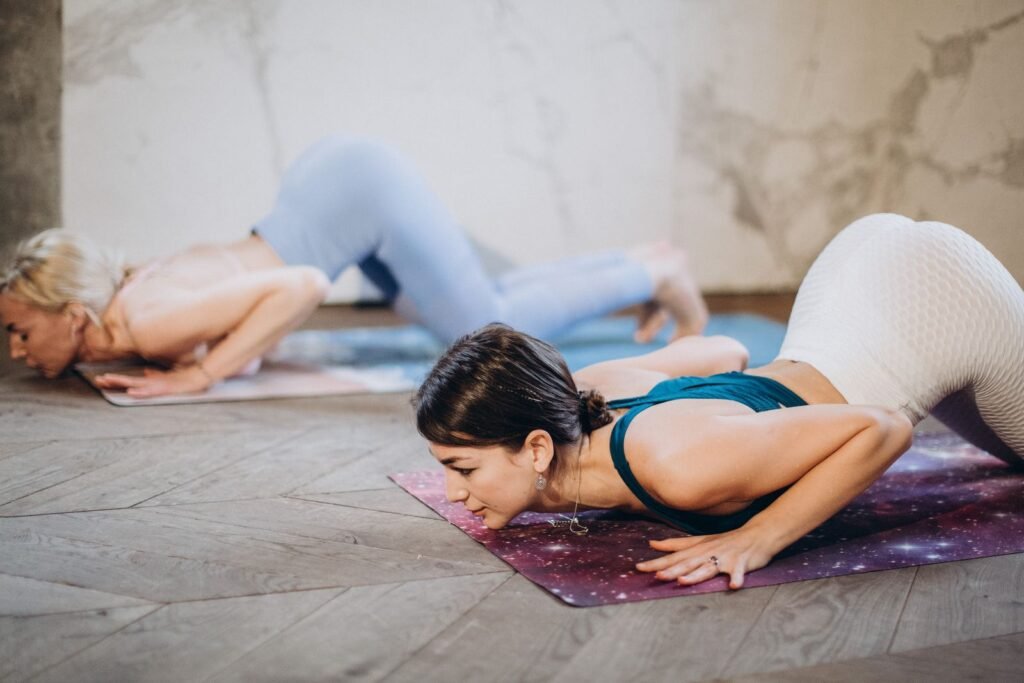
Power yoga is a fast-paced, fitness-based style of vinyasa yoga that links continuous movement with breath to build strength, stamina, and flexibility in the same session. Unlike gentler styles that hold poses for long, meditative stretches, power yoga keeps the body moving through flowing sequences of asanas, often at a near-cardio pace, so a single class can feel closer to a strength workout than a relaxation practice. It draws heavily from Ashtanga yoga but drops the fixed sequence, giving instructors freedom to design each class around specific goals like weight loss, muscular endurance, or full-body conditioning.
What Is Power Yoga?
Power yoga is a vigorous, athletic adaptation of traditional yoga that prioritizes continuous movement, breath-linked transitions, and muscular effort over stillness and prolonged holds. Where classical hatha yoga might spend several minutes in a single seated pose, a power yoga class strings together standing poses, balances, and core work in flowing rounds, often built around repeated sun salutations. The pace, heat generated by the body, and emphasis on strength are what distinguish it from more restorative styles like yin yoga or gentle hatha.
Because power yoga was never trademarked or standardized by a single organization, no two power yoga classes look exactly alike. Some studios run it as a heated practice similar to hot yoga; others keep it at room temperature but push intensity through faster transitions and longer sequences. What unites every variation is the underlying goal: use the breath-movement connection of yoga to deliver a genuine strength and cardiovascular workout.
Where Did Power Yoga Come From?
Power yoga traces back to the 1990s, when several American yoga teachers who had studied Ashtanga yoga under the Indian teacher K. Pattabhi Jois began adapting his fixed, physically demanding sequences for Western students who wanted a workout without years of prerequisite training. Teachers including Beryl Bender Birch, Bryan Kest, and Baron Baptiste are commonly credited with independently developing their own versions of what became known as power yoga around the same period, each keeping the vigorous, flowing character of Ashtanga while removing its rigid, unchanging sequence.
This gave instructors freedom to mix poses, adjust intensity, and design classes for specific outcomes, something the traditional Ashtanga system does not allow. It’s worth noting that Pattabhi Jois himself was reportedly critical of the power yoga adaptation, reflecting a broader tension in the yoga world between preserving traditional lineages and adapting practices for modern fitness audiences. Today, “power yoga” functions less as a single codified method and more as an umbrella term for any vigorous, strength-focused vinyasa-style class, which is also why studio-to-studio experiences vary so much.
How Is Power Yoga Different From Vinyasa Yoga?
Power yoga and vinyasa yoga share the same foundation: continuous movement synchronized with breath, rather than static holds. The difference is emphasis. Vinyasa is a broad category that can range from gentle and slow to extremely athletic, and its defining feature is simply that poses flow into one another on the breath. Power yoga is essentially vinyasa yoga turned up in intensity, with a specific fitness-first agenda: building strength, endurance, and often inducing a calorie-burning, sweat-inducing workout.
In practice, a power yoga class is more likely to include repeated strength-building elements like extended plank holds, chaturanga push-up patterns, and challenging arm balances, and less likely to include long restorative sequences or extensive guided relaxation. If you’ve taken a vinyasa class and found it too mellow, power yoga is usually the next step up in intensity within the same broad family of practice.
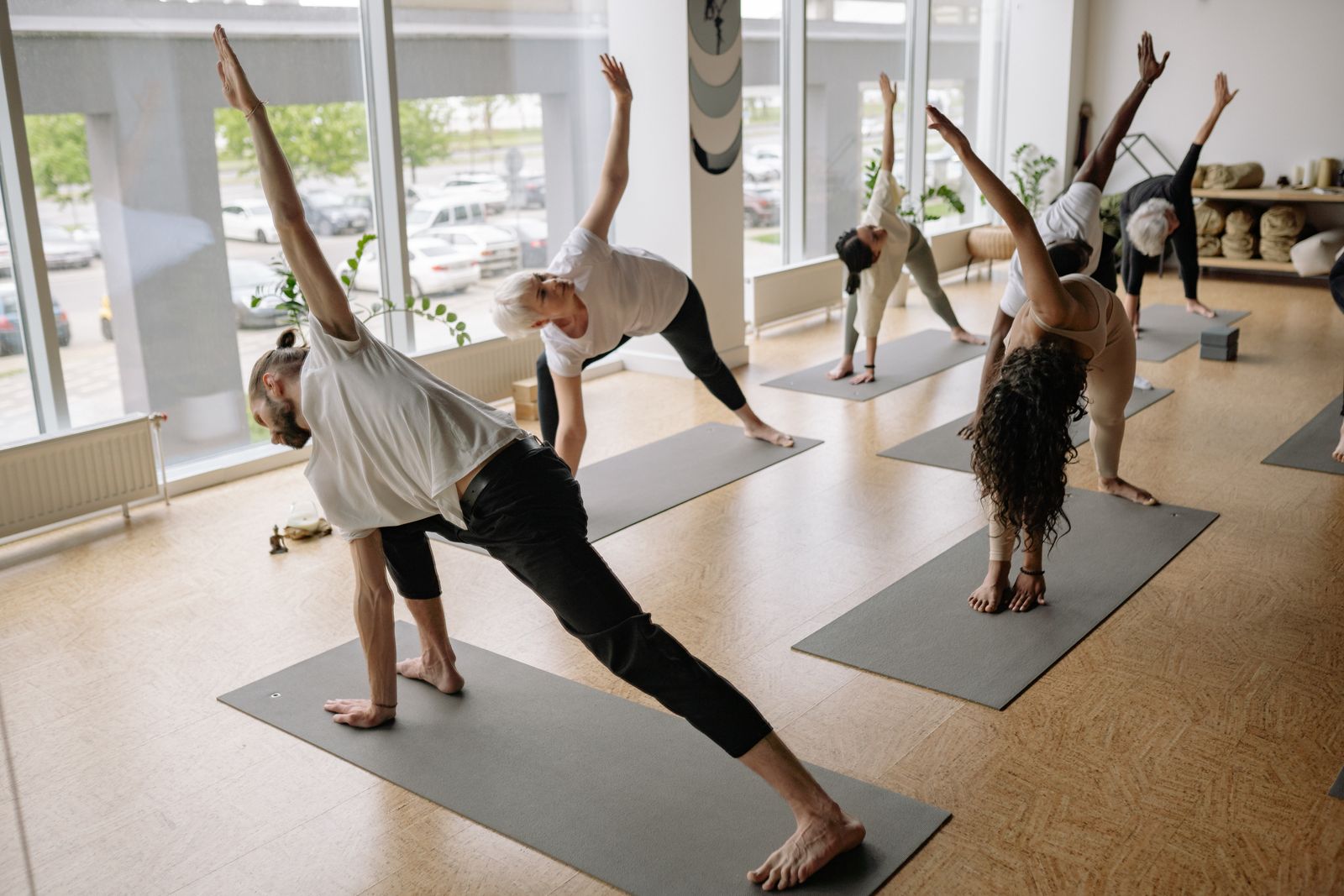
What Are the Benefits of Power Yoga?
Power yoga benefits extend across physical fitness, mental focus, and long-term health, which is part of why it has become a mainstream fitness option rather than staying a niche yoga variant.
- Builds functional strength: Repeated transitions through plank, chaturanga, and standing poses build muscular endurance in the arms, shoulders, core, and legs using bodyweight resistance.
- Improves cardiovascular fitness: The continuous pace elevates heart rate for sustained periods, giving the practice an aerobic training effect that slower yoga styles don’t provide.
- Increases flexibility alongside strength: Because poses are held briefly under active muscular engagement, power yoga develops what’s sometimes called “active flexibility,” useful range of motion that’s supported by strength rather than passive stretch alone.
- Supports weight management: Combined with a sensible diet, the higher energy expenditure of a vigorous flow can contribute to a calorie deficit over time.
- Sharpens focus and reduces stress: The breath-synchronized movement demands sustained attention, which many practitioners describe as a moving meditation that quiets mental chatter.
- Improves posture and body awareness: Frequent core engagement and alignment cues carry over into daily standing and sitting posture.
For a broader look at how these effects compare across styles, see our guide to the overall benefits of yoga.
Can Power Yoga Help With Weight Loss?
Power yoga can support weight loss primarily through the calories burned during a vigorous session and the muscle it helps build, which raises resting metabolic rate over time. A fast-paced power yoga class keeps the heart rate elevated for most of the session, closer to a moderate-intensity cardio workout than to a typical restorative yoga class. That said, power yoga alone rarely produces meaningful weight loss without attention to overall diet and total weekly activity; it works best as one part of a broader routine that includes consistent movement and mindful eating.
Where power yoga tends to outperform other exercise for weight management isn’t raw calorie burn, it’s adherence. Because the practice also reduces stress and improves sleep quality for many people, and stress and poor sleep are both linked to weight gain, the indirect metabolic benefits can matter as much as the workout itself. Pairing three to four power yoga sessions a week with basic strength training and a protein-adequate diet is a realistic, sustainable combination for most people pursuing fat loss.
What Are Common Power Yoga Asanas and Poses?
Power yoga asanas draw from the standard vinyasa and Ashtanga repertoire but are sequenced for continuous flow and strength demand. Common poses you’ll encounter include:
- Sun Salutations (Surya Namaskar A and B): The backbone of most power yoga classes, repeated in rounds to build heat and warm up every major muscle group.
- Chaturanga Dandasana (Four-Limbed Staff Pose): A low push-up position that builds serious upper-body and core strength through repetition.
- Warrior I, II, and III: Standing lunge-based poses that build leg strength, balance, and hip stability.
- Chair Pose (Utkatasana): An isometric squat-like hold that fatigues the quadriceps and glutes quickly.
- Plank and Side Plank: Core-stabilizing holds often layered into transitions between standing sequences.
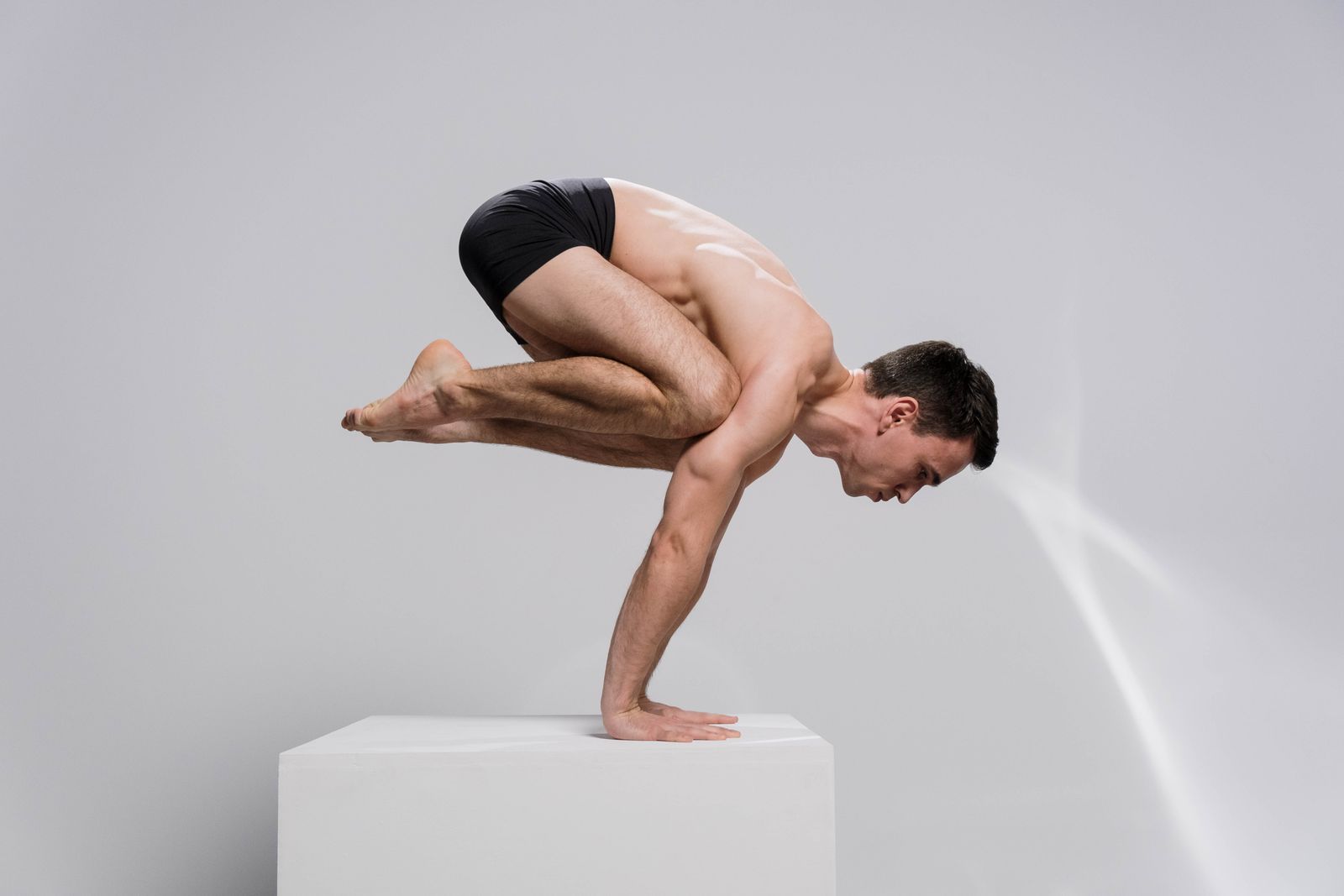
- Crow Pose (Bakasana) and other arm balances: Advanced poses introduced in more challenging classes to build wrist, shoulder, and core strength together.
- Downward-Facing Dog (Adho Mukha Svanasana): Used repeatedly as a transitional and resting pose between more demanding segments.
If you’re newer to these shapes, it helps to first get comfortable with foundational standing poses; our guide to yoga poses for beginners is a good starting point before jumping into a full power flow.
Is Power Yoga Good for Beginners?
Power yoga can work for beginners, but it isn’t the gentlest entry point into yoga. Because classes move quickly and assume some familiarity with foundational poses like downward dog, plank, and basic standing postures, complete beginners sometimes struggle to keep pace in their first few sessions. That’s not a reason to avoid it, most studios welcome newcomers and encourage modifications, but it does mean beginners should expect an adjustment period rather than immediate mastery.
A practical approach is to spend two to four weeks in a slower style, such as hatha yoga or a beginner vinyasa class, to build basic pose vocabulary and body awareness, then transition into power yoga once foundational alignment feels familiar. Good instructors will always offer modified versions of demanding poses, so beginners shouldn’t feel pressured to keep up with more advanced students in the room.
How Does Power Yoga Compare to Other Vigorous Yoga Styles?
Power yoga sits alongside several other intense yoga styles, and the differences matter when choosing what fits your goals.
Power yoga vs. Bikram yoga: Bikram yoga follows a fixed sequence of 26 poses and 2 breathing exercises in a room heated to roughly 105°F (40°C) with controlled humidity, always in that exact order. Power yoga has no fixed sequence and is typically practiced at normal room temperature unless a studio specifically bills it as “power vinyasa” in a heated room.
Power yoga vs. Ashtanga yoga: Ashtanga follows one of several set sequences (the Primary Series, Second Series, and beyond) that students progress through in a specific, unchanging order. Power yoga borrows Ashtanga’s intensity and flow but drops the fixed structure, letting instructors design varied classes.
Power yoga vs. hot yoga: “Hot yoga” is a general term for any yoga practiced in a heated room and can include power yoga sequences, Bikram’s fixed sequence, or other styles. Power yoga itself doesn’t require heat, though many studios combine the two for an added intensity and detox-focused sweat component.
Power yoga vs. aerial yoga: Aerial yoga uses a suspended hammock to support and deepen poses, emphasizing decompression and playful inversions rather than sustained cardiovascular effort. It’s a fundamentally different physical experience from the ground-based, strength-and-stamina focus of power yoga.
What Should You Expect in a Power Yoga Class?
A typical power yoga class runs 45 to 90 minutes and follows a loose but consistent arc: a brief warm-up, several rounds of sun salutations to build heat, a standing sequence targeting strength and balance, a floor-based segment for core work and deeper stretches, and a short cool-down or final relaxation (savasana). Instructors often cue breath audibly throughout, using it to pace transitions between poses.
Expect to sweat, expect your heart rate to climb, and expect the instructor to offer modifications for challenging poses like arm balances or deep backbends. Bringing a towel and water is standard practice, and many studios recommend arriving fifteen minutes early if it’s your first class so the instructor can flag any injuries or physical limitations before the session begins.
How Do I Find Power Yoga Classes Near Me?
Finding power yoga classes near you usually starts with a search for local studios that specifically list “power yoga” or “power vinyasa” on their class schedules, since not every yoga studio offers this more athletic format. Many well-known regional studios, such as Roopam’s Power Yoga Center and Avinash Power Yoga and Aerobics Studio in Nagawara, have built dedicated followings around this specific style, and searching by neighborhood along with “power yoga” typically surfaces the closest options. Community fitness centers, gyms with group class schedules, and dedicated yoga studios are the three most common venues.
If in-person options in your area are limited, inconvenient, or don’t fit your schedule, online power yoga classes solve the access problem entirely, letting you follow a structured, instructor-led flow from home on your own timeline. This also removes the common barrier of feeling self-conscious as a beginner in a room full of experienced practitioners.
What Is the CorePower Yoga C2 Sequence?
CorePower Yoga, a large U.S. studio chain, structures its power yoga offerings into tiered classes, with C1 as a foundational, slower-paced introduction and C2 as a more advanced, faster, and more physically demanding sequence built for students who already have a power yoga foundation. The C2 sequence typically includes longer flowing sequences, more advanced arm balances and inversions, and less instructional cueing since it assumes familiarity with pose names and basic alignment.
This kind of tiered structure, common across power yoga studio chains, reflects a broader truth about the style: because power yoga isn’t standardized the way Ashtanga or Bikram are, individual studios build their own internal progressions. If you’re shopping around for a class, asking whether a studio uses a leveled system like C1/C2 can help you gauge whether a specific class matches your current fitness and yoga experience.
What Should You Wear and Bring to Power Yoga?
Moisture-wicking, form-fitting athletic wear works best for power yoga since loose clothing can interfere with poses and get in the way during inversions or arm balances. A non-slip yoga mat with good grip is essential, given how much sweating typically happens during a vigorous flow; a mat towel or grip towel is a smart addition for anyone who sweats heavily. Bring water, since the pace and heat of most classes make dehydration a real risk, and consider a small hand towel to keep the mat and palms dry between poses.
Who Should Avoid or Modify Power Yoga?
Power yoga’s pace and intensity make it less suitable for people recovering from acute injuries, those with uncontrolled cardiovascular conditions, and pregnant practitioners in most trimesters, since the fast transitions, deep backbends, and core-intensive work carry more risk than gentler styles. Anyone with wrist, shoulder, or lower-back issues should be cautious with the repeated chaturanga transitions common in power yoga, since improper form under fatigue is a frequent source of strain.
This doesn’t mean these groups can’t practice yoga at all, it means a gentler alternative is usually the smarter choice. Prenatal practitioners are generally better served by prenatal yoga, while those managing joint pain or recovering from injury often do better with restorative yoga or gentle hatha until they’ve rebuilt strength and mobility. Always get clearance from a physician for any new vigorous exercise program if you have an existing health condition.
How Does Power Yoga Fit Into a Broader Yoga Practice?
Many practitioners don’t treat power yoga as their only style, they rotate it with gentler practices to balance intensity with recovery. A common approach is two to three power yoga sessions a week for strength and cardio benefit, combined with a slower practice like yin yoga or restorative yoga for flexibility and nervous-system recovery, plus attention to breathwork through pranayama practices. Some practitioners also complement power yoga with unrelated styles focused on facial muscle tone, such as face yoga, as part of a broader wellness routine.
If you’re building a weekly schedule from scratch, thinking in terms of “effort” and “recovery” days, rather than treating every session as equally intense, tends to produce better long-term consistency and fewer overuse injuries than doing power yoga daily.
Questions People Ask About Power Yoga
What is power yoga?
Power yoga is a vigorous, fitness-oriented style of yoga built on continuous, breath-linked movement rather than long static holds. It developed from Ashtanga yoga in the 1990s but drops Ashtanga’s fixed sequence, giving instructors flexibility to design varied, intensity-focused classes aimed at building strength, stamina, and flexibility together.
What is power yoga and its benefits?
Power yoga combines strength training, cardiovascular conditioning, and flexibility work within a single flowing practice. Its main benefits include improved muscular endurance, elevated heart rate for cardio conditioning, better active flexibility, stress reduction through breath-focused movement, and support for weight management when combined with a sensible diet and consistent practice.
What is power yoga exercises?
Power yoga exercises are sequences built from standard yoga asanas performed with continuous flow and minimal rest. Core exercises include sun salutations, chaturanga push-up transitions, standing warrior poses, chair pose holds, plank variations, and, in more advanced classes, arm balances like crow pose, all linked together through breath-paced movement.
What is power yoga benefits for weight loss?
Power yoga supports weight loss mainly through the calories burned during vigorous, cardio-like sessions and the lean muscle it builds over time, which can modestly raise resting metabolism. It works best paired with mindful eating and consistent weekly practice rather than as a standalone weight-loss solution.
What is power yoga good for?
Power yoga is good for building functional strength, improving cardiovascular fitness, increasing flexibility under active muscular control, reducing stress through focused breathwork, and improving posture and body awareness. It suits people who want a fitness-forward yoga practice rather than a purely restorative or meditative one.
Is power yoga suitable for weight loss without other exercise?
Power yoga alone can contribute to weight loss, but it works best as part of a broader routine that includes attention to diet and overall weekly activity levels. Its main advantage is sustainability, since many people find the breath-focused, strength-building format easier to stick with long-term than purely repetitive cardio.
Try This for Yourself
Reading about power yoga only goes so far, the strength, focus, and calm it builds only show up once you’re actually moving through the sequences. FitStrot’s Online Yoga Classes give you instructor-led sessions you can follow from home, at your own pace, with real modifications for every level.
Related reading: Explore Ashtanga yoga to understand the tradition power yoga grew from, compare intensity levels with Bikram yoga, try something completely different with aerial yoga, or round out your routine with face yoga, and see the full picture in our Online Yoga Classes program.