Yoga for anxiety works by combining slow, controlled breathing with gentle physical movement to shift the nervous system out of “fight or flight” and into a calmer, parasympathetic state. Poses like Child’s Pose, Legs-Up-the-Wall, and Cat-Cow, paired with extended exhale breathing, lower heart rate and muscle tension within minutes, while a consistent practice of three to five sessions a week has been linked in clinical research to meaningful drops in anxiety symptoms over several weeks. It is not a replacement for therapy or medication when anxiety is severe, but as a complementary tool, yoga gives you something most anxiety management strategies don’t: an immediate, physical off-ramp from a spiral of racing thoughts.
Why Does Yoga Help With Anxiety?
Anxiety is, at its core, a nervous system state. When you feel anxious, your sympathetic nervous system activates the same stress response your ancestors used to escape predators: your heart rate climbs, your breath shortens, your muscles tense, and your mind narrows to scan for threats. The problem is that modern anxiety rarely has a physical threat to run from, so that activation just sits in the body with nowhere to go.
Yoga interrupts this cycle through three mechanisms working together. First, slow diaphragmatic breathing directly stimulates the vagus nerve, which activates the parasympathetic (“rest and digest”) nervous system and physically lowers cortisol and heart rate. Second, the physical postures release stored muscular tension, particularly in the hips, shoulders, and jaw, areas where anxiety commonly lodges. Third, the practice of holding attention on breath and sensation, rather than on worry, functions as a form of present-moment focus similar to mindfulness meditation. If you want to go deeper on this mind-body connection, our guide to yoga for mental health covers the broader research on how regular practice reshapes stress response over time.
What Does the Research Actually Say About Yoga and Anxiety?
A widely cited clinical trial from NYU Langone, published in JAMA Psychiatry in 2020, compared Kundalini yoga against cognitive behavioral therapy (CBT) and a stress-management education class in 226 adults with generalized anxiety disorder. After 12 weekly sessions, 54% of the yoga group showed meaningful symptom improvement, compared to 33% in the education group, while CBT produced the strongest results at 71%. The researchers noted that yoga’s benefits were most pronounced in the short term; by the six-month follow-up, its advantage over the control group had faded, while CBT’s gains held steady.
The takeaway isn’t that yoga doesn’t work. It’s that yoga functions best as a complementary practice, something that provides fast, accessible relief and can be layered alongside therapy, medication, or other evidence-based treatment rather than used as a standalone cure for clinical anxiety disorders. If your anxiety significantly disrupts daily functioning, a conversation with a mental health professional should come first, with yoga as one part of a broader plan.
Which Yoga Poses Are Best for Anxiety?
Not every yoga pose is equally calming. Backbends and inversions can be energizing or even mildly stimulating, which is great for lethargy but not always ideal mid-anxiety-spiral. The most reliable yoga asanas for anxiety are forward folds, restorative poses, and gentle twists, all of which encourage the nervous system to downshift.
Child’s Pose (Balasana)
Kneel with your big toes touching, knees wide, and fold forward, resting your forehead on the mat with arms extended or tucked alongside your body. This is one of the most commonly recommended yoga positions for anxiety because the forward fold compresses the abdomen gently, encouraging slower breathing, while the head-down position has a naturally quieting effect on the mind. Hold for one to three minutes, breathing into your lower back.
Legs-Up-the-Wall (Viparita Karani)
Sit sideways against a wall, then swing your legs up so your body forms an L-shape with your hips near the baseboard. This gentle inversion promotes venous return and is frequently used in restorative yoga sequences for its sedative effect on the nervous system. Five to ten minutes here can noticeably slow a racing heart rate.
Cat-Cow (Marjaryasana-Bitilasana)
On hands and knees, alternate between arching and rounding your spine in sync with your breath: inhale to arch (Cow), exhale to round (Cat). This rhythmic pairing of movement and breath is one of the simplest yoga poses for anxiety because it gives an anxious mind something concrete and repetitive to follow, similar to how yoga for beginners sequences often start here to build breath awareness.
Seated Forward Fold (Paschimottanasana)
From a seated position with legs extended, hinge forward from the hips, reaching toward your feet. Like Child’s Pose, this forward fold has a calming, introspective quality and gently stretches the hamstrings and lower back, areas that often tighten under chronic stress.
Corpse Pose (Savasana)
Lying flat on your back, arms relaxed at your sides, palms up. Savasana is frequently underestimated because it looks like doing nothing, but it’s arguably the most important pose in any anxiety-focused sequence: it gives the nervous system uninterrupted time to settle after movement. Five to ten minutes at the end of practice consolidates the calming effects of everything before it.
How Does Breathing Fit Into Yoga for Anxiety Relief?
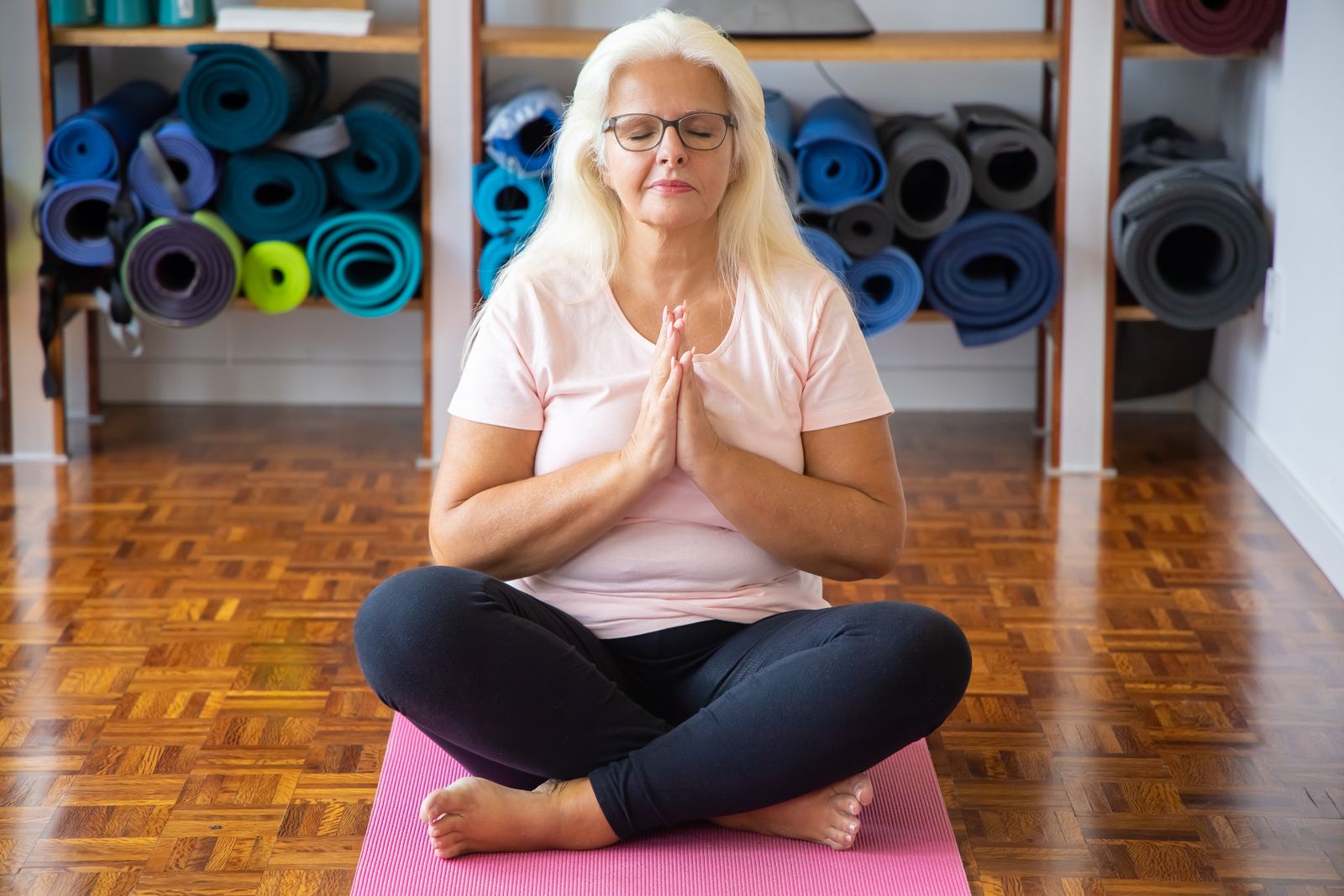
Breathwork, known in yoga as pranayama, is arguably more important than the postures themselves when the goal is anxiety relief. The physiological reason is straightforward: exhaling activates the parasympathetic nervous system, so any breathing pattern that lengthens the exhale relative to the inhale sends a direct signal to the brain that it’s safe to relax.
Two techniques are particularly useful. Extended exhale breathing, inhaling for a count of four and exhaling for a count of six or eight, is simple enough to use anywhere, including outside of a formal practice, like before a stressful meeting or during a panic moment. Alternate nostril breathing (Nadi Shodhana) involves gently closing one nostril at a time while breathing, a technique commonly cited in yogic tradition for balancing the nervous system, and many practitioners find it especially useful for quieting racing thoughts before sleep. For a deeper look at combining breath with movement, see our piece on pranayama breathing techniques.
What Type of Yoga Is Best for Stress and Anxiety?
Not all yoga styles are built for calming the nervous system, and choosing the wrong one can leave you more activated, not less. If your primary goal is anxiety relief, prioritize styles that emphasize slowness, breath, and sustained holds over speed and intensity.
Restorative yoga uses props like bolsters and blankets to support the body in passive poses held for five minutes or longer, making it one of the most direct paths to nervous system downregulation. Yin yoga similarly favors long holds, typically two to five minutes, targeting connective tissue and inducing a meditative state. Hatha yoga, with its slower pace and focus on alignment, is a gentle entry point for beginners exploring yoga to reduce stress and anxiety. By contrast, vinyasa yoga and power yoga, while excellent for fitness and mood via endorphin release, move quickly enough that they may not be ideal for someone in acute anxiety, though they can be valuable once a baseline of calm is established. If you’re deciding between approaches, our overview of types of yoga breaks down the pace, intensity, and focus of each style in more detail.
Can Yoga Help With Panic Attacks?
Yoga can be a useful tool during and after a panic attack, though it works differently in each moment. During an acute panic attack, simple grounding techniques borrowed from yoga, extended exhale breathing, feeling the weight of your feet on the floor, or a supported Child’s Pose, can help shorten the intensity and duration of the episode by counteracting the hyperventilation and adrenaline surge that fuel it.
Outside of an active panic attack, a regular practice appears to reduce the frequency of episodes over time for many people, likely because consistent breathwork and movement lower baseline physiological arousal, meaning the nervous system has less “charge” available to trigger a panic response in the first place. If panic attacks are frequent or severe, yoga should sit alongside, not replace, evaluation by a healthcare provider, since panic disorder often benefits from a structured treatment plan.
How Often Should You Practice Yoga for Anxiety?
Consistency matters more than duration when using yoga to manage anxiety. A short 15-to-20-minute practice done four to five times a week generally produces better results than one long session on the weekend, because the nervous system benefits from repeated, regular signals of safety rather than an occasional reset.
For those just starting out, a realistic structure looks like this: three focused sessions a week combining gentle postures and breathwork, plus one or two shorter five-minute breathing breaks on other days, perhaps during a lunch break or before bed. Over four to six weeks, many practitioners report noticeable shifts in their baseline stress levels, though individual timelines vary widely depending on the severity of anxiety and other lifestyle factors like sleep and caffeine intake.
Does Yoga Help With Anxiety and Depression Together?
Anxiety and depression frequently co-occur, and yoga’s mechanisms, nervous system regulation, present-moment focus, and gentle physical activity, address elements common to both. Movement itself is one of the more consistently supported non-pharmacological tools for mood, and yoga offers a lower-barrier entry point than higher-intensity exercise for people who feel fatigued or overwhelmed, which is common in depression.
That said, yoga asanas for depression and anxiety work best as part of a broader routine rather than in isolation. Combining a regular practice with adequate sleep, social connection, and professional support tends to produce more durable results than yoga alone. For a broader look at how movement supports mood beyond the mat, our article on yoga for mental health explores this connection in more depth, and our guide to yoga for depression focuses specifically on sequences suited to low-energy days.
What’s a Simple Beginner Sequence for Anxiety?
A short, repeatable sequence removes the guesswork that can itself become a source of stress for beginners. Try this 15-minute flow, ideally practiced in a quiet space at the same time each day to build a habit:
- Minute 0-2: Seated, eyes closed, extended exhale breathing (inhale for 4, exhale for 6-8 counts)
- Minute 2-5: Cat-Cow, 8-10 slow rounds synced to breath
- Minute 5-8: Child’s Pose, resting and breathing into the lower back
- Minute 8-11: Seated Forward Fold, holding gently without forcing depth
- Minute 11-13: Legs-Up-the-Wall or legs resting on a chair seat
- Minute 13-15: Savasana, allowing the body to fully settle
This sequence intentionally avoids strenuous poses so it can be done even on high-anxiety days when energy is low. As you build confidence, our yoga for beginners guide offers a fuller foundation for expanding your practice, and morning yoga routine has ideas for making this a consistent daily habit.
How Does Yoga Compare to Other Anxiety Management Tools?
Yoga is one of several complementary tools people use alongside or instead of more intensive interventions, and understanding where it fits helps set realistic expectations. Meditation shares yoga’s present-moment focus but without the physical movement component, which can make it harder for some anxious minds to settle into at first, since stillness alone can occasionally amplify racing thoughts. Our guide to meditation for anxiety explores this distinction further.
Compared to general exercise, yoga offers the same mood-boosting benefits of movement but adds a structured breathing and mindfulness component that pure cardio doesn’t. It also tends to be more accessible for people whose anxiety includes physical symptoms like muscle tension or a racing heart, since the poses directly address those sensations. None of these tools are mutually exclusive. Many people find the best results combining yoga with talk therapy, adequate sleep, and, when needed, medication prescribed by a doctor.
Can Online Yoga Classes Help With Anxiety as Effectively as In-Person Ones?
Online yoga classes can be just as effective for anxiety relief as in-person sessions, and for many people they remove a meaningful barrier: the social anxiety or logistical friction of attending a physical studio. Practicing from home also allows for more flexible timing, which supports the consistency that matters most for anxiety management, whether that’s a quick session before a stressful workday or a wind-down practice before bed.
The key factors that make any yoga practice effective for anxiety, breath awareness, gentle sustained postures, and a calm environment, translate well to a home setting. If anything, the privacy of practicing at home can lower self-consciousness for beginners who feel intimidated by studio classes. Our guide to online yoga vs studio yoga compares the two formats in more detail if you’re weighing which suits you best.
What Mistakes Make Yoga Less Effective for Anxiety?
A handful of common missteps can blunt yoga’s calming effects. Rushing through poses without pairing them to breath turns yoga into just another form of exercise, losing the nervous-system-regulating benefit that comes from the breath-movement connection. Choosing overly intense styles, like a fast-paced power class, when you’re in an acutely anxious state can also backfire, since it may elevate heart rate and adrenaline rather than lower them.
Practicing inconsistently, only reaching for yoga during a crisis rather than as a regular habit, also limits its benefits, since much of the research support for yoga and anxiety comes from sustained practice over weeks, not single sessions. Finally, comparing your practice to what you see on social media, chasing advanced poses or flexibility, can introduce a new source of stress into what’s meant to be a calming practice. If flexibility and body image concerns are part of what makes yoga stressful for you, our article on yoga for flexibility reframes progress in more realistic terms.
How Does Yoga for Anxiety Fit Into a Broader Wellness Routine?
Anxiety rarely responds to a single intervention in isolation, and yoga works best when it’s one piece of a broader lifestyle approach. Sleep quality has a particularly strong bidirectional relationship with anxiety, poor sleep worsens anxious thoughts, and anxiety disrupts sleep, making a wind-down yoga practice a useful bridge between the two. Our guide to yoga for sleep offers sequences specifically designed for the hour before bed.
Diet, hydration, and caffeine intake also interact with anxiety symptoms, since caffeine in particular can mimic or amplify the physical sensations of anxiety, like a racing heart. Weight and body image concerns can be another source of chronic stress for some people, and a gentle, sustainable practice like the one outlined in our yoga for weight loss guide can support overall wellbeing without adding pressure. And because chronic stress often manifests physically, our broader guide to yoga for stress is a useful next read for building out a full-spectrum approach to calming the nervous system.
Questions People Ask About Yoga for Anxiety
How quickly can yoga reduce anxiety symptoms?
Some physiological effects, like a slower heart rate and reduced muscle tension, can happen within a single 15-to-20-minute session through breathwork alone. Meaningful, sustained reduction in anxiety symptoms typically takes consistent practice over four to six weeks, though this varies by individual and by the severity of the anxiety being addressed.
Is yoga alone enough to treat an anxiety disorder?
For mild, everyday anxiety, yoga can be a primary coping tool. For diagnosed anxiety disorders, research suggests yoga works best as a complementary practice alongside therapy or medication rather than a standalone treatment, since its benefits, while real, tend to be less durable long-term than approaches like cognitive behavioral therapy.
What time of day is best for yoga for anxiety relief?
There’s no single best time; it depends on when your anxiety peaks. A morning practice can help set a calmer tone before the day’s stressors begin, while an evening practice can process the day’s tension and support better sleep. Many people benefit from a short practice at both ends of the day.
Can beginners with no yoga experience use it for anxiety?
Yes. The most effective poses for anxiety, Child’s Pose, Legs-Up-the-Wall, Cat-Cow, and Savasana, require no prior flexibility or experience. Beginners often see the fastest nervous-system benefits precisely because these foundational poses are simple and accessible from day one.
Does yoga help with physical symptoms of anxiety, like a racing heart or tight chest?
Yes. Extended exhale breathing directly slows heart rate by activating the parasympathetic nervous system, and gentle forward folds and chest-opening stretches can ease the physical tightness many people feel with anxiety. These physical effects are often noticeable within minutes of starting a practice.
Should you avoid certain yoga poses if you have anxiety?
Fast-paced sequences, deep backbends, and prolonged inversions can be overstimulating for some people during acute anxiety, though this varies by individual. If a pose increases rather than decreases your sense of calm, it’s reasonable to skip it in favor of gentler, grounding alternatives like forward folds and restorative poses.
Try This for Yourself
Reading about yoga for anxiety is useful, but the calming effects described here only show up through practice. If you’d like guided support building a consistent, anxiety-focused routine without the pressure of an in-person studio, explore FitStrot’s online yoga classes, designed to fit real schedules and meet you wherever your nervous system is today.
Related reading: Yoga for Stress | Yoga for Sleep | Yoga for Mental Health | Yoga for Weight Loss | Online Yoga Classes