Vinyasa yoga is a dynamic style of yoga that links breath to movement, flowing from one posture to the next on an inhale or exhale rather than holding poses for long, static counts. The word “vinyasa” translates roughly to “arranging something in a special way,” and in practice it means every physical movement is synchronized with a breath. Classes are typically faster-paced than hatha yoga, built around sun salutations, and sequenced so no two classes are ever quite identical. Because it builds strength, mobility, and cardiovascular endurance while calming the nervous system through breath control, vinyasa has become one of the most widely taught styles in yoga studios worldwide.
What Is Vinyasa Yoga, Exactly?
Vinyasa yoga is defined by the principle of breath-synchronized movement. Where a style like hatha yoga asks you to move into a pose and hold it for several breaths, vinyasa asks you to move continuously, matching each transition to a single inhale or exhale. A teacher might cue “inhale, reach your arms up; exhale, fold forward” — the breath becomes the metronome for the entire sequence. This is sometimes called “flow” yoga because the postures blend into one continuous sequence rather than a series of disconnected shapes. Vinyasa is considered a modern style, evolved primarily from Ashtanga yoga in the mid-to-late 20th century, and it now covers a broad spectrum of classes, from gentle, slow flows to fast, athletic, power-yoga-style sessions.
What Is Vinyasa Flow Yoga?
“Vinyasa flow yoga” is essentially another name for vinyasa yoga, used interchangeably by most studios to emphasize the continuous, flowing quality of the practice. A typical vinyasa flow class opens with a grounding or breathing segment, moves into several rounds of sun salutations (Surya Namaskar) to build heat, progresses through standing poses, balances, and often backbends or inversions, and closes with seated stretches and a final relaxation in savasana. The “flow” describes how these segments connect: there is rarely a hard stop between poses, and instructors often design sequences around a peak pose, building up to it through progressively deeper preparatory postures. If you’re comparing styles, a related but gentler option is restorative yoga, which sits at the opposite end of the intensity spectrum.
What Is Vinyasa in Yoga?
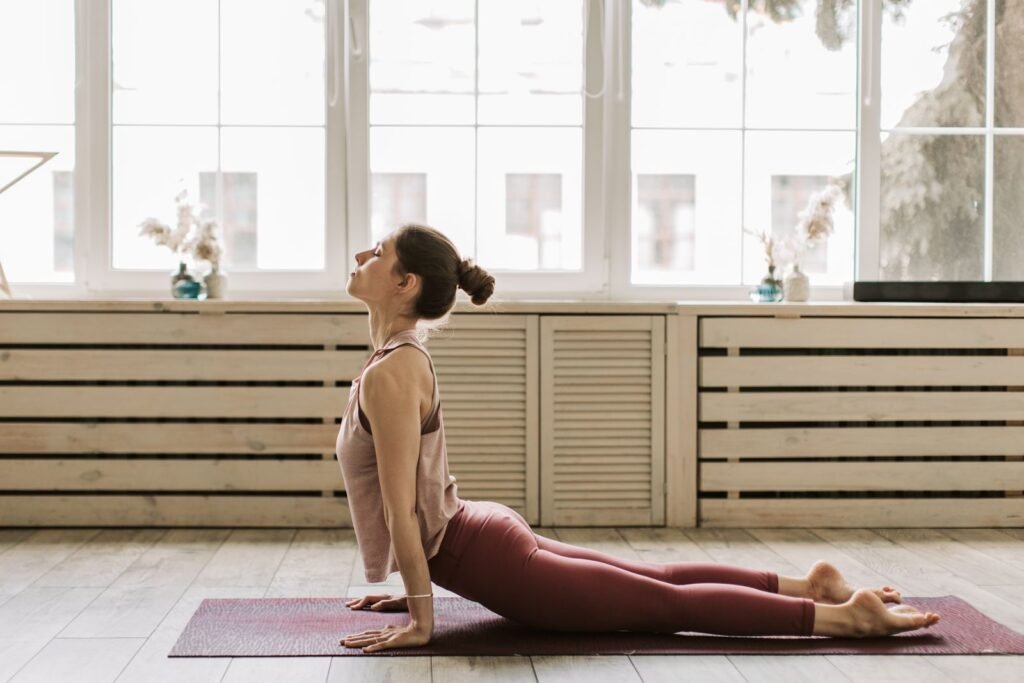
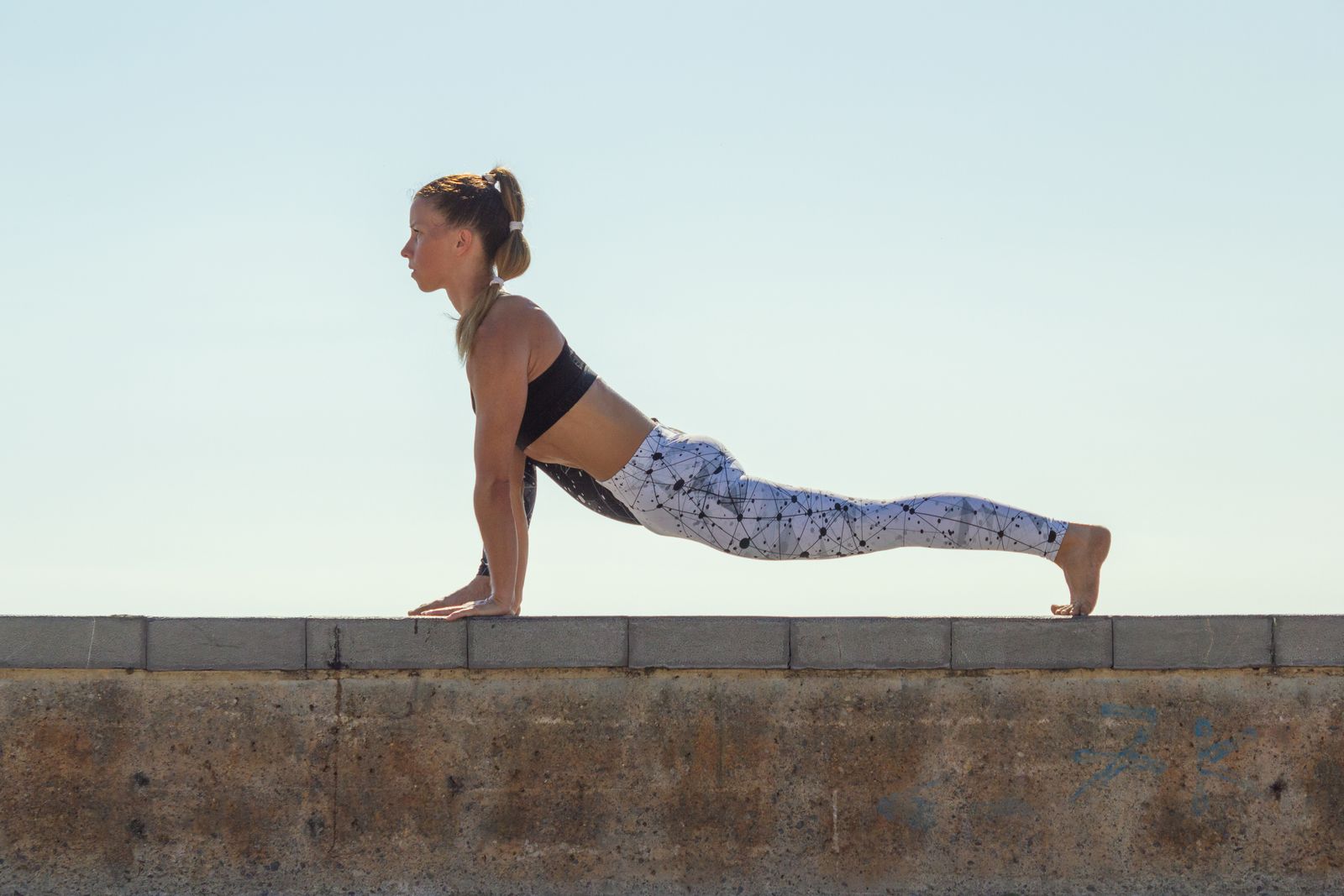
Within a broader yoga practice, “vinyasa” specifically refers to a short linking sequence of movements — most commonly the transition of plank, chaturanga (low push-up), upward-facing dog, and downward-facing dog — performed between seated or standing postures. You’ll hear teachers say “take a vinyasa” between poses, meaning: flow through that connecting sequence before moving to the next posture. This technical usage comes directly from Ashtanga yoga, where every posture in the primary series is separated by this exact transitional sequence. Vinyasa yoga as a style borrows this concept and expands it, using similar connective sequences throughout an entire class rather than only between fixed postures.
What Is Vinyasa Style Yoga Good For?
Vinyasa style yoga is good for building functional strength, improving cardiovascular fitness, increasing flexibility, and training focus through continuous breath awareness. Because the pace keeps the heart rate elevated for sustained periods, it functions as both a strength practice and a moderate-intensity cardio workout — a combination that’s harder to get from slower styles. It’s also good for people who find stillness difficult to sit with; the constant movement gives restless minds something to focus on, functioning as a moving meditation. People recovering from a sedentary lifestyle, athletes cross-training for mobility, and anyone looking to combine mindfulness with physical exertion tend to respond well to vinyasa specifically. If you’re managing tension or stiffness rather than seeking cardio, you may prefer yoga for back pain or a gentler beginner yoga poses sequence first.
What Is Vinyasa Yoga in Hindi?
In Hindi and in the original Sanskrit, “vinyasa” (विन्यास) is derived from the prefix “ni” (in a special way) combined with “asa” (to place), and is commonly translated as “to place in a special way” or “a specific placement.” In the context of yoga, this refers to placing movements in a deliberate sequence connected by breath, rather than simply moving at random. The term is not itself a separate branch of classical yoga philosophy like hatha or raja yoga; it’s a methodological concept — a way of structuring practice — that Western studios later adopted as the name for an entire class style. When Indian teachers use the word in a traditional setting, they’re usually referring to this sequencing principle rather than to the modern studio class format familiar to most Western practitioners.
How Does Hatha Yoga Differ From Vinyasa Yoga?
The core difference between hatha and vinyasa lies in pace and structure:
| Aspect | Hatha Yoga | Vinyasa Yoga |
|---|---|---|
| Pace | Slow, deliberate | Continuous, flowing |
| Posture hold time | Multiple breaths — often 30 seconds to several minutes | One or a few breaths before transitioning |
| Physical intensity | Lower; gentler and more meditative | Higher; more athletic, workout-style |
| Best suited for | Beginners and those wanting an alignment focus or a calmer session | Those wanting a workout alongside their mindfulness practice |
Neither style is objectively superior: hatha builds a strong foundation in alignment and breath awareness, and many vinyasa teachers recommend starting with a few hatha classes before moving into faster-paced flow. For a full breakdown of how the major schools differ, see types of yoga.
What Is Ashtanga Vinyasa Yoga and How Is It Different?
Ashtanga vinyasa yoga is the specific, highly structured lineage from which most modern vinyasa classes descend. It was systematized by K. Pattabhi Jois (1915–2009) at the Ashtanga Yoga Research Institute in Mysore, India, building on the teachings of his own guru, T. Krishnamacharya, often referred to as the father of modern yoga. Ashtanga follows a fixed sequence of postures — the Primary Series, followed by Intermediate and several Advanced series — always performed in the same order, always linked by the same vinyasa transitions between poses. Where modern vinyasa classes let teachers freely design and vary the sequence from class to class, Ashtanga does not deviate: the sequence is memorized and repeated. If you want the physical intensity and lineage-based discipline of Ashtanga without committing to a fixed, unchanging sequence, general vinyasa or Ashtanga yoga classes that blend both approaches can be a useful middle ground.
What Are the Core Vinyasa Yoga Poses?
A handful of poses recur in nearly every vinyasa flow sequence, forming the backbone of the practice:
- Downward-facing dog (Adho Mukha Svanasana) — the resting and transitional pose used between nearly every sequence.
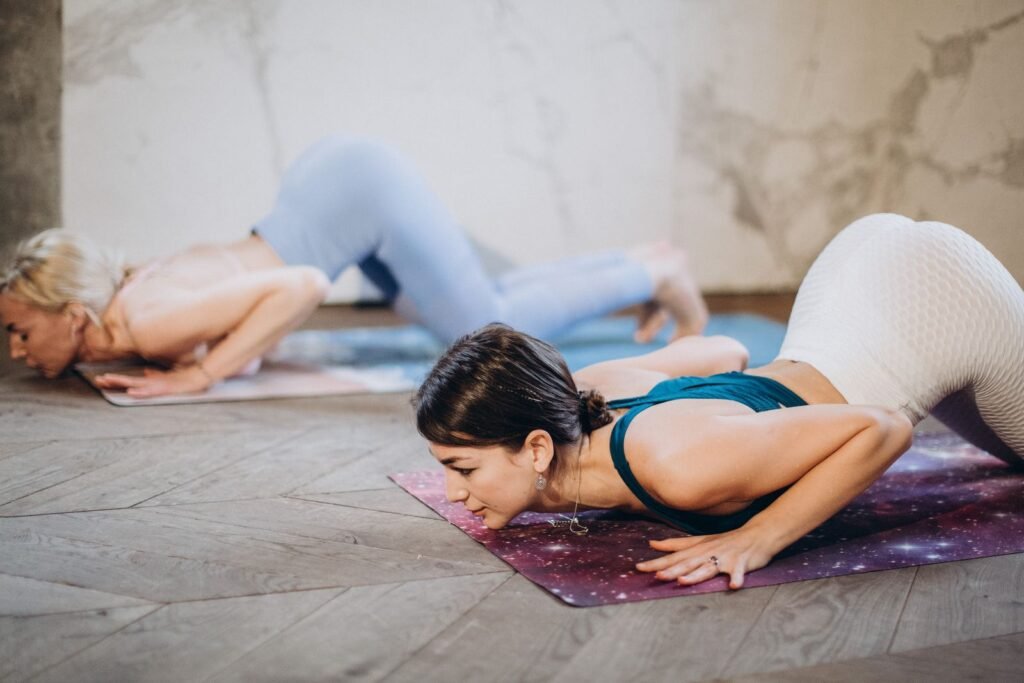
- Chaturanga Dandasana (a low, controlled plank) — builds the arm and core strength that supports the entire practice.
- Upward-facing dog (Urdhva Mukha Svanasana) — opens the chest and counters the forward-folding nature of chaturanga.
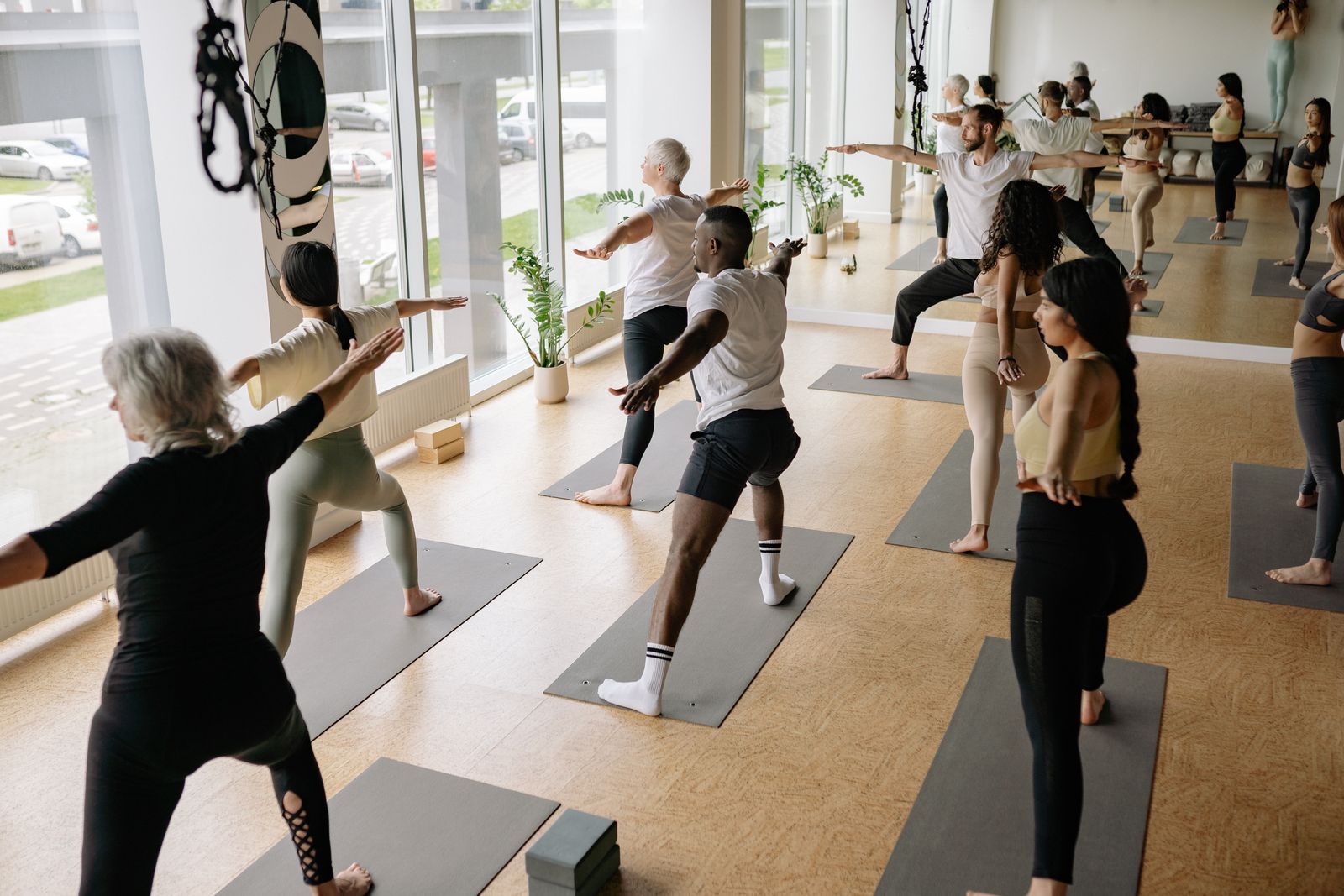
- Warrior I and II (Virabhadrasana I and II) — build leg strength and hip opening within standing sequences.
- Plank pose — stabilizes the core before lowering into chaturanga.
- Sun salutations (Surya Namaskar A and B) — string several of these together into the opening warm-up almost every vinyasa class begins with.
Mastering these core shapes individually — ideally away from the pace of a full class — makes the flow itself far more accessible; a dedicated look at sun salutation steps is a good place to start.
Can Vinyasa Flow Yoga Help With Weight Loss?
Vinyasa flow yoga can support weight loss as part of a broader approach that includes diet and overall activity level, primarily because its continuous movement keeps heart rate elevated longer than slower yoga styles. A vigorous 60-minute vinyasa class can burn a meaningful number of calories through sustained muscular engagement, though the exact number varies significantly by body weight, class intensity, and teacher pacing — power vinyasa and “hot vinyasa” variants tend to demand more energy than a gentle, slow-flow class. Vinyasa is best understood as one component of a weight-management plan rather than a standalone solution: it builds lean muscle, improves mobility that supports other forms of exercise, and — perhaps just as importantly — reduces the stress-driven eating patterns that undermine weight loss efforts in the first place. For additional options aimed specifically at fat loss and metabolic conditioning, see yoga for weight loss.
What Happens in a Typical Vinyasa Yoga Studio Class?
A typical class at a vinyasa yoga studio runs 60 to 75 minutes and follows a recognizable arc even though the specific poses vary by teacher. Class opens with a few minutes of seated breathing or gentle movement to settle attention and warm the spine. This is followed by two to five rounds of sun salutations to build internal heat and prepare the joints. The middle section — the longest part of class — moves through standing poses, balances, twists, and often backbends or arm balances, sequenced to build toward a peak pose. A cool-down phase brings seated forward folds, hip openers, and gentle twists to release tension built up during the more athletic portion. Class always ends in savasana (corpse pose), several minutes of complete stillness that allows the nervous system to integrate the practice. Studios vary room temperature, music, and sequencing philosophy considerably, so trying a few different teachers before settling into a regular vinyasa yoga studio routine is worth the effort.
What Should Beginners Know Before Their First Vinyasa Class?
Beginners should know that vinyasa moves faster than most other beginner-friendly yoga styles, so it’s normal to feel a step behind the instructor during your first several classes. Arrive early enough to speak with the teacher about any injuries or limitations — a good instructor will offer modifications on the spot. Expect to sweat: even a moderate-paced vinyasa class raises body temperature noticeably within the first ten minutes. Bring a mat towel if you tend to slip with sweaty palms, since chaturanga and plank transitions demand solid hand and foot placement. It’s also completely acceptable to skip a vinyasa (the plank-chaturanga-updog sequence) and rest in child’s pose whenever needed; experienced practitioners do this regularly, and no instructor will consider it a failure. If continuous flow feels overwhelming at first, pairing it with a slower foundational style like hatha yoga a few times a week can help build the strength and breath control vinyasa demands.
What Does Attending a Vinyasa Yoga Ashram Involve?
A vinyasa yoga ashram is a residential retreat or training center, typically in India, where students live on-site and practice multiple times daily alongside meditation, philosophy study, and often a vegetarian or vegan diet. Days usually begin before sunrise with a physical practice, followed by lectures on yoga philosophy or anatomy, additional practice sessions, and communal meals. Many ashrams that teach vinyasa root their curriculum in the Ashtanga lineage, given the historical connection between the two, and some serve as certified teacher-training sites where students complete 200-hour or 300-hour certifications recognized by international yoga alliances. An ashram immersion is a significant commitment — typically two to four weeks minimum — and suits practitioners looking to deepen their practice intensively rather than casual students wanting an occasional class.
What Does a Vinyasa Yoga Academy Teach?
A vinyasa yoga academy is a training institution — sometimes standalone, sometimes attached to a studio — that offers structured courses ranging from single workshops to full teacher-training certifications. Curriculum typically covers pose alignment and adjustment technique, sequencing principles (how to build a class that safely progresses toward a peak pose), breath work (pranayama), foundational anatomy and physiology, and enough yoga philosophy and history to give context to the physical practice. Graduates of a 200-hour vinyasa academy program are generally qualified to teach beginner and general-level classes, while 300-hour and 500-hour advanced certifications add deeper anatomy, therapeutic applications, and more nuanced sequencing skills. If teaching isn’t the goal, many academies also offer shorter immersions purely for practitioners who want to deepen personal practice without pursuing certification.
How Does Vinyasa Compare to Other Modern Yoga Styles?
Vinyasa sits within a family of physically dynamic modern yoga styles, each with a distinct emphasis. Bikram yoga uses a fixed sequence of 26 postures performed in a room heated to roughly 105°F (40°C), prioritizing heat and repetition over sequencing variety. Power yoga is essentially a more athletic, gym-oriented offshoot of vinyasa, often stripped of the Sanskrit terminology and philosophical framing. Aerial yoga incorporates a suspended silk hammock to support inversions and deep stretches, offering a very different sensory experience despite sharing some pose names. Yin yoga sits at the opposite end of the spectrum from vinyasa, holding passive, floor-based poses for several minutes to target connective tissue rather than muscle. Understanding where vinyasa sits among these options makes it easier to choose a style that matches your goals — whether that’s cardiovascular conditioning, deep stretching, or meditative stillness — rather than defaulting to whichever class happens to be on the schedule.
What Breathing Technique Powers a Vinyasa Practice?
Vinyasa yoga is typically paired with Ujjayi breath, a technique involving a slight constriction at the back of the throat that creates an audible, ocean-like sound on both the inhale and exhale. This breath serves two functions: it regulates the pace of movement (you can’t move faster than your breath allows if you’re following Ujjayi correctly), and it generates internal heat that supports the physically demanding nature of the practice. Teachers often cue students to lengthen the breath deliberately when a sequence starts feeling rushed, using breath as a built-in pacing mechanism rather than external time cues. Consistent Ujjayi practice also carries over off the mat, offering a portable calming technique usable during stressful moments outside of class — a benefit shared broadly across breath-focused practices, including pranayama breathing exercises.
Questions People Ask About Vinyasa Yoga
What is vinyasa yoga?
Vinyasa yoga is a dynamic yoga style that synchronizes breath with continuous movement between postures, rather than holding poses for extended static periods. Classes are typically built around sun salutations and flow through standing poses, balances, and backbends at a moderate-to-vigorous pace. It evolved primarily from Ashtanga yoga and is now one of the most widely taught yoga styles in studios worldwide.
What is vinyasa flow yoga?
Vinyasa flow yoga is essentially the same practice as vinyasa yoga; “flow” simply emphasizes the continuous, unbroken quality of the sequencing. Classes move from posture to posture on each breath rather than pausing between shapes, typically opening with sun salutations, building through a peak pose, and closing with seated stretches and savasana.
What is vinyasa in yoga?
Within a broader practice, “vinyasa” refers specifically to the connecting sequence of movements — usually plank, chaturanga, upward-facing dog, and downward-facing dog — performed between individual postures. The term originates from Ashtanga yoga, where this exact transition links every posture in the fixed primary series.
What is vinyasa style yoga good for?
Vinyasa style yoga is good for building strength, improving cardiovascular fitness, increasing flexibility, and training sustained focus through continuous breath awareness. Its moderate-to-vigorous pace makes it effective as both a physical workout and a moving meditation, appealing to practitioners who find stillness-based styles harder to settle into.
What is vinyasa yoga in Hindi?
In Hindi and Sanskrit, vinyasa (विन्यास) translates to “placing in a special way,” combining “ni” (in a special way) with “asa” (to place). It describes the principle of sequencing movements deliberately and connecting them with breath, rather than naming a distinct branch of classical yoga philosophy.
Try This for Yourself
Reading about vinyasa yoga only goes so far — the breath-to-movement rhythm this style is built on has to be felt to make sense. If you want structured guidance while you build that foundation, FitStrot’s online yoga classes pair you with real instructors who can adjust pacing, sequencing, and intensity to your level, whether you’re taking your first flow class or refining an established practice.
Related reading: Ashtanga yoga, hatha yoga, types of yoga, benefits of yoga, and FitStrot’s online yoga classes.