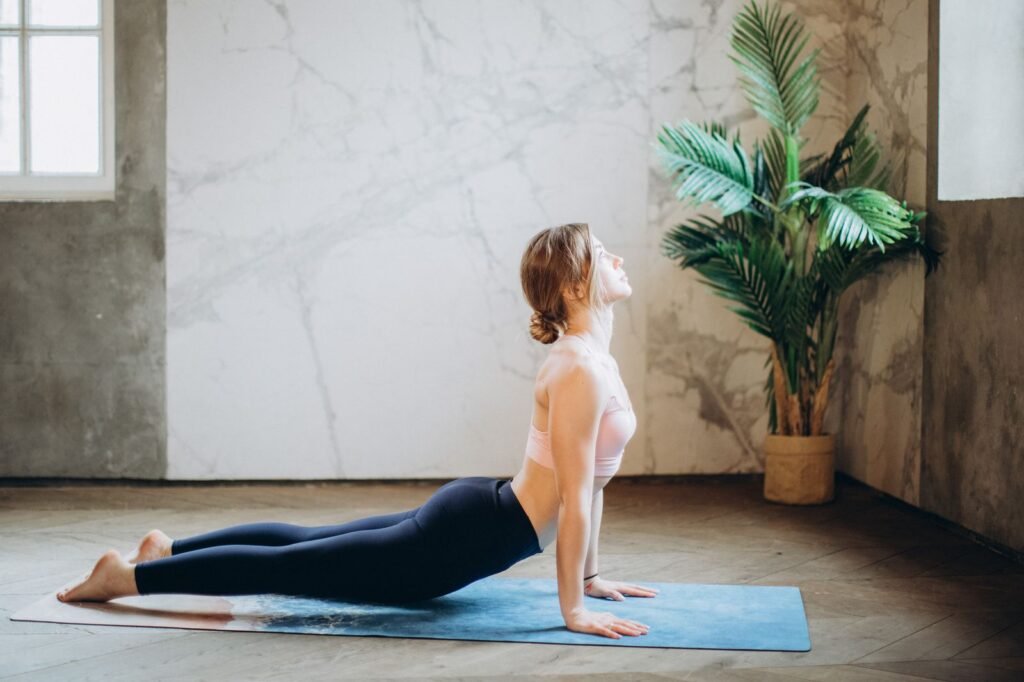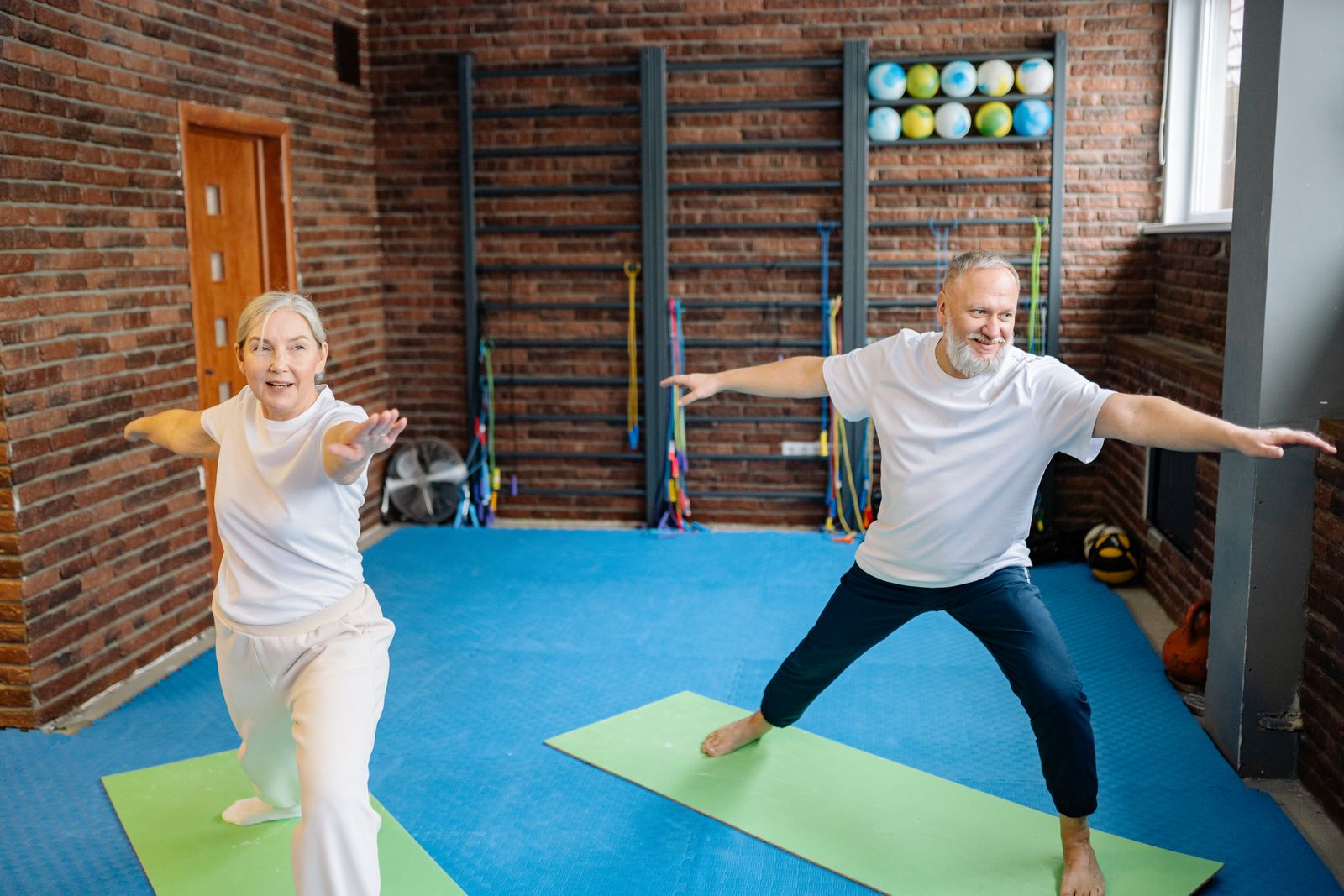
Yoga for seniors is a modified, slower-paced approach to yoga that emphasizes balance, joint mobility, gentle strength, and breath work over deep stretching or fast-flowing sequences. It typically uses props like chairs, walls, blocks, and bolsters to make poses accessible regardless of flexibility, past injury, or age, and it can be practiced standing, seated, or even lying in bed. Most beginners over 60 start with 10-20 minute sessions two to three times a week, focusing on functional movements that support everyday activities like getting up from a chair, reaching overhead, and walking without losing balance.
This guide walks through how yoga for seniors differs from a standard class, which styles work best at different ability levels, how to build a safe home practice, and what to watch for if you have common age-related conditions like arthritis, osteoporosis, or balance concerns.
Why Is Yoga Recommended for Older Adults?
Yoga is recommended for older adults because it addresses several things that decline with age at once: balance, joint range of motion, muscular strength, and stress levels. Unlike high-impact cardio, yoga postures can be held statically or moved into slowly, which gives aging joints and connective tissue time to adjust without the jarring forces involved in running or jumping. The breathing component of yoga, often called pranayama, also engages the parasympathetic nervous system, which can help lower resting heart rate and ease the kind of chronic tension that builds up from reduced daily movement.
For someone new to structured exercise, yoga also has a lower barrier to entry than gym-based strength training. A class can be done in socks on a carpeted floor, in a chair at the kitchen table, or even in bed, which matters for anyone managing mobility limitations, post-surgical recovery, or simply a reluctance to join a conventional fitness class. For a broader look at how a consistent practice supports the body over time, see our guide to the benefits of yoga.
What Makes Senior Yoga Different From a Regular Class?
Senior-adapted yoga differs from a standard studio class in pacing, prop use, and pose selection. Where a general vinyasa yoga class might move through a sun salutation every 30-45 seconds, a senior class holds each shape for several breaths, gives verbal cues for exactly where weight should sit in the feet or seat, and offers at least two variations of every pose.
Instructors also drop or heavily modify anything involving a deep knee bend, an inverted position, or fast direction changes, since these carry higher fall risk and put more shear force through knees and hips that may already show early arthritic changes. A well-run senior class looks less like a workout and more like a guided sequence of controlled, supported stretches connected by breath.
What Is Chair Yoga and Who Is It For?
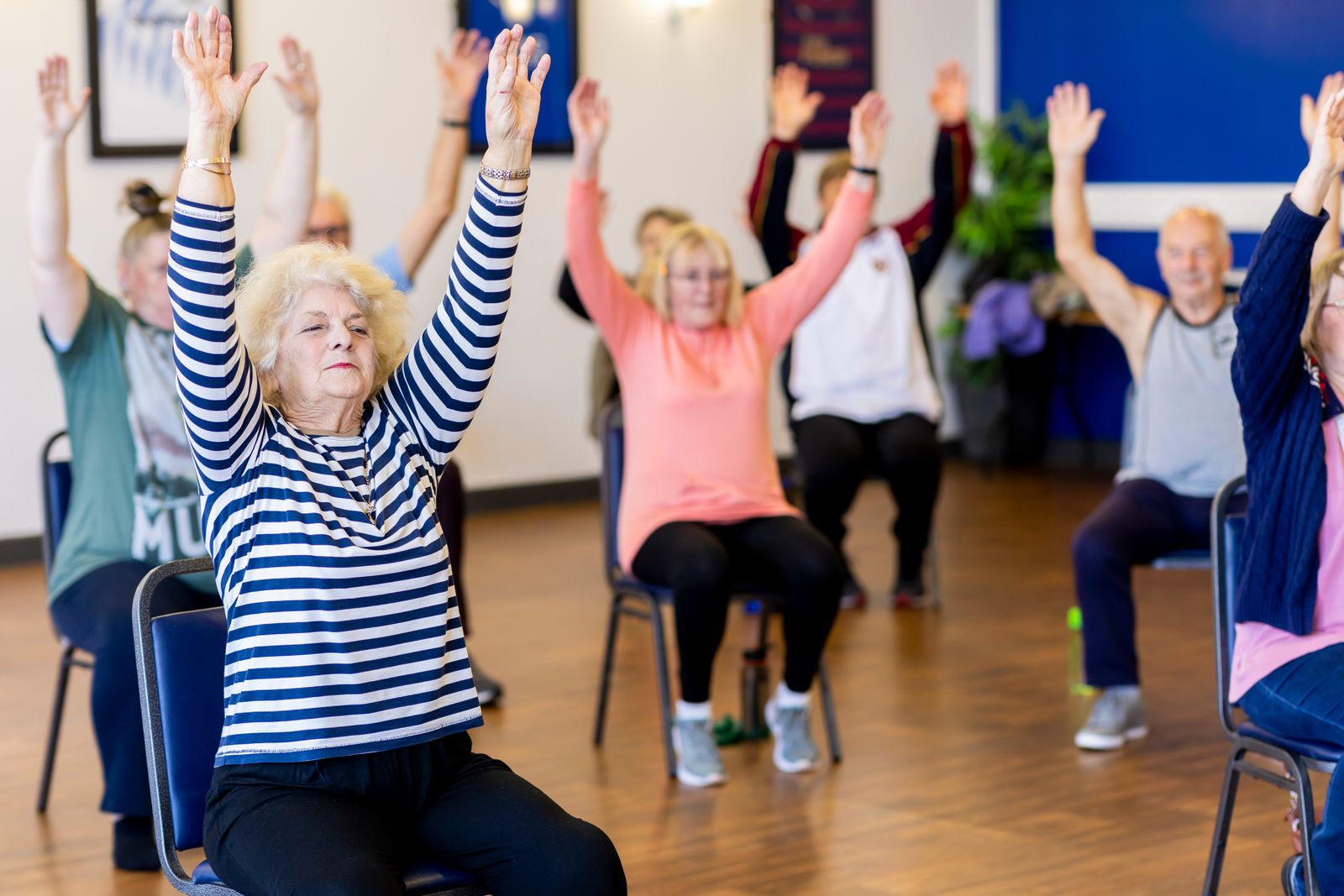
Chair yoga for seniors is a style where every pose is either performed while seated in a sturdy, armless chair or using the chair as a standing support for balance. It is one of the most searched and most recommended entry points into yoga for anyone over 65, because it removes the two biggest barriers to floor-based practice: getting down to the floor and getting back up safely.
A typical chair yoga sequence includes seated spinal twists, seated forward folds with a straight back, ankle circles, shoulder rolls, and standing balance holds using the chair back for support. It’s an ideal starting point for people recovering from a fall, managing chronic pain, or living with limited mobility from conditions like Parkinson’s or advanced osteoarthritis. Our dedicated chair yoga guide breaks down a full beginner sequence pose by pose.
How Should Someone Begin Yoga for the First Time After 60?
Beginning yoga for seniors works best as a gradual, low-pressure introduction rather than jumping into a full class length immediately. A sensible starting structure looks like this:
- Start with 10-15 minutes, two to three times a week, rather than a full 60-minute class.
- Choose seated or supported standing poses first: seated cat-cow, seated twists, and chair-supported mountain pose.
- Add one new pose or transition every week or two instead of learning an entire sequence at once.
- Keep a wall, sturdy chair, or countertop within arm’s reach for every standing pose during the first month.
- Track how joints feel the next morning, not just during the session, since delayed stiffness is common when starting any new movement pattern.
For a general framework that applies to any age group starting out, our yoga for beginners guide covers foundational poses and common first-week mistakes.
Is Yoga Safe for Seniors Over 70 or 80?
Yoga for seniors over 70 is generally considered safe when poses are modified appropriately and a healthcare provider has cleared the person for light to moderate activity, particularly if there’s a history of falls, osteoporosis, or cardiovascular conditions. The key adjustments at this age typically include avoiding any pose that requires bearing full body weight on the wrists or neck, skipping deep twists for anyone with significant spinal compression, and doing all standing balance work next to a wall or chair rather than freestanding.
Bone density becomes a bigger consideration past 70, since a fall during a standing balance pose carries a higher fracture risk than it would decades earlier. This is why most instructors teaching this age group favor seated and supine (lying down) variations for anything involving single-leg balance, only progressing to freestanding versions once a student has demonstrated consistent stability over several sessions. If osteoporosis has already been diagnosed, it’s worth reading our piece on yoga for osteoporosis, which covers which spinal positions to avoid.
Can Yoga Be Done in Bed?
Bed yoga for seniors is a real and useful variation for people managing chronic pain, recovering from surgery, or dealing with limited mobility that makes even a floor mat impractical. Because a mattress doesn’t provide the same firm, stable surface as a yoga mat, bed yoga focuses almost entirely on gentle range-of-motion work rather than any pose requiring pushing off the ground or holding body weight.
Useful bed-based movements include reclined knee-to-chest stretches, gentle spinal twists performed lying on the back with knees bent, ankle pumps and circles, and diaphragmatic breathing with a hand on the belly to feel the breath cycle. This kind of practice is often used first thing in the morning before getting up, or last thing at night to help with sleep onset, since it requires no transitions in or out of standing.
What’s the Benefit of Practicing Yoga in the Morning?
Morning yoga for seniors helps counteract the stiffness that builds up overnight, when joints go several hours without movement and synovial fluid (the substance that lubricates joints) isn’t being circulated. A short 10-minute morning sequence of gentle stretches and joint circles before breakfast can measurably reduce that first-hour-of-the-day stiffness that many older adults describe, particularly in the hands, knees, and lower back.
A simple morning routine might include seated or standing cat-cow for the spine, wrist and ankle circles, gentle neck rotations, and a few rounds of slow belly breathing. Because morning cortisol levels are naturally higher, this is also a good window for practicing balance work, when alertness and coordination tend to be at their best for the day. Pairing this with yoga for better sleep in the evening creates a natural bookend to the day’s movement.
Which Yoga Poses Are Best (and Which Should Be Avoided)?
The most useful poses for older adults tend to be low to the ground, supported, and focused on a single joint or movement pattern at a time. Good options include seated mountain pose, chair-supported warrior pose, seated forward fold, gentle seated twists, cat-cow on hands and knees or seated, and legs-up-the-wall for circulation and relaxation.
Poses to avoid or heavily modify include full wheel pose, headstand and shoulder stand, deep unsupported forward folds that round the lower spine under load, and any fast vinyasa-style transition between standing and floor positions. If shoulder mobility is limited, it’s worth reading our guide on yoga for shoulder pain before attempting any overhead arm poses.
How Does Yoga Help With Balance and Fall Prevention?
Falls are one of the leading causes of injury-related hospitalization in older adults, and balance training is one of the most consistently recommended interventions for reducing fall risk. Yoga contributes to this in two ways: it strengthens the small stabilizing muscles around the ankles, hips, and core that keep the body upright, and it improves proprioception, which is the body’s sense of where it is in space.
Poses like tree pose (done near a wall for support), standing heel-to-toe holds, and seated-to-standing transitions practiced slowly and with control all build the specific strength and awareness that everyday balance depends on. Because this is such a high-value area for older adults specifically, our dedicated article on yoga for balance goes into more depth on progressions.
Can Yoga Help With Arthritis and Joint Pain?
Gentle yoga is commonly recommended alongside standard medical care for people managing arthritis, since it moves joints through their available range of motion without the impact loading of higher-intensity exercise. Research in this area generally suggests that consistent, gentle joint movement helps maintain range of motion and can ease some of the stiffness associated with both osteoarthritis and rheumatoid arthritis, though yoga is a complement to medical treatment rather than a replacement for it.
The practical approach is to move within a pain-free range only, never forcing a stretch to the point of sharp pain, and to warm up joints with small circular movements before attempting any larger range-of-motion pose. For a focused breakdown of which sequences tend to help most, see our guide to yoga for arthritis.
What Equipment Do You Actually Need to Start?
Almost no specialized equipment is required to begin. A sturdy, armless dining chair, a wall for support, and a firm cushion or folded blanket to sit on cover most of what’s needed for the first several weeks. As the practice develops, a few low-cost props make a noticeable difference: a yoga block to bring the floor closer for tight hips or hamstrings, a strap to extend reach in seated stretches, and a bolster or rolled towel to support the knees in reclined poses.
A yoga mat is useful once floor work is added, mainly for cushioning and grip, but it isn’t required for a purely chair-based practice. Anyone practicing at home should also clear a space free of rugs that can bunch underfoot and make sure furniture used for support won’t slide.
How Often Should Seniors Practice Yoga Each Week?
Two to three sessions per week of 15-30 minutes is a realistic and effective starting frequency for most older adults, with daily short sessions of 5-10 minutes for breathing and gentle mobility layered in on non-practice days. This mirrors general physical activity guidance for older adults, which emphasizes consistency and variety (balance, strength, and flexibility work across the week) over any single long session.
Progress in yoga at this age tends to show up first as easier daily movements, like standing up from a low chair without using the arms, rather than as dramatic increases in flexibility. Tracking those functional markers, alongside how joints feel the day after practice, is a more useful gauge of progress than how deep a stretch looks.
What Other Health Conditions Should Be Considered Before Starting?
Beyond arthritis and osteoporosis, a few other common conditions call for specific modifications. High blood pressure generally means avoiding poses where the head drops below the heart for extended periods, since this can cause a temporary spike in blood pressure. Recent joint replacement surgery, particularly hip or knee, usually requires clearance from a surgeon or physical therapist before resuming any yoga practice, along with strict limits on hip flexion angle in the early months.
Anyone managing vertigo or inner-ear balance disorders should practice standing poses only with solid support nearby and should avoid quick head movements during transitions. If chronic pain is a factor rather than a single condition, our guide to yoga for chronic pain covers pacing strategies that apply well to older adults managing ongoing discomfort.
Online Yoga vs. In-Person Classes for Seniors
Both formats work, and the right choice usually comes down to mobility, transportation, and personal preference rather than one being objectively better. In-person classes offer hands-on adjustment from an instructor and built-in social contact, which matters for older adults at risk of isolation. Online classes remove the need to travel, allow sessions to be paused or repeated, and make it easier to practice in whatever comfortable clothing and lighting works best at home.
For anyone who struggles to get to a studio, is managing a chronic condition that makes travel unpredictable, or simply prefers the privacy of practicing at home, online yoga classes with a live or on-demand instructor offer nearly identical guidance and pose correction cues to an in-person session.
Questions People Ask About Yoga for Seniors
What is the best type of yoga for seniors just starting out?
Chair yoga or a gentle Hatha-style class is generally the best starting point, since both prioritize slow pacing, supported poses, and clear instruction over flow or intensity. These formats let a beginner learn foundational breathing and alignment cues without the pressure of keeping up with faster transitions found in styles like vinyasa or power yoga.
How long should a senior yoga session last?
Most beginners over 60 do well with 15-20 minute sessions, two to three times a week, building up gradually as strength and confidence increase. Shorter, more frequent sessions tend to produce better consistency than occasional long classes, and they reduce the risk of overdoing it before the body has adapted to regular movement.
Can yoga help seniors with osteoporosis?
Yes, with modifications. Weight-bearing standing poses can support bone health, but forward folds that round the spine and deep twists are generally avoided once osteoporosis has been diagnosed, since they increase the risk of vertebral compression. A doctor or physical therapist familiar with the diagnosis should ideally review any new yoga routine first.
Do seniors need to be flexible to start yoga?
No. Flexibility is a result of consistent practice, not a prerequisite for starting one. Every pose in a well-taught senior class has a modified version using a chair, block, or wall, which means someone with very limited range of motion on day one can still participate fully and safely.
Is it better to do yoga in the morning or evening as a senior?
Both have benefits, and the better choice depends on the goal. Morning sessions help work through overnight stiffness and take advantage of higher natural alertness for balance work, while evening sessions using slower, restorative poses can help ease the body toward sleep. Many people benefit from a short version of both.
Can chair yoga replace standing yoga entirely?
For many older adults, yes, a full-body practice can be built entirely around a chair, especially for anyone managing significant balance concerns, joint replacement recovery, or advanced arthritis. Chair-based sequences can address the spine, shoulders, hips, and legs without ever requiring a floor transition or unsupported standing pose.
Try This for Yourself
Reading about modified poses only goes so far. The fastest way to find out what actually feels right for your body is to try a guided session built specifically around gentler pacing and real instructor cues. Explore FitStrot’s Online Yoga Classes and start with a short, supported session this week.
Related reading: Yoga for Beginners, Chair Yoga, Yoga for the Elderly, Yoga for Balance, and Online Yoga Classes.