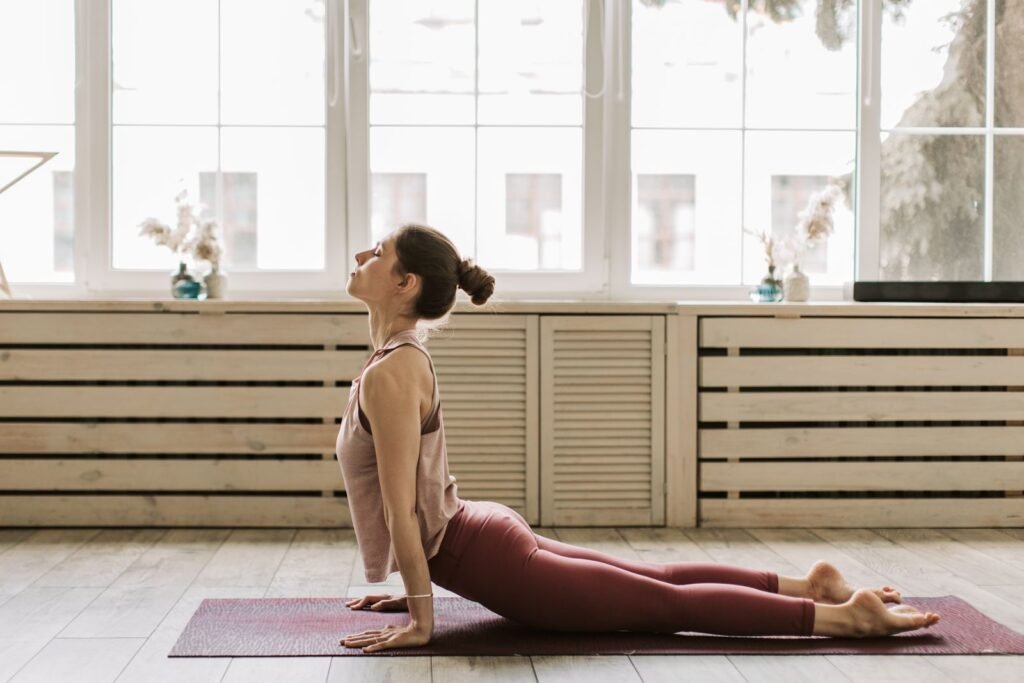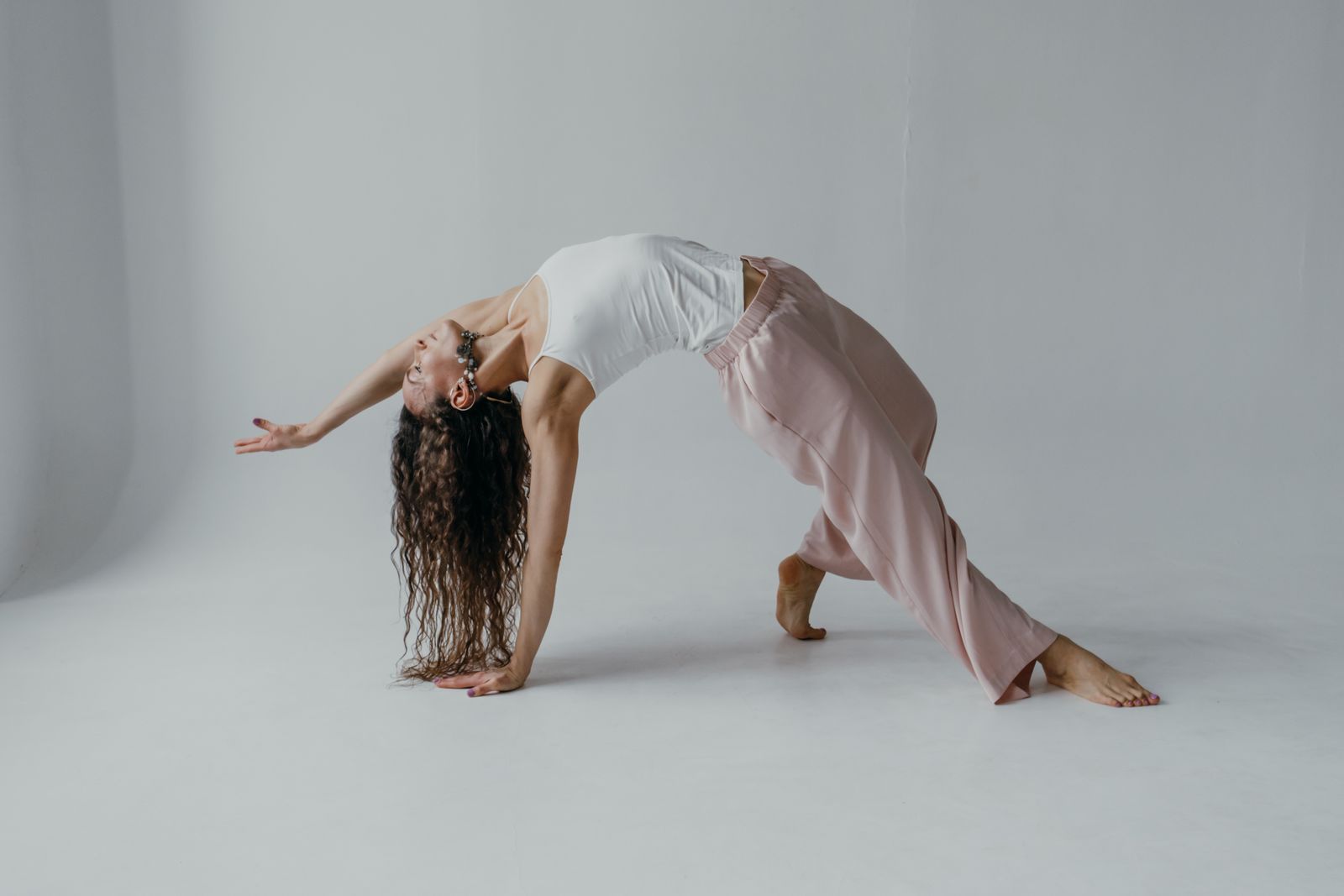
Kundalini yoga is a physical and meditative practice that combines dynamic postures, breathwork, chanting, and mantra to move energy that practitioners describe as coiled at the base of the spine upward through the body’s energy centers, or chakras. Unlike more physically focused styles such as ashtanga yoga, Kundalini yoga sessions are typically structured around a specific “kriya” (a set sequence of movement, breath, and sound), followed by deep relaxation and meditation. It’s often described as a practice for the nervous system as much as the body, aimed at building energy, awareness, and emotional resilience rather than pure flexibility or strength.
What Makes Kundalini Yoga Different From Other Styles?
Most yoga styles taught in Western studios, including hatha yoga and vinyasa yoga, organize a class around a sequence of postures held or flowed through for physical benefit. Kundalini yoga takes a different approach. A typical class is built around a kriya: a fixed combination of postures, breath patterns, sound, and sometimes eye focus, repeated for a set number of minutes or repetitions. The intention behind a kriya is not simply to stretch or strengthen a muscle group, but to work on a specific outcome, such as calming anxiety, building willpower, or supporting the digestive system.
Chanting is woven into nearly every class, often using mantras in Gurmukhi, a language associated with the Sikh tradition that shaped how Kundalini yoga was taught in the West. Sessions frequently close with extended relaxation and a seated meditation, making the practice as much about mental training as physical movement. This is one reason Kundalini yoga is sometimes described as “the yoga of awareness” rather than a purely postural practice like power yoga.
Where Did Kundalini Yoga Come From?
The concept of kundalini, a form of latent energy said to rest at the base of the spine, appears in Sanskrit tantric and yogic texts with references going back roughly a thousand years. For centuries, teachings around this energy were considered esoteric and were transmitted privately from teacher to student rather than taught in public classes. The practice most people in the West know as “Kundalini yoga” today took its current form far more recently.
Kundalini yoga as a public teaching method was introduced to North America by Harbhajan Singh Puri, known as Yogi Bhajan, who began teaching it openly in 1968 and 1969. He founded an organization called 3HO (Healthy, Happy, Holy Organization) to support the practice and trained thousands of teachers over the following decades. Before this, kundalini-related teachings were generally shared only within closed lineages. Yogi Bhajan’s approach was distinctive in that he designed the practice for ordinary working people with jobs and families, not only for monastics or advanced practitioners, which is part of why the style spread so quickly through yoga studios worldwide.
How Do Kriyas Work in a Kundalini Yoga Class?
A kriya is the organizing unit of a Kundalini yoga class, and understanding it helps make sense of why the practice can feel so different from a typical yoga class. Each kriya combines a specific order of postures, breathing patterns, and sometimes mudras (hand positions) and mantra, all aimed at a stated purpose, such as “kriya for elevation” or “kriya for the nervous system.” A single kriya might last anywhere from 15 to 40 minutes and is typically performed exactly as taught, without the improvisation you’d see in a flow-based class.
A typical class structure looks like this:
- An opening chant or mantra, often “Ong Namo Guru Dev Namo,” used to tune in before practice begins
- Warm-up movements to loosen the spine and joints
- The main kriya, combining postures, movement, and breath repetitions
- Deep relaxation, usually lying down for several minutes
- A closing meditation, sometimes with a specific mantra or breath count
- A closing chant to end the practice
What Role Does Breathwork Play in Kundalini Yoga?
Pranayama, or breath control, is central to Kundalini yoga in a way that goes beyond how breath is used in many other styles. Several specific breathing techniques appear repeatedly across kriyas, including long deep breathing, segmented breath, and a rapid breath through the nose known as “breath of fire,” which involves quick, equal inhales and exhales powered by the diaphragm. Alternate nostril breathing, sometimes called Nadi Shodhana in broader pranayama practice, is also common.
Breath of fire in particular is used to build internal heat and stamina during postures that are held for extended periods, sometimes several minutes at a time. Beginners are generally advised to start slowly and build up duration gradually, since rapid breathing techniques can cause lightheadedness if rushed. As with any intensive breathing practice, people who are pregnant or who have uncontrolled blood pressure or respiratory conditions should modify or avoid breath of fire and check with a doctor before starting.
What Are Chakras and Why Do They Matter in This Practice?
Chakras are described in yogic tradition as energy centers positioned along the spine, from the base to the crown of the head. Kundalini yoga is built around the idea that energy can move through these centers, most commonly described as six chakras along the spine plus a seventh at the crown. Individual kriyas are often designed to focus energy on a specific chakra, for example a sequence aimed at the throat chakra to support communication and self-expression, or one aimed at the root chakra to support grounding and stability.
It’s worth being clear that chakras are a traditional yogic and tantric concept rather than an anatomical structure that has been physically located or measured. Many practitioners find the framework useful as a way of organizing attention and intention during practice, similar to how someone might use the language of yoga philosophy more broadly, without needing to treat it as a literal physiological claim.
What Happens in a Typical Kundalini Yoga Class?
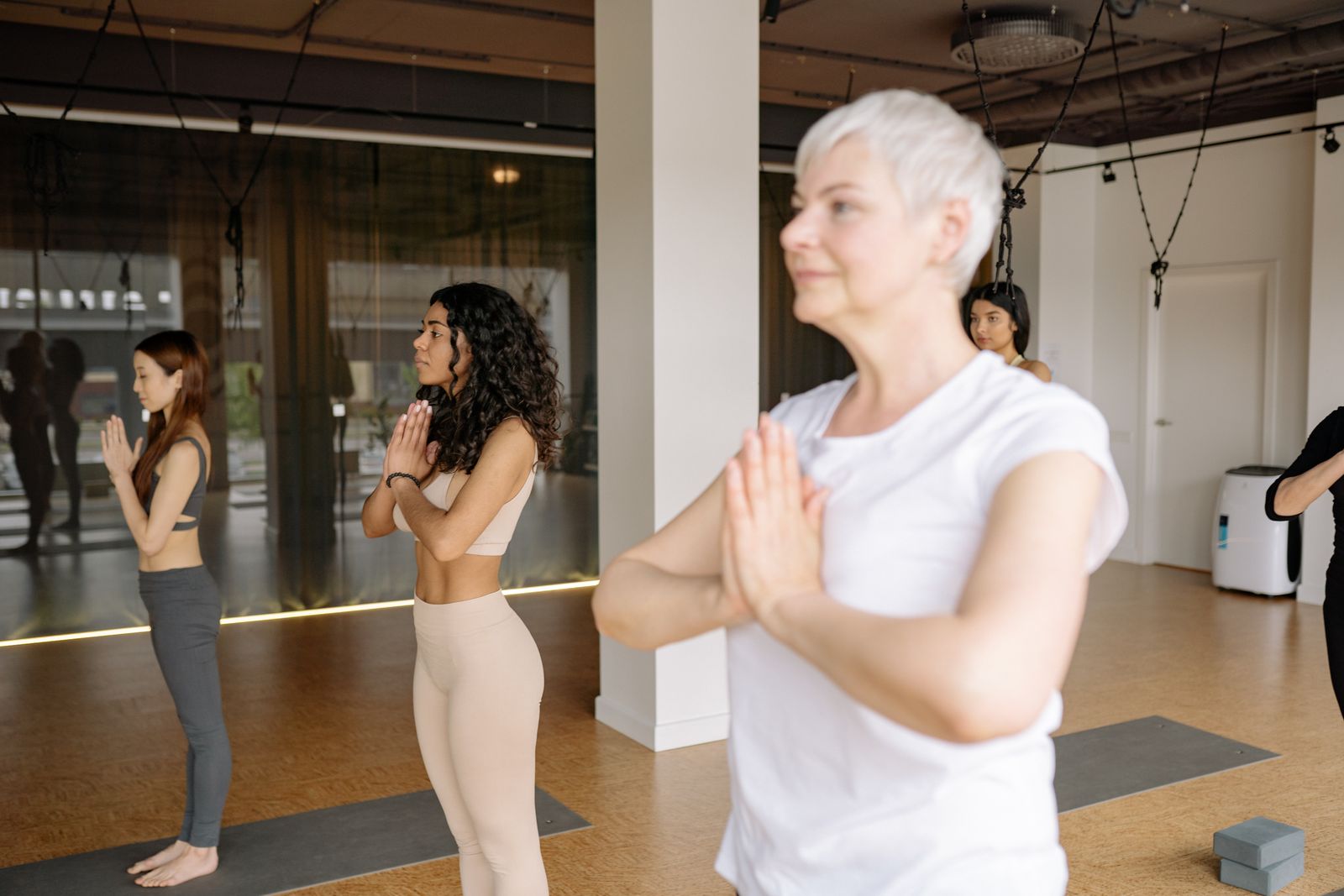
Walking into a Kundalini yoga class for the first time can feel different from a typical beginner yoga class. Students often sit cross-legged on the floor to begin, and the teacher leads an opening chant before any physical movement starts. Clothing is usually loose and comfortable, and some long-time practitioners wear white, which is traditional in the 3HO lineage but not required for newcomers.
During the kriya itself, postures may be held statically for one to three minutes while breathing in a specific pattern, which is more physically demanding than it sounds, particularly for the core and shoulders. Repetitive movements paired with breath, such as rapid spinal flexes, are also common. The class typically closes with an extended relaxation period lying on the back, followed by a seated meditation, sometimes with a gong or recorded mantra music playing in the background.
What Are the Reported Benefits of Kundalini Yoga?
Because Kundalini yoga combines vigorous breathwork, sustained postures, and meditation in a single session, practitioners commonly report a mix of physical and mental effects. Reported physical effects include improved core and spinal strength from held postures, better breath capacity from regular pranayama practice, and general stress-related changes such as slower heart rate and muscle relaxation during and after class.
On the mental and emotional side, practitioners often describe the meditation and mantra components as supportive for focus, mood regulation, and a general sense of calm, benefits broadly consistent with what’s documented for meditation-based practices more generally, similar to what’s discussed around yoga for anxiety and meditation for stress. It’s worth noting that research specifically isolating Kundalini yoga’s effects (as distinct from yoga and meditation practices generally) is still a developing area, so claims about specific outcomes are best treated as commonly reported experiences rather than settled medical fact.
Is Kundalini Yoga Safe for Beginners?
Kundalini yoga is generally accessible to beginners because many kriyas can be modified in intensity, but a few things are worth knowing before your first class. The rapid breathing techniques, particularly breath of fire, should be built up gradually rather than pushed to exhaustion in a first session. Some postures are held for longer than in a typical gentle yoga class, which can be intense on the shoulders, core, and legs if you’re new to sustained isometric holds.
As with starting any new physical practice, people who are pregnant, have a history of seizures, uncontrolled high blood pressure, glaucoma, or significant cardiovascular conditions should talk to a doctor before beginning, and should let the teacher know so postures and breathwork can be modified. Most studios and online class platforms offer beginner-friendly kriyas specifically designed to ease new students into the pacing and intensity of the practice.
How Is Kundalini Yoga Different From Kriya Yoga?
The names are easy to confuse, but Kundalini yoga and Kriya yoga are distinct traditions. Kriya yoga, popularized in the West largely through Paramahansa Yogananda’s teachings and his book “Autobiography of a Yogi,” centers on a specific meditation technique involving breath and energy control taught progressively by initiated teachers, with much less emphasis on physical postures or public group classes. Kundalini yoga, by contrast, is typically taught in open studio classes built around kriyas (sequences) that combine posture, breath, and sound, and is far more accessible to walk-in students without formal initiation.
Both traditions use the word “kriya” but with different meanings: in Kriya yoga it refers to the core meditation technique itself, while in Kundalini yoga it refers to a structured sequence that forms the body of a class. Both traditions also draw on the broader concept of kundalini energy and chakras found throughout Indian yogic and tantric philosophy.
Do You Need Experience With Other Yoga Styles First?
No prior yoga experience is required to start Kundalini yoga, and in some ways its structure can be more approachable for total beginners than alignment-heavy styles like Iyengar yoga, since a teacher leads every movement, breath, and count in real time. People coming from a purely physical background, such as power yoga or gym-based fitness, sometimes find the chanting and meditation unfamiliar at first, while those coming from yin yoga or restorative yoga may find the pacing more brisk, since postures alternate with vigorous breathwork rather than being held passively. Staying open to the format for a few classes tends to make the adjustment easier either way.
Can You Practice Kundalini Yoga Online?
Yes, Kundalini yoga translates well to an online format because much of the practice is instructor-led and verbally cued, meaning students don’t need constant hands-on adjustment the way they might in an alignment-focused class. A teacher can guide the chant, count the breath repetitions, and time the postures just as effectively over video as in person, which is why online classes have become a popular way to access this style, particularly for people without a local studio that offers it.
For online practice, a quiet space with enough room to sit and lie down flat, a yoga mat, and a stable device to see the instructor clearly are generally all that’s needed. Many students also keep a journal nearby, since kriyas often end with a suggestion to reflect briefly on the practice.
What Should You Wear and Bring to a Kundalini Yoga Class?
Loose, comfortable clothing that doesn’t restrict the diaphragm is important given how much of the class involves breathwork. Some long-time practitioners wear white, based on a traditional belief that it expands the practitioner’s energy field, though this is a stylistic choice rather than a requirement for beginners. A yoga mat, a cushion for seated meditation, and a light shawl for the final relaxation (since body temperature can drop during stillness) are practical additions, similar to what you’d bring to a yoga for beginners class of any style.
How Does Kundalini Yoga Compare to Meditation Alone?
Kundalini yoga incorporates meditation as one part of a larger practice that also includes movement and breathwork, which is a key difference from sitting in silent meditation alone. For people who find stillness difficult to access directly, the movement and breath components of a kriya can serve as a bridge into a meditative state, since the body is given something structured to do before the mind is asked to settle. This differs from styles like mindfulness meditation, which typically begins with stillness from the outset, and it’s one reason practitioners who struggle with traditional seated meditation often find Kundalini’s structure easier to sustain.
Questions People Ask About Kundalini Yoga
Is Kundalini yoga religious?
Kundalini yoga as taught in most Western studios is not tied to a specific religion, though it draws on Sikh-influenced mantras and Hindu and tantric concepts like chakras and kundalini energy. Most classes are taught in a secular, wellness-focused format, and you don’t need any particular religious belief to participate or benefit from the practice.
How long does it take to feel the effects of Kundalini yoga?
Many people report feeling calmer or more energized immediately after a single class, largely due to the breathwork and relaxation components. Deeper or longer-lasting changes in stress levels, focus, or emotional regulation are generally described as building with consistent practice over several weeks, similar to patterns reported with other regular yoga or meditation routines.
Can Kundalini yoga help with anxiety?
Many practitioners use Kundalini yoga’s breathwork and meditation components as part of a broader approach to managing anxiety, and slow, controlled breathing is well documented to support nervous system regulation. It should be viewed as a complementary practice alongside, not a replacement for, professional care when anxiety is significant or persistent.
Do I need to chant or believe in mantras to practice Kundalini yoga?
You don’t need to hold any particular belief about mantras for them to be part of a Kundalini yoga class; many practitioners approach chanting simply as a vocal and breath exercise that helps focus attention. If you’re uncomfortable chanting aloud, you can mouth the words quietly or simply listen while others chant, and most teachers are accommodating of this.
What is “breath of fire” and is it safe for everyone?
Breath of fire is a rapid, rhythmic breathing technique using quick equal inhales and exhales powered by the diaphragm, used throughout Kundalini yoga to build energy during postures. It’s generally safe for healthy adults when learned gradually, but it should be avoided or modified during pregnancy and by people with uncontrolled blood pressure, glaucoma, or certain respiratory conditions, so check with a teacher or doctor if you’re unsure.
How is Kundalini yoga different from a regular gym workout?
A gym workout typically targets muscular strength or cardiovascular fitness in isolation, while Kundalini yoga combines physical exertion with structured breathwork, chanting, and meditation aimed at mental and emotional effects alongside physical ones. The postures in a kriya are also usually held for specific durations tied to breath counts rather than repetitions or sets, which is a different training stimulus than typical resistance or cardio training.
Try This for Yourself
The best way to understand Kundalini yoga is to experience a guided kriya rather than just read about one. If you’d like to try a class led by an experienced instructor from home, explore FitStrot’s online yoga classes and find a session that fits your schedule and experience level.
Related reading: Hatha Yoga, Ashtanga Yoga, Kriya Yoga, Types of Yoga, and FitStrot’s online yoga classes.