Yoga courses in India and online range from short 200-hour beginner certifications to government-recognized diplomas and degree programs, with fees typically running from a few thousand rupees for a university certificate to $1,200-$2,500 USD for an internationally recognized 200-hour Yoga Alliance course in Rishikesh. The right course for you depends on your goal: a casual practitioner wants a beginners yoga course; someone chasing a teaching career wants a Yoga Alliance-accredited yoga teacher training; and someone wanting a government-backed academic credential looks at IGNOU, VMOU, or Patanjali University. This guide breaks down every major path so you can pick the one that actually fits your goals, budget, and timeline.
What Exactly Is a “Yoga Course”?
The phrase covers a wide spectrum. At one end are drop-in style beginner classes that teach breathing and basic postures over a few weeks. At the other end are 200-hour, 300-hour, and 500-hour Yoga Teacher Training (YTT) programs recognized by Yoga Alliance, which qualify you to teach professionally anywhere in the world. In the middle sit university and government courses — certificate, diploma, and degree programs from institutions like IGNOU, VMOU, and Patanjali University — which are academically rigorous but not always designed to make you an internationally certified instructor. Before enrolling anywhere, get clear on which outcome you actually want: personal practice, a teaching career, or an academic qualification. If you’re unsure, our overview of the different types of yoga styles is a good place to start narrowing down what you even want to study.
How Do You Choose Between a Beginners Course and a Teacher Training?
A beginners yoga course is built for people who have never stepped on a mat. It usually runs 4-12 weeks, meets a few times a week, and focuses on foundational alignment, breath control, and basic sequences like Sun Salutations. There’s no certification exam and no professional outcome — the goal is simply comfort and consistency. A teacher training, by contrast, assumes at least some existing practice (most reputable schools ask for 6-12 months of regular practice before you enroll) and is structured around anatomy, teaching methodology, philosophy, and supervised practice teaching. If you’ve never done yoga before, jumping straight into a 200-hour YTT is possible but harder — many students find it more useful to build a base with a yoga certificate course or a few months of regular class attendance first.
What Makes Yoga Courses in Rishikesh So Popular?
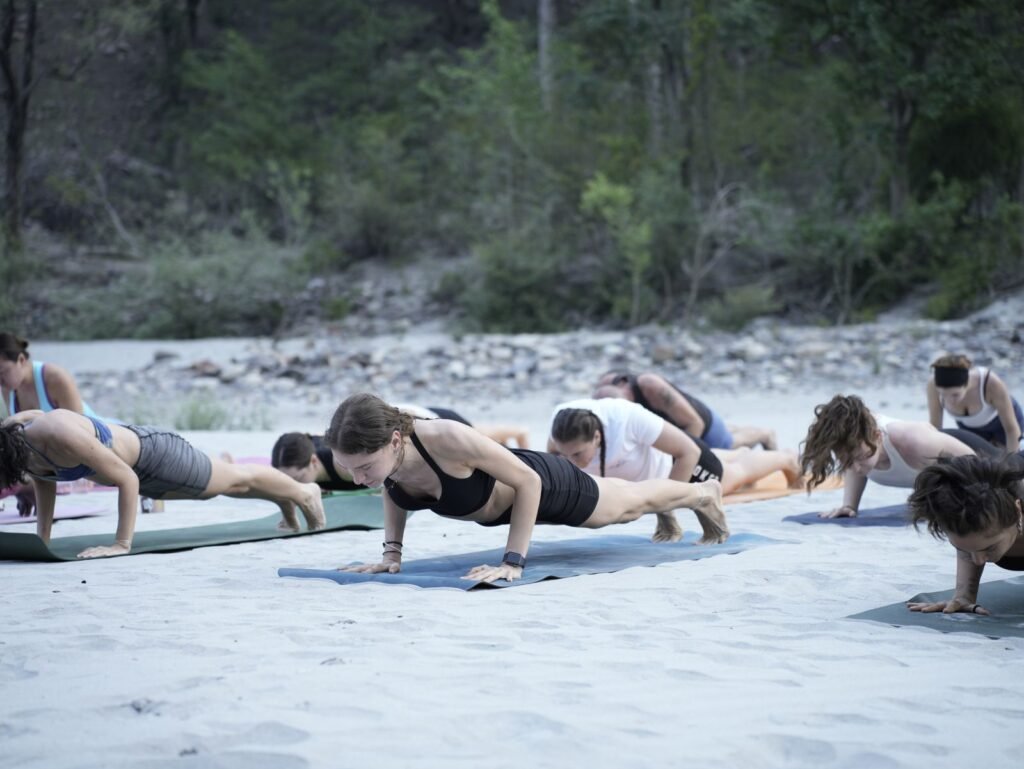
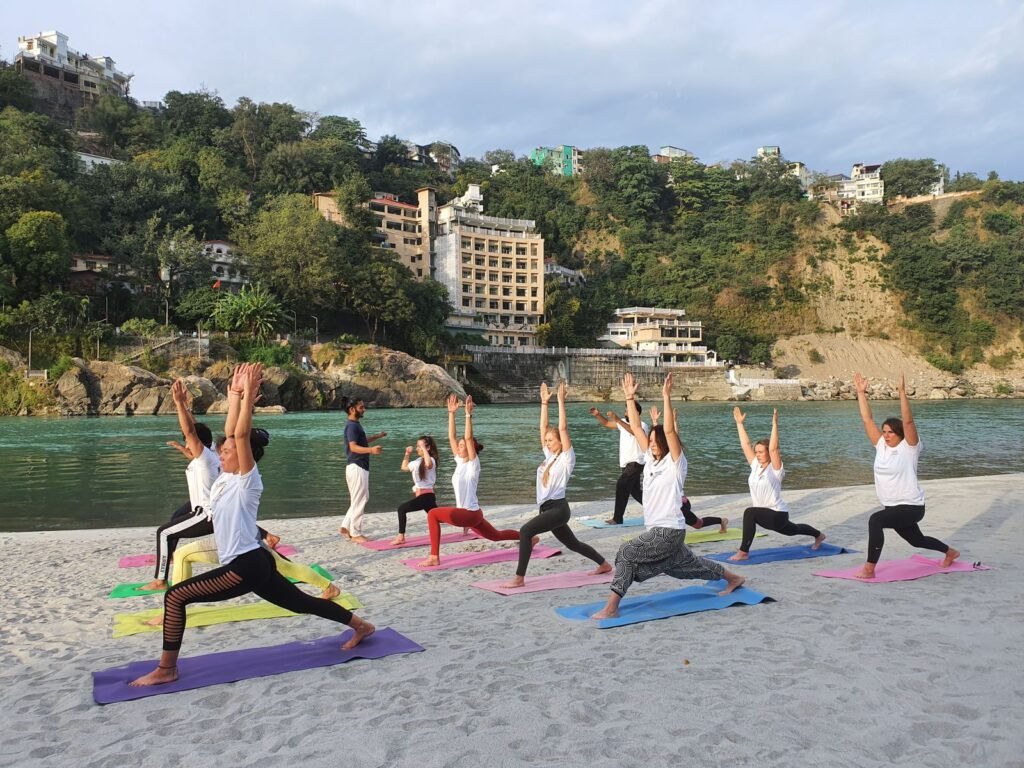
Rishikesh markets itself as the “Yoga Capital of the World,” and the concentration of schools there is real — hundreds of registered and unregistered yoga schools operate along the Ganges, many clustered around Tapovan and Laxman Jhula. Yoga courses in Rishikesh are popular for a few concrete reasons: the town has decades of institutional history teaching yoga to foreigners, most schools bundle accommodation and meals into the course price, and the spiritual atmosphere (ashrams, the Ganga Aarti ceremony, proximity to the Himalayas) adds an experiential dimension that a studio in a city can’t replicate. That said, quality varies enormously between schools, so accreditation and teacher credentials matter more than the town’s reputation alone. If you’re specifically weighing a residential program, our dedicated guide to yoga teacher training in Rishikesh covers how to vet a school before you book.
What Should You Budget for Rishikesh Yoga Course Fees?
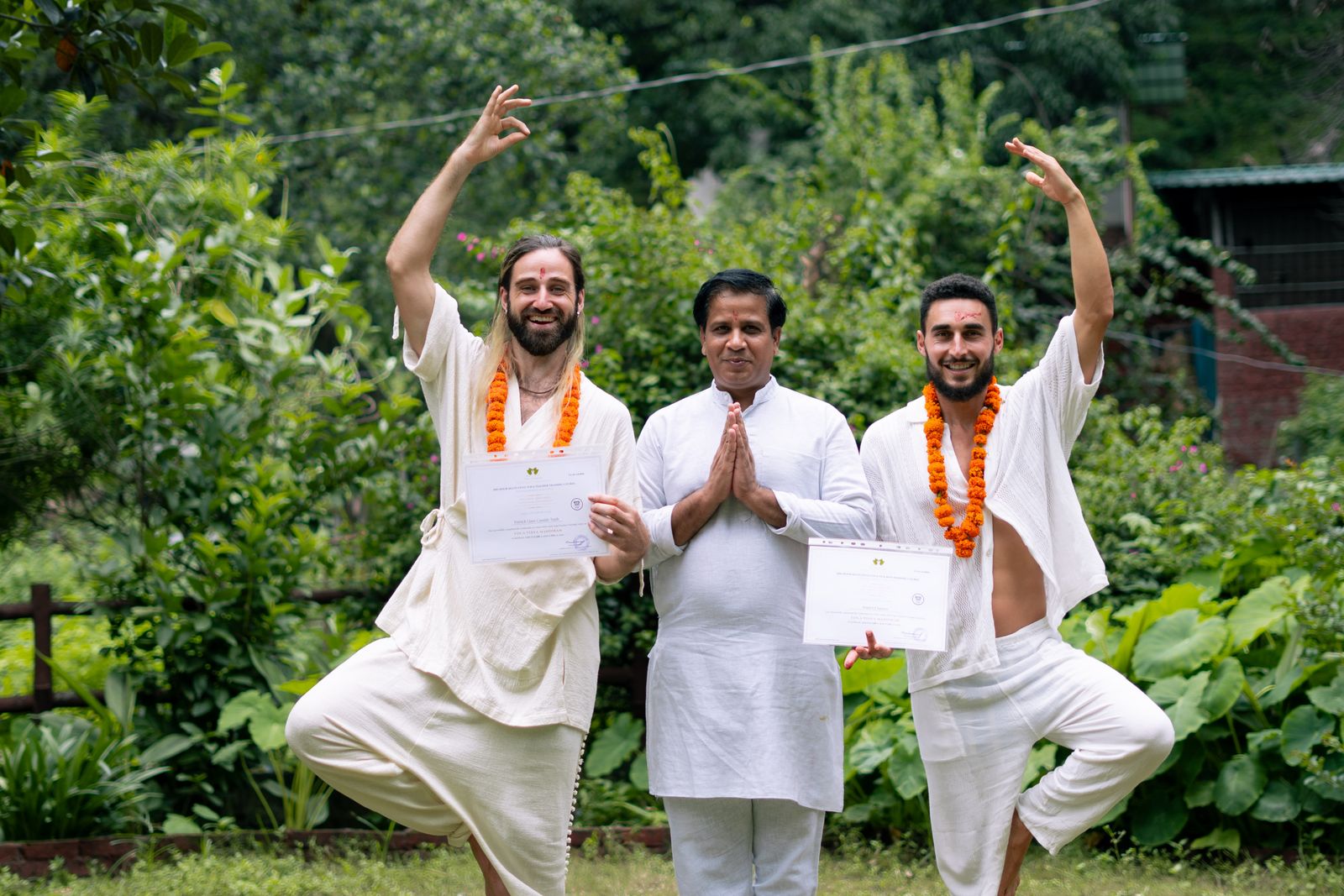
Rishikesh yoga course fees vary by program length, school reputation, and accommodation type, but as a general market range, a residential 200-hour YTT commonly falls between roughly $700 and $1,500 USD (all-inclusive of stay and meals), while 300-hour advanced courses tend to run higher, often $900-$2,000 USD. Non-residential or shorter workshop-style courses can cost considerably less. Prices fluctuate with season (October-March is peak season and typically pricier) and with what’s included — private rooms cost more than shared dorms, and some schools charge extra for the Yoga Alliance registration fee itself. Always ask a school for an itemized breakdown before paying a deposit: tuition, accommodation, meals, and certification fees should each be listed separately so you know exactly what you’re paying for.
What Is the IGNOU Yoga Course and Who Should Consider It?
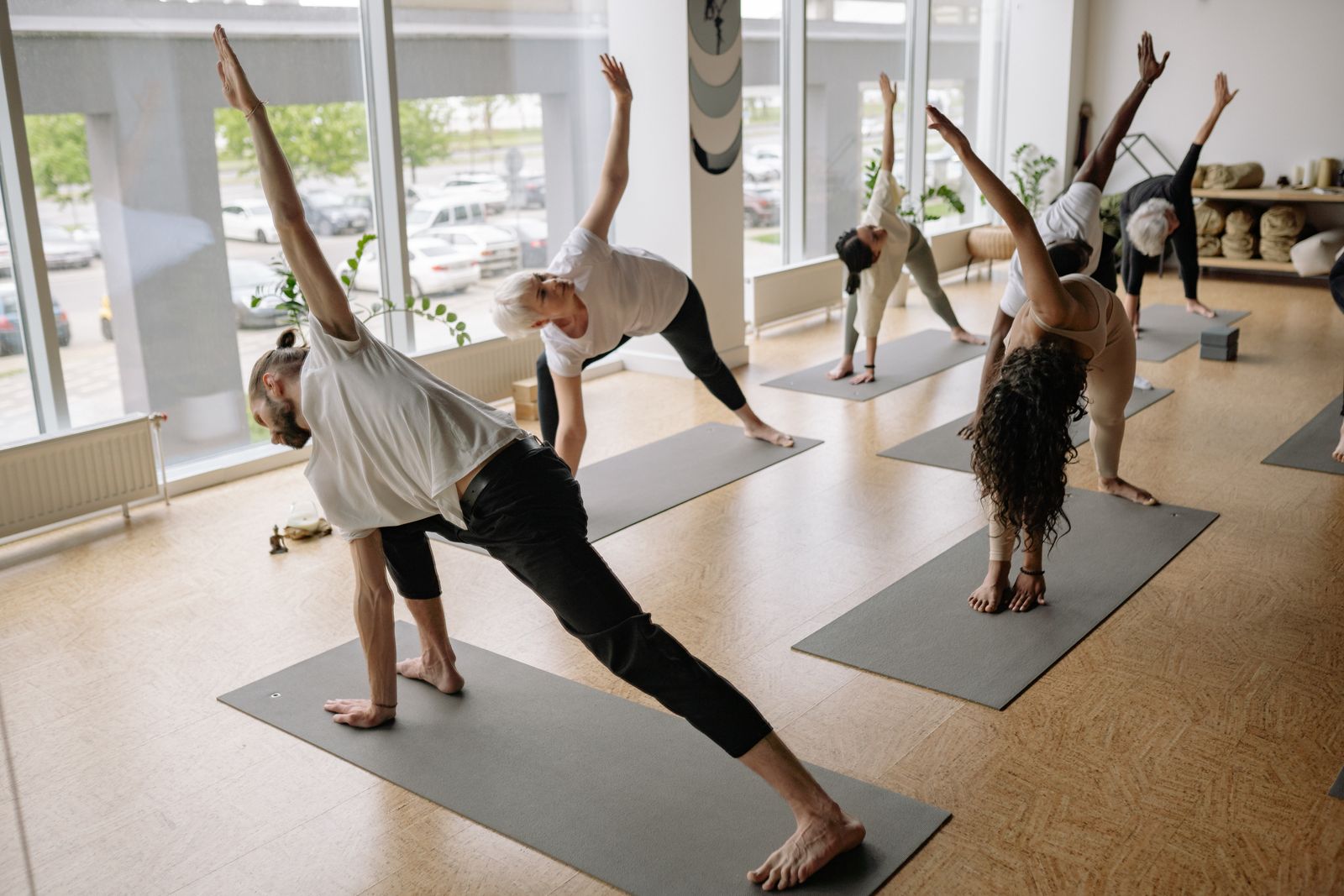
The Indira Gandhi National Open University (IGNOU) offers a Certificate Programme in Yoga (CPY), a distance-learning credential that combines theoretical study of yoga philosophy with practical components covering asanas, pranayama, meditation, and relaxation techniques. It is commonly cited as running around six months, extendable up to two years, with eligibility open to those who have completed class 12 or graduation. Because it’s UGC-recognized and government-backed, an IGNOU yoga course suits people who want an academically credentialed qualification — useful for teaching in schools, wellness centers, or government programs in India — rather than an internationally portable Yoga Alliance certification aimed at running your own studio or teaching abroad. It’s also a genuinely budget-friendly option, since distance-learning government fees are a fraction of residential YTT pricing.
How Does the Patanjali Yoga Course Compare?
Patanjali University (University of Patanjali) in Haridwar, founded in association with the Patanjali Yogpeeth associated with Baba Ramdev, offers a range of yoga and naturopathy programs, including diploma and postgraduate diploma courses in yoga science. Patanjali yoga course fees vary significantly by program level — certificate and diploma courses are generally the most affordable tier, while postgraduate diplomas and degree programs cost more and require longer commitments (often a year or more). The university blends traditional Patanjali yoga philosophy with naturopathy and Ayurveda, so it appeals particularly to students interested in the therapeutic and wellness side of yoga rather than purely the fitness or asana-teaching side. As with any institutional program, confirm current Patanjali yoga course fees directly with the university’s admissions office, since fee structures are revised periodically.
What Is the VMOU Yoga Course?
Vardhman Mahaveer Open University (VMOU) in Kota, Rajasthan, offers a Diploma in Yoga Science through distance education, along with related programs like a PG Diploma in Yoga and Naturopathy. Like IGNOU’s offering, the VMOU yoga course is designed for working professionals or students who want a recognized academic credential without relocating for a residential program. It typically covers yoga fundamentals, anatomy and physiology as it relates to asana practice, and applied yoga therapy. If you live in Rajasthan or prefer a regional open university over IGNOU, VMOU is one of the most commonly searched alternatives, though the choice between the two often comes down to regional accessibility and specific syllabus preferences rather than a major difference in quality.
Are Yoga Courses in Goa Worth Considering?
Yoga courses in Goa have grown into a serious alternative to Rishikesh, especially for people who want a beach-and-yoga combination or prefer a more laid-back, less overtly religious atmosphere. Arambol, Mandrem, and Patnem are the main hubs, with numerous Yoga Alliance-registered schools running 200-hour and 300-hour trainings, often with a stronger emphasis on Ashtanga and Vinyasa styles than the Hatha-heavy curriculum common in Rishikesh. Goa also tends to attract a more international, retreat-style crowd, and courses often run shorter and more intensive (think 3-4 weeks) rather than the longer residential stays common up north. If you want yoga training that doubles as a holiday, Goa is worth comparing directly against Rishikesh before you commit.
What About Yoga Courses in Mysore?
Yoga courses in Mysore occupy a distinct niche: Mysore is the birthplace of Ashtanga Yoga as taught by the late K. Pattabhi Jois, and the city remains the global center for traditional Ashtanga instruction, largely through the Krishnamacharya lineage. If your specific goal is to study Ashtanga in its most traditional form — the Mysore-style self-practice method where students move through the sequence at their own pace under a teacher’s individual guidance — Mysore is arguably unmatched anywhere else in the world. Courses here tend to be more disciplined and lineage-focused than the general multi-style trainings common in Rishikesh or Goa, so Mysore is best suited to practitioners already committed to Ashtanga yoga specifically rather than beginners exploring different styles.
How Do You Evaluate the Full Range of Yoga Courses in India?
Looking at yoga courses in India as a whole, they fall into three broad tiers. First, government and university programs (IGNOU, VMOU, Patanjali University, and others) offer academically recognized certificates, diplomas, and degrees, generally at low cost, ideal for domestic teaching roles or personal credentialing. Second, private Yoga Alliance-registered schools — concentrated in Rishikesh, Goa, Mysore, Dharamshala, and increasingly other cities — offer 200/300/500-hour YTTs aimed at people who want to teach professionally, including internationally. Third, short-format beginner and specialty courses (weekend workshops, prenatal yoga courses, yoga therapy modules) serve practitioners who want focused skill-building without a full certification track. Matching your course tier to your actual goal — hobbyist, domestic credential, or global teaching career — will save you from overpaying for a certification you don’t need, or underinvesting in one you do.
How Do You Find Good Yoga Courses Near Me?
Searching for yoga courses near me usually surfaces local studios offering beginner series, drop-in classes, or short certification tracks rather than full residential YTTs, since teacher training programs cluster in destination towns like Rishikesh and Goa. If you want in-person, local instruction, check whether the studio’s lead teacher holds a Yoga Alliance credential (RYT-200 or RYT-500) and ask how many students are typically in a class — smaller groups mean more individual correction. If no suitable local option exists, or if you want more flexibility than a fixed studio schedule allows, live online yoga classes with a certified instructor are a practical middle ground between a local studio and a residential course abroad.
What Should a Beginners Yoga Course Actually Teach You?
A well-structured beginners yoga course should cover four things in sequence:
- Breath awareness — learning diaphragmatic breathing and simple pranayama before adding movement.
- Foundational alignment — how to safely enter and exit basic postures like Tadasana, Adho Mukha Svanasana, and Balasana.
- A short, repeatable sequence you can practice independently.
- Basic relaxation technique — Savasana with guided body awareness.
Be wary of beginner courses that rush straight into advanced backbends or inversions — proper sequencing and injury prevention matter more in the first few weeks than how impressive the poses look. If joint pain or old injuries are a concern, look specifically for instructors experienced in yoga for back pain or gentle, therapeutic sequencing rather than a general vinyasa-flow class.
What Career Paths Open Up After Completing a Yoga Course?
Completion of a recognized course — particularly a 200-hour or higher YTT — opens several paths: teaching group classes at studios and gyms, running private one-on-one sessions, leading corporate wellness sessions, or working in specialized areas like prenatal or therapeutic yoga. Demand for qualified instructors has grown alongside the broader wellness industry, and many graduates supplement studio teaching with online classes to build a client base beyond their immediate city. If you’re planning your course specifically as a step toward employment, it’s worth researching what yoga instructor jobs actually require in terms of certification hours and specialization before choosing which program to enroll in, since some employers specifically ask for Yoga Alliance RYT status.
What Should You Check Before Enrolling in Any Yoga Course?
Before paying a deposit for any course — residential, online, or university-based — verify these five things:
- Accreditation — is it Yoga Alliance-registered, or UGC-recognized if it’s a university program?
- Teacher credentials — the lead teacher’s actual qualifications and years of teaching experience.
- Student-to-teacher ratio, since a smaller class means more individual correction.
- What’s included in the fee versus what’s billed as an “extra.”
- Cancellation and refund policy in case your plans change.
Read recent reviews specifically about the teaching quality, not just the location or accommodation, since a beautiful setting doesn’t guarantee good instruction. It’s also worth confirming whether the certificate you’ll receive is internationally recognized (Yoga Alliance) if you plan to teach outside India, since a purely domestic certificate may not transfer to teaching jobs abroad.
Can You Combine Philosophy Study With Physical Practice?
Most serious yoga courses — whether university-based or Yoga Alliance-accredited — include a philosophy component alongside asana practice, and this isn’t just academic filler. Understanding concepts like the eight limbs of yoga, the difference between Hatha and Raja yoga traditions, and foundational texts like the Yoga Sutras gives context to why postures and breathing techniques are sequenced the way they are. Courses that skip philosophy entirely tend to produce instructors who can demonstrate poses but struggle to explain the “why” behind sequencing, breath work, or meditation practices — a gap that becomes obvious once you start teaching real students with real questions.
Questions People Ask About Yoga Courses
Which yoga course is best for beginners?
For true beginners, a short local beginners yoga course (4-12 weeks) or a beginner-friendly online program is best, since it builds foundational breathing and alignment skills without the intensity of a full teacher training. Jumping straight into a 200-hour YTT without any prior practice is possible but generally harder and less enjoyable.
How much does a yoga course cost in India?
Costs vary widely: government university certificates (IGNOU, VMOU) can cost just a few thousand rupees, while private residential Yoga Alliance courses in Rishikesh or Goa typically range from roughly $700 to $2,000 USD depending on duration, season, and accommodation type. Short local studio courses usually fall well below both extremes.
Do I need prior yoga experience to join a teacher training course?
Most reputable teacher training schools recommend at least 6-12 months of consistent personal practice before enrolling, even though few strictly require it. Arriving with some familiarity with basic postures and breathing makes the intensive daily schedule of a residential YTT far more manageable.
Is an IGNOU or VMOU yoga certificate recognized for teaching jobs?
Yes, within India — these are UGC-recognized government credentials accepted by many schools, wellness centers, and government-linked wellness initiatives. However, if you plan to teach internationally, most foreign studios and gyms specifically ask for Yoga Alliance registration (RYT-200 or higher), which these university programs do not automatically provide.
Should I choose Rishikesh, Goa, or Mysore for a yoga course?
Choose Rishikesh for a traditional, spiritually immersive multi-style program with the widest school selection; Goa for a beach-based, more relaxed setting with strong Vinyasa/Ashtanga options; and Mysore specifically if you want traditional Ashtanga training in its birthplace. Your choice should follow the yoga style and atmosphere you actually want, not just convenience.
Can I complete a yoga course entirely online?
Yes. Many Yoga Alliance-registered schools now offer fully online 200-hour and 300-hour teacher trainings with live instruction, and university programs like the IGNOU yoga course are distance-learning by design. Online options remove travel costs but require strong self-discipline, since you won’t have daily in-person correction from a teacher.
Try This for Yourself
If you want to test your commitment before booking a residential program or a full certification, start with a live, instructor-led class from home. FitStrot’s online yoga classes let you build consistent practice, get real-time feedback on your alignment, and figure out which style and pace suits you best — all before you commit time and money to a longer course.
Related reading: Yoga Teacher Training, Yoga Certificate Course, Yoga Instructor Jobs, Yoga Teacher Training in Rishikesh, and FitStrot Online Yoga Classes.