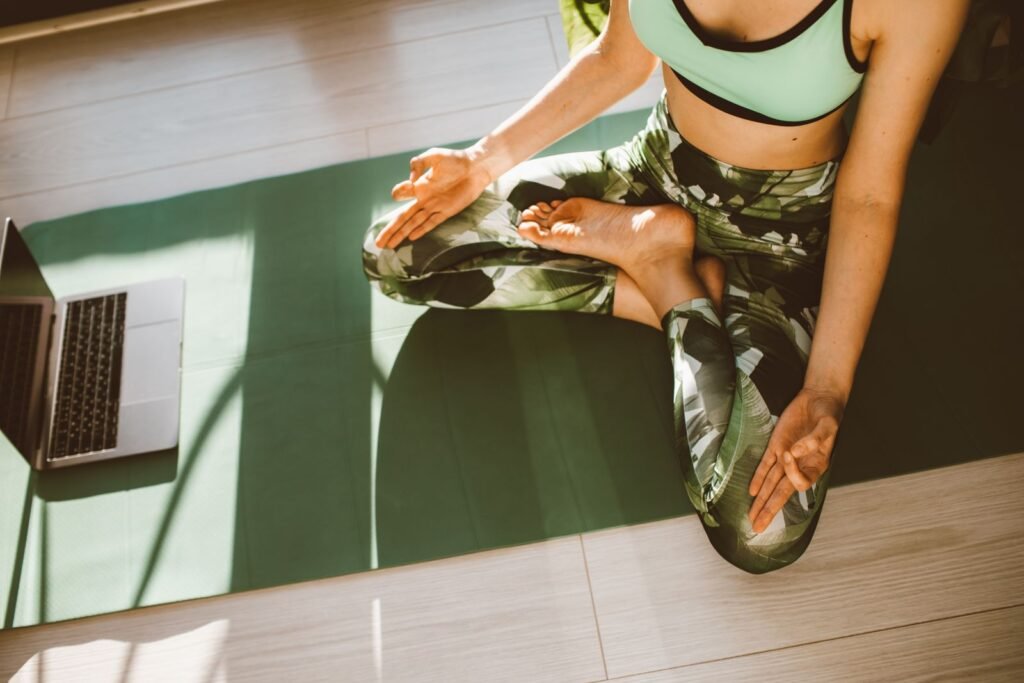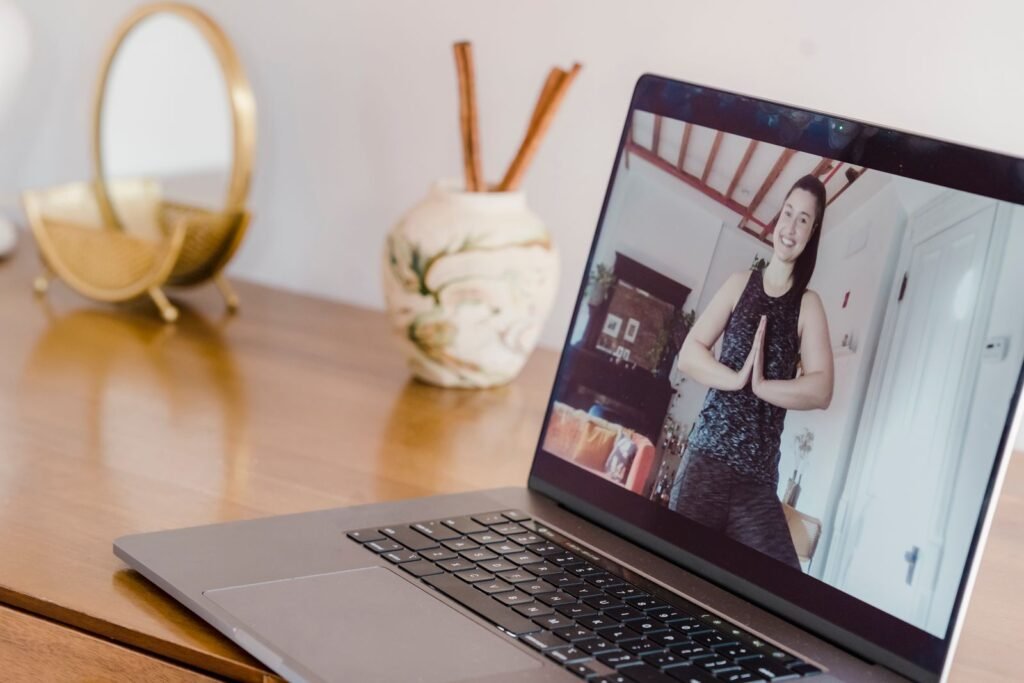
Online yoga classes are live or pre-recorded sessions led by a certified instructor that you follow through a laptop, tablet, or phone instead of traveling to a studio. The best ones combine real-time cueing or clear on-screen instruction, structured programs that build week over week, and enough style variety, Hatha, Vinyasa, Yin, restorative, to match your goals, whether that’s flexibility, stress relief, or strength. For most beginners and busy professionals, a good online yoga class costs less than a single drop-in studio session, fits into a 20 to 60 minute window at any time of day, and delivers comparable benefits to in-person practice when the instructor actively corrects form through live video rather than a passive recording.
Choosing between the dozens of platforms and formats on the market is where most people get stuck. This guide walks through how online classes actually work, what separates a genuinely good one from a glorified YouTube video, how to evaluate options against your specific goals, and what to expect in your first month.
How Do Online Yoga Classes Actually Work?
Online yoga classes fall into three delivery formats: live-streamed sessions where an instructor teaches in real time and can see and correct your form through video, on-demand libraries of pre-recorded classes you queue up whenever you want, and hybrid programs that mix a few live sessions per week with an on-demand library for the rest. Live formats function closest to a studio class, you show up at a set time, the instructor calls out cues, and in many platforms you can unmute or use chat to ask a question mid-flow. On-demand libraries trade that real-time feedback for total scheduling flexibility, which matters more for people whose work hours change week to week. A well-run program tells you upfront which format a given class uses, because the two require different levels of self-correction on your part.
What Makes a Good Online Yoga Class Different From a Free YouTube Video?
Free videos are a reasonable starting point, but a good online yoga class adds three things a static video can’t: progression, personalization, and accountability. Progression means the sequence of classes is built to develop specific skills over weeks, not just a random rotation of unrelated 20-minute flows. Personalization means the instructor can see you, through live video, and adjust a cue in real time if your alignment in Downward Dog or a standing balance pose is off. Accountability comes from a scheduled class time or a coach checking in on your consistency, which is the single biggest predictor of whether someone still practices three months later. If a program can’t offer at least one of these three, it’s functionally the same as a free video library, regardless of what it charges.
What Should Beginners Look for in Online Yoga Classes?
Online yoga classes for beginners should be labeled by level, not just by style, since a “beginner Vinyasa” class moves much faster than a “beginner Hatha” one even though both say beginner. Look for classes that spend the first few minutes explaining foundational alignment (how to stack a hip crease over a knee in a lunge, for example) rather than assuming you already know it. A genuinely beginner-friendly instructor also offers modifications on camera, showing a block or strap version of a pose next to the full expression, so you’re not guessing how to adapt when your hamstrings or shoulders aren’t there yet. If you’re brand new to the practice entirely, pairing your first few online sessions with our guide on how to start yoga will help you build the vocabulary instructors assume you already have.
Which Online Yoga Style Should You Choose First?
Your first style should match your primary goal rather than whatever is trending.
| Your Main Goal | Best Style to Start With | Why It Fits |
|---|---|---|
| Flexibility and stress reduction | Hatha or Yin Yoga | Poses are held longer and move slowly enough to learn alignment |
| A workout that raises your heart rate | Vinyasa yoga or Power Yoga | Poses link to breath in a continuous flow, building noticeably more strength over eight to twelve weeks |
| Back pain, tight hips, or stiffness from sitting | Classes tagged for yoga for back pain | Covers which poses tend to help and which to avoid early on |
Reviewing the broader landscape in our types of yoga overview is worth ten minutes before you commit to a subscription.
How Do You Evaluate the Best Online Yoga Classes Before Paying?
The best online yoga classes make it easy to verify instructor credentials, usually a 200-hour or 500-hour Yoga Alliance registration, before you pay for anything. Check whether the platform offers a trial class or a short free sample so you can judge teaching pace, audio quality, and camera angle, a class where you can’t clearly see the instructor’s feet during standing poses is hard to follow safely. Read for how classes are organized: a searchable library by duration, style, and body focus area is far more usable than an endless scroll of thumbnails. Finally, look at whether the platform tracks your attendance or streak, since programs with even basic progress tracking see meaningfully higher retention than ones that don’t, according to platform data cited across the online fitness industry.
What Equipment Do You Actually Need for Online Yoga Classes?
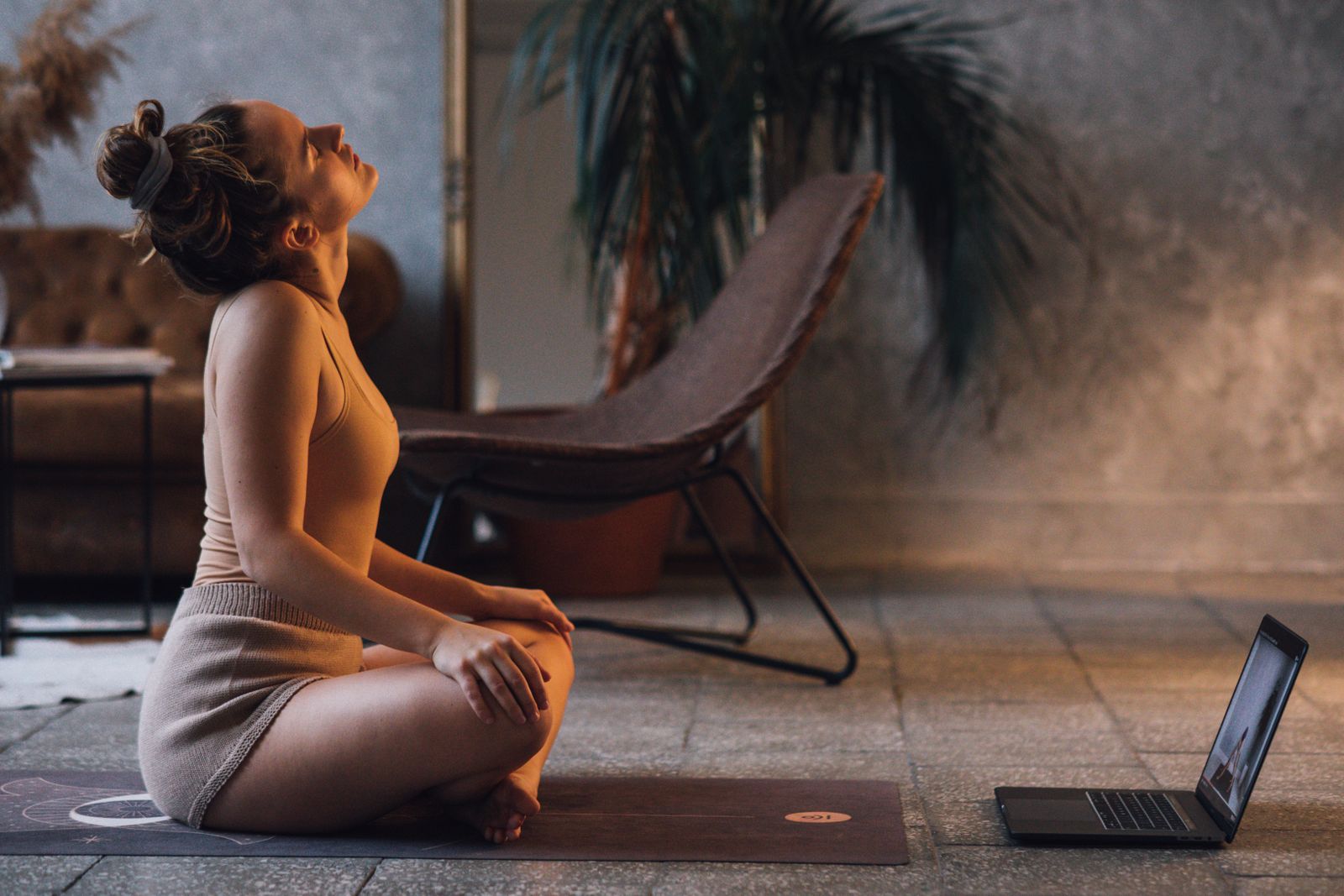
You need a non-slip yoga mat, a device with a stable internet connection, and roughly six by four feet of clear floor space with enough room to extend your arms overhead and lie down fully for Savasana. A yoga block or two, or a stack of thick books, and a strap or long belt cover most modification needs for beginner and intermediate classes. If you’re taking a live class where the instructor gives feedback, position your camera far enough back to show your full body, roughly six to eight feet, so alignment corrections actually apply to what they can see. Beyond that, resist buying gear before your third or fourth class; our yoga at home guide covers exactly what setup to prioritize first.
Are Online Yoga Classes as Effective as In-Person Studio Classes?
Research on remote yoga instruction, including studies examining online sessions during extended periods of restricted studio access, has found meaningful reductions in reported stress and improvements in wellbeing among regular online practitioners, broadly comparable to outcomes reported for in-person practice. The gap that remains is real-time physical correction: a studio teacher can walk over and adjust your shoulder placement by hand, while an online instructor can only describe the correction verbally or on camera. For most standing poses, seated stretches, and breathing practices, this gap matters less than people expect. For advanced inversions or deep backbends, in-person guidance for your first attempts remains the safer choice. If stress relief specifically is your goal, our dedicated guide to online yoga for stress relief goes deeper into the sequences that work best for that outcome.
How Much Do Good Online Yoga Classes Cost?
Pricing for online yoga classes generally falls into three tiers: free libraries supported by ads or donations, subscription platforms in the range of moderate monthly fees for unlimited on-demand and some live access, and premium live coaching with a dedicated instructor at a higher price point closer to studio membership costs. The middle tier, unlimited on-demand plus scheduled live classes, tends to offer the best value for people who want structure without the cost of one-on-one attention. If your goal is building a consistent habit rather than working toward a specific advanced pose, the free or low-cost tiers are often genuinely sufficient for the first three to six months.
Can You Find Online Yoga Classes Near You Instead of Fully Remote Ones?
Yes, many studios now stream their in-person class schedule live so local members can join remotely on days they can’t make it into the building, which blends the accountability of a known local instructor with the flexibility of an online format. Searching specifically for online yoga classes near me surfaces these hybrid studio offerings rather than fully global platforms, which matters if you eventually want to attend an in-person session with the same teacher and community. This hybrid approach also tends to keep pricing closer to local studio rates rather than international subscription pricing.
What Role Do Yoga Apps Play Alongside Online Classes?
Yoga apps and full online class platforms solve slightly different problems. Apps tend to excel at short, flexible, on-demand sessions you can drop into between meetings, with libraries sorted by duration and body focus, while dedicated online class platforms are better suited to structured, multi-week programs with live instructor access. Many practitioners use both: an app such as those covered in our yoga apps roundup for daily 10 to 15 minute sessions, and a scheduled live class once or twice a week for deeper instruction and correction. Neither replaces the other completely if your goal is steady long-term progress.
How Do You Build a Weekly Routine Around Online Yoga Classes?
Most people who stick with online yoga past the first month settle on two to four sessions weekly rather than daily practice, which is easier to sustain and still delivers measurable flexibility and stress benefits within six to eight weeks. A workable starting yoga routine pairs one longer 45 to 60 minute live or on-demand class on a weekend with two shorter 20 to 30 minute weekday sessions. Anchoring sessions to an existing habit, right after your morning coffee or immediately after logging off work, removes the decision fatigue that causes most people to skip. Our guide to structuring a morning yoga practice or an evening yoga wind-down covers timing specifics for each option.
What Mistakes Do Beginners Make in Online Yoga Classes?
A few recurring mistakes show up again and again among people new to online practice:
- Choosing a class level above your actual experience because the thumbnail or title sounds approachable, which leads to rushed form and a higher injury risk in poses like deep lunges or arm balances.
- Skipping the warm-up section by joining the video a few minutes late, since cold muscles are far more prone to strain during early standing poses.
- Practicing on a slippery surface without a proper mat.
- Ignoring the instructor’s breath cues in favor of just copying the shapes.
Our broader rundown of yoga mistakes to avoid applies just as directly to online formats as in-person ones.
Do Online Yoga Classes Work for Corporate and Group Wellness Programs?
Yes, and this is one of the fastest-growing uses of the format. Companies increasingly book scheduled online yoga sessions as a shared team wellness benefit, since remote sessions eliminate the venue logistics of an in-person workshop while still giving employees a live instructor and a shared, scheduled block of time. Sessions typically run 20 to 30 minutes to fit inside a lunch break, focus on desk-related tension in the neck, shoulders, and lower back, and are scheduled recurring rather than as a one-off event to build habit. This format sits alongside broader corporate fitness offerings as a low-friction way to introduce wellness benefits without requiring travel to a shared physical location.
Questions People Ask About Online Yoga Classes
Are online yoga classes good for complete beginners?
Yes, as long as the class is explicitly labeled for beginners and the instructor demonstrates modifications on camera. Beginners should prioritize slower-paced styles like Hatha over fast Vinyasa flows for their first month, and should confirm the platform offers some form of live or recorded feedback rather than just a silent pose sequence.
How do I know if an online yoga instructor is actually qualified?
Check for a Yoga Alliance registration (commonly RYT-200 or RYT-500) listed on the instructor’s profile, along with how many years they’ve taught and whether they specialize in the style you’re taking. Reputable platforms display this information directly on the class or instructor page rather than requiring you to ask.
Can online yoga classes replace a gym membership?
Online yoga classes can fully replace a gym membership if your goals are flexibility, stress reduction, and light-to-moderate strength building, since styles like Power Yoga and Vinyasa deliver measurable strength gains over time. If your goal includes heavy resistance training or specific machine-based work, yoga complements rather than fully replaces that kind of training.
What is the best time of day for online yoga classes?
There’s no single best time; morning sessions tend to build consistency because fewer things compete for that slot, while evening sessions are more effective for winding down before sleep. The better predictor of success is picking one consistent time and keeping it fixed for at least three to four weeks rather than optimizing for the “ideal” hour.
Do I need previous yoga experience to join a live online class?
No, most live online platforms run separate class levels specifically so complete beginners can join without prior experience. Look for classes explicitly labeled “beginner” or “all levels” and confirm the description mentions modifications, since a mislabeled intermediate class can be discouraging or unsafe for a first-timer.
Try This for Yourself
Reading about what makes online yoga classes effective is useful, but the actual benefit comes from consistent practice with an instructor who can see you and correct your form as you go. FitStrot’s online yoga classes pair you with certified instructors across styles and levels, live from wherever you have a mat and a stable connection.
Related reading: Yoga Apps, Online Yoga Classes Near Me, Best Online Yoga Classes, How to Start Yoga, and FitStrot’s online yoga classes.