Yin yoga is a slow, meditative style of yoga where poses are held passively for 3 to 10 minutes at a time, targeting the connective tissues, fascia, and joints rather than the muscles. Instead of flowing between postures, you settle into a shape close to your edge and stay there, letting gravity and time do the work while the nervous system downshifts into a parasympathetic, rest-and-digest state. It’s typically practiced on the floor with props like bolsters and blocks, and it pairs well as a counterbalance to more active styles such as ashtanga yoga or vinyasa yoga.
What Is Yin Yoga, Exactly?
Yin yoga is a passive, floor-based practice built around long-held, low-intensity stretches. Where most yoga styles ask the muscles to actively engage, yin yoga asks you to relax the muscles almost completely so the stretch can travel deeper, into the fascia, ligaments, and joint capsules. Poses are usually held between 3 and 10 minutes, sometimes longer in advanced classes, and a typical session includes only 5 to 8 poses in total, compared to the 20 or more you might move through in a faster-paced class.
The practice is often described as a moving meditation, because the real work happens in stillness. You are not trying to achieve a picture-perfect shape; you are trying to find a sensation of mild, sustainable stretch and then breathe through the discomfort of staying still. This makes yin yoga fundamentally different from styles like bikram yoga, which relies on heat and a fixed sequence of active postures performed in a heated room.
What Does “Yin” Actually Mean in Yin Yoga?
The name comes from Taoist philosophy, where yin and yang describe two complementary forces. Yang represents movement, heat, and active muscular effort; yin represents stillness, coolness, and passive, receptive tissue. In this framework, muscles are considered “yang” tissue because they respond quickly to exercise and warm up fast, while fascia, ligaments, and joints are considered “yin” tissue because they are denser, cooler, and change only with slow, sustained loading over time. Applying this idea to a physical practice means yin yoga is designed specifically to reach the tissues that faster styles tend to skip over: a vinyasa class heats and stretches the muscles, while yin works the layer underneath. Many teachers pair the two intentionally across a week, treating yin as the deliberate “cool down” counterpart to a “heating” practice.
Who Created Yin Yoga and Where Did It Come From?
Yin yoga’s modern form is generally credited to Paul Grilley, an American yoga teacher who in the late 1980s and 1990s combined ideas from Taoist yoga, traditional Chinese medicine’s meridian theory, and his own study of functional anatomy. Grilley was influenced by martial artist Paulie Zink, who taught a Taoist yin-and-yang style of stretching, and reworked those ideas into a system built around long holds and anatomical variation between individual bodies. His student Sarah Powers later helped popularize the practice worldwide and is credited with streamlining what had been called “Taoist yoga” or “yin and yang yoga” into the single, teachable style known today as yin yoga.
Because the practice draws on Chinese medicine concepts like meridians and chi, yin yoga is sometimes assumed to be an ancient Chinese practice, but its structured form as a taught, standardized style is a 20th-century development rather than a centuries-old lineage. Its influences are old; its packaging as “yin yoga” is comparatively recent, which is worth knowing before repeating claims about its history.
How Is Yin Yoga Different from Restorative Yoga?
Restorative yoga vs yin yoga is one of the most common points of confusion for new students, because both are slow and prop-heavy. The key difference is intent and sensation. Restorative yoga is entirely passive: props support 100% of your body weight, there should be zero stretch sensation, and the goal is complete rest and nervous system recovery, sometimes with holds of 10 to 20 minutes. Yin yoga, by contrast, deliberately introduces a mild-to-moderate stretch sensation and asks the body to work at an edge, even though the muscles stay relaxed.
Think of it this way: restorative yoga is closer to a nap, while yin yoga is closer to a long, patient stretch that still asks something of you. If you’re recovering from illness, burnout, or major life stress, restorative is usually the better entry point; if you want to improve mobility and work with connective tissue over time, yin is more targeted. Some studios blend the two into a single class, alternating supported rest poses with deeper yin holds.
What Are the Core Principles of Yin Yoga Practice?
Paul Grilley’s teaching outlines three general principles that guide how a yin pose should be approached, and most yin teachers still reference them today.
- Come into the pose to an appropriate depth. You’re aiming for a “70% edge,” a stretch sensation that is noticeable but never sharp, pinching, or painful.
- Resolve to remain still. Once you’ve found your depth, movement is minimized so the tissue can be loaded consistently over the full duration of the hold.
- Hold the pose for time. Because connective tissue changes slowly, holds typically last 3 to 10 minutes; anything shorter mostly just stretches muscle, which defeats the purpose.
A fourth idea, often added by later teachers, is to come out of the pose with control and give the body 20 to 30 seconds to reset before moving to the next shape, since blood flow returns to compressed tissue quickly and can create a brief rebound sensation.
What Are the Most Common Yin Yoga Poses?
A typical class draws from a relatively small, repeated set of yin yoga poses, each targeting a specific joint or tissue group.
- Butterfly (Baddha Konasana variation): Seated with soles of the feet together, folding forward over the legs to target the hips, inner thighs, and lower back.
- Dragon Pose: A long, low lunge held for several minutes on each side, opening the hip flexors and quadriceps far more deeply than a dynamic lunge.
- Saddle Pose: A kneeling backbend that stretches the quadriceps, hip flexors, and abdomen; often modified with a bolster under the spine.
- Sleeping Swan (a yin variation of pigeon pose): Targets the outer hip and glute of the front leg, one of the most requested poses for tight hips.
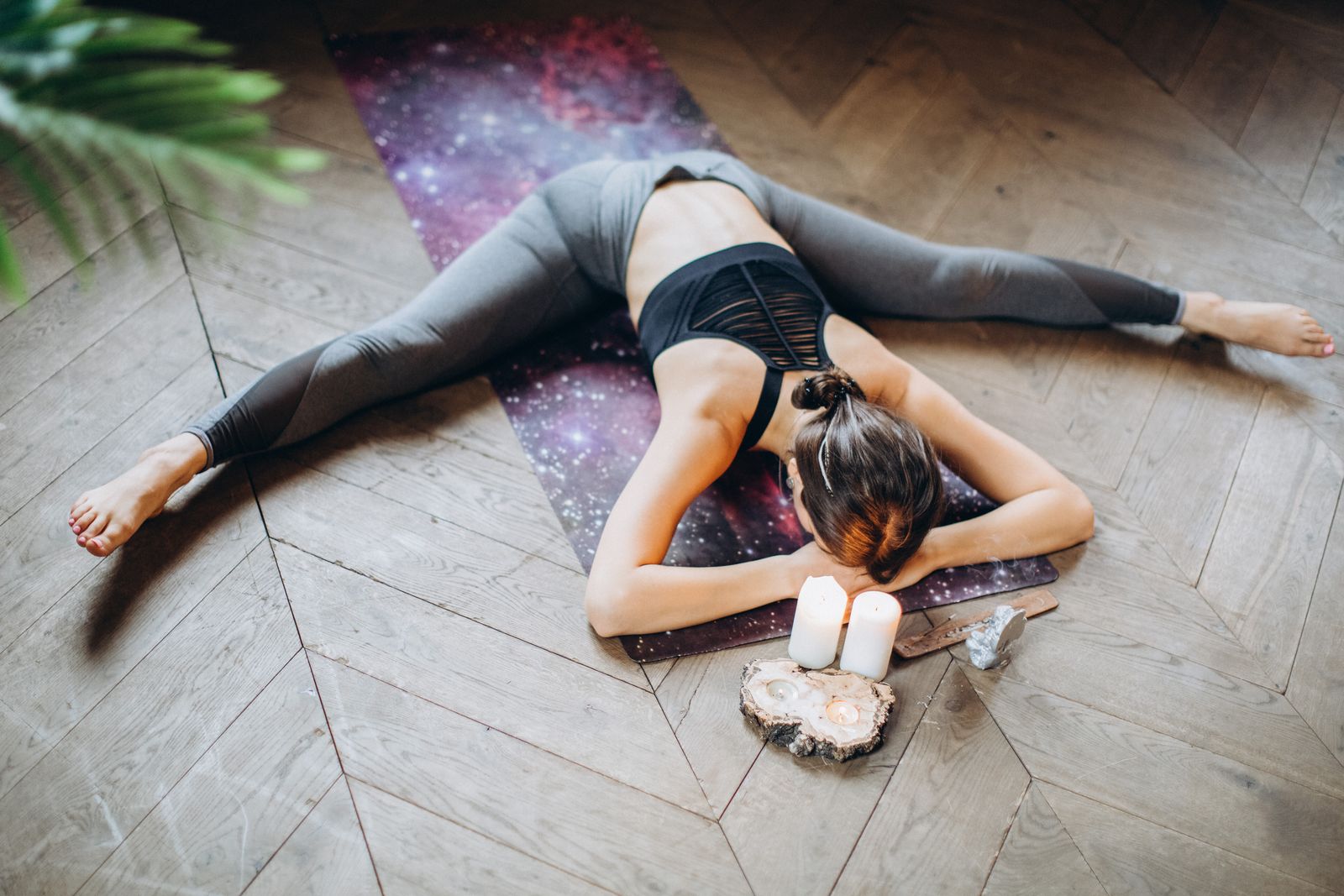
- Caterpillar: A seated forward fold with rounded spine, working the entire posterior chain from calves to the base of the skull.
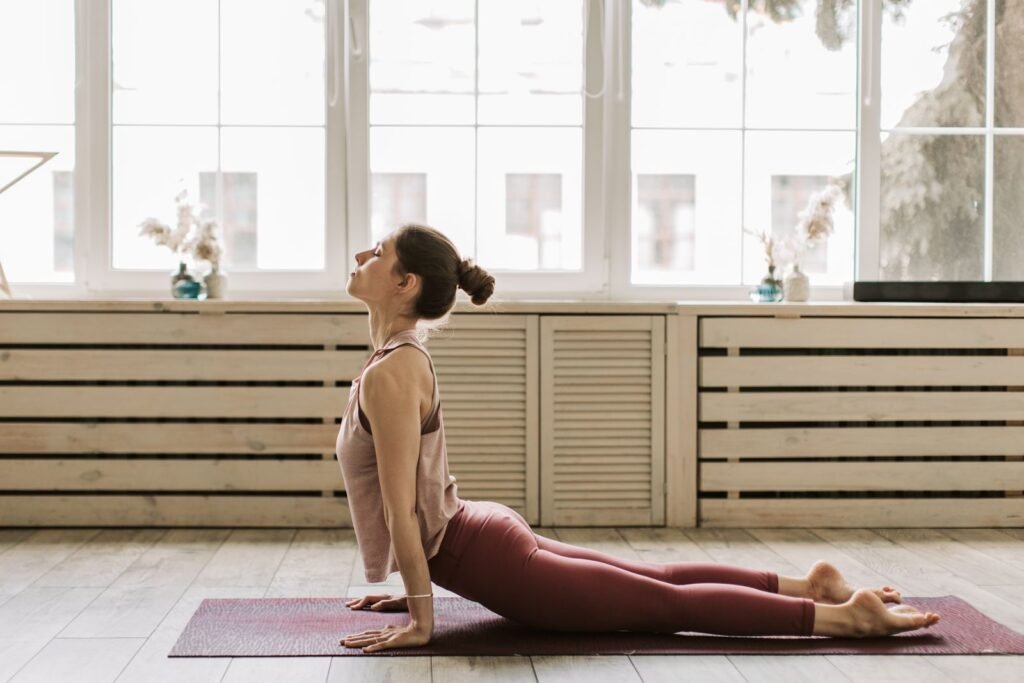
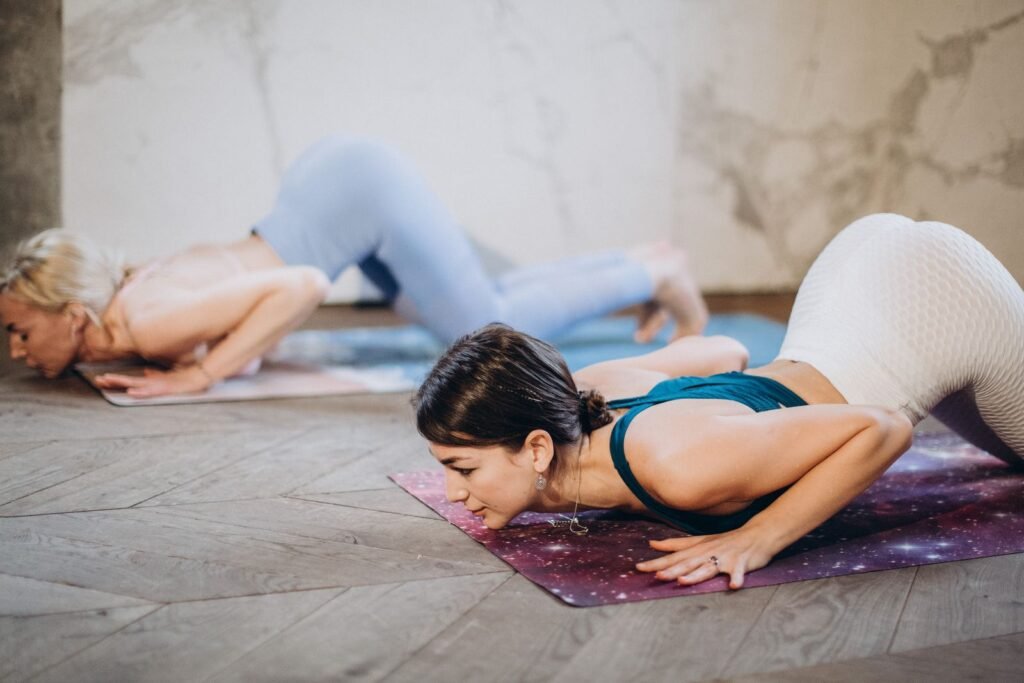
- Sphinx and Seal: Gentle to deeper backbends lying on the belly, targeting the lower back and sacrum.
- Shoelace Pose: A cross-legged seated twist and fold that works the outer hips and glutes from a different angle than Sleeping Swan.
Most sequences move from a gentle opening pose through hip- and spine-focused shapes, ending in a longer seated or supine pose before a final relaxation. If you enjoy this kind of prop-supported, slow-paced work, it pairs naturally with restorative practices for the neck and face, such as face yoga, which uses a similarly patient, sustained-hold approach for the muscles of the face.
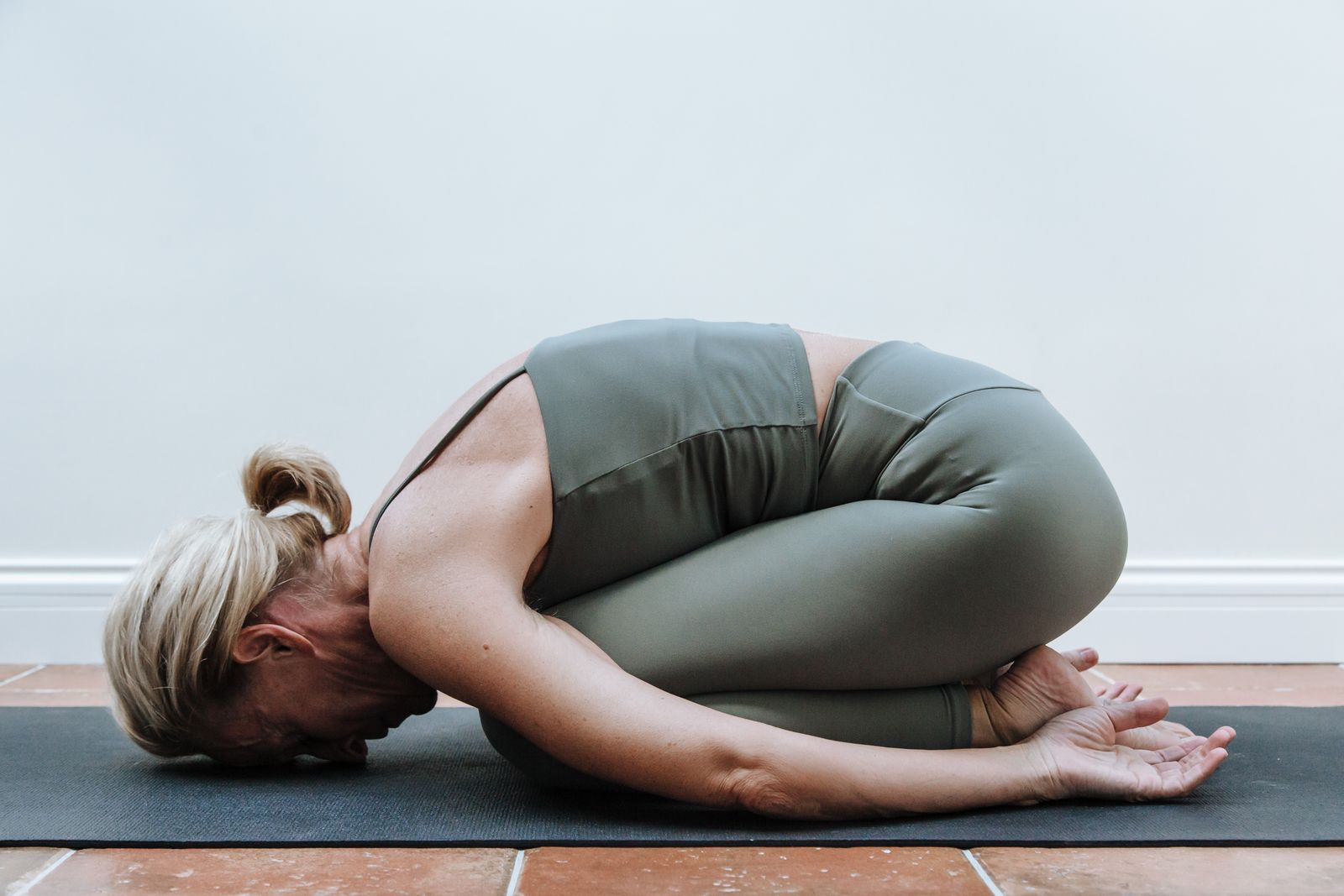
What Are Yin Yoga Poses for Chakras?
Because yin yoga borrows from meridian theory, many teachers also map specific poses to the body’s energy centers, or chakras, in Indian yogic philosophy. This isn’t an anatomical claim so much as a way of organizing intention and breath during a long hold. Common associations include Butterfly and Frog Pose with the sacral chakra (hips and lower belly), Sphinx and Saddle with the solar plexus and heart chakras (spine extension, chest opening), Camel and Melting Heart with the heart and throat chakras (front-body opening), and forward folds like Caterpillar with the root and crown chakras (grounding and quieting the mind).
If chakra work interests you, it’s best treated as an optional layer of intention-setting rather than a required framework. A class can be entirely effective as a physical practice for mobility and stress relief without ever mentioning chakras, and teachers vary widely in how much emphasis they place on this energetic mapping.
What Are the Real Benefits of Yin Yoga?
Yin yoga benefits fall into two broad categories: physical and nervous-system effects.
Physical benefits center on the connective tissue. Long, gentle loading is commonly cited as a way to improve joint mobility, particularly in the hips, pelvis, and lower spine, areas that tend to stiffen with long hours of sitting. It’s also frequently used by athletes and runners as a complement to more demanding training, since it targets tissue that high-intensity workouts rarely address directly.
Nervous system benefits tend to be the reason people stick with the practice. Sitting still in a pose for several minutes activates the parasympathetic nervous system, the body’s rest-and-digest mode, which can lower heart rate and support a subjective sense of calm. Because yin yoga forces you to sit with physical discomfort without reacting to it, many practitioners also report it builds a kind of patience and body awareness that carries over into daily life. None of this replaces medical treatment for chronic pain or anxiety, but as a complementary practice it’s one of the more evidence-informed slow-movement options available.
Who Should Try Yin Yoga (and Who Should Be Cautious)?
Yin yoga is well-suited to people who sit for long periods, athletes and runners looking to balance high-impact training, anyone dealing with everyday stress or a busy, overstimulated schedule, and yoga students who want to deepen their understanding of anatomy and breath. Because it’s low-impact and doesn’t require strength or flexibility to begin, it’s also a reasonable entry point for complete beginners who find faster-paced classes intimidating.
That said, caution is warranted for people with hypermobility or joint instability, since long passive stretching can overstretch already-loose ligaments; anyone with osteoporosis or a recent joint injury should get clearance from a physiotherapist or doctor first, and pregnant practitioners should modify poses that compress the belly. As with any new practice, it’s worth mentioning any existing conditions to your teacher before class and treating “it should hurt a little” as a myth, since sharp or shooting pain is never the goal.
How Does Yin Yoga Compare to Other Yoga Styles?
It helps to see yin yoga against the styles most people already know. Ashtanga yoga is a fixed, physically demanding sequence performed with continuous breath-linked movement; it builds heat and strength, the near-opposite of yin’s stillness. Bikram yoga uses 26 postures in a room heated to around 40°C (105°F), emphasizing sweat and active muscular stretching, whereas yin is practiced at room temperature with muscles relaxed. Aerial yoga uses a suspended hammock to support and deepen poses with the help of gravity and decompression, sharing yin’s use of props but adding an entirely different sensory and inversion element. Hatha yoga is the broadest umbrella term and often the closest cousin to yin, since many hatha classes are also slower-paced, though hatha poses are usually still held actively rather than passively.
If you’re building a personal practice, it’s common to combine styles across the week: a strength-focused practice like power yoga or vinyasa yoga two or three times a week, with one yin session to recover the connective tissue and calm the nervous system.
How Do You Structure a Home Yin Yoga Practice?
Because yin yoga needs so little space and no dynamic movement, it’s one of the easiest styles to practice consistently at home. A simple 30-minute home sequence might look like this: two minutes of seated breathing to settle in, Butterfly for 4 minutes, Dragon Pose for 3 minutes per side, Sphinx or Seal for 4 minutes, Shoelace for 3 minutes per side, and a final 5-minute Savasana or supported reclining pose. Props matter more here than in almost any other style; a bolster, two blocks, and a folded blanket are usually enough to modify every major pose so the stretch sensation stays moderate rather than sharp.
If you prefer guided structure over building your own sequence, joining a live online yoga class gives you real-time pacing and pose corrections without needing to time each hold yourself, which is one of the trickier parts of self-guided yin practice.
What Are Yin Yoga Cards and How Do They Help?
Yin yoga cards are illustrated pose decks, usually one pose per card with hold time, target tissue, and modification notes printed on the back, designed to help students and teachers build sequences without needing a book or app open. They’re popular among home practitioners who want variety without following the same fixed video every time, and among new teachers as a sequencing aid while they’re still memorizing pose names, common modifications, and typical hold times. A well-designed deck usually groups cards by target area (hips, spine, shoulders) so you can build a balanced sequence quickly, for example pulling two hip poses, one spinal twist, one backbend, and a final resting pose.
What Does Yin Yoga Teacher Training Involve?
Yin yoga teacher training typically runs 50 to 100 hours as a specialized add-on certification, distinct from a general 200-hour yoga teacher training, and covers functional anatomy of connective tissue, meridian theory and its role in sequencing, prop use and modifications for different body types, hold-time guidelines, and how to hold space verbally during long, quiet poses, which is a distinct teaching skill from cueing an active flow class. Many instructors pursue yin certification as a specialization after already completing a broader 200-hour yoga instructor training, since the pacing, cueing style, and anatomical focus are different enough to need dedicated study.
India, and Rishikesh in particular, has become one of the more prominent hubs for this kind of specialized training. Yin yoga teacher training in Rishikesh programs typically combine daily practice, anatomy study, and teaching methodology over one to four weeks, often alongside the Ganges and within walking distance of the ashrams that first drew international students to the town for yoga study.
What Should You Look for in a Yin Yoga Workshop?
A yin yoga workshop is usually a single, longer session, often 2 to 4 hours, that goes deeper into a specific theme than a regular class allows, such as hip-opening, spine health, or yin for athletes. Because a workshop format allows more time per pose and more individual attention, it’s a good way to test whether you enjoy the style before committing to a weekly class or a teacher training. When evaluating a workshop, check the teacher’s specific yin training and experience (not just a general yoga certification), the ratio of practice time to lecture or theory, and whether modifications and props are actively offered for different body types, since yin poses affect people with different joint structures very differently.
Questions People Ask About Yin Yoga
What is yin yoga?
Yin yoga is a slow, passive style of yoga where poses are held for 3 to 10 minutes to target connective tissue like fascia, ligaments, and joints rather than muscles. Instead of moving through a flow, you settle into a shape near your stretch edge, relax the muscles, and stay still while breathing through the sensation, letting gravity and time deepen the stretch gradually.
What are yin yoga’s benefits?
Yin yoga’s benefits include improved joint mobility, especially in the hips and lower spine, and activation of the parasympathetic nervous system, which supports stress relief and a calmer resting heart rate. It’s also commonly used by athletes to balance high-impact training and by anyone wanting a low-impact complement to a more active weekly routine.
What is yin yoga good for?
Yin yoga is good for improving flexibility in the hips, pelvis, and spine, releasing everyday tension from prolonged sitting, and calming an overstimulated nervous system through long, still holds. It also works well as a recovery day for runners and strength athletes, since it targets tissue that faster training styles typically don’t reach.
What are common yin yoga poses?
Common yin yoga poses include Butterfly, Dragon Pose, Saddle Pose, Sleeping Swan, Caterpillar, Sphinx, Seal, and Shoelace Pose. Each is held for several minutes and targets a specific joint or tissue group, most often the hips, lower spine, or shoulders, and most classes sequence five to eight of these poses into a single session.
How is yin yoga different from restorative yoga?
Restorative yoga is fully passive with props supporting all your body weight and no stretch sensation, aimed purely at rest. Yin yoga deliberately introduces a mild-to-moderate stretch and asks the body to work at an edge, even with muscles relaxed, making it more targeted toward improving mobility over time rather than pure recovery.
Try This for Yourself
Reading about long holds and connective tissue is one thing; feeling your hips soften three minutes into Dragon Pose is another. If you want real-time guidance on depth, breath, and pacing rather than guessing your way through a sequence alone, join a live online yoga class with FitStrot and let an instructor walk you through your first proper yin session.
Related reading: restorative yoga, hatha yoga, yoga for back pain, types of yoga, and explore FitStrot’s online yoga classes to start practicing with live instructor support.