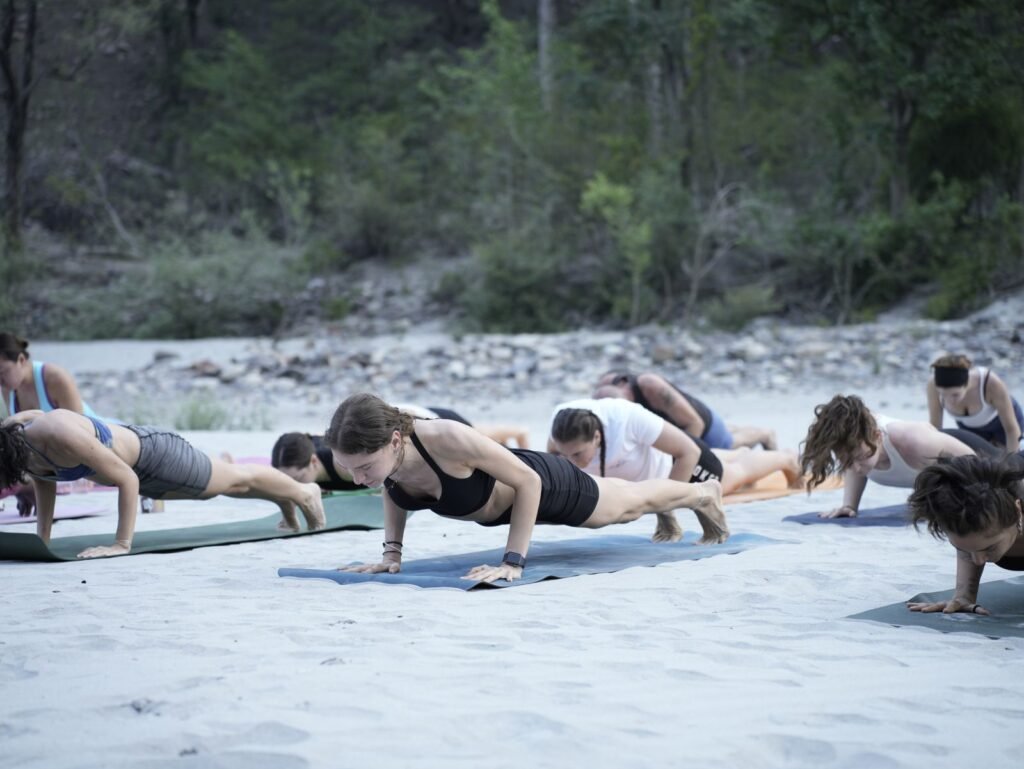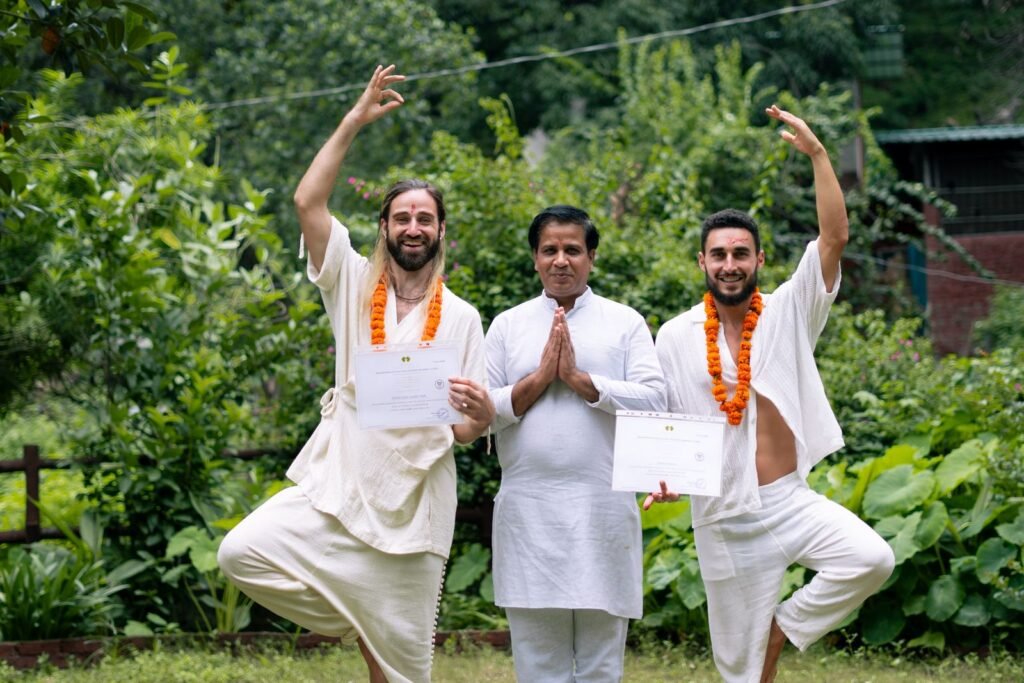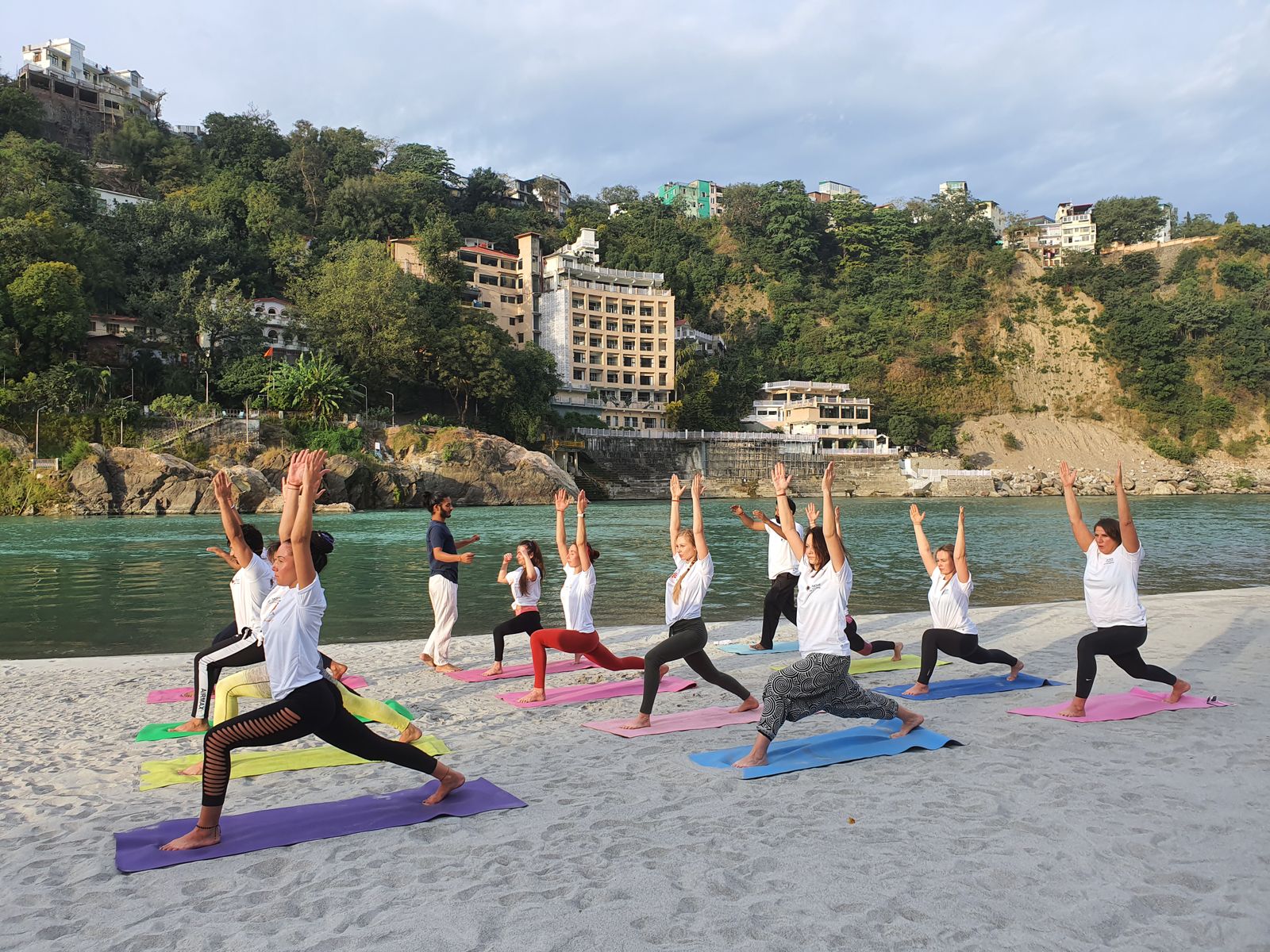
Yoga teacher training in Rishikesh means enrolling in an intensive, residential certification course — typically 100, 200, 300, or 500 hours — held in the town regarded as the birthplace of modern yoga, on the banks of the Ganga at the foothills of the Himalayas. Courses generally follow Yoga Alliance curriculum standards, combine asana, pranayama, meditation, philosophy, and teaching methodology, and result in an internationally recognized certificate (RYT 200, RYT 300, or RYT 500) that qualifies you to teach professionally worldwide. Programs run from two weeks to several months depending on the hour count, with tuition, shared accommodation, and vegetarian meals usually bundled into one price.
Why Do People Choose Rishikesh for Yoga Teacher Training?
Rishikesh has carried the title “Yoga Capital of the World” for decades, and the reputation is earned rather than purely marketed. The town sits where the Ganga exits the Himalayan foothills, and its ashrams, ghats, and forest schools have hosted yogis, swamis, and philosophy teachers for well over a century. Studying yoga teacher training here means learning asana and pranayama in the same cultural and geographic context that shaped classical Hatha and Raja yoga traditions, rather than in a studio far removed from that lineage. For many students, this cultural immersion is inseparable from the technical training — chanting at dawn on the riverbank, satsang in the evening, and daily contact with sadhus and long-term practitioners all shape how the philosophy lands.
What Are the Different Course Lengths and Which One Should You Choose?
Rishikesh schools offer four common program lengths, each serving a different stage of a yoga journey.
| Course Length | Typical Duration | Credential Earned | Best For |
|---|---|---|---|
| 100-Hour | 10-14 days | Foundational (not a standalone RYT) | Beginners wanting a structured taste of ashram life |
| 200-Hour | 3-4 weeks | RYT 200 | The standard entry point for professional teaching |
| 300-Hour | About 1 month | RYT 500 (combined with a prior 200-hour) | Certified teachers going deeper into advanced skills |
| 500-Hour | 2-3 months | RYT 500 | Students wanting the full 200+300 curriculum in one continuous program |
100-Hour Yoga Teacher Training Course in Rishikesh
A 100-hour yoga teacher training course in Rishikesh is a short, foundational program, usually spanning 10-14 days. It suits complete beginners who want a structured introduction to alignment, breathing, and basic philosophy before committing to a full certification, or dedicated practitioners who want a taste of ashram life without a long absence from work. Because it falls under a foundational or continuing-education category rather than the full RYT 200 pathway, graduates typically use it as a stepping stone rather than a standalone teaching credential.
100-Hour Yoga Teacher Training in Rishikesh vs. 200-Hour
The 200-hour program is the internationally recognized entry point for professional teaching and is what most people mean when they search for yoga teacher training in rishikesh. It runs roughly three to four weeks and covers the full breadth of a Registered Yoga School curriculum: asana technique, teaching methodology, anatomy and physiology, philosophy and ethics, and supervised practicum teaching. A 100-hour course is deliberately narrower — often just asana and basic pranayama — and does not by itself confer the RYT 200 credential.
300-Hour Yoga Teacher Training in Rishikesh
A 300-hour yoga teacher training in Rishikesh is an advanced-level program built for teachers who already hold a 200-hour certificate. Combined, 200 plus 300 hours qualifies a graduate for the RYT 500 credential. The 300-hour curriculum goes deeper into advanced asana and adjustments, subtle body concepts such as chakras, nadis, and koshas, Ayurveda basics, and refined teaching skills like sequencing for special populations, injuries, and therapeutic applications. It generally runs about a month.
500-Hour Yoga Teacher Training in Rishikesh
Some schools offer a single continuous 500-hour yoga teacher training in Rishikesh that folds the 200 and 300-hour material into one long residential program, often spanning two to three months. Others expect students to complete the two levels separately, sometimes at different schools or on different trips. Either path leads to the RYT 500 designation, a senior teaching credential beyond the standard 200-hour level.
What Does a Typical Daily Schedule Look Like?
Most Rishikesh residential courses run six days a week with one day off, usually Sunday, for excursions, laundry, or rest. A representative day starts before sunrise with a shatkarma or cleansing practice, moves into a two-to-three-hour asana and pranayama session, breaks for breakfast, and continues through the late morning with philosophy, anatomy, or alignment lectures. Afternoons are typically reserved for a second asana practice, teaching methodology workshops, and student teaching practice, with meditation and chanting closing the evening. Yoga Alliance policy caps instructional hours at 14 per day for Registered Yoga Schools, so reputable programs pace the day accordingly rather than cramming; if a school’s daily schedule looks compressed beyond that, it is worth asking questions before enrolling.
How Do You Choose a Rishikesh Yoga Teacher Training Center?
With hundreds of options along Tapovan, Laxman Jhula, and Swargashram, choosing a rishikesh yoga teacher training center comes down to a handful of concrete checks rather than marketing claims.
Confirm Yoga Alliance Registration Directly
Search the school’s name on the official Yoga Alliance registry rather than trusting a badge on their website. A genuine RYS 200, RYS 300, or RYS 500 registration means the curriculum meets minimum hour distributions across techniques, teaching methodology, anatomy, philosophy, and practicum.
Check Lead Teacher Credentials and Class Size
Ask who is actually teaching each module and what their own certification level and teaching experience are. Smaller class sizes, generally under 20-25 students, tend to produce more individual correction and a better balance between vinyasa-style dynamic classes and slower, alignment-focused instruction.
Read Reviews Beyond the School’s Own Website
Cross-check testimonials against independent platforms, and look specifically for comments about food hygiene, room cleanliness, and whether the promised syllabus was actually delivered in full.
Compare What’s Included in the Price
Tuition-only pricing without accommodation and meals can look cheaper but cost more overall once you add those expenses back. Ask explicitly whether airport pickup, laundry, excursions such as a Ganga aarti visit, and course materials are included in the quoted fee.
What Will You Actually Learn?
A well-structured curriculum blends four pillars in roughly balanced proportion.
Asana and Alignment
Daily practice sessions cover foundational postures across standing, seated, backbend, forward fold, twist, inversion, and balance categories, with an emphasis on safe alignment and modifications. Many schools teach across styles, so you might study Hatha yoga fundamentals in the morning and a faster-paced Ashtanga yoga-influenced sequence in the evening, giving graduates the range to teach different class formats.
Pranayama and Subtle Energy
Breathing techniques such as Nadi Shodhana, Kapalabhati, and Bhastrika are taught progressively, alongside an introduction to concepts like prana, the nadis, and the chakra system that underpin traditional pranayama theory.
Yoga Philosophy and Ethics
Expect study of foundational texts — commonly Patanjali’s Yoga Sutras and excerpts from the Bhagavad Gita and Hatha Yoga Pradipika — along with the eight limbs of yoga, the yamas and niyamas, and discussions of teaching ethics and the teacher-student relationship. This grounding in yoga philosophy is often what surprises students most, since it reframes yoga as a complete life discipline rather than a purely physical workout.
Anatomy, Physiology, and Teaching Methodology
Coursework covers musculoskeletal anatomy relevant to asana, breath physiology, and contraindications for common conditions, paired with practical methodology: how to cue, sequence a class, use props, and give hands-on adjustments safely. Most programs require supervised practicum hours where trainees teach their peers and receive structured feedback. Many curricula also introduce basic meditation for beginners techniques, since teachers are frequently asked to guide a short seated practice before or after asana.
Best Time of Year to Train in Rishikesh
Rishikesh has a distinct seasonal rhythm. October through April brings cool, dry weather that is comfortable for multiple daily practice sessions and outdoor activities, and this window is the busiest for course enrollments. The monsoon months of July through September bring heavy rainfall and higher humidity, and some schools reduce outdoor sessions or pause entirely. Peak summer, around May and June, can be intensely hot in the plains, though Rishikesh’s elevation and river proximity moderate it somewhat compared to Delhi. If you have flexibility, booking during the November-to-February window generally offers the most predictable conditions for a multi-week immersive course.
What Does It Cost, and What’s Usually Included?
Pricing varies widely by school reputation, room type (shared vs. private), and course length, and rates change year to year, so always confirm current pricing directly with a shortlisted school rather than relying on older articles. As a general pattern, 200-hour programs are priced as a package covering tuition, shared or private accommodation, and three vegetarian meals a day; 300 and 500-hour programs cost proportionally more given the longer duration. Extras to budget for separately typically include the Indian visa, international flights to Delhi followed by a road transfer to Rishikesh, personal expenses, and any optional add-ons like Ayurvedic treatments or rafting excursions.
Do You Need Prior Yoga Experience to Enroll?
Most 200-hour programs accept students with a basic, consistent home or studio practice rather than requiring advanced flexibility or years of experience — schools generally care more about commitment and physical readiness for a demanding daily schedule than about how deep your backbend is. If you are newer to the practice, spending a few months building consistency beforehand, and reviewing foundational material such as types of yoga and the benefits of yoga, will make the training itself far less physically overwhelming. Advanced 300 and 500-hour courses typically require a prior 200-hour certificate, since the curriculum builds directly on that foundation.
How Do You Compare Yoga Teacher Training Centers in Rishikesh?
Because there are yoga teacher training centers in Rishikesh at every price point and quality level, a side-by-side comparison should look at five factors: Yoga Alliance registration status, lead teacher qualifications, class size, what’s included in the fee, and how recent and verifiable the reviews are. It also helps to ask a school directly for a day-by-day syllabus rather than a marketing overview — a transparent school will hand this over without hesitation, while a vague answer is itself useful information. Avoid choosing based on price alone; the cheapest options often cut corners on lead teacher experience, food quality, or actual instructional hours delivered against what was advertised.
What Can You Do With the Certificate Afterward?
An RYT 200, RYT 300, or RYT 500 credential is recognized by Yoga Alliance-affiliated studios, gyms, resorts, and wellness centers internationally, and it is the standard baseline that most employers and studios ask for when reviewing yoga instructor jobs. Graduates commonly go on to teach group classes at studios, lead private or corporate sessions, build an online teaching practice, or specialize further into areas like therapeutic yoga for back pain, prenatal yoga, or yin yoga. Many also use the certification as the foundation for a broader wellness career that layers on complementary skills such as meditation instruction or basic Ayurvedic lifestyle coaching.
Common Mistakes to Avoid When Booking a Course
A few recurring mistakes account for most booking regrets:
- Booking too close to your travel date. The best-reviewed schools fill up months in advance during the October-April high season.
- Not confirming visa requirements early. Most travelers need an e-Visa or regular tourist visa arranged well before departure.
- Underestimating the physical demands. Two daily practice sessions plus lectures for weeks on end call for building basic stamina and joint mobility beforehand, not nailing advanced poses.
- Skipping a direct conversation with the school. A call or video chat before paying a deposit is an easy way to gauge communication quality and get straight answers about the syllabus.
How Does Rishikesh Compare to Training Elsewhere in India or Online?
Rishikesh’s advantage is immersion: no commute, no distractions, and daily contact with a community entirely focused on practice and philosophy. Other Indian yoga hubs, including parts of Kerala and Mysore, offer strong training too, often with a different stylistic emphasis, since Mysore in particular is closely associated with Ashtanga lineage, similar to how Iyengar yoga is closely tied to Pune. For those who cannot travel for a multi-week residential program, an online yoga certificate course or a broader set of yoga courses can build genuine skill and even lead to certification, though it will not replicate the cultural depth, hands-on adjustment practice, and daily immersion that a Rishikesh residential program provides. Many students treat a shorter online course as preparation before committing to the in-person intensive.
Questions People Ask About Yoga Teacher Training in Rishikesh
Is yoga teacher training in Rishikesh worth it for beginners?
Yes, provided you choose a program suited to your level. Many 200-hour courses welcome students with only a basic home practice, since the emphasis is on committed daily attendance rather than advanced flexibility. Beginners who feel unsure often start with a shorter 100-hour foundational course or build a few months of consistent practice first before committing to the full residential program.
How long does a yoga teacher training course in Rishikesh take?
It depends on the certification level. A 100-hour course typically runs 10-14 days, a 200-hour course runs three to four weeks, a 300-hour course runs about a month, and a combined 500-hour program can run two to three months. Some schools offer the 300-hour module as a separate later trip rather than one continuous stay.
Is the certificate from a Rishikesh school recognized internationally?
It is, as long as the school is a Registered Yoga School with Yoga Alliance or an equivalent recognized body. Always verify a school’s registration directly on the Yoga Alliance website rather than relying solely on claims made on the school’s own site, since the credential’s value depends entirely on genuine registration.
What should I pack for a month-long training in Rishikesh?
Lightweight, breathable layers work best, since mornings can be cool and afternoons warm, especially outside monsoon season. Bring a personal yoga mat if you have a preferred one, a reusable water bottle, modest clothing for ashram etiquette, a journal for philosophy notes, and basic toiletries, as some smaller towns nearby have limited shopping options.
Can I combine yoga teacher training with sightseeing in Rishikesh?
Most programs schedule one rest day per week, commonly used for local sightseeing such as the Ganga aarti ceremony, Laxman Jhula, or nearby waterfalls. Because the daily schedule during training days is demanding, extended sightseeing trips are better planned for before or after the course rather than during it.
Try This for Yourself
If a full residential program in Rishikesh isn’t realistic right now, you can still build the foundation for it. Try FitStrot’s online yoga classes to develop consistency, strength, and breath awareness at home — a practical first step before committing to an intensive teacher training abroad.
Related reading: Yoga Teacher Training, Yoga Certificate Course, Yoga Courses, Yoga Instructor Jobs, and FitStrot’s Online Yoga Classes.