Meditation for beginners simply means learning to sit quietly, direct your attention to one thing (usually the breath), and gently return your focus whenever the mind wanders, for a short, consistent period each day. You don’t need a special cushion, an app subscription, or twenty years of yoga experience to start. Five minutes of focused breathing, done daily, teaches your nervous system to settle faster than a single sixty-minute session ever could. The goal isn’t to stop thinking; it’s to notice when you’ve drifted and return, again and again, which is the actual skill being trained. This guide walks through exactly how to begin, what to expect in the first weeks, and how meditation connects with a broader yoga and meditation for beginners practice.
What Exactly Is Meditation, and Why Do Beginners Struggle With It?
Meditation is a mental training practice built around sustained, deliberate attention. Most beginner confusion comes from one misconception: that meditating well means having an empty, silent mind. It doesn’t. Even experienced practitioners have thoughts arise constantly during a sitting session. The practice is the repeated act of noticing a thought has appeared and returning attention to an anchor, most commonly the breath, a sound, or a physical sensation. Beginners struggle because they judge themselves for “failing” to stay focused, when the moment of noticing distraction and returning is actually the rep that builds the mental muscle. Reframing this single idea removes most of the frustration that makes new meditators quit in the first week.
How Do You Start Meditating as a Complete Beginner?
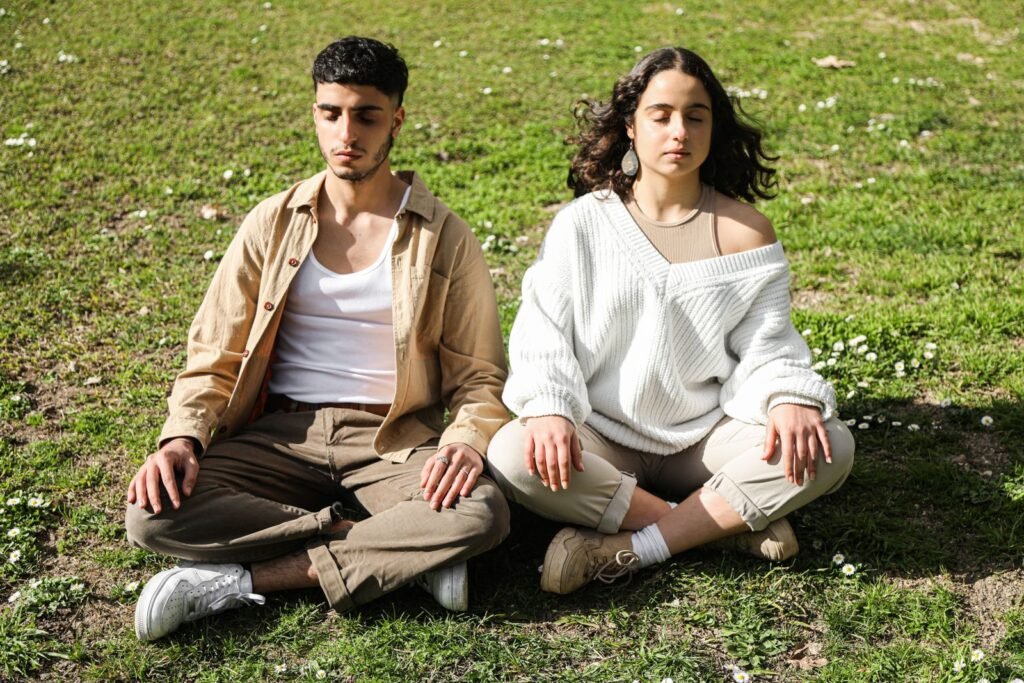
Start smaller than feels necessary. Sit in a stable position, spine reasonably upright, on a chair, cushion, or the edge of a bed. Close your eyes or soften your gaze downward. Bring attention to the physical sensation of breathing, the rise and fall of the belly or the air passing the nostrils. Set a timer for five minutes so you aren’t checking the clock. When your mind wanders, and it will, label it silently (“thinking”) and return to the breath without judgment. That’s the entire practice. Many beginners find it easier to build this habit alongside a gentle physical warm-up like yoga for beginners, since a few minutes of slow movement helps release physical restlessness before sitting still.
How Long Should a Beginner Meditate Each Day?
Five to ten minutes daily is a realistic, sustainable starting point, and it’s more valuable than one long session done inconsistently. Consistency trains the habit loop; duration trains depth, and depth only matters once the habit is stable. A common progression looks like this: five minutes daily for the first two weeks, ten minutes for weeks three and four, then increasing toward fifteen to twenty minutes once sitting still no longer feels like an effort of will. Research on structured programs, including the widely cited eight-week format used in Mindfulness-Based Stress Reduction (MBSR) courses developed by Jon Kabat-Zinn at the University of Massachusetts in the late 1970s, commonly points to measurable changes in stress markers and attention over roughly two months of regular practice. That timeline is a useful expectation-setter: give the practice weeks, not days, before judging whether it’s “working.”
What Are the Different Types of Meditation a Beginner Can Try?
There isn’t one correct meditation style, and trying a few in the first month helps you find the one that sticks.
- Breath-focused meditation — attention rests on the physical sensation of inhaling and exhaling; the simplest entry point.
- Body scan meditation — attention moves slowly through each part of the body, noticing sensation without trying to change anything.
- Mindfulness meditation — broadens the anchor to include sounds, thoughts, and sensations as they arise, observed without judgment.
- Loving-kindness meditation (metta) — silently directing goodwill phrases toward yourself, then others, building emotional warmth and reducing self-criticism.
- Mantra meditation — silently repeating a word or phrase as the anchor instead of the breath.
- Guided meditation — a teacher’s voice, live or recorded, walks you through the process step by step, useful for the first few weeks.
A structured overview of these approaches and how to combine them lives in our guide to meditation techniques, which is worth bookmarking as you move past the absolute basics.
What Is the Right Posture for Meditation?
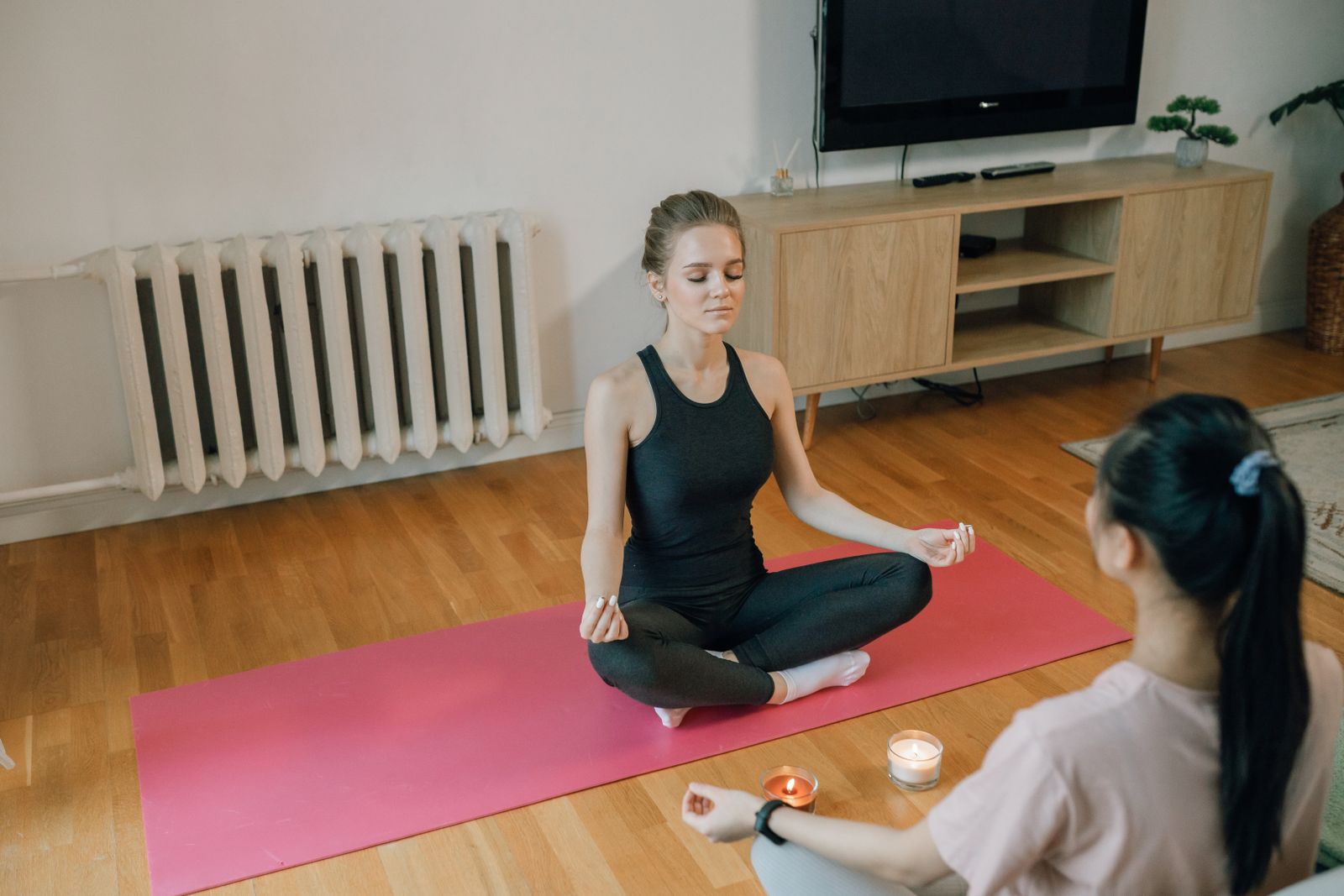
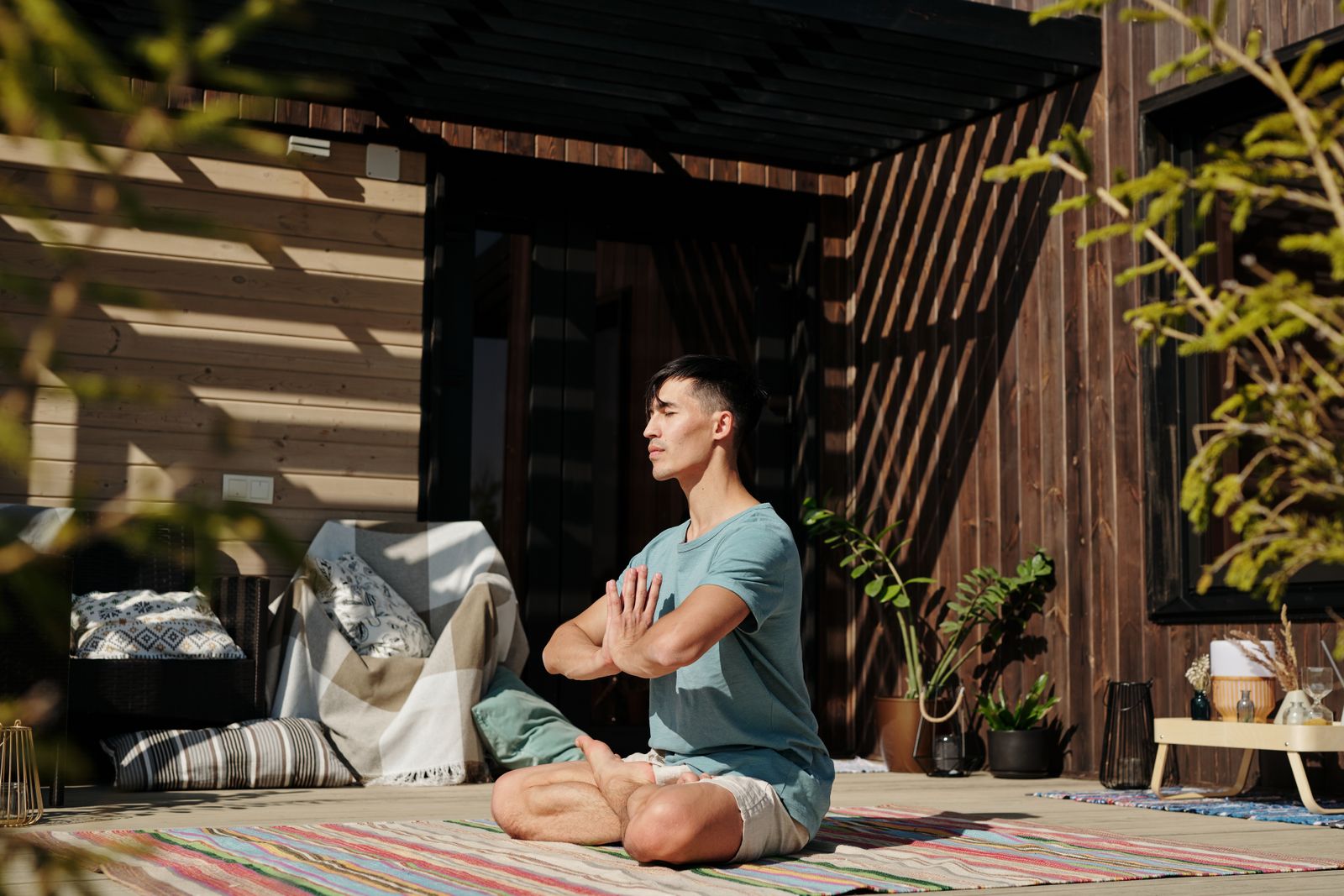
Comfort and stability matter more than any specific cross-legged shape. Sitting on a chair with both feet flat on the floor is entirely valid and often more sustainable for beginners than forcing a floor position the hips aren’t ready for. If sitting on the floor, a cushion or folded blanket under the sit bones tilts the pelvis forward slightly and takes pressure off the lower back. The spine should feel lifted but not rigid, shoulders relaxed away from the ears, hands resting on the thighs or in the lap. Many practitioners layer a simple hand position, or yoga mudra, such as resting the thumb and index finger together, into the posture; it isn’t necessary for meditation to “work,” but it can serve as a physical cue that signals the brain it’s time to settle in.
How Does Breathing Work in Meditation?
Most beginner meditation doesn’t require controlling the breath at all, only observing it as it naturally happens. That said, a few slow, deliberate breaths at the start of a session, exhaling for longer than you inhale, activates the parasympathetic nervous system and shortens the time it takes to settle. Once settled, the aim shifts to simply watching the breath rather than manipulating it. For beginners who want a more active breathing practice as a separate tool, structured techniques from pranayama, the yogic science of breath regulation, offer a useful complement. A good next step after the basics is exploring pranayama breathing techniques rather than jumping straight into advanced retention practices.
What Should You Actually Do With Wandering Thoughts?
Expect a wandering mind; it is not a sign you’re doing it wrong. A useful mental model is to treat thoughts like clouds passing through a wide sky: they arise, they’re noticed, and they pass, without needing to be chased, analyzed, or suppressed. When you notice you’ve been carried into a thought, silently note it, perhaps just as “thinking” or “planning,” and return attention to the breath. Over weeks of practice, the gap between drifting and noticing gets shorter, which is the actual marker of progress in early meditation, not the absence of thoughts altogether.
What Are the Proven Benefits of Meditation for Beginners?
Meditation’s benefits are best understood as cumulative rather than instant. Commonly reported effects among new practitioners after several weeks of consistent short sessions include reduced perceived stress, improved ability to sustain attention on a single task, better emotional regulation during minor daily frustrations, and improved sleep onset for people whose racing thoughts had been keeping them awake. A widely referenced study associated with Harvard-affiliated researchers examined structural brain changes after an eight-week mindfulness meditation program and reported measurable differences in regions linked to memory, sense of self, and stress regulation; findings like this are commonly cited as evidence that meditation isn’t just a subjective feeling of calm, but is linked to physical changes detectable in the brain. As with any single study, it’s sensible to treat this as suggestive rather than definitive, and to judge your own experience by how you feel after a few consistent weeks rather than by any one headline statistic. For a broader look at what the practice can offer long-term, see our guide to the benefits of meditation.
How Is Meditation Different From Mindfulness?
Meditation is a formal practice, typically a seated session with a defined start and end. Mindfulness is the broader quality of paying attention to the present moment, and it can be practiced informally throughout the day, while washing dishes, walking, or eating. Meditation is one of the most effective ways to train the skill of mindfulness, but mindfulness itself doesn’t require sitting down at all. A beginner who meditates for ten minutes each morning is building a mental capacity that then shows up as mindfulness during a stressful commute or a difficult conversation later that day. For a deeper look at how these two ideas relate and reinforce each other, see our full breakdown of mindfulness meditation.
How Does Meditation Connect With Yoga Practice?
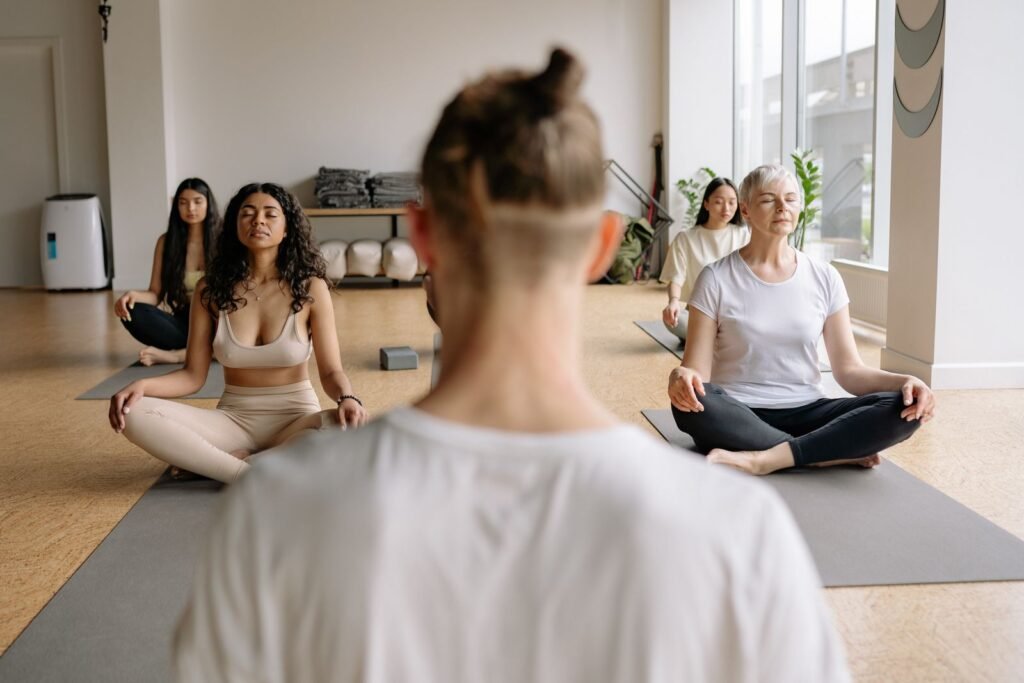
Meditation and yoga developed from overlapping philosophical roots and work well as complementary practices rather than substitutes for each other. Physical yoga postures, or asanas, help discharge restless energy and physical tension that would otherwise make sitting still for meditation uncomfortable. This is why many teachers recommend a short sequence of gentle stretches before meditating, and why programs that blend the two, such as yoga and meditation for beginners classes, tend to have higher adherence than meditation-only programs for people newer to both. If you already practice a style like hatha yoga or vinyasa yoga, adding five to ten minutes of seated meditation at the end of a session, when the body is already calm, is one of the easiest ways to build the habit without adding a separate block of time to your day. This pairing is also central to the philosophy behind pranayama, mudras and meditation as a combined discipline.
What Common Mistakes Do Beginners Make?
The most frequent mistake is treating short-term discomfort or a “bad” session as proof the practice isn’t working. A restless, thought-filled ten minutes is still a valid session; there’s no such thing as meditating incorrectly as long as you keep returning attention to the anchor. The second mistake is inconsistency, meditating for thirty minutes on a Sunday and then not again until the following weekend; short daily sessions build the habit far more reliably than occasional long ones. The third is chasing a specific feeling, such as blankness or bliss, and feeling discouraged when it doesn’t arrive; most sessions are simply neutral, and that’s normal. The fourth is ignoring physical discomfort during the session; adjusting posture mid-session is entirely acceptable and doesn’t break the practice, and it rarely requires the deep flexibility built through practices like yoga for flexibility.
What Tools and Apps Help Beginners Stay Consistent?
A simple kitchen timer or a phone timer is genuinely sufficient to start; nothing more is required. Guided meditation apps and recordings can help in the first few weeks by providing a voice to follow when the silence feels unfamiliar, and many people find a structured, scheduled class more sustainable than solo practice, since a set time on the calendar removes the daily decision of “should I meditate now.” A quiet corner of a room, a consistent time of day (many beginners find mornings easiest, before the day’s demands accumulate), and a visual cue like a cushion left out in plain sight all reduce the friction that causes new habits to lapse.
How Do You Build Meditation Into a Daily Routine That Sticks?
Habit formation research consistently points to the same lever: attach the new behavior to an existing one. Meditating immediately after brushing your teeth, immediately before or after your morning tea, or right after finishing a short online yoga class gives the brain an existing cue to hook the new habit onto. Track sessions with a simple checkmark on a calendar rather than a complex app if that feels like less friction. Expect the first two weeks to feel effortful and mechanical; most people report the practice starting to feel automatic, even something they look forward to, somewhere around the four-to-six-week mark, consistent with general habit-formation timelines rather than any meditation-specific magic number. Pairing this with a broader wellness routine, such as yoga for stress relief or yoga for better sleep, tends to reinforce both habits at once.
Questions People Ask About Meditation for Beginners
Is it normal to fall asleep while meditating?
Yes, especially early on, particularly if you’re meditating lying down or when you’re sleep-deprived. It usually means your body needed the rest. Try sitting upright rather than lying flat, meditate at a time of day when you’re less fatigued, and treat it as useful feedback about your sleep needs rather than a failure of the practice itself.
Do you need to sit in the lotus position to meditate?
No. Lotus position is one option among many and isn’t necessary for an effective practice. A chair with feet flat on the floor, a simple cross-legged seat on a cushion, or even lying down (with a higher risk of dozing off) all work. Stability and reasonable comfort matter far more than achieving a specific traditional posture.
How do I know if I’m meditating correctly?
If you’re sitting with an anchor (usually the breath), noticing when your mind wanders, and gently returning attention without harsh self-judgment, you’re doing it correctly. There is no version of this process that counts as “wrong” as long as you keep returning to the anchor; the returning is the practice, not a sign of failure.
Can meditation help with anxiety?
Many people report reduced anxiety symptoms with consistent practice, particularly through breath-focused and mindfulness approaches that interrupt anxious thought spirals. Research in this area is genuinely promising but still developing, and meditation is best treated as a complementary tool alongside, not a replacement for, professional support for clinically significant anxiety.
What’s the best time of day to meditate?
Morning, before the day’s obligations accumulate, is the most commonly recommended window because it’s easier to protect consistently and sets a calmer tone for the hours ahead. That said, the best time is genuinely whichever slot you’ll actually keep; a consistent evening session beats an inconsistent morning one.
How long until I notice a difference?
Some people notice subtle calm after a single session; more consistent, measurable shifts in stress and attention are commonly reported after two to eight weeks of regular short daily practice, a timeline echoed in several structured research programs. Patience through the first few unremarkable weeks is the biggest predictor of whether the habit sticks.
Try This for Yourself
Reading about meditation only goes so far; the practice itself is where the actual change happens. If you’d like real-time guidance, a supportive structure, and a teacher who can adjust technique to your specific needs, explore FitStrot’s online yoga classes, which pair movement and seated meditation in a format built for complete beginners.
Related reading: meditation, meditation techniques, mindfulness meditation, yoga mudra, and FitStrot’s online yoga classes.