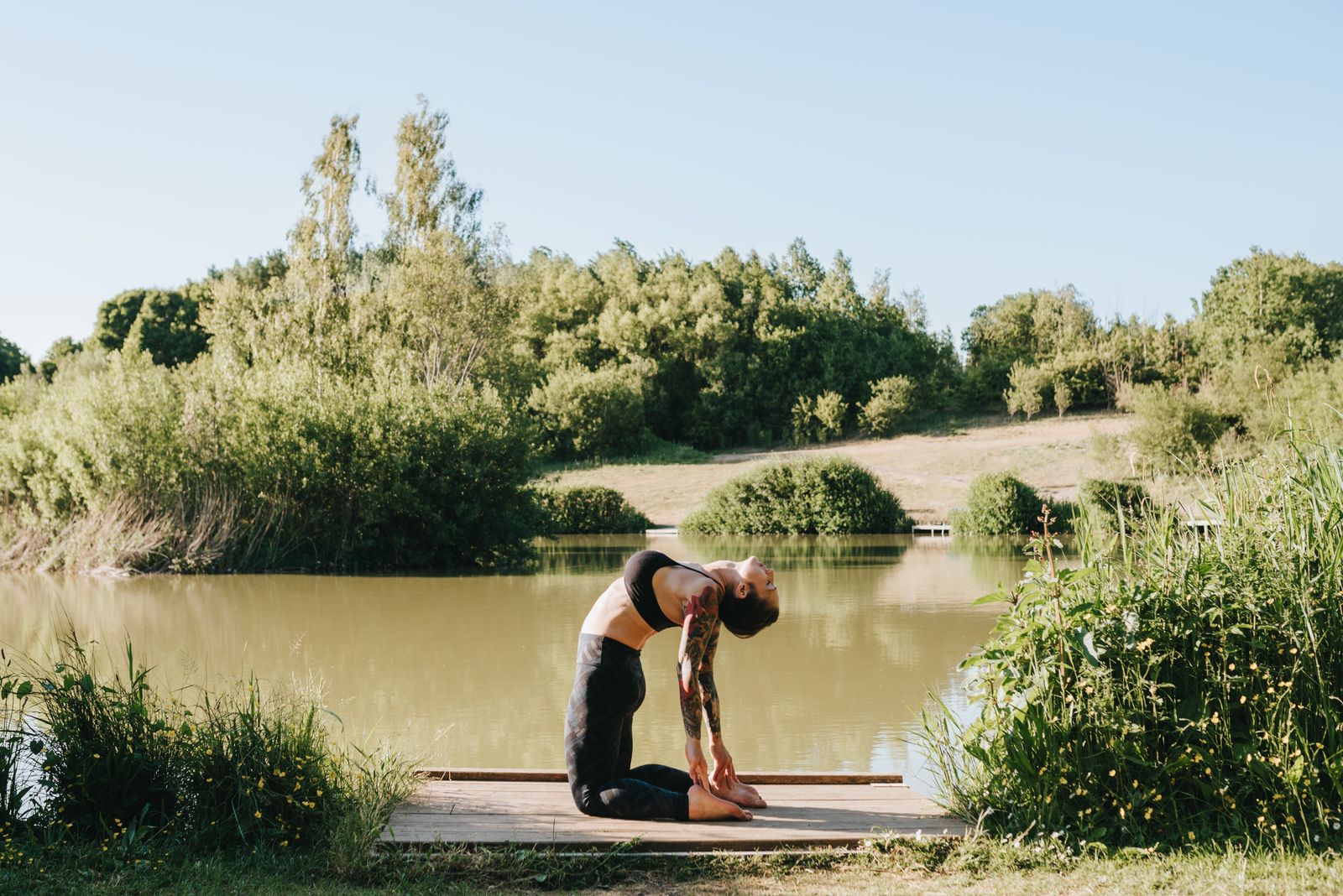
Ustrasana, or Camel Pose, is a kneeling backbend in which you arch your spine backward and reach your hands toward your heels while keeping your hips stacked over your knees. It opens the chest, shoulders, and hip flexors, strengthens the back muscles, and is commonly used to counter the effects of long hours spent sitting or hunched over a screen. Practiced with a neutral neck and a lift through the sternum rather than a collapse into the lower back, ustrasana is considered an intermediate backbend that builds both flexibility and postural strength over time.
What Does “Ustrasana” Mean?
The name comes from the Sanskrit words “ustra,” meaning camel, and “asana,” meaning pose or seat. The shape of the body in the full expression of the posture, with the chest lifted and the back curved, is said to resemble the hump and arched neck of a camel. You’ll also see it spelled “ushtrasana” in some transliterations, but the pronunciation and the pose are identical. It belongs to a broader family of backbends in yoga poses that emphasize spinal extension, alongside postures like bridge pose, wheel pose, and cobra pose. Understanding the Sanskrit naming convention also helps when exploring related poses, since many asanas are named after animals, objects, or sages found throughout yoga poses and their meanings.
How Do You Perform Ustrasana Step by Step?
Begin kneeling on your mat with knees hip-width apart and thighs perpendicular to the floor. Tuck your toes under initially if you want more support for your lower back, or keep the tops of your feet flat for the classical version. Place your hands on your lower back with fingers pointing downward for support. Inhale to lengthen your spine, then begin to lift your chest toward the ceiling as you gently start to lean backward from the upper back rather than collapsing into the lumbar spine. If it feels appropriate for your body, reach one hand back at a time to rest your palms on your heels, letting your head follow the line of your spine last, without straining the neck. Keep your hips pressing forward over your knees throughout, since this is what protects the lower back and keeps the work distributed through the whole spine. Hold for several breaths, then come out slowly by bringing your hands back to your hips and lifting your head and chest up last.
What Is Ardha Ustrasana (Half Camel Pose)?
Ardha ustrasana, or half camel pose, is a gentler variation where only one arm reaches back to the corresponding heel while the other arm extends overhead or rests on the same-side hip for support. This version reduces the intensity of the backbend and is often taught as a stepping stone before attempting the full two-handed expression. It’s a useful option for beginners, for those with tighter shoulders or hip flexors, or as a warm-up move before deeper backbends. Many teachers also use ardha ustrasana as a way to build one side of the body’s flexibility and strength before working symmetrically. It’s a pose you’ll often encounter early in yoga for beginners programs, since it teaches the core mechanics of a safe backbend without demanding full shoulder flexibility on day one.
What Are the Physical Benefits of Ustrasana?
Camel pose stretches the entire front line of the body, including the chest, abdomen, hip flexors, and quadriceps, which tend to shorten from prolonged sitting. It strengthens the muscles along the spine and the shoulders as they work to hold the backbend, and it can improve overall posture by counteracting the forward-rounded shape many people develop from desk work and screen time. The pose also encourages deeper breathing, since the open chest position removes some of the restriction on the lungs and diaphragm that a hunched posture creates. Regular practice of backbends like this one is often cited by yoga teachers as supportive for shoulder mobility and thoracic spine extension, though results vary by individual and should build gradually. These postural benefits are one reason ustrasana frequently appears in programs focused on yoga for posture and yoga for flexibility, alongside complementary work like yoga for shoulders.
What Are the Mental and Energetic Benefits?
Backbends are frequently described in yoga traditions as energizing and heart-opening postures, since they physically expand the chest cavity where the heart and lungs sit. Practitioners often report feeling more alert and emotionally open after backbend-focused sequences. In terms of subtle body concepts referenced in yogic philosophy, chest-opening poses are sometimes associated with the anahata, or heart chakra, said to relate to compassion and connection. These associations come from traditional yogic frameworks rather than clinical research, so they’re best understood as part of the practice’s broader philosophy rather than a medical claim. If you’re curious about this side of the practice, it’s covered in more depth in resources on chakras in yoga and the wider philosophy of yoga.
Who Should Avoid or Modify Ustrasana?
Ustrasana is an intermediate-level backbend and isn’t recommended for complete beginners without some prior spinal mobility work. Approach this pose cautiously, ideally under the guidance of an experienced teacher, if any of the following apply to you:
- Acute or chronic lower back injuries
- Neck issues or a recent neck injury
- High or low blood pressure
- Migraines
- Recent abdominal surgery
- Pregnancy, since deep backbends are generally advised against
If you feel any sharp or pinching pain in the lower back during the pose, it typically means the hips have shifted behind the knees, and you should ease out and reset with the hands supporting the lower back instead of reaching for the heels.
What Are Common Mistakes in Camel Pose?
The most frequent error is letting the hips drift backward behind the knees, which shifts the bend into the lower back instead of distributing it evenly through the spine. Another common mistake is dropping the head back too early, before the upper back and chest have opened, which can strain the neck. Some practitioners also hold their breath through the pose, which increases tension; steady breathing helps the body ease into the stretch rather than resist it. Finally, rushing into the full pose with hands on heels before the shoulders and hip flexors are adequately warmed up often leads to compensation patterns rather than genuine opening.
What Are Useful Variations of Ustrasana?
Besides ardha ustrasana, there are several accessible variations. Using yoga blocks placed beside the ankles gives the hands a higher surface to reach for, which is helpful for those who don’t yet have the shoulder or spine flexibility to reach the heels directly. A supported version against a wall or with a bolster under the hips can also ease newcomers into the shape. More advanced practitioners sometimes move toward deeper backbends such as wheel pose (urdhva dhanurasana) once camel pose feels comfortable and stable, or explore related kneeling shapes such as ustrasana variations and anjaneyasana to keep the hip flexors supple.
How Does Ustrasana Fit Into a Yoga Sequence?
Camel pose works best after the body has been warmed up with sun salutations or standing poses that open the hips and shoulders. A typical flow might move from surya namaskar into standing postures like tadasana and vrksasana to build heat and balance, then transition into kneeling and seated work before attempting backbends. Ustrasana is often placed before forward folds or twists, which help release the lower back after the intensity of the backbend. It also pairs well with hip-opening postures and gentle counter-poses like child’s pose and seated forward fold, which allow the spine to return to neutral gradually. If you practice within a broader style such as hatha yoga or a faster-paced vinyasa yoga class, camel pose is typically slotted into the middle of the sequence, after the body is warm but before the deepest peak pose of the practice.
What Breathing Pattern Works Best in Camel Pose?
Steady ujjayi-style breathing, an audible, slightly constricted breath through the nose, is commonly recommended while holding backbends like ustrasana. Inhaling as you lift the chest and lengthen the spine helps create space, while a slow, controlled exhale as you settle into the pose can help release tension in the muscles being stretched. Avoiding breath-holding is particularly important in backbends, since restricted breathing tends to increase muscular guarding and makes the stretch feel more intense than it needs to be. If you find yourself holding your breath, it’s often a signal to back off slightly and find a more sustainable depth in the pose.
How Does Ustrasana Compare to Other Backbends?
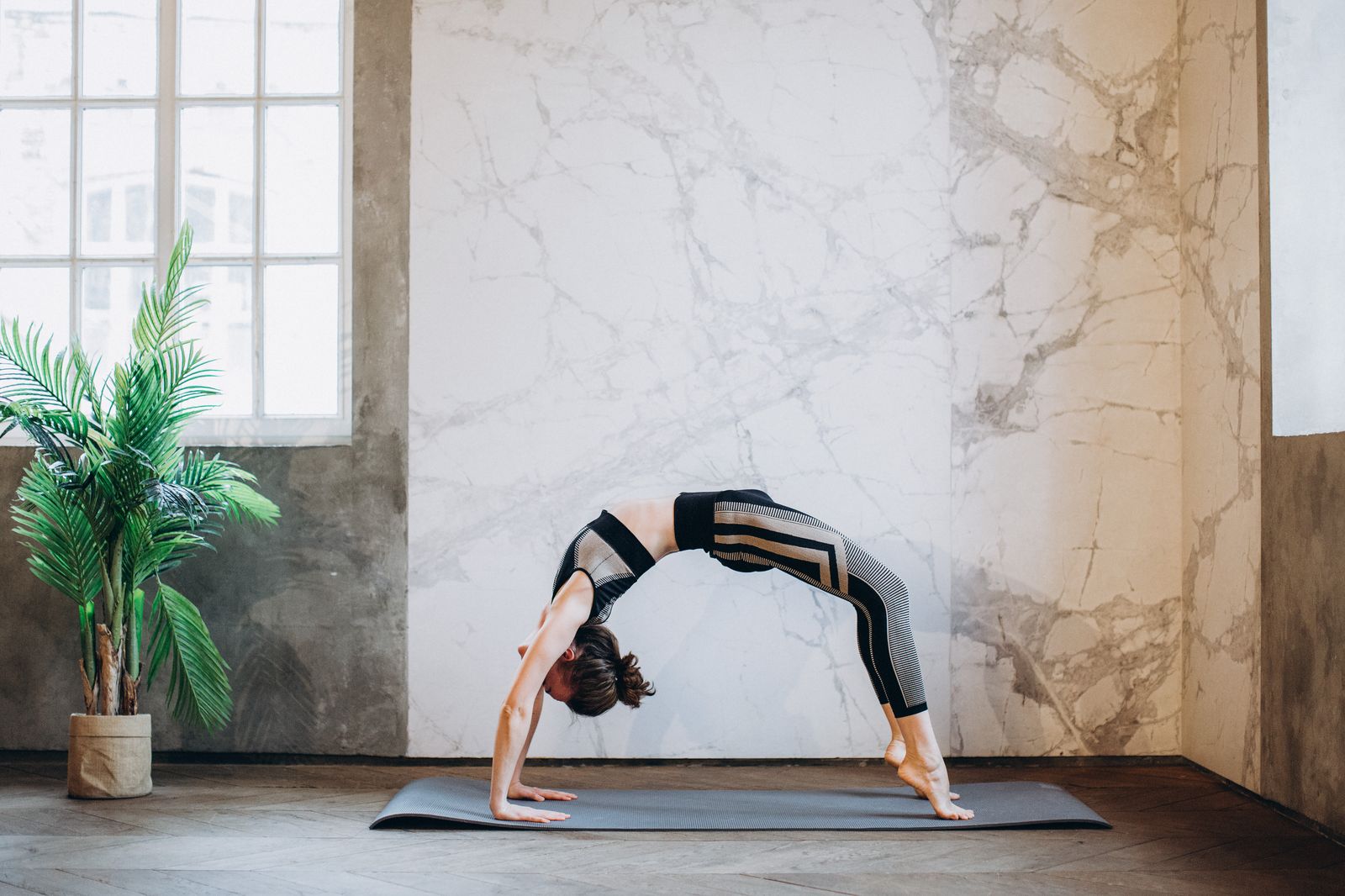
Compared to bridge pose, which is performed lying on the back with the hips lifted, ustrasana is a kneeling backbend that places more direct opening through the hip flexors and shoulders. Compared to a full wheel pose, which requires significant shoulder and spine flexibility along with arm strength, camel pose is considered more accessible for those newer to backbending because the hands can stay on the heels or lower back rather than bearing the body’s full weight.
| Pose | Body Position | Difficulty | Primary Opening |
|---|---|---|---|
| Bridge Pose | Lying on the back, hips lifted | Beginner-friendly | Hips, chest |
| Camel Pose (Ustrasana) | Kneeling, spine arched backward | Intermediate | Hip flexors, shoulders, chest |
| Wheel Pose | Hands and feet on the floor, full backbend | Advanced | Shoulders, spine, full front body |
Because of this, ustrasana is frequently used as a bridge posture, appropriate for those working up to deeper backbends while still building the strength and openness those poses require.
How Often Should You Practice Ustrasana?
Because it’s a moderately intense backbend, most teachers suggest practicing ustrasana two to four times a week rather than daily, allowing the muscles and connective tissue around the spine time to adapt. Pairing it with complementary practices like yoga for back pain or gentler restorative sessions on alternate days can help balance the intensity. As with any backbend, consistency over weeks and months tends to produce more lasting improvements in flexibility and posture than occasional, forced attempts at the deepest expression of the pose. Combining a couple of weekly backbend-focused sessions with breathing practices like pranayama or a restorative online yoga class can round out a balanced weekly routine.
Questions People Ask About Ustrasana
Is ustrasana good for beginners?
Ustrasana is generally considered an intermediate pose rather than a true beginner posture, since it requires some existing shoulder and spine mobility. Beginners can start with ardha ustrasana or a block-supported version and work up to the full pose gradually, ideally under guidance from an experienced teacher who can check hip and knee alignment.
What muscles does camel pose stretch and strengthen?
Camel pose stretches the chest, abdominal muscles, hip flexors, and quadriceps while strengthening the muscles that run along the spine, the shoulders, and the glutes, which engage to keep the hips pressing forward over the knees. This combination of stretching the front body and strengthening the back body is part of what makes it useful for posture.
Can ustrasana help with back pain?
Because it strengthens the muscles supporting the spine and opens tight hip flexors that can pull on the lower back, many practitioners find gentle backbending helpful for general back tension. However, anyone with an existing back injury or acute pain should consult a healthcare provider before attempting it, since the pose can aggravate certain conditions if done with poor alignment.
What is the difference between ustrasana and ardha ustrasana?
Ustrasana is the full pose with both hands reaching back to the heels, while ardha ustrasana, or half camel pose, involves only one arm reaching back while the other stays lifted or supported on the hip. Half camel is a gentler entry point that builds the flexibility and confidence needed for the full posture.
How long should you hold camel pose?
Most practitioners hold ustrasana for five to eight breaths, roughly twenty to thirty seconds, though this can vary based on experience level and how the body feels that day. It’s generally better to hold a moderate backbend steadily than to push for maximum depth for only a second or two.
Is it normal to feel dizzy after camel pose?
A mild head rush when coming out of a backbend is fairly common due to the change in blood flow and head position, especially if the neck was tipped back. Coming out of the pose slowly, bringing the head and chest up last, and resting briefly in child’s pose afterward usually helps this pass quickly.
Try This for Yourself
Reading about ustrasana is a good start, but backbends are best learned with real-time feedback on your alignment. Join a live, guided class to practice camel pose safely with an instructor who can help you find the right depth for your body. Book an online yoga class with FitStrot and build your backbend practice step by step.
Related reading: Yoga Poses, Types of Yoga, Benefits of Yoga, Vinyasa Yoga, and FitStrot’s online yoga classes.