Yoga for flexibility works by combining sustained stretches, controlled breathing, and repeated movement through a joint’s full range of motion, which gradually lengthens muscle fibers and loosens the connective tissue (fascia) that limits how far you can bend, twist, or reach. Poses like Paschimottanasana (seated forward fold), Adho Mukha Svanasana (downward-facing dog), and Anjaneyasana (low lunge) target the hamstrings, hips, shoulders, and spine, the areas where most adults lose range of motion first. Consistency matters more than intensity: practicing 15-30 minutes, 3-5 times a week, produces noticeably looser hips and hamstrings within 4-8 weeks for most beginners, according to patterns widely reported by yoga teachers and physical therapists working with new students. Flexibility gains are gradual and joint-specific, so a routine that mixes forward folds, hip openers, spinal twists, and shoulder stretches gets better results than repeating a single pose.
Why Does Yoga Improve Flexibility Better Than Static Stretching Alone?
Yoga combines static holds with breath-driven relaxation, which allows muscles to release tension more completely than a quick, unsupported stretch. When you hold a pose like Uttanasana (standing forward fold) for 5-8 breaths, the parasympathetic nervous system gradually takes over, signaling the stretched muscle to relax rather than reflexively tighten in a protective response. This breath-and-hold approach also builds body awareness, so practitioners learn to recognize the difference between a productive stretch and one that risks strain. Static stretching in isolation targets one muscle group at a time, while a yoga sequence moves through interconnected muscle chains, so a single sun salutation stretches the calves, hamstrings, hip flexors, chest, and shoulders in one continuous flow. This full-chain approach is one reason yoga for strength and flexibility training often overlap in the same sequences rather than requiring separate workouts.
What Are the Best Yoga Poses for Flexibility Beginners Should Start With?
A beginner-friendly flexibility routine should focus on major muscle groups without demanding advanced hip or shoulder mobility on day one. Adho Mukha Svanasana (downward-facing dog) stretches the hamstrings, calves, and shoulders simultaneously and serves as a foundational pose in nearly every sequence. Balasana (child’s pose) gently opens the hips and lower back while allowing the body to rest between more active stretches. Supta Baddha Konasana (reclined bound angle pose) uses gravity and support (a bolster or folded blanket under the knees) to slowly open the inner thighs and hips without forcing the stretch. Marjaryasana-Bitilasana (cat-cow) mobilizes the entire spine through gentle flexion and extension, making it one of the safest ways to build spinal flexibility for someone new to yoga. Holding each pose for 5-10 slow breaths, rather than rushing through repetitions, gives connective tissue time to respond and is generally safer than bouncing or forcing a deeper stretch.
Which Yoga Asanas Target Hip Flexibility Specifically?
Hips are typically the tightest joint in adults who sit for long stretches during the day, so a dedicated set of hip-opening asanas makes a noticeable difference. Pigeon pose (Eka Pada Rajakapotasana) is widely considered one of the most effective hip openers in yoga, stretching the glutes and outer hip of the front leg while lengthening the hip flexor of the back leg. Baddha Konasana (bound angle pose, also called butterfly pose) opens the inner thighs and groin by bringing the soles of the feet together and gently pressing the knees toward the floor. Low lunge (Anjaneyasana) directly targets the hip flexors and psoas muscle, which shorten from prolonged sitting. Because hip tightness is closely linked to lower back discomfort, many people practicing hip-opening sequences also find relief covered in yoga for back pain routines.
How Do You Stretch Tight Hamstrings Safely With Yoga?
Hamstring flexibility improves through consistent, gentle lengthening rather than forceful stretching, since overstretching a cold hamstring is one of the more common yoga injuries for beginners. Paschimottanasana (seated forward fold) is the classic hamstring stretch: sit with legs extended, hinge from the hips rather than rounding the lower back, and fold forward only as far as feels like mild tension, not pain. Uttanasana (standing forward fold) with slightly bent knees is a gentler alternative for very tight hamstrings, letting the spine lengthen before gradually straightening the legs over weeks of practice. Supta Padangusthasana (reclined big toe pose), using a strap or towel looped around the foot, isolates one hamstring at a time while keeping the lower back supported against the floor. Warming up with a few rounds of Surya Namaskar (sun salutations) before deep hamstring stretches raises tissue temperature and reduces injury risk, a principle that applies across nearly every type of yoga practice.
What Yoga Stretches Improve Shoulder and Upper Back Flexibility?
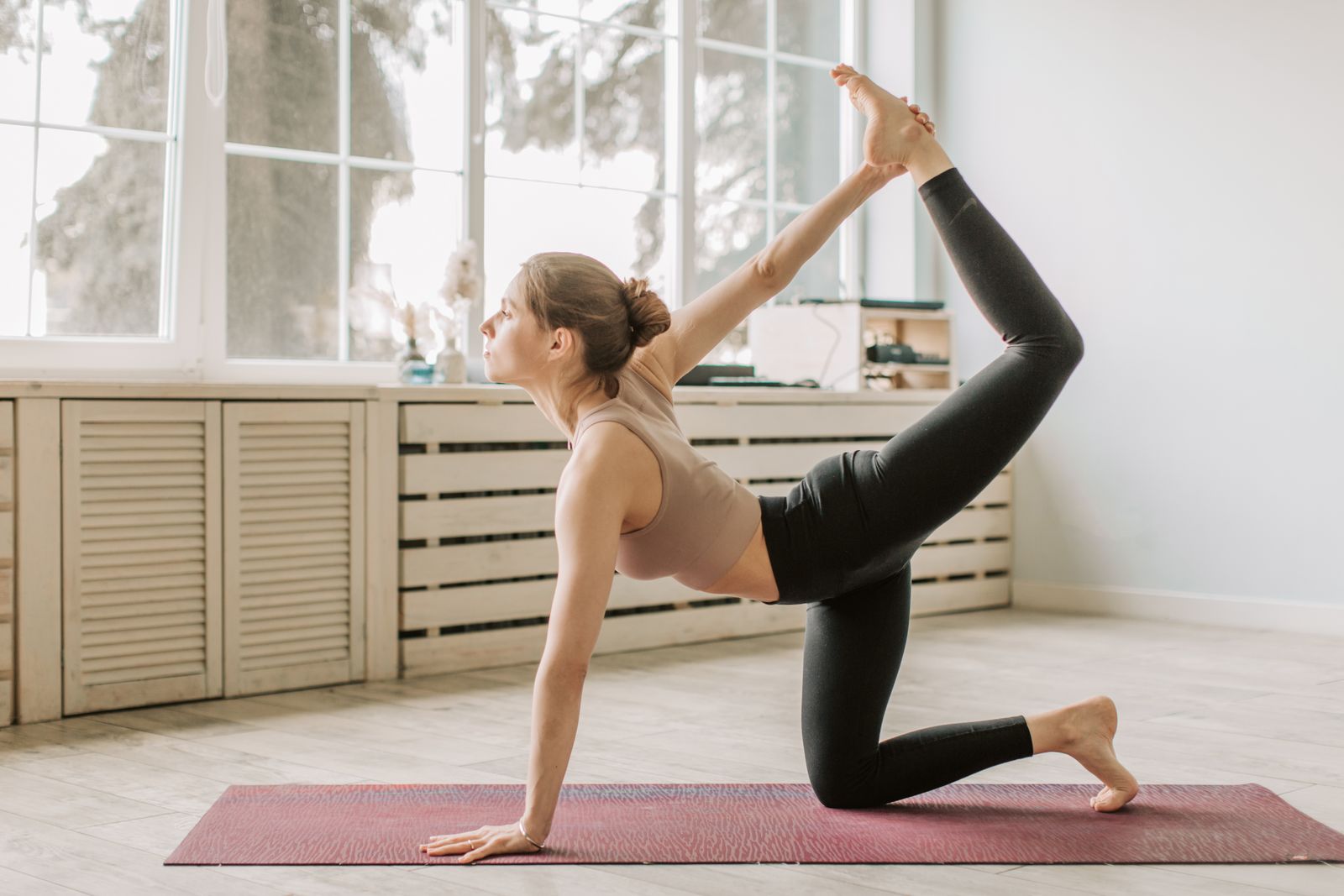
Tight shoulders often come from hours at a desk or a phone, rounding the upper back and internally rotating the shoulders. Gomukhasana (cow face pose) arms, clasping the hands behind the back with one elbow pointing up and one down, directly targets the tightness in the shoulders and triceps that builds up from this posture. Garudasana (eagle pose) arms wrap the arms around each other at the elbows and wrists, opening the upper back and rear shoulder muscles that rarely get stretched in daily life. Thread the needle pose stretches the shoulder and upper back on one side while gently twisting the spine. Dhanurasana (bow pose) opens the entire front of the shoulders and chest while stretching the hip flexors and quadriceps, making it an efficient full-body flexibility pose once a practitioner has built enough back strength to support it. Shoulder flexibility work pairs naturally with yoga for posture, since rounded shoulders and tight chest muscles are common posture complaints yoga addresses.
How Is Yoga for Flexibility and Strength Different From Flexibility-Only Stretching?
Pure flexibility training lengthens muscles without necessarily building the strength to control that new range of motion, which is why yoga pairs stretching with active poses that require muscular engagement throughout the stretch. Warrior II (Virabhadrasana II) stretches the hips and groin while the standing leg’s quadriceps and glutes actively stabilize the pose. Utkatasana (chair pose) builds strength in the thighs and core while opening the shoulders when the arms lift overhead. This combination matters because flexibility without strength can increase injury risk, since a joint with a large range of motion but weak surrounding muscles is less stable under load. A well-rounded yoga for strength and flexibility routine typically alternates between deep stretches and strength-building poses in the same session, which is also why vinyasa-style classes that link poses through movement tend to build both qualities more efficiently than long, static-only stretching sessions.
How Often Should You Practice Yoga to See Flexibility Results?
Most beginners notice their first improvements in range of motion within 2-3 weeks of practicing 3-4 times a week for 20-30 minutes per session. Meaningful, visible flexibility changes, like touching the toes for the first time or sitting comfortably in a deeper hip opener, generally take 8-12 weeks of consistent practice, since connective tissue adapts more slowly than muscle strength does. Daily short sessions of 10-15 minutes tend to outperform less frequent, longer sessions for flexibility specifically, because connective tissue responds better to repeated, moderate stretching than to occasional intense stretching.
What Yoga Sequence Works Best as a Full-Body Flexibility Workout?
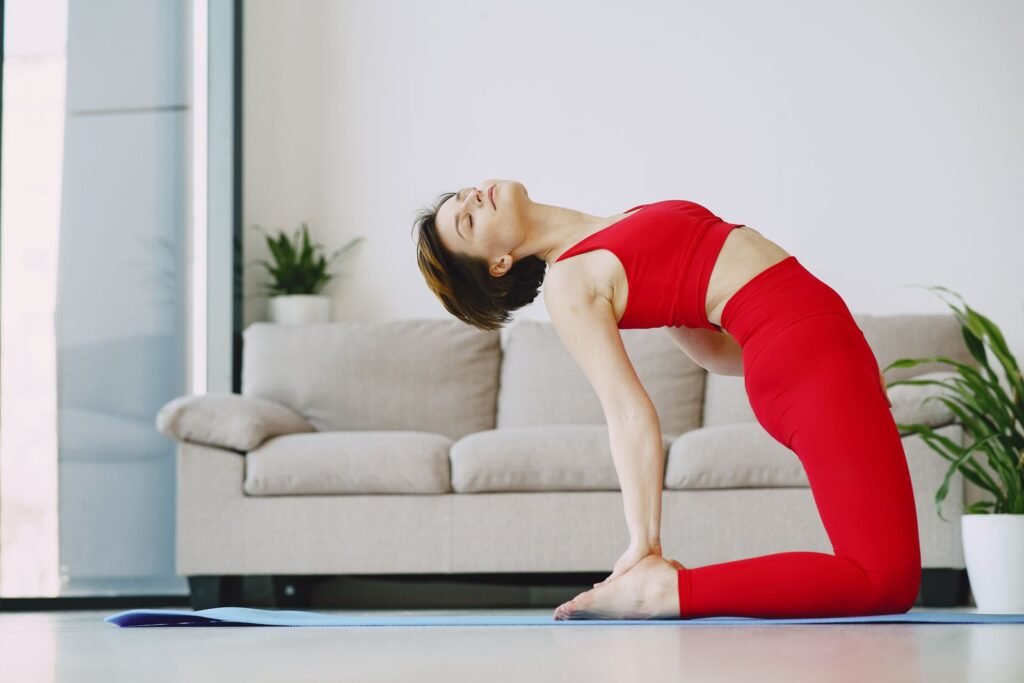
An effective flexibility-focused sequence moves from the center of the body outward and from larger muscle groups to smaller ones. Start with 3-5 rounds of Surya Namaskar (sun salutations) to raise body temperature and prepare the muscles for deeper stretching. Follow with hip openers, low lunge, pigeon pose, and bound angle pose, held for 5-8 breaths each side. Move into hamstring and spinal work: seated forward fold, wide-legged forward fold, and a seated spinal twist. Add shoulder and chest openers, cow face pose arms and a supported backbend like Bhujangasana (cobra pose) or Ustrasana (camel pose), and close with 5-10 minutes in Savasana (corpse pose) to let the nervous system settle and consolidate the stretch. This kind of full-body sequence takes 30-45 minutes and works well 3-4 times weekly, and pairs naturally with the broader routines covered in beginner yoga poses.
Can Yoga for Flexibility Help With Weight Loss and Body Composition?
Flexibility-focused yoga alone burns fewer calories than cardio-intensive styles like power yoga or vinyasa flow, since slower, held poses keep heart rate lower than continuous movement does. That said, flexibility training plays a supporting role in a broader fitness routine: looser hips and hamstrings make squats, lunges, and other compound strength movements safer and more effective. Restorative flexibility practice also reduces stress hormones like cortisol, linked to abdominal fat storage when chronically elevated, making it a useful complement rather than a replacement for calorie-burning exercise. Anyone specifically training for weight loss should pair a flexibility practice with more dynamic sessions, a topic covered in depth in yoga for weight loss.
Does Improving Flexibility Through Yoga Help You Grow Taller?
Yoga cannot increase height once growth plates have closed, typically by the late teens to early twenties, since height is determined by skeletal bone length, not muscle or connective tissue flexibility. What yoga can do is improve posture and spinal decompression, which often reveals a centimeter or two of height that was being masked by poor posture, forward head carriage, or compressed spinal discs from prolonged sitting. Poses like Tadasana (mountain pose) can temporarily decompress the spine, creating a taller appearance that fades within hours. For a more detailed look at what yoga can and cannot do for height and posture, see yoga to increase height.
What Common Mistakes Slow Down Flexibility Progress in Yoga?
Several habits reliably slow down flexibility progress, even for practitioners who show up consistently:
- Forcing a stretch past mild tension into sharp pain, which triggers a protective muscle contraction (the stretch reflex) that works against flexibility gains rather than helping them.
- Skipping the warm-up and moving straight into deep stretches on cold muscles, which increases injury risk.
- Holding the breath during a stretch instead of breathing slowly and evenly, which keeps the nervous system in a mild stress response that limits how much a muscle will release.
- Practicing inconsistently, one intense session every two weeks instead of shorter sessions several times weekly, which produces far slower results because connective tissue adapts to regular, moderate stress rather than occasional maximum effort.
- Comparing your flexibility to others in a class or on social media, which leads people to force positions their bodies aren’t ready for yet.
Which Yoga Style Builds Flexibility Fastest: Hatha, Vinyasa, or Yin?
Each major style builds flexibility at a different pace, largely based on how long each pose is held:
| Style | Typical Hold Time | Flexibility Speed | Best For |
|---|---|---|---|
| Yin | 3-5 minutes per pose | Fastest | Directly lengthening connective tissue, not just muscle |
| Hatha | 5-10 breaths per pose | Moderate | Beginners building flexibility and basic strength together |
| Vinyasa | 1-3 breaths per pose, continuous flow | Slowest | Cardiovascular benefit alongside gradual flexibility gains |
Combining 2 Hatha yoga or vinyasa sessions with 1 yin session weekly is a practical approach that builds strength and flexibility together. A broader comparison of pacing and intensity across styles is available in types of yoga and vinyasa yoga.
Are There Risks to Yoga for Flexibility Training?
Yoga is low-risk for most healthy adults when practiced with attention to the body’s signals, but a few precautions matter. Hypermobile individuals, people whose joints naturally move beyond a typical range, should focus on building strength around their joints rather than chasing deeper stretches, since excess flexibility without stability increases injury risk in this group specifically. Anyone with a recent joint injury, herniated disc, or diagnosed hip or shoulder impingement should get clearance from a physical therapist or doctor before deep hip openers or backbends. Pregnant practitioners should avoid deep twists and lying flat on the back for extended periods after the first trimester, favoring open, supported variations instead. Sharp, shooting, or radiating pain during any stretch is a signal to back off immediately, since this differs from the mild, dull sensation of a productive stretch.
How Does Breathing (Pranayama) Support Flexibility Gains?
Slow, controlled breathing activates the parasympathetic nervous system, which signals muscles to relax rather than guard against a stretch, making breath control just as important as the physical shape of a pose. Ujjayi breath, a slightly audible breath created by softly constricting the back of the throat, is commonly used throughout a yoga flexibility practice to maintain steady focus and a slow pace through each hold. Exhaling as you move deeper into a stretch, rather than holding the breath, allows the diaphragm to release tension that would otherwise keep the surrounding muscles tight. Practicing a few minutes of yoga breathing techniques before a flexibility session can lower resting heart rate and muscle tension, effectively pre-loosening the body before the physical stretching begins.
How Does Yoga for Flexibility Fit Into a Broader Wellness Routine?
Flexibility rarely improves in isolation from the rest of a fitness and wellness routine, since sleep quality, hydration, and overall stress levels all affect how readily muscles release tension during a stretch. Chronic stress keeps the nervous system in a mild fight-or-flight state, which tightens muscles throughout the body, one reason practitioners dealing with high stress often see faster flexibility gains once they also address yoga for stress and yoga for anxiety alongside their physical practice. Adequate protein and hydration support the collagen structure of tendons and ligaments, the tissues most responsible for a joint’s ultimate range of motion. Combining a dedicated flexibility practice with general strength work, a topic explored further in the broader benefits of yoga, produces more durable, injury-resistant results than chasing flexibility gains alone.
Questions People Ask About Yoga for Flexibility
How long does it take to become flexible with yoga?
Most beginners notice their first improvements within 2-3 weeks of practicing 3-4 times weekly, while more significant range-of-motion changes typically take 8-12 weeks of consistent practice. Connective tissue adapts more slowly than muscle strength, so flexibility gains build gradually rather than appearing after a single session.
What is the best yoga pose for flexibility beginners?
Downward-facing dog (Adho Mukha Svanasana) is one of the best starting poses, since it stretches the hamstrings, calves, and shoulders simultaneously while building basic strength. Cat-cow (Marjaryasana-Bitilasana) is equally useful for beginners because it gently mobilizes the entire spine without requiring any existing flexibility.
Can inflexible people still do yoga?
Yes. Yoga is specifically designed to meet the body where it currently is, and props like blocks, straps, and bolsters make poses accessible regardless of starting flexibility. Many people begin yoga precisely because they are inflexible, and consistent practice is what builds the range of motion over time, not the other way around.
Is it better to stretch every day or a few times a week for flexibility?
Short daily sessions of 10-15 minutes generally produce faster, steadier flexibility gains than longer sessions done only once or twice a week, since connective tissue responds better to frequent, moderate stress than occasional intense stretching. Three to five sessions weekly is a realistic, sustainable target for most beginners.
Does yoga for flexibility also build strength?
Yes, many flexibility-focused poses require active muscular engagement to hold safely, such as Warrior II or chair pose, which build strength in the legs, core, and shoulders alongside the stretch. This combination of flexibility and strength is one reason yoga is considered more injury-resistant than static stretching alone.
What should I avoid when stretching for flexibility in yoga?
Avoid bouncing into a stretch, holding your breath, or pushing through sharp or shooting pain, all of which increase injury risk rather than speeding up progress. A productive stretch should feel like mild, dull tension that eases slightly as you breathe, not pain that gets worse the longer you hold it.
Try This for Yourself
Reading about pigeon pose, seated forward folds, and hip openers is a useful starting point, but real flexibility gains come from consistent, guided practice where your alignment, breathing, and pacing are corrected in real time by someone who can see what your body is doing. If you want structured sessions that build flexibility safely alongside strength and mobility, explore FitStrot’s online yoga classes and build a routine suited to your current range of motion and goals.
Related reading: Yoga for Strength, Yoga for Posture, Yoga for Weight Loss, Beginner Yoga Poses, and FitStrot’s online yoga classes.