Tadasana, or Mountain Pose, is the foundational standing yoga posture in which you stand with feet grounded, spine tall, shoulders relaxed, and weight distributed evenly through both feet. Despite looking like simple standing, tadasana teaches full-body alignment, activates the leg muscles, lengthens the spine, and trains the nervous system to find stillness while staying alert. It’s the starting and ending point for most standing sequences, including Surya Namaskar, and is typically the first pose taught to beginners because every other standing asana borrows its alignment principles.
What Is Tadasana in Yoga?
Tadasana comes from the Sanskrit words “tada” (mountain) and “asana” (pose or seat), so the literal translation is Mountain Pose. It appears in classical hatha yoga texts as one of the base standing postures, and modern teachers treat it as the reference point for posture in nearly every other yoga pose. In tadasana, you’re not aiming for a dramatic shape. You’re aiming for precise, quiet alignment: ears over shoulders, shoulders over hips, hips over ankles, with the crown of the head lifting toward the ceiling as if a string were gently pulling it up.
Because it looks so simple, tadasana is often rushed or skipped by beginners eager to get to more visually impressive poses. Experienced teachers tend to disagree with that instinct. Standing well is a skill, and tadasana is where that skill is built, tested, and refined every single practice.
How Do You Do Tadasana? Step-By-Step Instructions
Tadasana can be practiced in under a minute, but the details matter more than the duration. Follow these steps:
- Stand with feet together or hip-width apart. Feel all four corners of each foot pressing evenly into the floor: big toe mound, little toe mound, and both sides of the heel.
- Engage the leg muscles. Lift the kneecaps slightly by firming the thigh muscles, without locking the knees.
- Lengthen the tailbone down while lifting the pubic bone slightly, which neutralizes an over-arched lower back.
- Broaden the collarbones and roll the shoulders back and down, away from the ears.
- Let the arms hang naturally by the sides, palms facing either inward toward the thighs or forward, depending on the variation.
- Lift the crown of the head toward the ceiling, keeping the chin level and the gaze soft and forward (this focal point is called drishti).
- Breathe steadily for 5 to 10 slow breaths, noticing where your weight naturally wants to shift and correcting it back to center.
Hold the pose for 30 seconds to a minute when practicing it as a standalone posture, or for a few breaths when using it as a transition point between vinyasa sequences.
What Are the Benefits of Tadasana?
Tadasana yoga benefits go well beyond “standing straight.” Practiced consistently, it delivers measurable improvements to posture, body awareness, and mental focus:
- Improves posture by training the body to recognize neutral spinal alignment, which carries over into how you sit, walk, and stand throughout the day.
- Strengthens the feet, ankles, and legs through isometric engagement, since you’re actively pressing into the floor and lifting the kneecaps rather than passively standing.
- Builds core awareness because keeping the pelvis neutral requires a gentle, continuous engagement of the deep abdominal muscles.
- Enhances balance by asking the small stabilizer muscles in the ankles and feet to make constant micro-adjustments.
- Calms the mind through the combination of steady breath and single-pointed focus, which is why many teachers use it as a grounding pose at the start or end of class.
- Prepares the body for more advanced poses including Vrksasana (Tree Pose), warrior variations, and forward folds, all of which rely on the same foundational alignment.
These tadasana yoga benefits are cumulative. A single session won’t transform your posture, but returning to the pose regularly, especially at the start of a yoga practice, retrains the body’s default standing pattern over weeks and months.
What Muscles Does Tadasana Work?
Even though tadasana doesn’t involve visible movement, it recruits a surprising number of muscle groups isometrically. The quadriceps and the muscles around the kneecap engage to keep the legs firm without locking the joints. The muscles of the feet and ankles, particularly the intrinsic foot muscles, fire continuously to maintain balance across all four corners of the foot. The transverse abdominis and other deep core muscles engage lightly to support the neutral pelvis position. The muscles between the shoulder blades, including the rhomboids and lower trapezius, work to keep the shoulders drawn back and down instead of rounding forward. This full-body, low-intensity engagement is part of why tadasana is often used as a diagnostic pose: it reveals where an individual habitually holds tension or lets muscles switch off.
What Is the Correct Tadasana Yoga Steps Sequence for Beginners?
Beginners often ask for a simplified version of the tadasana yoga steps before adding refinements. Start with just three checkpoints: feet, pelvis, and shoulders. First, ground the feet evenly and stack the ankles under the hips. Second, find a neutral pelvis by tucking the tailbone slightly without over-arching or over-flattening the lower back. Third, roll the shoulders back and let the arms rest naturally. Once these three checkpoints feel stable, add the subtler details: lifting the kneecaps, broadening the collarbones, and lengthening through the crown of the head. Practicing the pose in front of a mirror, or recording a short video, helps beginners catch asymmetries they can’t feel from the inside, such as one hip sitting higher than the other or the head tilting slightly to one side.
What Are Common Tadasana Variations?
Once the base alignment feels stable, tadasana can be modified to target different areas of the body or to serve different roles in a sequence:
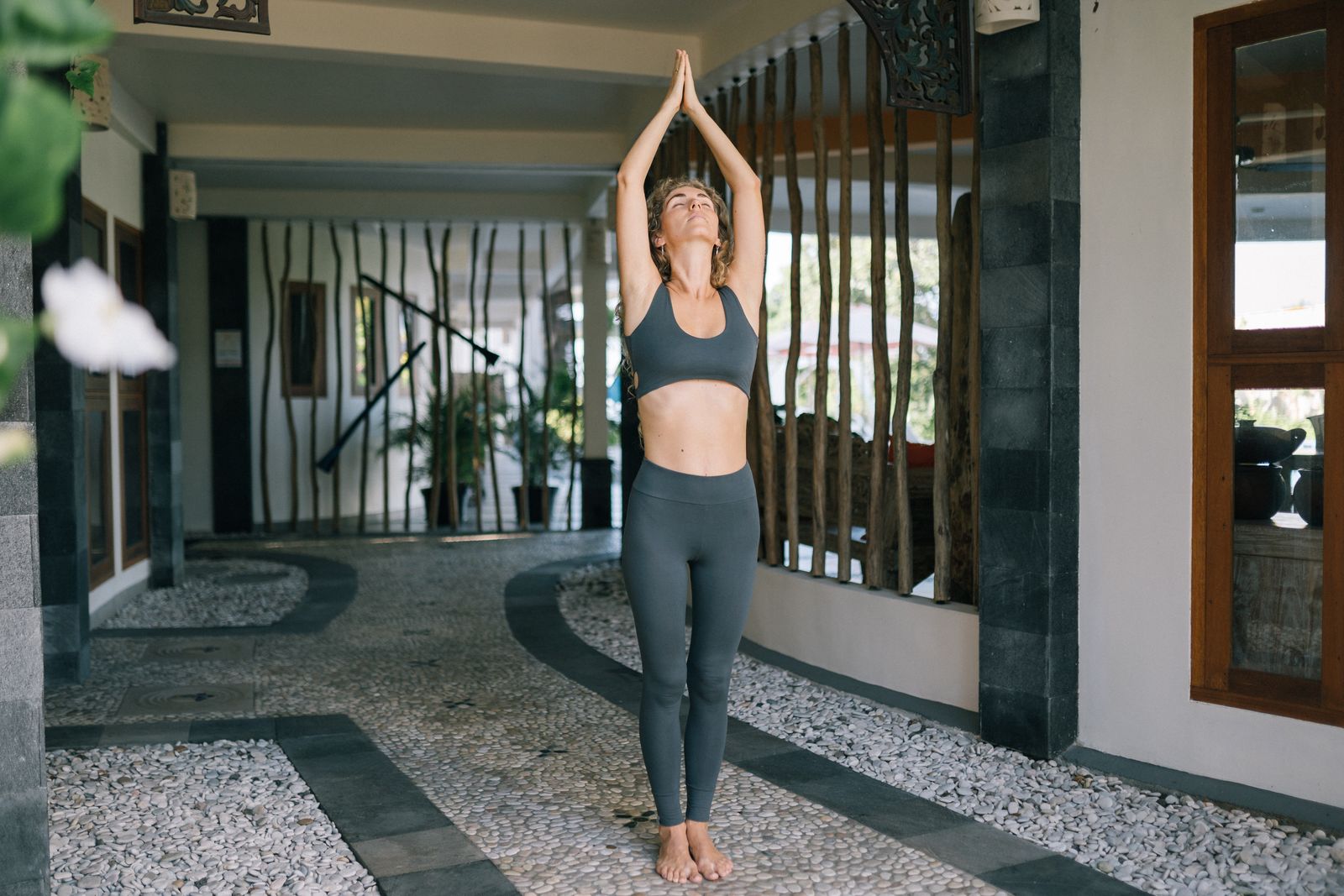
- Urdhva Hastasana (Upward Hand Pose): Arms extend straight overhead, palms facing each other or touching, which adds a gentle stretch through the shoulders and side body.
- Tadasana with interlaced fingers: Fingers interlace and the palms turn upward overhead, deepening the stretch across the chest and shoulders.
- Tadasana on the toes: Heels lift off the floor to challenge balance and strengthen the calves and ankle stabilizers further.
- Tadasana with eyes closed: Removing visual input forces the body to rely on proprioception, making it a more advanced balance challenge even though the shape doesn’t change.
- Wall-supported Tadasana: Standing with the back against a wall helps beginners feel what a neutral spine actually looks like, since the wall gives immediate feedback on alignment.
Each variation still follows the same core principles taught in the base pose, which is why mastering the fundamental version first matters more than rushing to the harder variations.
What Mistakes Do People Make in Tadasana?
Because tadasana looks like ordinary standing, it’s easy to practice it carelessly. The most common errors include locking the knees, which cuts off circulation and puts strain on the joints instead of engaging the muscles around them. Another frequent mistake is letting the weight sink into the heels or the outer edges of the feet, which throws off the whole chain of alignment above. Many people also let the lower back over-arch, pushing the ribs forward and the belly out, instead of keeping a neutral pelvis. Shoulders creeping up toward the ears is another common pattern, often from tension held in daily life rather than anything specific to the pose. Finally, holding the breath while concentrating on alignment defeats the purpose. Steady, unforced breathing should continue throughout the hold.
How Does Tadasana Compare to Other Standing Poses?
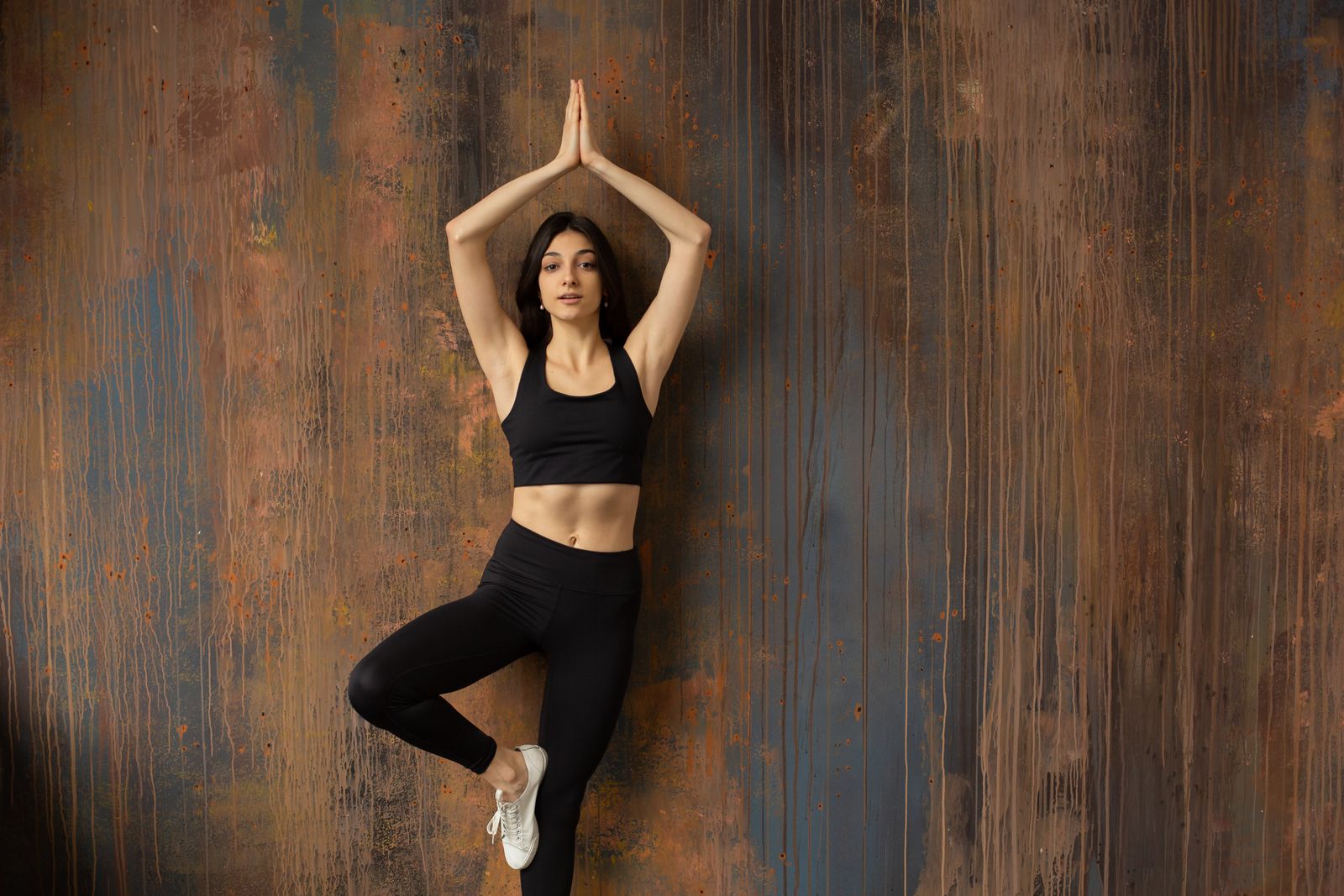
Tadasana is the reference posture that other standing poses are built from, but it’s useful to understand how it differs from its closest relatives. Vrksasana (Tree Pose) takes the same standing alignment and removes one leg from the ground, testing the balance skills that tadasana quietly builds. Warrior poses shift tadasana’s symmetrical stance into a lunge, adding strength and hip-opening work on top of the same spinal alignment. Vajrasana, by contrast, is a seated pose rather than a standing one, but it shares tadasana’s emphasis on a tall, neutral spine and is often used for meditation and breathing practices after a standing sequence. Understanding these relationships helps explain why teachers return to tadasana so often: it’s less a single pose and more a template.
How Long Should You Hold Tadasana?
For most practitioners, holding tadasana for 30 seconds to one minute, or 5 to 10 slow breaths, is sufficient to feel the alignment settle and the mind quiet down. When tadasana is used as a transitional pose within a flowing sequence such as Surya Namaskar, the hold might last only a single breath before moving into the next posture. Some restorative or meditative practices extend the hold to two or three minutes, using the stillness of the pose as a form of standing meditation. There’s no strict rule here: the right duration depends on whether tadasana is the main event or a passing checkpoint in a longer flow.
Can Beginners Practice Tadasana Safely?
Tadasana is considered one of the safest and most accessible poses in yoga, which is exactly why it’s typically the first pose taught to complete beginners. It requires no flexibility, no prior strength, and no risk of falling since both feet stay planted. That said, people recovering from ankle or knee injuries should check with a healthcare provider before holding prolonged standing postures, and anyone with balance concerns can practice near a wall for extra support. Pregnant practitioners generally find tadasana comfortable throughout pregnancy, though widening the stance slightly for stability is a common and sensible adjustment in later trimesters.
How Does Tadasana Fit Into a Broader Yoga Practice?
Tadasana rarely stands alone in a full class. It typically opens a practice, giving students a moment to arrive, ground, and set an intention before movement begins. It also serves as the anchor point between more dynamic postures, particularly in vinyasa and Surya Namaskar sequences, where you return to it after each forward fold or lunge. Teachers of hatha yoga often use it as a teaching tool for alignment cues that apply across the entire practice, from back pain relief sequences to beginner-friendly routines. If you’re building a home practice, starting and ending each session with a minute of tadasana is a simple, low-effort habit that reinforces everything else you do on the mat.
What Does Tadasana Look Like? (Visual Reference)
People frequently search for a tadasana yoga image, tadasana yoga drawing, or tadasana yoga photo before attempting the pose, mainly to confirm they’ve got the foot placement and arm position right. In its most common depiction, the practitioner stands facing forward, feet together or hip-width apart, arms resting by the sides with palms facing the thighs, spine tall, and gaze forward. Illustrated versions used in teaching materials often add small arrows or dotted lines to show the direction of muscular engagement, such as the kneecaps lifting or the tailbone lengthening down, since these subtle actions are hard to see in a static photo. If you’re learning primarily from images, pair them with a mirror check or a short video demonstration, since alignment cues like “neutral pelvis” are easier to feel than to see.
Questions People Ask About Tadasana
What is tadasana in English?
Tadasana translates to Mountain Pose in English. “Tada” means mountain in Sanskrit, and “asana” means pose or seat. The name reflects the posture’s quality of feeling grounded, stable, and upright, much like a mountain standing firm against the elements while still reaching skyward.
What is tadasana called in Hindi?
In Hindi, tadasana is commonly referred to as “Parvatasana” in casual conversation, though this can cause confusion since Parvatasana is technically a different pose in some yoga traditions. Most Hindi-speaking practitioners and teachers simply use “Tadasana” itself, since the Sanskrit term is already widely understood across India.
Is tadasana good for weight loss?
Tadasana alone burns very few calories since it’s a static, low-intensity pose. It supports weight management indirectly by improving posture, body awareness, and breath control, which can make other movement and exercise more effective. For calorie-burning goals, pair tadasana with a more active practice like vinyasa flow or a dedicated cardio routine.
Can tadasana help with height increase?
Tadasana doesn’t increase bone length or add height once growth plates have closed, but it can improve posture significantly, which makes a person appear taller and stand at their true height rather than a slouched version of it. For growing children and teenagers, good postural habits built through poses like tadasana may support healthy spinal development.
What is the difference between tadasana and samasthiti?
Samasthiti and tadasana are often used interchangeably, and many teachers treat them as the same pose. Where a distinction is drawn, samasthiti (“equal standing”) refers to the basic neutral standing position with arms at the sides, while tadasana specifically emphasizes the upward, mountain-like lift through the spine and crown of the head.
How many times a day should I practice tadasana?
There’s no fixed rule, but practicing tadasana for one to two minutes, two to three times a day, is a reasonable habit for improving posture and body awareness. Many people find it useful as a quick reset during work breaks, in addition to including it at the start and end of a full yoga session.
Try This for Yourself
Reading about alignment only goes so far. If you want real-time feedback on your tadasana and the rest of your standing practice, join a live, guided class where an instructor can watch your form and correct it in the moment. Explore FitStrot’s online yoga classes and build a foundation that supports every pose that comes after tadasana.
Related reading: Yoga Poses | Surya Namaskar | Vrksasana | Vajrasana | Online Yoga Classes