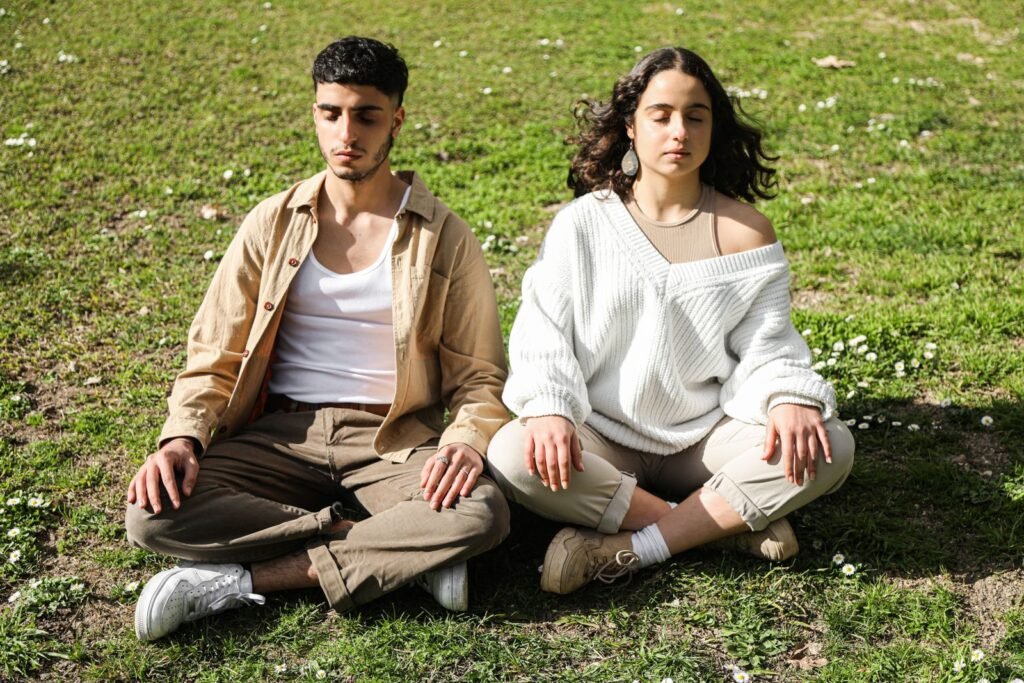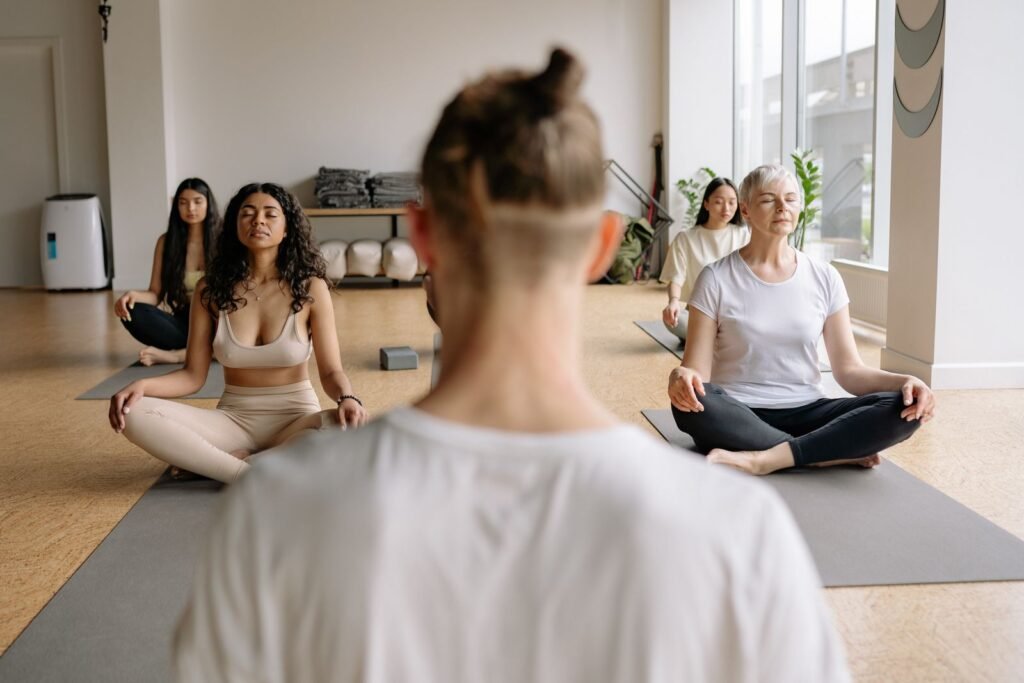
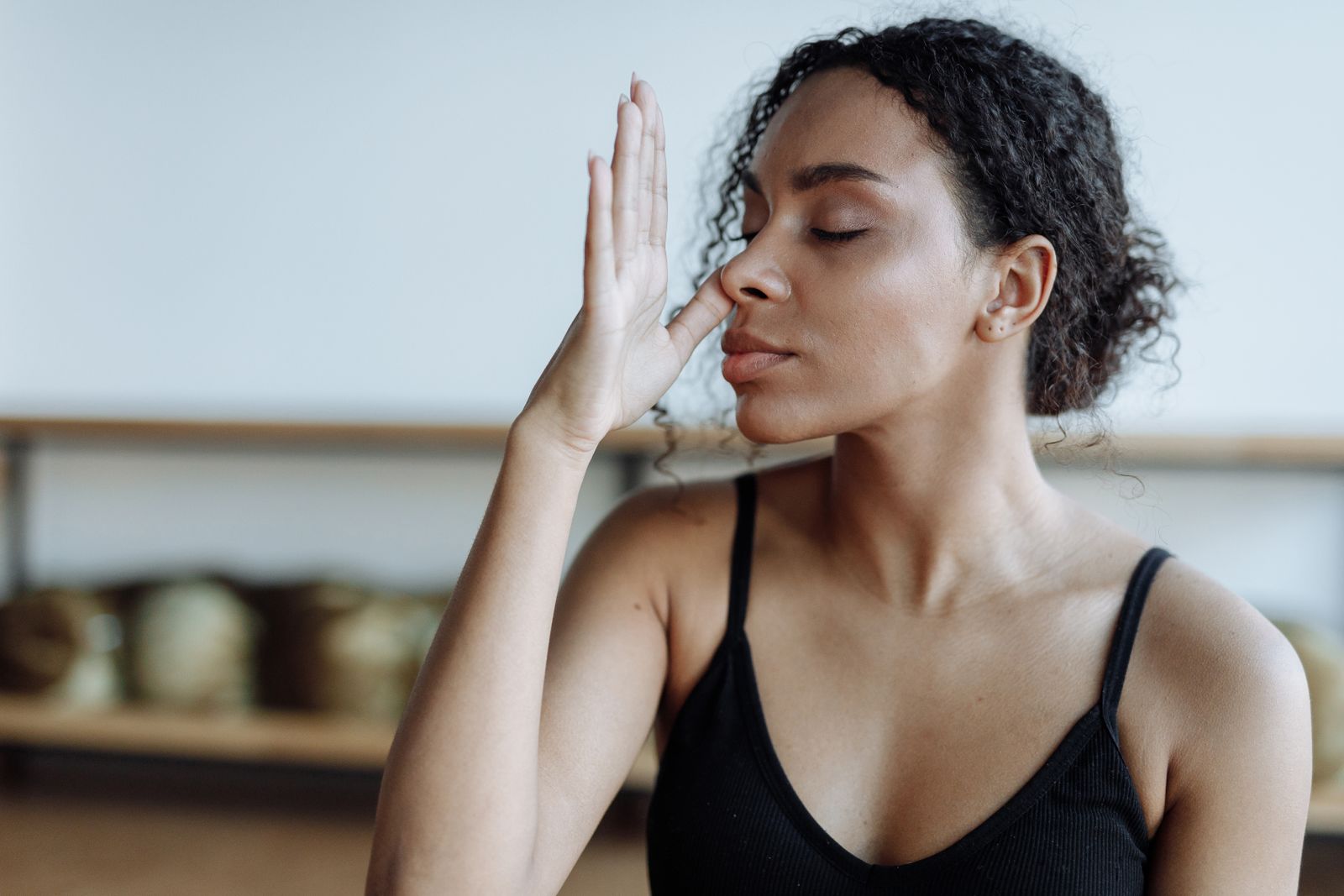
Pranayama is the yogic practice of consciously controlling the breath to influence the body, mind, and nervous system. The word comes from two Sanskrit roots, “prana” (life force or vital energy) and “ayama” (extension or control), so pranayama literally means the extension and regulation of the breath. In Patanjali’s classical eight limbs of yoga, pranayama is the fourth limb, sitting between the physical postures of asana and the inward practices of pratyahara, dharana, dhyana, and samadhi. Practically speaking, pranayama includes structured breathing techniques such as nadi shodhana (alternate nostril breathing), kapalbhati, bhramari, and ujjayi, each used to calm the nervous system, sharpen focus, or build respiratory capacity.
What Is Pranayama Yoga?
Pranayama yoga refers to the branch of yoga practice built entirely around breath regulation rather than physical postures. While asana focuses on the body and meditation focuses on the mind, pranayama works on the bridge between the two: the breath. Because breathing is one of the few bodily functions we can control both consciously and unconsciously, yogic tradition treats it as a direct lever for influencing the nervous system. A pranayama session typically involves a comfortable seated position, an upright spine, and a sequence of inhalations, retentions, and exhalations performed to a specific ratio or rhythm. Some techniques are activating and heating (like kapalbhati or bhastrika), while others are calming and cooling (like sheetali or chandra bhedana). Many teachers introduce breathing exercises as a gateway before layering on more advanced retention (kumbhaka) practices.
What Is Pranayama Yoga in Hindi?
In Hindi, pranayama (प्राणायाम) is understood the same way it is in classical Sanskrit texts: “prana” (प्राण) meaning life force or vital breath, and “ayama” (आयाम) meaning extension, expansion, or control. So प्राणायाम is commonly explained in Hindi-language yoga instruction as “श्वास पर नियंत्रण” (control over the breath) or “प्राण शक्ति का विस्तार” (expansion of vital energy). Traditional Indian yoga schools, ashrams, and Ayurvedic wellness centers across India teach pranayama in Hindi using the same core techniques recognized globally, such as अनुलोम-विलोम (anulom-vilom, alternate nostril breathing), कपालभाति (kapalbhati), and भ्रामरी (bhramari). The terminology may differ by language, but the underlying goal, conscious regulation of inhalation, retention, and exhalation, remains consistent across every regional teaching tradition in India.
Pranayama Yoga in Telugu: How Is It Taught Regionally?
In Telugu, pranayama is referred to as ప్రాణాయామం (pranayamam), following the same Sanskrit etymology used across Indian languages. Yoga instructors in Andhra Pradesh and Telangana commonly teach ప్రాణాయామం alongside asanas as part of a broader daily wellness routine, often integrating it into school curricula and community health programs following India’s push to popularize yoga through International Yoga Day initiatives. Regional teaching styles may use local breathing cues and counting methods, but the technique itself, whether anulom-vilom, kapalbhati, or bhramari, mirrors the pan-Indian and international versions. This consistency is part of why pranayama has scaled so effectively: the practice travels across language and geography without losing its core method.
Pranayama Is Which Part of Ashtanga Yoga?
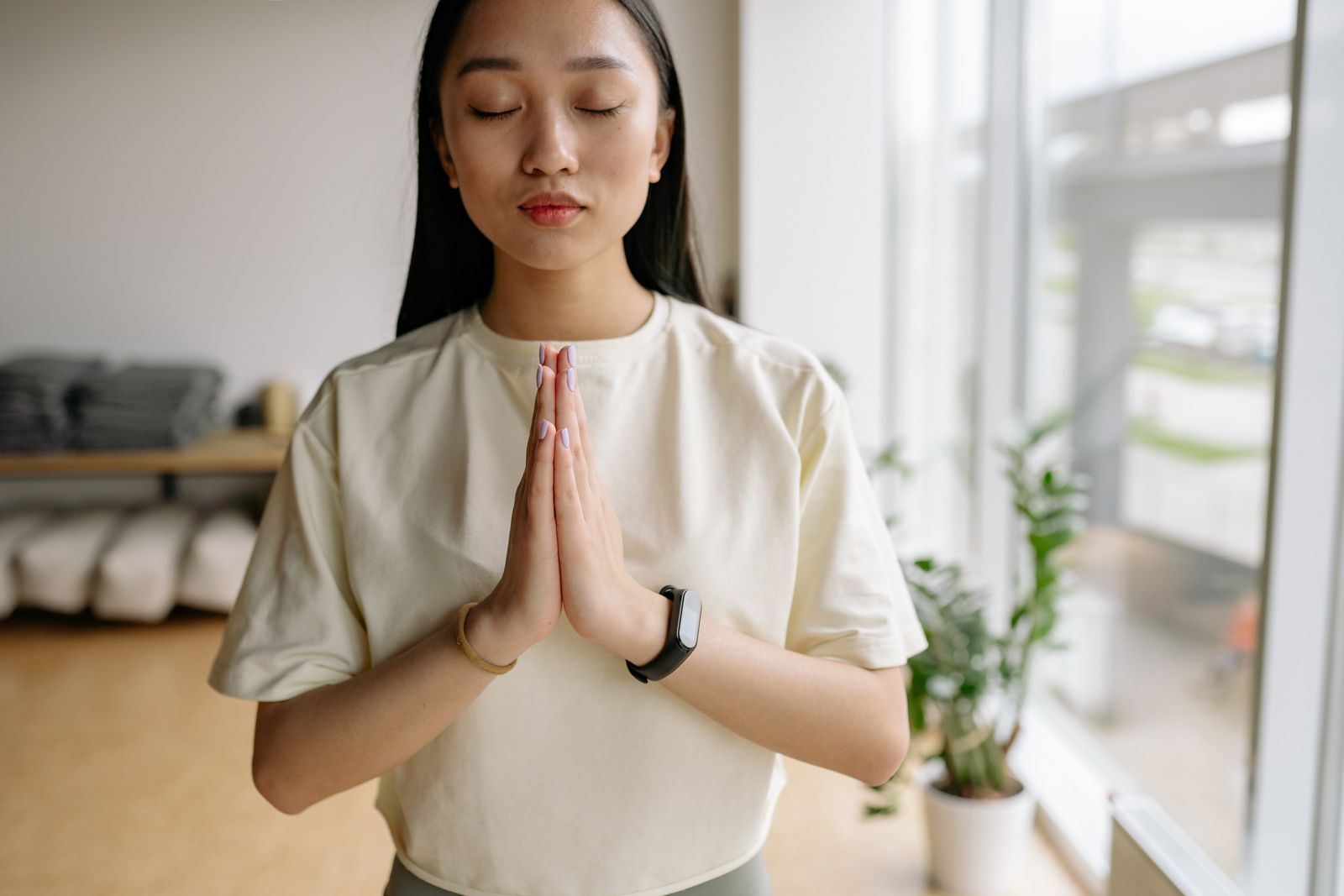
Pranayama is the fourth of the eight limbs (ashtanga) described in Patanjali’s Yoga Sutras, following yama (ethical restraints), niyama (personal observances), and asana (posture), and preceding pratyahara (withdrawal of the senses). The eight limbs move from external discipline toward internal absorption, and pranayama sits at the hinge between the outer, body-oriented limbs and the inner, mind-oriented ones. Once a practitioner can sit steadily in asana, pranayama trains them to regulate the breath so the nervous system settles enough to draw attention inward. This is distinct from “Ashtanga Yoga” the modern physical practice popularized by K. Pattabhi Jois, which borrows the same name but refers to a specific vinyasa-based sequence of postures; the two should not be confused, though both trace back to the same philosophical framework described in the ashtanga yoga guide.
Yoga Yama Niyama Asana Pranayama: How Do the First Four Limbs Connect?
The first four limbs, yama, niyama, asana, and pranayama, form what many teachers call the “outer” or preparatory limbs. Yama consists of five ethical restraints (non-violence, truthfulness, non-stealing, moderation, non-possessiveness) governing how a practitioner relates to the world. Niyama consists of five personal observances (cleanliness, contentment, discipline, self-study, surrender) governing how they relate to themselves. Asana, the physical postures, prepares the body to sit comfortably for extended periods, a prerequisite for effective pranayama. Only once the body is steady through foundational asana practice does pranayama become sustainable, because uneven posture disrupts breath flow and undermines the technique. This is why teaching sequences never introduce advanced breath retention before a student has a stable asana practice.
Ashtanga Yoga Pranayama: What Role Does Breath Play in the Practice?
Within the eight-limbed framework, ashtanga yoga pranayama refers to how breath regulation is applied once a student has stabilized their posture practice. Classical texts describe pranayama as consisting of puraka (inhalation), rechaka (exhalation), and two forms of kumbhaka (breath retention), antara kumbhaka after inhalation and bahya kumbhaka after exhalation. The ratio between these phases (commonly cited in traditional texts as progressions like 1:4:2, inhale:hold:exhale) is meant to be built up gradually over months or years under qualified guidance, not attempted all at once. Modern vinyasa-style Ashtanga classes also use “ujjayi breath,” a soft ocean-like technique used throughout the physical sequence, a simplified, continuous application of pranayama principles rather than the seated, retention-focused practice described in classical texts.
Pranayama Yoga Meaning: What Does the Sanskrit Really Say?
Breaking down the Sanskrit compound further clarifies why pranayama is considered a self-development practice, not just a wellness technique. “Prana” refers to more than physical air, in yogic philosophy it denotes the vital energy that sustains all living things, comparable to concepts like qi in Chinese medicine. “Ayama” can mean extension, expansion, restraint, or regulation depending on context, giving pranayama a layered meaning: to extend, expand, and gain mastery over one’s vital energy. This is why pranayama practices are traditionally framed as far more than “deep breathing exercises.” They’re presented as methods for expanding one’s capacity for prana and, by extension, one’s capacity for awareness, energy, and calm. Many meditation traditions consider steady, controlled breath a prerequisite for meditation because a restless breath is understood to correlate with a restless mind.
Bhramari Pranayama Yoga: What Is the Humming Bee Breath?
Bhramari pranayama, often called “humming bee breath” because of the buzzing sound it produces, involves inhaling deeply through the nose, then exhaling slowly while making a continuous humming sound, typically with the ears gently closed using the thumbs or fingers (a hand position called shanmukhi mudra). Several published studies on bhramari pranayama have examined its effects on stress reduction, autonomic nervous system balance, and sleep quality, with researchers generally attributing the calming effect to the vibration and vagal stimulation produced by the humming exhale combined with a slowed breathing rate. Because it is low-intensity and easy to learn, bhramari is commonly recommended as an accessible entry point into pranayama for beginners, and is often practiced alongside bhramari pranayama instruction specifically for anxiety and sleep support. It pairs particularly well with a short seated meditation immediately afterward, since the humming naturally quiets internal chatter.
Yoga Asana Pranayama: How Do Postures and Breathing Work Together?
Asana and pranayama are frequently taught together because posture directly affects breath mechanics. A slouched spine compresses the diaphragm and shortens breath capacity, while a tall, aligned spine, the kind cultivated through seated postures like sukhasana (easy pose), siddhasana (accomplished pose), or padmasana (lotus pose), allows the diaphragm to move freely and the lungs to expand fully. This is why most pranayama instruction begins with establishing a stable, comfortable seated yoga pose before any breathing technique is introduced. Standing and backbending postures such as cobra pose and gentle chest-openers are also commonly used beforehand to release tension in the chest and shoulders, making full diaphragmatic breathing easier to access. In a typical class, asana comes first to prepare the body, and pranayama follows once the nervous system has settled.
Surya Pranayama Yoga: What Is the Sun Breath?
Surya pranayama, sometimes called “surya bhedana,” is a heating, energizing technique performed by inhaling only through the right nostril (associated in yogic anatomy with the “surya” or sun energy channel, pingala nadi) and exhaling through the left. It is traditionally described as increasing body heat, alertness, and digestive fire, which is why some teachers suggest practicing it in the morning, and generally advise against it in hot weather, before bed, or for people with high blood pressure, since its stimulating effect is the opposite of what’s needed for rest. Its counterpart, chandra bhedana (moon breath), uses the left nostril for inhalation and is considered cooling and calming. Together, surya and chandra pranayama illustrate a core yogic principle: breath can be deliberately used to shift the body’s state, energizing or relaxing, depending on which nostril leads the inhale.
Yoga Pranayama Names: What Are the Main Types to Know?
There are dozens of named pranayama techniques across yogic literature, but a handful form the practical foundation most teachers introduce first:
- Nadi Shodhana (alternate nostril breathing) – balances the nervous system by alternating airflow between nostrils.
- Kapalbhati (skull-shining breath) – a rapid, forceful exhalation technique often classified as a cleansing kriya as much as a pranayama; learn the full technique in this guide to kapalbhati.
- Bhramari (humming bee breath) – a calming, vibration-based exhale used for stress and sleep.
- Ujjayi (ocean breath) – a soft, audible throat-constricted breath often used throughout vinyasa and ashtanga yoga practice.
- Sheetali and Sheetkari (cooling breaths) – inhalation techniques that draw air over the tongue to cool the body.
- Bhastrika (bellows breath) – a vigorous, energizing breath involving forceful inhales and exhales.
Each of these has its own rhythm, intensity, and intended effect, which is why pranayama is best learned progressively rather than attempting advanced techniques on day one.
Pranayama Yoga Drawing: What Do Traditional Illustrations Depict?
Traditional and modern illustrations of pranayama typically show a figure seated in a cross-legged meditation posture with an upright spine, hands resting in a mudra on the knees or in the lap, and sometimes with visual cues like radiating lines or a glowing center to represent the flow of prana. Diagrams of nadi shodhana often show the two nostrils with directional arrows representing airflow, alongside labeled illustrations of the ida, pingala, and sushumna nadis (energy channels) described in classical yogic anatomy. These illustrations are widely used in yoga teacher training manuals and wellness content because pranayama, unlike a physical asana, has no visible “shape” to demonstrate, so artists rely on symbolic elements, breath arrows, glowing chakra points, and seated posture alignment, to communicate what is otherwise an invisible, internal practice.
Pranayama Yoga Video: What Should You Look for When Learning Online?
When learning pranayama from video instruction, a few markers separate genuinely useful guidance from content that risks doing more harm than good. Look for instructors who clearly explain seated alignment before introducing breath technique, who cue retention (kumbhaka) durations cautiously rather than pushing beginners into long holds immediately, and who mention basic contraindications, such as avoiding forceful techniques like kapalbhati or bhastrika during pregnancy, with certain heart conditions, or with uncontrolled blood pressure. Because pranayama directly affects the autonomic nervous system, video learning works best as a supplement to live instruction where a teacher can observe your breath pattern and correct issues like shoulder tension or shallow chest-only breathing. Structured, teacher-led online sessions, such as guided online yoga for beginners classes, tend to build technique more safely than isolated video clips.
How Do You Start a Pranayama Practice Safely?
Begin with a comfortable, stable seated position, on a cushion, block, or chair if floor-sitting is uncomfortable, with the spine tall and shoulders relaxed. Start with simple, low-intensity techniques like diaphragmatic breathing and nadi shodhana for five to ten minutes before introducing forceful exhales or long retentions. Practice on an empty stomach, ideally in the morning or several hours after a meal, since digestion competes with the diaphragm for space. If you feel dizzy, lightheaded, or anxious at any point, return to normal breathing immediately; these techniques should never induce distress. People who are pregnant, have uncontrolled blood pressure, epilepsy, recent abdominal surgery, or significant respiratory or cardiac conditions should consult a doctor and a qualified teacher before starting forceful techniques like kapalbhati or bhastrika. Pairing a consistent breath practice with a regular yoga for beginners routine tends to build both the physical steadiness and breath awareness that make pranayama easier to sustain long-term.
How Does Pranayama Fit Into a Broader Meditation Practice?
Pranayama is often described as the doorway between the physical and mental limbs of yoga because it prepares the nervous system for stillness. A racing or shallow breath tends to correlate with a racing mind, while a slow, even breath tends to correlate with a settled, focused mind, which is why most seated meditation traditions begin with a few minutes of conscious breathing before dropping into silent awareness. Techniques like bhramari and nadi shodhana are popular as pre-meditation practices because their calming effect is fast-acting and doesn’t require advanced skill. Many practitioners also pair pranayama with hand gestures known as yoga mudras, believed to direct and seal prana within the body during breathwork, reinforcing the internal focus the breath practice builds.
Questions People Ask About Pranayama
What is pranayama yoga?
Pranayama yoga is the branch of yoga focused on consciously controlling the breath, inhalation, retention, and exhalation, to influence the nervous system, mental focus, and vital energy (prana). It is the fourth of Patanjali’s eight limbs of yoga, positioned between physical postures (asana) and deeper meditative practices, and includes named techniques like nadi shodhana, kapalbhati, bhramari, and ujjayi.
What is pranayama yoga in Hindi?
In Hindi, pranayama (प्राणायाम) combines “prana” (प्राण), meaning life force or vital breath, with “ayama” (आयाम), meaning extension or control. It is taught across India as the practice of regulating the breath, commonly explained as “श्वास पर नियंत्रण” or control over the breath, and includes the same core techniques used internationally, such as अनुलोम-विलोम (alternate nostril breathing) and कपालभाति (kapalbhati).
Is pranayama the same as deep breathing?
Not exactly. Deep breathing is a general relaxation technique, while pranayama is a structured yogic system with named techniques, specific ratios of inhale-hold-exhale, and a philosophical framework tied to prana (vital energy). Some pranayama techniques do emphasize deep, slow breathing, but others, like kapalbhati, involve short, forceful exhales rather than deep breaths.
How long should a beginner practice pranayama each day?
Most teachers recommend beginners start with five to ten minutes daily, focusing on simple techniques like diaphragmatic breathing or nadi shodhana before progressing to more advanced practices. Consistency matters more than duration; a short daily practice tends to build steadier breath control than infrequent longer sessions.
Can pranayama help with anxiety and stress?
Many people use calming techniques like bhramari and nadi shodhana specifically to manage everyday stress and anxious moments, and research on bhramari pranayama has explored its association with reduced stress markers and improved sleep quality. It should complement, not replace, professional care for diagnosed anxiety disorders.
Try This for Yourself
Reading about pranayama only goes so far, the real shift happens when you sit down, close your eyes, and actually practice the breath. If you want structured, teacher-led guidance instead of guessing your way through technique, join a live online yoga class where an instructor can walk you through pranayama safely, correct your posture in real time, and help you build a sustainable daily practice.
Related reading: Explore kapalbhati for a deeper look at skull-shining breath, bhramari pranayama for humming bee breath technique, breathing exercises for foundational breathwork, and yoga mudra to pair hand gestures with your breath practice, or join a live online yoga class to learn pranayama with expert guidance.