Yoga poses, also called asanas, are the physical postures used in yoga to build strength, improve flexibility, calm the nervous system, and connect breath with movement. They range from simple seated and standing shapes suited to complete beginners to complex arm balances and inversions practiced by advanced students. Whether you are looking for basic yoga poses to start a home practice, pictures to learn correct alignment, or a structured path from beginner to advanced, understanding how poses are grouped and sequenced is the fastest way to build a safe, effective practice.
What Is a Yoga Pose, Exactly?
A yoga pose (asana in Sanskrit) is a deliberate body position held or moved through with attention to breath, alignment, and muscular engagement. Unlike a generic stretch, an asana usually has a defined entry, a held or flowing shape, and an exit, along with specific cues for where the feet, spine, shoulders, and gaze should be. Poses are traditionally organized by body orientation: standing, seated, supine (lying face-up), prone (lying face-down), kneeling, balancing, inverted, and backbending. This system of classification is what makes it possible to build a balanced yoga sequence that works the whole body rather than repeating the same movement pattern.
How Many Yoga Poses Are There?
This is one of the most searched questions about yoga, and the honest answer is that nobody can give an exact number. Classical yoga texts describe a legendary figure of 8.4 million asanas, a number that is best understood as symbolic rather than literal, representing the idea that there is a posture to match every form of life. In practical, modern usage, most teacher training programs and pose directories reference somewhere between 200 and 300 named asanas with well-documented variations, and hatha yoga manuals such as the Hatha Yoga Pradipika describe a much smaller core set of foundational postures. If you want to explore the full scope, a resource covering all yoga poses is a good starting point, though no single list will ever be truly complete because teachers continue to create modified and hybrid variations.
What Are the Basic Yoga Poses for Beginners?
Basic yoga poses focus on building body awareness, core stability, and joint mobility before progressing to more demanding shapes. A dependable beginner set includes:
- Mountain Pose (Tadasana) — the foundation for all standing poses, teaching weight distribution and posture
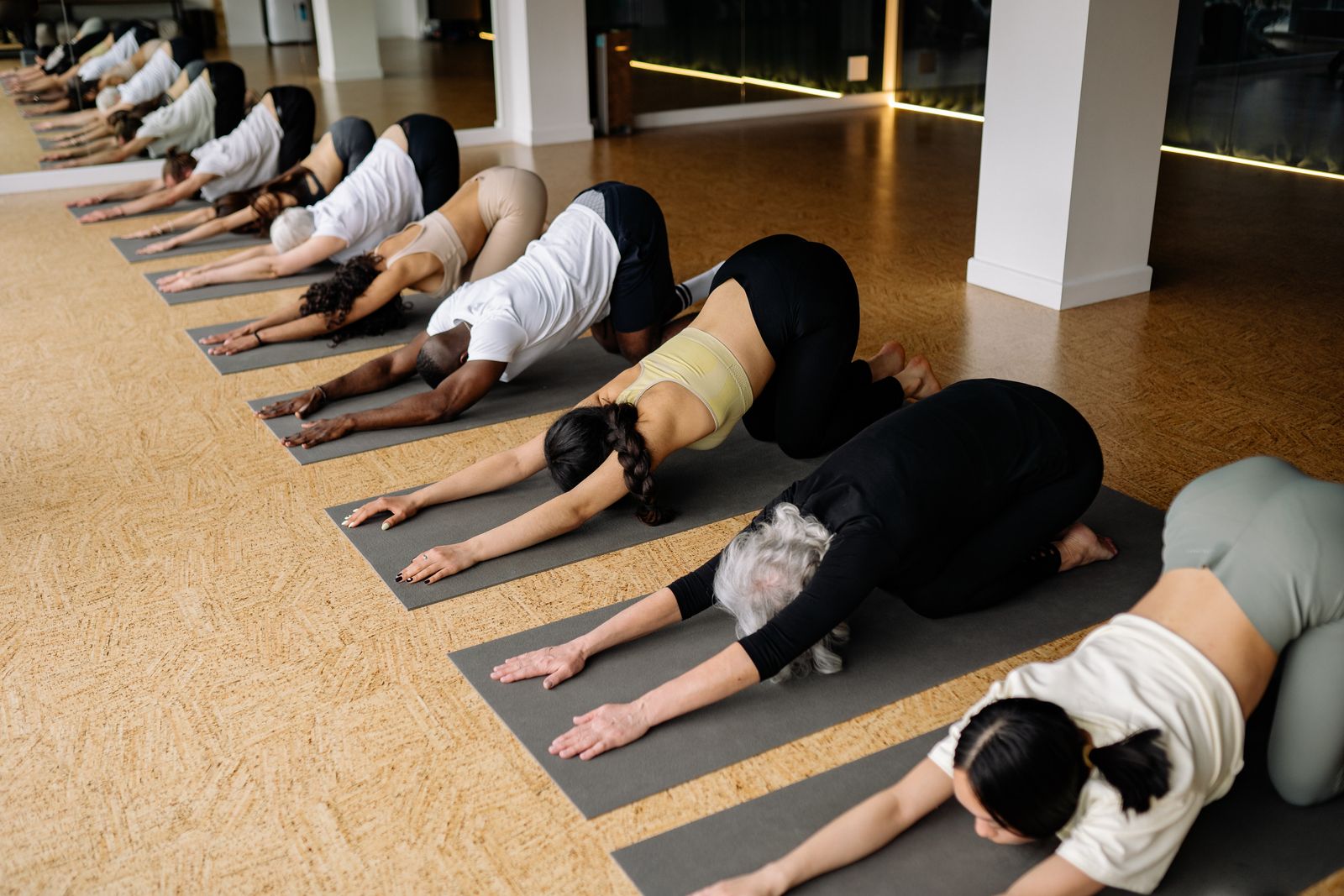
- Child’s Pose (Balasana) — a resting shape that stretches the hips and lower back
- Downward-Facing Dog (Adho Mukha Svanasana) — a full-body stretch and mild inversion
- Cat-Cow (Marjaryasana-Bitilasana) — spinal mobility linked to breath
- Warrior I and II (Virabhadrasana I and II) — leg strength and hip opening
- Tree Pose (Vrksasana) — introductory balance work
- Seated Forward Fold (Paschimottanasana) — hamstring and lower back release
These standing yoga poses and floor postures are typically taught together in a first class because they require minimal flexibility while still introducing every major movement pattern: forward folding, backbending, twisting, and balancing.
What Are Different Yoga Poses Used For?
Different yoga poses target different physical and mental outcomes, which is why most well-designed classes combine several categories rather than repeating one type of movement. Standing poses build leg strength and stamina. Seated poses improve hip mobility and encourage a settled mind. Backbends open the chest and counteract the forward-hunched posture common from desk work. Twists support spinal mobility and are often described as aiding digestion, though this specific digestive benefit is more anecdotal than clinically proven. Inversions, where the head goes below the heart, are associated with a shift in perspective and are generally reserved for students with some experience. Restorative poses, held for several minutes with support, activate the parasympathetic nervous system and are central to practices built around yoga for stress relief.
What Are Advanced Yoga Poses?
Advanced yoga poses require a combination of strength, flexibility, balance, and body awareness that typically takes months or years of consistent practice to develop safely. Examples include:
- Crow Pose (Bakasana) and other arm balances that demand core and wrist strength
- Headstand (Sirsasana) and Forearm Stand (Pincha Mayurasana), full inversions requiring shoulder stability
- King Pigeon Pose (Eka Pada Rajakapotasana), a deep backbend and hip opener
- Full Splits (Hanumanasana), requiring significant hamstring and hip flexor flexibility
- Handstand (Adho Mukha Vrksasana), an advanced balancing inversion
These advanced yoga poses should be approached gradually, ideally under the guidance of an experienced teacher, and only after the underlying strength and mobility have been built through consistent practice of simpler yoga asanas.
What Are the Most Difficult and Hard Yoga Poses?
Difficulty in yoga is not just about flexibility; some of the hardest poses demand extreme strength-to-bodyweight ratios or unusual joint mobility. Poses widely regarded as some of the most difficult include Firefly Pose (Tittibhasana), which requires arm strength combined with hamstring flexibility, Scorpion Pose (Vrischikasana), an advanced inversion with a deep backbend, and Eight-Angle Pose (Astavakrasana), a twisting arm balance. What makes these difficult yoga poses and hard yoga poses so demanding is usually a combination of two or more requirements at once — strength plus flexibility, or balance plus rotation — rather than any single limiting factor.
Can Yoga Poses Help You Grow Taller?
Certain yoga poses can support better posture and spinal decompression, which is likely why “yoga poses to increase height” is such a frequently searched phrase, but it is important to set realistic expectations here. Once the growth plates in the long bones have fused, typically by the late teens to early twenties, no exercise — yoga included — can increase actual bone length. What yoga poses can do is decompress the spine, improve postural alignment, and stretch the muscles that tend to compress the body over time, which can help a person stand taller and appear more elongated. Poses often mentioned for this purpose include Tadasana (Mountain Pose), Trikonasana (Triangle Pose), Bhujangasana (Cobra Pose), Tadasana variations with an overhead reach, and hanging or inverted stretches like Adho Mukha Svanasana. These are best framed as supporting posture and spinal health rather than literal height increase, and they pair well with a broader benefits of yoga routine.
What Are Good Stretching Yoga Poses?
Stretching yoga poses are held for longer durations, often 30 seconds to several minutes, to gradually lengthen muscle fibers and improve range of motion around a joint. Effective stretching-focused poses include Reclining Hand-to-Big-Toe Pose (Supta Padangusthasana) for the hamstrings, Pigeon Pose (Eka Pada Rajakapotasana) for the hips, Cobra Pose (Bhujangasana) for the front body and spine, and Seated Forward Fold for the entire posterior chain. Unlike faster-paced vinyasa sequences, a stretching-oriented practice prioritizes holding shapes at a comfortable edge of sensation, breathing steadily, and allowing the nervous system to signal the muscle to release rather than forcing a deeper stretch through momentum. This approach overlaps significantly with practices built around yoga for flexibility.
What Are Group Yoga Poses?
Group yoga poses, sometimes called partner or acroyoga poses, involve two or more people supporting, counterbalancing, or mirroring each other’s movement. Common examples include Double Downward Dog, where one partner rests on the other’s back, Partner Forward Fold, where two people counterbalance by holding hands and leaning back, and seated back-to-back breathing poses used to synchronize breath. These group yoga poses are popular in team-building sessions, partner yoga workshops, and corporate wellness settings because they build trust and communication alongside physical benefits, and they are often included in corporate yoga programs aimed at team bonding.
How Are Yoga Poses Illustrated and Drawn?
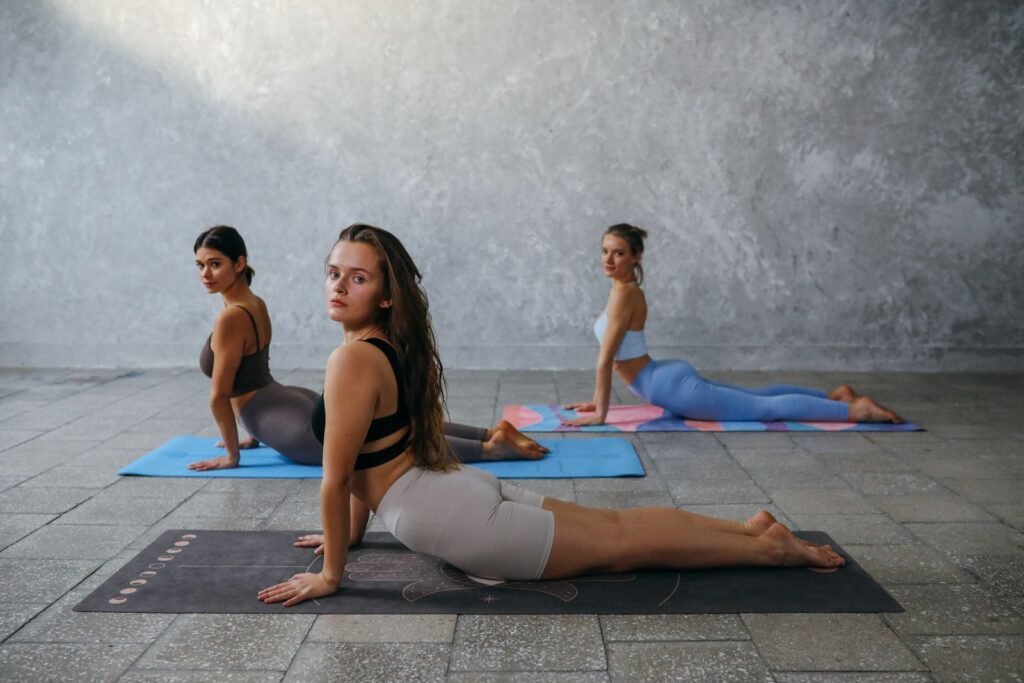
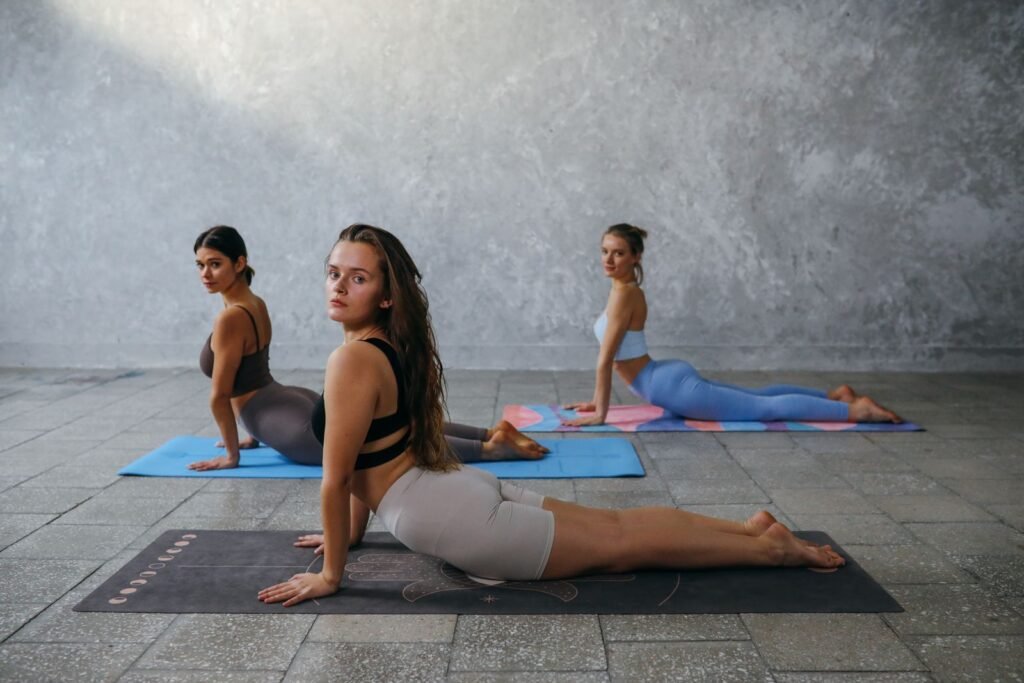
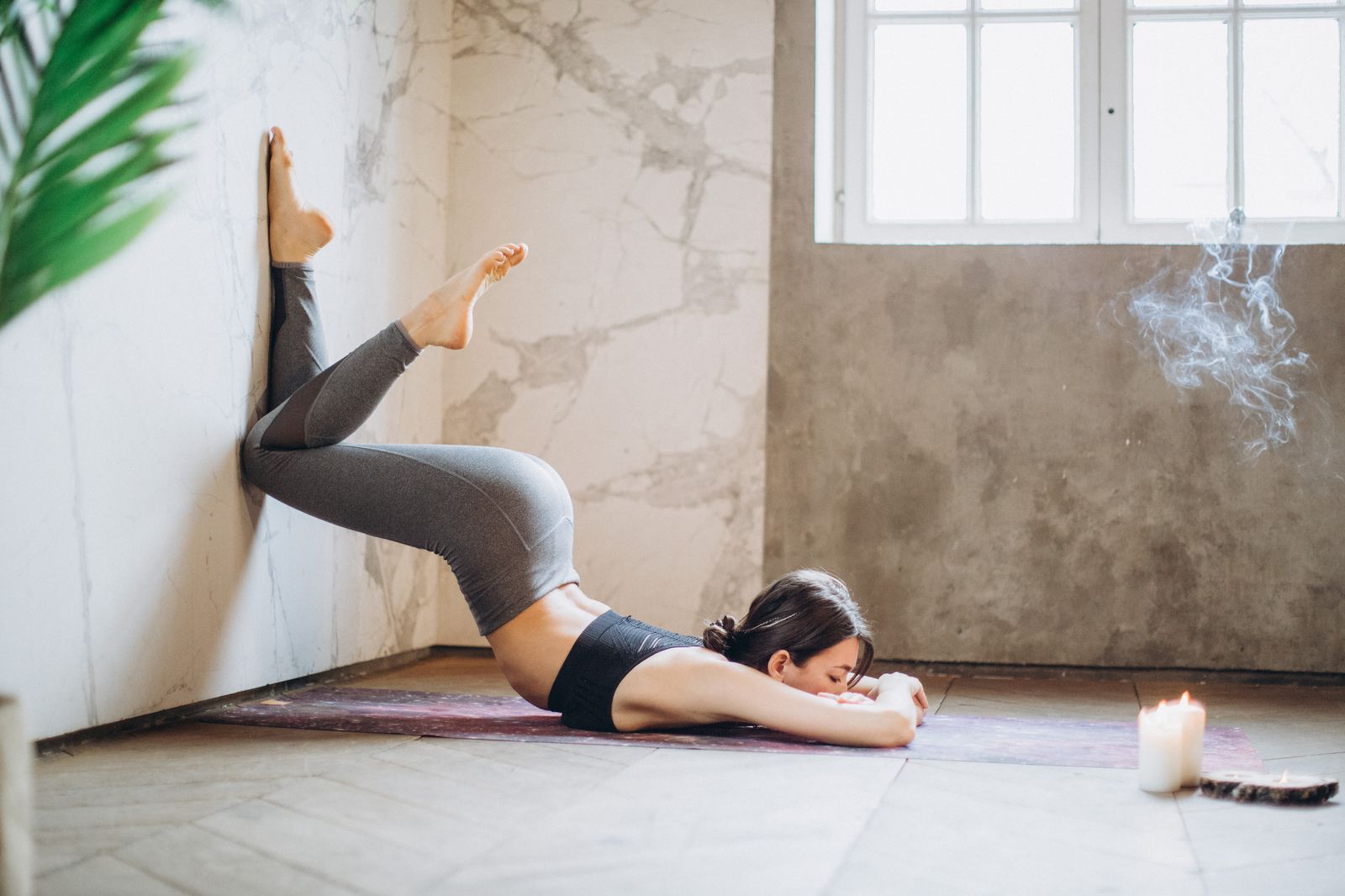
Because alignment is so important in yoga, visual references matter enormously, which is why searches for pictures of yoga poses and yoga poses drawing are both extremely common. Instructional drawings typically use simplified line art to show the skeleton’s angle, the direction of the gaze (drishti), and the placement of the hands and feet, stripping away distracting detail so a student can focus purely on structural alignment. Photographs, by contrast, show muscular engagement, breath expansion, and real-world body variation, which is why most learners benefit from using both formats together, cross-referencing a labeled anatomical drawing with real photos of the same yoga poses names and shapes.
How Do You Learn to Do Yoga Poses Correctly?
Learning to do yoga poses correctly starts with understanding the foundation of the pose before worrying about depth or flexibility. Begin by setting the base — the feet in a standing pose or the sitting bones in a seated pose — since a stable foundation determines whether the rest of the alignment can hold. Next, engage the core muscles to protect the lower back, particularly in backbends and twists. Move into the pose gradually rather than dropping into the deepest expression immediately, and use props such as blocks, straps, or a folded blanket to bridge any gap between your current flexibility and the full shape of the pose. Breathing steadily throughout, rather than holding the breath, keeps the nervous system regulated and prevents unnecessary muscular tension. Practicing regularly, even for ten to fifteen minutes a day, builds the pattern recognition needed to move into poses safely without a teacher physically adjusting you each time.
How Do You Progress from Basic to Advanced Poses?
Progressing through yoga poses works best when it follows a logical sequence rather than skipping ahead to visually impressive shapes. Start by mastering the foundational standing and seated poses, since these teach the alignment principles — hip alignment, shoulder stacking, spinal neutrality — that reappear in every more advanced variation. From there, add balance poses to develop proprioception, then introduce gentle backbends and hip openers to build the flexibility needed for deeper poses. Arm balances and inversions should come last, once sufficient core and shoulder strength has been developed through the earlier stages, and should ideally be practiced near a wall or with a spotter until confidence and control are established. This graduated approach is what separates a sustainable long-term practice from one that leads to strain or injury, and it applies whether your goal is a home practice or structured online yoga classes.
What Role Does Breath Play in Yoga Poses?
Breath, known as pranayama when practiced independently, is not a side detail in yoga poses — it is often considered as important as the physical shape itself. Most styles pair each movement with an inhale or exhale: reaching up or opening the chest on an inhale, and folding or twisting on an exhale. This breath-movement link is especially structured in vinyasa yoga, where transitions between poses are timed precisely to a single breath. Beyond timing movement, steady breathing helps regulate the nervous system during challenging holds, signals to the body that it is safe to release tension, and provides a mental anchor that keeps attention on the present moment rather than on discomfort or distraction.
How Do Yoga Poses Differ Across Styles?
The same basic asana can look and feel different depending on the style of yoga it is taught within. Hatha yoga tends to hold poses longer with a focus on alignment and breath awareness, making it a common starting point for beginners. Vinyasa links poses into flowing sequences timed to breath, building heat and cardiovascular engagement. Ashtanga yoga follows a fixed sequence of poses performed in the same order every session, appealing to practitioners who want a structured, repeatable practice. Yin yoga holds passive floor poses for several minutes at a time to target connective tissue rather than muscle. Restorative yoga uses props to fully support the body in gentle poses aimed purely at relaxation. Recognizing these differences helps explain why the “same” pose name can feel entirely different depending on which class you attend.
What Equipment Helps With Yoga Poses?
While yoga poses can be practiced with nothing more than a mat, a small set of props makes learning correct alignment significantly easier, especially for beginners or anyone with limited flexibility. Yoga blocks bring the floor closer in standing forward folds and twists. A strap helps bridge the gap in poses like Reclining Hand-to-Big-Toe Pose when the hamstrings are not yet flexible enough to reach the foot directly. A bolster supports the body in restorative poses, allowing full relaxation without muscular effort. A folded blanket cushions the knees in kneeling poses and can be used to elevate the hips in seated postures. None of these props change the pose itself; they simply allow the body to find correct alignment sooner, which supports safer progress toward more advanced yoga poses names and shapes over time.
Questions People Ask About Yoga Poses
How many yoga poses are there?
There is no single agreed-upon number. Traditional yoga texts reference a symbolic figure of 8.4 million asanas, representing infinite possible forms, while modern pose directories and teacher training programs typically document somewhere between 200 and 300 named poses with recognized variations, and new hybrid poses continue to be created by teachers today.
How do you draw yoga poses?
Start with a simple stick-figure skeleton to establish the pose’s angles and balance point, then add the direction of the gaze and the placement of the hands and feet. Reference a real photo or your own practice for accurate proportions, and simplify muscular detail so the alignment lines remain the clearest part of the drawing.
What is yoga poses?
Yoga poses, or asanas, are specific physical postures used in yoga practice that combine body alignment, muscular engagement, and breath control. They range from simple seated and standing shapes to complex balances and inversions, and are typically grouped by body orientation such as standing, seated, supine, and inverted.
How do you do yoga poses safely?
Set a stable foundation with the feet or sitting bones, engage the core, and move into the shape gradually rather than forcing depth. Use props like blocks or straps to bridge flexibility gaps, breathe steadily throughout, and stop short of sharp pain, which signals that a joint or muscle is being pushed beyond its safe range.
How do you make yoga poses part of a routine?
Pick a small set of five to seven poses covering standing, seated, and gentle backbend categories, and practice them consistently for ten to fifteen minutes most days. Building a routine around repetition of a manageable set is more effective for long-term progress than attempting many different poses inconsistently.
How do you master yoga poses?
Mastery comes from consistent practice, attention to alignment cues, and gradually increasing hold times or complexity once the foundational version feels stable. Working with an experienced teacher for feedback, combined with regular practice of the foundational poses that underlie more advanced shapes, is the most reliable path to long-term progress.
Try This for Yourself
Reading about yoga poses is a useful starting point, but alignment, breath timing, and safe progression are far easier to learn with live feedback from a qualified teacher. If you want personalized guidance on the poses covered in this guide, explore FitStrot’s online yoga classes and get matched with an instructor who can adapt a sequence to your current flexibility, strength, and goals.
Related reading: Yoga Asanas, Yoga Poses Names, Standing Yoga Poses, Basic Yoga Poses, and FitStrot’s online yoga classes.