Surya Namaskar, or Sun Salutation, is a flowing sequence of 12 yoga poses performed in a single continuous round, synchronized with the breath, to warm up the entire body, build strength and flexibility, and calm the nervous system. Traditionally practiced facing the rising sun as a gesture of gratitude, it moves through forward folds, lunges, a plank, and gentle backbends in one graceful cycle. Most practitioners complete anywhere from 4 to 12 rounds in a session, and because it works nearly every major muscle group while also regulating breath, it’s often called a complete workout in itself. Whether you’re brand new to yoga poses or refining your practice, Surya Namaskar is one of the most efficient sequences you can learn.
What Is Surya Namaskar?
Surya Namaskar translates literally from Sanskrit as “salutation to the sun” (surya meaning sun, namaskar meaning salutation or bow). It is a set sequence of postures, usually 12, linked together in one flowing movement rather than practiced as isolated poses. Each posture in the sequence is paired with a specific inhale or exhale, so the whole round becomes a moving meditation rather than a static stretching routine. In most traditional lineages, one “round” of Surya Namaskar actually consists of two half-sequences: the first stepping the right leg back into the lunge and plank, and the second stepping the left leg back, so that both sides of the body receive equal work. This is why yoga teachers often say a single round covers 24 total positions when both sides are counted, even though the classic count of 12 refers to one half-sequence.
Where Does Surya Namaskar Come From?
The practice is rooted in the broader tradition of hatha yoga, where sun worship and physical postures were combined as both a spiritual and physical discipline. The sun has held deep symbolic importance across many yogic and Vedic traditions as the source of life and energy, and Surya Namaskar was developed as a moving prayer performed at dawn. In the twentieth century, the sequence was popularized and standardized by yoga teachers in India, and it was later absorbed into modern styles such as Ashtanga yoga, where it forms the opening sequence of every practice session under the name Surya Namaskar A and Surya Namaskar B. Today it appears in nearly every style of yoga taught worldwide, from gentle hatha classes to fast-paced vinyasa flows.
What Are the 12 Steps of Surya Namaskar?
The classic 12-step sequence flows in this order, with each pose linked to an inhale or exhale:
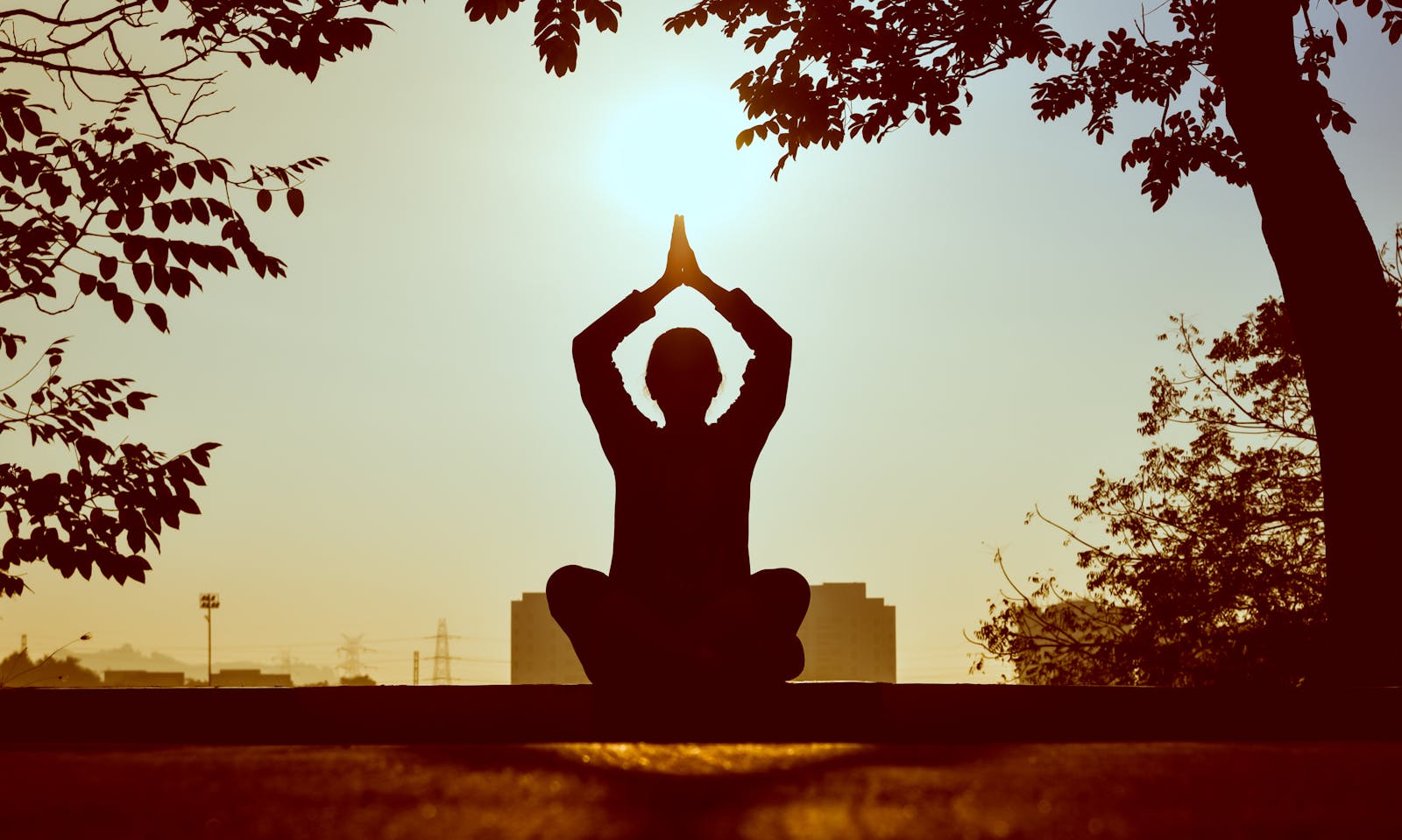
- 1. Pranamasana (Prayer Pose): Stand at the front of your mat in Tadasana, bring your palms together at the chest, and exhale as you settle your weight evenly through both feet.
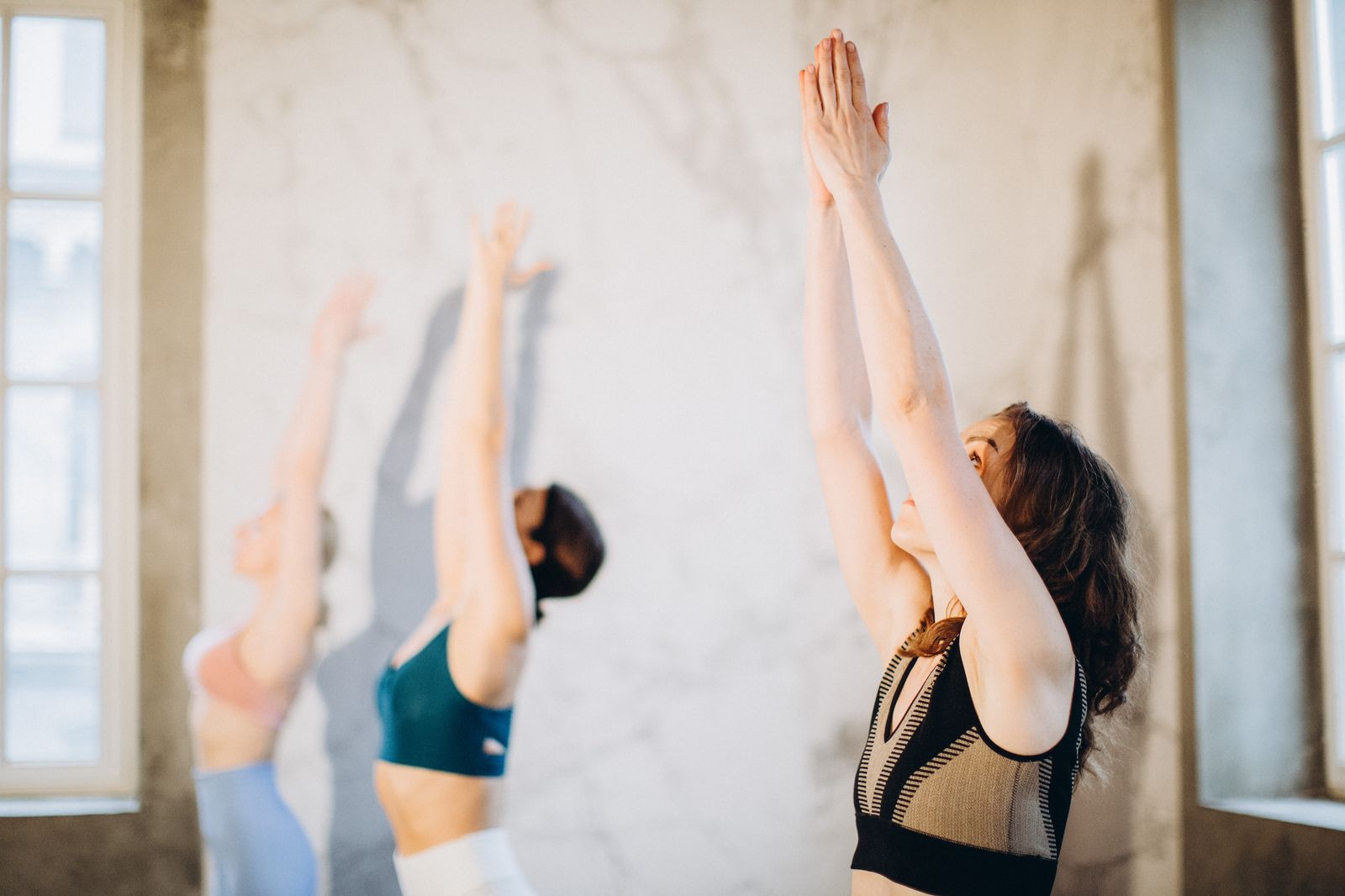
- 2. Hasta Uttanasana (Raised Arms Pose): Inhale as you sweep your arms overhead and gently arch the upper back, lengthening the front of the body from hips to fingertips.
- 3. Hastapadasana (Standing Forward Bend): Exhale and fold forward from the hips, bringing your palms toward the floor beside your feet, letting the head hang heavy.
- 4. Ashwa Sanchalanasana (Equestrian Pose): Inhale as you step the right leg far back into a low lunge, keeping the left knee stacked over the ankle and the chest lifted.
- 5. Dandasana (Plank Pose): Hold the breath briefly as you step the left leg back to meet the right, forming a straight line from head to heels.
- 6. Ashtanga Namaskara (Eight-Limbed Salutation): Exhale and lower the knees, chest, and chin to the floor, keeping the hips slightly raised so that eight points of the body touch the mat.
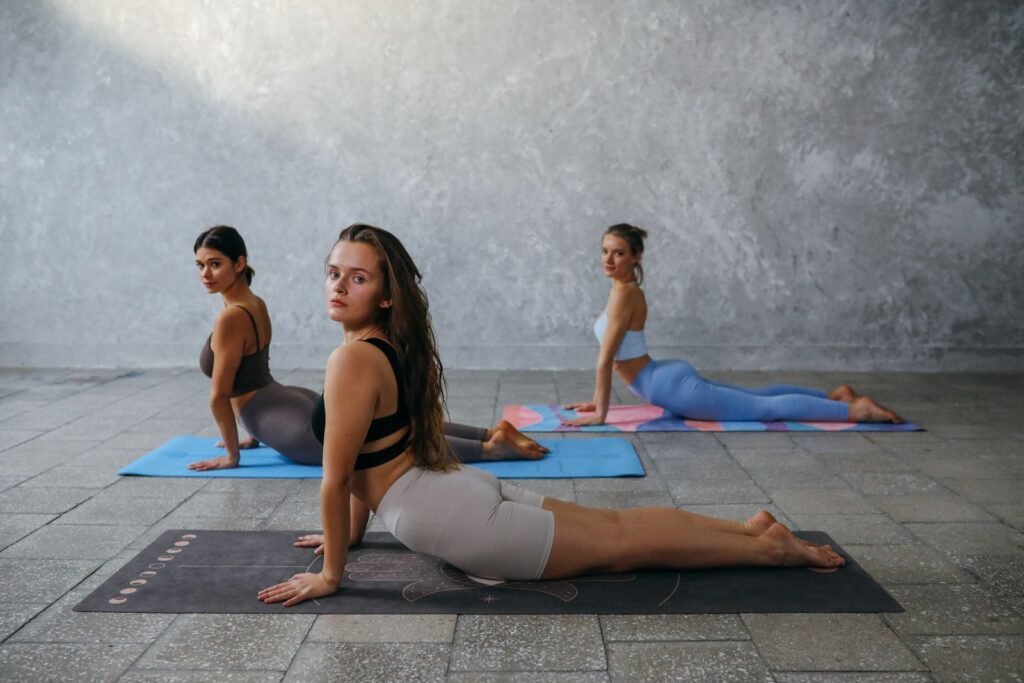
- 7. Bhujangasana (Cobra Pose): Inhale and slide the chest forward and up, straightening the arms as much as is comfortable while keeping the shoulders away from the ears.
- 8. Adho Mukha Svanasana (Downward-Facing Dog): Exhale and lift the hips up and back, forming an inverted V-shape with the body, pressing the heels toward the mat.
- 9. Ashwa Sanchalanasana (Equestrian Pose, opposite leg): Inhale and step the right foot forward between the hands, mirroring step 4 on the other side.
- 10. Hastapadasana (Standing Forward Bend): Exhale as you bring the left foot forward to meet the right, folding forward once again.
- 11. Hasta Uttanasana (Raised Arms Pose): Inhale and roll up through the spine, sweeping the arms overhead into a gentle backbend.
- 12. Tadasana (Mountain Pose): Exhale as you bring the palms back to the chest or by the sides, returning to standing stillness and completing one half-round.
To complete a full round, the sequence is repeated leading with the opposite leg in steps 4 and 9, so both sides of the body get equal stretching and strengthening. For a closer look at how these poses connect to broader standing and balancing postures, see our guide to Vrksasana and other foundational asanas.
How Does Ashtanga Yoga’s Sun Salutation A Differ?
In Ashtanga yoga, Sun Salutation A (Surya Namaskar A) follows a very similar arc but with a few technical distinctions that matter if you’re training in that lineage specifically. Ashtanga’s version uses the Vinyasa count system, where every movement is tied to a specific numbered breath, and it incorporates Chaturanga Dandasana (a low push-up hold) as a transition rather than lowering all the way to the floor as in Ashtanga Namaskara. The sequence also emphasizes Urdhva Mukha Svanasana (Upward-Facing Dog) instead of Cobra Pose, which requires more shoulder and core strength since the thighs lift off the mat entirely. Ashtanga practitioners typically perform five rounds of Sun Salutation A followed by five rounds of Sun Salutation B before moving into the standing sequence, making it a demanding warm-up rather than a gentle opener.
What Are the Benefits of Surya Namaskar?
Surya Namaskar is often described as a complete body workout because it moves the spine through flexion, extension, and neutral positions within a single round, while also working the shoulders, hips, hamstrings, and core. Commonly cited benefits include improved spinal flexibility, stronger arms and shoulders from the plank and cobra transitions, better hamstring and calf flexibility from the repeated forward folds, and a natural cardiovascular lift when the sequence is performed briskly across multiple rounds. Because the sequence pairs movement with breath throughout, regular practitioners often report better breath awareness and a calmer, more focused mind after even a short session. Some practitioners also find it useful for weight management when combined with a balanced diet, since a brisk sequence of 12 rounds can raise the heart rate meaningfully. For related sequences that build on this foundation, see our articles on yoga for flexibility and yoga for back pain.
How Do You Breathe During Surya Namaskar?
Breath is what separates Surya Namaskar from a simple stretching routine, so getting the pattern right matters as much as the shapes themselves. As a general rule, every backbend or upward movement is paired with an inhale, and every forward fold or downward movement is paired with an exhale. In the 12-step sequence above, you inhale into Raised Arms Pose, Equestrian Pose, and Cobra Pose, while you exhale into the Forward Bend, Downward Dog, and the final return to Prayer Pose. Beginners often find it easier to first learn the shapes without worrying about breath, then layer the breathing pattern in once the sequence feels familiar in the body. Once the coordination becomes automatic, many practitioners describe the sequence as meditative, since the mind has a clear rhythm to follow rather than needing to consciously plan each transition.
How Many Rounds of Surya Namaskar Should Beginners Do?
New practitioners are generally advised to start with 2 to 4 rounds, moving slowly enough to hold each posture for a full breath cycle rather than rushing through the transitions. As strength and familiarity build over several weeks, it’s common to progress toward 6 to 12 rounds performed at a steady pace. Some traditional practices build toward 108 rounds on specific occasions such as the change of seasons, but this is an advanced practice reserved for experienced practitioners with significant conditioning, not a starting point. If you’re recovering from injury, pregnant, or new to exercise generally, it’s worth learning the sequence under the guidance of a qualified teacher first, ideally through structured online yoga classes where a teacher can watch your alignment.
What Are Common Mistakes in Surya Namaskar?
The most frequent error is rushing through the sequence purely for cardio effect while skipping proper alignment, which increases the risk of strain in the shoulders, lower back, and wrists. Another common mistake is holding the breath instead of syncing it with movement, which defeats much of the sequence’s calming and coordinating purpose. Many beginners also let the hips sag in Plank Pose or Downward Dog, placing unnecessary load on the lower back and shoulders instead of the core and legs where the effort should be distributed. In the lunge positions (Ashwa Sanchalanasana), letting the front knee travel too far past the toes is another frequent issue that can strain the knee joint over repeated rounds. Learning the sequence slowly first, and only adding speed once the shapes feel stable, prevents most of these issues.
Can Surya Namaskar Be Modified for Beginners or Limited Mobility?
Yes, and modification is one of the sequence’s underrated strengths since nearly every step has a gentler variation. Instead of a full Plank and lowering to Ashtanga Namaskara, beginners can drop the knees to the floor before lowering the chest, reducing the load on the arms and core. Cobra Pose can be replaced with a gentler Sphinx-style lift using the forearms instead of straightening the arms fully, which is easier on the lower back. Those with tight hamstrings or a stiff lower back can bend the knees generously in the Forward Bend rather than forcing a straight-leg fold. For anyone managing wrist sensitivity, coming onto the forearms during Downward Dog (sometimes called Dolphin Pose) removes the wrist-loading altogether. These modifications keep the breath-movement rhythm intact while adjusting the intensity to match the practitioner’s current mobility, similar to how poses like Vajrasana are often used as gentler seated alternatives within a broader practice.
What Is the Best Time of Day to Practice Surya Namaskar?
Traditionally, Surya Namaskar is practiced at sunrise, facing east toward the rising sun, both for its symbolic meaning and because the body tends to be naturally calmer and the stomach empty at that hour. Practicing on an empty stomach, or at least two to three hours after a meal, is generally recommended since the forward folds and twists compress the abdomen. That said, many people successfully practice Surya Namaskar in the evening as a way to release tension from the day, and the physical benefits hold regardless of the exact hour. What matters more than the clock is consistency: practicing a shorter sequence daily tends to build more noticeable strength and flexibility gains than practicing a longer sequence sporadically.
How Does Surya Namaskar Compare to Other Warm-Up Sequences?
Compared to isolated stretching routines, Surya Namaskar has the advantage of combining strength, flexibility, and cardiovascular elements into one continuous flow rather than addressing them separately. Where a standard warm-up might involve static stretches for the hamstrings and shoulders individually, Surya Namaskar moves the same muscle groups through dynamic, breath-linked ranges of motion, which many practitioners find more effective for preparing the body for a full practice. It also differs from purely cardio warm-ups like jogging in place, since it simultaneously builds the specific strength and mobility patterns used throughout the rest of a yoga session, including balance poses like Vrksasana (Tree Pose) and seated postures like Vajrasana. For this reason, it’s used as the opening sequence in most structured yoga classes, whether the class is Hatha, Vinyasa, or Ashtanga in style.
What Do the Sanskrit Names of Each Pose Mean?
Understanding the Sanskrit names deepens the practice and helps with recognizing poses across different teachers and traditions. “Pranamasana” combines “pranam” (bow or salutation) with “asana” (pose), reflecting the reverential opening posture. “Hasta Uttanasana” translates to “raised hands pose,” from “hasta” (hand) and “uttana” (stretched out). “Ashwa Sanchalanasana” means “equestrian pose,” referencing the lunge’s resemblance to a rider on horseback. “Ashtanga Namaskara” literally means “eight-limbed salutation,” referring to the eight points of the body (two feet, two knees, two hands, chest, and chin) touching the ground. “Bhujangasana” comes from “bhujanga,” meaning serpent or cobra, describing the lifted, arched shape of the pose. Learning these names alongside the shapes makes it easier to follow classes taught with traditional terminology, including sequences that build toward more advanced yoga poses.
How Is Surya Namaskar Taught and Practiced in India?
In India, Surya Namaskar is often referred to simply by its Sanskrit name, and it’s commonly taught in schools, yoga shalas, and community wellness programs as a foundational practice suitable for nearly all age groups. It’s frequently paired with chanting the twelve names of the sun (such as Mitraya, Ravaye, and Suryaya) as each pose is performed, adding a devotional layer to the physical sequence. Many Indian yoga schools introduce Surya Namaskar to children as part of physical education, given its accessibility and low equipment requirements, needing only a mat and open space. This widespread, cross-generational teaching is part of why the sequence has remained largely consistent in structure even as it has been adapted by yoga schools around the world.
Questions People Ask About Surya Namaskar
Is Surya Namaskar enough exercise on its own?
For general mobility, flexibility, and light cardiovascular conditioning, several rounds of Surya Namaskar can serve as a complete short workout, especially when performed briskly. However, it is not a substitute for dedicated strength training if your goals include building significant muscle mass, nor does it replace targeted cardio training for endurance athletes. Many practitioners use it as a warm-up or a standalone practice on busy days rather than their only form of exercise.
Can Surya Namaskar help with weight loss?
Performing multiple brisk rounds of Surya Namaskar raises the heart rate and burns calories, which can support weight management when combined with a balanced diet and consistent practice. It is not a guaranteed or standalone weight-loss solution, and results vary based on frequency, intensity, and overall lifestyle. Combining it with other forms of movement tends to produce more noticeable results than relying on the sequence alone.
How long does one round of Surya Namaskar take?
A single slow, breath-focused round typically takes 30 to 60 seconds, while a faster, more athletic round can be completed in 15 to 20 seconds. Beginners are generally encouraged to move slowly, holding each posture for a full breath, which naturally extends the time per round while improving alignment awareness.
Is it safe to practice Surya Namaskar during pregnancy?
Surya Namaskar involves deep forward folds, plank holds, and backbends that are generally not recommended without modification during pregnancy, particularly in the second and third trimesters. Pregnant practitioners should consult a doctor and work with a qualified prenatal yoga teacher who can suggest safe alternatives rather than practicing the full traditional sequence unsupervised.
What muscles does Surya Namaskar work?
The sequence engages the shoulders and arms during the plank and cobra transitions, the core throughout nearly every posture, the hamstrings and calves during the forward folds, and the hip flexors and quadriceps during the lunge positions. Because it moves through such a wide range of postures in one flow, it’s considered one of the more comprehensive full-body sequences in yoga.
Do I need any equipment to practice Surya Namaskar?
No special equipment is required beyond a yoga mat for cushioning and grip, and comfortable clothing that allows a full range of motion. This accessibility is part of why the sequence is taught so widely, from home practices to online yoga classes, without needing a studio or props.
Try This for Yourself
Reading through the steps is a good starting point, but Surya Namaskar is best learned with real-time feedback on your alignment, breath timing, and pace. If you’d like a certified instructor to guide you through the full sequence safely, book a FitStrot online yoga class and build a consistent Surya Namaskar practice at home.
Related reading: Yoga Poses and Asanas, Tadasana (Mountain Pose), Vrksasana (Tree Pose), Vajrasana (Thunderbolt Pose), and FitStrot Online Yoga Classes.