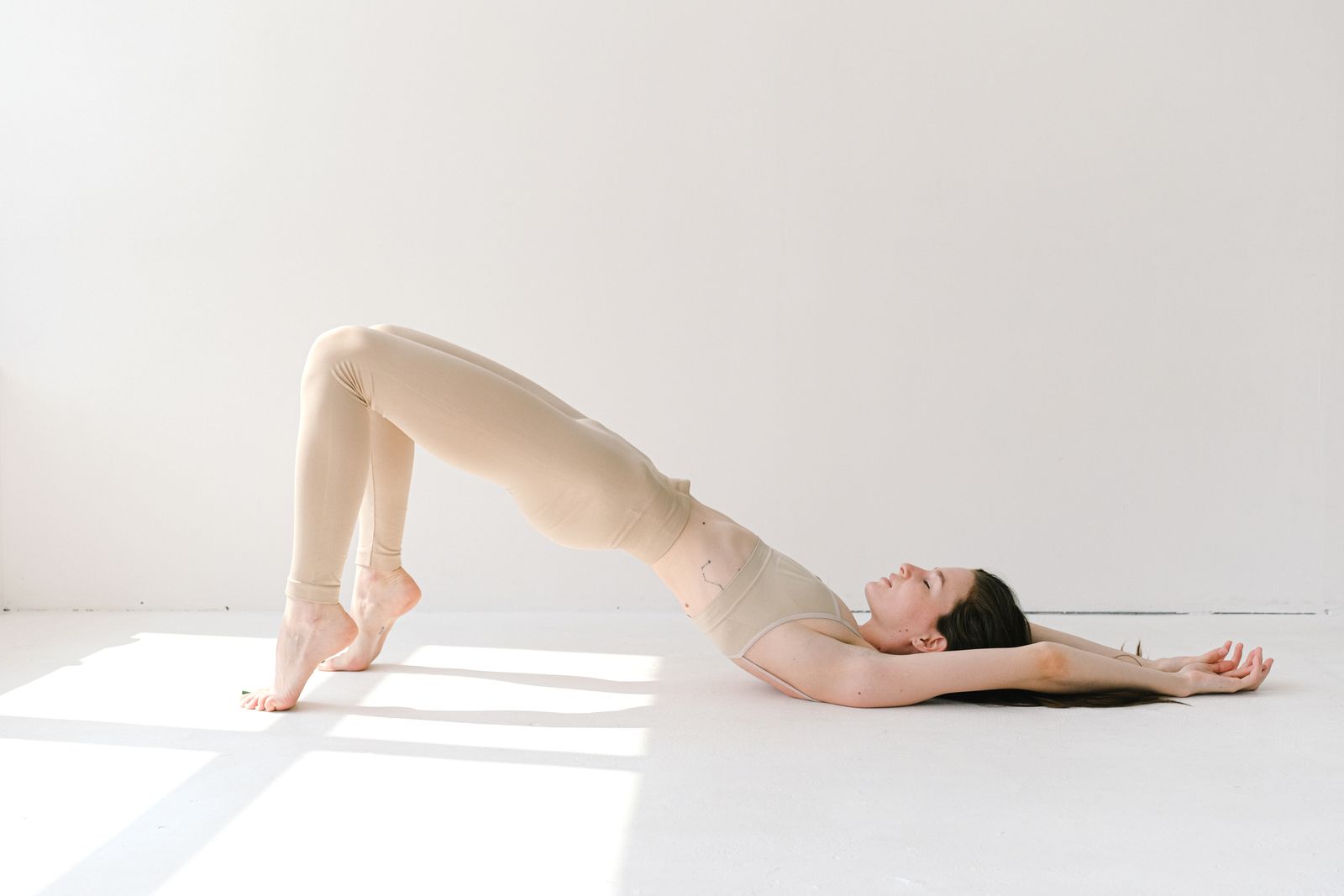
Setu Bandhasana, or Bridge Pose, is a gentle backbend in which you lie on your back, bend your knees, plant your feet hip-width apart, and lift your hips toward the ceiling while pressing your arms into the mat. It opens the chest and hip flexors, strengthens the glutes, hamstrings, and spinal muscles, and is commonly used as a warm-up backbend or a calming counterpose after seated forward folds. Most practitioners hold it for 30 to 60 seconds, breathing steadily, before releasing the spine back down one vertebra at a time.
What Is Setu Bandhasana?
Setu Bandhasana comes from three Sanskrit words: “setu” meaning bridge, “bandha” meaning lock or bind, and “asana” meaning pose. Together, the name literally translates to “bridge lock pose,” a reference to the shape the body forms once the hips lift and the arched spine resembles the arc of a bridge. It’s often confused with Setu Bandha Sarvangasana, a related but distinct posture that adds a shoulder-stand-style leg lift; the version most beginners learn in a general yoga class is the simpler Setu Bandhasana, sometimes labeled just “Bridge Pose” in English-language studios. This article covers that foundational bridge shape: the one taught in nearly every yoga poses library and used as a staple in beginner sequences.
How Do You Perform Setu Bandhasana Step by Step?
Start by lying flat on your back on a yoga mat, knees bent, feet flat on the floor directly under your knees, and heels close enough to your hips that your fingertips can graze them. Keep your arms alongside your body, palms facing down. On an inhale, press firmly through your feet and lift your hips off the mat, rolling your spine up one segment at a time rather than snapping upward. Once your hips reach a comfortable height, you can clasp your hands underneath your torso and roll your shoulders under to open the chest further, or leave your palms flat on the mat for more support. Hold for five to ten breaths, then exhale and lower your spine back down slowly, vertebra by vertebra, until your hips rest on the mat again.
What Muscles Does Bridge Pose Work?
Bridge Pose is primarily a posterior-chain exercise. The gluteus maximus and hamstrings do the heavy lifting to raise and hold the hips, while the erector spinae muscles running along the spine stabilize the lower back through the extension. The pose also recruits the core, particularly the transverse abdominis, to prevent the ribs from flaring and to keep the pelvis from tilting excessively. At the same time, it stretches the hip flexors, quadriceps, and the front of the chest and shoulders, making it a genuinely two-directional pose: strengthening through the back of the body while lengthening through the front. This dual action is one reason instructors often pair it with poses like Tadasana for postural resets between sequences.
What Are the Benefits of Setu Bandhasana?
Regular practice of Bridge Pose is commonly associated with several practical benefits, though individual results vary and none of these replace medical care for diagnosed conditions.
- Spinal mobility: The controlled extension through the thoracic and lumbar spine can help counteract the rounded posture that builds up from long hours at a desk.
- Glute and hamstring activation: Because the pose isolates hip extension, it’s frequently used as an accessible strength-building move for people who find standing squats or lunges uncomfortable.
- Chest and shoulder opening: The backbend stretches the pectoral muscles and front deltoids, which can feel especially useful after periods of forward-hunched sitting or typing.
- Calming nervous system effect: Many teachers cite Bridge Pose as a mild inversion-adjacent shape that can have a soothing, grounding quality when practiced slowly with long exhales, similar in intent to restorative poses.
- Preparation for deeper backbends: Because it’s a relatively low-risk backbend, it’s often used to warm up the spine before attempting more advanced poses such as Wheel Pose or Camel Pose.
Is Setu Bandhasana Good for Back Pain?
Many people with mild, non-specific lower back tightness find Bridge Pose comfortable because it strengthens the glutes and hamstrings, which support the pelvis and reduce strain on the lumbar spine during everyday movement. That said, “good for back pain” is not universal: anyone with a diagnosed disc injury, spondylolisthesis, or acute back pain should check with a physician or physical therapist before attempting backbends of any kind. If you’re exploring yoga specifically as a tool for chronic discomfort, it’s worth reading a dedicated resource on yoga for back pain before building a full routine around this single pose.
What Are Common Mistakes in Bridge Pose?
The most frequent error is letting the knees splay outward, which shifts load away from the glutes and onto the outer hips and knees; keeping the feet hip-width apart and the knees tracking directly over the ankles fixes this. A second common mistake is lifting the hips too high too fast, which can cause the lower back to overarch instead of distributing the extension across the whole spine. Beginners also often forget to press evenly through both feet, causing the hips to tilt to one side. Finally, holding the breath during the lift is common but counterproductive: steady inhalation on the way up and controlled exhalation on the way down keep the nervous system calm and the muscles better oxygenated throughout the hold.
Who Should Avoid Setu Bandhasana?
Bridge Pose is generally considered safe for healthy adults, but a few groups should modify or skip it. People with a recent neck injury should be cautious, since some variations involve tucking the chin and placing weight through the shoulders and upper back. Those in the later stages of pregnancy are often advised to avoid lying flat on the back for extended periods, which this pose requires. Anyone recovering from a shoulder injury may find the arm position uncomfortable and should keep the hold brief or use a block under the sacrum instead of lifting actively. As with any new posture, if you feel sharp or shooting pain rather than a stretch sensation, come out of the pose and consult a qualified instructor or medical professional.
How Is Setu Bandhasana Different From Wheel Pose?
Both are backbends that lift the hips or torso off the ground, but the similarity mostly ends there. Setu Bandhasana keeps the shoulders, arms, and head on the mat, making it a foundational, accessible backbend suitable for most skill levels. Wheel Pose (Urdhva Dhanurasana) requires pressing all the way up onto the hands and feet, creating a much deeper spinal extension and demanding significantly more shoulder flexibility and wrist strength. Teachers typically sequence Bridge Pose before Wheel Pose in a class precisely because it warms up the same muscle groups at a lower intensity. If you’re building toward deeper backbends, Bridge Pose is the sensible entry point rather than skipping straight to advanced variations.
What Variations of Bridge Pose Exist?
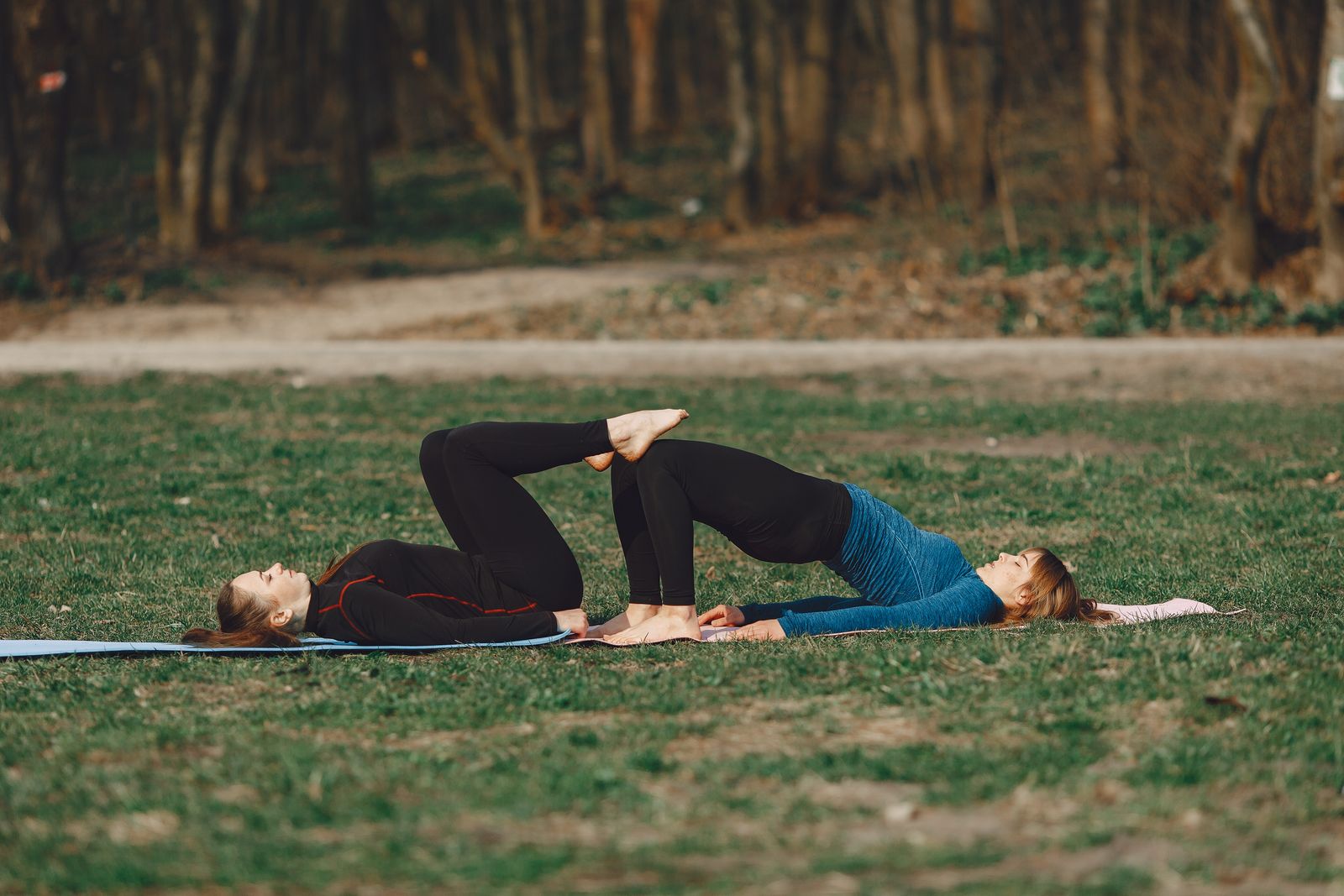
Once the basic shape feels stable, several variations add challenge or accessibility. A supported variation places a yoga block under the sacrum, letting you rest in the lifted position without continuous muscular effort, which is popular in restorative and yin yoga classes. A dynamic variation involves flowing the hips up and down with the breath, useful as a warm-up within a vinyasa yoga sequence. More advanced practitioners sometimes extend one leg straight up toward the ceiling while holding the lift, which demands significantly more core and hip stability. There’s also a version with the hands clasped and rolled underneath the body to deepen the chest opening, and a “wheel prep” variation where the hands are placed by the ears in preparation for pressing into a full Wheel Pose.
How Does Setu Bandhasana Fit Into a Yoga Sequence?
Bridge Pose works well in several places within a class. As a warm-up, it’s often placed after a round or two of Surya Namaskar (Sun Salutations) to introduce backbending once the spine and hamstrings are already warm. Mid-sequence, it pairs naturally with hip-opening poses and gentle twists, since the hip extension in Bridge Pose complements the external rotation worked in poses like Pigeon or Cow Face. Near the end of a practice, a slow, supported version of the pose can serve as a transition toward final relaxation, calming the nervous system before Savasana. Many structured routines, including Hatha yoga classes, place Bridge Pose deliberately between standing balance poses and seated forward folds to balance strength and flexibility work across a single session.
Can Beginners Do Setu Bandhasana Safely?
Yes. Bridge Pose is typically taught in the first few weeks of a beginner’s yoga journey precisely because it doesn’t require inverted weight-bearing on the neck or advanced shoulder flexibility. New practitioners should focus on keeping the movement slow and controlled rather than chasing height in the lift. Using a folded blanket under the shoulders can protect the neck for those with limited upper-back mobility, and a block between the knees can help beginners learn to keep the knees from splaying. As with foundational standing poses such as Vrksasana (Tree Pose), consistency and attention to alignment matter more than reaching an “advanced” version early on.
What Breathing Technique Works Best With Bridge Pose?
A steady ujjayi-style breath, where the inhale and exhale are both slightly audible and evenly paced, tends to work best for holding Bridge Pose without strain. Inhale as you lift the hips, exhale as you settle into the hold, and continue breathing evenly rather than bracing and holding the breath at the top. Many teachers suggest a 1:1 ratio of inhale to exhale length during the hold itself, then a slightly longer exhale during the descent to help the spine release without collapsing. This kind of breath awareness links Bridge Pose to broader pranayama practice, where breath control is treated as a skill in its own right rather than an afterthought to the physical shape.
How Often Should You Practice Setu Bandhasana?
Because it’s a low-impact, low-risk backbend, Bridge Pose can reasonably be practiced daily as part of a short morning or evening routine, typically for two to four rounds of 30 to 60 seconds each. For people using it specifically to build glute and hamstring strength, three to four sessions per week with slightly longer holds tends to produce more noticeable strength gains than daily brief holds. If you’re following a structured plan, it fits naturally into both a general beginner yoga routine and more targeted sequences aimed at posture correction or lower-back mobility.
Questions People Ask About Setu Bandhasana
Is Setu Bandhasana the same as Setu Bandha Sarvangasana?
Not exactly. Setu Bandhasana is the basic bridge shape with the feet and shoulders on the mat, while Setu Bandha Sarvangasana adds a shoulder-stand element with the legs lifted further. Many studios use the names interchangeably for the basic pose, which causes confusion, but traditionally the Sarvangasana version is considered the more advanced variation.
How long should you hold Bridge Pose?
Most instructors recommend holding Setu Bandhasana for 30 to 60 seconds, or five to ten slow breaths, for a general practice. Beginners can start with shorter 15 to 20 second holds and build up gradually as the glutes, hamstrings, and lower back adapt to the position without strain.
Can Setu Bandhasana help with thyroid function?
Some traditional yoga texts associate bridge-type poses with stimulating the throat area, and this claim appears frequently in yoga literature. However, there is no strong clinical evidence confirming a direct effect on thyroid hormone levels, so this benefit should be treated as a traditional claim rather than a medically verified one.
Is Bridge Pose safe during pregnancy?
Bridge Pose is often modified or avoided in the second and third trimesters because it involves lying flat on the back, which many prenatal care providers advise against for extended periods. Pregnant practitioners should consult their doctor and a qualified prenatal yoga instructor before including this or any backbend in their routine.
What’s a good modification if I have neck discomfort?
If you feel pressure in your neck during Bridge Pose, try placing a folded blanket under your shoulders to slightly elevate the upper back and take weight off the cervical spine, and avoid turning your head while in the pose. A supported version using a block under the sacrum instead of an active lift also removes strain while still delivering the stretch.
Does Bridge Pose count as a core exercise?
Bridge Pose engages the core indirectly, primarily the transverse abdominis and obliques, which work to stabilize the pelvis and prevent the lower back from overarching during the hold. It’s not a primary core-strengthening exercise the way a plank is, but it does contribute meaningfully to overall trunk stability when practiced with attention to alignment.
Try This for Yourself
Reading about Setu Bandhasana only goes so far — the real value comes from feeling the alignment cues, breath timing, and modifications in your own body with someone watching your form. If you want personalized guidance on this pose and how it fits into a complete practice, try an online yoga class with FitStrot and work directly with an instructor who can adjust your alignment in real time.
Related reading: Yoga Poses & Asanas Guide, Benefits of Yoga, Yoga for Flexibility, How to Start Yoga at Home, and explore FitStrot’s online yoga classes to build a full practice around poses like this one.