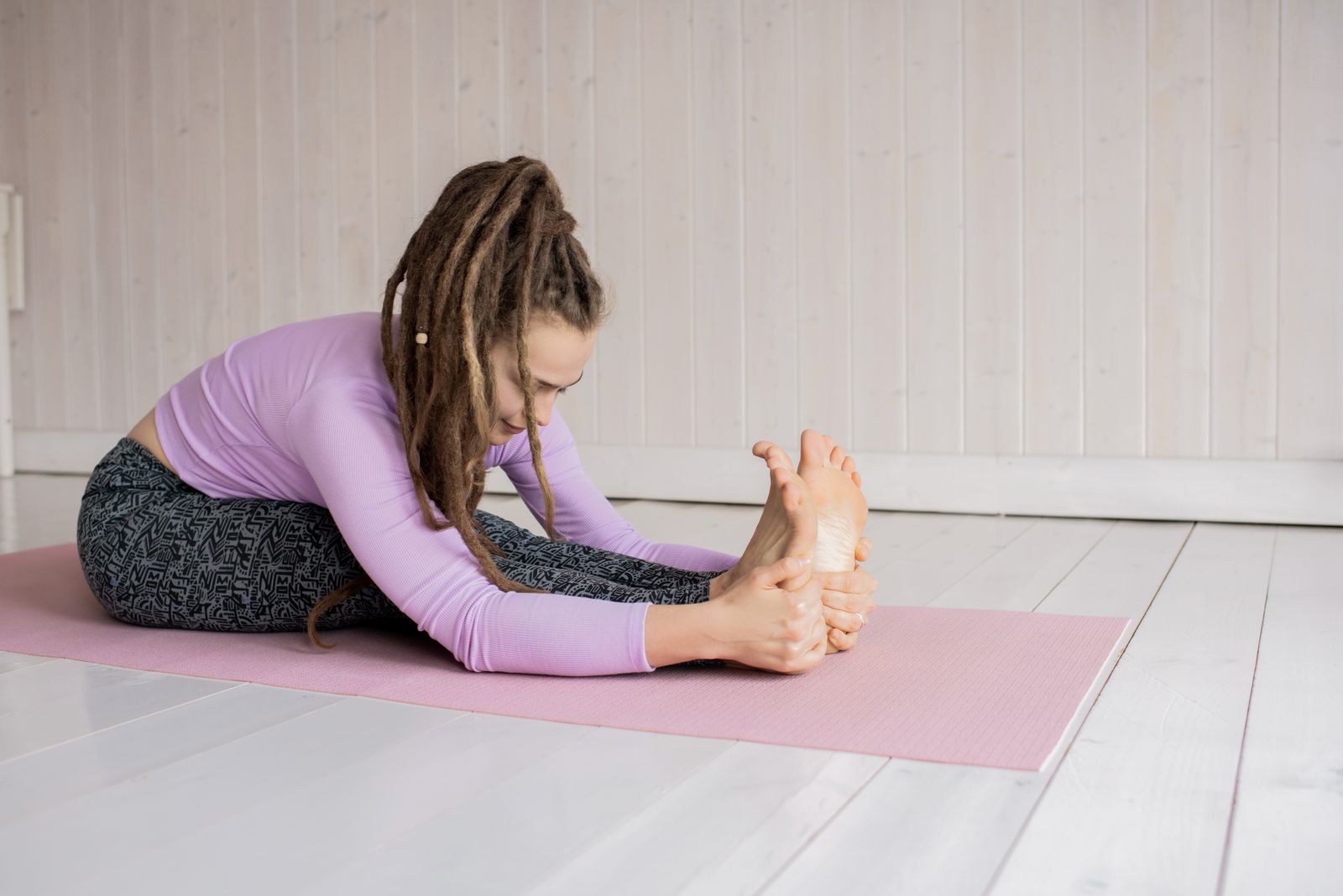
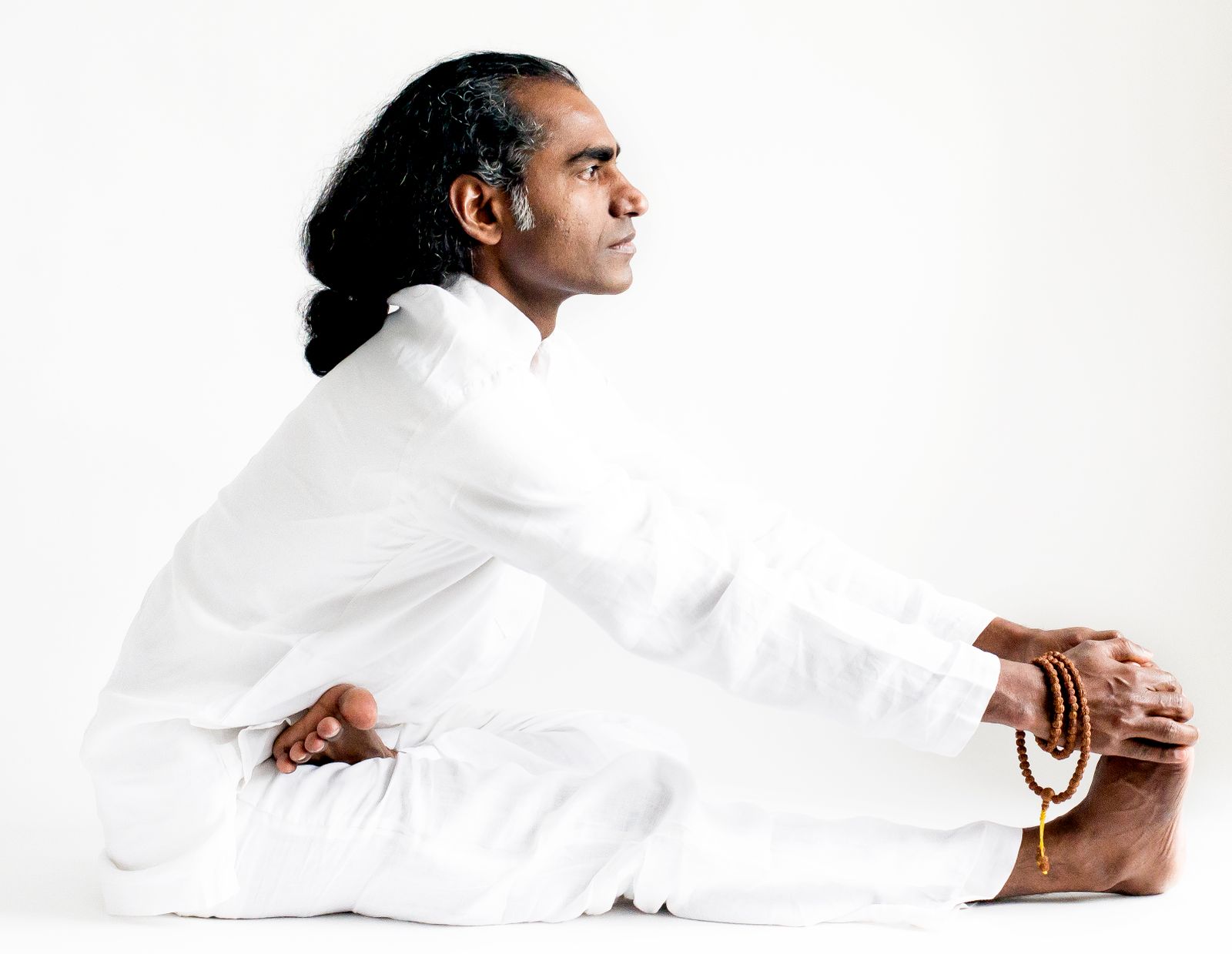
Paschimottanasana, or Seated Forward Bend, is a foundational seated yoga pose in which you sit with legs extended straight in front of you and fold forward from the hips to bring your torso toward your thighs. The name comes from the Sanskrit paschima (the back of the body, or “west”), uttana (intense stretch), and asana (posture) — together describing an intense stretch along the entire back body. It deeply stretches the hamstrings, calves, and spine while calming the nervous system, and it appears in classical texts as far back as the 15th-century Hatha Yoga Pradipika. Most practitioners can begin working toward it regardless of flexibility level, using props and gradual progression, which is why it’s taught in nearly every style of yoga poses curriculum, from beginner classes to advanced Ashtanga sequences.
What Is Paschimottanasana?
Paschimottanasana is a seated forward-folding asana that belongs to the family of forward bends, alongside poses like Uttanasana (standing forward bend) and Janusirsasana (head-to-knee pose). In this posture, both legs stay extended and together on the floor while the spine folds forward from the hip joints, ideally keeping the back long rather than rounded. The pose targets the “paschima” or posterior line of the body — the entire back surface from heels to the crown of the head — making it one of the most comprehensive stretches for the back body in the yoga repertoire.
It is classified as an intermediate seated pose in most teacher-training curricula, though beginners can approach a modified version using a strap or bolster. Because it requires both hamstring flexibility and spinal articulation, it’s frequently used as a benchmark pose that teachers return to across months or years of practice, similar to how tadasana (mountain pose) is used as a foundational reference for standing alignment.
Where Does Paschimottanasana Come From?
Paschimottanasana has a genuinely old lineage compared to many modern yoga poses. It is described in the 15th-century Hatha Yoga Pradipika, one of the classical texts of hatha yoga, though scholars note it is notably absent from several other medieval hatha manuals, suggesting an uneven historical record. Its modern popularization is more clearly documented: Sri Tirumalai Krishnamacharya, often called the father of modern yoga, and his students B.K.S. Iyengar and Pattabhi Jois each included the pose (or close variants like Janusirsasana) in their influential 20th-century teaching systems. Iyengar detailed it extensively in his 1966 book Light on Yoga, and Jois built it into the primary series of Ashtanga Vinyasa Yoga, where it appears early in the seated sequence.
Some yoga historians, including scholar Norman Sjoman, have pointed out similarities between poses like this one and older Indian gymnastic exercises (vyayama), suggesting the shape may predate its formal inclusion in yoga texts. Today it’s considered an essential seated posture taught worldwide, alongside staples like surya namaskar (sun salutations) and vrksasana (tree pose).
How Do You Do Paschimottanasana Step by Step?
Follow this sequence to move into the pose safely and with good alignment:
- Sit tall on the floor or a folded blanket with your legs extended straight in front of you, feet flexed and hip-width apart.
- Ground through your sit bones, pressing them down and back slightly so your pelvis tips forward rather than rounding immediately.
- Inhale and lengthen your spine, reaching the crown of your head upward and drawing your shoulder blades down your back.
- Exhale and hinge forward from the hips, leading with your chest rather than your head, keeping the spine as long as possible for as long as possible.
- Reach for your shins, ankles, or feet — wherever you can comfortably hold without forcing the stretch or rounding your lower back excessively.
- Keep your legs active by pressing the backs of your knees toward the floor and flexing your feet, which protects the knee joints and deepens the hamstring stretch.
- Hold for 5 to 10 breaths, softening deeper with each exhale rather than forcing the fold.
- Release slowly on an inhale, rolling back up to seated with a flat back, or by bending the knees first if your lower back feels tight.
This step-by-step approach mirrors how most standing forward folds are taught as well — the same hip-hinge principle applies whether you’re practicing this seated version or a standing variation.
What Are the Benefits of Paschimottanasana?
Paschimottanasana offers a wide range of physical and mental benefits, which is part of why it shows up so consistently across yoga traditions:
- Stretches the entire posterior chain — hamstrings, calves, and the muscles along the spine all lengthen simultaneously, improving overall flexibility over time.
- Improves spinal mobility by encouraging articulation through each vertebral segment as you fold and unfold.
- Stimulates the abdominal organs, which practitioners commonly describe as supporting healthy digestion, since the forward fold gently compresses the abdomen.
- Calms the nervous system, as forward bends are widely associated with activating the parasympathetic (“rest and digest”) response, making the pose useful for stress relief and as a wind-down posture before yoga nidra or seated meditation.
- Builds patience and body awareness, since real progress in this pose comes from consistent practice rather than force, teaching practitioners to work within edges rather than push past them.
- Complements standing poses like trikonasana and tadasana by targeting flexibility in a seated, ground-based position, which is easier on balance for those still building stability.
Because these benefits touch both the physical body and the nervous system, paschimottanasana is often recommended as part of broader benefits of yoga discussions, especially for people dealing with desk-job tightness or stress-related tension.
What Muscles Does Paschimottanasana Stretch and Strengthen?
While paschimottanasana is primarily known as a stretching pose, it also involves active muscular engagement. The hamstrings, calves, and the erector spinae muscles running along the spine are the main muscles being lengthened. At the same time, the quadriceps engage to help straighten and stabilize the legs, and the deep hip flexors work to initiate the forward hinge rather than letting the lower back round excessively. The core muscles, particularly the transverse abdominis, subtly engage to support the spine as it folds, which is why teachers often cue “lead with the chest” rather than “reach for the toes” — the cue shifts the effort from the arms and rounding back to the hips and core.
Understanding this interplay is useful for anyone exploring yoga for flexibility, since forward bends like this one show that flexibility gains come from active muscular control as much as passive lengthening.
What Are Common Mistakes in Paschimottanasana?
Several habits can reduce the effectiveness of this pose or increase the risk of strain:
- Rounding the back excessively to reach the feet. This shifts the stretch away from the hamstrings and onto the lower spine, which can aggravate disc issues over time. It’s better to keep a long spine and hold higher up the legs than to round just to touch the toes.
- Locking the knees too hard. A micro-bend in the knees is often appropriate, especially for beginners with tight hamstrings, since fully locking the joint can strain the back of the knee.
- Forcing the fold with momentum. Bouncing or yanking yourself deeper increases injury risk; the pose should deepen gradually with breath, not force.
- Letting the feet sickle or point. Keeping the feet actively flexed (toes drawing back toward the shins) protects the ankle and helps engage the legs correctly.
- Holding the breath. Because this is a calming, introspective pose, shallow or held breath undercuts much of its nervous-system benefit. Steady, even breathing throughout the hold matters as much as the shape itself.
Avoiding these mistakes matters just as much in related poses, including janusirsasana, where the same hip-hinge principle applies.
What Are the Best Variations and Modifications of Paschimottanasana?
Because hamstring and hip flexibility varies enormously between practitioners, paschimottanasana has several accessible variations:
- Strap-assisted variation: Loop a yoga strap around the balls of the feet and hold the strap instead of reaching for the feet directly. This lets you keep a long spine even with tight hamstrings.
- Bolster or blanket support: Sitting on a folded blanket tilts the pelvis forward slightly, making the hip hinge easier to access, particularly helpful for those with tight hips or a rounded lower back.
- Bent-knee variation: Keeping a generous bend in the knees while still folding forward allows beginners to feel the shape of the pose without straining the hamstrings.
- Wide-legged variation (Upavistha Konasana): Separating the legs into a V-shape before folding forward changes the stretch emphasis toward the inner thighs and groin.
- Twisted variation (Parivritta Paschimottanasana): Adding a spinal twist before or during the fold increases the challenge and targets the obliques and outer hips.
- Supported version with chair or wall: For those with limited floor mobility, folding forward over a chair seat can approximate the same stretch pattern with less strain on the hips and knees.
These variations make the pose accessible across practice levels, similar to how vrksasana offers wall-supported entry points for beginners still building balance.
Who Should Avoid or Modify Paschimottanasana?
While paschimottanasana is generally considered safe for most healthy adults, certain conditions call for caution or modification. People with acute lower back injuries, herniated discs, or sciatica should approach the pose carefully and ideally under the guidance of a qualified teacher, since forward folding can aggravate some spinal conditions if the back rounds excessively. Pregnant practitioners are often advised to modify the pose by widening the legs to make room for the belly, or to avoid deep forward folds altogether in later trimesters, and should consult their own healthcare provider and a prenatal-qualified instructor for personalized guidance. Those with diarrhea or recent abdominal surgery are commonly advised to skip deep forward folds temporarily, since the pose compresses the abdominal region.
As with any yoga pose, if you experience sharp pain (as opposed to a normal stretching sensation) at any point, you should ease out of the position immediately. This is one of many reasons that starting with guided instruction, such as structured online yoga classes, tends to produce safer long-term progress than learning purely from static images.
How Is Paschimottanasana Different From Uttanasana?
Both paschimottanasana and Uttanasana are forward bends that stretch the hamstrings and spine, but the key difference is the starting position. Uttanasana is a standing forward fold, performed from a standing posture with the legs together or hip-width apart, and it incorporates a balance and weight-bearing component that paschimottanasana does not. Paschimottanasana, being seated, removes the balance challenge and allows for a more controlled, sustained stretch since the legs are anchored to the floor. This makes paschimottanasana especially useful for practitioners who want to isolate the hamstring and spinal stretch without the added demand of standing stability, while Uttanasana is often used as a transitional pose within flowing sequences like surya namaskar.
How Does Paschimottanasana Compare to Janusirsasana?
Janusirsasana, or Head-to-Knee Pose, is essentially a one-legged variation of paschimottanasana: one leg extends straight while the other bends with the sole of the foot pressed against the inner thigh. This asymmetrical shape allows practitioners to work on flexibility one side at a time, which can be useful for identifying and addressing imbalances between the left and right hamstrings or hips. Paschimottanasana, by folding over both legs simultaneously, offers a more symmetrical stretch and is often introduced either before or after janusirsasana in a seated sequence so practitioners can compare sensation and progress on both variations.
How Often Should You Practice Paschimottanasana?
Consistency matters more than duration when it comes to improving flexibility in this pose. Practicing paschimottanasana 3 to 5 times per week, holding for 5 to 10 breaths per round, tends to produce more noticeable results over weeks and months than occasional long holds. Many teachers recommend practicing it toward the end of a session, once the hamstrings and hips have already been warmed up by standing poses, rather than as a cold-muscle starting stretch. Pairing it with hip openers and gentle backbends across a balanced weekly routine, such as those found in a yoga for beginners plan, tends to build flexibility more sustainably than isolating a single pose daily.
What Props Help With Paschimottanasana?
A small set of props can make paschimottanasana significantly more accessible, especially for those with tighter hamstrings or a rounded lower back:
- Yoga strap: Wrapped around the feet, it lets you maintain length in the spine while still working the hamstring stretch, rather than sacrificing form to reach the toes.
- Folded blanket or cushion: Sitting on an elevated surface tilts the pelvis into a more favorable position for the forward hinge.
- Bolster: Placed across the shins, a bolster gives the torso something to rest on during longer, more restorative holds of the pose.
- Yoga blocks: Positioned under the hands or forehead in certain variations, blocks help bridge the gap between your current flexibility and the “full” expression of the pose.
Props are especially useful in a home practice setting where you don’t have a teacher physically adjusting your alignment.
Questions People Ask About Paschimottanasana
Is paschimottanasana good for beginners?
Yes, with modifications. While the “full” expression requires decent hamstring flexibility, beginners can use a strap, bend the knees generously, or sit on a folded blanket to access the same hip-hinge pattern safely. Most beginner sequences introduce it gradually rather than expecting an immediate deep fold, so it’s appropriate to start practicing even with very tight hamstrings.
How long should you hold paschimottanasana?
Most teachers recommend holding the pose for 5 to 10 breaths, or roughly 30 to 60 seconds, for a typical practice. Longer, more restorative holds of a few minutes are sometimes used in yin or restorative styles, often with a bolster for support, to allow connective tissue to release more gradually.
Does paschimottanasana help with back pain?
Many practitioners find that paschimottanasana, done with good alignment, helps relieve general tightness-related back discomfort by lengthening the spine and hamstrings. However, if you have an existing back injury, disc issue, or sciatica, this pose should be approached cautiously and ideally under professional guidance, since forward folding can aggravate certain spinal conditions if performed with a rounded back.
Why can’t I touch my toes in paschimottanasana?
Tight hamstrings, tight hips, or a naturally longer torso relative to leg length are the most common reasons practitioners can’t reach their toes. This is completely normal and not a sign of doing the pose “wrong” — using a strap around the feet allows you to keep the same spinal alignment and stretch benefit without needing to physically reach your toes.
What is the difference between paschimottanasana and uttanasana?
Paschimottanasana is performed seated with the legs extended on the floor, while uttanasana is a standing forward fold. The seated version removes the balance component and allows a more anchored, sustained stretch, whereas the standing version is often used as a transitional pose within flowing sequences.
Can pregnant women practice paschimottanasana?
Deep forward folds like paschimottanasana are generally modified or avoided during pregnancy, particularly in later trimesters, since they can compress the abdomen. Widening the legs to make room for the belly is a common modification, but pregnant practitioners should consult their doctor and a prenatal-qualified yoga teacher before continuing this or any pose during pregnancy.
Try This for Yourself
Reading about alignment cues is a useful starting point, but paschimottanasana is genuinely easier to learn with real-time feedback on your hip hinge, spinal length, and breath pacing. If you want personalized guidance on this pose and how it fits into a broader flexibility and stress-relief practice, FitStrot’s online yoga classes pair you with instructors who can watch your form live and adjust cues to your specific body and goals.
Related reading: yoga poses, surya namaskar, tadasana, vrksasana, and FitStrot’s online yoga classes.