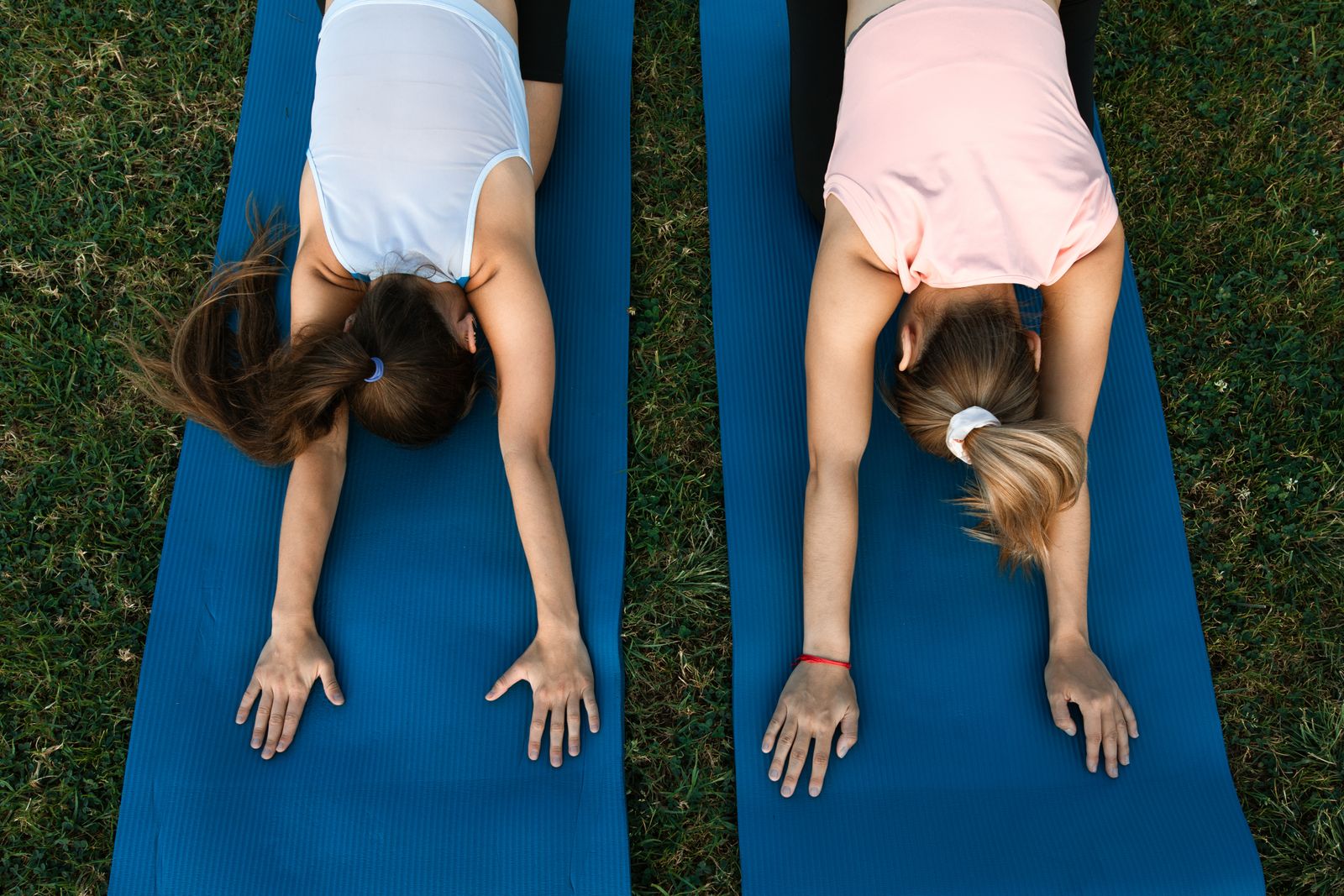
Balasana, or Child’s Pose, is a kneeling forward-fold in which you sit back on your heels, fold your torso over your thighs, and rest your forehead on the mat with your arms extended or relaxed alongside your body. It is one of the most widely used resting postures in yoga because it gently stretches the hips, thighs, ankles, and lower back while calming the nervous system through slow, deep breathing. Beginners can hold it for 30 seconds to a few minutes at any point during a practice, between more demanding poses, or as a standalone stress-relief exercise at home or at a desk.
What Does “Balasana” Mean in Sanskrit?
Balasana comes from two Sanskrit roots: “bala,” meaning child, and “asana,” meaning seat or pose. Put together, it translates literally to “child’s pose,” a name that reflects the naturally curled, protected shape babies and toddlers often rest in. In Hindi, the pose is commonly written and searched as “बालासन,” pronounced roughly as “baa-laa-sana,” and it is taught under the same name across most Hatha, Vinyasa, and Hindi-language yoga instruction in India. The pose does not have a documented ancient textual origin the way postures like Tadasana do; it is generally understood as a modern restorative addition to the asana canon, used to punctuate more strenuous sequences.
How Do You Do Balasana Correctly?
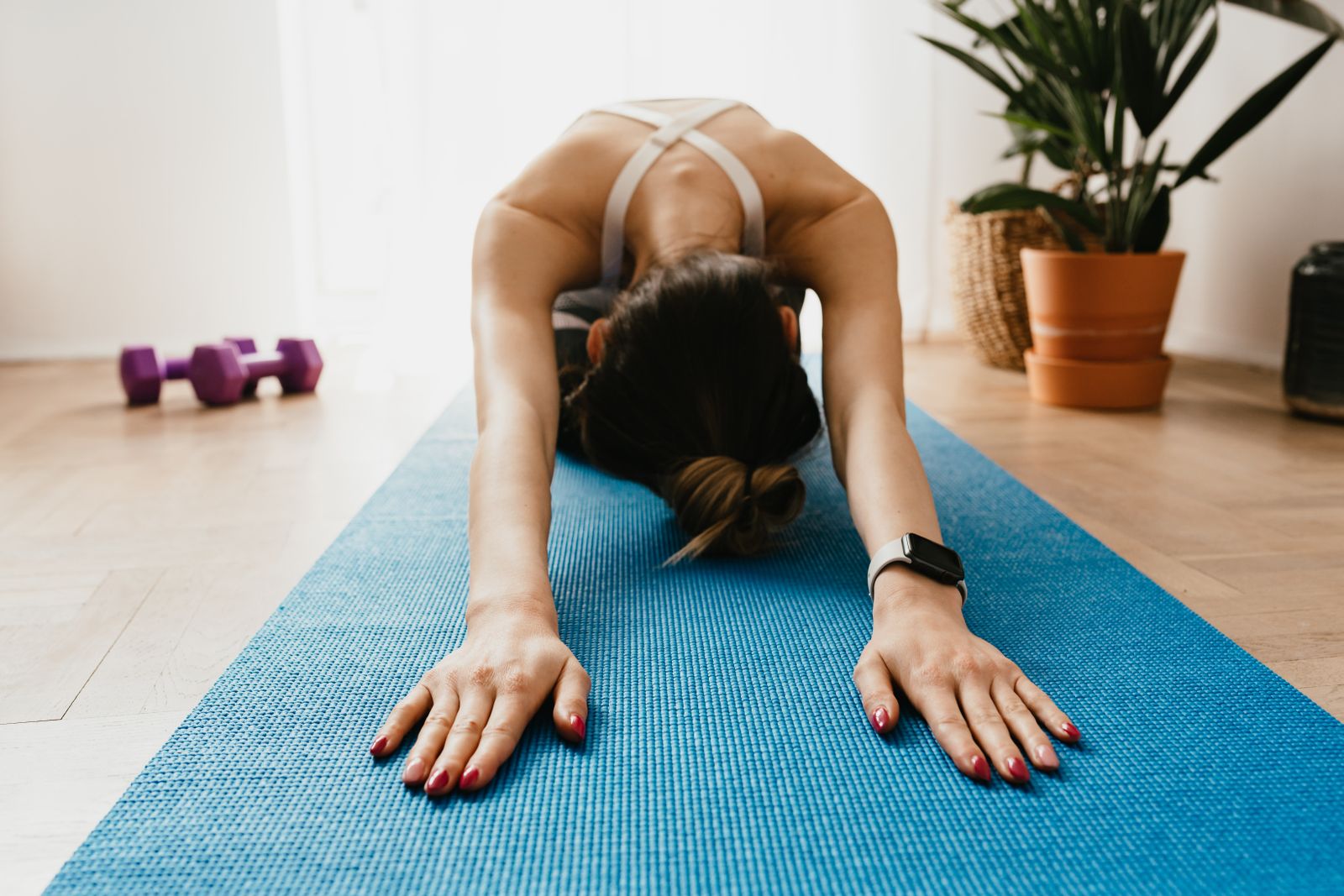
Start by kneeling on your mat with your big toes touching and knees spread to about hip-width or slightly wider. Sit your hips back toward your heels, then exhale as you fold your torso forward, laying it between or on top of your thighs. Rest your forehead gently on the mat. From here you have two main arm options: extend your arms forward with palms down for a deeper stretch through the shoulders and lats, or draw them back alongside your body with palms facing up, which is more passive and restful. Keep your hips reaching toward your heels rather than lifting away from them, and let your breath move into your lower back and ribcage rather than trying to force the stretch. Hold anywhere from 30 seconds up to several minutes, breathing slowly through the nose.
What Are the Main Benefits of Balasana?
Balasana offers a combination of physical release and nervous-system regulation that few other resting poses match. Because the posture folds the body forward and turns attention inward, it is commonly recommended as a reset point between more active sequences such as Surya Namaskar (Sun Salutations).
- Full-body stretch: the pose lengthens the lower back, spine, hips, thighs, and ankles simultaneously, which is useful after sitting for long stretches or after standing poses like Vrksasana.
- Nervous system calming: the forward fold and forehead-down position are widely described by yoga teachers and physical therapists as activating a parasympathetic, rest-and-relax response, which is why the pose shows up so often in classes focused on stress relief.
- Gentle digestive support: the light compression of the abdomen against the thighs is often cited as a mild aid to digestion, though this effect is subtle rather than a substitute for medical treatment of digestive issues.
- Shoulder and upper back release: when the arms are extended forward, the pose opens the shoulders, the sides of the torso, and the muscles between the shoulder blades.
- Accessible recovery position: because it requires no strength or balance, Balasana is one of the few poses appropriate as a rest option at literally any point in a class, including in the middle of a Vinyasa Yoga flow.
Some sources also point to research suggesting that short daily sessions of restorative poses like Balasana may support lower resting heart rate and blood pressure over time, though individual results vary and anyone with a cardiovascular condition should get personalized guidance from a doctor before relying on yoga for blood pressure management.
Is Balasana Good for Back Pain?
Balasana is frequently recommended as a gentle option for people dealing with general lower back tightness because it passively lengthens the lumbar spine without loading it. That said, “good for back pain” depends heavily on the cause. For simple muscular tightness from sitting or from a hard workout, the pose typically feels relieving. For disc-related pain, sciatica, or acute injury, forward folding can sometimes aggravate symptoms, so it is worth trying cautiously and stopping if you feel sharp, radiating, or worsening pain rather than a mild stretch. Anyone managing a chronic back condition should treat Balasana as one tool among several, alongside broader guidance on yoga for back pain, rather than a stand-alone fix.
What Muscles Does Balasana Stretch?
Balasana primarily stretches the erector spinae muscles running along the spine, the gluteal muscles, the hip flexors at the front of the hip, and the muscles around the ankles and tops of the feet, which are compressed into dorsiflexion. When the arms reach forward, the pose also stretches the latissimus dorsi along the sides of the torso and the muscles between the shoulder blades. It is a passive stretch rather than an active one: gravity and body weight do the work, which is exactly why the pose is so low-effort and beginner-friendly compared to active hip openers.
Is Balasana a Beginner Pose?
Yes. Balasana is typically one of the first postures taught in any beginner yoga class because it requires no flexibility threshold, no balance, and no strength to attempt safely. It is often taught in the same early session as standing poses like Tadasana and basic seated postures, forming part of the foundational vocabulary covered in most yoga poses guides for new students. Complete beginners sometimes find their hips do not reach all the way to their heels, or that their forehead does not comfortably touch the mat; both are common and resolve with consistent practice or with the prop modifications described below.
How Long Should You Hold Child’s Pose?
As a rest position between other postures, 20 to 30 seconds is usually enough to reset your breath before continuing. As a dedicated restorative or relaxation practice, many teachers recommend holding Balasana for 1 to 5 minutes, breathing slowly and evenly throughout. There is no strict upper limit: some restorative and yin-style classes hold the pose for 5 minutes or longer, sometimes with the hips or chest propped on a bolster for extra support. The right duration depends on your goal in the moment, whether that is a quick reset mid-flow or a longer meditative wind-down at the end of practice.
What Are Common Mistakes in Balasana?
Several small errors show up often, especially in beginners:
- Tucking the chin sharply: this compresses the back of the neck. Let the neck stay long and relaxed instead of curling the chin tightly toward the chest.
- Lifting the hips away from the heels: this shifts the stretch out of the hips and into the shoulders and wrists, changing the point of the pose. Focus on sitting the hips back rather than reaching the hands far forward if the two compete.
- Holding the breath: tension in the pose often comes from short, shallow breathing rather than tight muscles. Slow the exhale down and let the ribs expand into the lower back.
- Forcing the forehead to the floor: if the forehead does not reach the mat comfortably, forcing it down strains the neck. Use a prop instead of pushing.
- Ignoring knee discomfort: sharp knee pain is a sign to widen the knees, add cushioning, or skip the pose rather than push through it.
How Do You Modify Balasana If It’s Uncomfortable?
Balasana is highly adaptable, which is part of why it works for almost every body type and fitness level. If your hips do not reach your heels, place a folded blanket or bolster between your thighs and calves for support. If your forehead does not reach the mat, rest it on a block, cushion, or stacked fists. If your knees are sensitive, fold a blanket under them for cushioning or widen your knee position to reduce the angle of the fold. If you are pregnant or the compression on the belly feels uncomfortable for any reason, widen the knees further apart to make room for the torso rather than folding fully between the thighs. People with knee injuries or very limited ankle flexibility can try a seated forward fold instead until mobility improves.
Who Should Avoid or Modify Balasana?
Most people can practice Balasana safely, but a few situations call for caution or modification. Recent knee surgery or acute knee injury is the most common reason to skip or heavily modify the pose, since it places direct pressure on the knee joint. Pregnancy in the later trimesters usually calls for a wide-knee variation to avoid abdominal compression. Diagnosed disc herniation or acute sciatica may worsen with deep forward folding for some people, so it is worth checking with a physical therapist or doctor first. High blood pressure that is not well controlled is sometimes flagged as a caution for any pose where the head is lower than the heart, though for most people Balasana’s head position is mild compared to full inversions. As with any pose, mild discomfort that eases with adjustment is normal; sharp or worsening pain is a signal to stop.
What Is the Difference Between Balasana and Ananda Balasana?
Despite sharing “balasana” in the name, Balasana and Ananda Balasana are two distinct poses. Balasana (Child’s Pose) is a kneeling forward fold with the hips resting toward the heels and the torso folded forward. Ananda Balasana, commonly translated as “Happy Baby Pose,” is a completely different, supine posture: you lie on your back, draw your knees toward your armpits, and hold the outside edges of your feet, resembling a baby playing on its back. Both poses share the word “bala” (child) because of their childlike shapes, and both are calming, hip-opening postures, but they are performed in opposite positions (one face-down and kneeling, one face-up and reclining) and are not variations of the same pose. If you searched for “ananda balasana yoga” expecting instructions for Child’s Pose, look up Happy Baby Pose separately for the correct steps.
When Should You Practice Balasana in a Yoga Sequence?
Balasana is unusually flexible in terms of sequencing because it asks so little of the body. It is commonly used at the very start of a class to settle the breath and mind before movement begins, as a rest point between rounds of Surya Namaskar, as a counter-stretch after backbends or deep twists, and at the end of a practice just before final relaxation. In restorative and Yin Yoga classes, it sometimes serves as the closing pose held for several minutes. In more athletic styles such as Power Yoga, it is the default fallback whenever a student needs to pause without leaving the mat.
Can Balasana Help With Stress and Anxiety?
Balasana is one of the postures most frequently recommended specifically for calming an overactive mind, largely because the combination of a forward fold, closed eyes, and slowed breath tends to lower physical arousal. The forehead-down position also removes visual stimulation, which some people find helps quiet racing thoughts. It is not a replacement for treatment of clinical anxiety, but as a short daily practice, it is a low-effort tool worth pairing with broader stress-management approaches, including breathing techniques covered in guides on Pranayama and the wider mental health angle explored in resources on yoga for anxiety.
How Does Balasana Fit Into a Home or Online Yoga Practice?
Because it needs no equipment beyond a mat and no prior experience, Balasana is one of the easiest poses to build into a home routine. It works well bookended around desk-break stretches, at the start of a short morning session covered in guides to morning yoga, or as a wind-down after an online yoga class where you may not have a teacher physically present to spot your alignment. If you are new to structured practice, pairing Balasana with a broader look at the benefits of yoga and the different types of yoga available can help you decide what style of class to try next.
Questions People Ask About Balasana
Is Balasana the same as Shashankasana?
They are closely related but not identical. Shashankasana (“Hare Pose”) is often described in Hindi and Hatha yoga sources as a near-identical or slightly deeper version of Balasana, sometimes performed with arms stretched further forward and a stronger emphasis on stretching the shoulders. Many teachers use the two names interchangeably, though some traditions treat Shashankasana as a distinct pose in its own sequence.
Can I do Balasana every day?
Yes. Because it is a passive, low-strain stretch, Balasana is considered safe for daily practice by most teachers, and many people use it as a short daily reset for the back and nervous system. As with any repeated stretch, stop or modify if you notice ongoing knee or ankle discomfort rather than pushing through pain day after day.
Why can’t I touch my hips to my heels in Balasana?
Limited ankle flexibility, tight quadriceps, or simply a wider hip and thigh structure are the most common reasons. This is completely normal and not a sign you are doing the pose wrong. Placing a folded blanket or bolster between your calves and thighs lets you rest fully into the pose without forcing your joints into an uncomfortable range.
Does Balasana help with sleep?
Many people use Balasana as part of a wind-down routine before bed because the slow breathing and forward fold are associated with parasympathetic, rest-oriented nervous system activity. It is a reasonable addition to a bedtime routine, though it works best combined with other sleep habits like consistent bedtimes and reduced screen time rather than as a stand-alone fix for insomnia.
What is Balasana called in Hindi and how is it written?
In Hindi, Balasana is written as बालासन and is taught under the same name in Hindi-language yoga instruction across India. The word breaks down the same way as in Sanskrit: “bala” (बाल, child) plus “asana” (आसन, pose or seat).
Is Balasana safe during pregnancy?
In early pregnancy, many people practice Balasana comfortably with knees spread wide to leave room for the belly. As pregnancy progresses, most prenatal yoga teachers recommend the wide-knee variation exclusively and suggest checking with a doctor or a certified prenatal yoga instructor before continuing any forward-folding pose, since individual comfort and medical guidance can vary significantly.
Try This for Yourself
Reading about Balasana is useful, but the calming, full-body release it offers is easiest to feel with guided instruction on breath timing, hip alignment, and prop placement. If you want structured, teacher-led practice that builds poses like Balasana into a complete routine, try a class through FitStrot’s online yoga classes, where certified instructors guide you through pose sequencing and modifications in real time.
Related reading: Yoga Poses | Surya Namaskar | Tadasana | Vrksasana | Online Yoga Classes