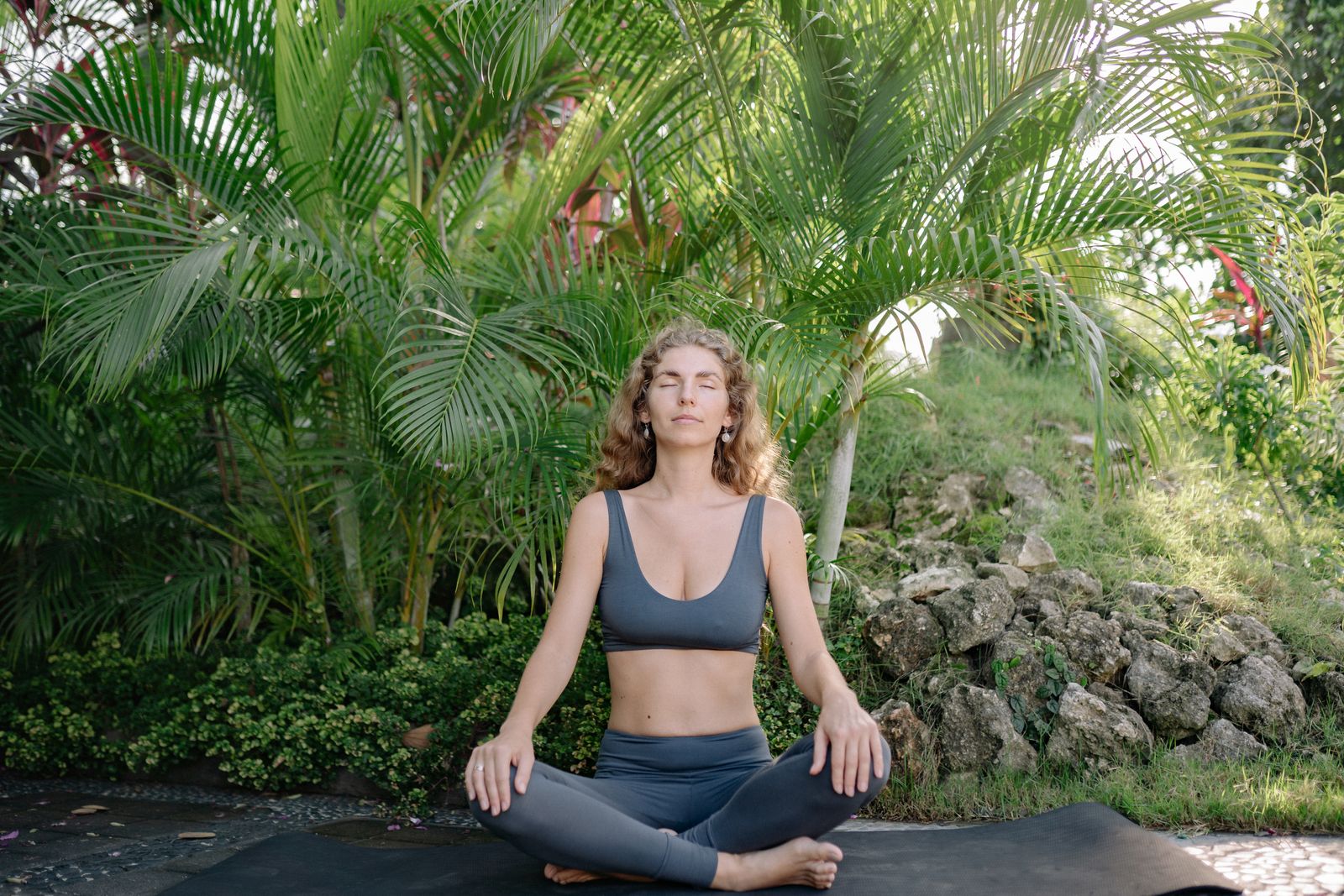
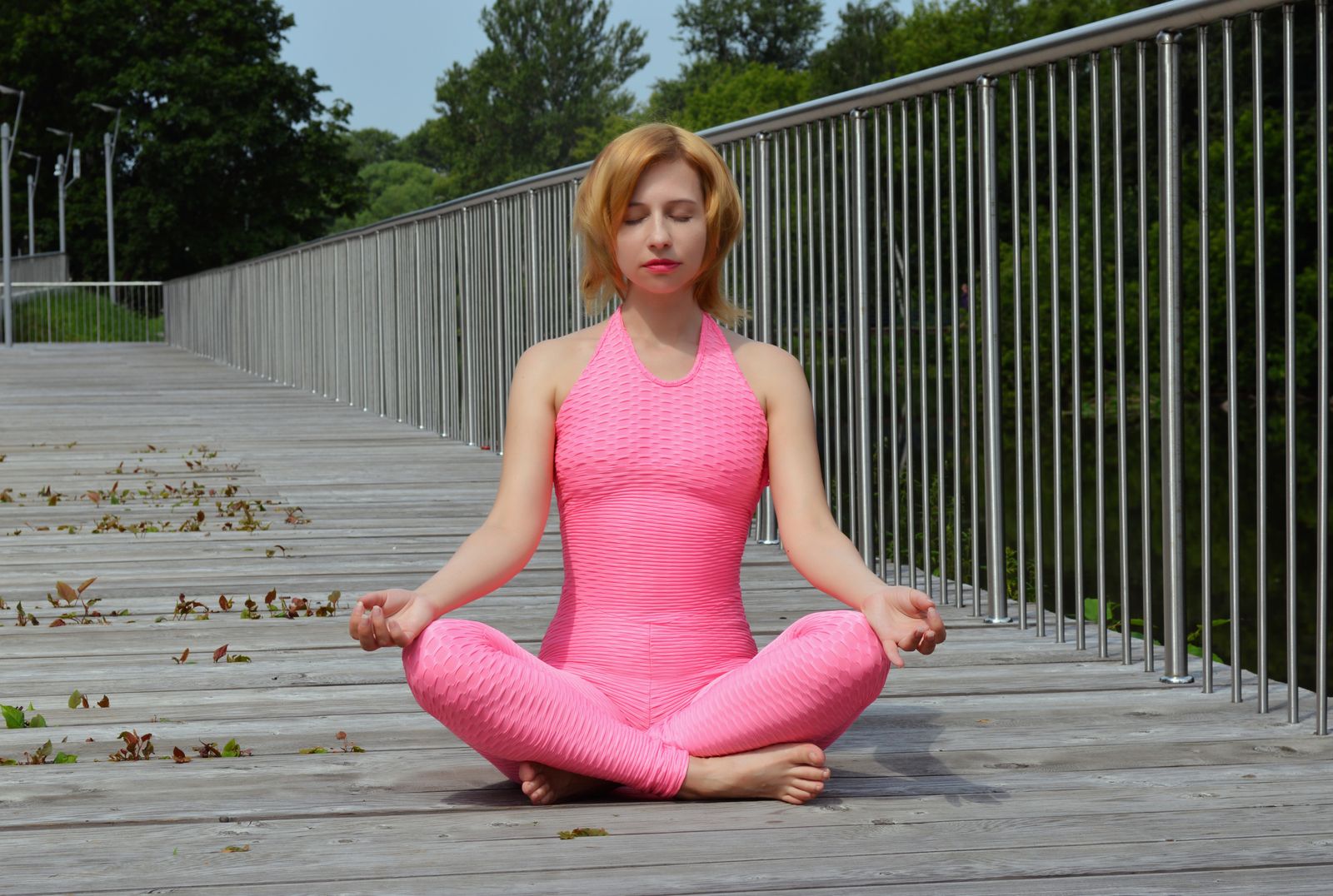
Padmasana, or Lotus Pose, is a seated yoga posture where each foot is placed on the opposite thigh, the spine is lifted tall, and the hands rest on the knees, typically in a mudra. It’s one of the most recognized meditation postures in yoga, valued for the stable, symmetrical base it creates for long periods of stillness, deep breathing, and focused attention. Padmasana opens the hips and stretches the ankles and knees, but it demands real flexibility in those joints, so it’s usually approached gradually with simpler cross-legged poses first rather than forced into on day one.
What Is Padmasana in Yoga?
The word padmasana comes from two Sanskrit roots: “padma,” meaning lotus, and “asana,” meaning seat or pose. The shape of the legs, folded and interlocked, is said to resemble the petals of a lotus flower, a plant that grows up through muddy water to bloom clean and open above the surface. That symbolism matters in yogic and Buddhist traditions, where the lotus represents purity, spiritual awakening, and rising above difficulty. Padmasana appears in classical hatha yoga texts as one of the primary seated postures recommended for meditation and pranayama, alongside poses like Vajrasana and Siddhasana.
In a modern studio or online class, padmasana is usually introduced once a student already has reasonable hip and ankle mobility, since the pose asks the hip joint to externally rotate quite deeply. It’s less about achieving a picture-perfect shape and more about finding a seat that can be held comfortably, without strain, for extended stillness.
How Do You Do Padmasana? Step-By-Step Instructions
Padmasana should be built up to rather than forced. Here is a safe, standard approach:
- Sit on the floor with legs extended. Use a folded blanket or cushion under the hips if the lower back rounds when sitting flat.
- Bend the right knee and draw the right foot toward the body, then rotate the hip outward and place the right foot on top of the left thigh, sole facing upward, heel close to the lower abdomen.
- Bend the left knee and, using the hands rather than forcing the leg, lift the left foot onto the right thigh in the same manner, so both soles face upward.
- Lengthen the spine from the base up through the crown of the head, letting the shoulders soften down and back.
- Rest the hands on the knees, palms up or down, often in Jnana Mudra (index finger touching thumb) or Chin Mudra.
- Soften the face and jaw, breathe steadily through the nose, and hold for as long as is comfortable, starting with 30 to 60 seconds.
- Release and switch leg order on the next round, so the opposite leg crosses on top, to keep the hips balanced over time.
If the classic full lotus feels inaccessible, Ardha Padmasana (Half Lotus), with only one foot resting on the opposite thigh and the other tucked underneath, is a completely valid and commonly taught alternative.
What Are the Benefits of Padmasana?
Padmasana’s benefits are tied closely to what a stable, upright seated posture does for the body and mind over time:
- Improves hip and knee flexibility. Regular, gradual practice increases external rotation range in the hips and mobility in the knees and ankles.
- Supports better posture. The pose naturally encourages an upright spine, which can carry over into sitting posture during work or study.
- Prepares the body for pranayama and meditation. A stable base makes it easier to sit still for breathing exercises like pranayama without the fidgeting that comes from an uncomfortable seat.
- May calm the nervous system. Long, steady holds paired with slow breathing are commonly associated with reduced physiological arousal, similar to other seated stillness practices.
- Encourages body awareness. Because the pose is unforgiving of poor alignment, it teaches practitioners to notice tension patterns in the hips, lower back, and shoulders.
These benefits build gradually. A single session in padmasana won’t transform hip mobility, but consistent practice over weeks and months, similar to progress seen with poses like Vrksasana for balance, tends to compound.
What Muscles Does Padmasana Work?
Padmasana is a passive-looking pose that quietly engages a specific set of muscles and connective tissue:
- Hip external rotators, including the piriformis and deep six muscles of the hip, which lengthen to allow the thighs to open outward.
- Hip flexors and adductors, which are stretched as the legs cross and fold.
- Knee and ankle ligaments, which are placed under rotational load and need to be approached carefully, especially in people with prior knee injuries.
- Core and back extensor muscles, which work isometrically to keep the spine tall rather than letting it collapse forward.
- Pelvic floor muscles, which many teachers cue to engage gently, supporting the connection between padmasana and subtler practices like Mula Bandha.
What Is the Correct Padmasana Sequence for Beginners?
Jumping straight into full lotus is one of the most common causes of knee strain in yoga. A more sensible beginner sequence looks like this:
- Sukhasana (Easy Pose) — simple cross-legged sitting, building basic comfort and spinal awareness.
- Ardha Padmasana (Half Lotus) — one foot on the opposite thigh, the other tucked under the opposite shin.
- Hip-opening stretches such as seated figure-four stretches or Baddha Konasana, done consistently over several weeks to build external rotation range.
- Padmasana attempts with support, using a cushion under the hips to reduce the angle demanded from the knees.
- Full Padmasana, attempted only once half lotus and hip-opening work feel genuinely comfortable, not rushed.
This progression is similar in spirit to how yoga for hip flexibility sequences are typically built, and can take weeks or months depending on a person’s natural hip structure, and that timeline is completely normal. Bone structure varies from person to person, and some practitioners with naturally shallower hip sockets may never find full lotus comfortable, which is fine, since Ardha Padmasana and Sukhasana offer nearly identical meditative benefits.
What Are Common Padmasana Variations?
Several variations let practitioners adapt padmasana to different mobility levels and goals:
- Ardha Padmasana (Half Lotus) — one foot rests on the opposite thigh, the other stays tucked below, offering most of the postural benefit with less hip demand.
- Baddha Padmasana (Bound Lotus) — a more advanced variation where the arms cross behind the back to hold the opposite big toes, adding a shoulder and chest opening element.
- Padmasana with props — a folded blanket or bolster under the sitting bones tilts the pelvis forward and reduces strain on the knees, useful for beginners and for longer meditation sits.
- Supta Padmasana (Reclining Lotus) — the legs are folded into lotus while lying on the back, shifting the pose from a meditation seat into more of a hip-opening stretch.
- Lotus in seated twists or forward folds — some intermediate sequences combine the lotus leg position with a gentle spinal twist or fold for a deeper stretch.
What Mistakes Do People Make in Padmasana?
Because padmasana looks simple, it’s easy to underestimate how it can go wrong:
- Forcing the knee before the hip is ready. When the hip can’t externally rotate enough, the twisting load gets transferred to the knee joint instead, which is not built to handle it and can lead to injury.
- Ignoring pain signals. Mild stretching sensation in the outer hip is expected; sharp or pinching pain in the knee is a sign to back out of the pose immediately.
- Skipping the warm-up. Attempting padmasana cold, without any hip-opening preparation, increases strain considerably.
- Letting the spine collapse. Slouching in the pose undermines the postural and breathing benefits that make padmasana worthwhile in the first place.
- Practicing only one leg-crossing order. Always crossing the same leg on top can create asymmetry in the hips over time; alternating sides helps keep things balanced.
How Does Padmasana Compare to Other Seated Poses?
Padmasana sits at the more demanding end of seated postures. Sukhasana (Easy Pose) requires minimal hip flexibility and is accessible to nearly everyone from the first class. Vajrasana (Thunderbolt Pose), a kneeling posture rather than a cross-legged one, asks for ankle and knee flexion instead of hip rotation, and is often more comfortable for people with tight hips but tolerable knees. Siddhasana (Accomplished Pose) sits between the two, offering more stability than Sukhasana without the full hip demand of padmasana. Choosing among them usually comes down to which joints are more flexible for a given practitioner, and many long-term meditators rotate between several of these seats depending on how their body feels that day.
How Long Should You Hold Padmasana?
For beginners, holding padmasana for 30 to 60 seconds per side is a reasonable starting point, gradually building toward several minutes as comfort increases. Meditation practitioners with years of consistent practice sometimes sit in padmasana for 20 minutes or longer, but that duration is the result of steady progression, not something to aim for early on. If numbness, tingling, or sharp pain develops in the legs or knees during a hold, that’s a signal to come out of the pose rather than push through, since numbness usually indicates reduced circulation rather than a productive stretch.
Is Padmasana Safe for Beginners?
Padmasana can be safe for beginners when it’s approached gradually and never forced, but it is not typically the first pose recommended to someone brand new to yoga. People with recent knee injuries, meniscus issues, hip replacements, or significant ankle stiffness are generally advised to avoid full padmasana and to work with a qualified teacher on suitable alternatives like Sukhasana or a supported half lotus. Pregnant practitioners are often guided toward simpler cross-legged seats with extra height under the hips rather than deep lotus variations. As with any pose involving joint rotation, working with an instructor who can observe alignment in real time, such as through online yoga classes for beginners, reduces the risk of practicing with poor form.
How Does Padmasana Fit Into a Broader Yoga Practice?
Padmasana rarely stands alone as a single pose practiced in isolation. It’s typically the destination pose at the end of a session, once the body has been warmed up through standing and hip-opening postures. A practice might move through Surya Namaskar to build heat, then Tadasana and other standing poses to establish alignment, before transitioning to floor-based hip openers and finally settling into padmasana for pranayama or meditation. This is also why padmasana shows up so often at the close of hatha yoga and yin yoga sessions, where the goal shifts from movement to stillness. In more dynamic styles like vinyasa yoga, padmasana is less common mid-flow and appears mostly at the very beginning or end of class.
What Does Padmasana Look Like? (Visual Reference)
Searches for padmasana yoga images, padmasana yoga pictures, and padmasana yoga drawing are common because the pose has such a distinct, symmetrical silhouette: both feet resting on top of opposite thighs, knees ideally touching or close to the floor, spine vertical, and hands resting palms-up or palms-down on the knees. In illustrations and yoga anatomy drawings, padmasana is frequently used as the default “meditation pose” symbol, appearing in everything from yoga studio logos to app icons. When learning the pose from images alone, it helps to note that the knees don’t need to touch the floor for the pose to be valid or beneficial; that depth is a product of years of hip opening for most bodies, not a beginner benchmark.
How Does Padmasana Support Meditation and Breathwork?
The physical stability of padmasana is precisely why it became associated with meditation across multiple traditions. A well-aligned lotus seat creates a base that doesn’t require constant muscular correction, freeing attention for the breath or a meditation object rather than for balance. This stability is also valuable for pranayama practices where extended, controlled breathing benefits from a spine that stays lifted without effort. Teachers often note that discomfort in the hips or knees during seated meditation becomes a distraction in itself, which is exactly why building padmasana gradually, rather than forcing it, tends to produce better long-term meditation practice than rushing to the full pose. This same principle of stability-before-stillness shows up in meditation for beginners guidance and in how yoga for mental health programs sequence their sessions.
Questions People Ask About Padmasana
What does padmasana mean?
Padmasana means “Lotus Pose” in Sanskrit, combining “padma” (lotus) and “asana” (seat or pose). The name refers to the shape formed by the crossed legs, which is said to resemble the folded petals of a lotus flower, a plant long associated with purity and spiritual growth in yogic and Buddhist traditions.
Is padmasana good for the knees?
Padmasana can be problematic for the knees if attempted before the hips have enough external rotation, since the twisting load gets redirected to the knee joint. Approached gradually, with proper hip-opening preparation, most people can practice it without knee strain, but anyone with existing knee issues should use Ardha Padmasana or avoid deep lotus variations.
How long does it take to achieve full padmasana?
There’s no fixed timeline; it depends heavily on individual hip anatomy and consistency of practice. Some practitioners with naturally open hips manage it within weeks, while others take months or years of gradual hip-opening work, and some bodies are simply better suited to Ardha Padmasana as a permanent, equally valid alternative. Building hip mobility through targeted yoga for flexibility work alongside regular yoga poses for beginners tends to speed up the process considerably.
Can pregnant women practice padmasana?
Deep lotus variations are generally not recommended during pregnancy due to the intense hip rotation and pressure on the pelvic area. Simpler cross-legged seated poses with support under the hips are usually a safer substitute, and pregnant practitioners should always check with a qualified prenatal yoga instructor before attempting seated hip-opening postures.
What is the difference between padmasana and sukhasana?
Sukhasana (Easy Pose) is a simple cross-legged seat with the shins crossed and feet tucked under the opposite knee, requiring minimal hip flexibility. Padmasana demands considerably more hip external rotation, with each foot lifted onto the opposite thigh, making it a more advanced posture typically approached after building comfort in Sukhasana first.
Why is the lotus position used for meditation?
The lotus position creates a wide, stable, symmetrical base and encourages an upright spine without ongoing muscular effort, which makes it easier to sit still for extended periods. This stability reduces physical distraction, allowing attention to settle on the breath or meditation object rather than on balance or discomfort.
Try This for Yourself
Reading the steps is a good start, but padmasana rewards real-time feedback on hip alignment and knee safety that’s hard to get from a page alone. Explore FitStrot’s online yoga classes and work with an instructor who can guide your hip-opening progression toward a safe, comfortable lotus seat.
Related reading: Yoga Poses | Vajrasana | Vrksasana | Surya Namaskar | Online Yoga Classes