Chair yoga is a gentle style of yoga practiced while seated in a chair, or using a chair for support during standing poses, so that anyone with limited mobility, balance concerns, or joint pain can still stretch, breathe, and build strength without ever getting down on a mat. It draws on traditional asanas (poses) like Trikonasana, Tadasana, and seated twists, adapting each one so the chair takes on the stabilizing work the floor would normally do. Because it removes the barriers of getting up and down from the ground, chair yoga has become one of the most widely recommended forms of movement for older adults, office workers, people recovering from injury or surgery, and anyone practicing yoga for the first time. A typical session runs 20 to 45 minutes and combines gentle stretching, joint mobility work, breathing exercises, and short relaxation, all achievable from a standard armless chair.
What Exactly Is Chair Yoga?
Chair yoga is not a separate style of yoga so much as a modification method applied to classical yoga asanas. Instructors take standing, seated, and even some backbend and twist postures from styles like Hatha yoga and Iyengar yoga and rework them so a chair provides the base of support instead of the floor. A forward fold, for example, becomes a seated hinge from the hips with feet flat on the floor; a standing balance pose becomes a supported variation with one or both hands resting on the chair back. The result keeps the core intention of each pose while removing the fall risk and joint strain that can come with getting up and down from a mat repeatedly. This is why chair yoga is often the entry point recommended in broader guides to yoga for seniors and yoga for the elderly.
Who Is Chair Yoga Really For?
While chair yoga is best known as a senior-friendly practice, its actual audience is much broader. Older adults managing arthritis, osteoporosis, or a history of falls are the most commonly cited group, since chair yoga lets them work on flexibility and strength without the balance demands of standing poses. Office workers who sit for long stretches use it for quick desk breaks that release tension in the neck, shoulders, and lower back, a use case often searched as office chair yoga. People recovering from surgery, managing chronic pain conditions, or navigating pregnancy in later trimesters also turn to chair-based sequences because they reduce joint loading. Wheelchair users can adapt nearly all chair yoga sequences directly, since the postures were never dependent on standing in the first place.
What Are the Real Benefits of Chair Yoga?
The benefits of chair yoga overlap heavily with mainstream yoga, but several are especially relevant to the populations who practice it most. Improved joint mobility is one of the most immediate effects, since gentle range-of-motion work in the shoulders, hips, wrists, and ankles helps counteract the stiffness that comes with age or long periods of sitting. Better circulation is another commonly cited benefit, particularly from seated twists and ankle pumps that encourage blood flow in the lower legs. Chair yoga also supports core and postural strength in a low-impact way, which matters for reducing back pain and improving seated posture. On the mental health side, the breathing and mindfulness components common to all yoga styles help lower stress and support better sleep. Research reviewed by Harvard Health has found that adults with lower-body osteoarthritis who practiced chair yoga twice weekly for eight weeks reported reduced pain and fatigue, and a separate study found improved ability to perform daily activities among adults with knee osteoarthritis after a 12-week chair yoga program. Older adults have also shown greater stress reduction after chair yoga compared with chair aerobics, walking, or social games in at least one study. These findings support chair yoga as a legitimate, evidence-informed practice rather than just a lighter version of “real” yoga.
What Are the Best Chair Yoga Poses for Beginners?
A beginner-friendly chair yoga sequence should move slowly through the major joint groups before layering in anything more demanding. These poses are commonly recommended starting points for anyone new to chair yoga for beginners:
- Seated Mountain Pose (Chair Tadasana): Sitting tall with feet flat on the floor, spine long, and shoulders relaxed away from the ears. This resets posture and is usually the opening pose of any sequence.
- Seated Cat-Cow: Alternating between arching and rounding the spine while breathing deeply, releasing tension along the entire back.
- Seated Forward Fold: Hinging forward from the hips with a long spine, stretching the lower back and hamstrings without the balance demands of a standing fold.
- Seated Twist: Rotating the torso gently to one side while holding the chair for support, improving spinal mobility and aiding digestion.
- Ankle and Wrist Circles: Simple rotations that improve circulation and joint lubrication in the extremities, often used as a warm-up.
- Seated Cow Face Arms (Gomukhasana arms): Reaching one arm overhead and the other behind the back to clasp or approach the hands, opening the shoulders. A full standing version is covered in the Gomukhasana guide.
Each pose can be held for 3 to 5 breaths, with the entire sequence taking roughly 15 to 20 minutes for a first session.
Which Chair Yoga Poses and Asanas Go Beyond the Basics?
Once the basic seated postures feel comfortable, most sequences move on to poses adapted from standing and balance asanas. Chair-supported Trikonasana (Triangle Pose) uses the chair back for hand support while the torso tilts sideways, preserving the side-body stretch of the standing version described in the full Trikonasana guide. A chair-assisted Warrior variation lets one leg extend back while the front knee bends, with hands resting on the chair for balance. Seated Eagle Arms (adapted from Garudasana) wraps the arms around each other at chest height to stretch the upper back and shoulders. These intermediate variations bridge the gap between fully seated practice and traditional standing yoga poses, and they are a natural next step for anyone who has built confidence with the beginner sequence.
What Do Advanced Chair Yoga Poses Look Like?
Advanced chair yoga is less about complexity and more about depth, hold time, and combining breath with more challenging transitions. A seated King Pigeon variation, where one ankle rests on the opposite knee in a figure-four position while leaning forward, offers a deeper hip stretch for practitioners with more mobility. Chair-supported balance poses, such as a modified Tree Pose (adapted from Vrksasana) with one hand lightly touching the chair back while the opposite foot rests against the standing leg, challenge stability while retaining a safety point. Longer-held seated backbends, gentle chair-supported inversions like a supported forward fold with the head lower than the heart, and extended pranayama sessions of 10 minutes or more also characterize advanced chair yoga poses. These variations are best attempted only after weeks of consistent beginner and intermediate practice, and ideally under the guidance of an instructor who can check alignment.
How Does Iyengar Chair Yoga Differ From Standard Chair Yoga?
Iyengar yoga, developed by B.K.S. Iyengar, is known for its precise attention to alignment and its extensive use of props, including chairs, straps, blocks, and bolsters. Iyengar chair yoga poses use the chair not just as a seat but as an active prop within full standing or backbend poses; a chair might support an inverted pose, help align the pelvis in a standing twist, or hold the legs in a restorative posture. This differs from general chair yoga, where the chair is primarily the surface someone sits on. Iyengar-style chair work tends to be more precise about exact hand and foot placement, often referencing specific measurements or angles, and it draws directly from the broader philosophy described in the Iyengar yoga tradition. Someone drawn to the detail-oriented, alignment-first approach of Iyengar teaching will likely find its chair adaptations more structured than a typical accessible chair yoga class built primarily for seniors or beginners.
How Can You Practice Chair Yoga at the Office?
Office chair yoga is designed to be done in work clothes, at a desk, in the time it takes for a coffee break. A simple five-minute sequence might include seated cat-cow to release the spine after hours of typing, a seated spinal twist in each direction to counter the forward hunch of screen work, shoulder rolls and neck stretches to relieve tension that builds from looking at a monitor, and a few deep breaths with eyes closed to reset focus before returning to work. Because it requires no mat, no changing clothes, and no dedicated space, office chair yoga has become a popular addition to corporate wellness programs. Employers increasingly build it into broader initiatives alongside services like online yoga classes for teams working remotely or across multiple office locations, since a short guided session can be dropped into a meeting-free block without disrupting the workday.
How Do You Build a Complete Chair Yoga Routine?
A well-rounded chair yoga session generally follows a simple arc: warm-up, active poses, and cool-down. Start with two to three minutes of gentle joint mobilization, ankle circles, wrist rolls, and shoulder shrugs, to bring blood flow to the extremities. Move into five to ten minutes of seated stretches and gentle twists that address the spine, hips, and shoulders. If balance and comfort allow, add five to ten minutes of chair-supported standing poses for a bit more strength work. Close with three to five minutes of slow breathing, ideally a simple technique like Bhramari Pranayama, followed by a minute or two of quiet stillness with eyes closed. This structure, roughly 20 to 30 minutes total, mirrors the pacing used in most guided easy yoga poses routines.
Why Is Chair Yoga Especially Valuable for Senior Citizens?
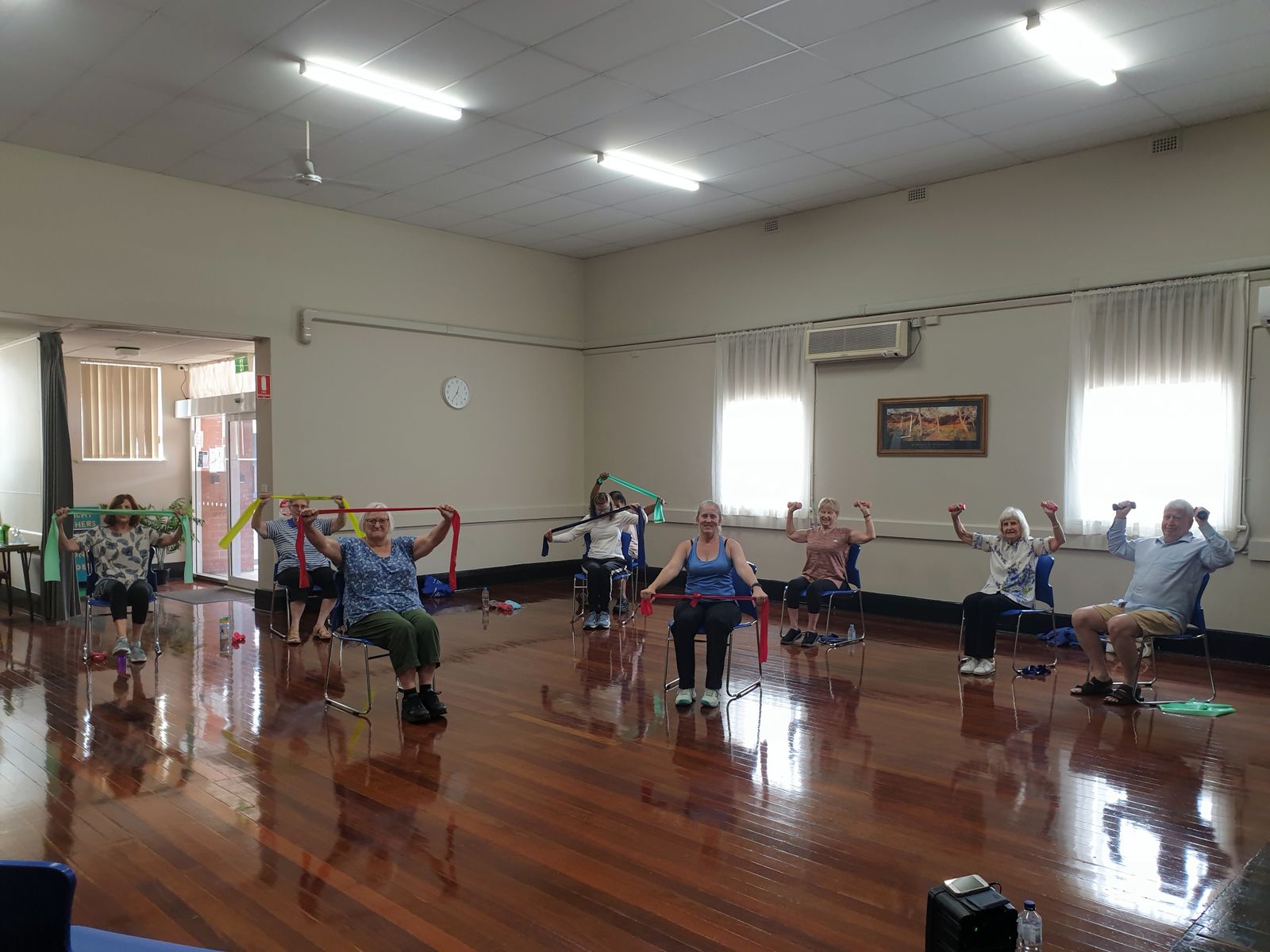
Chair yoga for senior citizens addresses several of the specific physical realities of aging in a single, low-risk practice. Balance decline and fear of falling are common concerns for older adults, and chair yoga sidesteps this risk almost entirely by keeping a stable base of support available at all times. Joint conditions like osteoarthritis, which affect a large share of adults over 65, benefit from the gentle, controlled range of motion chair yoga provides without the impact of higher-intensity exercise. Reduced muscle mass and slower reflexes, both typical with aging, are addressed gradually through the light strength and stability work built into many chair sequences. Beyond the physical, group chair yoga classes in senior centers and assisted living communities also provide valuable social connection, which research consistently links to better outcomes in older age. This combination of physical safety, manageable intensity, and social engagement is why chair yoga is frequently the first recommendation in broader discussions of yoga for seniors and yoga for elderly populations.
What Should You Know About Chair Yoga Asanas and Traditional Naming?
Most chair yoga asanas are directly adapted from classical Sanskrit-named poses rather than being entirely new inventions. Seated Tadasana keeps the same postural intention as standing Mountain Pose, just from a chair. Seated Marjaryasana-Bitilasana (Cat-Cow) preserves the same spinal wave motion. A seated variation of Ustrasana (Camel Pose) becomes a gentle backbend using the chair back for support rather than kneeling on the floor. Even seated versions of Sarvangasana-inspired leg elevations exist in some restorative sequences, using a second chair or wall to elevate the legs safely. Understanding this lineage matters because it means chair yoga is not a diluted practice; it is the same body of asana knowledge, translated for a different physical starting point, and a teacher familiar with the traditional pose can usually explain the chair adaptation’s connection back to its full-floor origin.
Are There Printable Chair Yoga Resources You Can Use at Home?
Many people search for a printable chair yoga poses PDF to keep a visual reference nearby, whether that is taped to a home office wall, kept in a senior center activity binder, or used by a caregiver leading a small group session. A useful printable resource typically includes step-by-step images or simple line drawings of each pose, brief cues for breath timing, and a suggested sequence order so a session can be led without needing to memorize an entire routine. If you cannot find a printable guide that fits your specific needs, working directly with an instructor through a structured program removes the guesswork altogether, since a live class can adapt pose selection and pacing in real time based on how a participant is moving and breathing that day.
How Do You Choose the Right Chair for Chair Yoga?
The chair itself matters more than many beginners expect. A sturdy, armless chair with a flat, firm seat is generally recommended, since armrests can restrict the range of motion needed for twists and side stretches. The chair should not have wheels or a swivel base, both of which introduce an unnecessary safety risk during standing or transition movements. Placing the chair on a non-slip surface, or against a wall for extra stability during standing poses, adds another layer of safety, particularly for anyone managing balance concerns or recovering from a fall. Wooden dining chairs, sturdy folding chairs, and many office task chairs (with the wheels locked or removed from the equation entirely) all work well. Yoga mats are optional in chair yoga, though a thin mat or non-slip pad under the chair legs can add extra stability during more dynamic sequences.
Questions People Ask About Chair Yoga
Is chair yoga good enough to count as real exercise?
Yes, chair yoga provides genuine health benefits including improved joint mobility, better circulation, gentle strength building, and stress reduction, and research has linked it to measurable improvements in pain and daily function for people with osteoarthritis. It is lower-intensity than standing or floor-based yoga, so it works best as part of a broader activity routine for people who are otherwise active, but for those with mobility limitations, it can be a complete and sufficient form of movement on its own.
Can chair yoga help with back pain?
Chair yoga can help with certain types of back pain by gently mobilizing the spine, stretching tight muscles, and improving posture, particularly the kind of stiffness that builds from prolonged sitting. It is not a substitute for medical evaluation of severe, radiating, or persistent back pain, so anyone with ongoing pain should get a proper diagnosis before relying on chair yoga as the primary treatment. Related guidance can be found in resources on yoga for back pain.
How often should I practice chair yoga?
Most instructors recommend three to five sessions per week of 20 to 30 minutes each for noticeable improvements in flexibility, strength, and stress levels. Shorter daily sessions of five to ten minutes, such as an office chair yoga break, are also beneficial and can be layered on top of a longer weekly session for additional benefit.
Do I need any equipment besides a chair?
No special equipment is required beyond a sturdy, armless chair. Comfortable clothing that allows a full range of motion is helpful, and some people use a small cushion or folded towel for added seat comfort, but a mat, blocks, or straps are optional extras rather than requirements.
Is chair yoga suitable during pregnancy or after surgery?
Chair yoga is commonly recommended during later pregnancy and post-surgical recovery precisely because it reduces balance demands and allows careful control over range of motion. That said, anyone in these situations should get clearance from their doctor or physical therapist first and ideally practice with an instructor who can modify poses around specific restrictions.
Can chair yoga be used as an advertisement or class offering for wellness businesses?
Yes, chair yoga is frequently used as an accessible entry point in wellness studio marketing and corporate wellness pitches, since it lowers the barrier to trying yoga for people who might otherwise assume yoga requires floor mobility or flexibility they do not have. A well-made chair yoga advertisement typically emphasizes accessibility, safety, and the specific populations it serves, such as seniors, office workers, or people managing chronic conditions.
Try This for Yourself
Reading about seated poses and chair-supported sequences is a helpful starting point, but building real confidence with chair yoga comes from practicing alongside guidance that can adjust pacing, support, and pose selection to your body. Explore FitStrot’s online yoga classes to get structured, accessible instruction you can follow from a chair, at home, on your own schedule.
Related reading: Yoga for Beginners, Yoga for Seniors, Yoga for Elderly, Easy Yoga Poses, and FitStrot’s Online Yoga Classes.