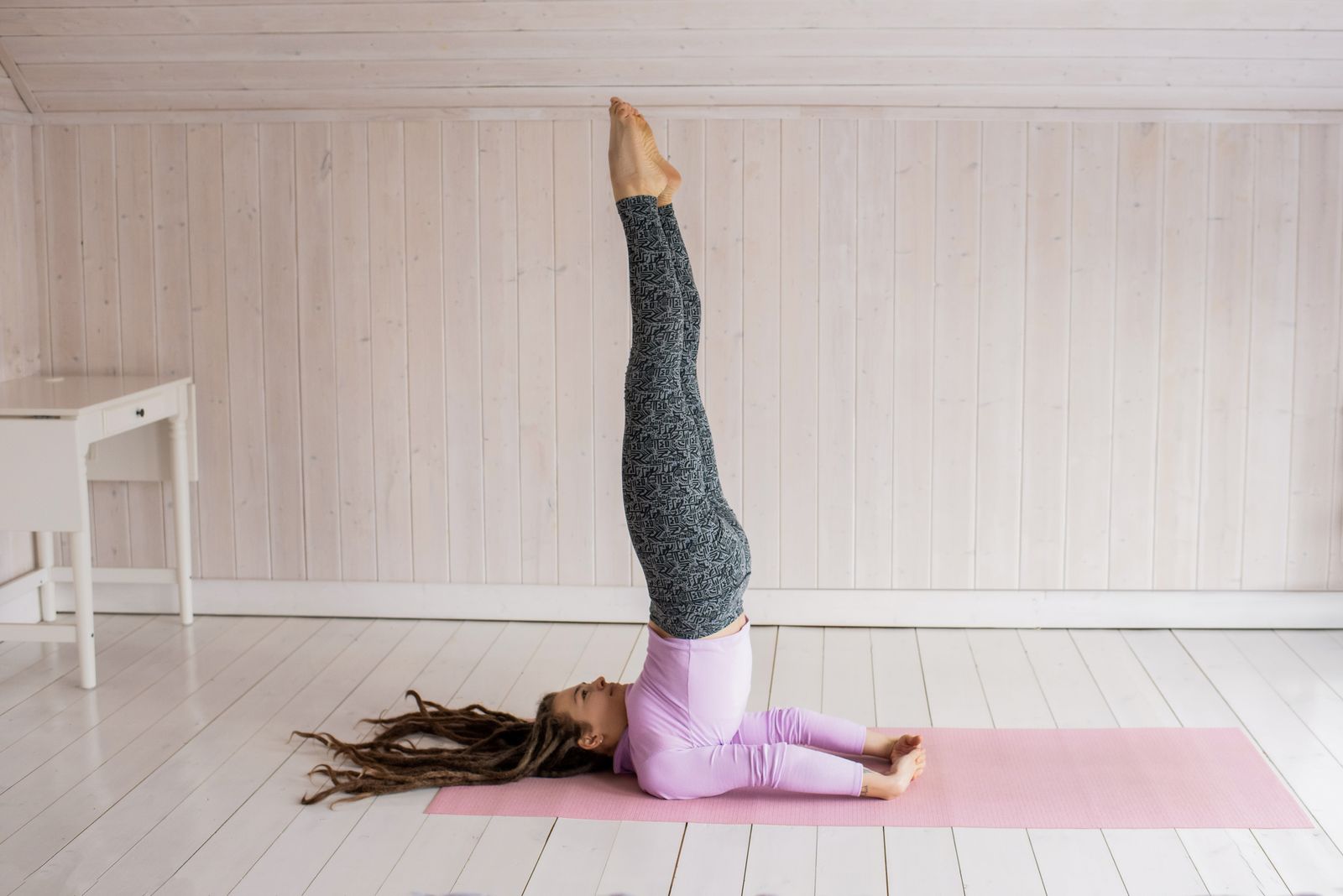
Sarvangasana, or shoulder stand, is an inverted yoga posture where the body is balanced on the shoulders and upper arms with the legs extended straight up toward the ceiling, hips supported by the hands. Often called the “queen of asanas,” it is commonly practiced to support circulation, calm the nervous system, and build strength in the core, shoulders, and upper back. It is an intermediate-level pose that requires a warmed-up neck and shoulders, and it is usually held for anywhere from 30 seconds up to several minutes once the body has built enough stability and comfort in the position.
What Is Sarvangasana in Yoga?
The word “sarvangasana” comes from three Sanskrit roots: sarva (all), anga (limb or part), and asana (pose) — literally, “the pose of all body parts.” The name reflects how the posture is believed to engage nearly every part of the body at once, from the feet pointed at the ceiling down through the legs, hips, spine, shoulders, and neck. In most modern hatha and vinyasa yoga lineages, sarvangasana is taught as a peak inversion, often placed near the end of a practice, right before savasana and sometimes preceded by halasana (plow pose), which shares a similar shoulder and neck foundation.
How Do You Get Into Sarvangasana Step by Step?
Building the pose gradually and with control matters more than rushing into the full expression. Here is a step-by-step approach for a supported shoulder stand:
- Set up your foundation. Lie on your back on a folded blanket or thick mat, with your shoulders on the padding and your head on the bare floor beyond the edge of the blanket. This protects the cervical spine from excess pressure.
- Lift the legs. Bend your knees, press your palms into the floor, and use your abdominal muscles to lift your hips and legs off the ground, similar to the initial lift used in plow pose.
- Support the lower back. Bend your elbows, place your hands on your lower back or hips, and walk them up toward your shoulder blades for maximum support.
- Straighten the legs. Slowly extend your legs straight up, stacking your hips over your shoulders and your ankles over your hips, similar to the vertical alignment you build in tadasana (mountain pose) but inverted.
- Hold and breathe. Keep your gaze soft, chin slightly tucked away from the chest, and breathe steadily for 15 to 60 seconds as a beginner, working up gradually over weeks of practice.
- Come down with control. Bend your knees toward your forehead, roll down one vertebra at a time, and rest in a neutral spine position before sitting up.
What Are the Benefits of Sarvangasana?
Practitioners and yoga teachers commonly cite several benefits associated with regular, careful practice of sarvangasana:
- Circulatory support: Because the legs and pelvis are elevated above the heart, venous blood flow from the lower body back toward the chest is assisted by gravity, which many teachers describe as a mild aid to circulation.
- Thyroid and throat region: The chin-to-chest position gently compresses the front of the throat, an area traditional yoga texts and many contemporary teachers associate with the thyroid and parathyroid glands, though this connection is based on traditional and anecdotal understanding rather than confirmed clinical research, so it is best treated as a general wellness association rather than a medical claim.
- Core and upper-body strength: Holding the legs vertical demands sustained engagement from the deep abdominal muscles, the shoulders, the upper back, and the triceps.
- Nervous system calming: Like many inversions, sarvangasana is often described as activating a parasympathetic, “rest and digest” response, which is why it is frequently sequenced near the end of a class alongside restorative poses.
- Improved posture awareness: Because the pose requires a stacked, aligned spine to be sustainable, regular practice tends to improve body awareness that carries over into standing postures like tadasana and vrksasana (tree pose).
Who Should Avoid Sarvangasana?
Sarvangasana places significant weight and pressure on the neck and cervical spine, so it is not suitable for everyone. Common precautions cited by yoga teachers and therapeutic yoga resources include neck or shoulder injuries, herniated cervical discs, high blood pressure, glaucoma or other eye pressure conditions, and pregnancy. Some traditional schools also advise against practicing inversions during menstruation, although this recommendation varies by lineage and is debated among modern teachers, so it is worth treating as a personal or tradition-based choice rather than a universal rule. If you have any of these conditions, it is sensible to check with a doctor and a qualified teacher before attempting the pose, or to explore supported variations against a wall instead.
What Are Common Mistakes in Sarvangasana?
Because the pose asks the body to bear weight in an unfamiliar way, several mistakes show up often, even among people who have practiced yoga poses for years:
- Turning the head while in the pose. Once you’re inverted, the neck should stay still and centered; turning the head under load is one of the most common causes of strain.
- Skipping the blanket padding. Practicing directly on a hard floor increases pressure on the cervical vertebrae; a folded blanket under the shoulders (not the head) reduces this risk.
- Letting the legs collapse forward or backward. The goal is a vertical line from shoulders to ankles; legs that drift forward over the face or lean too far back both destabilize the pose.
- Forcing the full pose too soon. Jumping straight to an unsupported shoulder stand before building shoulder and core strength through preparatory poses often leads to wobbling and neck strain.
- Holding the breath. Beginners often unconsciously stop breathing while balancing; steady, even breathing throughout the hold makes the pose more sustainable and calming.
What Poses Should You Practice Before Sarvangasana?
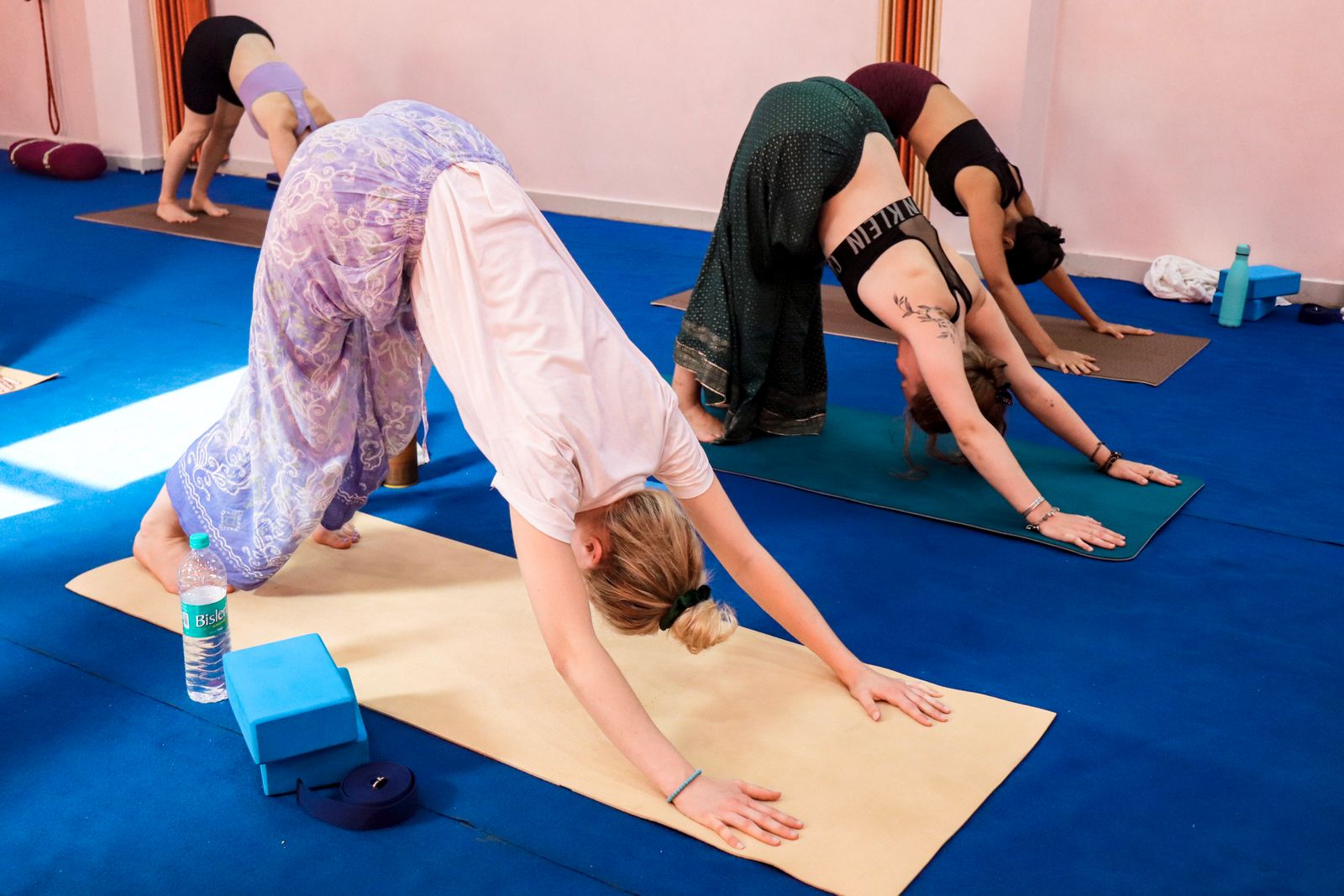
Because sarvangasana is an inversion that loads the neck and shoulders, most sequencing guidance recommends preparing the body first. A well-rounded warm-up sequence might move through surya namaskar (sun salutations) to build general heat and shoulder mobility, followed by adho mukha svanasana (downward-facing dog) to open the shoulders and hamstrings, then setu bandhasana (bridge pose) to strengthen the glutes and open the chest. Some teachers also recommend practicing against a wall first, or using two or three folded blankets to build confidence in the lift before attempting the pose in open space.
What Are the Best Variations of Sarvangasana for Beginners?
Several modifications make the benefits of shoulder stand accessible to newer students:
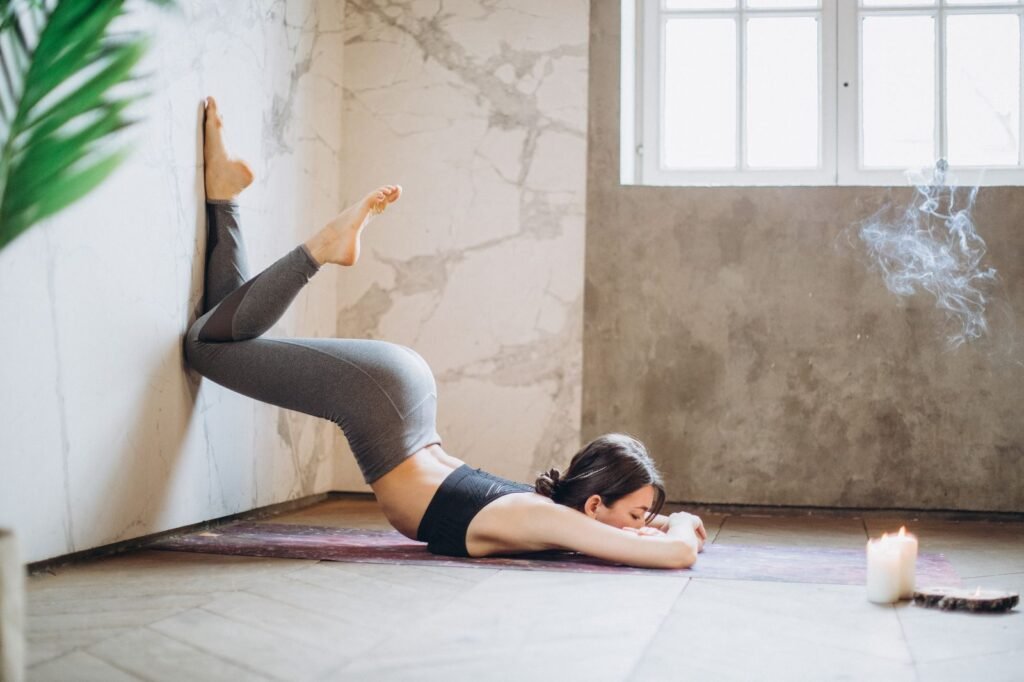
- Wall-supported shoulder stand: Lying with your hips close to a wall, walk your feet up the wall until your legs are vertical, which reduces the balance demand while you build shoulder strength.
- Chair or bolster support: Some restorative approaches use a chair seat or stacked bolsters under the hips to reduce the core strength required, making it accessible to students recovering from injury.
- Half shoulder stand (Ardha Sarvangasana): The legs are held at a 45-degree angle rather than fully vertical, which is gentler on the neck and often used as a stepping stone to the full pose.
- Legs-up-the-wall pose (Viparita Karani): A gentler alternative inversion where the hips rest on the floor near a wall and the legs extend up the wall, offering many of the calming and circulatory benefits without the neck-loading of a full shoulder stand.
How Long Should You Hold Sarvangasana?
Beginners typically start by holding sarvangasana for 15 to 30 seconds, focusing on stability and steady breathing rather than duration. As strength and confidence build over weeks of consistent practice, many practitioners work up to holds of 1 to 3 minutes. Traditional hatha yoga texts describe advanced practitioners holding inversions for much longer, but for most people practicing at home or in a general class, a controlled 1-to-2-minute hold with clean alignment offers more benefit than a longer hold with a wobbling or strained neck.
How Does Sarvangasana Compare to Other Inversions?
Sarvangasana is often grouped with other inversions like headstand (sirsasana) and plow pose (halasana), but the weight-bearing structure differs meaningfully between them. Headstand balances the body on the crown of the head and forearms, which demands more advanced neck and core strength and carries a higher risk profile for beginners. Shoulder stand, by contrast, distributes weight across the broader surface of the shoulders and upper arms, which many teachers consider a gentler entry point into inversions. Halasana, meanwhile, is frequently used as either a preparation for or a follow-up to sarvangasana, since it uses the same shoulder foundation but folds the legs down over the head instead of extending them upward.
How Does Sarvangasana Fit Into a Broader Yoga Practice?
In a typical class structure, sarvangasana is usually placed after strengthening and standing sequences and before the final relaxation. It pairs naturally with grounding poses like tadasana at the start of practice and balancing poses like vrksasana in the standing sequence, since all three poses draw on similar principles of spinal alignment and steady breath. If you’re building a home practice around the broader landscape of yoga poses, sarvangasana is generally introduced only after a student is comfortable with basic surya namaskar sequences and has developed reasonable shoulder and core strength through several weeks or months of consistent practice.
Can Sarvangasana Help With Stress and Sleep?
Many practitioners report that inversions like sarvangasana leave them feeling calmer, and this lines up with how the pose is typically sequenced — close to the end of practice, right before savasana and deep relaxation. The forward fold of the chin and the stillness required to hold the pose both tend to shift attention inward, which is part of why inversions are often recommended as part of an evening or wind-down practice. If a full shoulder stand feels too stimulating or difficult before bed, the gentler legs-up-the-wall variation is commonly used as a substitute with a similar calming effect.
Questions People Ask About Sarvangasana
Is sarvangasana good for beginners?
Sarvangasana is generally considered an intermediate pose rather than a true beginner pose, since it requires reasonable shoulder, neck, and core strength along with body awareness. Beginners can work toward it safely by starting with wall-supported variations, using blanket padding under the shoulders, and building strength gradually through preparatory poses before attempting an unsupported hold.
What is the difference between sarvangasana and halasana?
Both poses share the same shoulder-and-blanket foundation, but sarvangasana extends the legs straight up toward the ceiling, while halasana lowers the legs down over the head so the toes touch the floor behind you. Many sequences move between the two poses, since halasana is often used as either a preparation for or transition out of shoulder stand.
Can I do sarvangasana every day?
Many practitioners include sarvangasana in a daily practice once they have built sufficient strength and have no contraindications like neck injuries or high blood pressure. As with any inversion, it’s worth listening to how your neck and shoulders feel and taking rest days if you notice strain, since consistency matters more than daily perfection.
Why is sarvangasana called the queen of asanas?
Sarvangasana is traditionally nicknamed the “queen of asanas” (with headstand often called the “king”) because older hatha yoga texts describe it as benefiting nearly every system of the body at once — circulation, the spine, the core, and the nervous system. This reputation comes from traditional yoga teaching rather than modern clinical studies, so it’s best understood as a long-standing cultural framing rather than a scientific ranking.
Do I need a yoga blanket for shoulder stand?
A folded blanket under the shoulders (with the head resting on the bare floor beyond it) is widely recommended because it reduces the angle and pressure placed on the cervical spine during the pose. Practicing without this support on a hard floor increases the risk of neck strain, especially for beginners still learning the correct alignment.
What should I do if I feel dizzy in sarvangasana?
Dizziness during or after an inversion usually means it’s time to come down slowly and rest in a neutral position, ideally in savasana for a few minutes. If dizziness happens regularly, it’s worth practicing gentler alternatives like legs-up-the-wall pose and checking in with a doctor, especially if you have blood pressure concerns.
Try This for Yourself
Reading about sarvangasana is one thing; feeling the shift in your breath, your posture, and your energy when a qualified teacher guides you through it safely is another. If you want personalized cues on alignment, pacing, and modifications suited to your body, book an online yoga class with FitStrot and practice sarvangasana with real-time guidance from home.
Related reading: Explore more of our library on yoga poses, learn the foundational tadasana (mountain pose), build balance with vrksasana (tree pose), and warm up your practice with surya namaskar (sun salutations). Ready to go deeper with a real instructor? Explore FitStrot’s online yoga classes.