Yoga for knee pain works by gently building strength in the muscles that support the joint, improving flexibility in the hips and ankles that take pressure off the knee, and teaching better alignment during everyday movement. Poses like Supported Bridge, Chair Pose against a wall, and Reclined Hand-to-Big-Toe Pose load the knee minimally while strengthening the quadriceps and hamstrings. For most people with mild to moderate knee pain, including pain linked to early osteoarthritis, a slow and props-supported practice done 3-4 times a week can reduce stiffness and improve function over several weeks. Anyone with a recent injury, swelling, locking, or a surgeon’s restriction should get clearance from a doctor or physiotherapist before starting.
What Causes Knee Pain That Yoga Can Help With?
Knee pain generally falls into a few categories: osteoarthritis (cartilage wear that increases with age), patellofemoral pain (kneecap tracking issues common in younger, active people), ligament or meniscus injuries, and postural issues like knock knees or weak hip stabilizers that place uneven load on the joint. Yoga does not repair cartilage or torn ligaments, but it addresses the surrounding contributors: tight hamstrings and calves that pull on the knee, weak quadriceps and glutes that fail to stabilize it, and poor movement patterns that concentrate force on one side of the joint. If you are dealing with chronic tightness elsewhere in the body that compounds knee strain, it’s worth reading about yoga for back pain as well, since spinal and hip misalignment often show up downstream at the knee. Understanding the broader benefits of yoga for joint health can also help set realistic expectations before you begin.
Is Yoga Actually Safe for Knee Osteoarthritis?
Yes, when modified appropriately. Several clinical reviews, including a widely cited pilot randomized controlled trial in older women with knee osteoarthritis, found that a supervised yoga program was associated with reduced pain and improved physical function over roughly eight weeks compared with no intervention. A broader systematic review published in 2024 similarly concluded that yoga can be effective in reducing pain and stiffness from knee osteoarthritis and may improve day-to-day function. These findings are encouraging, but they are not a substitute for a diagnosis. If your knee pain is new, sudden, or accompanied by swelling, warmth, or an inability to bear weight, see a doctor before starting any exercise program, yoga included. For a broader look at how gentle movement supports joint conditions generally, see our guide to yoga for arthritis.
What Are the Best Yoga Poses for Knee Pain?
The most reliable knee pain yoga exercises avoid deep flexion and instead build stability around the joint. Start here:
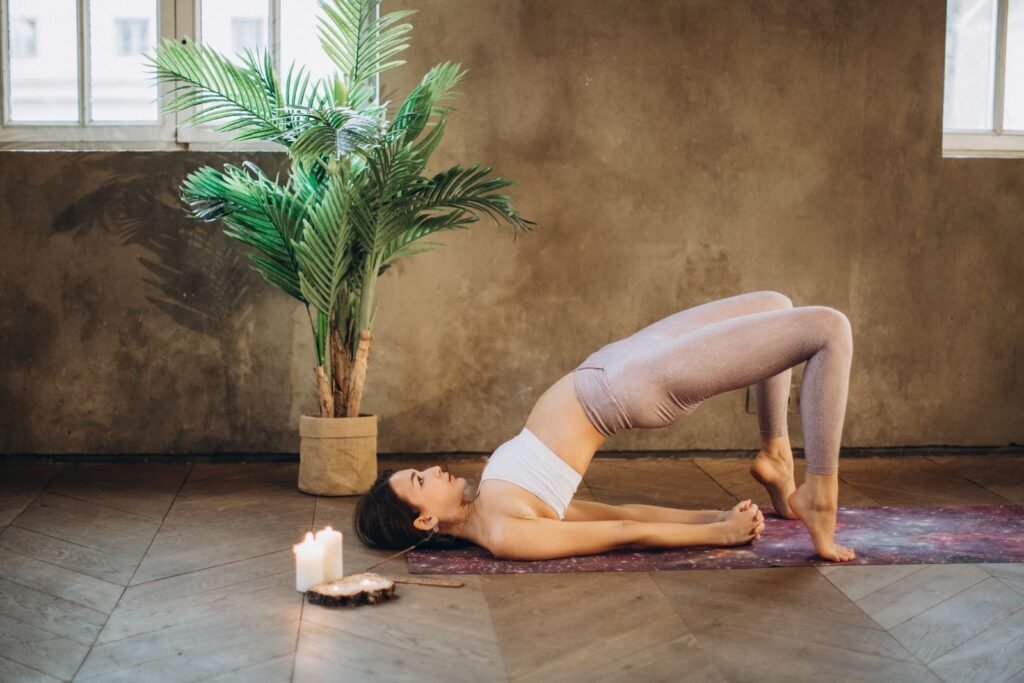
- Supported Bridge Pose (Setu Bandhasana): Lie on your back, feet hip-width apart, and lift the hips while pressing through the heels. This strengthens the glutes and hamstrings without bending the knee past 90 degrees.
- Chair Pose at the Wall (Utkatasana): Slide your back down a wall into a shallow squat. The wall removes the balance demand so you can focus purely on quadriceps activation.
- Reclined Hand-to-Big-Toe Pose (Supta Padangusthasana): Lying down, extend one leg toward the ceiling using a strap around the foot. This stretches the hamstrings, which indirectly reduces pull on the kneecap.
- Locust Pose (Salabhasana): A gentle backbend on the belly that strengthens the lower back and glutes, both of which help offload the knee during walking and standing.
- Mountain Pose (Tadasana): Standing tall with even weight through both feet retrains alignment, which matters enormously for anyone with knock knees or a tendency to lock the joint.
These form the foundation of most yoga asanas for knee pain programs, and they pair well with the broader alignment work covered in types of yoga if you want to understand which overall style suits a rehabilitation-focused practice. If you’re building a routine from scratch, our beginner yoga poses guide and our overview of gentle yoga styles are useful companions to this list.
Which Yoga Asanas for Knee Joint Pain Should You Avoid?
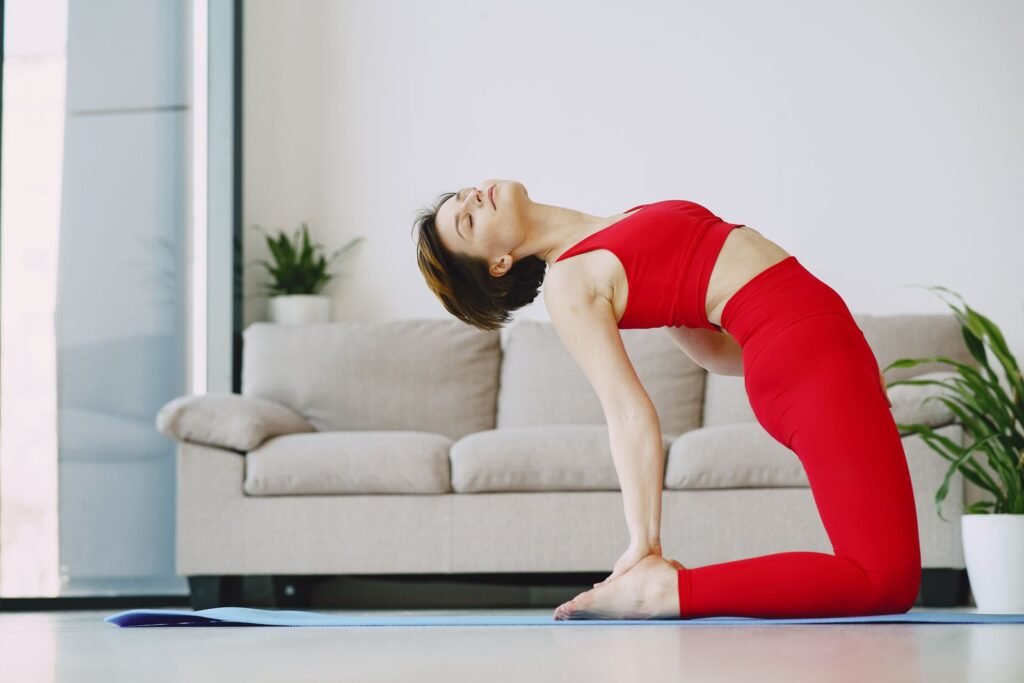
Some traditional poses put direct compressive or rotational force through the knee and are best skipped or heavily modified during a flare-up. These include Lotus Pose (Padmasana) and its variations, Hero Pose (Virasana) without a block, deep Pigeon Pose (Eka Pada Rajakapotasana), Camel Pose (Ustrasana), and any deep kneeling pose where you sit back fully onto the heels without support. Child’s Pose can also aggravate sensitive knees unless you place a rolled blanket behind the knees or under the ankles. The general rule from physiotherapists and yoga therapists alike is straightforward: yoga should not hurt, and if a pose creates sharp or pinching pain, back off immediately rather than pushing through it. If you’re recovering from a specific injury, our guide to yoga for injury recovery covers similar modification principles in more depth.
How Does Yoga for Knee Pain in Old Age Differ From a Regular Practice?
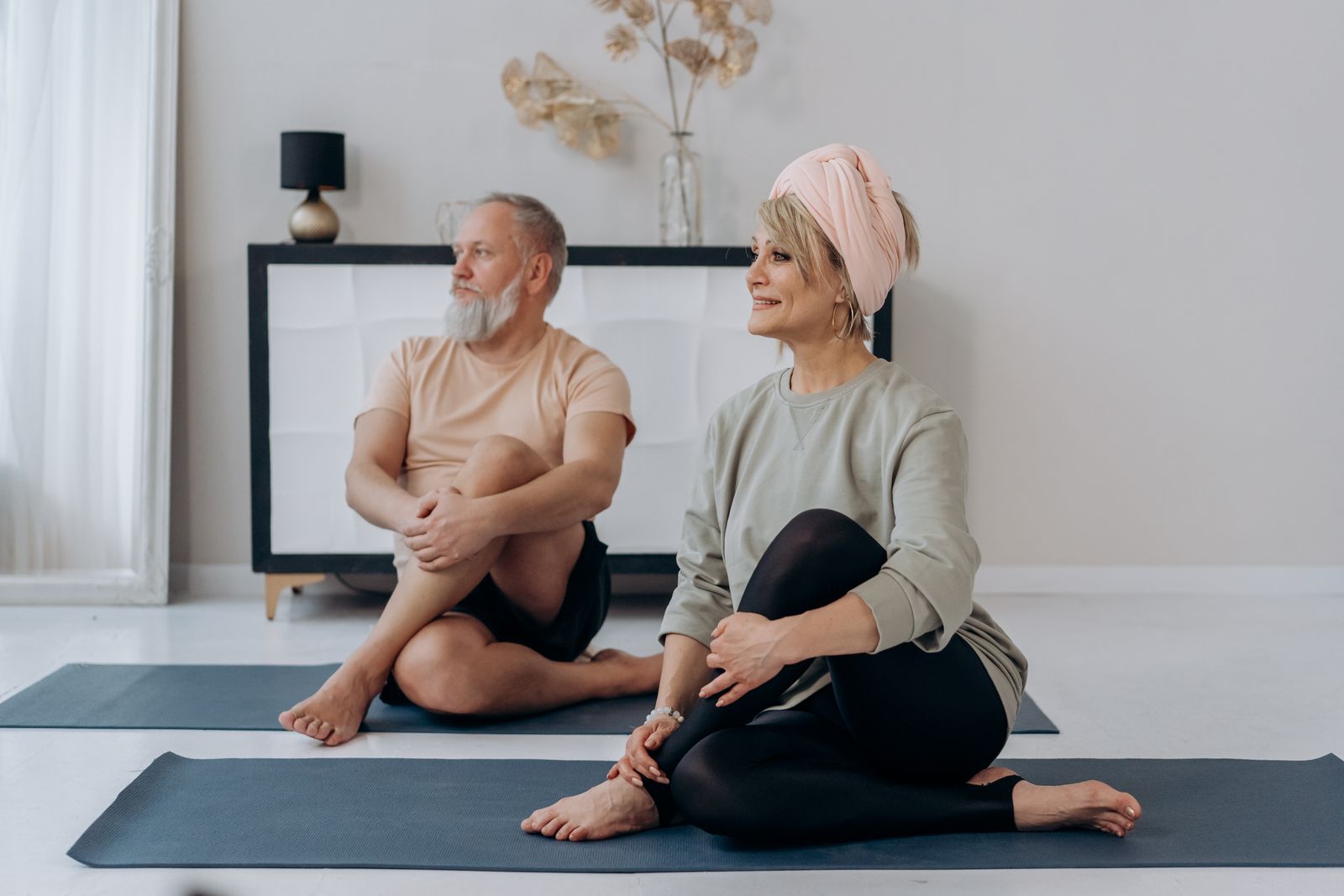
Yoga for knee pain in old age typically means slower transitions, more props, and a stronger emphasis on balance and fall prevention alongside joint care. Older practitioners often benefit from chair-assisted variations of standing poses, thicker mats or folded blankets to cushion bony areas, and shorter holds of 15-20 seconds rather than long static poses. Bone density and balance also matter more with age, so pairing a knee-focused sequence with general strength work is sensible. It’s worth exploring yoga for weight loss too, since even a modest reduction in body weight lowers the load on the knees with every step. Balance-focused sequences from our guide to yoga for seniors pair naturally with a knee-care routine, and gentle styles like chair yoga are often the easiest entry point for older beginners.
What Yoga Poses Work Best for Knee Arthritis Specifically?
Yoga for knee arthritis should prioritize range-of-motion maintenance over strength gains early on, since arthritic joints often lose mobility before they lose power. Gentle Cat-Cow on all fours (with padding under the knees) keeps the joint moving through a pain-free arc. Seated forward folds with a bent-knee option maintain hamstring length without forcing extension. Ankle pumps and seated marching, while not classic yoga postures, are often included in therapeutic sequences for arthritis because they pump synovial fluid through the joint and reduce morning stiffness. Consistency matters more than intensity: a 15-minute daily routine tends to outperform a single 90-minute weekly class. Slower, longer-hold styles such as Yin Yoga and restorative yoga are generally better suited to arthritic joints than fast-paced flow classes.
Do Kneeling Yoga Poses Have to Be Avoided Completely?
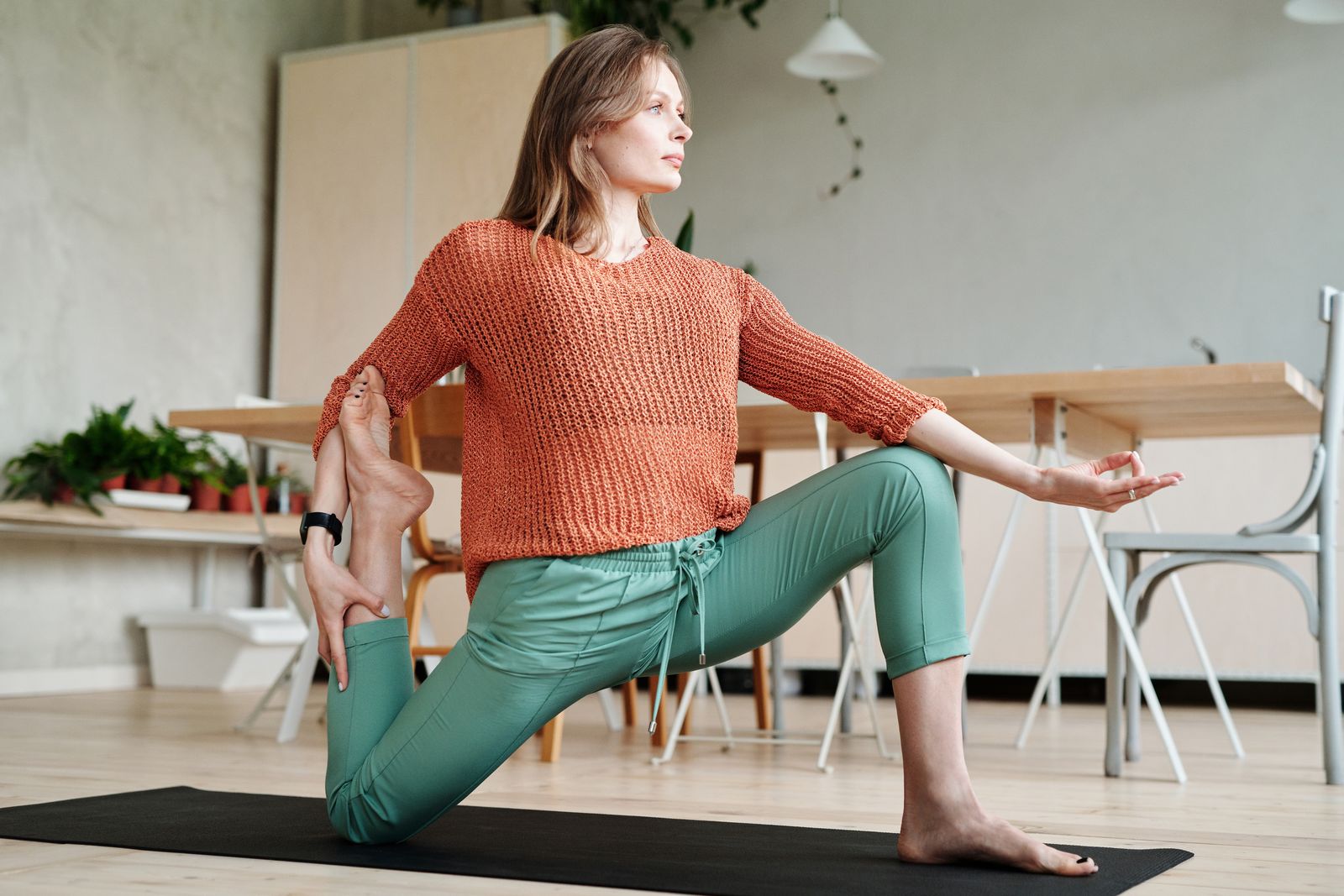
Not necessarily. Kneeling yoga poses like Thunderbolt Pose (Vajrasana) and Cat-Cow can be adapted rather than eliminated. Placing a folded blanket or a dedicated knee pad under the joint reduces direct pressure on the kneecap and shin, and can make the difference between a pose being tolerable or off-limits. Widening the knees slightly, avoiding full weight-bearing on the kneecap, and shortening hold times all help. If kneeling consistently causes pain even with padding, it’s a signal to substitute a seated or supine variation of the same pose rather than forcing it. Many of these seated substitutions are the same postures used in yoga for hip pain, since hip and knee mechanics are closely linked.
Why Do Yoga Knee Pads Matter More Than People Expect?
A dedicated knee pad, or even a thickly folded blanket, changes the pressure distribution across the kneecap and patellar tendon during kneeling and lunging poses. Standard yoga mats are usually 4-6mm thick, which is often not enough cushioning for a bony or sensitive knee, especially on hard floors. A good yoga knee pad is typically 12-15mm thick, made of high-density foam that doesn’t compress flat under body weight, and sized to cushion just the knee rather than the whole body. For anyone practicing Low Lunge, Cat-Cow, or Thunderbolt Pose regularly, this single prop upgrade often resolves discomfort that felt like a knee problem but was actually a padding problem. It’s a similar principle to the prop guidance in our yoga props for beginners article, which covers blocks, straps, and bolsters more broadly.
Can Yoga Help With Knock Knees?
Yoga for knock knees (genu valgum) focuses on strengthening the muscles that control inward knee collapse, particularly the outer hip muscles (glute medius) and the muscles supporting the arch of the foot. Poses like Warrior II (Virabhadrasana II), Goddess Pose (Utkata Konasana), and Tree Pose (Vrksasana) all train the practitioner to actively track the knee over the second toe rather than letting it drift inward. This kind of alignment cueing will not structurally realign bone in adults, since knock knees are largely determined by skeletal structure, but it can meaningfully reduce the joint strain and compensatory pain that often accompanies the condition, particularly during standing and walking poses. Standing poses like Warrior II are core to Hatha Yoga sequences, which tend to hold postures long enough to actually retrain alignment habits.
How Often Should You Practice Yoga for Knee Pain Relief?
Most people see meaningful yoga for knee pain relief with three to four sessions per week of 20-30 minutes, rather than one long weekly class. Joints generally respond better to frequent, gentle input than to occasional intense stretching. A practical structure is two shorter home sessions focused on the specific poses above, plus one longer guided class per week to check alignment and progress safely. Building this kind of routine is much easier with structured guidance, which is one reason many people considering a knee-focused yoga practice look into online yoga classes rather than trying to self-direct from videos alone. Pairing a knee routine with general yoga for flexibility work also tends to speed up progress, since tight surrounding muscles are one of the most common reasons knee discomfort lingers.
What Breathing and Warm-Up Steps Should Come Before Knee-Focused Poses?
Cold joints are stiffer joints, so a five-minute warm-up of ankle circles, gentle marching in place, and slow Cat-Cow movements should precede any knee-specific sequence. Pairing movement with breath, inhaling to lengthen and exhaling to settle into a pose, helps regulate the nervous system’s pain response and can reduce the guarding reflex that makes joints feel tighter than they structurally are. This same principle underlies breath-led practices used for yoga for migraine and other pain-sensitive conditions, where slow diaphragmatic breathing lowers overall tension before targeted work begins. Techniques such as pranayama breathing techniques and ujjayi breath are both commonly layered into a knee-focused warm-up for exactly this reason.
How Does Yoga Compare to Other Low-Impact Exercise for Knee Pain?
Yoga sits alongside swimming, cycling, and walking as a low-impact option, but it has a distinct advantage in also addressing flexibility and body awareness, not just cardiovascular fitness. Where cycling and walking primarily build endurance and mild strength, yoga adds a proprioceptive component: the practice of consciously feeling how weight is distributed through the joint. Research comparing yoga to standard strength-training programs for osteoarthritis has found the two approaches to be roughly comparable in reducing pain, suggesting yoga is a legitimate primary option rather than only a supplement to other exercise. For circulation-related leg discomfort that often overlaps with knee issues, it’s also worth looking at yoga for varicose veins, since several of the same gentle inversions and leg-elevation poses apply to both concerns. Compared with higher-impact formats like Power Yoga or Vinyasa yoga, a knee-focused practice deliberately trades intensity for joint safety.
What Role Does Weight and Alignment Play in Knee Pain?
Every extra kilogram of body weight translates into several kilograms of additional force through the knee during walking, and considerably more during stairs or squatting. This is why weight management and yoga are so often discussed together for knee health. Beyond weight itself, static alignment matters: standing with weight consistently shifted to one leg, locking the knees in Tadasana, or habitually turning the feet outward all create uneven load over months and years. Yoga’s slow pace makes it an unusually good setting to notice and correct these patterns, since poses are held long enough to actually feel where pressure concentrates. If weight is a contributing factor for you, combining knee-safe poses with the broader guidance in our yoga for weight loss article can compound the benefit over time.
When Should You See a Doctor Instead of Starting a Yoga Practice?
Yoga is not appropriate as a first response if you have significant swelling, a knee that gives way or locks, an inability to bear weight, recent surgery, or a suspected fracture or ligament tear. These situations require medical evaluation first. Chronic, dull, activity-related knee pain without these red-flag symptoms is generally the profile that responds well to a gentle, progressive yoga approach. A physiotherapist or sports medicine doctor can also help identify whether your knee pain is arthritis, patellofemoral, or ligament-related, which changes which poses are most appropriate. Once you’re cleared to practice, a qualified instructor in an online yoga class can build a sequence around your specific limitations rather than a generic routine.
Questions People Ask About Yoga for Knee Pain
Can yoga make knee pain worse?
Yoga can worsen knee pain if poses involve deep flexion, unsupported kneeling, or twisting under load without proper alignment. The fix is usually modification, not avoidance: use props, shorten hold times, and stop immediately if a pose causes sharp or pinching pain rather than a mild stretch sensation.
How long does it take for yoga to help knee pain?
Many people notice reduced stiffness within two to three weeks of consistent practice, while measurable improvements in pain and function in clinical studies were typically assessed after six to eight weeks of regular sessions. Consistency (three to four sessions weekly) matters more than any single long session.
Is downward dog bad for knee pain?
Downward Dog does not directly load the kneecap since the knees can stay soft or slightly bent, making it generally safe. Keep a micro-bend in the knees rather than locking them straight, and shift weight through the heels and hands rather than the knees.
What yoga props help most with knee pain?
A thick yoga knee pad or folded blanket, a strap for reclined stretches, and a block for seated or standing poses are the three most useful props. They reduce direct pressure on the joint and allow full participation in a pose without forcing range of motion the knee isn’t ready for.
Can beginners with knee pain start yoga safely?
Yes, beginners with knee pain can start safely by choosing supine and seated poses first, avoiding deep kneeling and twisting postures initially, and progressing gradually as strength improves. Starting with a guided or online class rather than self-taught videos also reduces the risk of alignment mistakes in the early weeks.
Try This for Yourself
Knee-friendly yoga works best with real-time feedback on alignment, especially in the first few weeks when it’s easy to unknowingly compensate around the joint. If you want a guided, structured way to build a knee pain yoga exercises routine safely, explore FitStrot’s online yoga classes, where instructors can adapt poses to your specific knee condition in real time.
Related reading: yoga for back pain, yoga for varicose veins, yoga for migraine, benefits of yoga, and FitStrot’s online yoga classes.