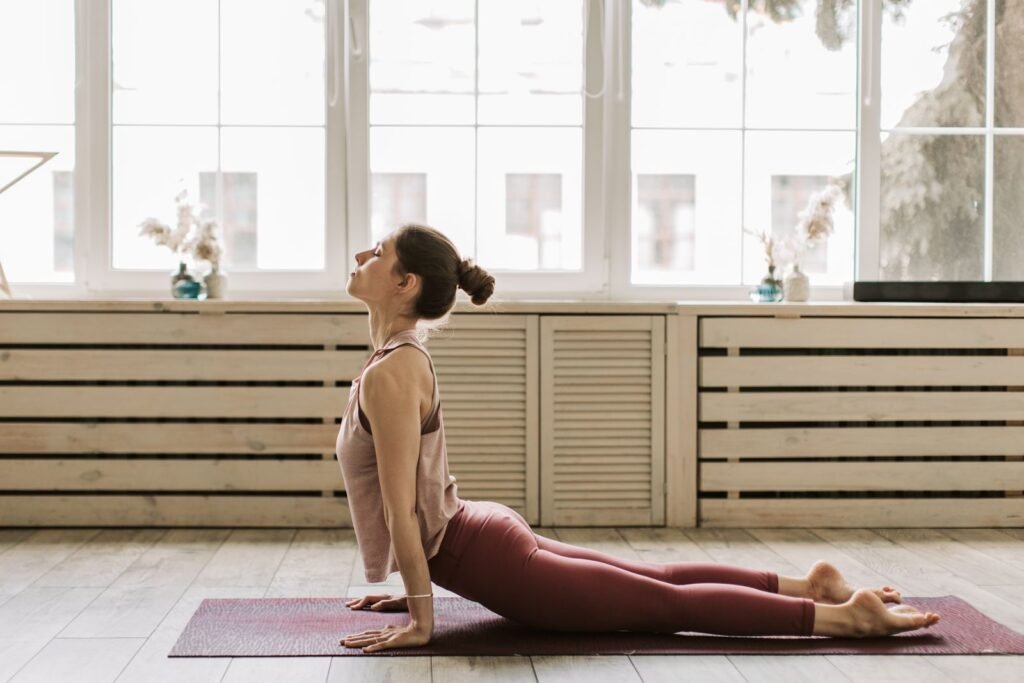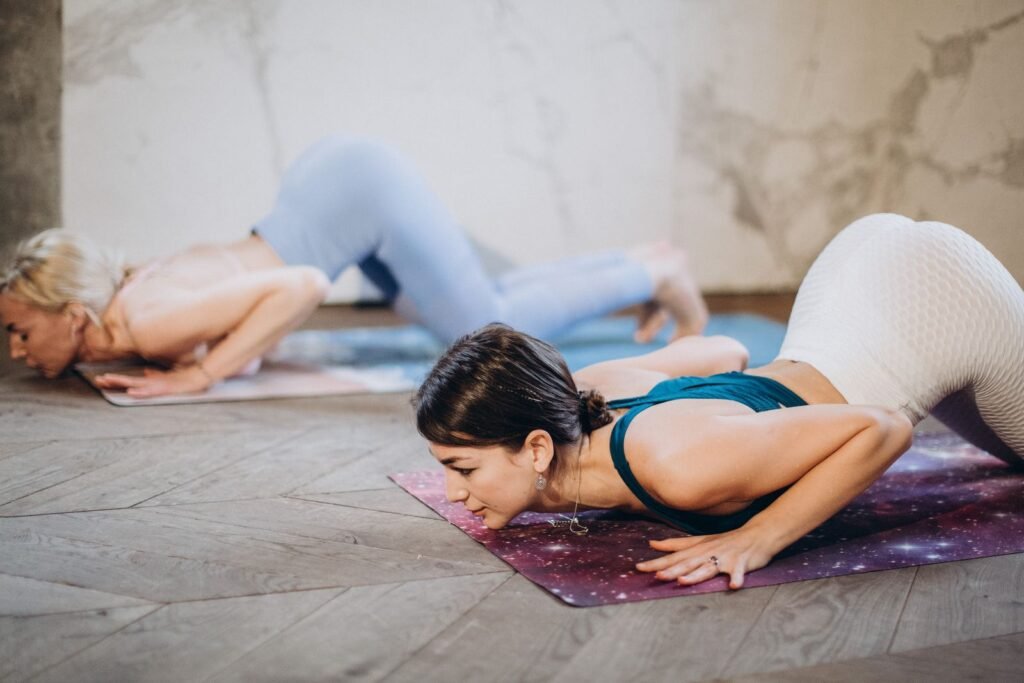
Restorative yoga is a slow, prop-supported style of yoga where you hold just 4 to 6 passive poses for 5 to 20 minutes each, using bolsters, blankets, and blocks so your body never has to work to stay in position. Instead of stretching or strengthening, the goal is complete physical support so your nervous system can shift out of fight-or-flight and into deep rest. It’s often described as “the yoga that does you,” rather than yoga you do, and it’s commonly recommended for stress, poor sleep, recovery from illness or injury, and burnout.
If you’ve searched for restorative yoga meaning, define restorative yoga, or you’re trying to figure out whether it’s the same as gentle yoga or yin yoga, this guide covers what it actually is, where it came from, the exact poses and props used, and how to try it whether you’re brand new to the mat or dealing with an injury.
What Is Restorative Yoga, Exactly?
Restorative yoga is a therapeutic style of yoga built around passive, fully supported postures held for extended periods, usually 5 to 20 minutes per pose, with props doing the work your muscles would normally do. A typical class includes only 4 to 6 poses total, compared to the 15 to 25 poses you might move through in a vinyasa yoga class. There is no flow, no sequencing for heat or strength, and minimal movement between poses. The body is propped so that no muscle needs to contract to hold the shape, which allows the parasympathetic nervous system, the “rest and digest” counterpart to fight-or-flight, to take over.
This distinguishes restorative yoga from nearly every other style taught in a typical studio. Where Ashtanga yoga and Bikram yoga are built around heat, repetition, and physical exertion, restorative yoga deliberately removes effort from the equation.
Where Did Restorative Yoga Come From?
Restorative yoga grew out of Iyengar yoga, the alignment-focused style founded by B.K.S. Iyengar, which pioneered the systematic use of props such as blocks, straps, and bolsters. Judith Lasater, an early student of Iyengar and a co-founder of Yoga Journal, is widely credited with shaping restorative yoga into a distinct practice in the 1970s and 1980s, adapting Iyengar’s prop-based techniques specifically for rest and nervous-system recovery rather than alignment or strength. Her teaching popularized the now-common description of the practice as one where “instead of doing yoga, this form of yoga does us.”
Unlike ancient asana lineages, restorative yoga is a relatively modern development, closely tied to a growing understanding of stress physiology and the parasympathetic nervous system in the latter half of the 20th century.
What Happens to Your Body During a Restorative Yoga Session?
When a pose requires zero muscular effort to maintain, the body receives a strong signal that it is safe to stop bracing. Over the course of a long hold, this can lower heart rate and blood pressure, ease muscle tension that’s been held unconsciously, and shift the balance from sympathetic (alert, activated) to parasympathetic (calm, restorative) nervous system dominance. Instructors and researchers describe this as allowing the body to “recover after stress” in a way that active movement styles, however beneficial, are not designed to do.
Because sessions are slow and props remove strain from joints and muscles, this makes restorative yoga distinct from styles built around cardiovascular exertion, like power yoga or studio Zumba classes, and from balance-and-strength-focused practices like aerial yoga.
What Are the Key Restorative Yoga Poses (Asanas)?
A restorative sequence typically draws from a small, repeatable set of supported shapes. Here are the most common restorative yoga asanas you’ll encounter in a class or want to try at home:
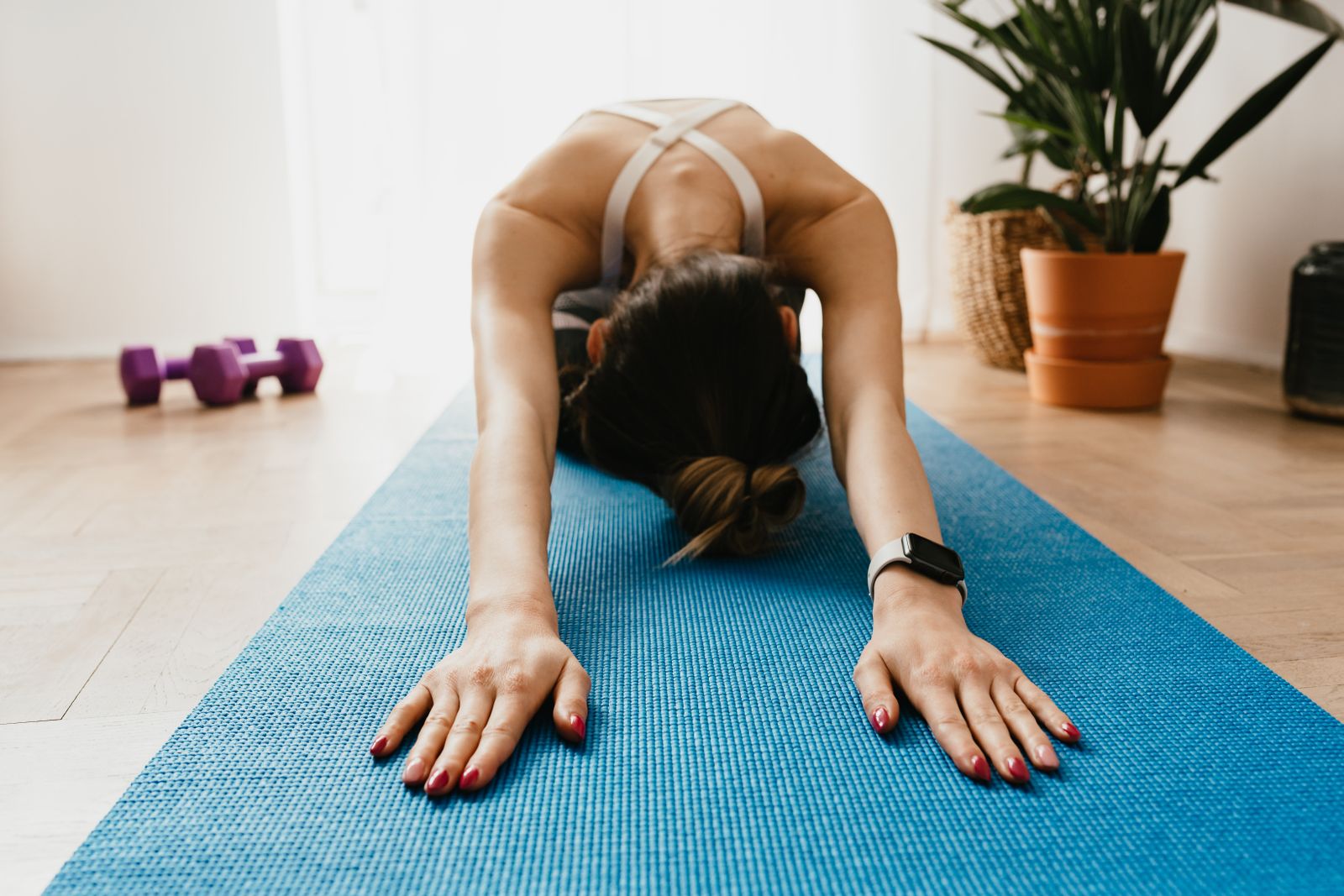
- Supported Child’s Pose (Balasana): Kneeling with a bolster or stacked pillows under the torso and forehead, arms relaxed alongside the body. Calms the mind and gently releases the lower back.
- Reclined Bound Angle Pose (Supta Baddha Konasana): Lying back over a bolster with the soles of the feet together and knees supported by blocks or blankets. Opens the chest and hips.
- Legs-Up-the-Wall (Viparita Karani): Lying on your back with legs resting vertically against a wall. Often cited as one of the most accessible restorative poses for reducing leg swelling and calming the nervous system.
- Supported Fish Pose (Matsyasana variation): A bolster placed lengthwise under the spine, opening the chest and shoulders passively.
- Supported Forward Fold (Paschimottanasana variation): Seated with a bolster across the legs to rest the torso on, easing the nervous system without straining the hamstrings.
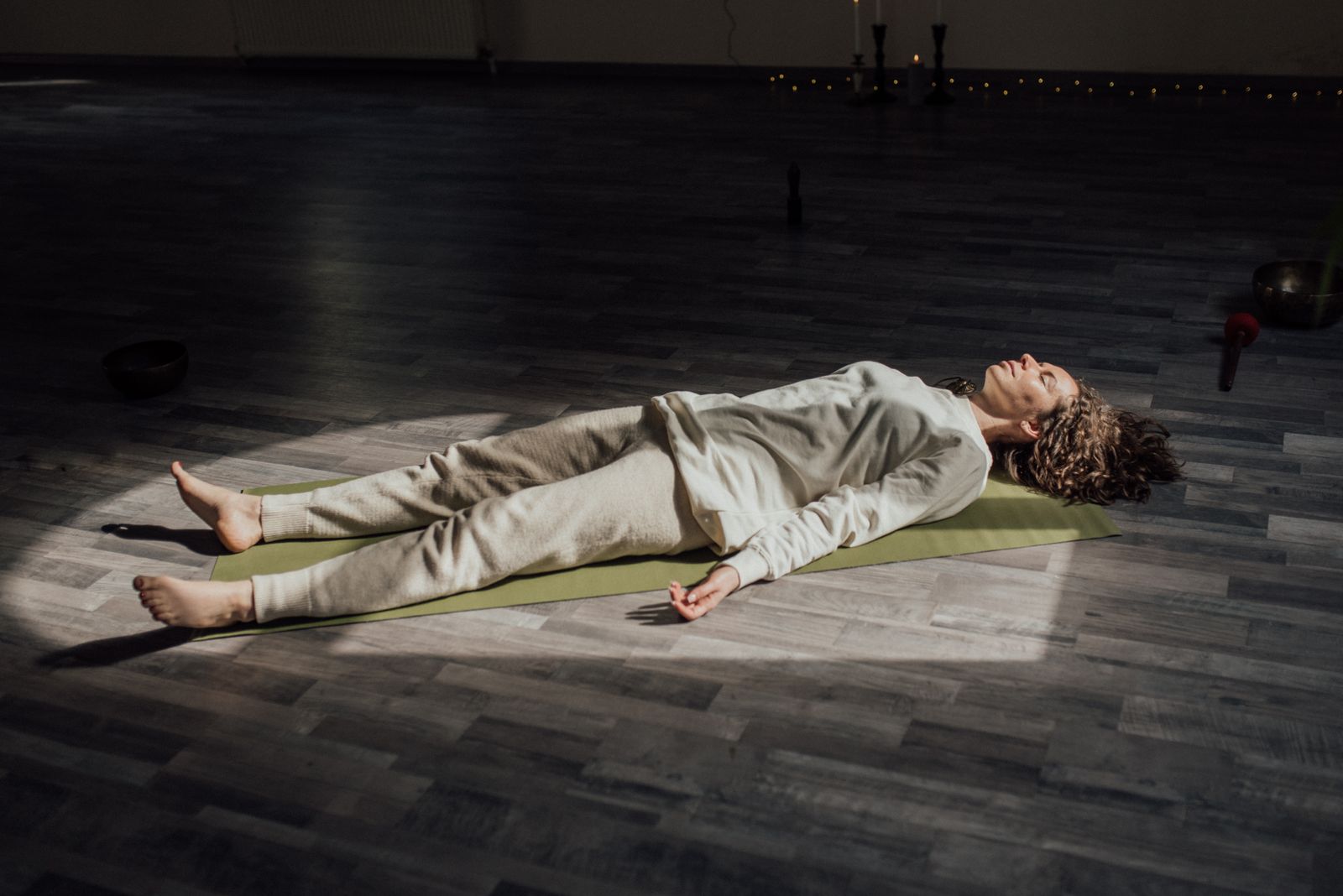
- Savasana with props: The final resting pose, often elevated with a bolster under the knees and a blanket over the body for warmth and a sense of containment.
Each pose is usually held for 5 to 20 minutes, far longer than the 15 to 60 seconds typical in a hatha yoga or vinyasa class.
What Props Do You Need for Restorative Yoga?
Props are not optional extras in restorative yoga, they are the core mechanism that makes the practice work. A standard prop kit includes:
- A bolster: A firm, rectangular or cylindrical cushion that supports the spine, chest, or knees.
- Blankets: Folded for padding under joints, rolled for support, or draped over the body for warmth.
- Blocks: Used to prop up knees, support the head, or adjust the height of a pose.
- A strap or belt: Occasionally used to gently secure a position without muscular effort.
- An eye pillow: A small weighted cushion that blocks light and adds gentle pressure to the eyes, often used to deepen relaxation.
- A wall: Essential for poses like Legs-Up-the-Wall.
If you don’t own yoga props, household substitutes work well: firm couch cushions or a rolled beach towel in place of a bolster, bed pillows instead of blocks, and a folded blanket for warmth. This makes restorative yoga one of the more accessible styles to try during an online yoga class at home, since a studio’s full prop wall isn’t required to get the benefits.
How Is Restorative Yoga Different From Yin Yoga?
Restorative yoga and yin yoga are frequently confused because both are slow and involve long holds, but the intent is different. Yin yoga targets connective tissue, fascia, tendons, and ligaments, by holding poses at the edge of a stretch to create gentle, sustained tension. Restorative yoga specifically avoids tension and stretch sensation altogether; every joint and muscle is fully supported so there is no edge to work into. If you leave a pose feeling a mild stretch, that’s yin. If you leave a pose feeling like you were held by pillows the whole time, that’s restorative.
They also differ in purpose: yin yoga is often framed as a complement to more active practices, improving flexibility and joint mobility, while restorative yoga is framed almost entirely around nervous-system recovery and stress relief.
Is Restorative Yoga the Same as Gentle Yoga?
No. Gentle yoga still involves some active movement and light muscular engagement, just at a slower pace and lower intensity than a vinyasa or power class. Restorative yoga removes active movement almost entirely in favor of full passive support. Someone recovering from an injury or managing chronic fatigue may find even gentle yoga too demanding on a bad day, whereas restorative yoga is designed to meet the body at its lowest energy state.
What Are the Benefits of Restorative Yoga?
Because restorative yoga is built around parasympathetic activation, its most consistently reported benefits center on the stress response and recovery rather than strength or flexibility gains:
- Lower heart rate and blood pressure during and after practice, consistent with parasympathetic nervous system activation.
- Reduced muscle tension and soreness, including after intense exercise, since the body is fully supported rather than working.
- Improved sleep quality for many practitioners, likely linked to the shift away from sympathetic arousal before bed.
- Reduced rumination and anxious thought patterns, reported anecdotally and in small studies of specific populations.
- Support during recovery from illness, surgery, or injury, since poses require no strength or range of motion.
Some published research has looked at restorative yoga in specific populations: a small 2018 study found sedentary cancer survivors were able to maintain a long-term restorative yoga practice, a 2022 study reported improved cognitive function in women after cancer treatment following a 24-week restorative yoga program, and a 2023 study of medical students found that one weekly session was associated with increased relaxation and reduced self-reported stress. These are specific, population-level findings rather than universal guarantees, and results vary by individual, but they point toward restorative yoga’s core value as a recovery and stress-management tool rather than a fitness practice.
Who Should Try Restorative Yoga?
Restorative yoga is particularly well suited to people managing chronic stress or burnout, anyone recovering from injury, surgery, or illness where strength-based movement isn’t appropriate, people with anxiety or sleep difficulties looking for a body-based way to calm down, athletes and highly active people who need an active recovery day, and complete beginners who find faster-paced styles intimidating. It’s also commonly recommended alongside prenatal care and for older adults, since poses are supported and low-impact, though anyone with a specific medical condition should check with their healthcare provider before starting a new practice.
It’s less suited to people specifically seeking a cardiovascular workout, strength training, or flexibility gains; for those goals, styles like vinyasa, power yoga, or online Zumba classes are a better fit.
How Do You Practice Restorative Yoga at Home?
You don’t need a studio or a full prop wall to start. A basic at-home session might look like this: choose 3 to 4 poses from the list above, gather pillows, folded blankets, and a wall, dim the lights and silence notifications, set a timer for 5 to 15 minutes per pose, and focus on slow, unforced breathing throughout. Many people find it easiest to follow a guided restorative yoga video rather than timing poses themselves, since a teacher’s voice helps you stay present instead of checking the clock. Searching for a “restorative yoga video” is one of the most common ways people find their first class, and a guided online yoga class can walk you through prop placement and pacing without needing prior experience.
How Often Should You Practice Restorative Yoga?
Because restorative yoga places minimal physical demand on the body, it can be practiced far more frequently than active styles without risk of overtraining. Many practitioners use it 1 to 3 times a week as a stress-management tool, while others turn to it daily during particularly demanding periods, such as exam season, a major life transition, or physical recovery. Unlike hot yoga or Bikram yoga, which typically require rest days between sessions, restorative yoga is gentle enough to be a nightly wind-down ritual if it fits your schedule.
Can Restorative Yoga Help With Sleep and Anxiety?
Restorative yoga is one of the more commonly recommended styles for sleep and anxiety support because its central mechanism, parasympathetic activation, directly opposes the physiological state that keeps people wired at bedtime or anxious during the day. Poses like Legs-Up-the-Wall and supported Savasana are especially popular as pre-sleep routines. That said, restorative yoga is a complementary practice, not a replacement for treatment of clinical anxiety or diagnosed sleep disorders; anyone with a persistent condition should combine it with appropriate medical or mental health care.
How Does Restorative Yoga Compare to Other Yoga Styles?
Understanding restorative yoga’s place among other styles helps clarify what to expect:
- Ashtanga yoga: A rigorous, fixed sequence of physically demanding poses performed in a set order, the opposite end of the intensity spectrum from restorative yoga.
- Bikram yoga: A 26-pose sequence practiced in a heated room, designed to build heat and flexibility rather than stillness.
- Aerial yoga: Uses a suspended hammock for inversions and deep stretches, requiring more active engagement than restorative yoga despite also using a supportive prop.
- Yin yoga: Long holds targeting connective tissue, with a mild stretch sensation, unlike the zero-effort support of restorative yoga.
- Face yoga: A completely different, highly localized practice focused on facial muscle exercises rather than full-body relaxation.
- Kundalini yoga: Combines movement, breathwork, and chanting for energetic and spiritual goals, distinct from restorative yoga’s purely physical relaxation focus.
Many practitioners use restorative yoga alongside a more active style, for example pairing three weekly vinyasa sessions with one restorative class for balance and recovery.
What Should You Wear and Expect in a Restorative Yoga Class?
Because you’ll be lying still for long stretches, comfort matters more than mobility. Loose, soft layers work best, since body temperature drops during long, still holds, and many studios recommend bringing socks or a light sweater. Expect a quiet, dimly lit room, minimal verbal instruction once you’re set up in a pose, and often soft music or complete silence. Unlike faster-paced classes, there’s little risk of feeling lost or behind; the teacher’s main job is helping you get comfortably supported before stepping back.
Questions People Ask About Restorative Yoga
What does restorative yoga mean?
Restorative yoga means a style of yoga where poses are fully supported by props like bolsters and blankets so the body doesn’t need to exert any muscular effort. The term “restorative” refers to its purpose: restoring the nervous system to a calm, parasympathetic state rather than building strength or flexibility.
What is the difference between restorative yoga and regular yoga?
Regular yoga styles, such as vinyasa or hatha, involve active movement, muscular engagement, and shorter pose holds of 15 to 60 seconds. Restorative yoga removes active effort almost entirely, using props to support the body in passive poses held for 5 to 20 minutes, prioritizing rest over exercise.
How long should you hold a restorative yoga pose?
Most restorative yoga poses are held for 5 to 20 minutes, considerably longer than in other yoga styles. A typical class includes only 4 to 6 poses total, since the long holds mean far fewer poses fit into a session compared to a flowing practice.
Can beginners do restorative yoga?
Yes, restorative yoga is one of the most beginner-friendly styles available because it requires no prior flexibility, strength, or yoga experience. The main skill is simply getting comfortable being still, which makes it a common first step for people who find faster-paced classes intimidating.
Do you need special equipment for restorative yoga?
Traditional props include a bolster, blocks, blankets, and a strap, but household items work as substitutes: firm cushions instead of a bolster, bed pillows instead of blocks, and a folded blanket for warmth. A wall is also useful for poses like Legs-Up-the-Wall.
Is restorative yoga good for weight loss?
Restorative yoga burns very few calories since it involves no active movement, so it isn’t an effective standalone tool for weight loss. It’s better understood as a recovery and stress-management practice that can complement more active workouts, like vinyasa yoga or Zumba, rather than replace them.
Try This for Yourself
Reading about supported poses is useful, but restorative yoga is felt, not studied. If you want to experience genuine parasympathetic rest with proper prop guidance and pacing, a live instructor makes a real difference in how deeply you can let go. Book an online yoga class with FitStrot and try a guided restorative session from home, no studio or prop wall required.
Related reading: Yin Yoga | Hatha Yoga | Benefits of Yoga | Yoga for Anxiety | Online Yoga Classes at FitStrot