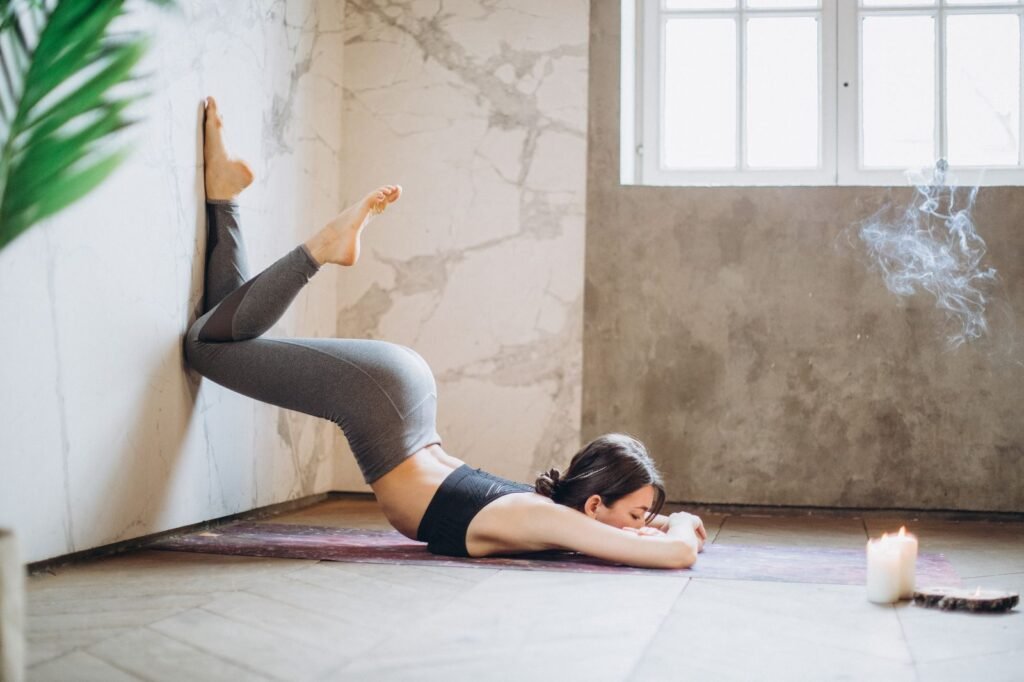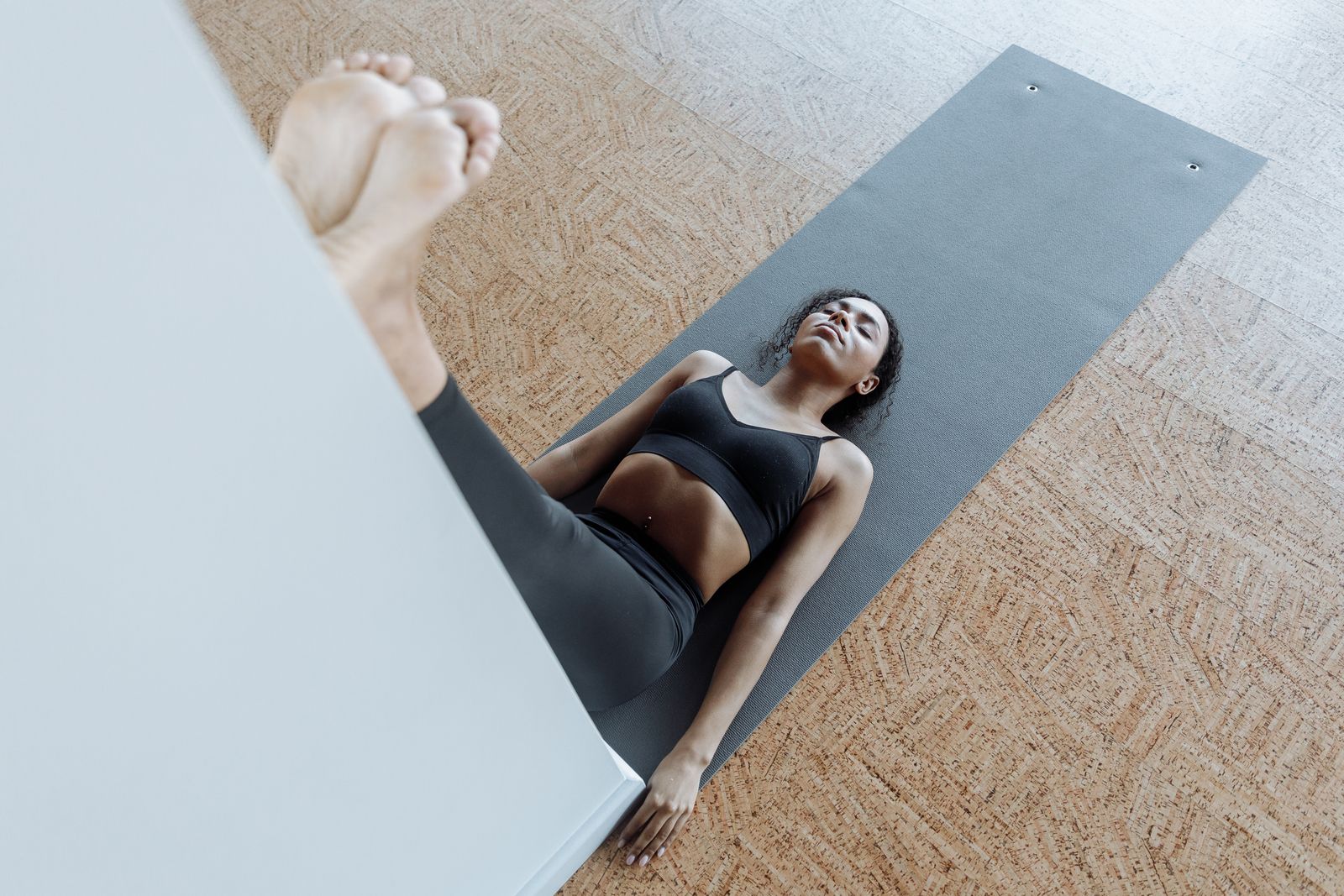
Wall yoga poses use a wall as a prop for support, resistance, or alignment feedback, making postures like handstand, legs-up-the-wall, and forward folds accessible to beginners while giving advanced practitioners a tool to refine form. The wall removes the guesswork from balance, lets you hold poses longer without wobbling, and turns almost any room into a functional practice space. Whether you’re recovering from injury, building strength for inversions, or just want calmer evenings, wall-assisted asana is one of the most practical entry points into a home yoga practice.
What Exactly Is Wall Yoga?
Wall yoga is a technique where a flat wall acts as a supportive surface, a resistance point, or a straight-edge reference for alignment. Instead of relying purely on core strength or balance to hold a shape, you let the wall carry part of your body weight or give you a stable line to press into. This isn’t a separate branch of yoga like Vinyasa or Yin; it’s a method that can be layered onto almost any style, including Hatha yoga, restorative yoga, and Iyengar yoga, which popularized many of the rope-and-wall techniques still used today. Iyengar yoga in particular formalized wall-assisted practice through props like ropes, blocks, and belts, treating the wall as a legitimate piece of equipment rather than a crutch. For most home practitioners, a bare stretch of wall and a mat are all that’s needed to start.
Why Practice Yoga Against a Wall?
The wall solves three problems that trip up a lot of practitioners: balance, alignment, and access to inversions. When you’re wobbling in a standing balance like Tree Pose or Half Moon, a wall behind or beside you removes the fear of falling, which lets your nervous system relax instead of bracing. That relaxation response is part of why wall poses pair so well with stress-reduction goals; see our guide on yoga for stress relief for more on how nervous-system regulation works in a yoga practice. For alignment, the wall gives instant tactile feedback: if your hips are supposed to stack over your shoulders in a forearm stand and they drift back, you’ll feel the wall correct you immediately, which is far more useful than trying to interpret verbal cues alone. Finally, for inversions like Headstand or Handstand, the wall is often the reason a beginner can attempt the pose safely at all, since it removes the single biggest risk factor, which is falling backward or sideways with no way to catch yourself.
Which Wall Yoga Poses Should Beginners Start With?
Beginners get the most benefit from wall poses that ask the body to trust support rather than fight for balance. Three poses make an ideal starting point:
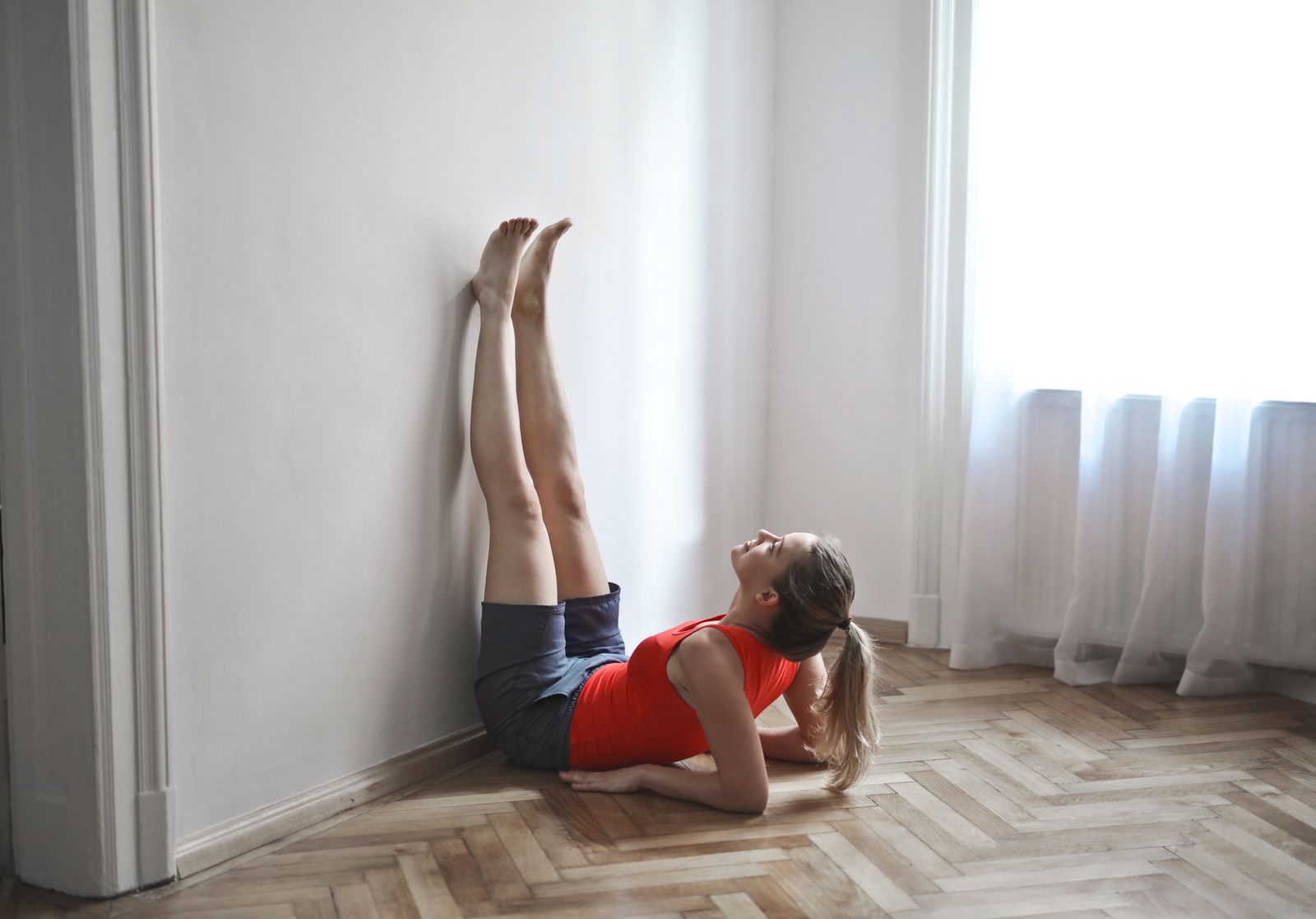
- Legs-Up-the-Wall Pose (Viparita Karani): Lie on your back with your hips close to the wall and legs extended straight up. Widely recommended for calming the nervous system and easing tired legs after a long day.
- Wall-Supported Forward Fold: Stand an arm’s length from the wall, hinge at the hips, and press your palms flat against the wall at shoulder height to lengthen the spine without straining the hamstrings.
- Downward Dog at the Wall: With feet at the wall base, press your heels toward the wall and your hands toward the floor to learn the shape of the pose without the anxiety of an unsupported inversion.
These three poses alone cover relaxation, spinal decompression, and postural awareness, and none require any flexibility beyond what a first-time practitioner already has. For a broader foundation, our yoga poses for beginners guide covers the non-wall basics that pair naturally with these.
How Do You Do a Wall Handstand Safely?
A wall handstand starts from Downward Dog with your hands about a foot from the wall, feet walking up the wall until your body forms an inverted L-shape, hips stacked over shoulders. From there, more experienced practitioners can walk the feet further up or kick one leg up at a time to find full vertical alignment, always keeping the gaze between the hands rather than at the wall. The most common mistake is placing the hands too close to the wall, which collapses the shoulders and puts unnecessary load on the wrists; a hand distance of roughly one forearm’s length from the wall tends to work for most body proportions. Building shoulder and core strength through Vinyasa yoga or a dedicated yoga for strength routine before attempting full handstands reduces strain considerably. Anyone with wrist injuries, uncontrolled high blood pressure, or vertigo should modify or skip full inversions and consult a physician first.
What Is a Yoga Rope Wall and What Are the Standard Dimensions?
A yoga rope wall, also called an Iyengar rope wall, is a dedicated wall fitted with pairs of cotton or webbing ropes anchored at different heights so a practitioner can hang, hinge, or traction the spine using body weight as resistance. Studios that install these commonly cite mounting heights of around 82 inches from the floor for the upper rope set and around 42 inches from the floor for the lower, hip-height set, though exact placement varies by studio and by the practitioner’s height, so these figures should be treated as a general reference rather than a fixed standard. A typical single station uses four ropes and four anchor points, two positioned high and two at hip height, usually secured into wall studs with heavy-duty eye screws rather than surface-mounted hardware, since the ropes bear significant body weight during inversions and backbends. If you’re considering a home rope wall, consulting an experienced Iyengar teacher or a professional installer for your specific wall and ceiling height is worth the extra step, since anchor points that aren’t secured into structural framing can fail under load.
What Can You Do With a Wall Rope Setup?
Wall ropes extend what’s possible well beyond what a bare wall allows, mainly by adding traction and inversion options that need real structural support. Halasana (Plow Pose) done with the hips supported in the ropes lets practitioners fold deeply without compressing the neck, since the rope bears the weight instead of the cervical spine. Adho Mukha Svanasana (Downward Dog) performed with the hips belted into the lower ropes allows a much longer, more passive hold, letting the shoulders and hamstrings release gradually instead of through active muscular effort. Inverted poses like Sirsasana (Headstand) can be practiced hanging from the upper ropes with the legs extended horizontally, building the core and shoulder stability needed for the unsupported version over time. This rope-assisted approach is a hallmark of Iyengar-method studios and reflects a broader philosophy within that lineage of using props to make correct alignment achievable at any level, rather than reserving certain poses only for the already-flexible.
Can Wall Yoga Help With Back Pain?
Several commonly used wall poses target the specific mechanical issues behind everyday back pain, mainly by decompressing the spine and releasing tight hip flexors that pull on the lower back. Legs-Up-the-Wall Pose is frequently recommended for lower back relief because lying with the legs vertical takes weight-bearing pressure off the lumbar spine and allows the hip flexors to lengthen passively. Wall-supported Cat-Cow, done with hands on the wall at chest height while arching and rounding the spine, keeps the movement gentle and controlled for anyone whose back pain flares with unsupported floor work. Standing wall forward folds also help by lengthening the hamstrings, which are frequently a hidden contributor to lower back tightness when they’re chronically short. For a more complete approach to chronic discomfort, see our dedicated guide on yoga for back pain, which covers sequencing and precautions beyond what wall poses alone address. Anyone with a diagnosed disc issue or recent back injury should get clearance from a doctor or physical therapist before adding new spinal positions to a routine.
How Does Wall Yoga Compare to Regular Floor Yoga?
The core difference is where the support comes from: floor yoga relies entirely on your own strength, flexibility, and balance, while wall yoga borrows stability from an external surface to isolate and train specific parts of a pose. This makes wall variations especially useful during rehabilitation, since a physical therapist or teacher can dial in exactly how much support a person needs and gradually remove it as strength returns. It also makes wall poses valuable for absolute beginners, older adults, or anyone with balance concerns, since the fall risk that comes with standing balances and inversions is largely engineered out. That said, wall yoga isn’t a replacement for unsupported practice long-term; the goal for most practitioners is to use the wall as scaffolding while building the strength and proprioception needed to eventually hold the same shapes independently. Many practitioners blend both, using yoga poses against the wall as a warm-up or regression option within a broader unsupported yoga asanas sequence.
| Aspect | Floor Yoga | Wall Yoga |
|---|---|---|
| Balance | Relies on core strength and proprioception | Wall reduces fall risk and steadies the body |
| Alignment feedback | Verbal cues or a mirror only | Instant tactile feedback from the wall |
| Best suited for | Building independent strength and balance | Beginners, rehab, older adults, inversion prep |
| Inversions | Requires significant unsupported strength | Wall makes inversions accessible sooner |
What Equipment Do You Need for a Home Wall Yoga Practice?
Most wall yoga poses need nothing beyond a clear stretch of wall, a non-slip mat, and comfortable clothing that won’t restrict movement near the hips and shoulders. A few props make certain poses more comfortable: a folded blanket or bolster under the hips for Legs-Up-the-Wall extends how long you can hold the pose without lower back strain, and a yoga block placed between the thighs during wall-supported inversions helps maintain leg engagement. For anyone drawn to rope-assisted work, a home rope wall requires the anchors discussed earlier plus properly rated cotton or nylon webbing ropes, which should be purchased from a yoga equipment supplier rather than improvised, since load-bearing failure during an inversion is a genuine safety risk. Setting the space up doesn’t need to be elaborate. A single uncluttered wall roughly 6 to 8 feet wide, with enough floor clearance in front of it to lie down fully, covers nearly every pose in this guide.
How Often Should You Practice Wall Yoga?
Wall yoga poses can reasonably be practiced daily, since most of them, particularly restorative shapes like Legs-Up-the-Wall, place minimal strain on the body and are commonly used as a wind-down before sleep. For strength-building poses like wall handstands, three to four sessions per week with rest days between allows the wrists, shoulders, and core to recover and adapt, similar to strength-training guidance for any new skill. A useful pattern many teachers suggest is bookending the day: a few minutes of wall-supported standing poses or Downward Dog in the morning to wake up the body, and Legs-Up-the-Wall or a supported forward fold in the evening to downshift the nervous system before bed. Consistency matters more than duration here. Five focused minutes against a wall most days will build more skill and comfort than an occasional 45-minute session. Pairing wall poses with steady breathing, as covered in our pranayama guide, deepens the calming effect further.
What Mistakes Should You Avoid With Wall Yoga Poses?
The most common mistake is placing hands or feet too close to the wall in standing poses, which shortens the working range and collapses alignment rather than supporting it; a general rule is to start with more distance than feels necessary and move closer only if the pose calls for it. Another frequent error is gripping the wall with tense fingers or pressing so hard that the shoulders creep up toward the ears, which defeats the purpose of using the wall for support rather than added tension. In inversions, many beginners rush to kick both legs up at once instead of building the skill incrementally, one leg at a time, which increases the chance of overshooting and landing awkwardly. Skipping a warm-up before wall-assisted backbends or inversions is also common and increases strain on cold muscles and connective tissue. Finally, practicing on a wall with hanging decor, mirrors, or unsecured shelving nearby is a preventable safety issue that’s easy to fix by simply clearing a dedicated section of wall before starting.
Is Wall Yoga Suitable for Seniors and Beginners With Limited Mobility?
Wall yoga is frequently recommended specifically for seniors and people with limited mobility because it directly addresses the fall risk and balance uncertainty that keep many older adults away from standing yoga poses altogether. Simple wall-supported variations of Tree Pose, Warrior poses, and standing forward folds let someone build strength and confidence with a stable point of contact always within reach, rather than attempting free-standing balance from the first session. For anyone managing joint stiffness or reduced range of motion, wall poses can also be scaled in small increments; standing slightly further from or closer to the wall changes the intensity without changing the pose itself. As with any new movement practice, starting with a qualified instructor, even for one or two sessions, helps establish safe form before practicing solo, and anyone with recent surgery, severe osteoporosis, or uncontrolled blood pressure should get medical clearance first. Our guide on yoga for seniors covers additional modifications worth knowing.
How Does Wall Yoga Fit Into a Broader Practice?
Wall poses work best as one tool within a wider practice rather than a complete system on their own, and most practitioners weave them into whatever style they already follow. Someone practicing Ashtanga yoga might use the wall only occasionally, to refine an inversion within the standard sequence, while someone focused on Yin yoga might use it constantly, for long-held supported shapes like Legs-Up-the-Wall or supported butterfly. Teachers following yoga philosophy traditions that emphasize gradual, sustainable progress, rather than forcing a pose before the body is ready, tend to treat the wall as a long-term tool rather than training wheels to discard as fast as possible. If you’re building a full home practice, it’s also worth understanding the general benefits of yoga that wall-assisted work contributes to, alongside the many types of yoga you might eventually explore. However you structure it, the wall is best understood as a permanent option in your toolkit, not a stage you graduate out of.
Questions People Ask About Wall Yoga Poses
Do I need special equipment to start wall yoga?
No. Most wall yoga poses only need a bare wall, a yoga mat, and comfortable clothing. Optional extras like a folded blanket, bolster, or yoga block can make certain poses more comfortable, but none are required to get started. Rope walls are a more advanced addition used mainly by Iyengar-style studios and serious home practitioners.
Can wall yoga help me learn a handstand?
Yes, this is one of the most common reasons people start wall yoga. Practicing handstand against a wall removes the fear of falling backward, letting you focus on shoulder alignment, core engagement, and gaze position. Most practitioners build from Downward Dog with feet walking up the wall before progressing to a full kick-up.
Is Legs-Up-the-Wall Pose safe every day?
For most healthy adults, yes. It’s a gentle, restorative pose commonly practiced daily, especially in the evening. People with glaucoma, severe neck issues, or uncontrolled high blood pressure should check with a doctor first, since any inversion changes blood flow and eye pressure temporarily.
How far should I stand from the wall for standing poses?
It depends on the pose, but a common starting reference is one arm’s length for forward folds and about a foot for handstand preparation. Standing too close collapses alignment; standing too far removes the support the wall is meant to provide. Adjust gradually until the pose feels stable rather than strained.
Can beginners really do wall yoga without a teacher?
Basic poses like Legs-Up-the-Wall, wall-supported forward folds, and Downward Dog with feet at the wall are safe for most beginners to try independently. More advanced work, particularly inversions and rope-assisted poses, benefits significantly from at least a session or two with a qualified instructor to establish safe form first.
What is the difference between wall yoga and a yoga rope wall?
Wall yoga simply means using any flat wall for support, balance, or alignment feedback, with no special equipment. A yoga rope wall is a specific installation with anchored ropes at set heights, used mainly in Iyengar-method studios for traction-based poses like supported inversions and deep forward folds that a bare wall can’t provide.
Try This for Yourself
Reading about wall yoga poses only goes so far. The real benefits, a calmer nervous system, better alignment, safer inversions, show up once you actually practice against a wall consistently. Join a guided Online Yoga Class with FitStrot and get real-time feedback as you build these poses into your routine, whether you’re working toward your first handstand or just want a better evening wind-down.
Related reading: Yoga Poses, Yoga Asanas, Yoga Poses Names, Yoga for Back Pain, and explore FitStrot’s Online Yoga Classes to get started today.