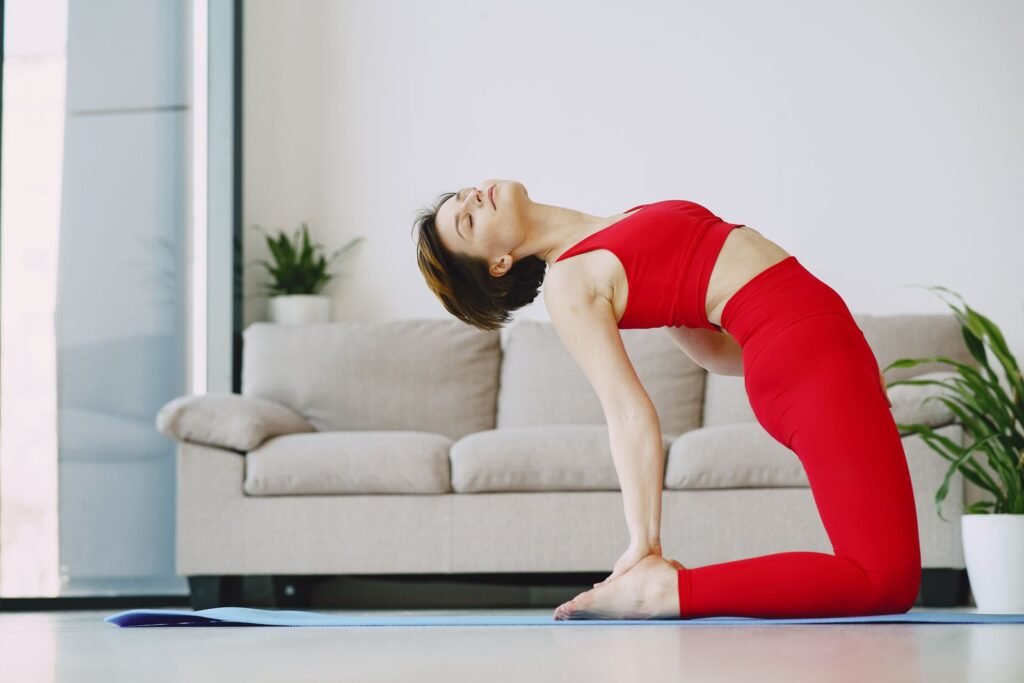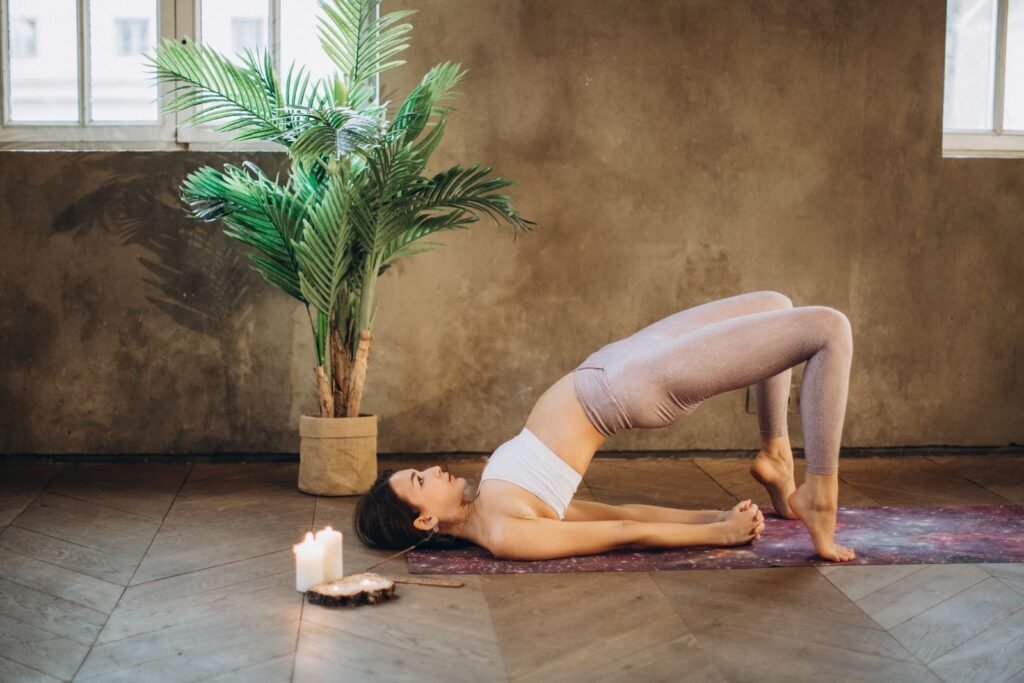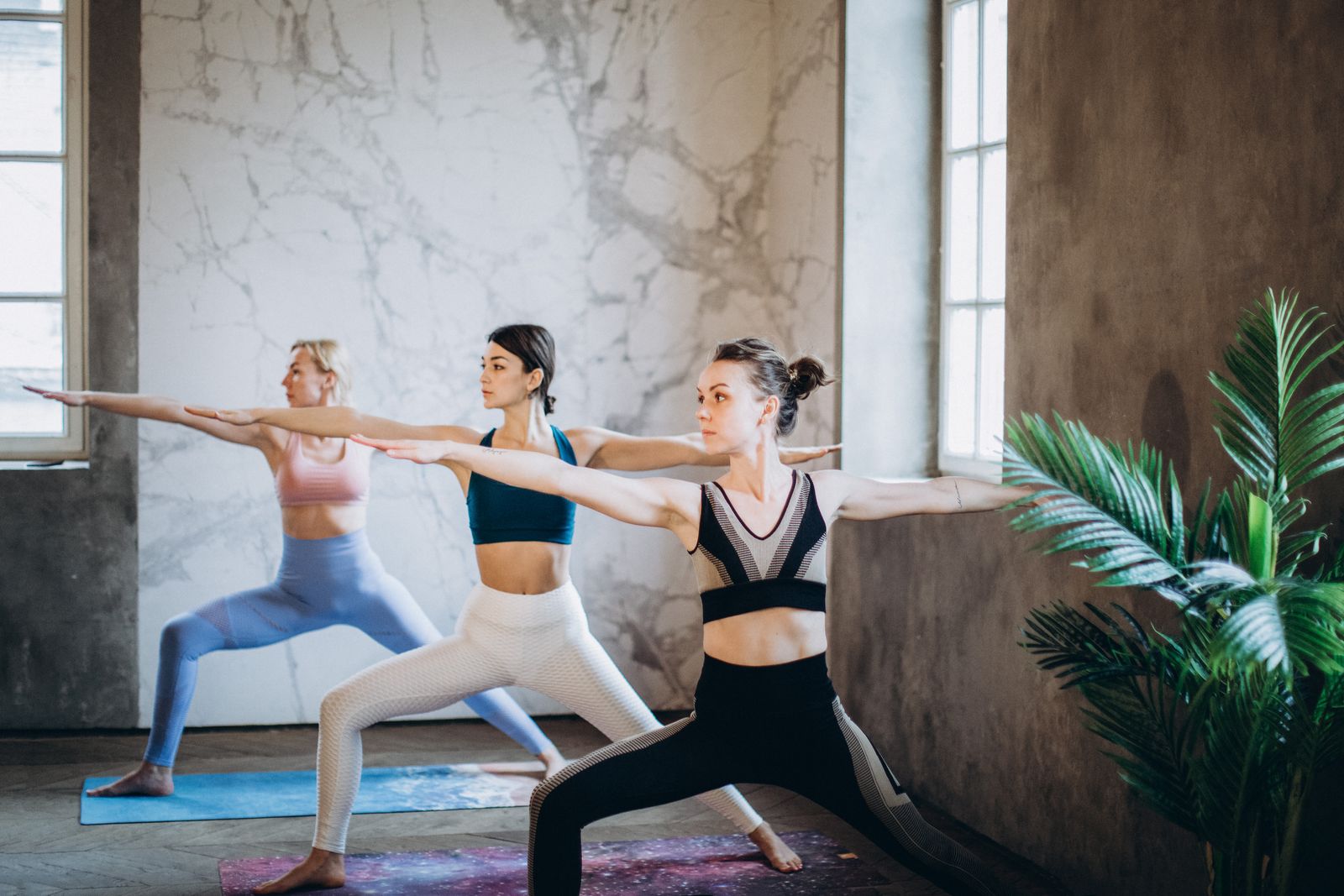
Yes, yoga builds real, functional strength. Poses like plank, chair, warrior II, and side plank use your own bodyweight as resistance, holding major muscle groups under tension for 20-60 seconds at a time, which is enough time under load to trigger the same muscular adaptations that light resistance training does. The strength yoga builds tends to be full-body, joint-stable, and closely tied to balance and control rather than pure maximal force, which is why it pairs so well with, rather than replaces, traditional strength training. A consistent practice of 2-4 sessions a week, focused on poses that load the arms, core, legs, and back, is where the actual gains come from.
Below is a full breakdown of how yoga builds strength, which styles and poses do the most work, how it compares to lifting weights, and how to structure a practice if strength is your main goal.
Does Yoga Actually Build Muscle, or Just Flexibility?
Yoga is often filed under “flexibility work” and left there, but that undersells what a well-structured practice does to the muscular system. Poses like plank, warrior poses, and chair pose place sustained isometric load on the shoulders, core, quadriceps, and glutes. Isometric holds, where a muscle contracts without changing length, are a recognized method of building strength and muscular endurance, and yoga is built almost entirely out of them. The difference from a barbell squat is the type of strength being trained: yoga favors time-under-tension and stabilizer engagement over heavy, short bursts of maximal force. If your goal is raw one-rep-max strength, yoga alone won’t get you there. If your goal is functional strength, better joint control, and muscular endurance that shows up in daily movement, a regular practice absolutely builds it. This is one reason it works so well as a companion to yoga for weight loss programs, since more lean muscle raises resting energy expenditure over time.
Which Yoga Styles Build the Most Strength?
Not all yoga styles are equal when strength is the goal. Some styles are built around long holds and dynamic transitions that load muscles hard; others are almost entirely restorative. Knowing the difference matters before you pick a class.
Hatha Yoga for Strength
Hatha yoga for strength works because of pace, not intensity. Hatha classes hold poses for longer, often 30-60 seconds or more, which increases time under tension in each muscle group compared to faster-flowing styles. Research on Hatha yoga’s health-related fitness effects has found improvements in measures such as strength and flexibility among regular practitioners, and more recent studies continue to explore Hatha’s role in muscular endurance, including in older adults. Because Hatha moves slowly, it’s also one of the more approachable entry points for beginners who want strength gains without the cardio intensity of a flow class.
Vinyasa and Power Yoga
Vinyasa yoga links poses into continuous sequences, which adds a cardiovascular and muscular-endurance component on top of the strength work. Power yoga, a more athletic offshoot of vinyasa, is built almost entirely around strength-and-stamina sequencing: repeated chaturangas, jump-backs, and long plank-to-updog transitions that tax the shoulders, triceps, and core repeatedly within a single class.
Ashtanga Yoga
Ashtanga yoga follows a fixed sequence of postures performed in the same order every time, with a heavy emphasis on arm balances, jump-throughs, and core-intensive transitions. It is widely considered one of the more physically demanding styles for building upper-body and core strength specifically, and it pairs naturally with the mental-focus training covered in yoga and mindfulness practices, since holding the sequence’s harder transitions requires real concentration.
Restorative and Yin Yoga
These styles are the exception. Restorative and yin classes use props to support the body in passive, long-held stretches, targeting connective tissue and the nervous system rather than muscular strength. They’re valuable for recovery days, but they are not the style to reach for if strength is the primary goal.
What Are the Best Yoga Poses for Strength?
A handful of poses do most of the strength-building work in any yoga practice. Understanding what each one targets helps you build a session with intention rather than just moving through a random sequence.
Plank Pose (Phalakasana)
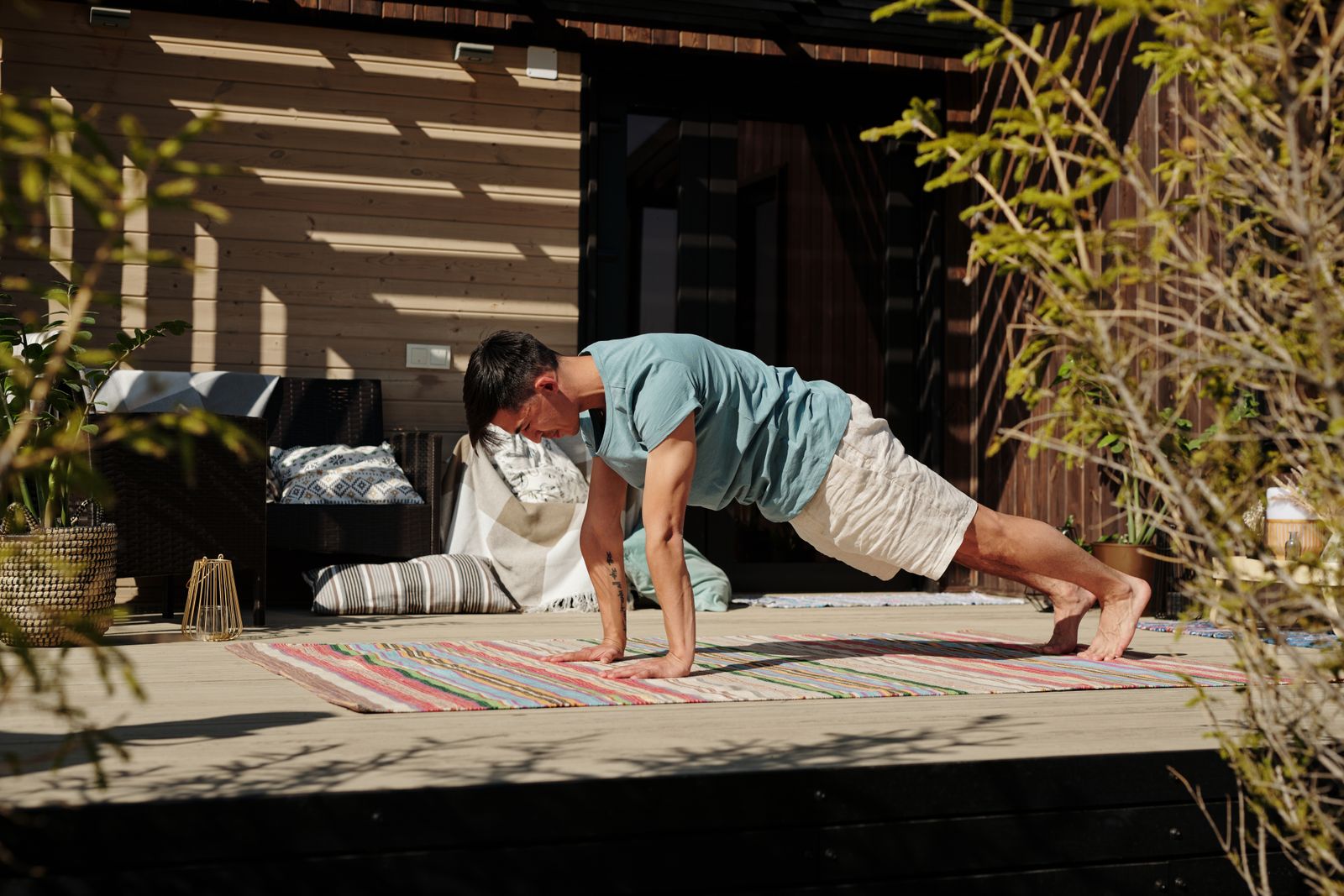
Plank is the clearest strength pose in yoga. Holding a straight-arm or forearm plank recruits the entire core, the shoulders, and the muscles stabilizing the spine. Building plank hold time from 20 seconds up to a minute or more is a simple, trackable way to measure core-strength progress, and it shows up directly in the results people look for from yoga for abs routines.
Chair Pose (Utkatasana)
Chair pose is an isometric squat, loading the quadriceps, glutes, and hip flexors while also demanding shoulder and core engagement to keep the torso upright. Holding chair pose for 30-45 seconds across several rounds builds serious lower-body endurance and complements the goals behind yoga for toned legs sequences.
Warrior II and Warrior III
Warrior II builds strength through the legs and hips while training the core to stabilize a wide, grounded stance. Warrior III takes this further, balancing on one leg while the torso and opposite leg extend parallel to the floor, which demands strength through the standing leg, glutes, and entire posterior chain to avoid collapsing forward.
Side Plank (Vasisthasana)
Side plank isolates the obliques, shoulder stabilizers, and hip abductors in a way few other poses do. It’s a direct test of lateral core strength and a pose that improves quickly with consistent practice.
Boat Pose (Navasana)
Boat pose is a pure core-strength hold, balancing on the sit bones with the legs and torso forming a V shape. It’s demanding on the hip flexors and abdominal wall and is a staple in almost every strength-focused yoga sequence, including many built around yoga for back pain recovery, since a stronger core takes pressure off the lower spine.
Crow Pose (Bakasana)
Crow is an arm balance that shifts bodyweight forward onto the hands, building wrist, forearm, and shoulder strength along with the core control needed to keep the body balanced. It’s a more advanced pose but a clear marker of upper-body strength progress.
How Is Yoga for Strength and Toning Different From Regular Yoga?
Yoga for strength and toning is less about achieving perfect alignment in a single pose and more about intentionally sequencing poses that keep muscles under load for longer stretches. A toning-focused class typically holds standing poses and planks longer, adds more repetitions of transitions like chaturanga, and reduces the amount of passive stretching in favor of active, muscle-engaging holds. The visible effect over weeks of consistent practice is often described as “toning,” meaning firmer muscle tone and better definition, largely because you are building lean muscle and improving muscular endurance while also supporting fat loss through increased activity.
Can Yoga Replace Weightlifting for Strength Training?
Yoga and weightlifting build strength through different mechanisms, and neither fully replaces the other. Weightlifting uses external, progressively increasing resistance, which is the most direct way to build maximal strength and add muscle mass. Yoga uses bodyweight and isometric holds, which builds strength but with a natural ceiling, since the resistance doesn’t increase the way it does when you add plates to a bar.
| Factor | Yoga | Weightlifting |
|---|---|---|
| Resistance type | Bodyweight, isometric holds | External, progressively increasing load |
| Best for | Functional strength, joint mobility, balance | Maximal strength, muscle mass |
| Strength ceiling | Limited by bodyweight | Virtually unlimited as load increases |
| Ideal role | Mobility, core stability, recovery | Progressive overload |
Where yoga clearly wins is joint mobility, balance, and muscular endurance, qualities heavy lifting alone doesn’t train as directly. Many strength coaches recommend combining the two: lifting for progressive overload, yoga for mobility, core stability, and recovery. If building substantial muscle mass is the only goal, yoga is a complement, not a substitute. If the goal is functional, full-body strength alongside better mobility, a dedicated practice like power yoga can be the main event.
How Often Should You Practice Yoga for Strength Gains?
Most people see noticeable strength improvements with 2-4 sessions per week, each lasting 30-60 minutes, as long as the sessions include strength-focused poses rather than purely restorative ones. Muscles need recovery time between demanding sessions, so alternating a strength-focused practice with a gentler or restorative day tends to produce better long-term progress than daily maximal-effort sessions. Beginners often notice improved hold times and reduced shaking in poses like plank and chair within 3-4 weeks of consistent practice, while more visible changes in muscle tone typically take 8-12 weeks.
What Does a Beginner-Friendly Strength Yoga Routine Look Like?
A simple, sustainable routine matters more than an ambitious one you abandon after a week. A beginner strength sequence might open with a few rounds of sun salutations to warm up the shoulders and hamstrings, move into standing poses like chair and warrior II held for 20-30 seconds each, add a plank-to-forearm-plank sequence for core work, and finish with boat pose and a supported backbend to balance the front-loading poses. Building up hold times gradually, rather than jumping straight to one-minute planks, reduces the risk of strain and keeps the nervous system adapting steadily. Pairing this with attention to yoga for posture work ensures the strength you build actually translates into how you sit and stand day to day, not just how you look mid-pose.
Does Yoga for Strength Also Improve Flexibility?
Strength and flexibility are not opposing goals in yoga; they develop together when a practice is balanced. Poses like warrior I and downward dog stretch the hip flexors, hamstrings, and calves while the standing leg and core work isometrically to hold the position. This is different from static stretching alone, which lengthens muscle without building the strength to control that new range of motion, a combination sometimes called “active flexibility.” Practices that focus purely on strength poses without any counter-stretching can leave muscles tight, so most well-designed strength sequences alternate loading poses with poses drawn from a yoga for flexibility routine to keep the muscles both strong and supple.
Can Yoga for Strength Help With Weight Management?
Strength-focused yoga contributes to weight management in two ways: the sessions themselves burn calories through sustained muscular effort, and building lean muscle mass modestly raises resting metabolic rate over time. Vinyasa and power yoga classes, in particular, combine near-continuous movement with strength holds, giving them a higher energy cost than a slower Hatha class. On its own, yoga is rarely enough to drive significant fat loss without attention to diet and overall activity level, but as part of a broader routine that includes yoga for weight loss, the strength-building poses covered here are what make the biggest long-term difference, since more muscle mass supports a higher calorie burn even at rest.
Is Yoga for Strength Good for Height and Posture Development?
Strength-focused yoga supports better posture and can make a person appear taller, primarily by correcting the slouched, rounded-shoulder position that comes from long hours sitting. Poses like cobra, cat-cow, and mountain pose strengthen the muscles along the spine and shoulders that hold the body upright, while chair and warrior poses build the leg and core strength needed to stand tall without fatigue. It’s worth being clear about one thing: yoga cannot increase adult bone length, since growth plates close after puberty, so claims tied to yoga to increase height are best understood as postural improvement and decompression of the spine rather than literal height gain, an important distinction especially for adult practitioners.
What Equipment Do You Need for Strength-Focused Yoga?
One of the appeals of strength-focused yoga is how little equipment it demands. A non-slip mat is the only true requirement, since most strength poses rely entirely on bodyweight. A few props expand what’s possible:
- Non-slip mat – the only true requirement, since most strength poses rely on bodyweight alone.
- Yoga blocks – help beginners hold poses like chair or half-moon with better alignment while the muscles build strength to go deeper.
- Yoga strap – assists in poses that need a reach the body isn’t ready for yet.
- Wall – helps with practicing poses like handstand prep safely.
None of these are mandatory to start; they simply make specific poses more accessible while strength develops.
Are There Any Risks to Building Strength Through Yoga?
The most common risk in strength-focused yoga is overloading joints before the surrounding muscles are ready, particularly in poses like crow, side plank, and deep lunges. Wrist strain from repeated plank and chaturanga transitions is one of the most frequently reported issues, usually from poor hand placement or moving too fast through the transition. Lower-back strain can occur in poses like boat or full wheel if the core isn’t yet strong enough to support the position, causing the lower back to compensate. The safest approach is progressing gradually, holding poses only as long as form stays clean, and stepping back to an easier variation the moment the lower back rounds or the wrists ache. Anyone with existing joint issues, recent injuries, or cardiovascular concerns should check with a healthcare provider before starting a strength-intensive practice.
Questions People Ask About Yoga for Strength
Can yoga alone make you strong?
Yes, for functional and muscular-endurance strength. Consistent practice of poses like plank, chair, and warrior series builds real strength in the core, legs, shoulders, and back. It won’t build maximal strength the way heavy weightlifting does, since resistance stays fixed at bodyweight, but for everyday strength and stability it’s genuinely effective.
How long does it take to see strength results from yoga?
Most practitioners notice improved hold times and steadier balance within 3-4 weeks of practicing 2-4 times per week. Visible changes in muscle tone and definition generally take 8-12 weeks of consistent practice, similar to timelines seen in other bodyweight training methods.
Is Hatha or Vinyasa yoga better for building strength?
Hatha builds strength through longer, slower holds, making it ideal for beginners focused on foundational strength. Vinyasa adds continuous movement between poses, building strength alongside cardiovascular endurance. Neither is strictly better; the right choice depends on whether you want a slower, controlled pace or a faster, more athletic session.
Do you need weights alongside yoga to get strong?
No, but combining the two accelerates results for most goals. Yoga builds functional strength, balance, and joint stability using bodyweight, while weights add progressive resistance for building maximal strength and muscle mass. Many practitioners use yoga on rest days from lifting to aid recovery and mobility.
Which yoga pose builds the most upper-body strength?
Plank and its variations (forearm plank, side plank, plank-to-chaturanga) build the most upper-body strength, working the shoulders, triceps, and chest along with the entire core. Crow pose is the more advanced upper-body strength benchmark, since it requires enough shoulder and wrist strength to support the full bodyweight.
Can beginners do strength-focused yoga safely?
Yes, as long as poses are modified to match current strength levels. Holding chair pose for 10 seconds instead of 30, or doing plank from the knees instead of full extension, still builds strength while reducing strain. Progressing hold times and pose difficulty gradually is safer and more sustainable than pushing into advanced poses too early.
Try This for Yourself
Reading about strength-building poses only goes so far; the actual gains come from consistent, guided practice. If you want a structured strength-focused sequence without guessing which poses to combine or how long to hold them, FitStrot’s online yoga classes are built around exactly this kind of progressive, strength-oriented programming, with instructors who can correct your form in real time and adjust the intensity to where you actually are right now.
Related reading: yoga for weight loss, yoga for flexibility, yoga for posture, types of yoga, and FitStrot’s online yoga classes.