Partner yoga poses are two-person postures where each participant uses the other’s body weight, balance, or counterbalance to move deeper into a stretch, build strength, or find stillness together. Unlike solo yoga poses, partner yoga relies on trust, communication, and shared breath, which is why it’s used in couples’ practice, family sessions, kids’ yoga classes, and even prenatal routines. Popular examples include Double Downward Dog, Seated Cat-Cow, Back-to-Back Breathing, and Partner Forward Fold. Most poses take 5-10 minutes to learn and require nothing more than two yoga mats and a willingness to communicate clearly with your partner throughout.
What Exactly Is Partner Yoga?
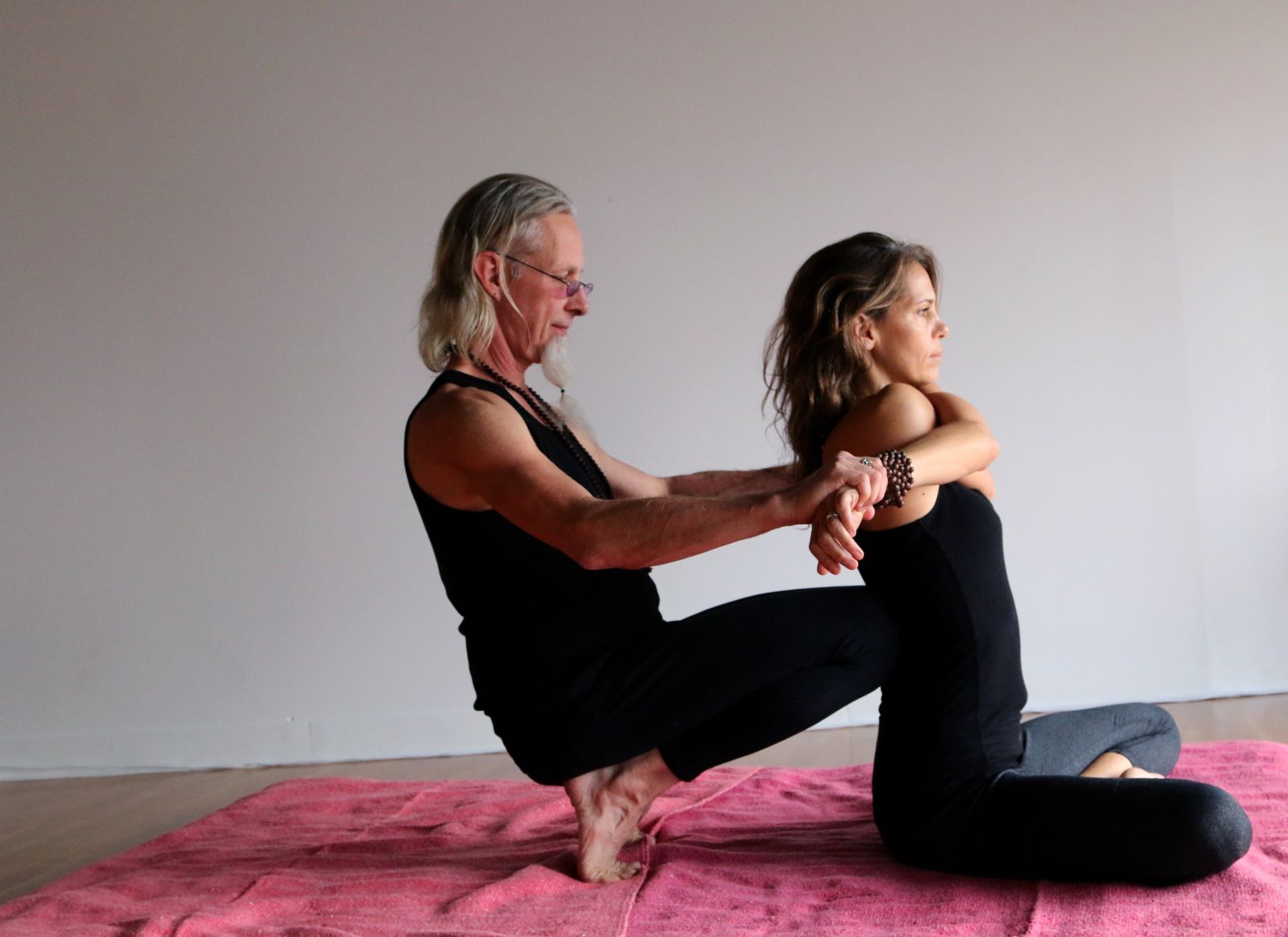
Partner yoga (sometimes called acro-lite yoga or contact yoga) is a style of practice where two people work together within a single pose or a linked sequence of poses. Rather than practicing yoga asanas in isolation, each person becomes an active prop for the other — providing resistance, weight, or a stable anchor point. This is different from acroyoga, which typically involves one person lifting or balancing the other off the ground; partner yoga stays grounded and low-impact, making it accessible to beginners, older adults, children, and pregnant practitioners alike. The core idea is cooperative movement: as one partner opens a stretch, the other partner might deepen it, counterbalance it, or simply hold space for it with steady breath.
| Feature | Partner Yoga | Acroyoga |
|---|---|---|
| Contact with the ground | Both partners stay grounded | One partner (the “flyer”) is lifted off the ground |
| Skill level | Beginner-friendly, low-impact | Needs more strength, balance, and spotting practice |
| Typical equipment | Two yoga mats | Often a crash mat or spotter |
| Best suited for | Couples, families, kids, prenatal practice | Athletic partners building acrobatic skills |
Why Practice Yoga With a Partner?
Practicing with another person changes the nature of the work. Physically, a partner’s body weight or resistance can deepen a stretch further than you could reach alone, which is especially useful for tight hips, hamstrings, and shoulders. Mentally, partner yoga demands communication — you have to check in verbally (“does this feel okay?”) and read non-verbal cues, which builds the kind of active listening that carries over into relationships outside the mat. It also adds an accountability layer: a scheduled partner session is harder to skip than a solo one. For couples, families, and coworkers, it’s frequently used as a bonding exercise precisely because it requires cooperation rather than competition, echoing themes explored in yoga philosophy around interconnectedness and shared presence.
How Do You Prepare for a Partner Yoga Session?
Start with a few minutes of individual centering — sit back to back with your partner and simply match your breathing before moving into any poses. Choose a partner close to your own height and flexibility level for easier poses, though skilled partners can adapt many postures across size differences by adjusting stance width and grip. Clear a space large enough for two mats side by side, remove socks for better grip, and agree on a simple check-in signal (a light tap or the word “release”) that either partner can use at any point to exit a pose immediately. If either of you is recovering from an injury, treat partner yoga the same way you’d approach yoga for back pain or other therapeutic practice: move slowly, avoid deep twists, and stop at the first sign of discomfort rather than pushing through it.
What Are the Best Partner Yoga Poses for Beginners?
Easy partner yoga poses share three traits: both people stay low to the ground, movements are slow and controlled, and there’s minimal risk if balance is briefly lost. Good starting poses include:
- Seated Cat-Cow: Sit cross-legged, facing your partner, and hold hands or forearms. Round your spines together on an exhale (cat), then arch and lift your chests on an inhale (cow), moving in sync.
- Back-to-Back Breathing: Sit back to back with spines touching, close your eyes, and simply feel each other’s breath rise and fall for one to two minutes. This is often the first pose taught in any partner class because it needs zero flexibility or strength.
- Double Tree Pose: Stand side by side, inner arms wrapped around each other’s waists or shoulders, and each lift the outer foot to the inner thigh or calf of the standing leg, similar to solo tree pose but with a built-in spotter.
These three poses alone make a complete 10-minute beginner sequence and require no prior yoga experience from either partner.
What Are Effective 2-Person Partner Yoga Poses for Stretching?
Once you’re comfortable with the basics, these two-person poses add a deeper stretch component:
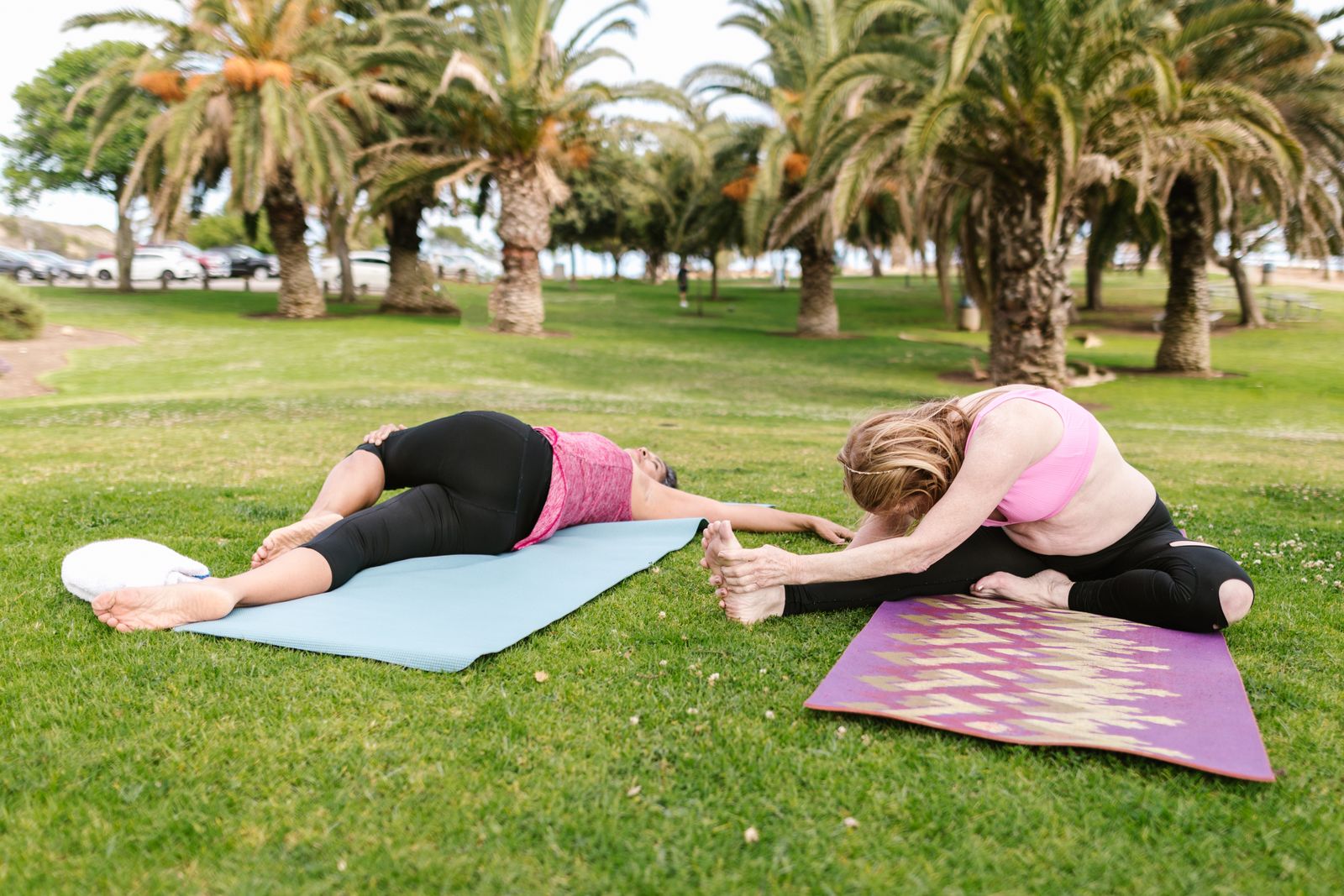
Partner Forward Fold: Sit facing each other with legs extended and the soles of your feet touching (or legs straddled wide, feet against your partner’s). Hold hands and take turns gently leaning back while the other folds forward, similar in spirit to a supported forward fold but with a controlled external pull.
Double Downward Dog: One partner holds a standard downward dog. The second partner places their hands on the mat in front of the first, walks their feet up onto the first partner’s lower back or sacrum, and lifts into their own downward dog, stacking one triangle over the other. This is a favorite in vinyasa yoga classes as a playful peak-pose finisher.
Partner Twist: Sit back to back with knees bent, feet flat, and twist toward the same side, each partner placing a hand on the other’s opposite knee to deepen the rotation evenly on both bodies at once.
Each of these poses should be held for 30-60 seconds per side, with a slow release rather than a sudden drop out of the position.
How Do Partner Yoga Poses Build Strength?
Several partner poses shift from stretching into strength work by using a partner’s body weight as resistance instead of a stretch aid:
Partner Plank Press: Both partners hold a forearm or high plank facing each other, then take turns lightly tapping the other’s shoulder, forcing the stabilizing partner to resist rotation through the core — a two-person twist on standard plank pose work.
Double Chair Pose: Stand back to back, link elbows, and slowly walk your feet forward while bending your knees, letting your backs support each other in a shared chair position. This builds quadriceps and glute strength while removing some of the balance demand of solo chair pose.
Counterbalance Squat: Face your partner, hold hands, and lean back together while bending your knees into a squat, using each other’s weight as the counterbalance that lets you sit lower than you could alone.
These strength-focused poses are a useful bridge for people building toward more advanced power yoga or acroyoga practice later on.
What Partner Yoga Poses Work for Kids?
Partner yoga poses for kids are typically simpler, sillier, and shorter in hold time than adult versions, since young children have less patience for stillness and benefit more from playful, animal-themed cues. Popular kid-friendly options include:
Mirror Pose: One child moves slowly through simple shapes (arms up, arms out, one-legged balance) while the other copies like a mirror image, which builds body awareness and focus without any physical contact needed.
Rowboat Pose: Two kids sit facing each other, hold hands, bend their knees with feet touching, and rock back and forth as if rowing a boat — a fun variation that also stretches the hamstrings.
Double Boat Pose: Sitting facing each other with knees bent, kids press the soles of their feet together, hold hands, and lift their feet to balance in a shared boat shape, similar to solo boat pose but far more engaging for younger practitioners because of the teamwork element.
Kids’ partner yoga is commonly used in school PE classes and family yoga sessions because it teaches cooperation and patience alongside basic movement skills, and it pairs naturally with broader yoga for kids programming.
Are Partner Yoga Poses Safe During Pregnancy?
Many gentle partner yoga poses can be adapted for pregnancy, but the approach shifts significantly compared to a regular practice. Prenatal partner yoga generally avoids deep twists, poses that compress the belly, and anything requiring the pregnant partner to bear significant weight or balance without support. Safe, commonly recommended options include seated back-to-back breathing, a supported seated forward fold where the partner provides gentle resistance rather than pulling, and a standing partner squat where the pregnant partner holds onto their partner’s forearms for stability rather than counterbalancing with body weight. These modifications mirror the general caution used in prenatal yoga more broadly. Because pregnancy changes balance, joint laxity, and comfortable ranges of motion trimester by trimester, anyone practicing partner yoga while pregnant should get clearance from their doctor or midwife first and treat any pose involving twisting, lying flat on the back after the first trimester, or deep forward compression as one to skip or heavily modify.
What Are Partner Yoga Cards and How Do You Use Them?
Partner yoga cards are a physical or digital deck showing illustrated poses with instructions for two people, designed to take the guesswork out of sequencing a session without an instructor present. Each card typically shows the starting position, hand or foot placement, breath cues, and a difficulty rating, letting couples, friends, or families shuffle through a deck and build a spontaneous flow. They’re popular for date nights, family game nights, and classroom settings because they turn partner yoga into a structured but playful activity rather than requiring either person to memorize a sequence. If you don’t have a physical deck, you can recreate the same structure by writing five or six pose names on paper slips and drawing them randomly, which works well as a low-cost way to practice the same poses covered in a typical yoga poses names reference guide.
How Long Should a Partner Yoga Practice Session Last?
A complete partner yoga session generally runs 20-45 minutes, structured in three phases: a 5-minute warm-up of synchronized breathing and gentle individual stretches, 15-30 minutes of partner poses moving from easy to more demanding, and a 5-minute cool-down where partners often finish in a seated or lying supported position with eyes closed. Beginners should start with shorter 15-20 minute sessions focused only on the easiest poses — seated cat-cow, back-to-back breathing, and double tree — before adding weight-bearing poses like double downward dog or counterbalance squats. Building up gradually also reduces the risk of one partner overextending to “keep up” with a more flexible partner, which is one of the more common ways partner yoga sessions go wrong.
What Mistakes Should You Avoid in Partner Yoga?
The most common mistake is mismatched communication — one partner assumes the other is ready to deepen a stretch when they’re not, which usually happens because people are reluctant to say “stop” mid-pose. Establish your check-in signal before you begin and actually use it. A second common mistake is choosing poses that are too advanced for the weaker or less flexible partner, which turns a cooperative pose into an unstable one; when in doubt, default to the easier version and add depth only once both partners are steady. A third mistake is rushing transitions between poses without re-establishing a stable base, which is when most minor slips happen. Finally, avoid practicing partner yoga immediately after eating a large meal, since several poses (like partner twists and forward folds) compress the torso.
Can Partner Yoga Poses Replace a Regular Solo Practice?
Partner yoga works best as a complement to, not a replacement for, individual practice. Solo sessions let you move at your own pace, hold poses as long as you need, and work through the full range of postures found in a structured style like hatha yoga or ashtanga yoga, while partner sessions add a social and cooperative dimension that solo practice can’t replicate. Many practitioners use partner yoga once or twice a week alongside three or four solo sessions, treating the partner practice as a way to deepen specific stretches and add an accountability habit rather than as the entirety of their yoga routine.
What Equipment Do You Need for Partner Yoga?
Partner yoga requires very little equipment: two yoga mats placed side by side or end to end depending on the pose, comfortable clothing that allows a full range of motion, and bare feet for grip. A yoga block or two can help shorter or less flexible partners bridge the gap in poses like partner forward fold, and a folded blanket is useful padding for kneeling poses like seated cat-cow. Unlike acroyoga, which often uses crash mats or a spotter for lifted poses, ground-based partner yoga doesn’t require any specialized safety equipment, which is part of why it’s such an accessible entry point compared to more advanced partner practices.
Questions People Ask About Partner Yoga Poses
Do you need yoga experience to try partner yoga poses?
No. Many beginner-friendly partner poses, like back-to-back breathing or seated cat-cow, require no prior yoga experience from either person. The main skills needed are basic communication and a willingness to move slowly, which makes partner yoga a common entry point for people who have never tried a solo yoga class before.
What’s the difference between partner yoga and acroyoga?
Partner yoga generally keeps both people grounded, using body weight for stretching, counterbalance, or resistance. Acroyoga typically involves one person (the “base”) lifting the other (the “flyer”) off the ground into aerial-style poses, which requires more strength, spotting, and often a crash mat for safety.
Can two people of very different heights do partner yoga together?
Yes, though some poses need adjustment. Height differences matter most in symmetrical poses like double tree or seated forward fold, where a taller partner may need to bend knees more or adjust stance width. Poses like back-to-back breathing or mirror pose work well regardless of height difference.
Is partner yoga good for couples who argue a lot?
Partner yoga can help because it requires active listening and non-verbal cooperation rather than debate, but it isn’t a substitute for addressing underlying relationship issues. Many couples use it as a low-stakes way to practice communication and physical trust together, which can support — but not replace — other forms of relationship care.
How often should you practice partner yoga poses?
Once or twice a week is a common starting frequency, often paired with more frequent solo practice. Because partner sessions depend on two people’s schedules aligning, many practitioners treat it as a special weekly or biweekly session rather than a daily habit.
Try This for Yourself
Reading about partner yoga poses is a good start, but the real benefits — deeper stretches, better communication, shared calm — only show up once you’re actually on the mat with someone. If you’d like expert guidance on pacing, alignment, and safe modifications for you and your partner, join a live, guided class with FitStrot’s online yoga classes and practice alongside a certified instructor from home.
Related reading: Yoga Poses | Yoga Asanas | Yoga Poses Names | Yoga for Kids | FitStrot Online Yoga Classes