Yoga poses names generally follow a Sanskrit-to-English naming pattern built around a handful of root words: “asana” means pose or seat, “eka pada” means one leg, “adho mukha” means facing downward, and “urdhva” means upward. So Adho Mukha Svanasana becomes Downward-Facing Dog, and Urdhva Dhanurasana becomes Upward Bow (Wheel) Pose. Once you recognize these building blocks, hundreds of yoga pose names stop feeling like a foreign vocabulary list and start reading like a logical system, whether you first encountered them at a studio, in a home online yoga class, or scrolling an app.
This guide breaks down yoga poses names in English and Sanskrit, groups them by category (standing, seated, backbend, inversion, and balance poses), and explains what each name literally translates to so you can actually remember it instead of just memorizing it.
Why Do Yoga Poses Have Sanskrit Names?
Yoga’s postural vocabulary comes from Sanskrit, the classical language in which foundational yoga texts such as the Yoga Sutras and the Hatha Yoga Pradipika were composed. Teachers use Sanskrit names partly out of tradition and partly for precision: a single Sanskrit term can specify body position, limb arrangement, and gaze direction in one compound word, which is harder to do with an English phrase alone. When you study yoga asanas in a serious teacher training or lineage-based class, you’ll typically learn both the Sanskrit and English name together, since many pose names in modern practice were only standardized in the 20th century as yoga spread internationally.
Knowing the Sanskrit root also helps you guess the pose before you’ve even seen it demonstrated. “Vrksasana” contains “vrksa” (tree), so you can reasonably assume it’s a standing balance pose shaped like a tree, even the first time you hear it.
What Are the Basic Yoga Poses Names Every Beginner Should Know?
A working list of beginner yoga poses covers roughly ten shapes that appear in nearly every introductory class:
- Mountain Pose (Tadasana) — the standing foundation pose all other standing poses reference
- Downward-Facing Dog (Adho Mukha Svanasana) — an inverted V-shape stretch used as a transition and rest pose
- Child’s Pose (Balasana) — a resting, forward-folded kneeling pose
- Cat-Cow (Marjaryasana-Bitilasana) — a spinal warm-up done on hands and knees
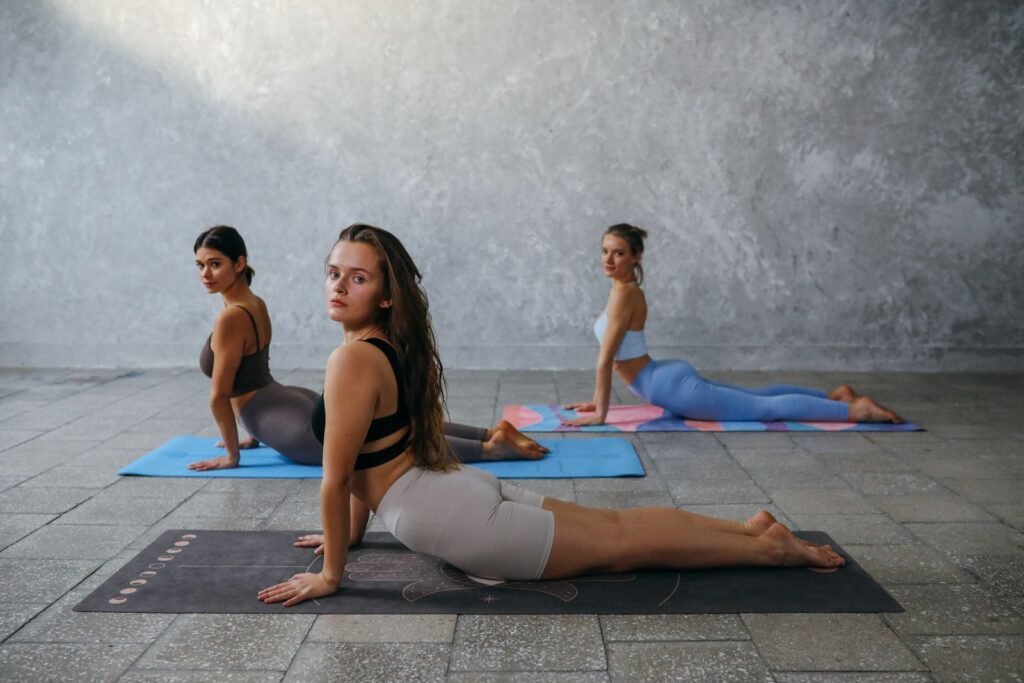
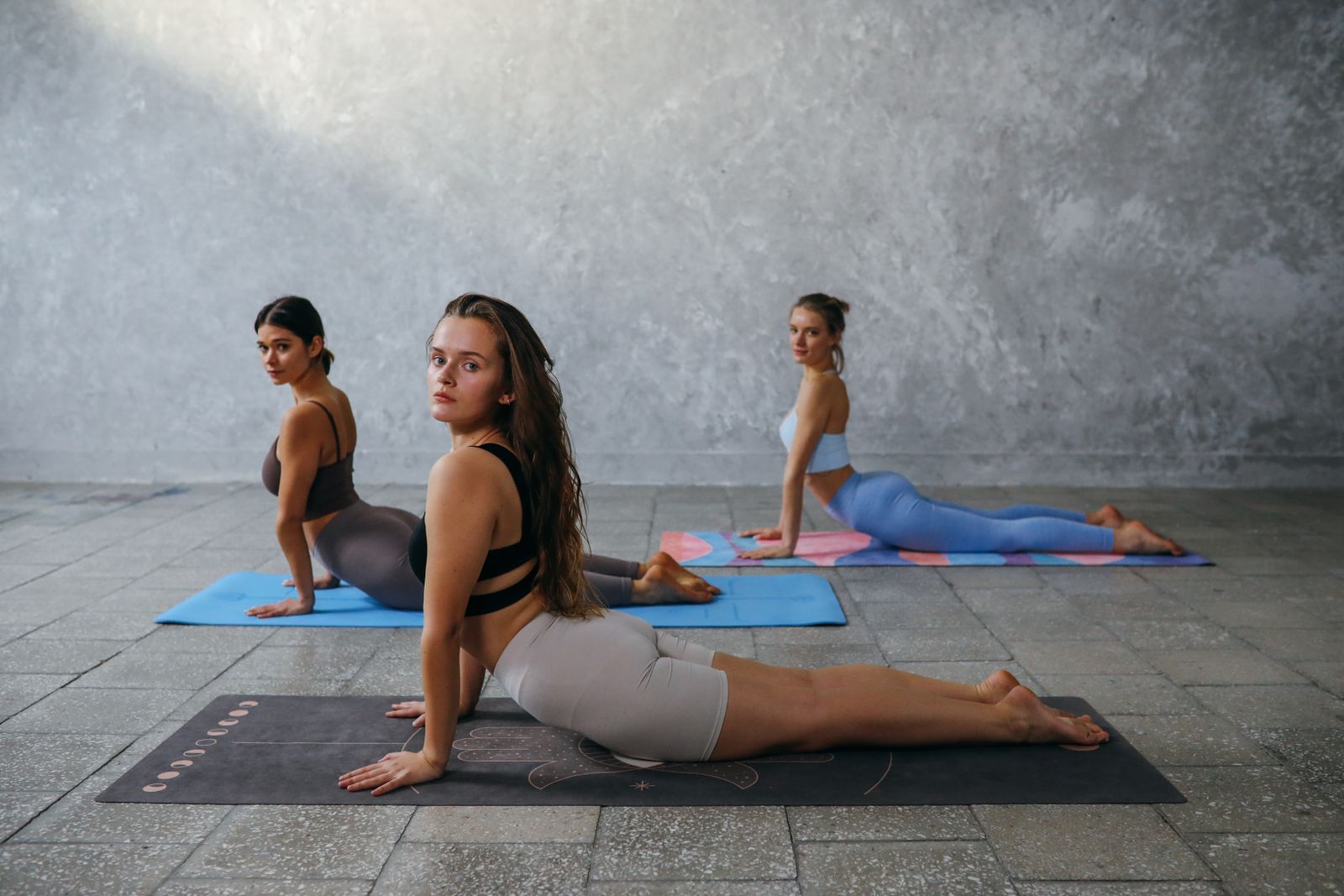
- Cobra Pose (Bhujangasana) — a gentle backbend lying face down
- Warrior I and II (Virabhadrasana I and II) — lunging standing poses named after a mythic warrior
- Triangle Pose (Trikonasana) — a standing side-bend with straight legs
- Seated Forward Fold (Paschimottanasana) — a seated hamstring and spine stretch
- Bridge Pose (Setu Bandhasana) — a gentle backbend lying on the back
- Corpse Pose (Savasana) — the final relaxation pose done lying flat
These ten form the backbone of most hatha yoga and beginner vinyasa sequences, and understanding them well makes every more advanced pose easier to learn later, since many complex poses are built directly from these shapes.
What Are Yoga Poses Names in English?
Most Sanskrit pose names have a direct, literal English translation rather than an arbitrary nickname. Here’s how some of the most searched terms break down:
- Adho Mukha Svanasana = Downward-Facing Dog
- Urdhva Mukha Svanasana = Upward-Facing Dog
- Utthita Trikonasana = Extended Triangle Pose
- Ardha Chandrasana = Half Moon Pose
- Salamba Sirsasana = Supported Headstand
- Salamba Sarvangasana = Supported Shoulderstand
- Uttanasana = Standing Forward Fold
- Baddha Konasana = Bound Angle Pose (sometimes called Butterfly Pose)
- Parsvottanasana = Intense Side Stretch Pose
- Ustrasana = Camel Pose
English names tend to be more literal and descriptive, while Sanskrit names often reference the pose’s structure, an animal, a sage, or a deity. Both naming systems point to the exact same physical shape, so you can use whichever version feels more natural, though most teacher trainings and yoga style certifications expect you to recognize both.
What Are Yoga Poses Names in Hindi?
Because Sanskrit and Hindi share the Devanagari script and much of their vocabulary, many yoga pose names are used in Hindi with little or no change from their Sanskrit originals. Common examples include:
- Tadasana (ताड़ासन) — Mountain Pose, from “tad” meaning mountain or palm tree
- Vrikshasana (वृक्षासन) — Tree Pose, from “vriksha” meaning tree
- Bhujangasana (भुजंगासन) — Cobra Pose, from “bhujanga” meaning serpent
- Shalabhasana (शलभासन) — Locust Pose, from “shalabha” meaning grasshopper or locust
- Dhanurasana (धनुरासन) — Bow Pose, from “dhanur” meaning bow
- Halasana (हलासन) — Plough Pose, from “hal” meaning plough
- Matsyasana (मत्स्यासन) — Fish Pose, from “matsya” meaning fish
Because these are the original-language names rather than translations, searching for “yoga poses names in Hindi” and “yoga poses names in Sanskrit” usually returns the same list. India’s Ministry of AYUSH and the annual International Day of Yoga materials also reference these same Sanskrit-Hindi terms in official pose guides, which is one reason the naming has stayed fairly consistent worldwide.
How Are Standing Yoga Poses Named?
Standing yoga poses build strength in the legs, hips, and core while training balance, and their names often reference the shape the pose resembles or the mythological figure it honors:
- Tadasana (Mountain Pose) — upright stillness, the base standing posture
- Virabhadrasana I, II, and III (Warrior I, II, III) — named for Virabhadra, a fierce warrior created by Shiva
- Trikonasana (Triangle Pose) — the straight-legged body forms a triangle shape
- Parivrtta Trikonasana (Revolved Triangle Pose) — a twisting variation of Triangle Pose
- Utkatasana (Chair Pose) — literally “fierce” or “powerful” pose, resembling sitting in a chair
- Garudasana (Eagle Pose) — named after Garuda, the eagle-like vehicle of Vishnu in Hindu mythology
- Natarajasana (Lord of the Dance Pose) — named after Nataraja, a dancing form of Shiva
Because standing poses train balance and alignment simultaneously, they’re usually taught early in a class as a warm-up before seated yoga poses and floor work.
What Are the Names of Seated and Forward-Fold Poses?
Seated poses generally emphasize hip opening, spinal length, and hamstring flexibility. Frequently referenced names include:
- Sukhasana (Easy Pose) — the simple cross-legged seated position
- Padmasana (Lotus Pose) — the classic meditation seat with feet resting on opposite thighs
- Baddha Konasana (Bound Angle Pose) — soles of the feet pressed together, knees open
- Paschimottanasana (Seated Forward Fold) — “paschima” refers to the back/west side of the body being stretched
- Janu Sirsasana (Head-to-Knee Pose) — one leg extended, forehead reaching toward the opposite knee
- Upavistha Konasana (Seated Wide-Angle Pose) — a wide-legged seated forward fold
Many of these poses appear in restorative and yin yoga sequences, where each shape is held for one to five minutes to work into deeper connective tissue rather than muscle.
What Are the Names of Backbend Poses?
Backbends counter the forward-rounded posture common from sitting at desks, and several of the most recognized names include:
- Bhujangasana (Cobra Pose) — a gentle, low backbend performed lying face down
- Urdhva Mukha Svanasana (Upward-Facing Dog) — a deeper backbend with the thighs lifted off the floor
- Ustrasana (Camel Pose) — a kneeling backbend reaching the hands toward the heels
- Dhanurasana (Bow Pose) — lying face down, holding the ankles to form a bow shape
- Urdhva Dhanurasana (Upward Bow or Wheel Pose) — a full backbend pressing up from the floor into an arch
- Setu Bandhasana (Bridge Pose) — a supported backbend performed on the back with feet planted
Backbends are typically sequenced after adequate warm-up, since the spine and shoulders need mobility preparation. This is one reason yoga for back pain programs introduce backbends gradually rather than starting with the deepest variations.
What Are Yoga Handstand Poses Names?
Inversions and arm balances form one of the more advanced categories in the yoga pose vocabulary, and their names are searched often by practitioners progressing past beginner level:
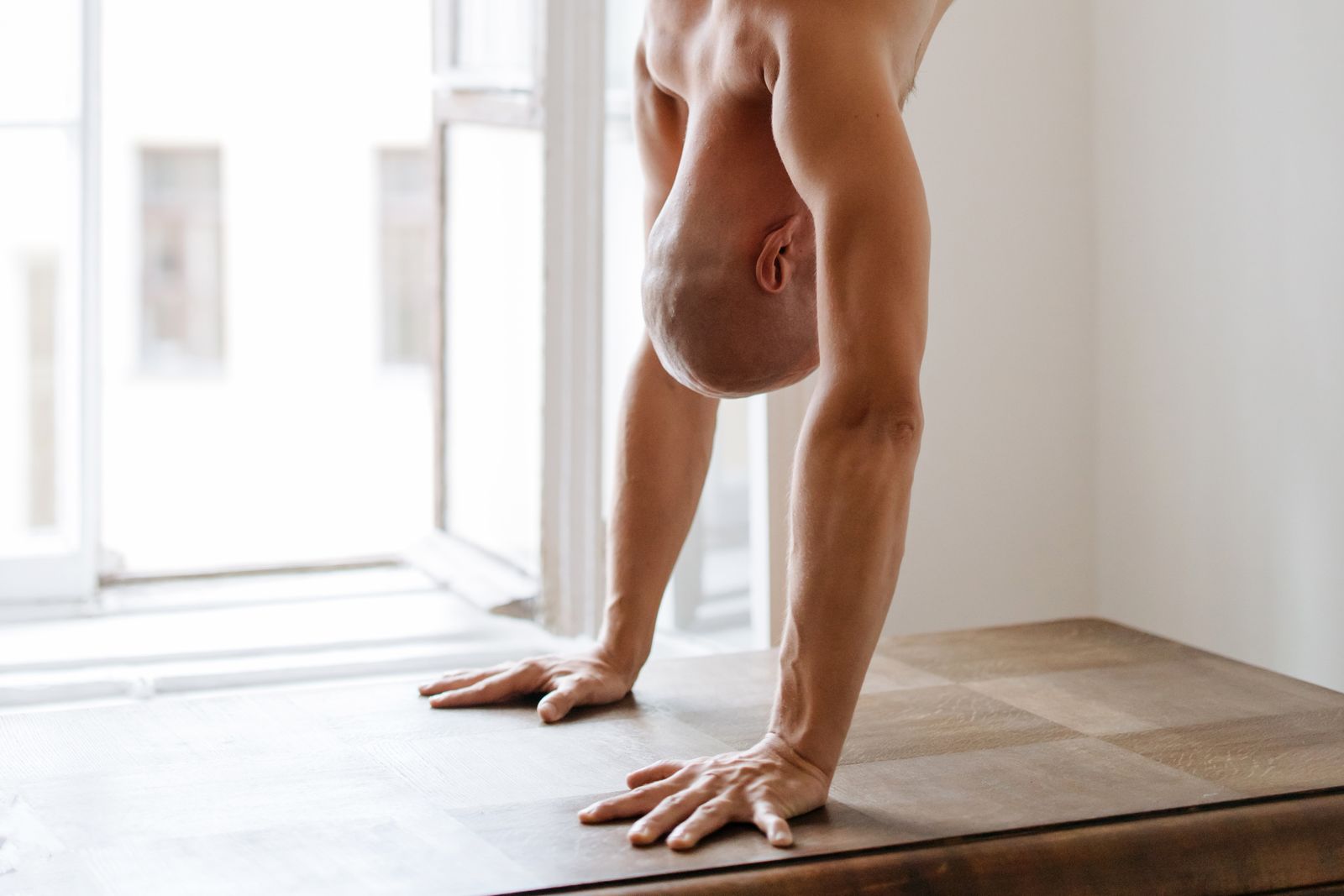
- Adho Mukha Vrksasana (Handstand) — literally “downward-facing tree pose,” balancing fully on the hands
- Salamba Sirsasana (Supported Headstand) — often called the “king of asanas” in traditional hatha yoga texts
- Salamba Sarvangasana (Supported Shoulderstand) — sometimes called the “queen of asanas”
- Pincha Mayurasana (Forearm Stand or Feathered Peacock Pose) — balancing on the forearms
- Bakasana (Crow Pose) — an arm balance with knees resting on the upper arms
- Titibasana (Firefly Pose) — an arm balance with legs extended outward
Handstand and inversion practice typically requires building shoulder, wrist, and core strength first, which is why most yoga for strength programs treat these poses as a longer-term goal rather than an early milestone. A qualified teacher should always supervise a practitioner’s first attempts at Sirsasana and Adho Mukha Vrksasana.
What Are Ashtanga Yoga Poses Names?
Ashtanga yoga, developed and popularized in Mysore, India by K. Pattabhi Jois in the 20th century, follows a fixed sequence of poses practiced in a set order rather than a varied class structure. The Primary Series (Yoga Chikitsa) opens with Surya Namaskara A and B (Sun Salutations A and B), then moves through standing poses like Padangusthasana (Big Toe Pose) and Utthita Parsvakonasana (Extended Side Angle Pose), into seated poses such as Marichyasana (named after the sage Marichi) and Navasana (Boat Pose), and closes with a fixed set of finishing poses including Sarvangasana, Halasana (Plough Pose), and Padmasana. Because the sequence is fixed, Ashtanga practitioners often memorize the entire pose order and Sanskrit names as a single continuous flow rather than learning poses individually.
What Are Acro Yoga Poses Names?
Acro yoga blends acrobatics, yoga, and Thai massage into a partner-based practice, and its pose vocabulary reflects the three distinct roles involved: the “base” (on the ground supporting), the “flyer” (being lifted), and the “spotter” (ensuring safety). Common named poses and positions include:
- Bird (or Front Bird) — the flyer balances horizontally on the base’s feet, face down
- Throne — the flyer sits upright on the base’s feet in a stable seated position
- Star — the flyer balances on the base’s feet with arms and legs extended outward
- Whale Watch — a foundational two-person stretch pose used as a warm-up
- Reverse Bird — a variation of Bird flown facing upward
Unlike traditional Sanskrit asana names, most acro yoga pose names are modern, descriptive English terms coined within the acro yoga community, since the practice itself only developed as a distinct discipline in the early 2000s.
What Do Yoga Pose Names and Benefits Have in Common?
Many Sanskrit pose names directly hint at their physical benefit, which is a useful memory trick as well as a practical guide to what a pose targets:
- Matsyasana (Fish Pose) — opens the chest and throat, often cited for improving breathing capacity
- Balasana (Child’s Pose) — a resting pose that releases tension in the lower back and hips
- Setu Bandhasana (Bridge Pose) — strengthens the glutes and hamstrings while opening the chest
- Vrksasana (Tree Pose) — builds single-leg balance and ankle stability
- Marjaryasana-Bitilasana (Cat-Cow) — mobilizes the spine through flexion and extension
Rather than memorizing benefits as a separate list, it helps to notice that a pose’s name often already tells you what it’s for: a “twist” pose supports spinal rotation and digestion, a “forward fold” lengthens the posterior chain, and a “backbend” opens the front body and chest. For a deeper breakdown of physical and mental effects, see our guide to benefits of yoga.
What Are Easy Yoga Poses Names for Absolute Beginners?
If you’re brand new to the practice, a smaller starter set of genuinely easy poses is more useful than a long list:
- Sukhasana (Easy Seated Pose) — simple cross-legged sitting for breathing and meditation
- Balasana (Child’s Pose) — a resting, low-effort stretch
- Marjaryasana-Bitilasana (Cat-Cow) — gentle, repetitive spinal movement
- Tadasana (Mountain Pose) — standing stillness with alignment cues
- Savasana (Corpse Pose) — full-body relaxation lying flat on the back
These five poses require no prior flexibility, strength, or balance training, which makes them the standard opening and closing shapes in nearly every gentle yoga and restorative class.
Where Can You Find All Yoga Poses Names With Images?
Because yoga has thousands of documented pose variations, no single list captures “all” yoga poses names, but structured pose libraries organized by category (standing, seated, backbend, twist, inversion, restorative) are the most practical way to browse comprehensively. When looking at images alongside pose names, pay attention to three details every well-illustrated pose guide should show clearly: foot and hand placement, spine alignment, and gaze direction (drishti), since these three elements distinguish similar-looking poses from each other. A photo of Trikonasana next to Parivrtta Trikonasana, for example, looks similar at first glance until you notice the twist through the torso in the revolved version.
Questions People Ask About Yoga Poses Names
What is the hardest yoga pose to learn by name?
Difficulty varies by body type and training, but poses frequently cited as advanced include Adho Mukha Vrksasana (Handstand), Titibasana (Firefly Pose), and Eka Pada Rajakapotasana (One-Legged King Pigeon Pose), since each combines strength, flexibility, and balance demands simultaneously. Most practitioners work toward these over months or years of consistent practice rather than attempting them early on.
Do all yoga styles use the same pose names?
Core Sanskrit names like Tadasana, Adho Mukha Svanasana, and Savasana are shared across nearly all yoga styles, including Hatha, Vinyasa, Ashtanga, and Iyengar. However, some styles add their own naming conventions for sequences or transitions, and modern practices like acro yoga and aerial yoga use largely non-Sanskrit, descriptive English names instead.
Why do some yoga poses have two different Sanskrit names?
Small regional and lineage-based variations exist because yoga was transmitted through different teachers and schools before pose names were widely standardized in English-language texts during the 20th century. For example, Baddha Konasana is also called Bhadrasana in some older texts, though both refer to the same bound-angle seated pose.
Is it necessary to learn Sanskrit names to practice yoga?
No, English names work perfectly well for a home or beginner practice, and most online yoga classes teach using English cues with the Sanskrit name mentioned alongside. Learning Sanskrit becomes more useful if you plan to pursue a teacher training certification, since most certification syllabi test pose names in Sanskrit.
What’s the difference between an asana and a yoga pose?
“Asana” is the Sanskrit word used in yoga philosophy specifically for a steady, comfortable seated or postural position, originally referring mainly to seated meditation postures. In modern usage, “asana” and “yoga pose” are used interchangeably to describe any of the physical postures practiced in a yoga class, whether standing, seated, or inverted.
Try This for Yourself
The fastest way to actually remember yoga poses names is to practice them with real-time guidance rather than memorizing a list in isolation. Book an online yoga class with FitStrot and learn the correct Sanskrit and English name for every pose your instructor cues, live, from wherever you are.
Related reading: Yoga Poses | Yoga Asanas | Standing Yoga Poses | Beginner Yoga Poses | Online Yoga Classes