Online yoga teacher training is a structured certification program, usually 200 or 300 hours long, that lets you complete the study, practice teaching, and exam requirements to become a registered yoga teacher entirely from home. A reputable program pairs live or recorded lectures on anatomy, philosophy, and teaching methodology with practicum sessions where you actually lead classes and get feedback, then reports your completed hours to Yoga Alliance so you can apply for RYT status. The best online programs match in-person training in rigor; the difference is where you sit while you learn it.
If you’ve been searching for a way to deepen your practice, change careers, or simply understand your body and breath at a level most students never reach, online teacher training has quietly become one of the most practical entry points into the profession. It’s a natural next step after building a consistent habit through yoga for beginners routines or regular vinyasa yoga classes, once you’re ready to move from student to instructor. This guide walks through exactly what these programs involve, how to tell a legitimate one from a diploma mill, what it costs, and what happens after you graduate.
What Is Online Yoga Teacher Training, Exactly?
Online yoga teacher training replaces the in-person residential intensive with a distance-learning format. Instead of relocating to an ashram or studio for a month, you log into video lectures, join live sessions with lead trainers, complete reading and written assignments, and record or livestream your own teaching for evaluation. Most programs are built around the Yoga Alliance curriculum categories: techniques and practice, teaching methodology, anatomy and physiology, yoga philosophy and ethics, and practicum. A well-designed course doesn’t just hand you pre-recorded videos and a certificate at the end. It builds in real interaction, cohort discussion, and direct instructor feedback on your teaching voice, sequencing, and cueing, which is exactly what separates a credential from an actual skill set. If you’re still comparing formats, it’s worth reading about how a yoga certificate course is structured before committing to any single delivery method, and how it differs from a broader yoga course aimed purely at students rather than future teachers.
Is Online Training as Credible as In-Person Training?
Yes, when the school is properly registered. Yoga Alliance, the primary credentialing body most studios and gyms recognize in the United States, has approved online and hybrid Registered Yoga School (RYS) formats since 2020, and many schools that previously ran only in-person intensives now offer the identical curriculum online. Credibility comes down to three things: the school’s RYS registration status, the qualifications of the lead trainers, and whether the program includes live practice teaching rather than passive video watching. A 200-hour certificate from an unaccredited course with no live teaching component won’t carry the same weight with studios as one from a registered school, regardless of delivery format. Always verify a school’s current registration directly through the Yoga Alliance directory rather than trusting a badge on a website. It’s the same due diligence worth applying if you’re weighing an in-person option like a yoga teacher training in Goa or a yoga teacher training in Rishikesh program alongside your online research.
What Does a 200 Hour Online Yoga Teacher Training Cover?
The 200-hour tier is the foundational credential and the minimum most studios expect before hiring. Expect the curriculum to break down roughly like this across a typical program:
- Techniques, training, and practice (approx. 100 hours): asana alignment, breathwork (pranayama), meditation techniques, and hands-on or verbal adjustment practice.
- Teaching methodology (approx. 25 hours): class sequencing, cueing language, working with props, and adapting classes for different populations.
- Anatomy and physiology (approx. 20 hours): musculoskeletal structure, common injuries, contraindications, and how the body responds to specific poses, building on foundational yoga anatomy concepts.
- Yoga philosophy, lifestyle, and ethics (approx. 30 hours): the eight limbs of yoga, foundational texts, and a teacher’s code of conduct, often introducing students to yoga philosophy in more depth than a typical studio class ever covers.
- Practicum (approx. 25 hours): supervised teaching practice, feedback sessions, and often a final teaching assessment.
Programs vary in exactly how they split these hours, but any legitimate 200-hour course will cover all five categories in some proportion. If a program compresses practicum down to almost nothing, that’s a signal to look elsewhere, since teaching practice is where most new instructors actually build confidence.
How Long Does Online Yoga Teacher Training Take?
Most 200-hour programs are designed to be completed in 8 to 16 weeks on a part-time schedule of roughly 10 to 15 hours per week, though many schools also offer accelerated formats that compress the same 200 hours into 3 to 4 weeks of intensive daily study. Self-paced programs sometimes allow 6 to 12 months to finish, which suits people training around a full-time job or family schedule. The right pace depends less on how fast you can technically finish and more on how much time you actually have to absorb anatomy, practice sequencing, and get comfortable teaching out loud. Rushing a teacher training to hit a deadline tends to produce instructors who know the material on paper but freeze the first time they have to cue a live room. The same logic applies to your personal practice leading up to training: someone who has spent a year building strength and breath control through power yoga or steady hatha yoga sessions will absorb the anatomy and sequencing modules faster than someone starting cold.
How Much Does an Affordable Online Yoga Teacher Training Program Cost?
Online 200-hour programs typically range from around $600 on the budget end to $3,000 or more for premium programs with extensive live mentorship, small cohorts, and additional certifications bundled in (such as yin, prenatal, or restorative modules). The lower end of that range doesn’t automatically mean lower quality, since online delivery removes the overhead of venue rental, accommodation, and catering that inflates in-person program pricing. When comparing an affordable online yoga teacher training option, check exactly what’s included: live contact hours with lead trainers, one-on-one feedback on your teaching, a physical or digital manual, exam and certification fees, and Yoga Alliance registration support. A cheap program that only offers self-paced video with no human feedback loop is a different product entirely from a moderately priced one with live practicum sessions, even if the headline price gap looks large. Budget-conscious students sometimes offset the training cost by continuing to teach themselves through free or low-cost online yoga classes during the certification period, which also doubles as extra practice time on the mat.
What Equipment and Setup Do You Actually Need?
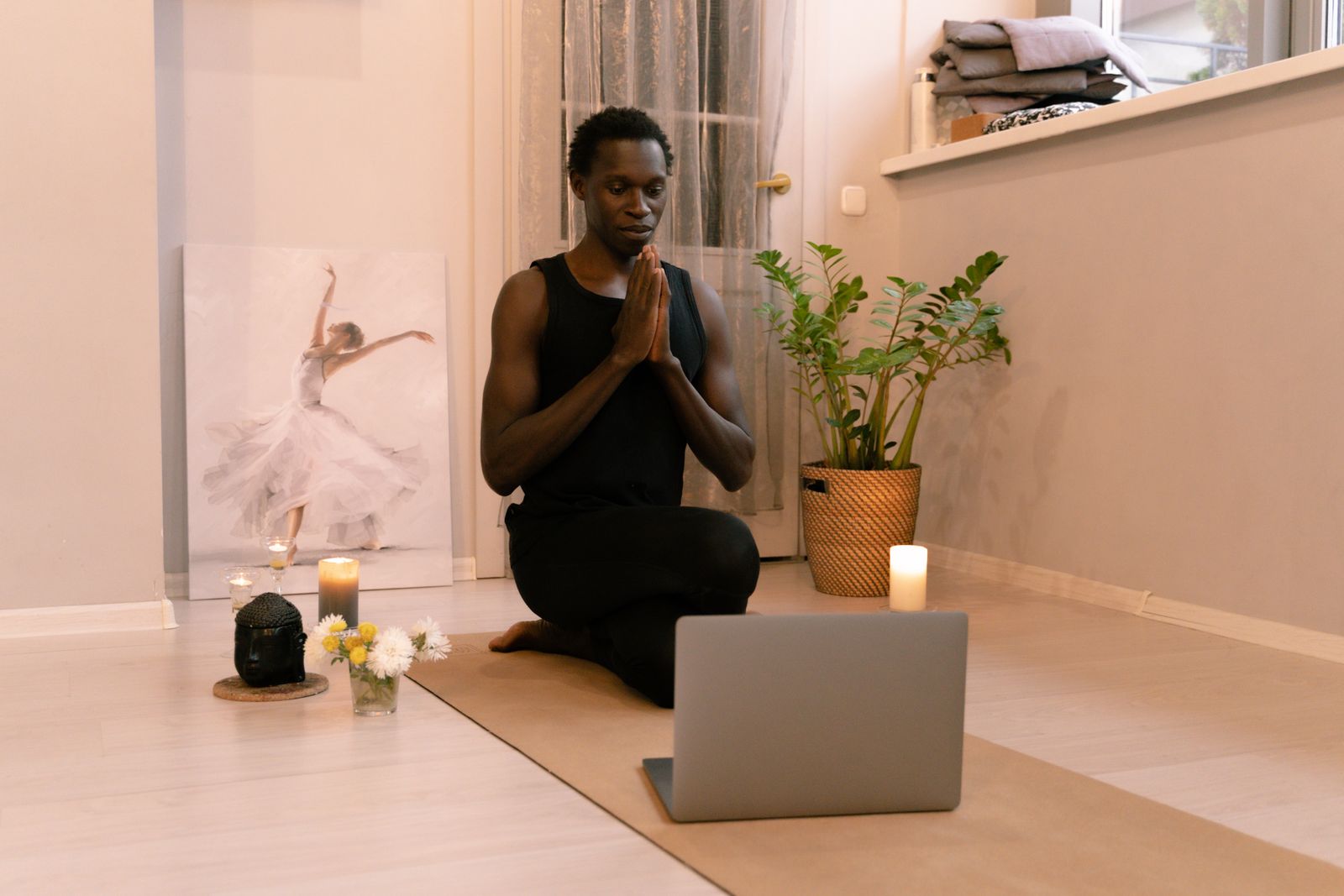
You don’t need a home studio, just a clear, quiet space roughly the size of a yoga mat with enough room to extend your arms and legs in every direction, a stable internet connection for live sessions, a device with a camera positioned to show your full body during practice teaching, and standard props: a mat, one or two blocks, and a strap. Good lighting matters more than people expect, since instructors evaluating your practicum sessions need to actually see your alignment. Many students set up near a window or invest in a simple ring light. Beyond that, the barrier to entry is genuinely low, which is part of why online training has opened the profession to people who couldn’t otherwise take a month off to travel for an intensive. It’s worth pairing your practicum setup with good breathing practice too, since clear pranayama breathing techniques translate directly into calmer, more confident cueing on camera.

Online Yoga Teacher Training Course vs In-Person: Which Should You Choose?
Choose online if you need schedule flexibility around work or family, can’t take extended time off to travel, or want to train with a specific lead teacher regardless of geography. Choose in-person, such as a yoga teacher training in Rishikesh or another dedicated retreat setting, if you learn best through total immersion, want the cultural and community experience of training alongside classmates in person, or find that video calls make it hard to absorb hands-on adjustment cues. Many people also choose a hybrid path: completing the academic and philosophy modules online, then attending a shorter in-person intensive for hands-on adjustment practice and practicum. There’s no universally correct answer here. The honest test is which format you’ll actually finish and retain, since a training you drop halfway through helps no one. Corporate professionals juggling demanding schedules, for instance, often lean toward online formats for the same reason they turn to corporate yoga programs during the workday: flexibility that fits around fixed commitments rather than around it.
What Should You Look for in Online Yoga Teacher Training Programs?
Vet any program against this checklist before enrolling:
- Registered School status: Confirm current Yoga Alliance RYS registration, not just a claim of “Yoga Alliance approved.”
- Lead trainer credentials: Look for E-RYT 500 or equivalent experienced trainers, not instructors a year into their own teaching career.
- Live contact hours: A meaningful portion of the program should involve live video sessions, not entirely pre-recorded content.
- Cohort size and feedback ratio: Smaller cohorts generally mean more individual feedback on your teaching.
- Practicum structure: Ask exactly how many times you’ll teach live and receive direct critique before graduating.
- Alumni support: Some schools offer job boards, mentorship, or continuing education discounts after graduation.
- Refund and rescheduling policy: Life happens; know the policy before you pay.
Reading reviews from actual graduates, not just testimonials curated on the school’s own site, is one of the most reliable ways to separate strong online yoga teacher training programs from ones that look polished in marketing but under-deliver on practicum quality.
It’s also worth asking whether the program covers style-specific teaching skills you’ll actually use, such as leading a yin yoga class versus a faster-paced flow, or guiding meditation for beginners as part of a well-rounded class close. Generalist 200-hour programs touch on these areas but rarely go deep, which is normal at this level and simply flags where your post-certification learning should continue.
Can You Get Online Yoga Teacher Jobs After Certification?
Yes, and demand has grown alongside the rise of on-demand and livestream fitness platforms. Studios, gyms, corporate wellness programs, and dedicated yoga apps all hire instructors to teach live virtual classes, and many combine this with in-person teaching once you’re locally established. That said, most hiring managers still want to see some live teaching experience, even if it was gained virtually during practicum or through free community classes you ran after certification. Building a demo reel of you teaching, along with a simple website or social profile, meaningfully improves your odds when you start applying. For a fuller breakdown of where the openings actually are and what employers look for, see this guide to yoga instructor jobs. Many new teachers also start by assisting or subbing classes in styles they already know well, such as Ashtanga yoga or gentle restorative yoga, before taking on a full independent class load.
What Comes After 200 Hours? Understanding 300 Hour and 500 Hour Tiers
The 200-hour credential (RYT 200) is the entry point. Many teachers later pursue a 300-hour advanced training, which combined with an existing 200-hour certificate qualifies them for RYT 500 status. Advanced trainings typically go deeper into specialized areas: therapeutic applications, advanced asana, Sanskrit terminology, or a specific lineage’s philosophy in more depth. There’s no requirement to rush toward 500 hours immediately. Most experienced teachers recommend building a year or two of real teaching experience on your 200-hour foundation first, since advanced training makes far more sense once you’ve already faced a live room and know which gaps in your own knowledge actually need filling.
How Do You Choose a Specialization Within Your Training?
Most 200-hour programs are general Hatha or Vinyasa based, but a growing number let you specialize during or immediately after certification. Popular tracks include prenatal yoga, yin yoga, restorative yoga, yoga for back pain and injury recovery, and chair or accessible yoga for older adults and mobility-limited students. Choosing a specialization isn’t required at the outset, but it’s worth researching early, since it shapes which elective modules or continuing education you pursue right after graduating. If you’re drawn to a gentler, therapeutic teaching style, research into yoga for back pain or restorative sequencing can help you decide whether a specialty certification is worth adding onto your base 200-hour credential.
What Does the Practicum and Final Assessment Actually Look Like?
Practicum is where online training earns or loses its credibility. In a strong program, you’ll teach live over video multiple times throughout the course, sometimes to fellow trainees and sometimes to open community classes, with a trainer observing and giving direct feedback on your cueing, sequencing logic, pacing, and use of language. The final assessment usually combines a written exam covering anatomy and philosophy with a graded teaching demonstration, where you plan and lead a full class independently. Some schools also require a reflective journal or teaching philosophy essay as part of graduation requirements. Treat practicum sessions as the actual point of the training rather than a formality to get through, since this is the closest simulation you’ll get to teaching a real class before you’re doing it for paying students.
Questions People Ask About Online Yoga Teacher Training
Do online yoga teacher training certificates count toward Yoga Alliance registration?
Yes, as long as the school is a registered Yoga Alliance school (RYS) and the course meets the required curriculum hours across all five content categories. Always confirm the specific program’s registration status directly on the Yoga Alliance website before enrolling, since registration status can change and not every course claiming affiliation is currently active.
Can you become a yoga teacher with no prior experience?
Most reputable programs recommend at least six months to a year of consistent personal practice before starting a 200-hour training, since the course assumes basic familiarity with common poses and breathing techniques. It’s technically possible to enroll as a newer practitioner, but you’ll likely find the pace demanding without that practice foundation already in place.
How much can you earn from online yoga teacher jobs?
Earnings vary widely based on platform, location, and experience, ranging from a modest per-class rate teaching for a studio’s livestream schedule to a significantly higher income for established teachers running their own subscription-based online classes. Most new teachers supplement online teaching with in-person classes or another part-time role while building a client base.
Is a 200 hour online yoga teacher training enough to start teaching?
Yes, the 200-hour RYT credential is the standard minimum requirement most studios, gyms, and corporate wellness programs look for when hiring entry-level yoga instructors. It qualifies you to teach general group classes; more specialized settings, like therapeutic or prenatal classes, typically expect additional certification on top of the base 200 hours.
What’s the difference between self-paced and live online yoga teacher training programs?
Self-paced programs give you full control over your schedule but often provide less direct feedback on your teaching. Live programs run on a set cohort schedule with real-time video sessions, group discussion, and immediate instructor feedback, which tends to build teaching confidence faster but requires you to be available at set times each week.
Try This for Yourself
The best way to know if teaching is right for you is to spend real time on your own mat first, refining your practice before you ever plan to lead someone else’s. Explore FitStrot’s online yoga classes to build the consistent personal practice that makes any future teacher training click faster, whether you’re aiming for a 200-hour certificate this year or just want to deepen what you already know.
Related reading: yoga courses, yoga certificate course, types of yoga, benefits of yoga, and FitStrot’s online yoga classes.