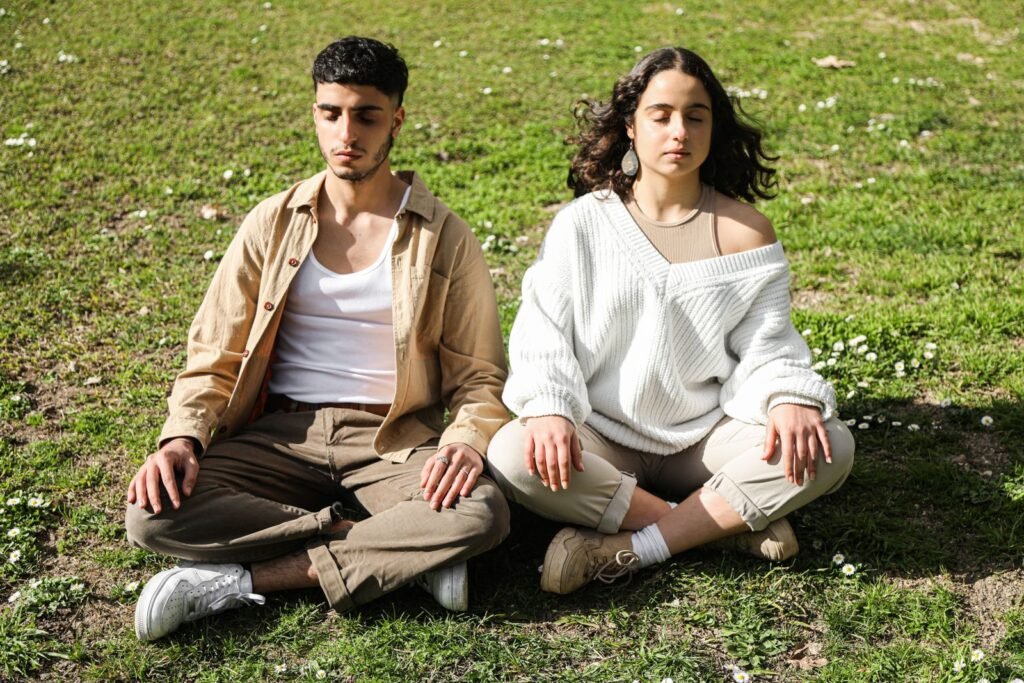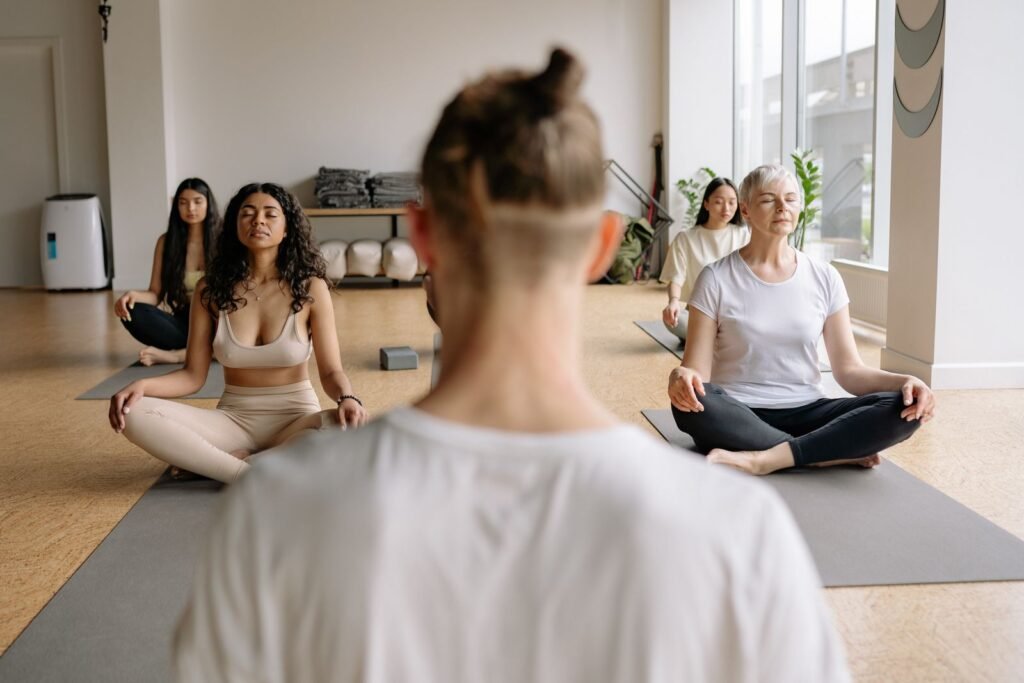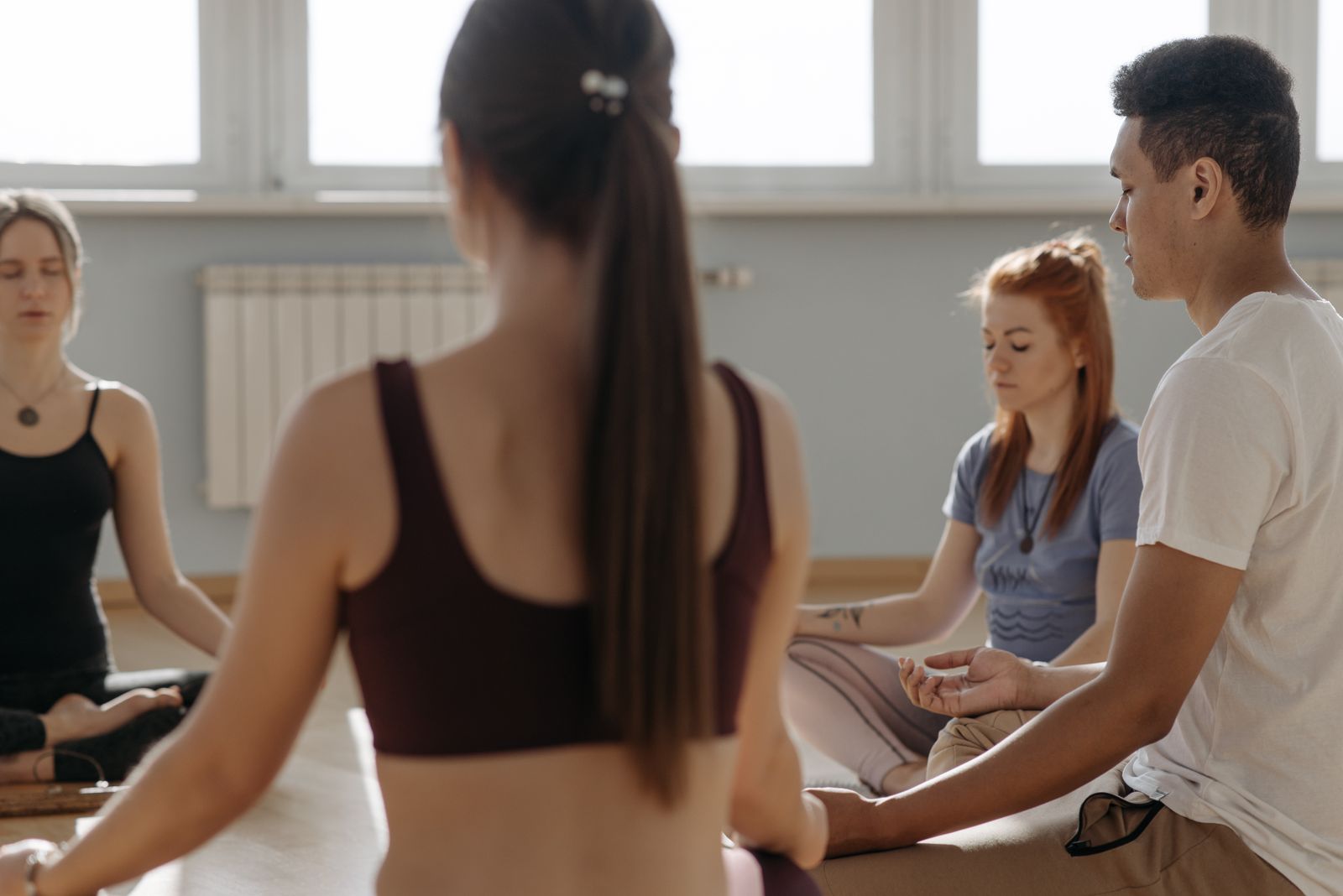
Guided meditation is a practice in which a teacher, therapist, or recorded voice leads you step by step through a meditation session, directing your attention to your breath, body sensations, a visualization, or a specific intention while you sit or lie in a relaxed position. Unlike silent, self-directed meditation, guided meditation gives you a voice to follow, which makes it easier to stay focused, know what to do next, and settle into a calmer state of mind, especially if you are new to meditation or find it hard to quiet a busy mind on your own.
Because the instructions do the work of directing attention, guided meditation removes much of the early guesswork that stops beginners from building a consistent practice. It is one of the most accessible entry points into the wider world of meditation, and it pairs naturally with breathing exercises, gentle movement, and the mental focus techniques taught in traditional yoga.
What Exactly Happens During a Guided Meditation Session?
A typical guided meditation session opens with a settling phase, usually one to three minutes of finding a comfortable seated or lying position and taking a few slow breaths. The guide then directs your attention toward a specific anchor: your breath, the weight of your body against the floor, a body scan moving from head to toe, or a calming mental image such as a beach, forest, or warm light. Throughout the session, the voice periodically brings your attention back whenever it notices you might drift, which mirrors what you would eventually learn to do for yourself in unguided practice.
Sessions close with a gradual return to alertness, often a slow count, a few deeper breaths, and gentle movement of the fingers and toes before opening the eyes. This structure, open, sustain, close, is consistent whether the session lasts five minutes or fifty, and it is one of the reasons guided meditation feels approachable even to someone who has never meditated before.
How Is Guided Meditation Different from Regular Meditation?
Regular or unguided meditation asks you to hold your own attention using an internal cue, such as counting breaths or silently repeating a mantra, with no outside voice directing you. Guided meditation, by contrast, outsources that attention-holding job to a teacher or recording, which lowers the skill threshold needed to get some benefit from the session. Many long-term meditators use guided sessions when they are stressed, distracted, or learning a brand-new technique, and switch to silent practice once the technique feels familiar in the body.
Neither format is objectively superior. Guided meditation tends to suit beginners, people meditating for a specific problem such as sleep or anxiety, and anyone who finds total silence more anxiety-inducing than calming. Unguided, silent practice tends to suit those who already have an established routine and want deeper, self-directed stillness. Many practitioners use both, choosing guided sessions on demanding days and silent sitting on calmer ones, similar to how someone practicing mindfulness meditation might alternate between a recorded body scan and quiet, unstructured awareness.
What Are the Main Benefits of Guided Meditation?
Guided meditation is commonly associated with a calmer nervous system, improved sleep onset, reduced perceived stress, and a better ability to notice and step back from racing thoughts. Research on mindfulness-based practices, which include many guided formats, has linked regular sessions to improvements in attention and emotional regulation, and to reduced physiological markers of stress such as elevated heart rate and shallow breathing. Because a guide is directing the pace and depth of breath, many people also find guided sessions lower muscle tension more reliably than trying to relax unassisted.
Beyond the individual session, the cumulative benefit of returning to guided meditation regularly, even for ten minutes a day, is what most practitioners and teachers describe as the real payoff: a gradually improved baseline of calm that carries into work, relationships, and sleep. It is worth noting that results vary from person to person, and guided meditation is best treated as a complement to, not a replacement for, medical or psychological care when anxiety, depression, or sleep disorders are severe.
How Do You Choose the Right Guided Meditation for Your Goal?
Different goals call for different session structures, and matching the two makes a noticeable difference in how effective a session feels.
- For sleep: choose slow-paced sessions with a body scan or soft visualization, typically 15 to 30 minutes, played at low volume as you lie down.
- For stress or anxiety: choose breath-focused sessions with a calm, steady voice, often 5 to 15 minutes, that can be used mid-day at a desk or before a stressful event.
- For focus and clarity: choose short, seated sessions built around single-point attention, such as counting breaths, ideal before study or work.
- For spiritual or deeper practice: choose longer, tradition-rooted sessions such as kriya yoga guided meditation, which combine breath control, internal energy awareness, and sustained stillness.
Trying two or three different styles in your first week is a practical way to discover which format your mind responds to best, rather than assuming the first session you try is representative of the practice as a whole. This is also a good stage to explore broader types of yoga, since many styles fold guided meditation into their closing minutes differently.
What Is Kriya Yoga Guided Meditation?
Kriya yoga guided meditation is a structured meditation approach rooted in the broader kriya yoga tradition, a lineage of yogic practice that became widely known in the West largely through the teachings of Paramahansa Yogananda in the early twentieth century. The word “kriya” refers to a specific technique or action, and in this context it describes a set of guided breathing and energy-focusing practices designed to move attention systematically along the spine and through the body’s energy centers.
In a guided kriya session, the instructor typically walks you through a specific breath pattern, often a slow, deliberate inhale and exhale paired with mental visualization of energy rising and settling, followed by stretches of silent stillness. Because the technique involves precise sequencing, guided instruction is especially valuable here compared with more freeform meditation styles, since the structure itself is part of what the practice is trying to teach the body and mind. Practitioners commonly describe kriya yoga guided meditation as more intense and more physically noticeable than a basic breath-awareness session, and teachers generally recommend learning the foundational breathing pattern with guidance before attempting longer, unguided kriya sittings.
If you are drawn to this style, it pairs well with foundational practices such as pranayama breathing work and hand positions used in yoga mudra practice, both of which are traditionally taught alongside kriya techniques to help direct and stabilize energy during the sitting.
How Long Should a Guided Meditation Session Be?
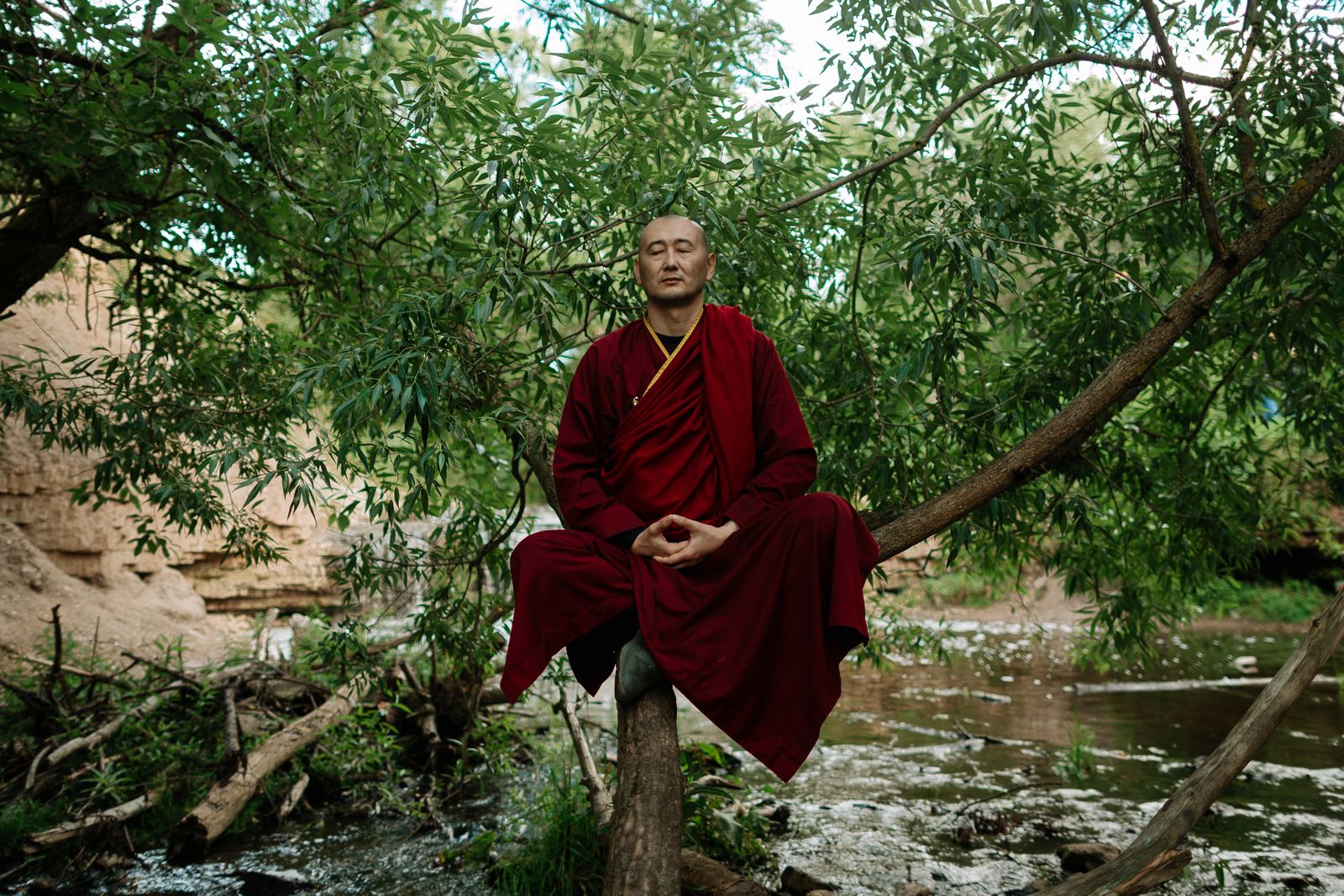
For most beginners, five to ten minutes is a realistic and sustainable starting length, since it is short enough to complete on a busy day but long enough to notice the settling effect of the guided voice. As comfort with sitting grows, many people extend to 15 to 20 minutes, which is a common length for stress-focused or sleep-focused sessions. Longer sessions of 30 to 45 minutes, often used in kriya yoga guided meditation or deeper spiritual practice, are usually approached only after weeks or months of shorter, consistent sessions have built the physical tolerance for sitting still and the mental patience for sustained attention.
Consistency matters more than duration. A five-minute guided session done daily produces more noticeable benefit over a month than a single 40-minute session attempted once and never repeated, largely because the nervous system responds to repeated, predictable cues rather than isolated events.
What Postures Work Best for Guided Meditation?
Guided meditation does not require any particular pose, which is part of why it is so widely accessible. A simple cross-legged seat on a cushion, sitting upright in a chair with feet flat on the floor, and lying flat on the back are all valid starting positions. What matters more than the specific posture is a straight, supported spine when seated, since a collapsed posture makes it harder to breathe deeply and easier to fall asleep unintentionally during a daytime session.
Those exploring more traditional seated postures often progress toward classic meditation asanas such as padmasana (lotus pose) or a simpler cross-legged sukhasana, both of which are commonly paired with guided sessions once the hips and knees have enough flexibility to sit comfortably for longer stretches. If seated postures feel uncomfortable at first, easing into them through general beginner yoga poses that open the hips can help.
Can Guided Meditation Help With Sleep and Anxiety?
Guided meditation is one of the most commonly recommended non-drug tools for easing both occasional sleeplessness and everyday anxiety, largely because the guided voice interrupts the loop of racing thoughts that keeps people awake or on edge. Sleep-focused guided sessions typically slow the pace of instruction, lower vocal pitch and volume, and lean heavily on body scans and visualization rather than active breath counting, all of which nudge the nervous system out of an alert state.
For anxiety, short guided sessions focused on breath awareness can help interrupt the physical symptoms of a stress response, such as a racing heart or shallow breathing, by giving the body a specific, slow rhythm to match, a connection explored further in our guide to yoga for anxiety. It is worth being clear-eyed here: guided meditation is a well-supported complementary tool, not a substitute for therapy or medical treatment when anxiety or insomnia is persistent or severe, and anyone in that situation should speak with a qualified healthcare provider alongside using meditation as a support.
What Tools Do You Need to Start Guided Meditation?
Almost nothing is required to begin. A quiet corner, a cushion or chair, and a way to play audio, whether that’s a phone, a laptop, or a live instructor, covers the basics. Headphones can help block out background noise and make the guiding voice feel closer and more personal, which some practitioners find deepens focus. A journal nearby is optional but useful for jotting down any insights or recurring thoughts that surface immediately after a session, since these notes often reveal patterns worth exploring in later sittings.
Many people starting out benefit from structured, live-guided classes rather than solo recordings, since a real instructor can adjust pacing, answer questions, and correct posture in real time, all of which speeds up the learning curve considerably compared to learning entirely from an app or a video.
How Does Guided Meditation Fit Into a Broader Yoga Practice?
In most traditional yoga systems, meditation is considered one of the final stages of practice, arriving after the body has been prepared through postures and the breath has been steadied through pranayama. Guided meditation works well as a closing component to a physical yoga class, typically five to ten minutes at the end of a session, when the body is already relaxed and the mind is naturally quieter after movement. It is common in slower-paced styles such as hatha yoga and restorative yoga, where extra time built into the class leaves more room for extended stillness at the end, and it also appears in gentler practices like yin yoga.
For those newer to the practice overall, starting with meditation for beginners guidance alongside a gentle physical practice such as yoga for beginners tends to build both the physical comfort and the mental patience needed to sit for a full guided session without excessive fidgeting or frustration. The overall benefits of yoga compound when meditation and movement are practiced together rather than in isolation.
What Common Mistakes Do Beginners Make With Guided Meditation?
The most common mistake is treating any wandering thought as a failure. A wandering mind is normal and expected, even for experienced meditators, and the practice is simply noticing the drift and gently returning attention to the guide’s voice, not preventing the drift from happening at all. Another frequent mistake is choosing a session length that is too ambitious too soon, which leads to physical discomfort, restlessness, and a false impression that meditation “doesn’t work” for that person.
Practicing at inconsistent times of day, or only when already highly stressed, also limits the cumulative benefit that comes from regular practice at a similar time daily. Finally, many beginners skip the settling and closing phases of a session by fast-forwarding an audio track, which removes much of the value, since the transition in and out of stillness is where a lot of the nervous-system benefit actually occurs.
How Do You Build a Consistent Guided Meditation Habit?
Anchoring the practice to an existing daily habit, such as right after brushing your teeth in the morning or immediately before bed, is one of the most reliable ways to make guided meditation stick. Starting with a fixed, short duration, five minutes is enough, removes the decision fatigue of figuring out how long to sit each day, and a consistent time and place trains the mind to settle faster over repeated sessions since the brain begins to associate that specific cue with calm.
Tracking sessions, even with a simple checkmark on a calendar, provides visible momentum that keeps motivation alive during the first few weeks, which is typically when most people either build a lasting habit or quietly abandon the practice. Joining a live class, whether in person or through online yoga classes, adds accountability and expert feedback that a solo app-based routine cannot fully replicate. Pairing meditation with movement-based practices such as vinyasa yoga earlier in the day can also make it easier to sit still later, since the body has already released excess restlessness.
Questions People Ask About Guided Meditation
Is guided meditation as effective as unguided meditation?
Both can be effective, and the better choice depends on experience level and goals. Guided meditation tends to work well for beginners and for specific problems like sleep or stress because the voice keeps attention anchored. Unguided meditation often becomes more effective once a person has built enough familiarity with the anchor technique to hold their own focus without external direction.
Can I fall asleep during guided meditation?
Yes, and for sleep-focused sessions this is often the intended outcome. For daytime sessions meant to build focus rather than induce sleep, falling asleep repeatedly may suggest the chosen time of day isn’t ideal, or that a more upright seated posture rather than lying down would help you stay alert.
Do I need any experience to try kriya yoga guided meditation?
No prior experience is required, though most teachers recommend starting with basic pranayama and breath-awareness meditation first. Because kriya techniques involve a specific, structured breath and energy sequence, having some baseline comfort with slow, controlled breathing makes the guided instructions easier to follow accurately.
How soon will I notice benefits from guided meditation?
Many people notice a calmer, more settled feeling immediately after a single session, particularly in heart rate and breathing pace. Deeper or longer-lasting changes, such as improved sleep quality or reduced baseline anxiety, are more commonly reported after several weeks of consistent daily or near-daily practice.
What’s the difference between guided meditation and mindfulness meditation?
Guided meditation refers to the format, a teacher or recording leading you through the session, while mindfulness meditation refers to a specific technique focused on non-judgmental present-moment awareness. The two overlap often: many guided sessions teach and use mindfulness as their core technique, but guided meditation can also be built around other techniques such as visualization, mantra, or breathwork.
Try This for Yourself
The clearest way to understand what guided meditation can do for your stress, sleep, and focus is to experience a well-taught session yourself, ideally alongside a real instructor who can adjust the pace and technique to your needs. FitStrot’s online yoga classes include guided meditation and pranayama components taught live, so you can build the habit with expert feedback rather than guessing your way through a recording alone.
Related reading: Meditation, Mindfulness Meditation, Meditation for Beginners, Yoga Mudra, and FitStrot’s online yoga classes.