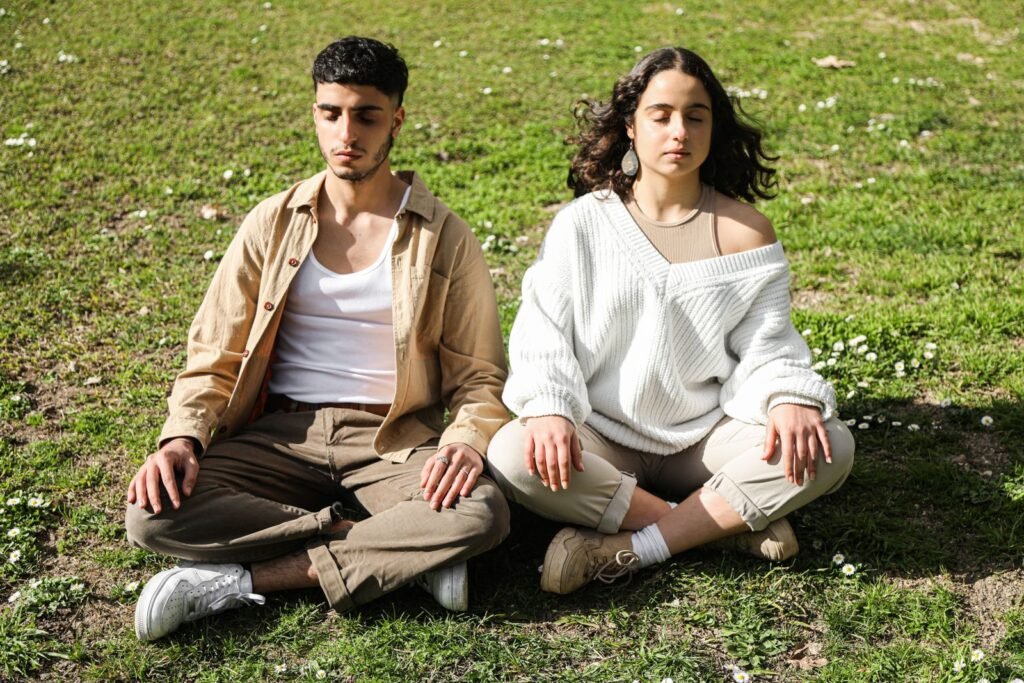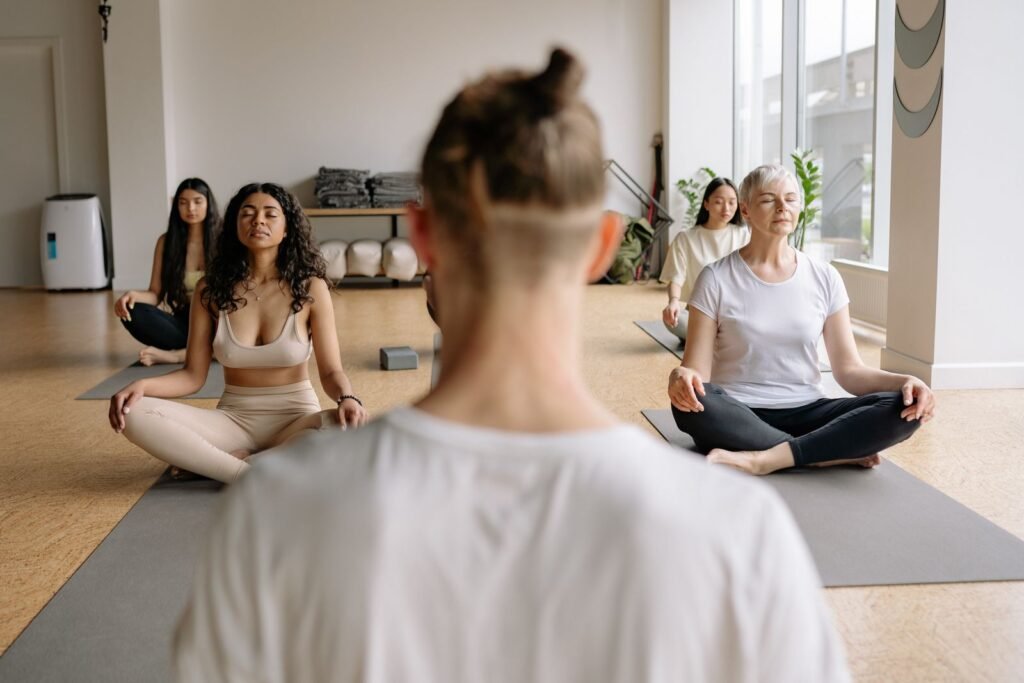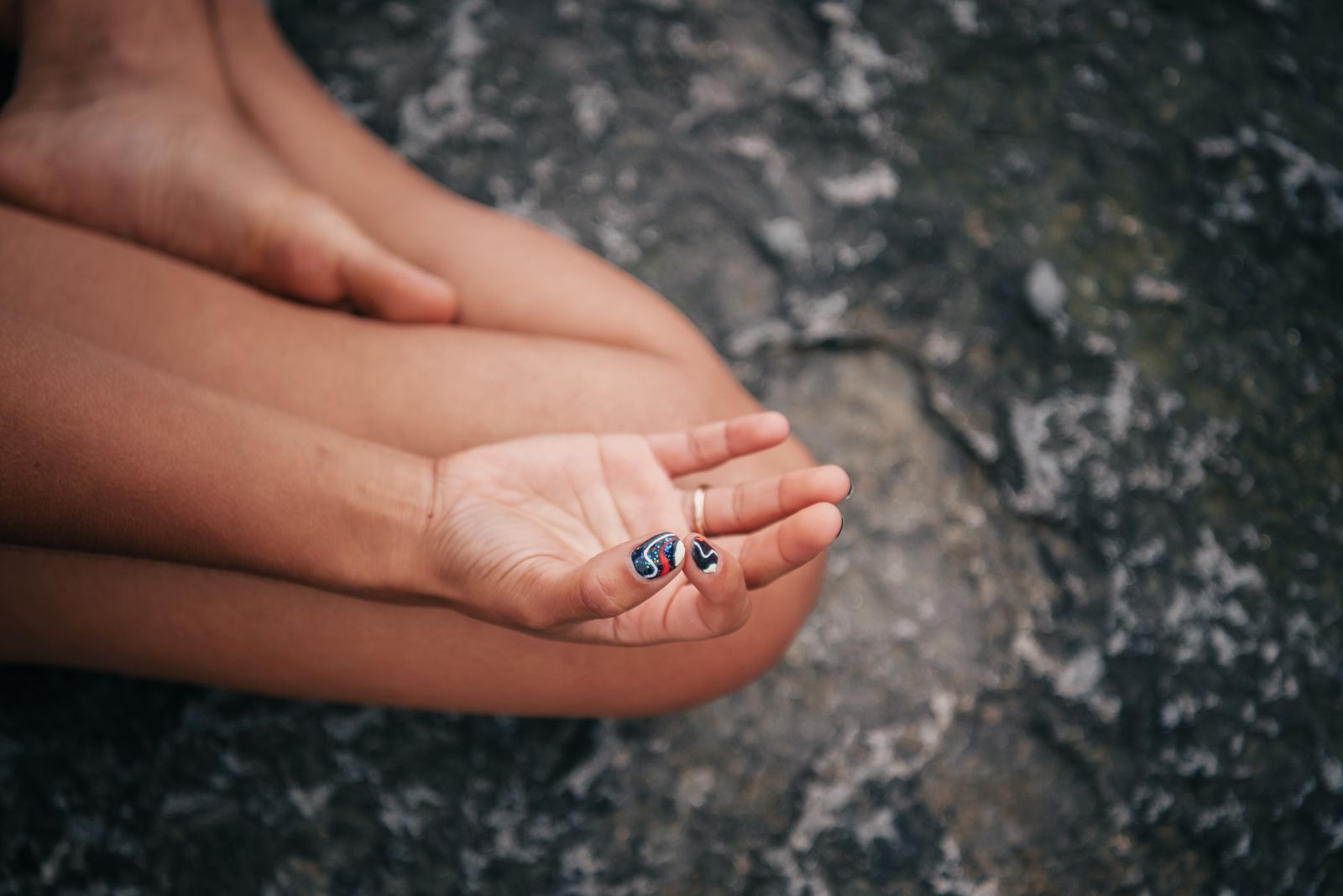
Mudras are precise hand and finger gestures used in yoga and meditation to direct the flow of prana (life energy) through the body, and their benefits are commonly described as calming the nervous system, sharpening focus, easing physical tension, and deepening the results of pranayama and meditation. Rooted in Hatha yoga and Ayurveda, each mudra is believed to correspond to one of the five elements (earth, water, fire, air, and space) and to balance that element when the fingers are joined in specific patterns. They cost nothing, need no equipment, and can be practiced anywhere: at a desk, in traffic, or seated on a mat. This guide walks through what mudras are, the major types, how each one is practiced, and how to build them into a daily routine alongside yoga mudra practice more broadly.
What Exactly Is a Mudra?
The word “mudra” comes from Sanskrit and is generally translated as “seal,” “gesture,” or “mark.” In the yogic tradition, a mudra is a deliberate positioning of the hands, fingers, eyes, or body that is said to lock and direct energy within specific channels, or nadis. Most mudras used in modern yoga and meditation are hasta mudras (hand mudras), formed by touching the tips of specific fingers to the thumb or to each other. Classical Hatha yoga texts such as the Hatha Yoga Pradipika and Gheranda Samhita describe dozens of mudras, some involving the whole body, though the finger-based mudras are the ones most people encounter in a modern yoga or meditation class.
How Do Mudras Work According to Yogic Theory?
Yogic anatomy holds that each finger represents one of five elements: the thumb is fire, the index finger is air, the middle finger is space (or ether), the ring finger is earth, and the little finger is water. When two fingers touch, the theory goes, it creates a subtle circuit that either increases or decreases the influence of that element in the body. This framework is a traditional and philosophical model rather than a claim verified by modern biomedical science, so it’s best understood as a lens for practice and self-observation rather than a clinical mechanism. That said, the physical stillness and focused attention required to hold a mudra do have a documented calming effect on the mind, which is where most of the practical benefit comes from.
What Are the Physical and Mental Benefits of Practicing Mudras?
People who practice mudras regularly commonly report several benefits, though it’s worth noting that rigorous clinical research on mudras specifically is still limited compared to research on yoga asana or pranayama:
- Calmer nervous system: Holding a steady hand position during breathing or meditation is thought to support the parasympathetic (“rest and digest”) response, which many practitioners experience as a felt sense of calm within minutes.
- Improved focus and concentration: The act of forming and maintaining a precise gesture gives the mind a small, absorbing task, which can reduce mental wandering during meditation.
- Better breath awareness: Many mudras are paired with pranayama, and the hand position acts as a physical anchor that keeps attention on the breath.
- Support for specific complaints: Individual mudras are traditionally associated with specific concerns, such as digestive discomfort, fatigue, or anxious energy, though these associations come from traditional practice rather than controlled trials.
- A portable meditation tool: Because mudras require no equipment and can be done seated, standing, or lying down, they’re one of the most accessible entry points into a consistent meditation for beginners practice.
If you’re managing a specific medical condition, mudras should be treated as a complementary practice alongside, not a replacement for, medical care.
What Are the Main Types of Mudras in Yoga?
Different classification systems exist, but most teachers group mudras into five broad categories:
- Hasta mudras (hand gestures): The most common category and the focus of this article, including gyan mudra, prana mudra, and vayu mudra.
- Mana mudras (head and facial gestures): Such as shambhavi mudra (soft, upward gaze), used in advanced meditation and pranayama.
- Kaya mudras (whole-body gestures): Combining posture, breath, and focus, such as viparita karani (a gentle inversion) or yoga mudrasana.
- Bandha mudras (energy lock gestures): Involving the “locks” of the body, such as mula bandha (root lock) and jalandhara bandha (chin lock), typically used with pranayama.
- Adhara mudras (perineal gestures): Advanced practices tied to the base of the spine, generally taught only under direct guidance from an experienced teacher.
For most beginners building a home practice, hasta mudras are the natural starting point because they can be practiced while seated in sukhasana or any comfortable cross-legged position, and combined with simple pranayama breathing techniques.
What Is Gyan Mudra and What Is It Used For?
Gyan mudra, also spelled gyaan or jnana mudra, is formed by touching the tip of the index finger to the tip of the thumb while keeping the other three fingers extended and relaxed. It’s the most widely recognized mudra, often the default hand position seen in meditation imagery. In yogic theory, joining the “air” finger (index) to the “fire” finger (thumb) is said to stimulate knowledge, memory, and calm concentration, which is reflected in its Sanskrit name: “gyan” means knowledge. Practitioners typically hold gyan mudra during seated meditation or pranayama, resting the backs of the hands on the knees, palms facing upward. It is generally considered safe for daily practice and is often the first mudra taught to new students.
What Is Vayu Mudra and When Should You Practice It?
Vayu mudra is formed by folding the index finger down to touch the base of the thumb, then gently pressing the thumb over the folded index finger, while the remaining three fingers stay extended. “Vayu” means air or wind, and this mudra is traditionally used to pacify excess air element in the body, which some practitioners associate with bloating, joint stiffness, tremors, or a restless, scattered feeling. Unlike gyan mudra, vayu mudra is generally recommended for shorter, targeted sessions of around 15 to 45 minutes rather than continuous daily practice, and traditional guidance suggests discontinuing it once symptoms ease. As with any mudra addressing a specific physical complaint, persistent symptoms deserve a conversation with a healthcare provider rather than reliance on the gesture alone.
What Is Prana Mudra and Why Is It Called the “Mudra of Life”?
Prana mudra is formed by touching the tips of the ring finger and little finger to the tip of the thumb, while the index and middle fingers stay extended. It joins the earth and water elements with fire, and is one of the mudras most commonly recommended for general vitality, said to activate the root chakra and reduce feelings of fatigue or low energy. Many practitioners pair prana mudra with slow diaphragmatic breathing for five to ten minutes in the morning as a way to set an intentional tone for the day, often as part of a broader morning yoga routine.
What Is Apana Mudra and How Does It Relate to Digestion?
Apana mudra brings the tips of the middle finger and ring finger to touch the thumb, with the index and little fingers extended. “Apana” refers to the downward-moving energy associated with elimination and detoxification in yogic physiology. It’s traditionally practiced to support regular digestion and is sometimes taught alongside twisting postures or gentle core work as part of a broader routine for gut health, similar to how certain postures are recommended in guides on yoga for digestion.
What Is Prithvi Mudra and What Does It Support?
Prithvi mudra, or the “earth mudra,” is formed by touching the tip of the ring finger to the tip of the thumb, with the other three fingers extended. It’s associated with grounding, stability, and, in traditional texts, with supporting healthy weight and tissue nourishment. Because it’s linked to the earth element, teachers often recommend practicing it while seated directly on the floor or ground, reinforcing the sense of physical stability that pairs naturally with grounding postures like tadasana (mountain pose).
What Is Shunya Mudra and How Is It Used?
Shunya mudra, the “mudra of emptiness” or “heaven mudra,” is formed by folding the middle finger down to the base of the thumb and pressing the thumb gently over it, while the other fingers remain extended. It represents the space or ether element and is traditionally used to address a heavy or “blocked” sensation in the ears or head. Some practitioners use it briefly during long-haul flights or after swimming, though, as with all mudras addressing physical symptoms, it should be treated as a supportive practice rather than a medical intervention.
What Is Yoga Mudrasana and How Is It Different from Hand Mudras?
Yoga mudrasana, sometimes translated as the “psychic union pose,” is a full-body posture rather than a finger gesture. It’s practiced seated, usually in padmasana (lotus pose) or a simple cross-legged position, with the arms reaching behind the back to clasp the opposite wrist or forearm, followed by a forward fold that brings the forehead toward the floor. The benefits of yoga mudrasana are commonly described as stretching the spine and shoulders, gently compressing the abdominal organs to stimulate digestion, calming the mind through the forward fold, and symbolically representing surrender and inward focus. Because it involves a deep forward fold with the arms bound behind the back, it’s best approached gradually and is not recommended during pregnancy, after recent abdominal surgery, or for anyone with a significant back injury without a teacher’s guidance.
How Do You Practice a Mudra Correctly?
The mechanics of any hasta mudra follow a similar pattern, and getting the basics right matters more than memorizing dozens of variations:
- Sit comfortably. Choose a seated position you can hold without strain, whether that’s a chair, sukhasana, or padmasana.
- Keep the spine tall but relaxed. Slouching restricts the breath, which undercuts the point of the practice.
- Rest the hands on the knees or thighs, palms generally facing upward for most calming mudras, though some traditions vary this.
- Form the gesture gently. Fingers should touch with light contact, not pressure. Clenching defeats the purpose.
- Breathe slowly and evenly. Most teachers recommend pairing the mudra with a simple breath count, such as a four-count inhale and six-count exhale.
- Hold for 5 to 45 minutes, depending on the mudra and your experience level, building duration gradually rather than starting at the longest recommended time.
How Long Should You Hold a Mudra Each Day?
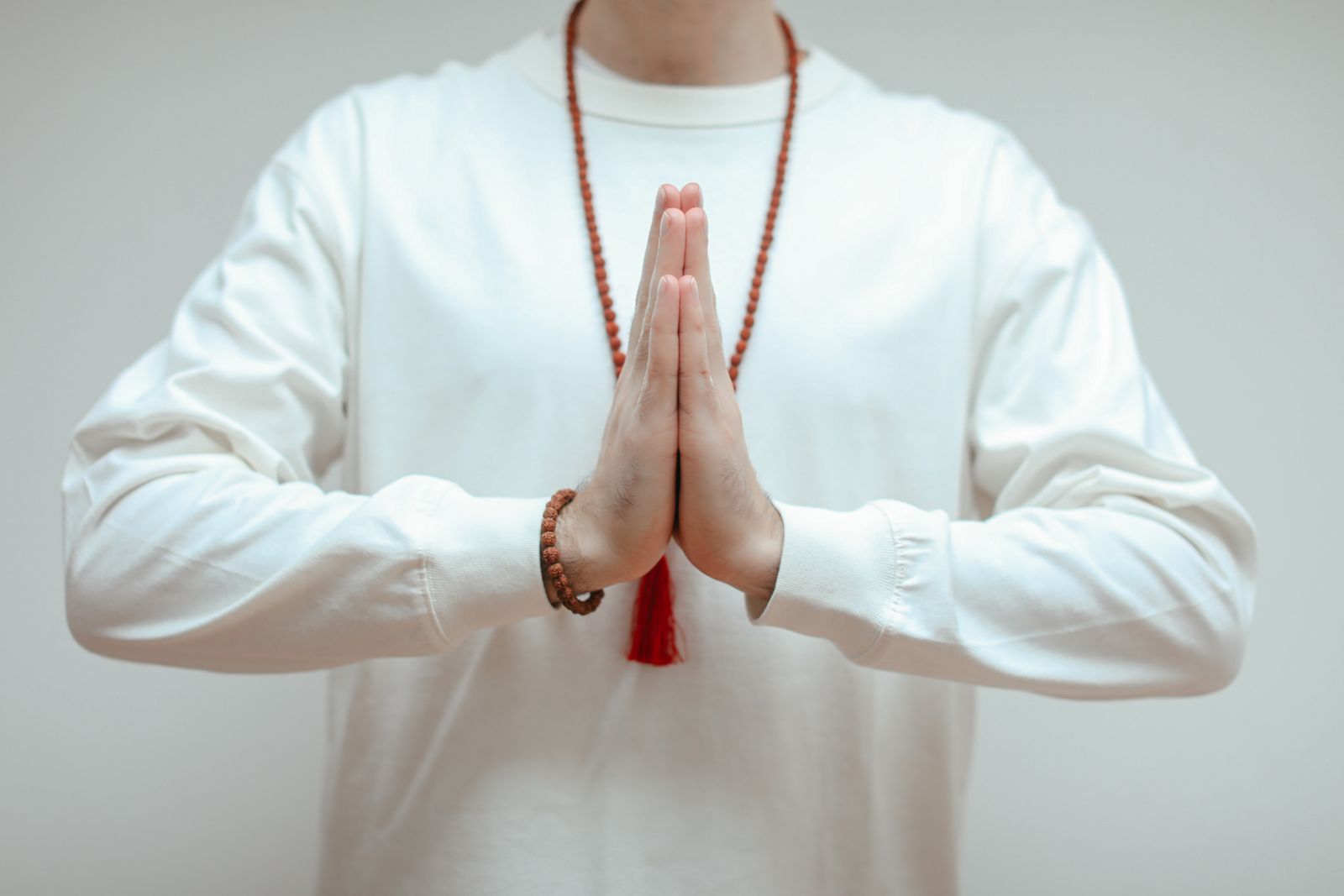
There’s no universal rule, but traditional guidance and modern teaching converge on a few general ranges. Beginners typically start with 5 to 10 minutes once or twice a day, most often paired with seated meditation or pranayama breathing techniques. More experienced practitioners working with a specific mudra for a specific concern, such as vayu mudra for a restless feeling, often practice for 15 to 45 minutes at a stretch. Mudras intended for general balance, like gyan or prana mudra, are generally considered safe for longer or even daily practice, while mudras targeting acute symptoms are usually meant to be practiced until the symptom eases, then set aside.
Can Mudras Be Combined with Pranayama and Meditation?
Yes, and in the traditional framework this is actually the primary way mudras are meant to be used rather than as a stand-alone practice. A typical sequence might begin with a few minutes of alternate nostril breathing (nadi shodhana), transition into a seated mudra such as gyan or prana mudra, and settle into silent meditation while holding the gesture. The hand position acts as a physical reminder to stay present, which is especially useful for beginners whose minds tend to wander in the early stages of meditation for beginners practice. Many online yoga classes now build a short mudra segment into the closing minutes of a session for exactly this reason.
Are There Any Precautions or Mistakes to Avoid with Mudras?
Mudras are low-risk compared to physical asana, but a few common mistakes reduce their effectiveness or, in rare cases, cause minor discomfort:
- Pressing too hard. Fingers should meet with light, steady contact. Firm pressure held for long periods can cause joint fatigue, particularly in the thumb.
- Holding tension in the shoulders or jaw. The point of a mudra is calm focus, so the rest of the body, especially the shoulders, face, and jaw, should stay soft.
- Overusing symptom-specific mudras. Gestures like vayu or shunya mudra are traditionally meant for targeted, time-limited use, not indefinite daily practice.
- Expecting immediate or dramatic results. Mudras work subtly and cumulatively; treating them as a quick fix sets up unrealistic expectations.
- Ignoring persistent symptoms. A mudra is a complementary practice. Ongoing pain, digestive issues, or anxiety deserve proper medical evaluation, not just a hand gesture.
How Can Beginners Start a Simple Daily Mudra Practice?
A sustainable starting routine doesn’t need to be complicated. Begin with a single mudra, such as gyan mudra, practiced for five minutes each morning while seated quietly. Once that becomes a comfortable habit, usually after one to two weeks, add a second mudra, perhaps prana mudra in the evening to unwind. Keep a simple log of how you feel before and after each session; this kind of self-observation is far more useful for judging what works for your body than following someone else’s schedule exactly. Pairing this with a broader foundation in types of yoga and the basics of the overall benefits of yoga helps mudra practice feel like one part of a coherent routine rather than an isolated trick.
Questions People Ask About Mudras and Benefits
What is the most powerful mudra in yoga?
There’s no single “most powerful” mudra since different gestures serve different purposes. Gyan mudra is the most widely practiced because of its general calming and focus-supporting effects, but practitioners working on digestion, energy, or grounding often find prana, apana, or prithvi mudra more relevant to their specific goals.
Can mudras be practiced without meditation?
Yes. While mudras are traditionally paired with meditation or pranayama, they can also be held briefly during a stressful moment, a commute, or a work break to encourage a slower breath and calmer state. The benefit is generally stronger when combined with focused breathing, but standalone use is common and safe.
Are mudra benefits backed by scientific research?
Research specifically on hand mudras is limited compared to research on yoga asana or breathing practices, though some preliminary studies have explored their role as a complementary wellness practice. Most claimed benefits come from centuries of traditional yogic and Ayurvedic practice and from practitioners’ self-reported experience rather than large randomized clinical trials.
How many mudras are there in yoga?
Classical texts describe dozens of mudras, with some sources listing more than fifty variations across hand, body, and eye gestures. In practical modern teaching, however, a core set of around ten to twelve hand mudras, including gyan, vayu, prana, apana, prithvi, and shunya mudra, cover most everyday needs.
Can children or older adults practice mudras safely?
Generally yes, since mudras involve gentle finger positions rather than physical exertion. Older adults with arthritis or limited finger mobility may need to adapt the pressure or hold time, and children typically benefit most from simple, short sessions of a minute or two rather than extended holds.
What is the difference between a mudra and a bandha?
A mudra is typically a gesture involving the hands, face, or whole body used to direct focus and energy, while a bandha is specifically an internal muscular “lock,” such as at the pelvic floor, abdomen, or throat, used mainly during pranayama to control the movement of breath and energy within the torso. Some advanced practices combine both simultaneously.
Try This for Yourself
Reading about mudras only goes so far; the calming and focusing effects are something you feel through consistent practice, not something you can fully understand from a page. If you’d like a guided introduction to mudras, pranayama, and meditation with a real instructor watching your form and pacing, join a live session through FitStrot’s online yoga classes and build the habit with proper support from day one.
Related reading: Yoga mudra, pranayama breathing techniques, meditation for beginners, benefits of yoga, and online yoga classes.