Breathing exercises are structured patterns of inhalation, retention, and exhalation, drawn largely from the yogic practice of pranayama, that are used to calm the nervous system, improve lung function, and sharpen focus. Unlike the shallow, automatic breathing most people do all day, these exercises slow the breath down, extend it, or add rhythm and resistance to it, prompting the body to shift out of a stressed state and into a more relaxed one. They range from simple techniques like belly breathing that beginners can learn in minutes to advanced pranayama practices like kapalbhati and bhastrika that take weeks of guided practice to master safely.
What Are Breathing Exercises, Exactly?
At the most basic level, a breathing exercise is any deliberate change to your normal breathing pattern, done for a specific physical or mental effect. In yoga, this deliberate breath control is called pranayama, a Sanskrit term often broken down as “prana” (life force or breath) and “ayama” (extension or control). The practice is one of the eight limbs described in the classical yoga tradition, sitting alongside physical postures (asana) and meditation (dhyana) as a core pillar of the discipline.
Breathing exercises are not one single technique but a family of them, each with a different mechanism. Some, like diaphragmatic breathing, simply slow and deepen the breath. Others, like anulom vilom, alternate the breath between nostrils to balance the nervous system. Still others, like kapalbhati, use short, forceful exhales to energize the body rather than calm it. Understanding which category a technique falls into (calming, energizing, or balancing) is the first step to using breathing exercises effectively rather than randomly.
Why Do Breathing Exercises Work?
Breathing is one of the few bodily functions that runs automatically but can also be controlled consciously, which makes it a direct access point to the autonomic nervous system. Slow, extended exhalation is commonly cited as activating the parasympathetic nervous system, the branch responsible for the “rest and digest” state, which is why techniques that lengthen the exhale relative to the inhale tend to feel calming almost immediately. Faster, more forceful breathing patterns, by contrast, tend to have a more stimulating, alerting effect.
This is also why breathing exercises are taught as a foundation before more advanced pranayama work. Learning to notice your breath, slow it down, and direct it into different parts of the torso builds the awareness needed for more complex techniques later. Many yoga teachers describe the breath as a bridge between the body and mind: change the breath consciously, and the mental and physical state tends to follow.
What Are 5 Basic Yoga Breathing Exercises for Beginners?
If you are new to pranayama, these five techniques form a practical starting sequence. Each is described here at a beginner level; more advanced variations exist once the basics feel comfortable.
1. Diaphragmatic (Belly) Breathing
Sit or lie down comfortably, place one hand on your chest and one on your belly, and breathe so that the belly hand rises more than the chest hand. This retrains the diaphragm to do most of the work of breathing instead of the shoulders and upper chest, which is how most people breathe under stress. Five to ten minutes of belly breathing before bed or first thing in the morning is a common way to build the habit.
2. Ujjayi (Ocean Breath)
Ujjayi involves a slight constriction at the back of the throat, similar to fogging up a mirror but done with the mouth closed, which creates a soft, audible, ocean-like sound on both the inhale and the exhale. It is frequently used throughout asana practice, particularly in vinyasa yoga and ashtanga yoga, because the audible rhythm helps practitioners stay present and pace their movement to their breath.
3. Anulom Vilom (Alternate Nostril Breathing)
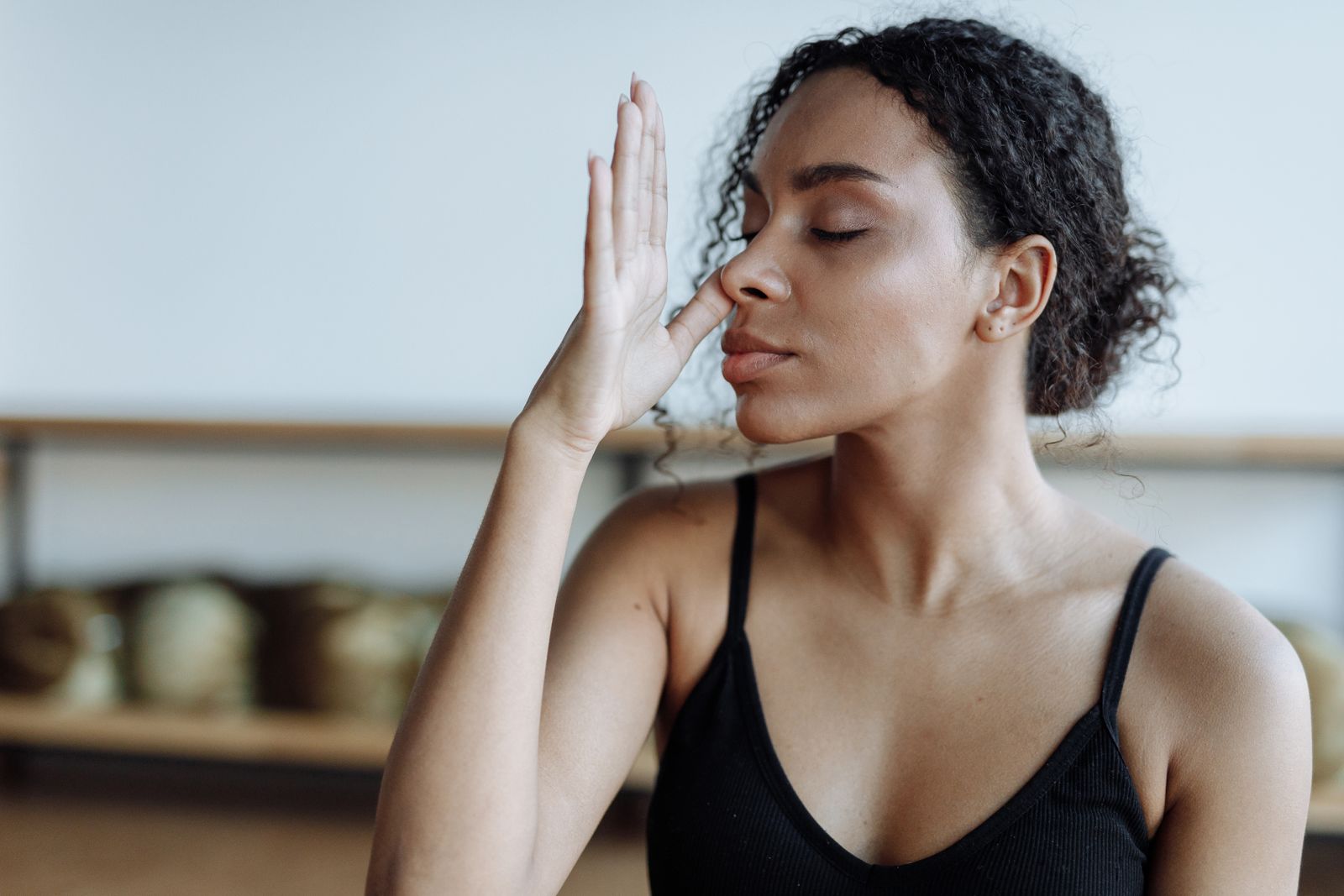
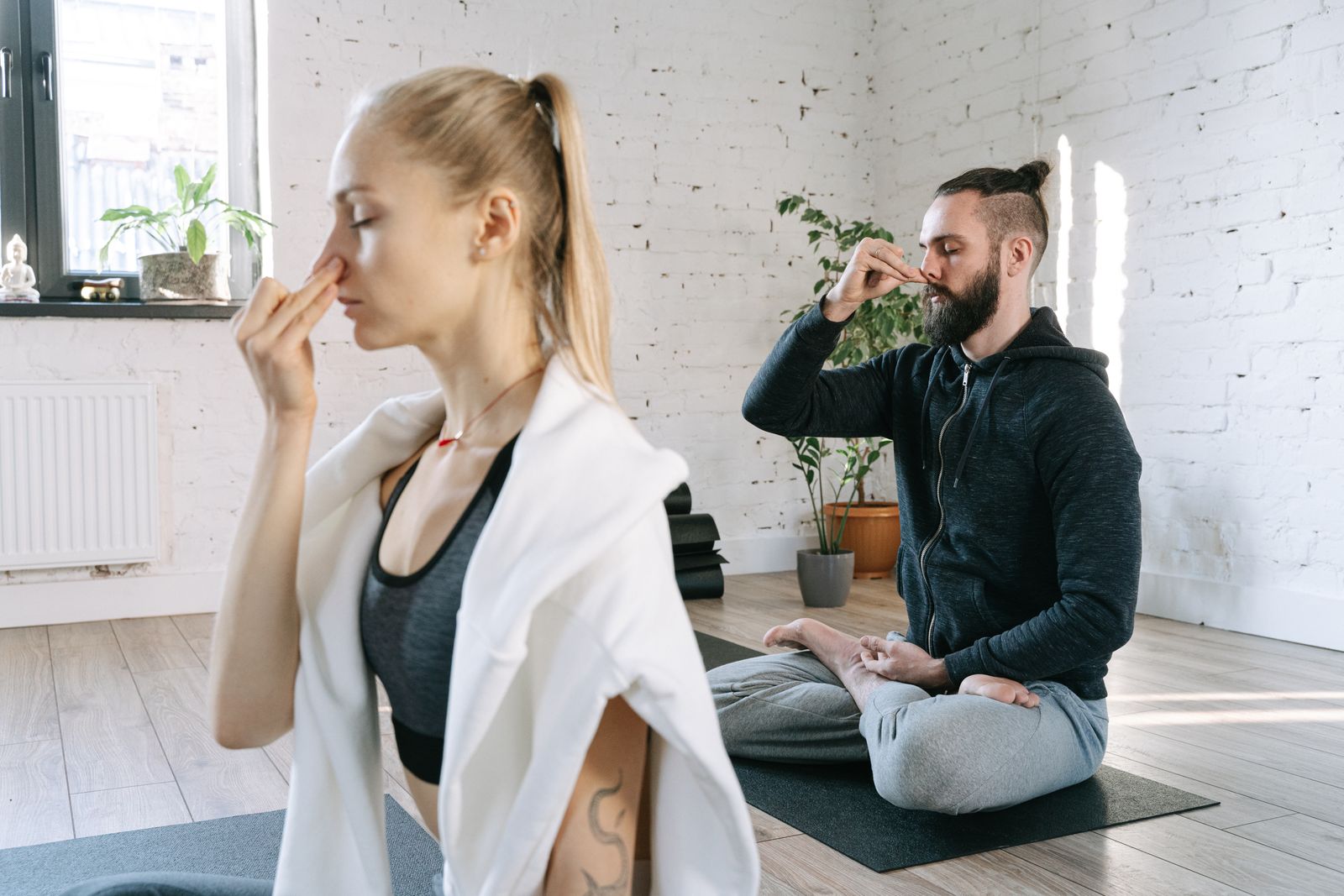
Using the thumb and ring finger to alternately close one nostril at a time, this technique is widely practiced for its calming, balancing effect on the mind. A full explanation of the hand position, breath ratio, and benefits is covered in this guide to anulom vilom, but the core idea is simple: inhale through one nostril, close it, exhale through the other, then reverse.
4. Kapalbhati (Skull-Shining Breath)
This technique uses short, sharp, forceful exhales through the nose powered by pulling the navel in, with the inhale left completely passive in between. It is more physically active than the calming techniques on this list and is generally introduced after a practitioner is comfortable with basic breath control; the full technique, benefits, and precautions are covered in this kapalbhati guide.
5. Bhramari (Humming Bee Breath)
Bhramari involves closing the ears with the thumbs, closing the eyes, and humming gently on the exhale, creating a soothing internal vibration that many practitioners find quickly settles a racing mind. It is often used as a closing technique at the end of a pranayama session; the step-by-step method is covered in this bhramari pranayama guide.
What Do Basic Yoga Breathing Exercises Look Like With Pictures?
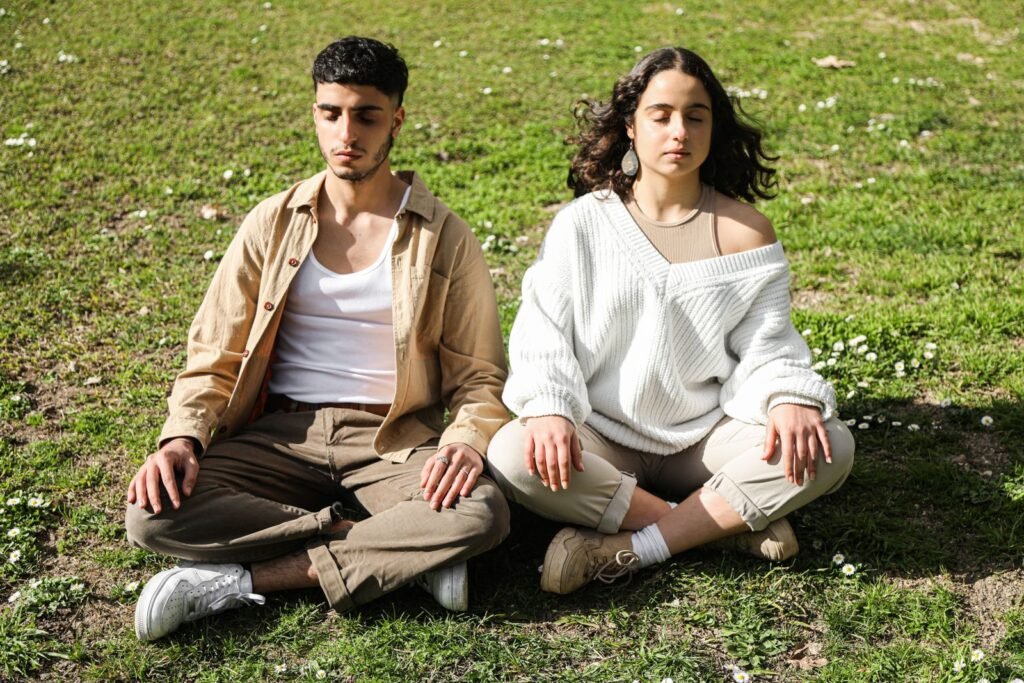
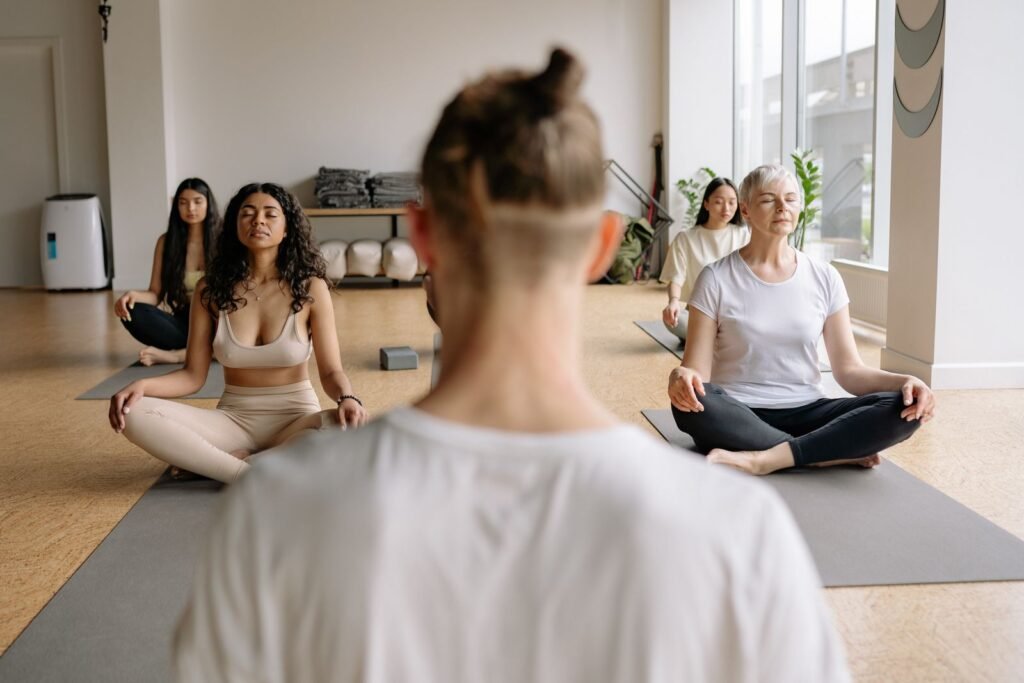
Visual reference matters for breathing exercises because posture and hand position are as important as the breath pattern itself. In most seated pranayama photographs, you will notice a few consistent details: an upright, tall spine (never slouched, since a rounded back restricts diaphragm movement), a relaxed jaw and face, and hands resting either on the knees in a simple mudra or actively engaged in nostril work, as seen in anulom vilom.
For techniques like kapalbhati and bhastrika, images typically show the practitioner seated in Sukhasana or Padmasana with the hands resting lightly on the knees, since the visible movement in these techniques comes from the belly, not the arms. If you are learning from pictures alone, pay close attention to shoulder position: shoulders creeping up toward the ears is one of the most common form mistakes across nearly every seated breathing exercise.
How Did Baba Ramdev Popularize Yoga Breathing Exercises?
Yoga teacher Baba Ramdev is widely credited with bringing pranayama to a mass television audience in India, teaching a daily sequence of breathing techniques including kapalbhati, anulom vilom, and bhastrika as part of large-scale yoga camps and morning programs. His teaching style typically groups several pranayama techniques into one continuous morning routine, moving from more energizing practices like kapalbhati and bhastrika toward calming ones like anulom vilom and bhramari, a sequencing principle that many yoga teachers still follow today regardless of lineage.
It’s worth noting that the core techniques he teaches, such as kapalbhati and anulom vilom, are traditional practices with roots that predate any single modern teacher; what popularized them at this scale was the accessible, repeatable format of a guided morning sequence. As with any traditional practice popularized for a general audience, the benefits commonly described in this context should be understood as widely reported outcomes of consistent practice rather than guaranteed medical results.
What Physical Benefits Do Breathing Exercises Offer?
Consistent pranayama practice is associated with a range of physical effects, most of which relate to how the technique influences the respiratory muscles and the autonomic nervous system.
Improved Lung Capacity and Efficiency
Techniques that emphasize slow, deep breathing train the diaphragm and intercostal muscles to work more efficiently, which can improve how much air the lungs move per breath over time. This is one reason breathing exercises are often recommended as a complementary practice for people managing respiratory concerns; a dedicated look at this is covered in yoga for asthma.
Lower Resting Heart Rate and Blood Pressure
Slow breathing patterns, particularly those that extend the exhale, are commonly associated with a reduction in heart rate and blood pressure during and shortly after practice, consistent with parasympathetic nervous system activation. This connection is explored further in yoga for blood pressure.
Better Core and Postural Muscle Engagement
Active techniques like kapalbhati and bhastrika engage the abdominal muscles repeatedly through forceful exhalation, which can function as a subtle form of core conditioning alongside their traditional respiratory purpose.
What Mental and Emotional Benefits Do Breathing Exercises Offer?
Beyond the physical effects, breathing exercises are widely practiced for their impact on mental state, largely because breath and mental state are so closely linked.
Reduced Stress and Anxiety
Slow, controlled breathing techniques are commonly cited as a fast, accessible way to interrupt the stress response, since a racing breath rate and a racing mind tend to reinforce each other. This makes pranayama a practical complement to broader stress-management routines; see yoga for stress and yoga for anxiety for a deeper look.
Improved Focus and Mental Clarity
Techniques like kapalbhati are traditionally described as sharpening alertness and mental clarity, which is why they are typically practiced in the morning rather than before sleep. Slower techniques, meanwhile, tend to support the kind of settled, present-moment focus that carries directly into meditation for beginners.
Better Sleep Quality
Calming techniques such as bhramari and extended-exhale breathing are frequently used as part of a wind-down routine before bed, since they encourage the same parasympathetic state that supports falling asleep. This pairs naturally with practices covered in yoga for sleep.
How Do You Build a Daily Breathing Exercise Routine?
A sustainable pranayama routine does not need to be long or complicated to be effective. A common beginner structure looks like this:
- Morning (5-10 minutes): Begin with a few rounds of kapalbhati or bhastrika for energy, then 5-10 rounds of anulom vilom to balance the nervous system before the day begins.
- Midday (2-3 minutes): A short break of diaphragmatic breathing or box breathing (a four-count inhale, hold, exhale, hold pattern) to reset focus during a stressful stretch of the day.
- Evening (5-10 minutes): Bhramari or slow, extended-exhale breathing to transition out of an active day and prepare the body for rest.
Consistency matters more than duration. Five focused minutes practiced daily generally produces more noticeable change over a few weeks than a single 40-minute session done occasionally. Many practitioners fold this routine into a broader morning yoga routine that also includes a short sequence of asanas.
What Role Do Mudras Play in Breathing Exercises?
Hand gestures, or mudras, are frequently paired with pranayama to deepen focus and direct subtle energy, according to traditional yogic teaching. During seated breathing practices, it is common to see practitioners holding Gyan Mudra (thumb and index finger touching, other fingers extended) or Chin Mudra (a similar gesture with the palm facing down), both of which are simple enough for complete beginners to hold throughout an entire practice. A closer look at these gestures and their traditional meanings is available in this guide to yoga mudra.
While mudras are not strictly necessary to get the physiological benefits of a breathing exercise, many teachers include them because holding a specific hand position gives the mind something steady to rest on, which supports the concentration side of the practice alongside the physical breath control.
Who Should Be Careful With Breathing Exercises?
Most gentle breathing exercises, like diaphragmatic breathing and slow alternate nostril breathing, are considered safe for the vast majority of people. However, the more forceful techniques carry precautions worth knowing before you begin.
- Pregnant individuals should avoid forceful abdominal techniques like kapalbhati and bhastrika, and are generally advised to stick with gentle, slow breathing instead.
- People with high blood pressure, heart conditions, or a history of stroke should consult a physician before attempting fast or forceful pranayama techniques.
- Anyone with a hernia, recent abdominal surgery, or significant respiratory illness should approach vigorous breath work cautiously and ideally under supervision.
- Beginners who feel dizzy or lightheaded during any technique should stop immediately, return to normal breathing, and rest until the sensation passes.
If you have an underlying health condition or are simply new to pranayama, learning under the guidance of a certified online yoga classes instructor is a safer route than learning purely from videos, since your pace and form can be corrected in real time.
How Do Breathing Exercises Fit Into a Broader Yoga Practice?
Pranayama is rarely treated as a standalone activity in traditional yoga; it typically sits between the physical postures and the meditative practices that follow. A common full session might begin with a short warm-up of gentle stretches, move into a handful of pranayama rounds to settle the nervous system, and close with seated meditation. This structure reflects the broader eight limbs of yoga framework, where breath control (pranayama) is positioned as preparation for concentration and meditation rather than an end in itself.
Different styles of yoga weave breathing exercises in differently. In hatha yoga, pranayama is often taught as its own dedicated segment of class. In more movement-based styles like vinyasa yoga, ujjayi breath is woven continuously through the postures themselves rather than practiced separately. Knowing which style you are drawn to can help you decide how much dedicated pranayama time to build into your week versus how much you will absorb through the breath work embedded in a moving practice.
Questions People Ask About Breathing Exercises
What Is the Best Breathing Exercise for Beginners?
Diaphragmatic (belly) breathing is generally considered the best starting point because it requires no special hand positions or counting, just breathing so the belly rises more than the chest. Once this feels natural, most teachers recommend moving on to anulom vilom, since its slow, structured pattern builds on the same foundation of controlled, even breathing.
How Long Should You Practice Breathing Exercises Each Day?
Five to fifteen minutes a day is a common and realistic target for beginners, and this can be split across a short morning and evening session rather than done all at once. Consistency matters far more than duration, so a short daily practice generally produces better results than an occasional long one.
Can Breathing Exercises Replace Medical Treatment?
No. Breathing exercises are widely used as a complementary practice alongside medical care, particularly for stress, mild anxiety, and general respiratory wellness, but they are not a substitute for prescribed treatment. Anyone with a diagnosed medical condition should continue following their physician’s guidance and treat pranayama as a supportive addition, not a replacement.
Is It Normal to Feel Dizzy When Starting Breathing Exercises?
Mild lightheadedness can happen when beginners breathe too fast, hold the breath too long, or practice forceful techniques like kapalbhati before building up gradually. If this happens, stop, return to normal breathing, and rest; it usually signals the pace needs to slow down rather than indicating anything serious, though persistent dizziness should be discussed with a doctor.
What Is the Difference Between Pranayama and Regular Deep Breathing?
Regular deep breathing is simply taking a slower, fuller breath without any specific structure. Pranayama refers to a defined set of traditional techniques, each with its own ratio of inhale, retention, and exhale, and often a specific hand position or nostril pattern, developed within the yogic tradition for particular physical and mental effects.
Try This for Yourself
Reading about breathing exercises can only take you so far; the real shift happens when you practice consistently with feedback on your pace, posture, and technique. If you would like guided instruction in pranayama alongside a full yoga practice, explore FitStrot’s online yoga classes and learn safely from an experienced instructor from the comfort of your home.
Related reading: Anulom Vilom Pranayama, Kapalbhati Yoga Guide, Bhramari Pranayama Benefits, Yoga Mudras Explained, and FitStrot Online Yoga Classes.