The 8 limbs of yoga are the eight-part path outlined by the sage Patanjali in the Yoga Sutras of Patanjali: yama (ethical restraints), niyama (personal observances), asana (posture), pranayama (breath control), pratyahara (withdrawal of the senses), dharana (concentration), dhyana (meditation), and samadhi (absorption or enlightenment). Together they’re known as Ashtanga Yoga, literally “eight-limbed yoga” in Sanskrit, and they describe a complete, step-by-step framework for moving from ethical living through physical practice into deep meditative awareness. Modern yoga classes usually focus on just one limb, asana, but Patanjali intended all eight to work together as a single system for a disciplined, meaningful life.
What Are the 8 Limbs of Yoga?
The 8 limbs of yoga are a sequential framework described in the second chapter of the Yoga Sutra, called the Sadhana Pada, or “chapter on practice.” Patanjali compiled this text roughly 2,000 years ago as a systemization of much older oral yoga teachings, not as an invention of new ideas. The eight limbs are yama, niyama, asana, pranayama, pratyahara, dharana, dhyana, and samadhi. Each limb builds a foundation for the next, moving from how you treat others and yourself, to how you use your body, to how you train your mind, and finally to a state of union that gives yoga its name (the word “yoga” itself comes from the Sanskrit root “yuj,” meaning to yoke or unite). Understanding what yoga actually is beyond the physical postures starts with this framework.
| Limb | Sanskrit Name | What It Means |
|---|---|---|
| 1 | Yama | Ethical restraints |
| 2 | Niyama | Personal observances |
| 3 | Asana | Steady, comfortable posture |
| 4 | Pranayama | Breath control |
| 5 | Pratyahara | Withdrawal of the senses |
| 6 | Dharana | Concentration |
| 7 | Dhyana | Meditation |
| 8 | Samadhi | Absorption or enlightenment |
Where Do the 8 Limbs Come From?
The eight limbs originate in Patanjali’s Yoga Sutras, a foundational text of classical yoga philosophy consisting of 196 short aphorisms (sutras) organized into four chapters (padas). The eight limbs specifically appear in the second chapter, verses 29 through the end of the text, where Patanjali lays out Ashtanga Yoga as a practical path toward liberation, or kaivalya. Patanjali is traditionally credited as the compiler and systematizer of this philosophy rather than its sole originator, since many of the ideas draw on earlier Samkhya philosophy and yogic traditions that predate the sutras. This is different from Hatha yoga texts written centuries later, such as the Siddha Siddhanta Paddhati and the Hatha Yoga Pradipika, which describe their own, sometimes different, numbers of limbs. That distinction matters because a lot of confusion online conflates Patanjali’s eight-limb model with other historical schemes.
Yama: The First Limb
Yama refers to five ethical restraints that govern how a yoga practitioner interacts with the outside world:
- Ahimsa — non-violence
- Satya — truthfulness
- Asteya — non-stealing
- Brahmacharya — moderation or right use of energy
- Aparigraha — non-attachment or non-greed
These aren’t abstract virtues; Patanjali treats them as the essential starting point because a mind clouded by dishonesty, harm, or grasping cannot progress toward calm concentration later on. Ahimsa is generally considered the foundational yama, since the other four can be understood as different expressions of non-harming applied to speech, possessions, energy, and desire. Many teachers introduce the yamas and niyamas together as a single ethical unit, since they function as two halves of the same moral foundation.
Niyama: The Second Limb
Niyama covers five personal observances, meaning disciplines directed inward at yourself rather than at your relationships with others. They are saucha (cleanliness), santosha (contentment), tapas (disciplined effort or austerity), svadhyaya (self-study, including study of sacred texts), and ishvara pranidhana (surrender to a higher power or ultimate reality). Where the yamas restrain harmful outward behavior, the niyamas cultivate positive inner habits. Santosha, for example, asks a practitioner to find contentment with what is present rather than chasing constant acquisition, while svadhyaya encourages regular self-reflection, journaling, or study of philosophical texts as a way of building self-awareness. Together, yama and niyama form the ethical bedrock beneath every other limb.
Asana: The Third Limb
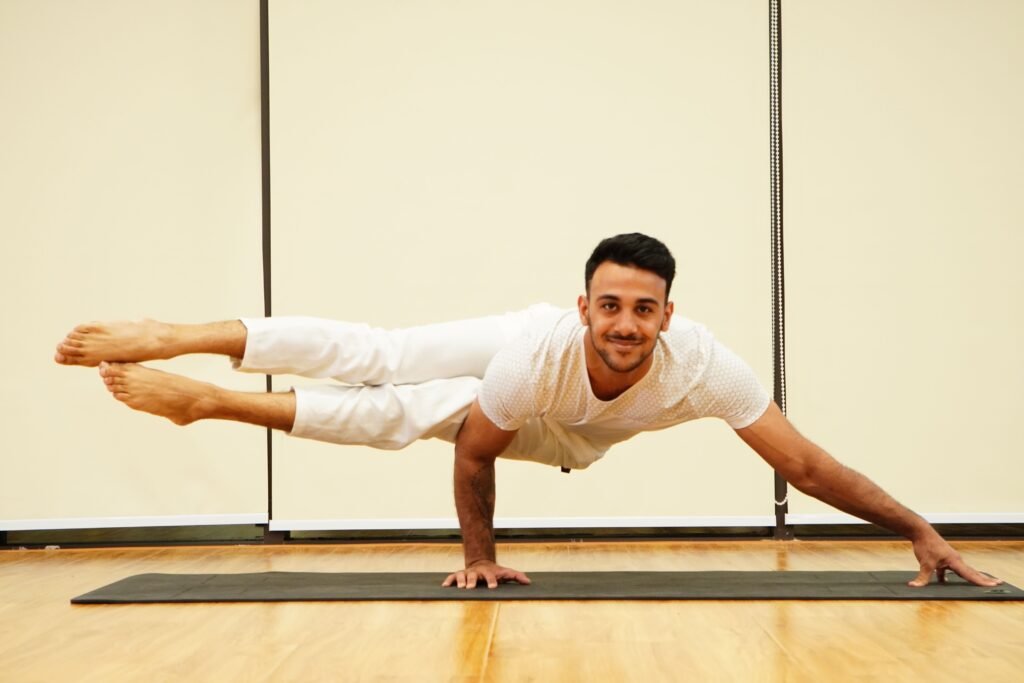
Asana means posture, and in the Yoga Sutras it refers to a stable, comfortable seated position suitable for meditation, not the wide variety of standing, balancing, and inverted poses taught in a modern studio class. Patanjali defines asana in a single short sutra: sthira sukham asanam, meaning the posture should be steady and comfortable. The huge catalog of postures familiar from modern styles of yoga like Hatha yoga and Vinyasa yoga developed mostly through later Hatha yoga texts, which expanded a simple seated posture into dozens of named asanas designed to prepare the body for long periods of stillness. Practicing physical postures still matters within the eight-limb path, since a body that’s tense, in pain, or restless makes concentration and meditation far harder to sustain.
Pranayama: The Fourth Limb
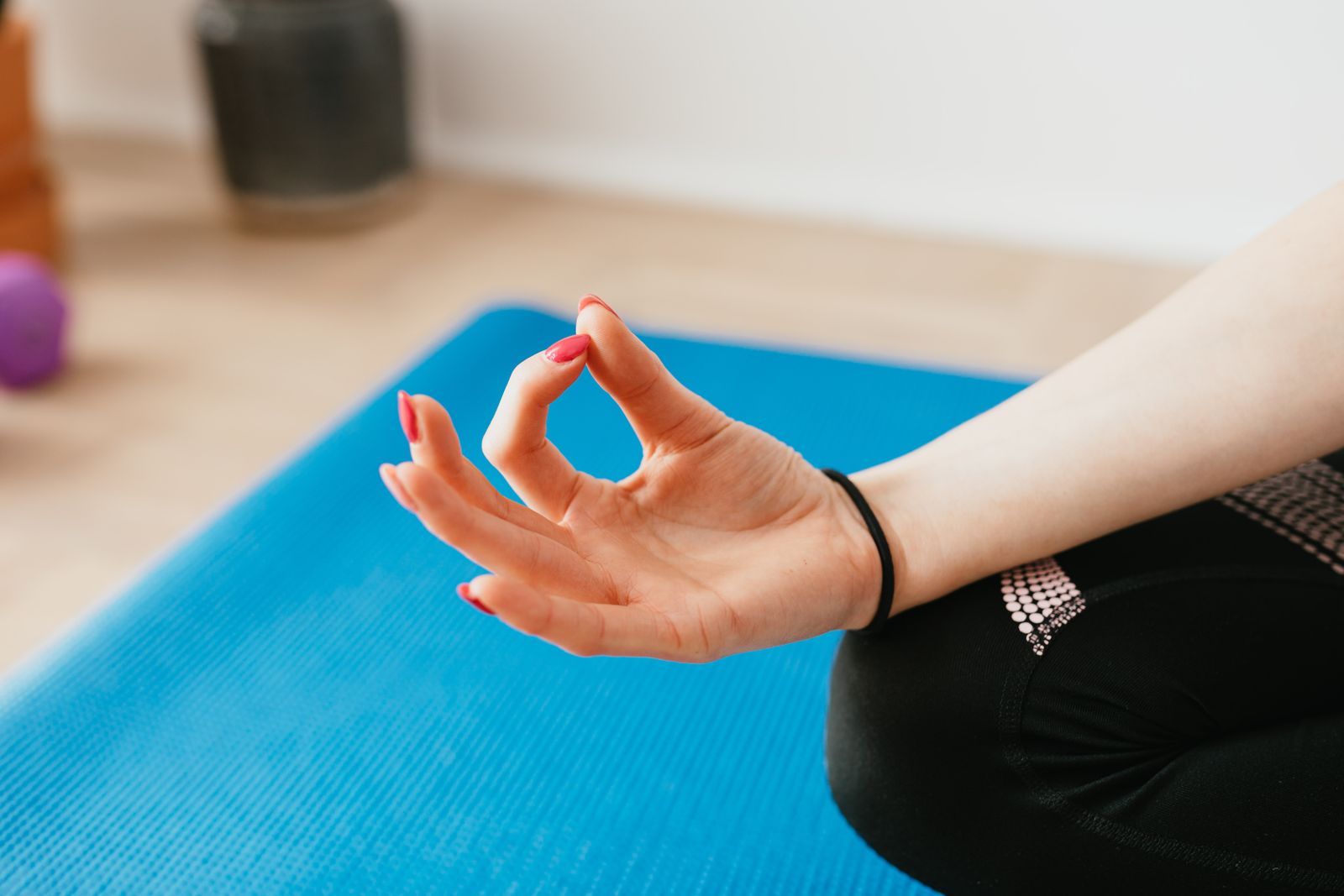
Pranayama is the practice of controlling the breath, built from “prana” (life force or vital energy) and “ayama” (extension or control). Patanjali describes pranayama as the regulation of the incoming and outgoing breath, and traditionally it’s practiced only after asana has been steadied, since an unstable body makes for an unstable breath. Common pranayama techniques taught today include pranayama breathing techniques such as nadi shodhana (alternate nostril breathing), ujjayi (victorious breath), and kapalabhati (skull-shining breath). The underlying idea is that breath and mind are closely linked, so a practitioner who can steady and lengthen the breath is simultaneously steadying the mind, which prepares the way for the more inward-facing limbs that follow.
Pratyahara: The Fifth Limb
Pratyahara means withdrawal of the senses, the practice of turning attention away from external sights, sounds, tastes, and sensations so the mind can begin to look inward. Patanjali describes it as the point where the senses stop being pulled toward their objects and instead follow the mind’s own direction. This is often the least understood of the eight limbs because it isn’t something you do so much as something you allow to happen once concentration has developed; a common analogy compares it to a turtle drawing its limbs inside its shell. Pratyahara acts as the hinge between the four “outer” limbs (yama, niyama, asana, pranayama), which deal with body and behavior, and the three “inner” limbs (dharana, dhyana, samadhi), which deal purely with the mind.
Dharana: The Sixth Limb
Dharana is concentration, defined by Patanjali as binding the mind to a single point or object. That focal point might be the breath, a candle flame, a mantra, a chakra, or an image of a deity; what matters is sustained, single-pointed attention rather than the specific object chosen. Dharana is considered a training exercise for the mind in the same way asana trains the body: short, repeated attempts to hold focus, gently returning attention whenever it wanders. This limb connects closely to the practice of meditation for beginners, since building the ability to concentrate for even a few uninterrupted minutes is usually the first real milestone in a meditation practice.
Dhyana: The Seventh Limb
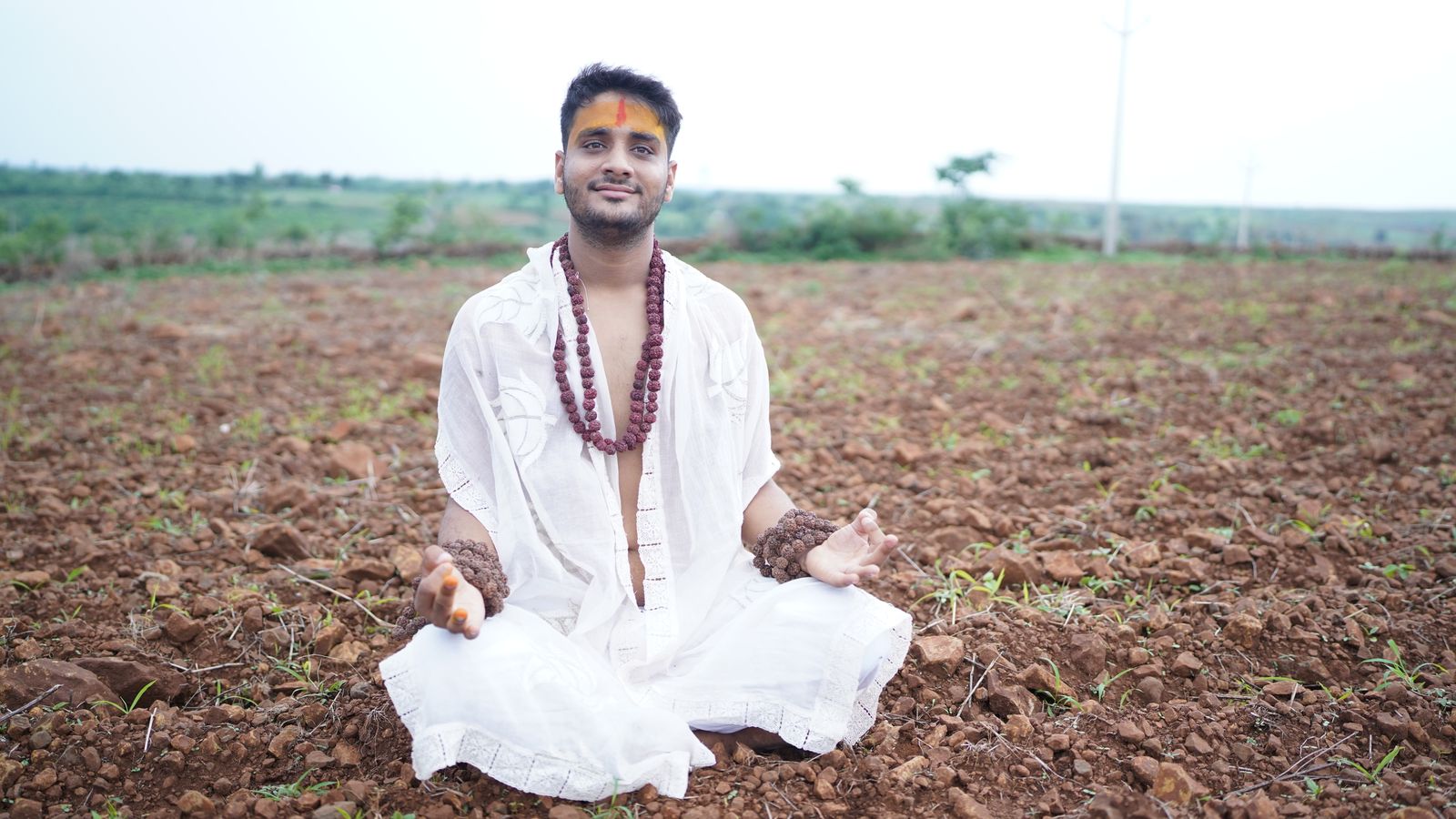
Dhyana is meditation proper, described by Patanjali as an unbroken flow of attention toward the object of concentration. Where dharana is the effort of repeatedly bringing the mind back to one point, dhyana is what happens once that effort dissolves into continuous, effortless awareness of the same point. The distinction is subtle: dharana still involves the sense of “trying,” while dhyana feels more like sustained absorption without strain. Many contemporary mindfulness and meditation practices, while not identical to classical dhyana, draw on this same core skill of resting attention steadily on one object, whether that’s the breath, a body scan, or a repeated phrase.
Samadhi: The Eighth Limb
Samadhi is the culmination of the eight-limb path, a state Patanjali describes as the object of meditation shining forth alone, as if the meditator’s own sense of self has emptied out. In this state, the distinction between the one meditating, the act of meditating, and the object of meditation dissolves into a single unified experience. Patanjali further divides samadhi into subtler stages within the Yoga Sutras, but for a general reader the key point is that samadhi represents the goal toward which every earlier limb was building: a state of profound stillness, clarity, and union that gives yoga its name. Very few practitioners claim to have experienced classical samadhi in its fullest sense, and most teachers describe it as a rare, advanced state rather than a routine outcome of a daily practice.
How Do the 8 Limbs Work Together?
The eight limbs are traditionally understood as progressive rather than a menu to pick from at random, though in practice most students work on several at once. Yama and niyama establish the ethical groundwork; asana and pranayama condition the body and breath; pratyahara turns attention inward; and dharana, dhyana, and samadhi represent increasingly refined states of mental absorption. Some scholars group the first five limbs as “external” practices (bahiranga yoga) and the final three as “internal” practices (antaranga yoga), reflecting the shift from managing the outer world and body to working purely with consciousness. A useful way to think about this progression is as a funnel: broad ethical and physical foundations at the top, narrowing toward an increasingly focused and subtle inner experience at the bottom.
How Is This Different From the Six Limbs in Hatha Yoga Texts?
Not every classical yoga text uses an eight-limb model. Later Hatha yoga texts, including works associated with the Nath yogi tradition, describe a six-limbed path instead, typically omitting yama and niyama and adding techniques specific to Hatha practice, such as mudras (energy seals) or shatkarmas (cleansing techniques). This six-limb model reflects a different lineage and emphasis, focused more on physical and energetic transformation of the body, compared to Patanjali’s more contemplative, ethics-first framework. When you see references to “6 limbs” versus “8 limbs” of yoga in different sources, it usually reflects which text is being cited rather than any single correct answer, since Patanjali’s Ashtanga model and the Hatha yoga six-limb models come from different historical periods and different priorities.
How Can You Practice the 8 Limbs in Daily Life?
Practicing the eight limbs doesn’t require years of monastic training; it can start with small, deliberate choices. Applying yama might mean noticing when you’re tempted to exaggerate a story (satya) or hold onto something you no longer need (aparigraha). Applying niyama could be as simple as a five-minute gratitude journal each morning (svadhyaya) or accepting an unchangeable situation without complaint (santosha). A regular beginner yoga poses practice covers asana, while a few minutes of slow, extended breathing covers pranayama. Setting aside even five distraction-free minutes to sit quietly with your eyes closed builds pratyahara and dharana simultaneously. None of the limbs require perfection; the point of the path is gradual refinement, not an instant transformation.
Why Do Modern Yoga Classes Only Focus on Asana?
Most yoga studios in the West built their class formats around asana because physical postures are the most visible, teachable, and marketable part of the eight-limb system, especially once yoga was popularized internationally in the 20th century. This isn’t a flaw exactly, since a strong asana practice offers genuine physical and mental benefits, including improved flexibility, strength, balance, and stress reduction, and it can serve as an accessible entry point into the other seven limbs. But it does mean many students encounter only one-eighth of Patanjali’s actual system unless a teacher deliberately weaves in philosophy, breathwork, and meditation. Studios and teachers who want to offer a more complete picture increasingly pair asana classes with dedicated instruction in the philosophy of yoga, pranayama, and meditation.
Questions People Ask About the 8 Limbs of Yoga
What are the 8 limbs of yoga?
The 8 limbs of yoga, as outlined by Patanjali in the Yoga Sutras, are yama (ethical restraints), niyama (personal observances), asana (posture), pranayama (breath control), pratyahara (withdrawal of the senses), dharana (concentration), dhyana (meditation), and samadhi (absorption). Together they form Ashtanga Yoga, a progressive path from ethical living to physical practice to deep meditative states.
What are the eight limbs of yoga?
The eight limbs of yoga are the same eight stages described above: yama, niyama, asana, pranayama, pratyahara, dharana, dhyana, and samadhi. “8 limbs” and “eight limbs” refer to the identical framework from Patanjali’s Yoga Sutras; the difference is only in whether the number is written as a numeral or spelled out.
How many limbs of yoga are there?
According to Patanjali’s Yoga Sutras, there are eight limbs of yoga, known collectively as Ashtanga Yoga. This is the most widely cited number in classical yoga philosophy. Some later Hatha yoga texts describe a different, six-limbed model, so the answer can vary slightly depending on which historical text is being referenced.
How many limbs of yoga are mentioned in Siddhasiddhanta Paddhati?
The Siddhasiddhanta Paddhati is a Hatha yoga text associated with the Nath yogi tradition, and Hatha yoga texts from this lineage are generally understood to describe a limb system different from Patanjali’s eight, often a six-limbed model that emphasizes physical and energetic techniques over the ethical limbs. Because source texts and translations vary, readers researching this specific question should treat it as a specialized textual detail best confirmed against the primary Sanskrit text or a scholarly translation rather than a general yoga blog.
What are the limbs of yoga?
The limbs of yoga refer to the sequential stages of practice that Patanjali describes in the Yoga Sutras: yama, niyama, asana, pranayama, pratyahara, dharana, dhyana, and samadhi. Each limb builds toward the next, moving from ethical foundations through physical and breath practices into progressively deeper states of concentration and meditation.
Try This for Yourself
Reading about the eight limbs is a useful starting point, but the real value comes from practicing them, starting with a steady asana and breath foundation and gradually exploring concentration and meditation. If you’d like structured, guided support for that journey, explore FitStrot’s online yoga classes, where certified instructors help you build a consistent practice that covers far more than just the physical postures.
Related reading: Yoga Sutras of Patanjali, Yamas and Niyamas Explained, What Is Yoga?, Benefits of Yoga, and FitStrot’s Online Yoga Classes.