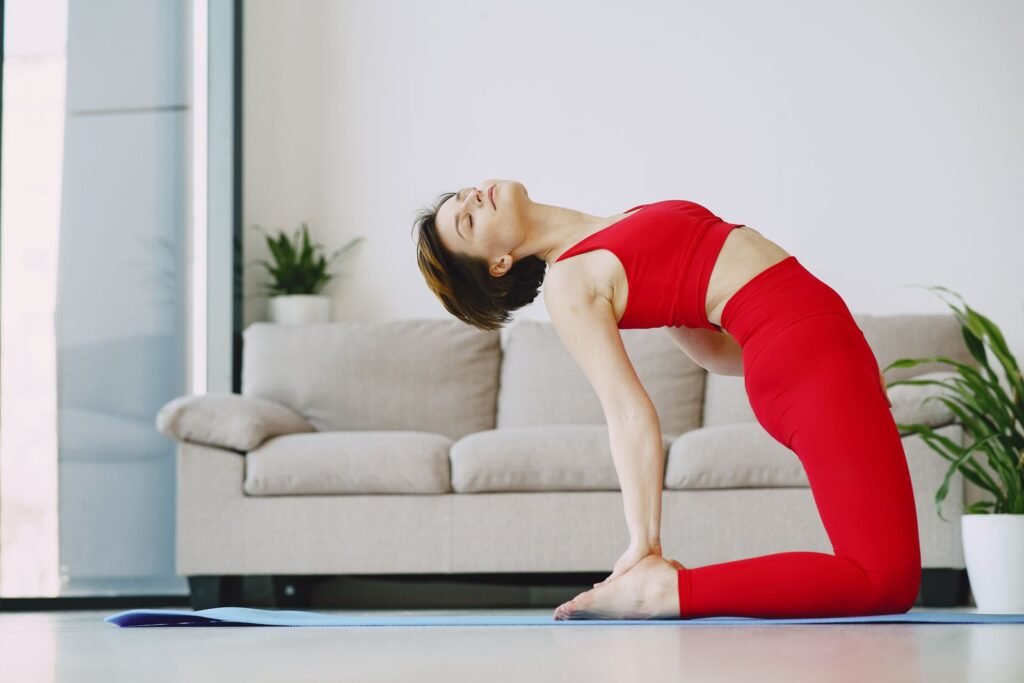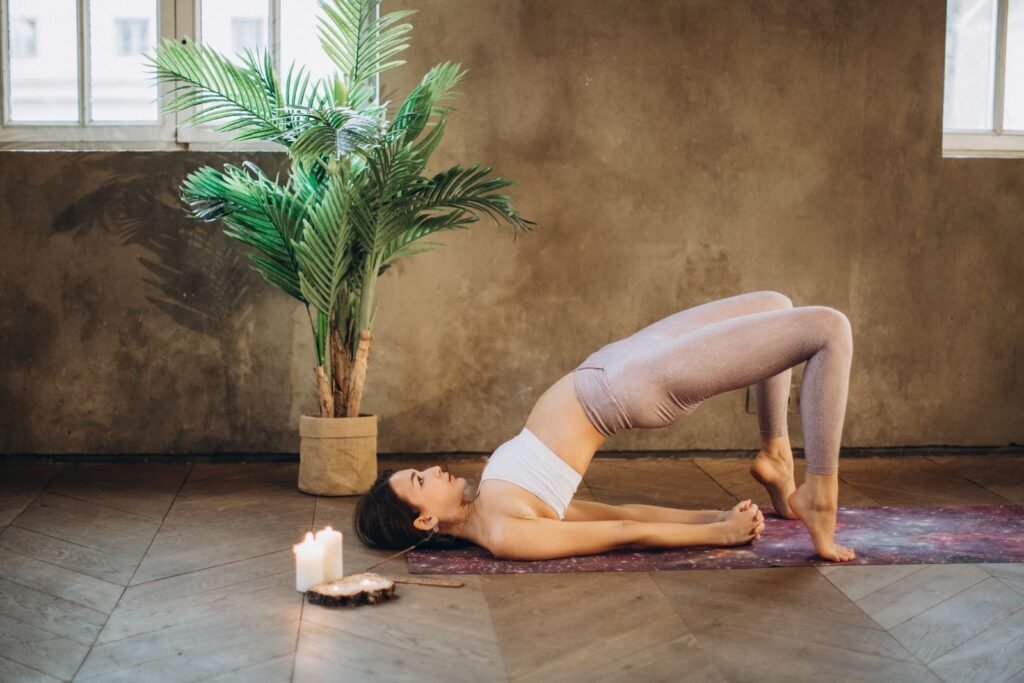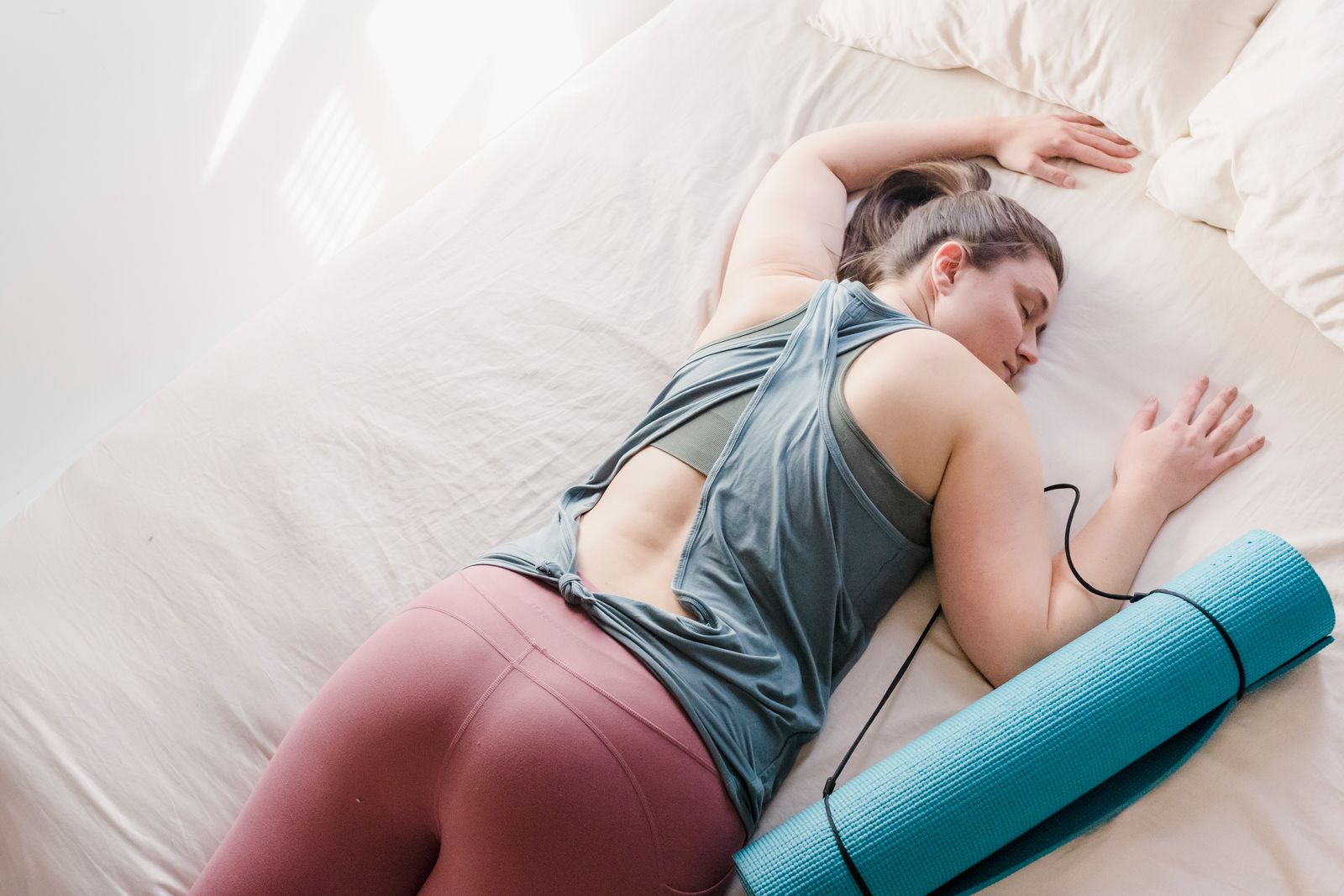
Yoga for sleep works by calming the nervous system before bed, using slow breathing, gentle forward folds, and restorative poses like Legs-Up-the-Wall and Child’s Pose to lower heart rate, ease muscle tension, and quiet a racing mind. A short 10 to 20 minute practice done consistently in the hour before bed is commonly linked to falling asleep faster and waking less during the night, and yoga nidra, a guided lying-down meditation, has been studied specifically for chronic insomnia with promising results in a randomized controlled trial. Yoga is not a substitute for treating diagnosed sleep disorders like sleep apnea, but as a nightly wind-down ritual, it gives your body a physical off-switch for the stress hormones that keep so many people staring at the ceiling.
How Does Yoga Actually Help You Sleep Better?
Poor sleep is frequently a nervous system problem before it is a “bedroom” problem. When your sympathetic nervous system, the one responsible for alertness and stress response, stays activated into the evening, your body keeps producing cortisol and adrenaline at exactly the time it should be winding down. Yoga counters this through three connected mechanisms: slow diaphragmatic breathing stimulates the vagus nerve and shifts you toward parasympathetic (“rest and digest”) dominance, static restorative poses held for several minutes signal safety to the brain, and the practice of directing attention to breath and body sensation interrupts the mental looping that often keeps people awake. This is closely related to how yoga for stress works during the day, except a bedtime practice deliberately removes anything stimulating, no sun salutations, no core work, just long holds and slow exhales. If you’re only beginning to explore what yoga can do beyond flexibility, our guide to the benefits of yoga is a useful starting point.
What Does the Research Say About Yoga and Sleep Quality?
Sleep researchers have increasingly grouped yoga alongside tai chi, walking, and jogging as forms of exercise associated with meaningful improvements in insomnia symptoms, and organizations including the Sleep Foundation and Johns Hopkins Medicine cite yoga as a legitimate, low-risk complementary approach for people struggling to fall or stay asleep. One randomized controlled trial published in a peer-reviewed journal found that patients with chronic insomnia who practiced yoga nidra, a structured, guided relaxation technique performed lying down, showed measurable improvements in sleep quality compared to those who did not. Researchers generally attribute these effects to the combined impact of slowed breathing, muscle relaxation, and reduced pre-sleep arousal rather than to any single pose or technique. As with most mind-body interventions, consistency matters more than any one session, benefits are typically described over several weeks of regular practice rather than overnight.
What Is the Best Yoga for Sleep and Relaxation?
The best yoga for sleep and relaxation is restorative and yin-style yoga, not the more vigorous vinyasa or power styles you might do earlier in the day. Restorative yoga uses props like pillows, blankets, or a wall to fully support the body in passive poses held for three to ten minutes, allowing muscles to release without any active effort. Yin yoga similarly favors long, quiet holds that target connective tissue rather than muscle strength, an approach explained in more depth in our guide to yin yoga. Both styles avoid anything that raises heart rate, so standing balances, backbends, and inversions like headstand are generally left out of a bedtime sequence. If you are new to the practice broadly, our overview of the types of yoga explains how restorative and yin fit alongside more energetic styles like vinyasa or power yoga, and our beginner yoga guide is a good next stop if you’re starting from scratch.
Which Yoga Poses Help the Most With Sleep?
A handful of poses show up consistently in sleep-focused sequences because they are simple, require no special flexibility, and directly engage the relaxation response.
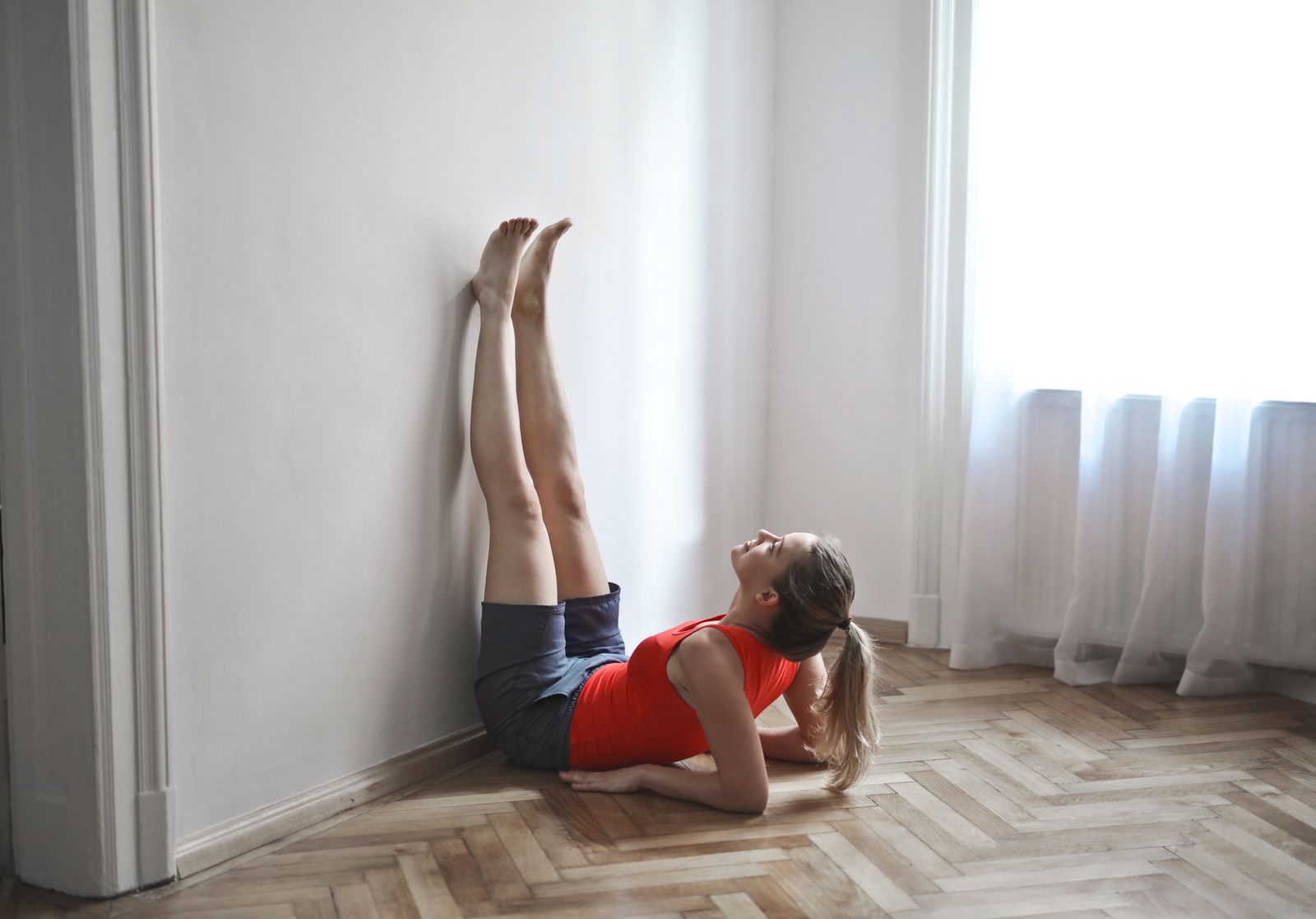
Legs-Up-the-Wall Pose (Viparita Karani)
Lying on your back with your legs resting up a wall is one of the most widely recommended poses for sleep. It gently reverses blood flow from the legs, takes pressure off the lower back, and requires zero effort to hold, making it ideal when you are already tired. Five to ten minutes is typically enough to feel a shift toward calm.
Child’s Pose (Balasana)
A forward fold with the hips resting back toward the heels and the forehead down, Child’s Pose compresses the abdomen gently and encourages slower breathing simply through the position of the body. It is a natural transition pose between other stretches and a calming resting point on its own.
Reclining Bound Angle Pose (Supta Baddha Konasana)
Lying on your back with the soles of the feet together and knees falling open, supported by pillows under the knees if needed, opens the hips and chest simultaneously. This pose is often used in prenatal and restorative sequences because it requires no muscular effort to maintain.
Seated or Reclining Forward Fold (Paschimottanasana)
Folding forward over extended legs, whether seated or with support, has a naturally quieting effect, likely because forward folds turn attention inward and away from the visual field.
Cat-Cow (Marjaryasana-Bitilasana)
A few slow rounds of arching and rounding the spine on hands and knees release tension that accumulates in the back and neck from a day of sitting, and pairing the movement with breath builds the awareness you’ll carry into stiller poses.
For a broader library of postures beyond a bedtime sequence, our guide to basic yoga poses covers foundational shapes worth learning regardless of when you practice.
What Breathing Techniques Help With Sleeplessness?
Breathwork, known as pranayama in yoga tradition, is arguably more important than any specific pose for addressing sleeplessness, because breath rate has a direct, immediate effect on the nervous system. Extending the exhale longer than the inhale is one of the simplest ways to trigger a parasympathetic response, a common pattern is inhaling for a count of four and exhaling for a count of six or eight. Alternate nostril breathing (Nadi Shodhana) is another technique frequently recommended before bed, practiced by gently closing one nostril at a time and breathing slowly through the other, said in yoga tradition to balance the nervous system, though its specific sleep benefits are less rigorously studied than yoga nidra’s. For sleeplessness tied to anxious thought patterns rather than physical restlessness, our guide to yoga for anxiety covers breathing techniques in more depth.
Can Yoga Help With Sleep Apnea?
Yoga for sleep apnea is generally discussed as a complementary practice, not a replacement for medical treatment like a CPAP machine or a sleep study diagnosis. Some research and clinical commentary suggests that specific pranayama practices and throat, tongue, and upper-airway exercises, sometimes called oropharyngeal exercises, may help tone the muscles around the airway and reduce snoring severity or mild apnea symptoms over time, likely by improving muscle tone in the soft palate and tongue base. Broader yogic breathing practice may also support easier nasal breathing and reduce the mouth-breathing pattern that can worsen airway collapse during sleep. Anyone with diagnosed or suspected sleep apnea should treat yoga as an addition to, not a substitute for, medical care and should discuss any new symptoms, including loud snoring, gasping during sleep, or daytime fatigue, with a doctor.
Is Yoga Nidra Different From Regular Yoga for Sleep?
Yes. Yoga nidra, sometimes translated as “yogic sleep,” is a guided meditation practiced lying completely still, typically in Savasana (Corpse Pose), while a teacher or recording leads you through a body scan and structured stages of relaxation. Unlike a pose-based practice, there is no movement at all, you remain physically still while systematically relaxing each part of the body and, eventually, the mind. A randomized controlled trial specifically studying yoga nidra in people with chronic insomnia found it linked to improved sleep outcomes, which has made it one of the more frequently recommended tools for people whose sleeplessness is less about physical tension and more about an overactive mind at bedtime. Many people find a 20 to 30 minute recorded yoga nidra session works well as the very last thing they do before turning off the lights.
What About Yoga for Sleep Paralysis?
Sleep paralysis, the temporary inability to move or speak while falling asleep or waking up, is often linked to disrupted sleep patterns, sleep deprivation, and irregular sleep schedules, and stress is commonly cited as a contributing factor. Because yoga’s calming techniques address stress, irregular pre-sleep arousal, and sleep quality broadly, some practitioners use a consistent bedtime yoga and breathing routine as one part of stabilizing sleep patterns that may be contributing to episodes. That said, sleep paralysis has multiple potential causes, including underlying sleep disorders like narcolepsy, and frequent episodes are worth discussing with a doctor or sleep specialist rather than addressing through yoga alone.
What Are Common Yoga for Sleep Disorders Beyond Insomnia?
Restless Legs Syndrome, delayed sleep phase patterns, and stress-related sleep disruption are among the sleep disorders where a gentle yoga practice is commonly discussed as a supportive, non-drug option. Restorative stretching, particularly poses that lengthen the hamstrings and hips, is sometimes recommended for people with Restless Legs Syndrome symptoms, alongside general lifestyle measures. For irregular sleep-wake schedules, a consistent yoga practice at the same time each evening may help reinforce the body’s circadian signals the same way a fixed bedtime does. As with sleep apnea and sleep paralysis, yoga should be viewed as a complementary layer around, not a replacement for, an evaluation by a sleep medicine professional when a disorder is suspected.
How Do You Build a Bedtime Yoga Routine?
A simple, repeatable sequence removes the decision-making that can itself become a barrier to a consistent practice. A commonly recommended structure looks like this:
- Settle in (2 to 3 minutes): Sit or lie down and focus on breath awareness to downshift from the day.
- Move through gentle poses (5 to 8 minutes): Four or five poses such as Cat-Cow, Child’s Pose, and a seated forward fold, spending sixty to ninety seconds in each.
- Settle into stillness (5 to 10 minutes): Legs-Up-the-Wall or Reclining Bound Angle Pose, held without any effort.
- Close it out: Either a short yoga nidra recording or simply lying in Savasana with slow, extended exhales.
The entire sequence takes fifteen to twenty minutes and requires no equipment beyond a mat and, ideally, a wall. Practicing dimly lit, ideally after screens are already off, reinforces rather than fights the melatonin release your body is trying to produce.
How Is Bedtime Yoga Different From a Morning or Daytime Practice?
A morning or daytime yoga session, like the kind covered in our guide to vinyasa yoga, is often designed to build heat, strength, and alertness through flowing sequences and sun salutations. A bedtime practice inverts nearly every one of those goals:
| Aspect | Morning/Daytime Practice | Bedtime Practice |
|---|---|---|
| Pace | Flowing, dynamic movement | Poses held longer, minimal movement |
| Lighting | Bright room | Dim, low light |
| Heart rate | Elevated, energizing | Kept low throughout |
| Poses used | Backbends, inversions, strength-based holds included | Backbends, inversions, and strength-based holds left out |
| Main goal | Build heat, strength, alertness | Calm the nervous system for sleep |
If weight management or general fitness is your main goal, a more active practice like the one described in our guide to yoga for weight loss is better suited earlier in the day, saving the restorative approach specifically for the evening wind-down.
Does Yoga Address the Root Causes of Poor Sleep?
Sleep difficulty is rarely caused by one single factor, and yoga works best as one part of addressing the underlying pattern rather than the only intervention. Chronic stress and an overactive mind at bedtime are frequently cited contributors, which is why practices like yoga for mental health and a broader stress-management routine often go hand in hand with sleep-focused yoga. Physical tension from sitting all day, screen use late into the evening, irregular bedtimes, and caffeine timing all play a role that a fifteen-minute sequence cannot fully offset alone. Yoga works best for sleep when paired with consistent sleep-wake timing, a dark, cool bedroom, and reduced screen exposure in the hour before bed, alongside broader daily habits covered in our guide to yoga for weight loss and general fitness.
Is Meditation Necessary Alongside Yoga for Better Sleep?
Meditation is not strictly necessary, but it meaningfully amplifies yoga’s sleep benefits by directly targeting the racing-thoughts pattern that physical poses alone may not fully resolve. Simple techniques like body scan meditation, closely related to yoga nidra, or basic breath-counting meditation can be layered in after your physical poses are complete. People who find their mind is the main obstacle to falling asleep, more so than physical tension, often benefit from spending proportionally more time on breath and meditation, a theme also explored in our guide to yoga for anxiety, and less on the poses themselves.
Questions People Ask About Yoga for Sleep
How long before bed should I do yoga for sleep?
Most sleep-focused yoga sequences are designed to be done in the fifteen to thirty minutes directly before you intend to sleep, since the goal is to carry the calm, parasympathetic state straight into bed. Doing yoga much earlier in the evening is still beneficial for general stress relief, but a short routine done immediately pre-bed has the most direct impact on how quickly you fall asleep.
Can beginners do yoga for sleep without any experience?
Yes. Bedtime yoga sequences use simple, well-supported poses like Child’s Pose and Legs-Up-the-Wall that require no prior flexibility, strength, or yoga background. Because the poses are static and gentle rather than flowing, beginners often find a restorative sleep sequence easier to follow than a faster-paced class.
What is the single best yoga pose for sleep?
Legs-Up-the-Wall Pose (Viparita Karani) is the most consistently recommended single pose for sleep because it requires no muscular effort, is accessible to nearly all bodies, and directly reduces lower-body swelling and back tension while promoting a calm nervous system state within five to ten minutes.
Does yoga help with sleep apnea or is it just for stress-related insomnia?
Yoga is primarily studied and recommended for stress-related and general insomnia, but some research and clinical sources also suggest that specific breathing and throat-toning exercises may support airway muscle tone relevant to mild sleep apnea. It should never replace medical evaluation or treatment, such as a CPAP machine, for diagnosed sleep apnea.
How soon can I expect yoga to improve my sleep?
Some people notice they fall asleep faster after a single restorative session, but the more meaningful, lasting improvements in overall sleep quality that research points to are generally associated with consistent practice over several weeks rather than a single night.
Is it better to do yoga nidra or physical poses for sleep?
Neither is strictly “better,” they address slightly different things. Physical poses like Child’s Pose and Legs-Up-the-Wall release physical tension, while yoga nidra targets mental restlessness through guided, still relaxation. Many people combine both: a short pose sequence followed by a yoga nidra recording once lying in bed.
Try This for Yourself
Reading about restorative poses and breathwork is a useful starting point, but sleep-focused yoga is easiest to stick with when you’re following a guided routine rather than piecing one together alone each night. FitStrot’s online yoga classes include sessions built specifically around relaxation, breathwork, and wind-down sequences you can do from home, guided by real instructors so you’re never guessing whether you’re doing a pose correctly. If better sleep is the goal, a consistent, guided practice is one of the most sustainable ways to get there.
Related reading: yoga for anxiety, yoga for stress, yoga for mental health, yoga for weight loss, and explore FitStrot’s online yoga classes to build a guided bedtime practice.