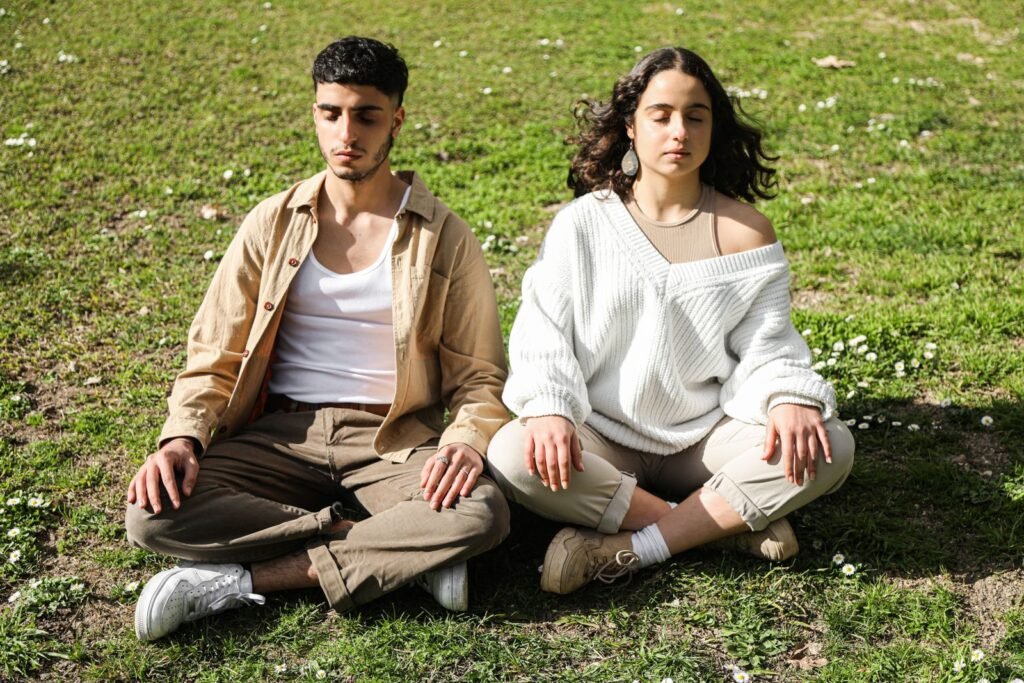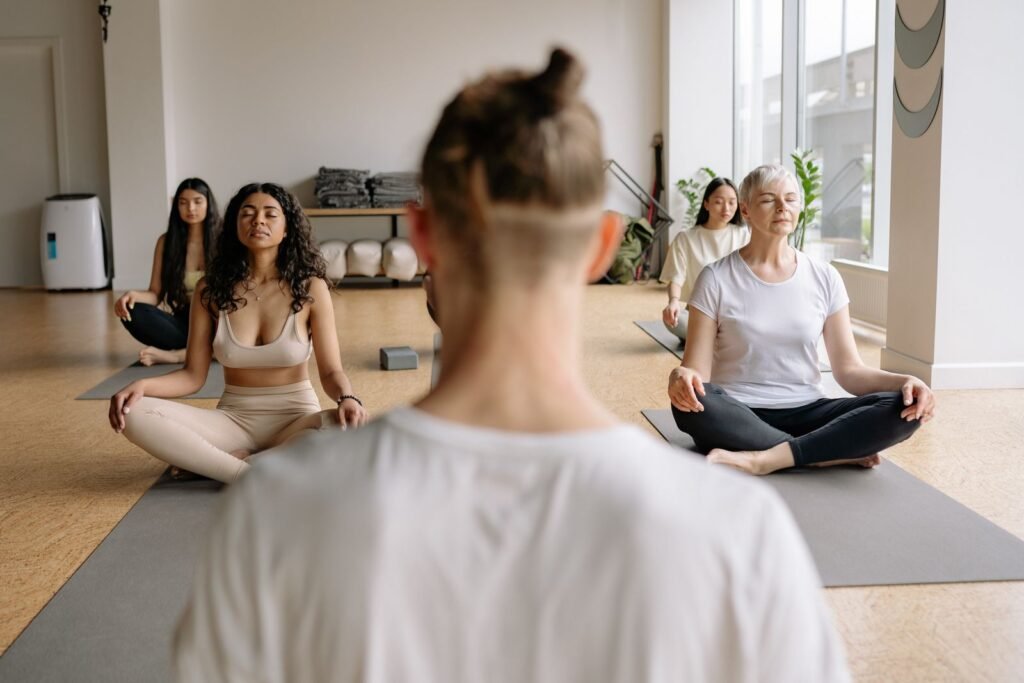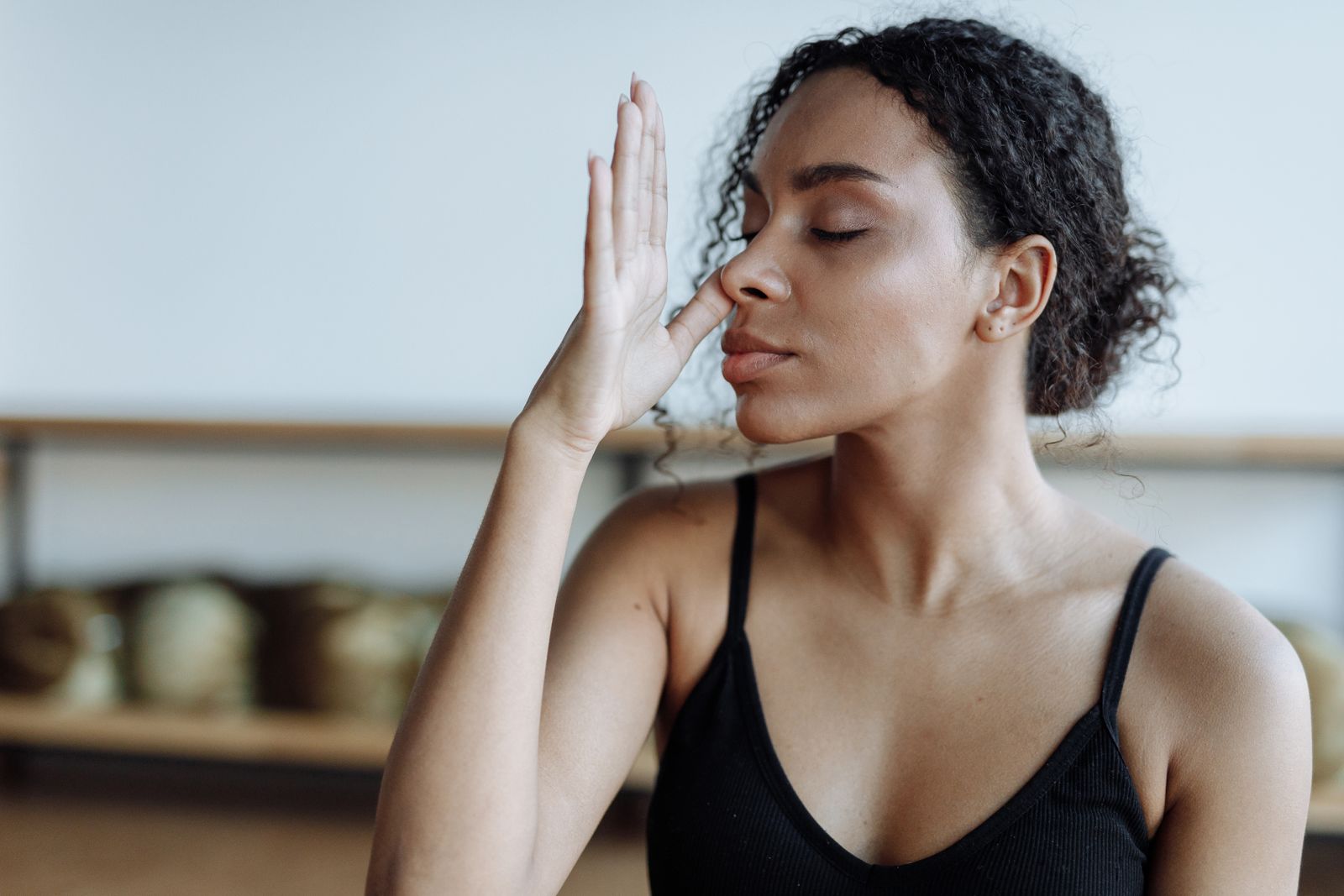
Anulom vilom is an alternate nostril breathing technique from traditional pranayama practice in which you close one nostril at a time using your fingers and breathe in and out through the other, cycling back and forth in a slow, controlled rhythm. Practitioners commonly turn to it to calm a racing mind, steady the breath, and settle the nervous system before meditation. It takes 5 to 15 minutes, needs no equipment, and can be learned by a complete beginner in a single sitting, though refining the rhythm takes regular practice over several weeks.
What Is Anulom Vilom Yoga?
Anulom vilom is a pranayama (breath-control) technique that belongs to the broader family of nadi shodhana, or “channel-purifying” breathing practices. The Sanskrit word “anulom” means “with the grain” or “in natural order,” while “vilom” means “against the grain” or “in reverse order.” Together, the name describes the practice of breathing in through one nostril and out through the other, then reversing the direction on the next round.
In most modern yoga classes, anulom vilom and nadi shodhana are taught almost interchangeably, though traditional texts sometimes distinguish them by whether a breath retention (kumbhaka) is included. For a beginner-friendly home practice, the version without retention is the safer and more commonly taught starting point. If you’re building a broader home pranayama routine, it pairs naturally with practices like bhramari pranayama and kapalbhati, which target the nervous system and respiratory system in different ways.
How Do You Do Anulom Vilom Step by Step?
The technique is simple enough to learn from a single guided session, but precision in the hand position and breath ratio makes a real difference to how effective it feels.
- Sit comfortably. Choose a cross-legged seat such as sukhasana or padmasana, or sit upright in a chair with your spine straight and shoulders relaxed.
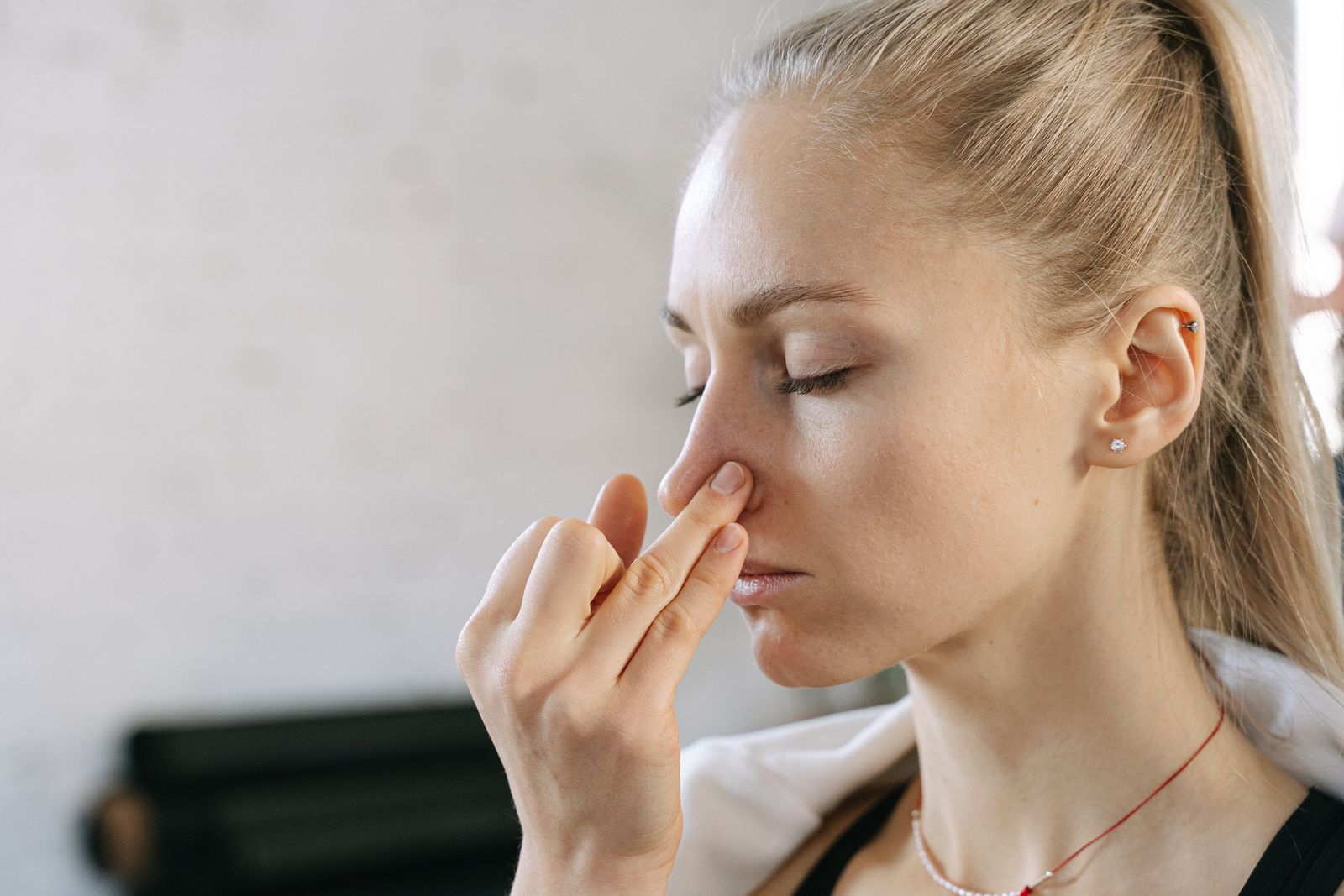
- Form Vishnu mudra. Fold the index and middle fingers of your right hand into the palm, leaving the thumb, ring finger, and little finger extended. This is the standard hand position used throughout the practice.
- Close the right nostril. Use your thumb to gently close the right nostril and inhale slowly through the left nostril for a count of four.
- Switch sides. Close the left nostril with your ring finger, release the thumb, and exhale through the right nostril for a count of four to eight.
- Reverse the cycle. Inhale through the right nostril, then close it and exhale through the left. This completes one full round.
- Repeat. Continue for 5 to 15 rounds, keeping the breath smooth, silent, and unforced throughout.
Beginners often start with a 1:1 inhale-to-exhale ratio and gradually work toward a 1:2 ratio (for example, a 4-count inhale and an 8-count exhale) as breath control improves. Rushing this progression is one of the most common mistakes; the goal is a longer, smoother exhale, not a longer breath-hold.
What Are the Benefits of Anulom Vilom Yoga?
Anulom vilom is one of the most widely practiced pranayama techniques in India, popularized in large part through televised yoga sessions and public health campaigns, and its appeal comes from a combination of traditional claims and a growing body of small clinical studies.
- Nervous system regulation. Slow, controlled breathing of this kind activates the parasympathetic nervous system, which is associated with the body’s “rest and digest” state rather than “fight or flight.”
- Reduced perceived stress and anxiety. Several small trials involving students and healthy adults have reported lower self-reported stress and anxiety scores after a few weeks of regular alternate nostril breathing.
- Cardiovascular markers. A handful of studies on healthy volunteers and hypertensive patients have measured modest short-term reductions in resting heart rate and blood pressure following structured anulom vilom practice, though sample sizes in this research are generally small and results vary between studies.
- Improved focus and mental clarity. Practitioners frequently report a subjective sense of calm alertness after practice, which is consistent with the technique’s traditional use as preparation for meditation.
- Better sleep quality. Because the practice downshifts the nervous system, many people use it as part of a wind-down routine before bed.
It’s worth being precise about what the evidence does and doesn’t show. Anulom vilom is not a validated treatment for hypertension, migraine, or any diagnosed medical condition, and claims that it can “cure” high blood pressure in minutes are not supported by rigorous evidence. What the research more consistently supports is its role as a low-risk stress-reduction and breath-training practice alongside, not instead of, medical care.
Is Anulom Vilom the Same as Nadi Shodhana?
In everyday teaching, yes, the terms are used interchangeably, and most yoga studios and apps will describe them as the same practice. The subtle distinction some traditional lineages draw is that nadi shodhana in its classical form includes kumbhaka, a deliberate breath retention between the inhale and exhale, while anulom vilom as commonly taught in modern wellness contexts typically omits the hold and focuses purely on the alternating breath pattern. For a beginner, this distinction rarely matters in practice. What matters more is consistency: five focused minutes a day for a month will do more for your nervous system than an occasional 20-minute session.
How Is Anulom Vilom Connected to Baba Ramdev?
Anulom vilom’s mainstream popularity in India owes a great deal to yoga guru Baba Ramdev, whose televised morning yoga camps in the 2000s introduced the practice, alongside kapalbhati, to a mass audience well beyond traditional yoga circles. His teaching style presented anulom vilom as a simple, accessible practice that anyone could do at home without special equipment, which is a large part of why it remains one of the most searched pranayama techniques in India today. It’s worth separating the technique itself, which has a long lineage in classical pranayama texts, from specific health claims made in popular media, some of which go beyond what current research supports.
How Long Should You Practice Anulom Vilom Each Day?
Most teachers recommend starting with 5 minutes a day and building up to 15 to 20 minutes over several weeks as your breath control improves. A typical beginner session looks like 5 to 9 rounds, where one round is a complete inhale-exhale cycle through both nostrils. Practicing first thing in the morning on an empty stomach is the most commonly taught timing, since digestion is inactive and the mind tends to be calmer before the day’s demands set in. That said, a short session in the evening can work equally well as a wind-down before sleep or before a seated meditation practice.
What Precautions Should You Take Before Starting?
Anulom vilom is considered a gentle practice suitable for most healthy adults, but a few precautions matter.
- Practice on an empty stomach, ideally at least 2 to 3 hours after a meal.
- Avoid forcing the breath. The exhale should never feel strained; if you feel dizzy or breathless, return to normal breathing immediately.
- Sit upright rather than lying down, since spinal alignment supports easier diaphragmatic movement.
- Consult a doctor first if you have a diagnosed respiratory condition, a recent nasal surgery, severe hypertension, or a heart condition, since breath-retention variants in particular are not appropriate for everyone.
- Skip it during a cold or nasal congestion, since blocked nostrils make the alternating pattern uncomfortable and largely ineffective.
Pregnant practitioners are generally advised to avoid breath retention variants and to practice only the gentle, non-retention version, ideally under the guidance of a qualified teacher.
What Mistakes Do Beginners Commonly Make?
A few habits quietly undermine the practice for people just starting out.
- Breathing too fast. The instinct is to rush through rounds; slowing down is what activates the calming nervous system response.
- Using the wrong fingers. Switching hand positions randomly instead of the standard Vishnu mudra makes the sequence harder to track and less consistent.
- Forcing a breath-hold before it feels natural. Retention should only be added once the basic alternating breath feels smooth and easy.
- Practicing right after a meal. A full stomach restricts diaphragmatic movement and makes the deep breathing uncomfortable.
- Ignoring posture. Slumped shoulders and a collapsed chest restrict full lung expansion, reducing the practice’s effectiveness.
How Does Anulom Vilom Compare to Other Pranayama Techniques?
Anulom vilom is one of several foundational pranayama practices, and each targets the body slightly differently. Kapalbhati uses short, forceful exhales to energize and detoxify, making it more stimulating than calming. Bhramari pranayama, the humming bee breath, is especially effective for calming an agitated mind and is often taught alongside anulom vilom in the same session. Simple diaphragmatic breathing exercises without the alternating nostril pattern are a good entry point for absolute beginners before progressing to anulom vilom’s more structured technique. Understanding where anulom vilom fits among these options helps you build a rounded pranayama practice rather than relying on a single technique for every goal.
Can Anulom Vilom Help With Anxiety and Sleep?
Anulom vilom is widely used as part of anxiety-management and sleep-support routines because slow nasal breathing signals safety to the nervous system, lowering the heart rate and easing the mental chatter that keeps people awake. It is not a replacement for clinical treatment of anxiety disorders or insomnia, but as a complementary practice it fits naturally alongside yoga for anxiety routines and evening wind-down sequences that include gentle stretching and a short yoga nidra or restorative practice. Many people find that pairing five minutes of anulom vilom with a short body scan before bed noticeably shortens the time it takes to fall asleep.
Does Anulom Vilom Use a Specific Hand Mudra?
Yes. The standard hand position is called Vishnu mudra: the index and middle fingers fold into the palm while the thumb, ring finger, and little finger stay extended. The thumb closes the right nostril and the ring finger closes the left. Some practitioners use a simpler variation, closing the nostril with just the thumb and index finger, but Vishnu mudra remains the most widely taught form in both traditional and modern yoga instruction. If mudras interest you beyond pranayama, they play a much broader role across contemplative practice, and it’s worth exploring yoga mudra techniques used in seated meditation and healing traditions.
Who Should Avoid or Modify Anulom Vilom?
Certain groups should modify the practice or check with a physician before starting. People with severe uncontrolled hypertension, recent chest or nasal surgery, epilepsy, or advanced respiratory disease should seek personalized guidance rather than following a general online routine. Anyone who feels lightheaded, gets a headache, or notices heart palpitations during practice should stop immediately and return to normal breathing. Because anulom vilom is often practiced alongside more vigorous techniques in a single home routine, it helps to understand how it fits into a broader practice, including gentler entry points like yoga for beginners sequences that build breath awareness before introducing more structured pranayama.
How Does Anulom Vilom Fit Into a Daily Yoga Routine?
Most teachers place pranayama either at the very start of a session, to settle the mind before asana practice, or at the end, to consolidate the calming effects of the physical postures that came before. A common structure is a short warm-up, a sequence of postures, five to ten minutes of anulom vilom, and a closing relaxation. If you practice online yoga classes, many instructors build a few minutes of alternate nostril breathing directly into the warm-up or cool-down, which is an easy way to build the habit without adding a separate block of time to your day. For those following a more structured discipline like ashtanga yoga or hatha yoga, pranayama is traditionally treated as a distinct limb of practice that deserves its own dedicated time rather than being squeezed in as an afterthought.
Questions People Ask About Anulom Vilom
What is anulom vilom yoga in simple words?
Anulom vilom is a breathing exercise where you alternately close one nostril and breathe through the other, switching sides with each round. It’s used to calm the mind, steady the breath, and prepare the body for meditation. No equipment is needed, and a basic session takes just 5 to 10 minutes to complete.
What are the main benefits of anulom vilom yoga?
The most consistently reported benefits are reduced stress and anxiety, better focus, and calmer breathing patterns. Some small studies also report modest short-term improvements in heart rate and blood pressure readings. It is best understood as a supportive wellness practice rather than a medical treatment for any specific condition.
Can anulom vilom cure high blood pressure?
No credible research supports the claim that anulom vilom cures hypertension, and viral claims about curing high blood pressure in minutes are not medically accurate. Some studies suggest regular practice may modestly support healthy blood pressure alongside standard medical treatment, but it should never replace prescribed medication or a doctor’s advice.
How many times a day should you do anulom vilom?
Most teachers recommend once a day, ideally in the morning on an empty stomach, for 5 to 15 minutes. Some practitioners add a short evening session as part of a wind-down routine. Twice daily is common among more experienced practitioners, but consistency matters far more than frequency for seeing benefits.
Is anulom vilom the same as pranayama?
Anulom vilom is one specific technique within the broader category of pranayama, which is the general practice of breath control in yoga. Other pranayama techniques include kapalbhati, bhramari, and ujjayi breathing, each with a different rhythm and purpose. Anulom vilom specifically refers to the alternating nostril pattern.
Can beginners learn anulom vilom without a teacher?
Yes, the basic technique is simple enough to learn from written or video instructions, since it doesn’t require breath retention or advanced positions. That said, a qualified instructor can correct hand position and breathing rhythm faster than self-teaching, which is especially useful if you have any underlying health condition. Guided online sessions are a practical middle ground for most beginners.
Try This for Yourself
Reading about anulom vilom only gets you so far; the calming effect is something you feel once you actually practice the rhythm with proper guidance. If you’d like a structured, teacher-led introduction to this and other pranayama techniques, FitStrot’s online yoga classes can walk you through the correct hand position, breath ratio, and pacing from your first session onward.
Related reading: Kapalbhati Pranayama | Bhramari Pranayama | Breathing Exercises for Beginners | Yoga Mudra Guide | Online Yoga Classes at FitStrot