To start yoga, pick one style suited to beginners (Hatha or gentle Vinyasa), set aside 15 to 20 minutes three times a week, and learn five to six foundational poses, Mountain Pose, Cat-Cow, Downward Dog, Child’s Pose, and a seated twist, before adding anything more advanced. You can begin at home with a mat and a free beginner video, or in a studio with a certified instructor who corrects your alignment in real time. Neither path is wrong; what matters most in the first month is consistency at a low intensity, not how deep you stretch or how quickly you progress. Most people who quit yoga in the first few weeks do so because they started too fast, not because they weren’t flexible enough.
What Do You Actually Need Before Your First Yoga Session?
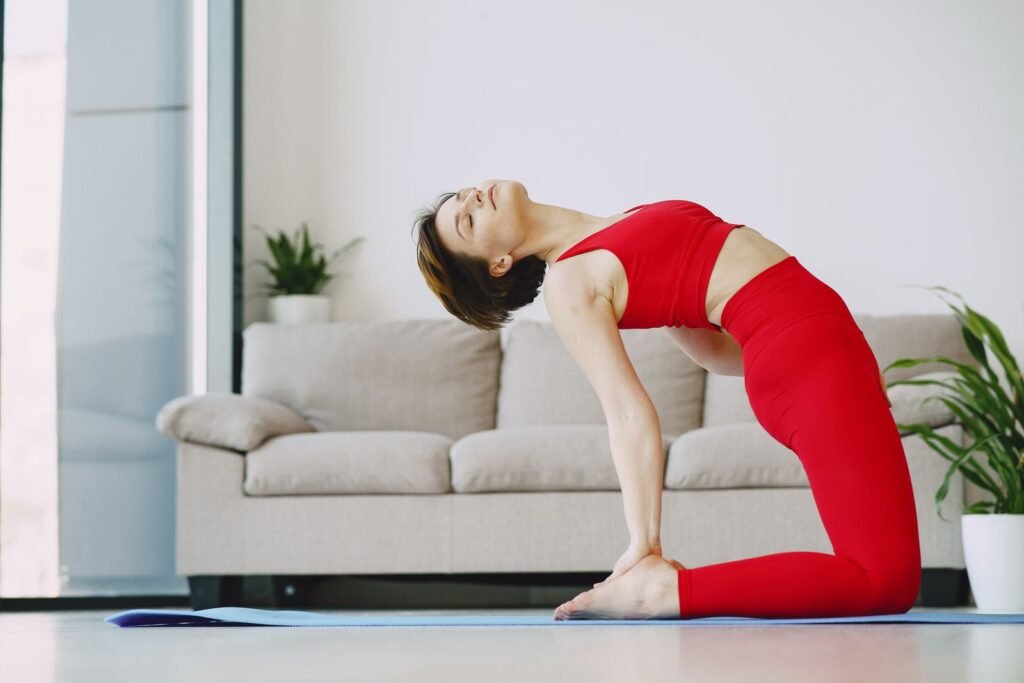
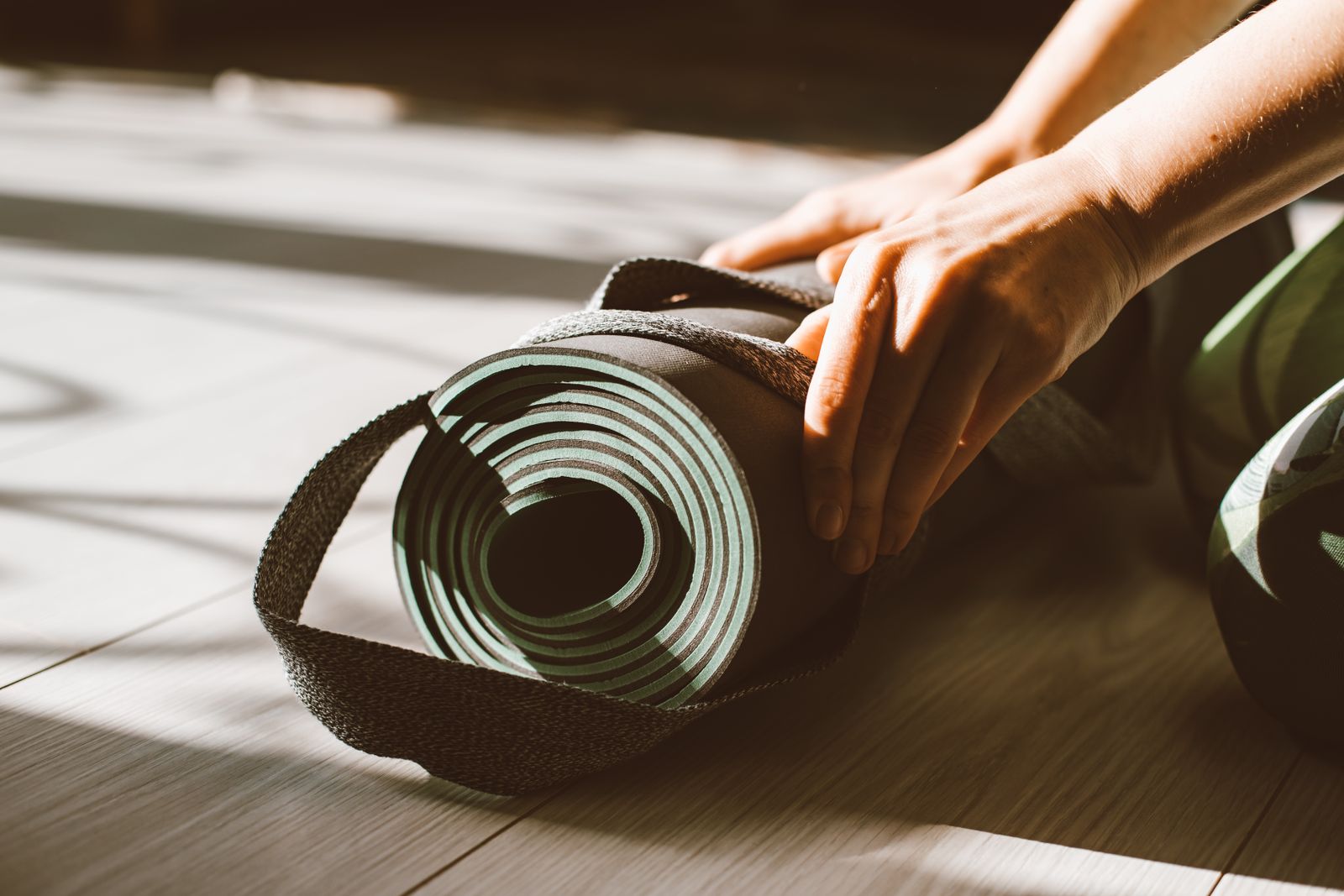
You need far less gear than the wellness industry suggests. A non-slip yoga mat is the one genuinely essential purchase, since practicing on a rug or tile floor increases slipping risk during standing poses like Warrior II or Triangle Pose. Beyond that, comfortable clothing that allows a full range of movement matters more than branded activewear. A folded blanket or two thick towels can substitute for yoga blocks in poses where your hands don’t reach the floor, and a long belt or scarf works as a stretching strap. If you’re planning to practice at home rather than in a studio, our guide to yoga at home walks through setting up a small dedicated space, roughly six feet by four feet of clear floor, that becomes a consistent cue for practice.
Should You Start Yoga at a Studio or at Home?
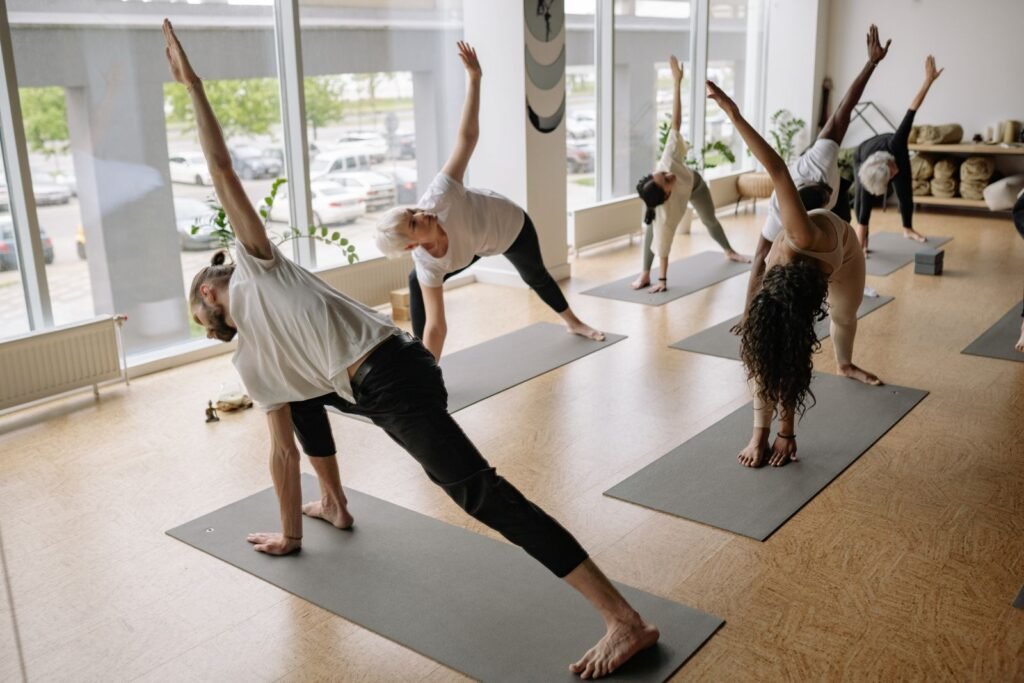
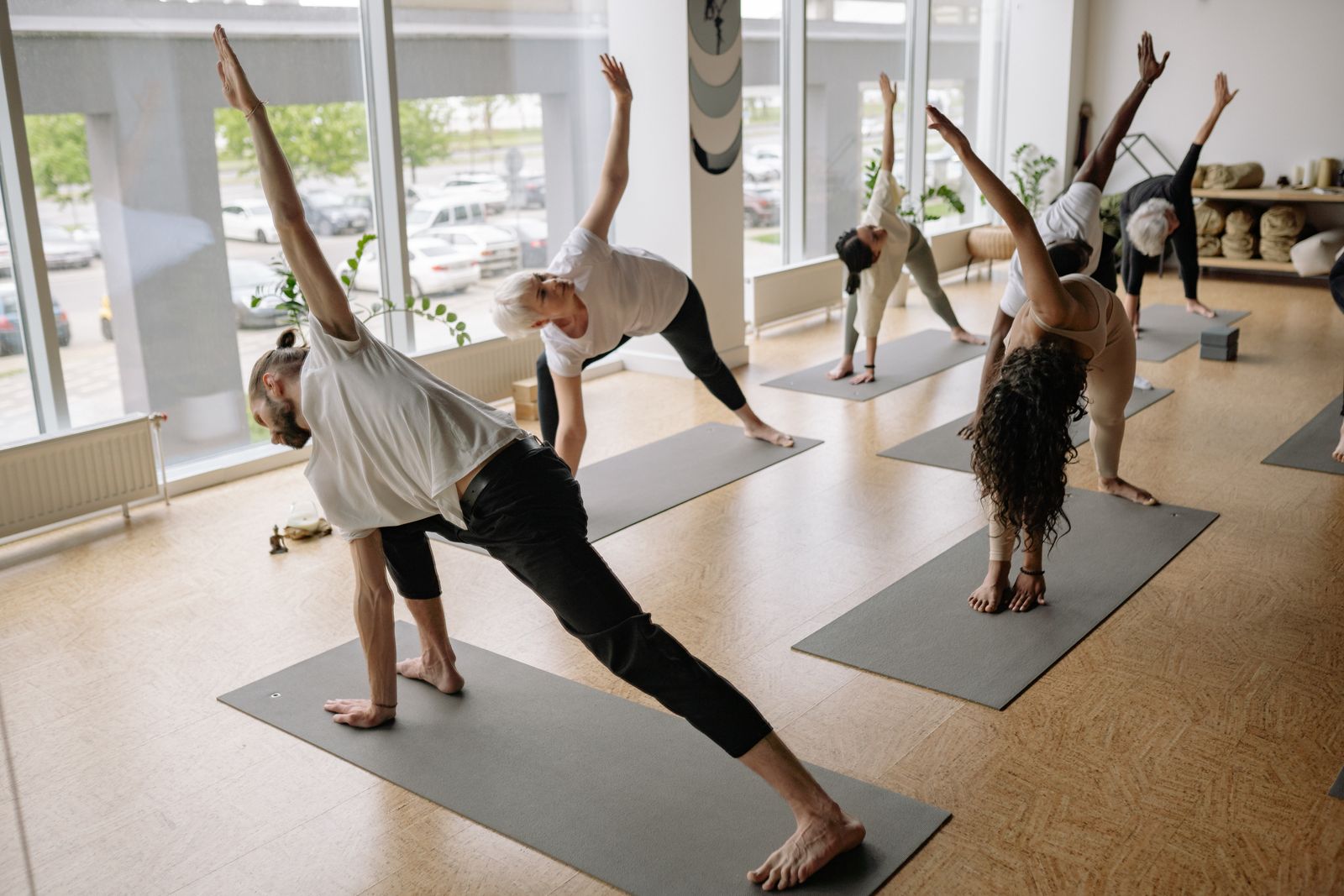
Both are valid starting points, and the right choice depends on your budget, schedule, and how much in-person correction you feel you need. Studio classes offer immediate feedback from a certified teacher, which helps catch alignment mistakes before they become habits, and the shared energy of a group class keeps some beginners more accountable. Home practice removes the commute and membership cost, lets you repeat a pose as many times as you need without feeling watched, and works well for people who feel self-conscious in a room full of experienced practitioners. Many people land on a hybrid: a few studio or live online sessions to learn correct form, followed by regular home practice on their own schedule. Our how to do yoga guide breaks down alignment cues for each foundational pose in detail, which is useful whichever path you choose.
How Do You Start Yoga at Home for Beginners?
Begin with a small, repeatable routine rather than trying to copy a full studio class from a video. A structure that works well for most beginners: two minutes of seated breathing to settle the mind, five to six foundational poses held for 30 to 60 seconds each, and a two-minute final relaxation in Savasana. Choose a fixed time of day, ideally when you’re least likely to be interrupted, and commit to three sessions a week for the first month before considering daily practice. Track sessions on a simple calendar; the visual habit streak motivates far more people than they expect. If weight loss or flexibility is a specific goal, our yoga for weight loss guide and yoga for flexibility resource both sequence poses toward those outcomes specifically, rather than a generic routine.
How to Start Yoga Step by Step as a Complete Beginner?
Follow these five steps in order, since each one builds on the last rather than working as a checklist you can complete in any sequence.
- Choose a style that matches your goals and fitness level. Hatha yoga is the most common recommendation for absolute beginners because it moves slowly and holds poses long enough to focus on alignment.
- Learn five foundational poses in isolation before linking them into a flow: Mountain Pose for standing alignment, Downward-Facing Dog for a full-body stretch, Cat-Cow for spinal mobility, Child’s Pose for rest, and a seated spinal twist.
- Add breath awareness by inhaling and exhaling through the nose in a steady rhythm rather than holding your breath during effortful holds.
- Build a simple weekly rhythm of three sessions lasting 15 to 20 minutes, before increasing frequency or duration.
- Review your form periodically, either with a mirror, a recorded video of yourself, or a session with an instructor, since self-taught practice carries a higher risk of alignment mistakes going unnoticed for months.
Our types of yoga overview is a useful reference at step one, since Hatha, Vinyasa, Yin, and Restorative all suit different bodies and goals.
What Should Your First Week of Yoga Practice Look Like?
Keep the first week deliberately light. Three sessions of 15 minutes each is enough to introduce your body to new movement patterns without triggering the soreness or frustration that causes many beginners to quit by day five. A reasonable first-week plan: Day 1, learn Mountain Pose, Cat-Cow, and Child’s Pose with a five-minute breathing warm-up. Day 3, add Downward-Facing Dog and a seated twist, repeating the poses from Day 1. Day 5, string all five poses into a slow, connected sequence, holding each for a full breath cycle of five to eight breaths. Rest days matter as much as practice days in week one, since your nervous system is also adapting to a new routine, not just your muscles. By week two, most beginners feel comfortable extending sessions to 20 minutes or adding a fourth day.
How Do You Start a Yoga Practice in the Morning?
Morning practice tends to have the highest adherence among beginners because it happens before the day’s obligations pile up and willpower gets depleted. Start with a short sequence you can do before checking your phone: two to three minutes of Sun Salutations (Surya Namaskar) to warm the body, followed by three or four standing poses, and a brief seated breathing close. Keep a glass of water nearby and practice on an empty or very light stomach, since a full meal makes twists and forward folds uncomfortable. Our dedicated morning yoga guide includes a ready-made 20-minute sequence you can follow along with as you build the habit, and our Surya Namaskar breakdown covers the full sun salutation sequence pose by pose.
What Are the Best Beginner Yoga Poses to Learn First?
A small set of foundational poses covers most of what a beginner needs before progressing further. Mountain Pose (Tadasana) teaches standing alignment, weight distributed evenly through both feet, shoulders relaxed away from the ears. Downward-Facing Dog stretches the hamstrings, calves, and shoulders while building basic arm strength. Cat-Cow mobilizes the spine and is often used as a gentle warm-up. Child’s Pose offers rest between more effortful poses and teaches you what a genuine relaxation position feels like. A seated forward fold and a simple seated twist round out flexibility work for the hips and spine. Warrior I and Warrior II can be introduced once these five feel stable, since they build the standing strength that later poses rely on. Our yoga poses for beginners guide covers alignment cues and common mistakes for each of these in more depth.
What Are the Most Common Mistakes Beginners Make When Starting Yoga?
A handful of avoidable errors account for most of the early injuries and drop-off among beginners:
- Skipping the warm-up and moving straight into deep stretches, which raises injury risk in cold muscles, particularly the hamstrings and lower back.
- Comparing your flexibility to an instructor in a video and pushing into pain rather than a mild stretch sensation; if a sensation is sharp, pinching, or radiating, that is a signal to ease off, not push through.
- Holding the breath during effortful poses instead of maintaining steady nasal breathing throughout every hold, which keeps the nervous system calm and prevents unnecessary muscle tension.
- Practicing on an unstable or slippery surface, which undermines balance poses regardless of strength or flexibility.
- Attending or replicating an advanced class too early, which leads to frustration; starting with a class or video explicitly labeled for beginners avoids this almost entirely.
How Long Does It Take to See Results After Starting Yoga?
Most beginners notice improvements in flexibility and stress levels within two to four weeks of consistent practice at three to four sessions a week. Strength gains in poses like Plank or Warrior sequences typically become noticeable around the six-to-eight-week mark. Sleep quality and stress reduction are often the fastest-reported benefits, sometimes within the first one to two weeks, since the parasympathetic nervous system responds relatively quickly to slow, controlled breathing. Weight or body composition changes, if that’s a goal, generally follow a slower timeline because they depend on overall calorie balance rather than yoga practice alone. Progress isn’t linear; some weeks feel like a plateau, and that’s a normal part of building any new physical practice rather than a sign it isn’t working. For a deeper look at physical and mental outcomes, our benefits of yoga guide covers what’s realistically achievable and over what timeframe.
How Do You Start a Yoga Centre or Studio?
Starting a yoga centre is a different question from starting a personal practice, and it typically begins with completing a recognized teacher training program, commonly 200 hours as a baseline certification, before considering opening a physical or online studio. Beyond certification, practical requirements include a suitable space with adequate ventilation and non-slip flooring, basic props like mats and blocks for students who don’t bring their own, and a clear specialization, prenatal yoga, therapeutic yoga, or a specific style like Ashtanga or Yin, that differentiates the centre from generic offerings. Many new instructors start by teaching a small number of private or small-group sessions before committing to full studio overhead, testing demand and refining their teaching style with lower financial risk. Liability insurance and clear waivers covering injury risk are standard practice regardless of scale.
Can You Start Yoga If You Have No Flexibility or Fitness Background?
Yes, yoga is one of the more accessible practices for people starting from zero flexibility or fitness experience, precisely because poses can be modified to meet your body where it currently is. A forward fold doesn’t require touching your toes, bent knees and a rounded spine are a legitimate starting version of the same pose, and props like blocks or a folded blanket bring the floor closer when your hands or hips can’t reach it comfortably. Beginner classes and beginner-labeled videos are built around this assumption; if a pose feels inaccessible, a modification almost always exists. Flexibility improves gradually with consistent practice, it’s a result of yoga, not a prerequisite for starting it. If you’re carrying an existing injury or chronic condition, our yoga for back pain guide and similar condition-specific resources cover safe modifications for common concerns.
How Do You Start Yoga If English Isn’t Your First Language?
Yoga instruction is widely available in regional languages, and searching in your preferred language often surfaces more locally relevant content, including instructors familiar with common regional concerns and terminology. Many beginners in India specifically look for instruction in Hindi, and a large body of beginner-friendly video content exists in Hindi covering the same foundational poses and breathing techniques described throughout this guide, breath awareness, Mountain Pose, Cat-Cow, and a basic seated sequence. The core principles don’t change with language: start slow, learn correct alignment before adding complexity, and prioritize consistency over intensity in the first month. If you prefer instruction in Hindi or another regional language, searching for beginner-specific content in that language, rather than a general translation of English material, typically surfaces guidance that’s better tailored to common questions in that audience.
What’s the Difference Between Yoga for Fitness and Yoga as a Practice?
Many beginners start yoga purely for physical benefits, flexibility, strength, or stress relief, and that’s a completely valid entry point. Over time, some practitioners find themselves drawn to yoga’s broader philosophical roots, concepts like mindfulness, breath control as a tool for emotional regulation, and the ethical framework outlined in classical yogic texts. Neither approach is more “correct” than the other, and you don’t need to adopt the philosophical side to benefit physically, nor do you need to treat yoga purely as exercise if the deeper aspects interest you. If you’re curious about that dimension once your physical practice feels stable, our guide to the eight limbs of yoga introduces the foundational framework, and our pranayama breathing techniques resource covers breathwork specifically, which bridges both the fitness and contemplative sides of practice.
How Do You Stay Consistent After Starting Yoga?
Consistency is the single biggest predictor of whether a beginner still practices yoga six months in, more so than natural flexibility, chosen style, or even whether sessions happen at home or in a studio. Anchoring practice to an existing habit, right after brushing your teeth, right before your morning coffee, makes it easier to remember than treating it as a separate task competing for willpower. Keeping sessions short in the first month, 15 to 20 minutes, protects against the burnout that comes from over-committing early and then quitting entirely. A simple accountability method, a habit-tracking app, a practice partner, or a scheduled live class, measurably increases follow-through compared to an unstructured “I’ll do it when I feel like it” approach. If motivation drops, revisiting your original reason for starting, stress relief, flexibility, a health condition, often restores enough momentum to get back on the mat.
Questions People Ask About How to Start Yoga
How to start yoga?
Pick a beginner-friendly style like Hatha, set aside 15 to 20 minutes three times a week, and learn five to six foundational poses, Mountain Pose, Cat-Cow, Downward Dog, Child’s Pose, and a seated twist, before progressing further. Start at whatever pace feels sustainable rather than copying an advanced class, and prioritize consistency over intensity in the first month.
How to start yoga at home?
Set up a small clear space with a non-slip mat, choose a fixed time of day, and follow a beginner video or written sequence for two to four weeks until the poses feel familiar. Begin with two minutes of seated breathing, five to six foundational poses held for 30 to 60 seconds each, and a short final relaxation in Savasana.
How to start yoga at home for beginners?
Start with three sessions a week of 15 to 20 minutes rather than committing to daily practice immediately. Use a folded blanket or towel in place of blocks if needed, follow along with a beginner-labeled video, and give each pose at least two weeks of regular practice before adding more advanced variations or a longer sequence.
How to start yoga for beginners?
Choose a gentle style such as Hatha or beginner Vinyasa, learn correct alignment for five foundational poses before linking them into a flow, and keep initial sessions short, 15 to 20 minutes, three times a week. Comfortable clothing and a non-slip mat are the only real requirements to begin.
How to start yoga as a beginner?
Focus on learning proper form for a handful of foundational poses rather than the number of poses you can do. Use a mirror or record yourself to check alignment, breathe steadily through the nose during every hold, and increase frequency or duration gradually, changing only one variable at a time as sessions start to feel easy.
How to start yoga at home for beginners in Hindi?
घर पर योग शुरू करने के लिए एक शांत जगह चुनें, नॉन-स्लिप मैट का उपयोग करें, और सांस लेने के सरल अभ्यास से शुरुआत करें। इसके बाद ताड़ासन, मार्जरी आसन, और बालासन जैसे बुनियादी आसन 30 से 60 सेकंड तक करें, और अंत में शवासन में विश्राम करें। सप्ताह में तीन बार, 15 से 20 मिनट के छोटे अभ्यास से निरंतरता बनाना सबसे प्रभावी तरीका है।
Try This for Yourself
Reading about how to start yoga is a solid first step, but real progress comes from consistent, guided practice where someone can correct your form before habits set in. FitStrot’s online yoga classes connect you with certified instructors who build a beginner-friendly routine around your goals and watch your alignment in real time, all from the comfort of your own home.
Related reading: Yoga at Home, How to Do Yoga, Morning Yoga, Types of Yoga, and FitStrot’s online yoga classes.