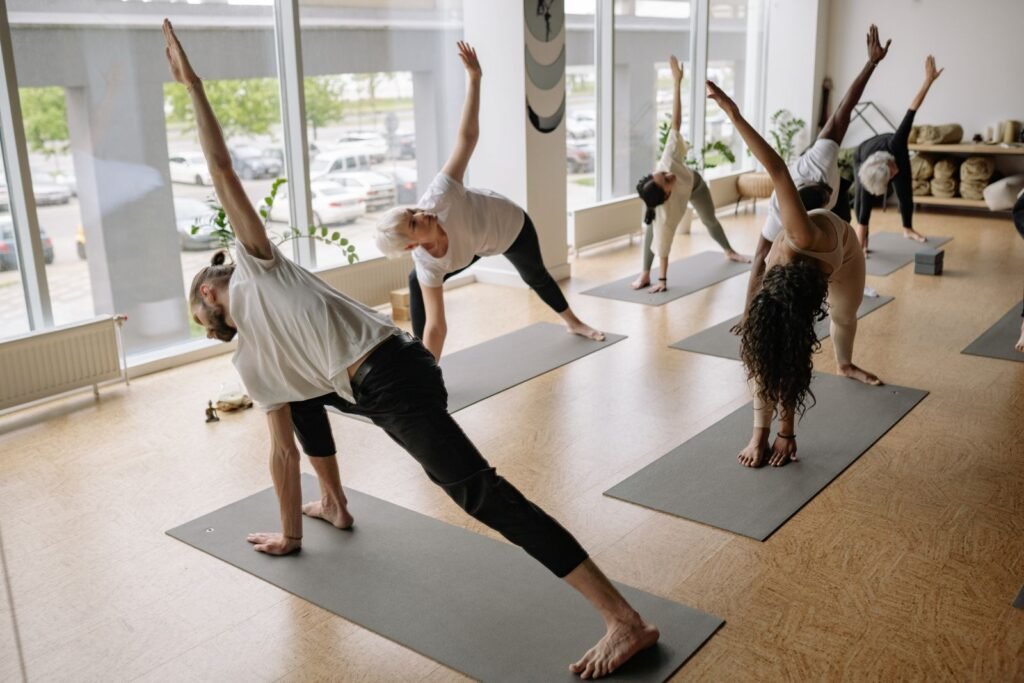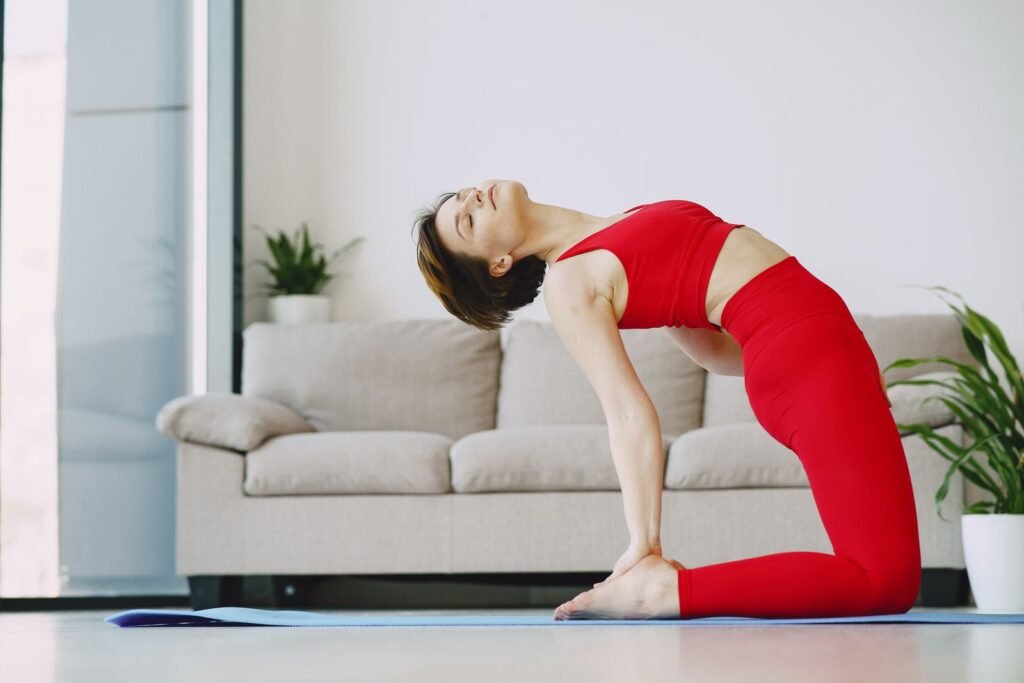
Morning yoga is a short sequence of gentle stretches, breathing exercises, and standing or seated poses done shortly after waking to loosen stiff joints, wake up the nervous system, and set a calm tone for the day. A typical session runs anywhere from 10 to 30 minutes and combines a few sun salutations with hip openers, spinal twists, and a grounding breath practice. You don’t need a studio, special clothing, or years of experience — a yoga mat, a quiet corner, and 10 minutes before coffee is enough to start. The biggest difference between morning yoga and practicing later in the day is that your muscles and connective tissue are cooler and slightly less pliable after sleep, so the pacing is slower and the poses are gentler than a typical afternoon flow.
Why Practice Yoga in the Morning Instead of at Night?
Morning and evening practice serve different purposes, and neither replaces the other. A morning session emphasizes activation: it raises your heart rate gently, mobilizes the spine after hours of stillness, and engages the sympathetic nervous system just enough to sharpen focus for the day ahead. An evening yoga practice does the opposite — it leans on longer holds, forward folds, and slower breathing to downshift the body toward sleep. If you only have time for one session, morning practice tends to have a stronger effect on daytime energy and mood, while evening practice has a stronger effect on sleep quality. Many practitioners eventually do both, using a five-minute morning routine to wake up and a longer evening wind-down to close the day.
What Are the Best Morning Yoga Poses for Beginners?
A beginner-friendly sequence of morning yoga poses should move from the floor to standing, gradually increasing range of motion as the body warms. Each pose can be held for 5 to 8 breaths, in this order:
- Cat-Cow (Marjaryasana-Bitilasana) — for spinal mobility
- Child’s Pose (Balasana) — a gentle stretch through the hips and lower back
- Downward-Facing Dog (Adho Mukha Svanasana) — lengthens the hamstrings and calves
- Low Lunge (Anjaneyasana) — opens the hip flexors
- Standing Forward Fold (Uttanasana) — releases the spine before standing upright
This progression respects the fact that connective tissue is stiffer in the morning, so it avoids deep backbends or forceful twists until the body has had a few minutes to warm up. If you’re completely new to yoga, it’s worth starting with our yoga for beginners guide before attempting a full sequence, and understanding the broader landscape of types of yoga helps you pick a style that matches your goals rather than following a routine that doesn’t fit your body.
What Is a Good 10-Minute Morning Yoga Routine?
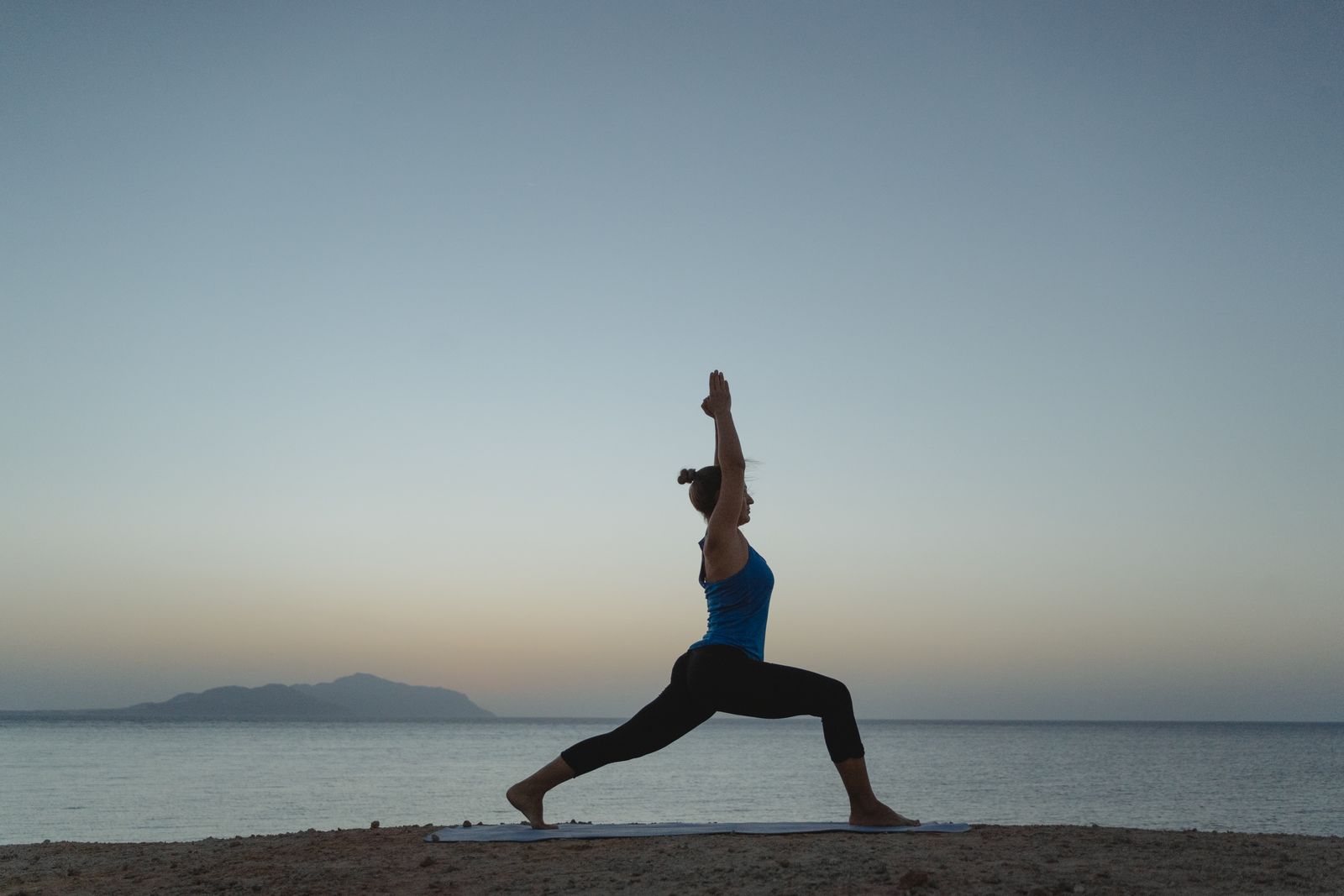
A focused 10-minute morning yoga routine works well when time is tight before work or school. Start with 1 minute of seated breathing to settle the mind, then move through 3 rounds of Sun Salutation A (Surya Namaskar A) at a slow pace, spending roughly 3 minutes total. Follow this with a 2-minute standing sequence — Warrior I into Warrior II on each side — to build heat and stability in the legs. Close with 2 minutes of seated spinal twists and a final minute lying in Savasana to let the nervous system settle before you stand up and start the day. This structure covers mobility, strength, and calm in a single short session, which is why it works as a repeatable daily habit rather than something you only do when you have a spare half hour. For a deeper dive into building this into a lasting habit, see our guide on daily yoga.
How Do You Build a Longer Morning Yoga Routine (20-30 Minutes)?
Once 10 minutes starts to feel easy, a 20 to 30 minute morning yoga routine adds depth without changing the underlying structure. Begin with 3 to 5 minutes of breathwork and gentle Cat-Cow to wake the spine. Move into 5 to 6 full rounds of sun salutations, alternating between Sun Salutation A and B to bring the shoulders and hip flexors into the warm-up. Add a standing balance sequence — Tree Pose (Vrksasana), Warrior III (Virabhadrasana III), and Half Moon Pose (Ardha Chandrasana) — for 5 to 7 minutes to sharpen focus and proprioception early in the day. Include one or two deeper hip openers, such as Pigeon Pose (Eka Pada Rajakapotasana) or Lizard Pose (Utthan Pristhasana), held for 60 to 90 seconds per side. Finish with a short seated meditation and Savasana. This longer format works particularly well as a weekend practice when you have more time than a typical weekday allows, and it pairs naturally with a broader yoga flow approach where poses link together through the breath rather than being held in isolation.
What Are the Benefits of Practicing Yoga First Thing in the Morning?
Practicing on an empty stomach before the day’s demands take over offers a few practical advantages over doing yoga later. Your schedule hasn’t filled up yet, so the session is less likely to get bumped by meetings, errands, or fatigue. Cortisol, the hormone that naturally peaks shortly after waking to help you feel alert, works alongside gentle movement to support wakefulness without the jittery feeling caffeine alone can cause. Morning movement also improves circulation to stiff joints and tight fascia that built up overnight, particularly in the hips, hamstrings, and lower back. Beyond the physical, starting the day with a few minutes of intentional breathing and movement has been widely reported by practitioners as improving mood and focus for the hours that follow, though the size of that effect varies from person to person. For a broader look at what the practice offers beyond the mat, our article on the benefits of yoga covers the physical and mental research in more depth.
What Morning Yoga Asanas Help Stiff Joints and Back Pain?
If you wake up with a stiff lower back or tight hips, certain morning yoga asanas target those areas specifically. Cat-Cow mobilizes the entire spine through flexion and extension and is often the very first movement worth doing before your feet even touch the floor fully. Sphinx Pose (Salamba Bhujangasana) offers a gentle backbend that decompresses the lower back without the intensity of a full Cobra Pose. Supine Spinal Twist (Supta Matsyendrasana), done lying on your back with knees dropped to one side, releases tension along the spine and into the glutes. Thread the Needle stretches the outer hip and piriformis, a common source of morning stiffness for people who sit for long stretches during the day. If back discomfort is a recurring issue rather than ordinary morning stiffness, it’s worth reading our dedicated guide on yoga for back pain, which goes further into pose selection and precautions.
How Does Morning Yoga Compare to Morning Cardio or Running?
Morning yoga and morning cardio train different systems, and comparing them directly misses the point of each. Running or a cardio workout raises heart rate quickly and builds cardiovascular endurance, but it does so on tissue that is still cold and less pliable right after waking, which raises the risk of strain if you skip a warm-up. Morning yoga poses, by contrast, are specifically sequenced to warm the body gradually, making it a natural warm-up before cardio rather than a replacement for it. Many practitioners use a short yoga sequence — 5 to 10 minutes — to mobilize the joints and activate the core before a run, then save a full yoga session for later in the day or for rest days. If your main goal is calorie burn and cardiovascular conditioning, pairing yoga with something like Zumba or another cardio format on alternating days tends to produce more balanced results than yoga alone.
Do You Need Special Equipment for a Morning Yoga Routine?
A morning yoga routine requires very little equipment to start. A yoga mat with reasonable grip is the only near-essential item, since bare floors or thin rugs can be slippery for standing poses like Warrior II or Triangle Pose. Beyond that, a block or a firm cushion helps beginners reach the floor comfortably in poses like Half Pigeon or seated forward folds without straining the hamstrings. A strap — or a bathrobe tie, which works just as well — assists with binds in poses like Cow Face Pose or a seated forward fold if your hamstrings are tight. Comfortable, non-restrictive clothing matters more than technical fabric; the main requirement is that it allows a full range of motion in the hips and shoulders. None of this needs to be expensive, and most people can build a complete home setup for under the cost of a single studio drop-in class.
What’s the Best Time and Environment for Morning Yoga?
Consistency matters more than a specific clock time. Practicing within 30 to 60 minutes of waking, before eating a full meal, tends to work best because the stomach is empty and the mind hasn’t yet been pulled into emails or to-do lists. A quiet space with enough room to extend your arms fully in every direction — roughly 6 feet by 4 feet — is sufficient for most home sequences. Natural light helps signal to your body that it’s time to be alert, so practicing near a window or, weather permitting, outdoors adds a small but real benefit. Temperature matters too: cooler rooms can make early stretches feel stiffer, so a few extra minutes of gentle movement at the start compensates for a lack of ambient warmth. If you’re searching for morning yoga classes near me because you’d rather practice with guidance and community than alone, in-person studio classes typically run 45 to 60 minutes and are worth trying alongside a home practice rather than instead of one.
How Do You Stay Motivated to Practice Yoga Every Morning?
The single biggest factor in maintaining a morning yoga habit is reducing the friction between waking up and starting to move. Laying out your mat the night before, picking a fixed time rather than “whenever there’s time,” and starting with a routine short enough that skipping it feels harder than doing it are the three most effective strategies reported by long-term practitioners. Tracking streaks, even informally on a calendar, provides a visual incentive that many people find more motivating than vague intentions to “practice more.” Pairing the habit with an existing morning anchor — right after brushing your teeth, or right before your first cup of coffee — uses habit-stacking to make the new behavior easier to remember. If motivation dips, shortening the session to just 5 minutes rather than skipping it entirely preserves the habit loop and makes it easier to build back up to a full routine.
Can Morning Yoga Help With Weight Management and Energy Levels?
Morning yoga on its own burns a modest number of calories compared to higher-intensity cardio, but its role in weight management is more indirect than direct. A morning practice supports better sleep patterns over time, and sleep quality is closely tied to appetite regulation and energy levels throughout the day. It also builds a consistent movement habit, which research on behavior change consistently shows is one of the strongest predictors of long-term exercise adherence — and adherence, more than any single workout, is what drives weight management results over months and years. For energy specifically, the combination of deep breathing and gentle movement increases circulation and oxygen delivery to muscles and the brain, which many practitioners describe as a clearer, steadier form of alertness than the sharper but shorter-lived spike from caffeine.
What Are Common Mistakes People Make With Morning Yoga?
A few mistakes come up again and again in morning practice, and most are easy to fix once you’re aware of them:
- Skipping the warm-up — moving straight into deep stretches or backbends while muscles are still cold from sleep raises the risk of strain in the hamstrings and lower back.
- Choosing a routine that’s too long or too advanced — this makes the habit feel like a chore rather than something sustainable; starting smaller and building up works better than starting big and quitting.
- Holding the breath during poses — breathing steadily throughout, rather than holding it, produces the calming effect that makes morning practice valuable in the first place.
- Skipping a glass of water beforehand — practicing on a completely empty stomach after overnight dehydration can cause lightheadedness during standing poses.
- Comparing yourself to others — measuring your own morning yoga poses against images of extremely flexible practitioners online can discourage beginners; the goal is consistency and how your body feels, not how a pose looks.
Questions People Ask About Morning Yoga
Is 10 minutes of morning yoga enough?
Yes, 10 minutes is enough to see real benefits if done consistently. A short sequence covering a few sun salutations, a standing pose, and a brief seated twist mobilizes the major joints and calms the nervous system. Consistency over years matters more than duration on any single day, so a reliable 10-minute habit outperforms an occasional 45-minute session.
Should you do morning yoga before or after eating?
Most practitioners do morning yoga before eating, on a mostly empty stomach, since twists, forward folds, and inversions are more comfortable without food weighing on the digestive system. A small glass of water beforehand is fine and often recommended. If you feel lightheaded practicing fasted, a few bites of a light snack 20 to 30 minutes before starting can help.
What if I’m not flexible enough for morning yoga poses?
Flexibility is a result of consistent practice, not a prerequisite for starting it. Beginner modifications exist for nearly every pose — bent knees in a forward fold, a block under the hand in a twist, or a shortened stance in a lunge. Morning stiffness is completely normal and is one of the reasons the practice exists in the first place.
Can morning yoga replace my regular workout?
Morning yoga complements rather than fully replaces strength training or cardio for most fitness goals. It builds mobility, balance, and a calm start to the day effectively, but for building significant muscle or cardiovascular capacity, pairing it with strength work or a cardio format like Zumba on other days produces more complete results.
What good morning yoga images or poses represent a strong start to the day?
Poses commonly associated with an energizing morning practice include Sun Salutation, Warrior I and II, Tree Pose, and a seated twist — all frequently pictured in “good morning yoga” imagery because they combine visible strength, balance, and calm in a single frame. Practically, the pose that matters most is whichever one you’ll actually do consistently each morning.
How long does it take to notice benefits from a daily morning yoga routine?
Many practitioners report feeling looser and calmer within the first one to two weeks of daily practice, largely from reduced morning stiffness and a steadier start to the day. Benefits tied to strength, balance, and flexibility typically become more noticeable after 4 to 8 weeks of consistent practice, similar to the general adaptation timeline seen in other forms of regular exercise.
Try This for Yourself
Reading about morning yoga poses is a reasonable starting point, but the real shift happens on the mat with someone guiding your breath, alignment, and pacing. If you’d like structured, live instruction that adapts to your flexibility and schedule, explore FitStrot’s online yoga classes and build a morning practice that actually sticks.
Related reading: daily yoga, yoga flow, evening yoga, benefits of yoga, and FitStrot’s online yoga classes.