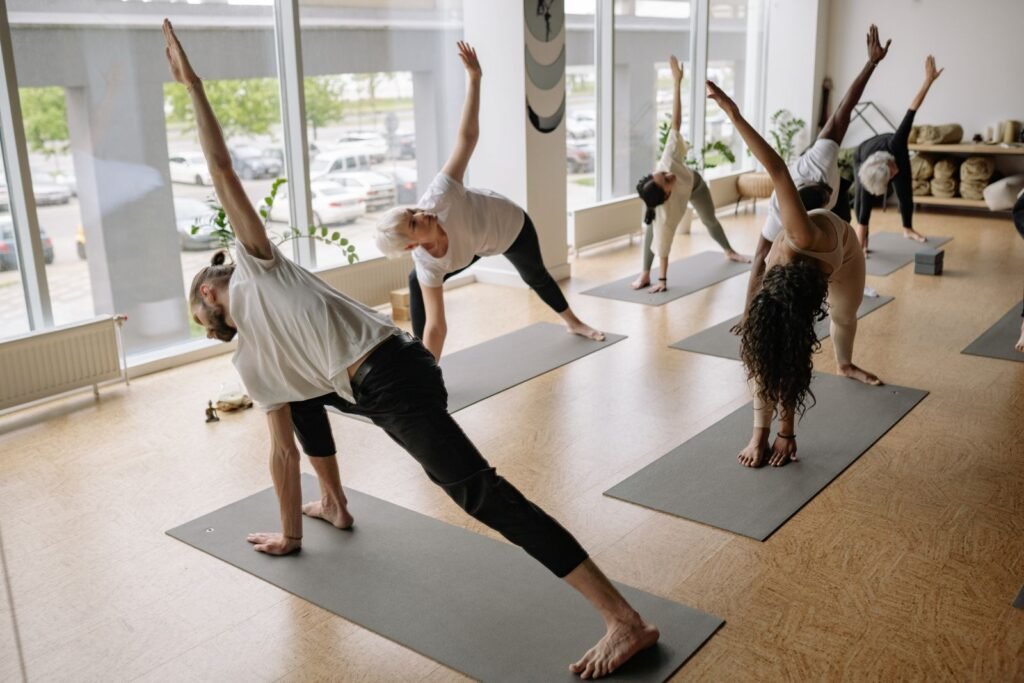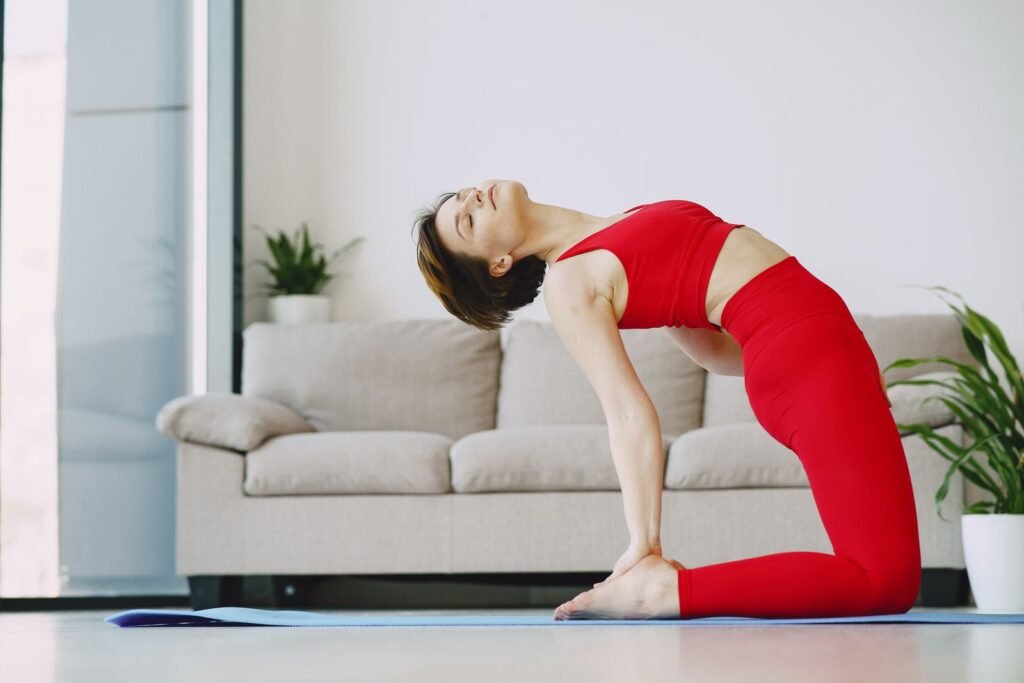
Evening yoga is a slower-paced practice done in the hours after work or dinner, using gentle stretches, longer holds, and calming breathwork to release the day’s physical tension and quiet an overactive mind before sleep. Unlike a morning session, which is built around energizing the body for the day ahead, evening yoga leans into forward folds, hip openers, and restorative poses that lower heart rate and signal to the nervous system that it’s time to wind down. A 15-20 minute evening practice, done consistently, is commonly cited by yoga teachers and sleep researchers as a useful tool for easing insomnia, reducing muscle stiffness from a day of sitting, and creating a reliable buffer between work stress and rest.
What Exactly Is Evening Yoga?
Evening yoga refers to any yoga practice performed roughly one to three hours before bedtime, typically after the day’s main activities are done. It’s distinct from a general yoga class in its intent: the sequencing, pacing, and breath pattern are all chosen to lower arousal rather than raise it. Where a morning yoga routine might include sun salutations and standing balances to wake up the muscles and mind, an evening session favors seated and floor-based poses, slow transitions, and extended exhales. The goal isn’t athletic performance — it’s nervous system regulation. Many practitioners treat it as the physical equivalent of a wind-down ritual, similar to dimming the lights or putting a phone away an hour before bed.
Can We Do Yoga in the Evening?
Yes, and for many people it’s actually a better fit than a morning session. Evening yoga is safe for almost everyone as long as the sequence is gentle rather than vigorous, since a highly stimulating practice too close to bedtime can have the opposite effect and leave you more alert. The key is choosing the right intensity for the time of night: a slow, restorative flow two to three hours before bed works well for most bodies, while a more active vinyasa or power-style class is better scheduled earlier in the evening, ideally finishing at least three hours before you plan to sleep so your body temperature and heart rate have time to settle.
Why Practice Yoga at Night Instead of in the Morning?
The honest answer is that neither time is objectively superior — it depends on what your body and schedule need. Evening yoga has a few distinct advantages worth naming directly:
- Your muscles are already warm. After a full day of movement, joints and connective tissue are typically more pliable than first thing in the morning, which makes deep stretches like hip openers and forward folds more accessible and lower-risk.
- It counteracts a day of sitting. Hours at a desk shorten the hip flexors and round the shoulders. An evening practice is a direct antidote to that specific pattern of tightness before it compounds overnight.
- It creates a transition ritual. The mind often needs a clear signal that “work mode” is over. A short evening flow gives the brain that off-switch in a way that scrolling a phone does not.
- It supports the parasympathetic nervous system. Slow, extended-exhale breathing activates the body’s rest-and-digest response, which is exactly the physiological state you want before sleep.
If you’re also curious about the other end of the day, our guide on morning yoga breaks down why an energizing sequence works differently and is better suited to waking the body up rather than calming it down.
What Are the Best Evening Yoga Poses?
The most effective evening yoga poses share three traits: they’re done at a slow pace, held longer than in a typical flow class, and rely on forward folds or gentle twists rather than deep backbends or inversions that can be overstimulating. Here is a practical, beginner-friendly sequence:
- Cat-Cow (Marjaryasana-Bitilasana) — 8-10 slow rounds to release tension along the entire spine and reconnect breath with movement.
- Child’s Pose (Balasana) — held for 60-90 seconds, this is one of the simplest ways to lower heart rate and quiet the mind.
- Seated Forward Fold (Paschimottanasana) — stretches the hamstrings and lower back while naturally encouraging a longer exhale.
- Reclining Bound Angle Pose (Supta Baddha Konasana) — opens the hips and chest while lying down, often used as a near-final pose before rest.
- Legs-Up-The-Wall (Viparita Karani) — a gentle inversion that’s an exception to the “avoid inversions at night” guideline, since it’s passive and widely recommended for calming the nervous system and easing tired legs.
- Supine Spinal Twist (Supta Matsyendrasana) — releases tension in the lower back and obliques after a day of sitting.
- Corpse Pose (Savasana) — always the closing pose, held for at least 5 minutes to let the nervous system fully settle.
For a broader look at how individual poses fit into a complete practice, see our yoga flow guide, which explains how sequencing choices change the effect of a session.
How Long Should an Evening Yoga Session Be?
Fifteen to thirty minutes is the sweet spot for most people. A session shorter than 10 minutes rarely gives the body enough time to shift out of an alert state, while anything longer than 45 minutes late at night risks pushing bedtime back and can occasionally leave you feeling more awake rather than sleepy, especially if the sequence includes more active poses. If you’re short on time, a 10-minute routine focused only on Child’s Pose, a forward fold, a gentle twist, and Savasana still delivers a meaningful calming effect. On nights where you have more time, extending the practice to 30 minutes with slower transitions and longer holds compounds the relaxation response.
Can Evening Yoga Help With Weight Loss?
Evening yoga for weight loss works differently than you might expect: the gentle, restorative styles typically practiced at night are not calorie-burning workouts in the way a vinyasa or power yoga class is, so don’t expect an evening flow alone to drive fat loss the way cardio or strength training does. Where evening yoga genuinely helps with weight management is indirect but well-supported: better sleep quality is linked to more stable appetite-regulating hormones, and reduced evening stress can lower cortisol-driven cravings and late-night snacking. If weight loss is a specific goal, pairing a more active style earlier in the evening — a flow-based or power session — with a shorter calming practice closer to bed gives you both the metabolic benefit and the sleep benefit. Our yoga for weight loss guide covers which styles and sequences are actually built for calorie expenditure.
How Do You Find Evening Yoga Classes Near Me?
If you’re searching for evening yoga classes near you, most local studios schedule their calming or restorative sessions between 6pm and 8:30pm specifically because that’s when people are looking to transition from work to rest. That said, in-person class times don’t always match real schedules — a session might start right as you’re finishing dinner or picking up kids. This is one of the biggest reasons people shift toward online yoga classes: you can join a live evening session from home at the exact time that works for you, without factoring in travel time on top of an already long day. A good online evening class should still offer live instructor feedback and a fixed group schedule, not just a pre-recorded video, so you get the accountability of a real class with the flexibility of home practice.
What’s the Difference Between Evening Yoga and Bedtime Yoga?
The terms overlap but aren’t identical. Evening yoga is the broader category — any practice done after work hours, which could range from a moderately active flow at 6pm to a fully restorative sequence at 9pm. Bedtime yoga specifically refers to the last 10-20 minutes before sleep and is almost always slow, floor-based, and low-intensity by design. Think of bedtime yoga as a subset of evening yoga with a narrower, more specific goal: falling asleep faster. If your evening is long, it’s common to do a moderately active vinyasa yoga session earlier on, then transition to a short bedtime-specific sequence of just three or four poses right before turning off the lights.
What Breathing Techniques Work Best for Evening Practice?
Breath is arguably more important than the poses themselves in an evening practice, because it’s the fastest lever for shifting the nervous system from alert to calm. A few techniques worth building into any evening routine:
- Extended exhale breathing — inhaling for a count of 4 and exhaling for a count of 6-8. A longer exhale relative to the inhale is one of the most direct ways to activate the parasympathetic nervous system.
- Alternate nostril breathing (Nadi Shodhana) — commonly used to balance the nervous system and quiet mental chatter before sleep.
- Ujjayi breath — a soft, ocean-like breath through a slightly constricted throat, often used throughout the physical poses to keep the pace slow and the mind anchored.
Pairing any of these with the physical sequence turns a simple stretch routine into a full nervous-system reset. For more on how breathwork fits into a complete practice, see our pranayama breathing techniques guide.
Should Evening Yoga Be Part of a Daily Routine?
Consistency matters more than intensity when it comes to evening yoga. Practicing daily, even for just 10-15 minutes, is generally more effective for sleep and stress management than one long 90-minute session once a week, because the nervous system responds well to a predictable, repeated cue. If you’re building a habit, our daily yoga guide walks through how to structure a sustainable routine that fits around a full workday rather than competing with it. Many people find it easiest to anchor the practice to an existing habit — right after brushing their teeth, or immediately after putting kids to bed — so it doesn’t rely on willpower alone each night.
What Should You Avoid Before an Evening Yoga Session?
A few common mistakes undercut the calming effect of an evening practice:
- Eating a heavy meal right before. A full stomach makes forward folds and twists uncomfortable and can interfere with the relaxation response. Aim to practice at least 60-90 minutes after a full meal.
- Checking your phone mid-session. Blue light and notifications undo much of the calming work of the practice. Put the phone in another room or on airlock mode.
- Choosing an overly vigorous sequence. Save backbend-heavy or fast-paced vinyasa flows for earlier in the day; they raise heart rate and core body temperature in ways that can delay sleep onset.
- Skipping Savasana. It’s tempting to end the session as soon as the “real” poses are done, but the final resting pose is where much of the nervous-system shift actually consolidates.
How Does Evening Yoga Compare to Meditation Alone?
Meditation and evening yoga both calm the mind, but they work through different entry points. Meditation asks the mind to settle first, which can be difficult if the body is still physically tense from the day. Evening yoga works the other way around: it releases physical tension first, through movement and stretch, which then makes it easier for the mind to settle afterward. Many practitioners find that pairing the two — a short physical sequence followed by five to ten minutes of seated stillness or a body scan — is more effective than either alone. If seated stillness alone feels difficult after a stimulating day, easing into it through gentle movement first, as covered in our meditation for beginners guide, tends to work better than trying to sit still cold.
Is Online Evening Yoga as Effective as In-Person Classes?
For most people, yes — particularly for the restorative, low-intensity style of practice that evening yoga typically calls for. Because evening sessions rely less on complex alignment cues and more on pacing, breath, and consistency, a well-taught online yoga for stress relief class can deliver nearly identical benefits to an in-studio session, minus the commute that often eats into already-limited evening hours. The main thing to look for is a live or interactive format rather than a static video, so an instructor can still cue breath timing and offer modifications in real time.
Questions People Ask About Evening Yoga
Can we do yoga in evening?
Yes, evening is a fully suitable and, for many people, preferable time to practice yoga. The key is matching intensity to the hour: gentle, restorative sequences work best in the two to three hours before bed, while more active styles are better scheduled earlier in the evening so the body has time to cool down and settle before sleep.
What time in the evening should I practice yoga?
Most teachers suggest practicing 60-90 minutes after your last meal and finishing at least an hour before you plan to sleep. For a bedtime-specific routine, the final 10-20 minutes before lights-out works well, provided the poses are slow and floor-based rather than active.
Is evening yoga better than morning yoga?
Neither is universally better — it depends on your goal. Morning yoga is better suited to energizing the body and setting intention for the day, while evening yoga is more effective for releasing accumulated tension and preparing the nervous system for sleep.
How many evening yoga poses do I need to do?
A short, effective sequence can be as few as 5-7 poses: a couple of gentle warm-up movements, one or two hip openers or forward folds, a twist, and a closing Savasana. Quality of breath and pacing matters more than the total number of poses.
Can evening yoga replace sleep medication or supplements?
Evening yoga is a natural, low-risk tool that many people find helpful for winding down, but it isn’t a medical treatment and shouldn’t be used as a substitute for prescribed medication without talking to a doctor. It works best as one part of a broader wind-down routine alongside consistent sleep habits.
What if evening yoga makes me feel more awake?
This usually means the sequence was too active for the time of night. Switch to slower-paced, floor-based poses, lengthen your exhales, and cut out any standing balances or vigorous flows within two hours of bedtime.
Try This for Yourself
Reading about evening yoga is useful, but the actual calming effect only shows up once you practice it with proper guidance and consistency. FitStrot’s online yoga classes include live evening sessions built specifically around wind-down sequencing, breathwork, and instructor feedback in real time — so you can build the habit without leaving home or guessing at the right poses.
Related reading: Morning Yoga, Daily Yoga, Yoga Flow, Yoga for Weight Loss, and FitStrot’s online yoga classes.