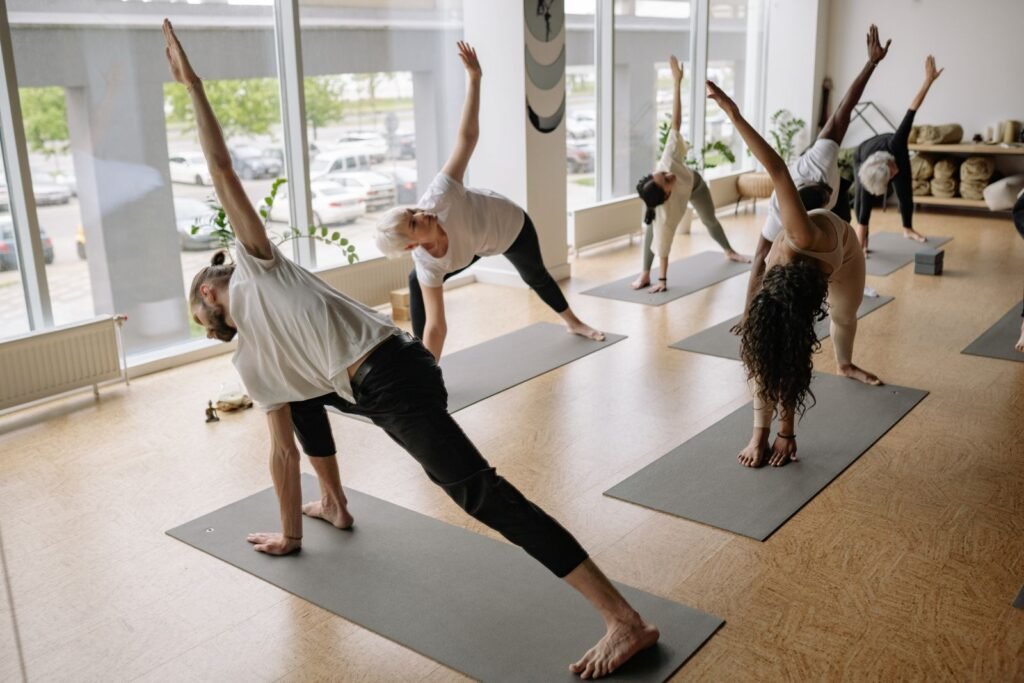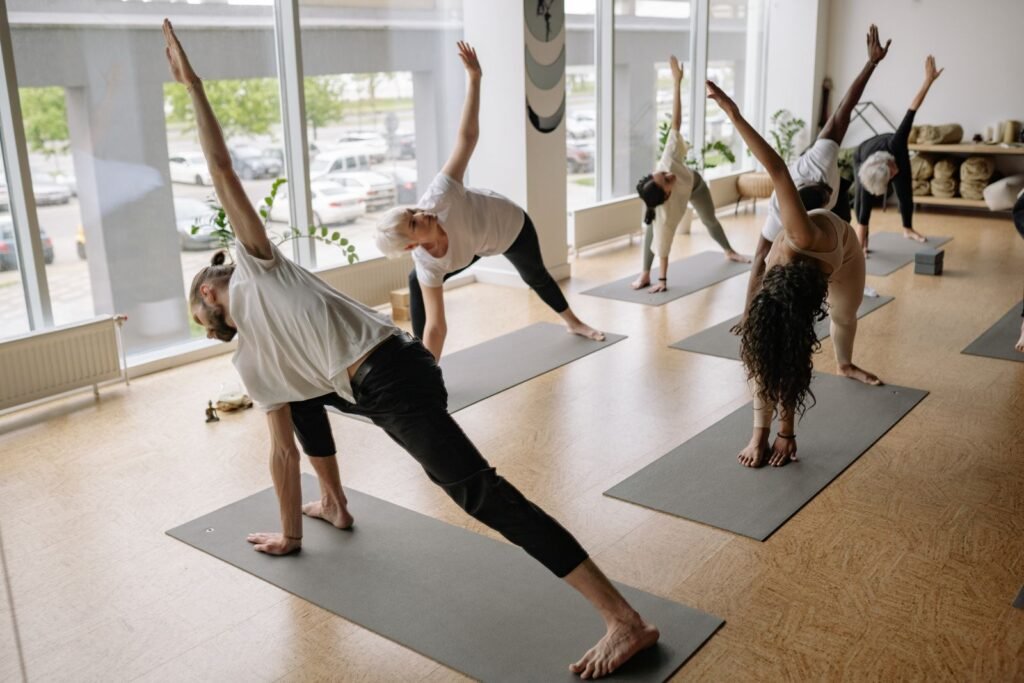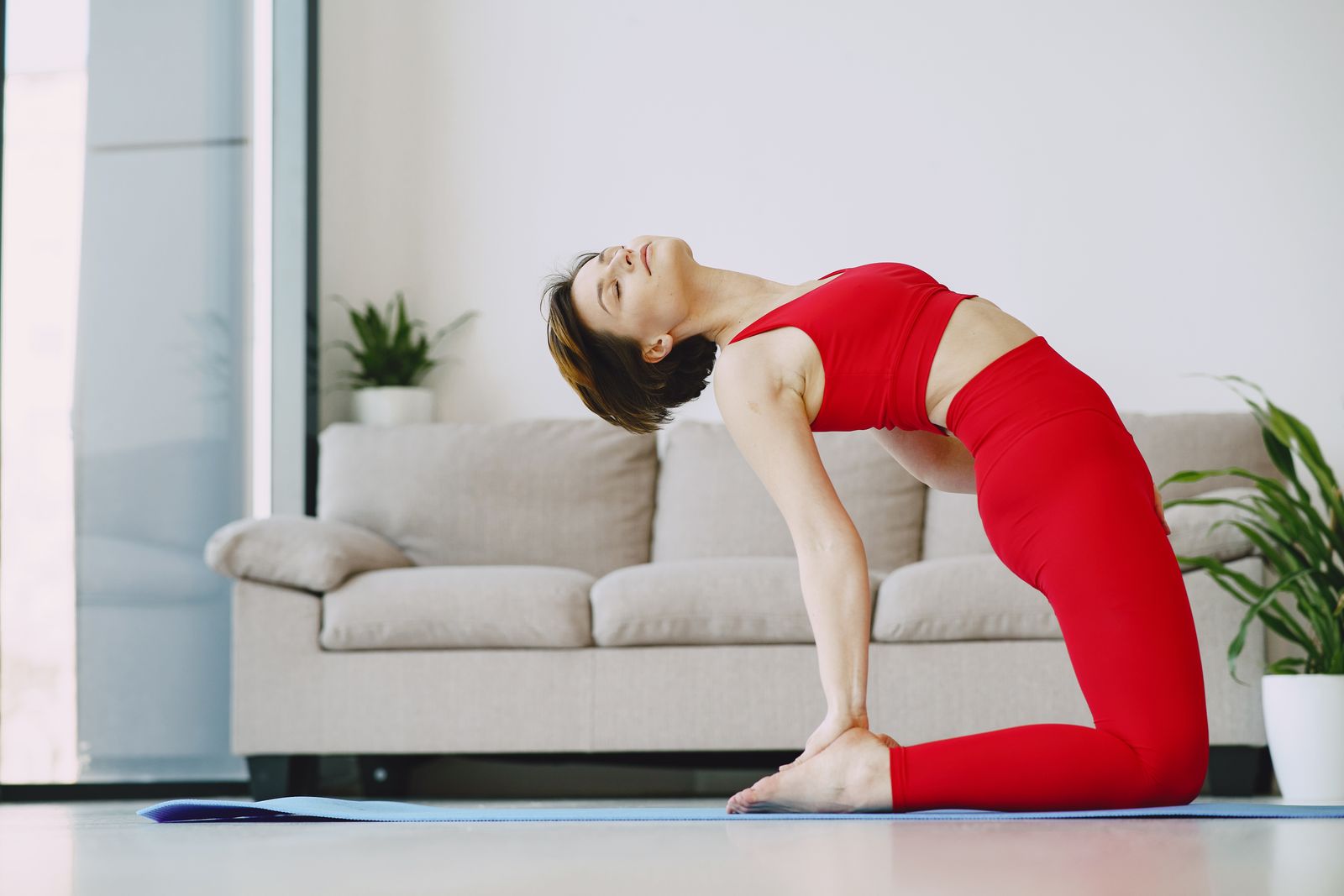
Yoga at home means practicing yoga poses, breathing exercises, and meditation in your own space, using nothing more than a mat, a few square feet of floor, and 15 to 45 minutes of your day. You don’t need a studio membership, fancy equipment, or years of flexibility to start. A basic home yoga practice can begin with five foundational poses, a short breathing routine, and a consistent time slot, whether that’s early morning before work or a wind-down session before bed. The key to making yoga at home actually stick is treating it like a habit you build in stages, not a workout you either “do right” or skip entirely.
Why Practice Yoga at Home Instead of a Studio?
Home practice removes the two biggest barriers that stop people from starting yoga in the first place: cost and commute. A monthly studio membership in most Indian cities runs anywhere from a few thousand rupees upward, plus the time spent traveling to and from class. Practicing at home also removes performance anxiety. Many beginners feel self-conscious in a room full of experienced practitioners, and that discomfort alone can be enough to make someone quit before they’ve given yoga a fair chance. At home, you set the pace, repeat a pose as many times as you need, and skip anything that doesn’t feel right for your body that day. If you’re weighing the pros and cons more broadly, our guide on how to start yoga covers both the studio and home-practice routes in detail.
How Do You Do Yoga at Home as a Complete Beginner?
Start with a clear, small routine rather than trying to replicate a full studio class. A simple structure that works for most beginners looks like this: two minutes of seated breathing to settle in, five to six foundational poses held for 30 to 60 seconds each, and a two-minute final relaxation in Savasana. Foundational poses to begin with typically include Mountain Pose (Tadasana), Downward-Facing Dog, Cat-Cow, Child’s Pose, and a gentle seated twist. Our full walkthrough on how to do yoga breaks down proper alignment cues for each of these so you’re not guessing at form from a video alone. The biggest beginner mistake is trying to hold advanced poses before the basics feel stable. Give each pose at least two weeks of regular practice before adding complexity.
What Do You Actually Need to Set Up a Home Yoga Space?
You need less than most people assume. A non-slip mat is the one non-negotiable purchase, since practicing on a rug or bare floor increases the risk of slipping during standing poses. Beyond that, a folded blanket or two thick towels can substitute for yoga blocks, and a belt or long scarf works in place of a yoga strap for stretches where your hands can’t quite reach your feet. Choose a spot with enough clear floor space to stretch your arms fully in every direction, roughly 6 feet by 4 feet, away from furniture edges. Natural light and quiet help, but they’re not essential. Many practitioners find that keeping the same spot dedicated to practice, even if it’s a corner of the bedroom, builds a psychological cue that makes showing up easier over time.
How Do You Start Yoga at Home if You’ve Never Practiced Before?
Begin with three sessions a week of 15 to 20 minutes each rather than committing to daily practice immediately. Consistency at a sustainable frequency beats an ambitious daily goal that collapses after five days. Pick a fixed time, morning practice tends to have the highest adherence because it happens before the day’s obligations pile up, and our guide to morning yoga has a ready-made 20-minute sequence you can follow along with. Track your sessions on a simple calendar or habit app for the first month; the visual streak is a stronger motivator than most people expect. Once three sessions a week feels easy, extend either the session length or the weekly frequency, but change only one variable at a time.
Can Yoga at Home Help With Weight Loss?
Yoga can support weight loss when it’s combined with mindful eating and consistent practice, though it burns fewer calories per session than high-intensity cardio. Dynamic styles like Vinyasa and Power Yoga, along with practices like Surya Namaskar (Sun Salutations), raise heart rate more than restorative styles and contribute meaningfully to a calorie deficit over weeks of regular practice. The bigger contribution yoga makes to weight management is often indirect: it improves sleep quality, reduces stress-driven eating, and builds body awareness that makes people notice hunger and fullness cues earlier. For a home routine focused specifically on this goal, our yoga for weight loss guide sequences poses in a way that keeps the body moving continuously rather than resting between static holds.
Is It Safe to Practice Pregnancy Yoga at Home?
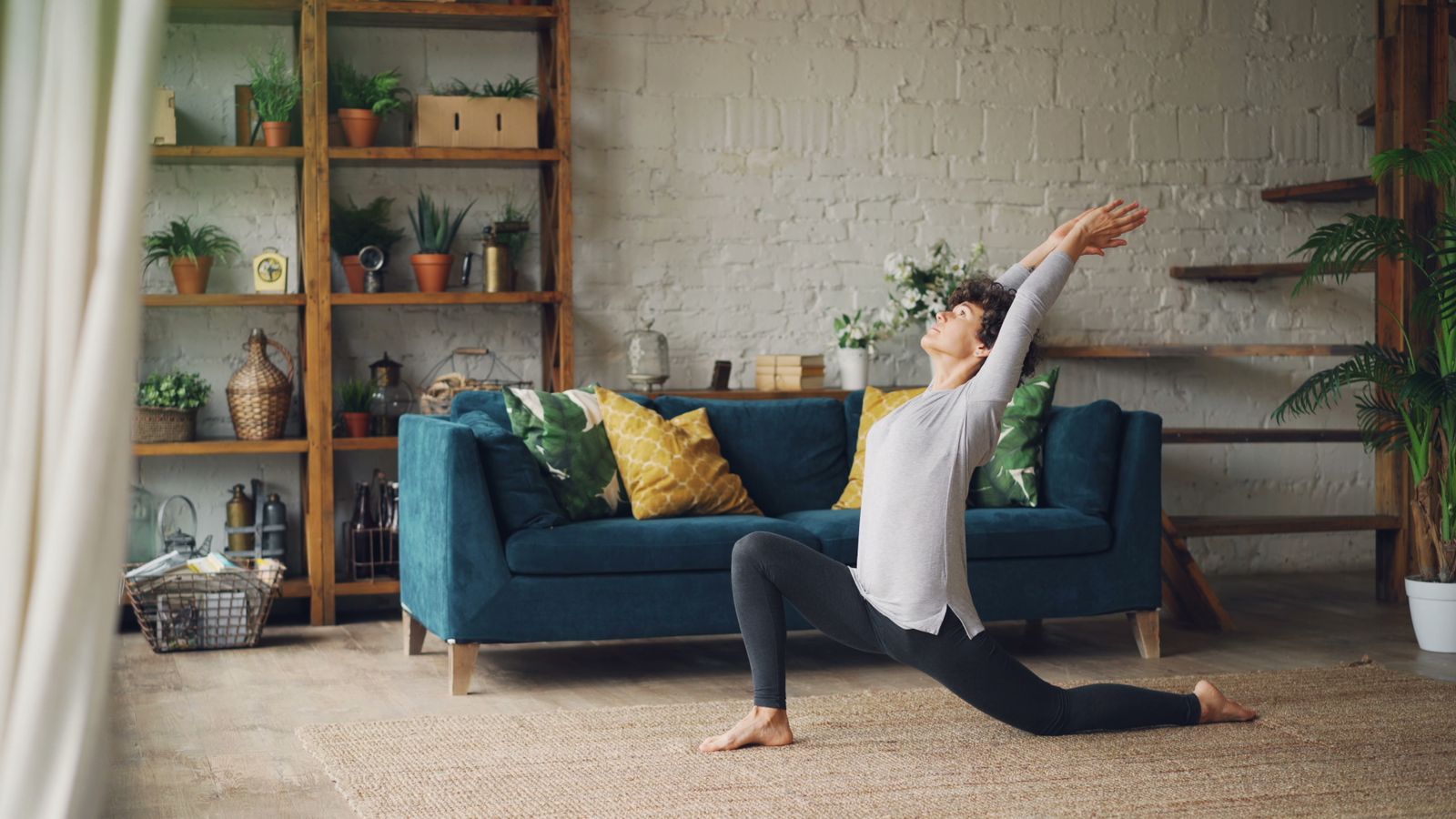
Prenatal yoga can be practiced safely at home during a low-risk pregnancy, but it requires modifications that change by trimester and should be cleared with your doctor or midwife first, especially if you’re new to yoga or have any pregnancy complications. Generally accepted precautions include avoiding deep twists that compress the abdomen, skipping poses that involve lying flat on the back for extended periods after the first trimester, and avoiding hot yoga entirely due to overheating risk. Gentle standing poses, supported cat-cow, side-lying rest positions, and breathing work are typically considered safe throughout pregnancy when done without strain. Our dedicated pregnancy yoga resource covers trimester-specific sequences, and it’s worth pairing that with a session led by a prenatal-certified instructor at least once before practicing solo, so you know what proper alignment feels like in your changing body.
How Do You Practice Kriya Yoga at Home?
Kriya Yoga is a meditative technique centered on controlled breathing (pranayama) and internal energy awareness, traditionally taught through direct instruction from a teacher rather than learned purely from books or videos. It was popularized in the West largely through Paramahansa Yogananda’s writings, and many lineages consider the specific technique something that should be received through initiation rather than self-taught. For home practice, most accessible versions focus on foundational breath awareness: sitting upright with a straight spine, practicing slow diaphragmatic breathing, and building concentration through a fixed point of focus, often the space between the eyebrows. If you’re drawn to Kriya specifically, look for a certified teacher who can guide the traditional technique properly; what you can safely self-practice at home in the meantime is basic pranayama and seated meditation, which our pranayama breathing techniques guide explains step by step.
What’s the Difference Between “How to Yoga at Home” and Following a Structured Program?
Searching “how to yoga at home” usually reflects wanting a simple starting point, and the honest answer is that unstructured practice works for a while but tends to plateau without guidance. A structured program, whether that’s a beginner course, a certified yoga at home trainer, or a themed 30-day sequence, adds progression: each week builds on the last rather than repeating the same five poses indefinitely. If budget is the reason you’re avoiding a trainer, many certified instructors now offer live online sessions at a fraction of in-person studio rates, which keeps the accountability and correction benefits of guided practice without the commute or the premium price tag.
Can You Learn Yoga at Home Without Ever Attending a Class?
Yes, many practitioners learn entirely at home using video sequences, apps, and written guides, though self-taught practice carries a higher risk of alignment mistakes going uncorrected for months. The workaround is to occasionally record yourself in poses like Downward Dog or Warrior II and compare your form against reference images or a mirror, checking that knees track over ankles and the spine stays neutral rather than rounded. Our types of yoga overview is a useful starting point before you commit to a specific style, since Hatha, Vinyasa, Yin, and Restorative all suit different goals and body types, and choosing the wrong one early on is a common reason people quit within the first month.
What Should a Weekly Yoga at Home Schedule Look Like?
A sustainable weekly structure alternates intensity so the same muscle groups aren’t loaded every single day. A commonly recommended pattern spreads the week across four session types:
| Session Type | Frequency per Week | Focus |
|---|---|---|
| Dynamic (Vinyasa or Sun Salutations) | 2 sessions | Cardiovascular benefit |
| Restorative or Yin | 2 sessions | Flexibility and recovery |
| Breathing and meditation (no poses) | 1 session | Nervous system reset |
| Rest days | 2 days | Recovery |
This rotation prevents the plateau that comes from doing an identical routine daily and reduces overuse strain in the hips, hamstrings, and lower back, which are the areas most commonly overworked in beginner practice. Adjust the ratio based on your goal: weight loss goals lean toward more dynamic sessions, while stress relief and flexibility goals lean toward more restorative ones.
How Do You Find a Yoga at Home Trainer Near You?
“Yoga at home near me” searches are typically looking for one of two things: an instructor who travels to your house in person, or a live online trainer who can see and correct your form over video call. In-person home visits are common in larger Indian cities but come at a premium compared to group classes. Live online personal training has closed much of that gap, since a certified instructor can still watch your alignment in real time and adjust the session to your goals, whether that’s yoga for back pain, prenatal practice, or general fitness. When vetting a trainer, ask about their certification body, years of teaching experience, and whether they customize sequences or run the same class for everyone; personalization is usually the biggest difference between a trainer worth paying for and a generic recorded video.
What Are the Most Common Mistakes People Make Practicing Yoga at Home?
A handful of errors show up again and again in home practice, and most are easy to fix once you know to watch for them:
- Skipping the warm-up: Jumping straight into deep stretches raises injury risk in cold muscles, particularly in the hamstrings and lower back.
- Practicing on an unstable or slippery surface: This undermines balance poses like Tree Pose or Warrior III regardless of how much strength or flexibility a person has.
- Holding the breath during effortful poses: Steady breathing throughout every pose, including strength-based ones, keeps the nervous system calm and prevents unnecessary tension.
- Comparing your flexibility to instructors in videos: Pushing into pain rather than a mild stretch sensation is one of the fastest ways to turn a beneficial practice into an injury.
If something is sharp, pinching, or radiating, that’s a signal to back off, not push through.
How Long Before You See Results from a Home Yoga Practice?
Most people notice improvements in flexibility and stress levels within two to four weeks of consistent practice, three to four sessions a week. Strength gains in poses like Plank or Warrior sequences typically become noticeable around the six-to-eight-week mark, and changes in body composition, if weight loss is a goal, follow a similar or slightly longer timeline since they depend on overall calorie balance rather than yoga alone. Sleep quality and stress reduction are often the fastest-reported benefits, sometimes within the first one to two weeks, because the parasympathetic nervous system responds quickly to slow, controlled breathing. Progress isn’t linear, some weeks feel like a plateau, and that’s normal rather than a sign the practice isn’t working.
Questions People Ask About Yoga at Home
How to do yoga at home?
Set aside a quiet space with a non-slip mat, start with two minutes of seated breathing, move through five to six beginner poses like Mountain Pose, Cat-Cow, Downward Dog, and Child’s Pose held for 30 to 60 seconds each, then finish with a short relaxation in Savasana. Follow a beginner video or written sequence for the first few weeks until the poses feel familiar in your body.
How to do yoga at home to reduce weight?
Focus on dynamic styles like Vinyasa flow and repeated Surya Namaskar (Sun Salutation) rounds, which keep the heart rate elevated and burn more calories than static holds. Combine three to four sessions a week with mindful eating, since yoga’s biggest weight-loss contribution often comes from better sleep and reduced stress eating rather than calories burned in the session alone.
How to do yoga at home in Hindi?
घर पर योग शुरू करने के लिए एक शांत जगह चुनें, योगा मैट बिछाएं, और सांस लेने के सरल अभ्यास से शुरुआत करें। इसके बाद ताड़ासन, मार्जरी आसन, और बालासन जैसे बुनियादी आसन 30 से 60 सेकंड तक करें, और अंत में शवासन में विश्राम करें। नियमित अभ्यास से कुछ ही हफ्तों में लचीलापन और तनाव में कमी महसूस होती है।
How to do yoga at home by yourself?
Practicing solo works well once you’ve learned correct alignment, either from a class, a certified trainer, or careful video instruction. Use a mirror or record short clips of yourself in key poses to check form, keep sessions short and consistent (15 to 20 minutes, three times a week to start), and progress gradually rather than attempting advanced sequences before basics feel stable.
How to do yoga at home during pregnancy?
Get clearance from your doctor first, then focus on gentle standing poses, supported Cat-Cow, side-lying rest, and breathing work, avoiding deep twists, prolonged time flat on your back after the first trimester, and any hot or intense practice. A prenatal-certified instructor session, even just once, helps you learn safe modifications before practicing independently at home.
How to do yoga at home in Kannada?
ಮನೆಯಲ್ಲಿ ಯೋಗ ಪ್ರಾರಂಭಿಸಲು ಶಾಂತ ಸ್ಥಳವನ್ನು ಆಯ್ಕೆಮಾಡಿ, ಜಾರದ ಚಾಪೆಯನ್ನು ಬಳಸಿ, ಮತ್ತು ಸರಳ ಉಸಿರಾಟದ ಅಭ್ಯಾಸದಿಂದ ಆರಂಭಿಸಿ. ನಂತರ ತಾಡಾಸನ, ಮಾರ್ಜರಿ ಆಸನ ಮತ್ತು ಬಾಲಾಸನದಂತಹ ಮೂಲಭೂತ ಆಸನಗಳನ್ನು 30 ರಿಂದ 60 ಸೆಕೆಂಡುಗಳ ಕಾಲ ಅಭ್ಯಾಸ ಮಾಡಿ, ಕೊನೆಯಲ್ಲಿ ಶವಾಸನದಲ್ಲಿ ವಿಶ್ರಾಂತಿ ಪಡೆಯಿರಿ.
Try This for Yourself
Reading about yoga at home only goes so far, real progress comes from consistent, guided practice. FitStrot’s online yoga classes connect you with certified instructors who can watch your form, correct alignment in real time, and build a routine around your specific goals, whether that’s weight loss, flexibility, prenatal practice, or stress relief, all from the comfort of your own home.
Related reading: How to Do Yoga, How to Start Yoga, Morning Yoga, Benefits of Yoga, and FitStrot’s online yoga classes.