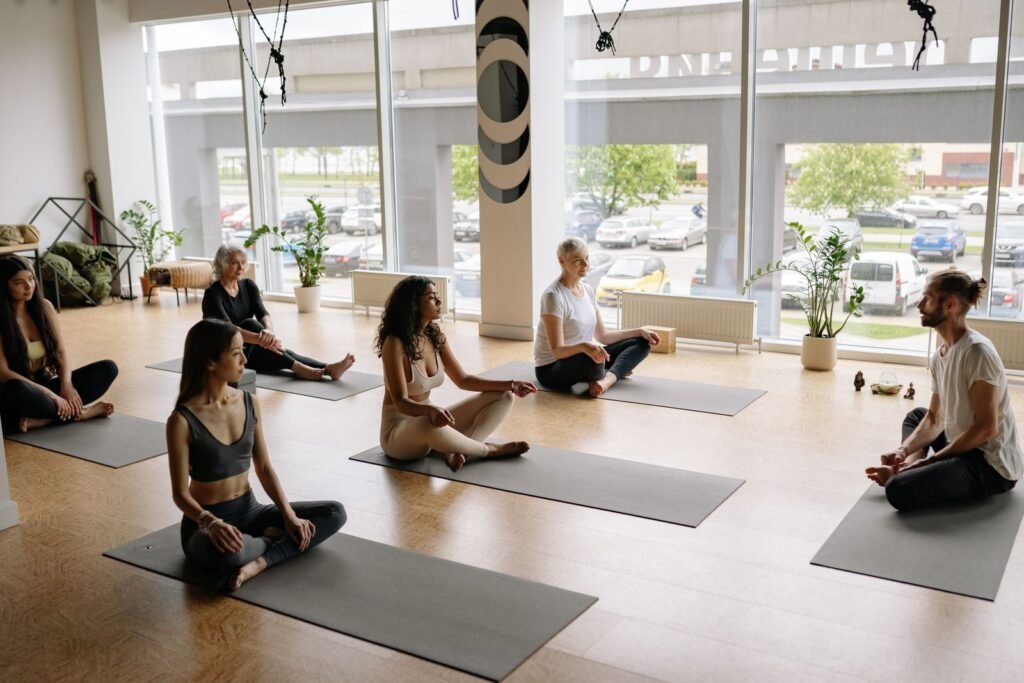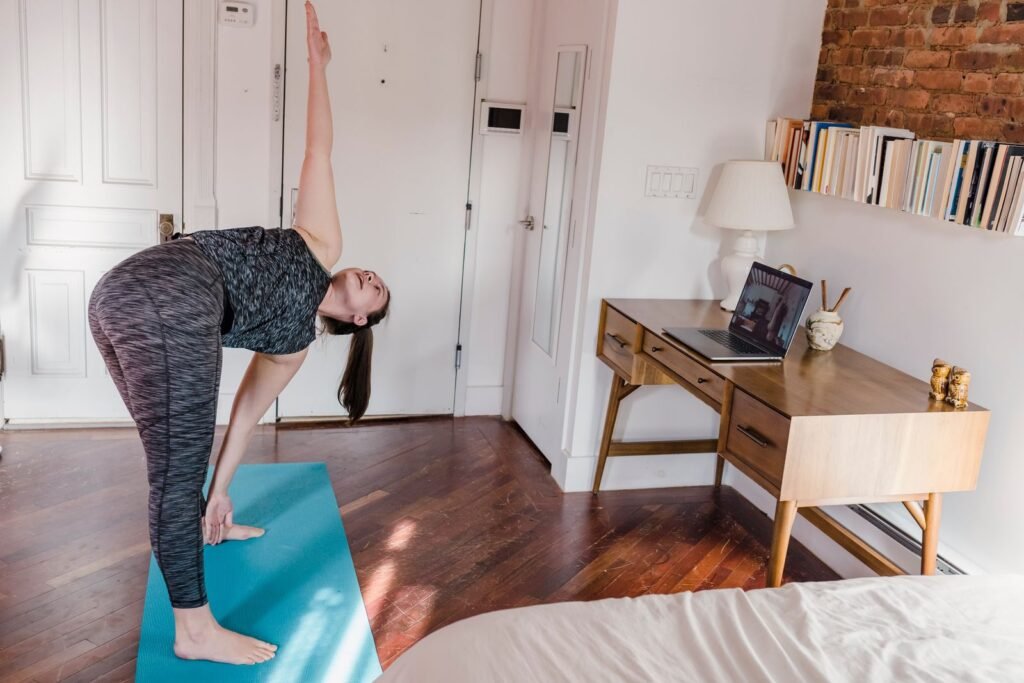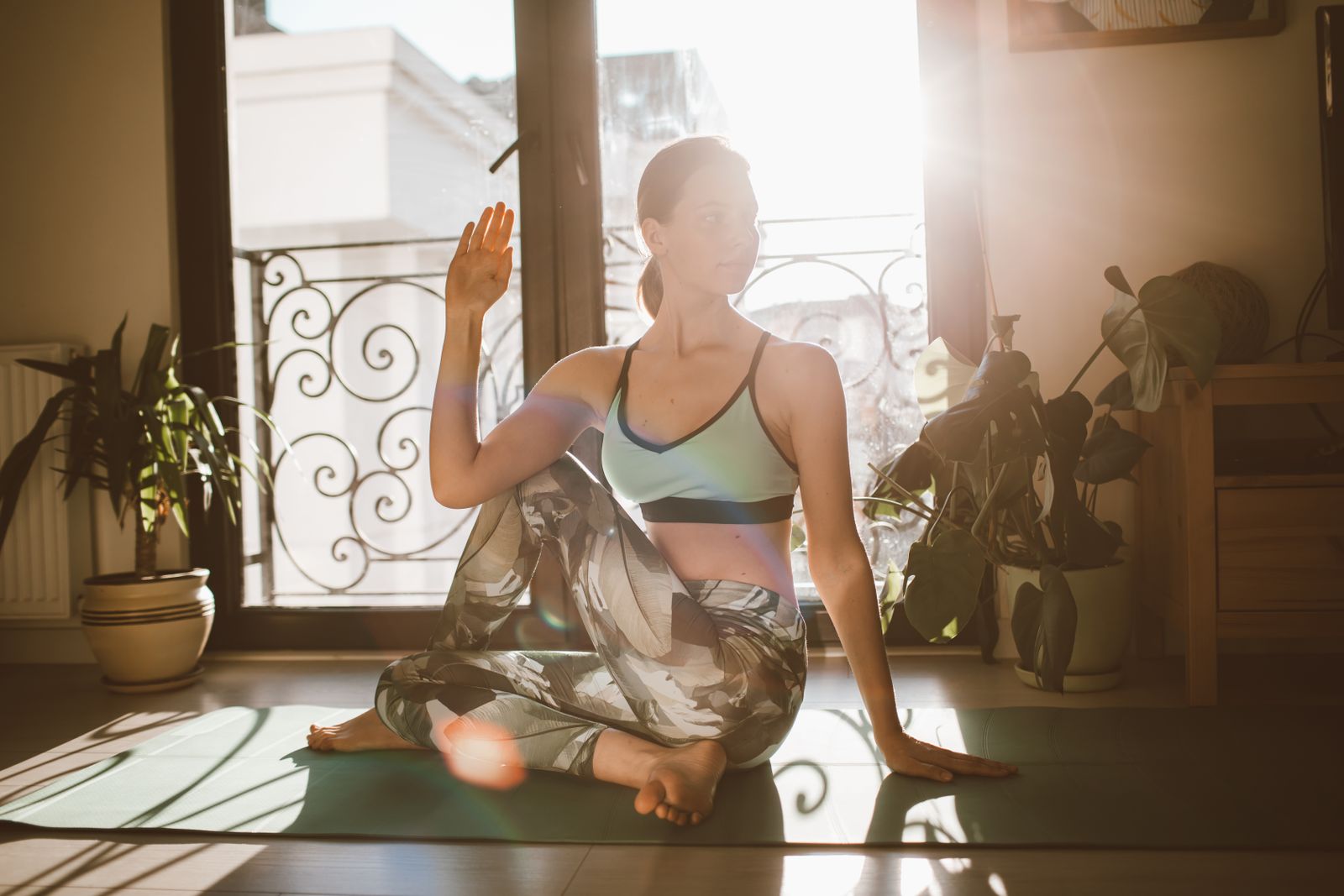
A self care yoga routine is a short, repeatable sequence of gentle poses, breathwork, and stillness you practice on purpose to look after your own physical and emotional wellbeing, not to hit a fitness target. The most sustainable versions run 15 to 30 minutes, combine two or three grounding poses with slow breathing and a few minutes of rest, and get repeated at a consistent time of day so the body starts to recognize it as a signal to downshift. You don’t need advanced flexibility, special equipment, or an hour of free time. You need a small, honest commitment that you can actually keep on a bad week, not just a good one.
What Exactly Counts as Self-Care Yoga?
Self-care yoga is different from a fitness-focused yoga class in intent, not necessarily in the poses themselves. A power vinyasa class is built around building heat, strength, and cardiovascular output. A self-care yoga routine is built around regulating your nervous system, noticing how your body feels without judgment, and giving yourself permission to slow down. The same downward dog or child’s pose can serve either goal depending on the pace, the breath, and the attention you bring to it.
This distinction matters because a lot of people quit yoga as self-care because they’re secretly measuring it against a fitness yardstick, then feeling like they failed when a slow, restorative session didn’t leave them sweaty. If you’re exploring different approaches, it helps to understand the different types of yoga so you can pick a style that matches self-care rather than performance goals on the days you need it most.
Why Does Self-Care Yoga Actually Help?
Slow, breath-led movement activates the parasympathetic nervous system, the branch responsible for rest, digestion, and recovery, as opposed to the sympathetic “fight or flight” branch that dominates during stress. According to Johns Hopkins Medicine, scientific evidence points to yoga supporting stress management, mental health, mindfulness, and quality sleep. That’s a meaningful claim because it means the benefit isn’t just a feeling of relaxation in the moment; it’s a measurable shift in how your body handles stress over time.
Practically, this shows up as slower, deeper breathing, a lower heart rate, softer shoulders and jaw, and a mind that stops circling the same three worries. If you want the deeper physiological explanation, our guide to yoga for stress relief breaks down what’s happening in the nervous system during a session. The self-care angle is simply applying that same mechanism deliberately and regularly, rather than only reaching for yoga when you’re already overwhelmed.
How Do You Build a Self-Care Yoga Routine From Scratch?
Start smaller than feels necessary. A realistic self-care yoga routine has four parts: arrival, movement, stillness, and intention. Arrival is one to two minutes of simply sitting or lying down and noticing your breath without trying to change it. Movement is eight to fifteen minutes of slow, connected poses. Stillness is three to five minutes of a restorative hold or seated meditation. Intention is a closing moment, sometimes thirty seconds, where you name what you needed from the practice today.
Here’s a simple weekly structure that works for most beginners:
- Monday and Thursday: A gentle hatha yoga sequence focused on hips and shoulders, where tension commonly accumulates from desk work.
- Tuesday and Friday: A short yin yoga session with two or three long-held floor poses.
- Wednesday: Ten minutes of pranayama breathing techniques with no physical postures at all.
- Weekend: A slightly longer restorative session, or simply rest if your body is asking for it.
The specific days matter less than the pattern: alternating gentle movement with pure stillness keeps the routine from becoming another task you’re grinding through.
Which Poses Belong in a Self-Care Sequence?
Not every pose serves a self-care goal equally well. The most useful poses for this purpose share one trait: they can be held for longer than a single breath without straining. A short, tested sequence looks like this.
- Child’s Pose for one to three minutes, forehead resting on the mat, arms extended or by your sides. This is often the first pose people learn, and it remains one of the most effective for signaling safety to the nervous system.
- Cat-Cow for eight to ten slow rounds, synchronizing movement with breath to release tension along the spine.
- Low Lunge held for a minute per side to open the hip flexors, an area that tightens from long periods of sitting.
- Seated Forward Fold for two minutes, which has a naturally calming effect on the mind partly because folding forward is associated with introspection and rest.
- Legs-Up-The-Wall Pose for five to ten minutes, a passive inversion widely recommended for reducing fatigue and settling an anxious mind.
- Corpse Pose (Savasana) for at least three minutes to close the practice, allowing the nervous system to fully integrate the session.
If you want more detail on any of these, our library on yoga poses for beginners covers alignment cues and common mistakes for each one, and restorative yoga poses goes deeper into longer, supported holds if you want to extend your stillness time.
What Role Does Breathwork Play in Self-Care Yoga?
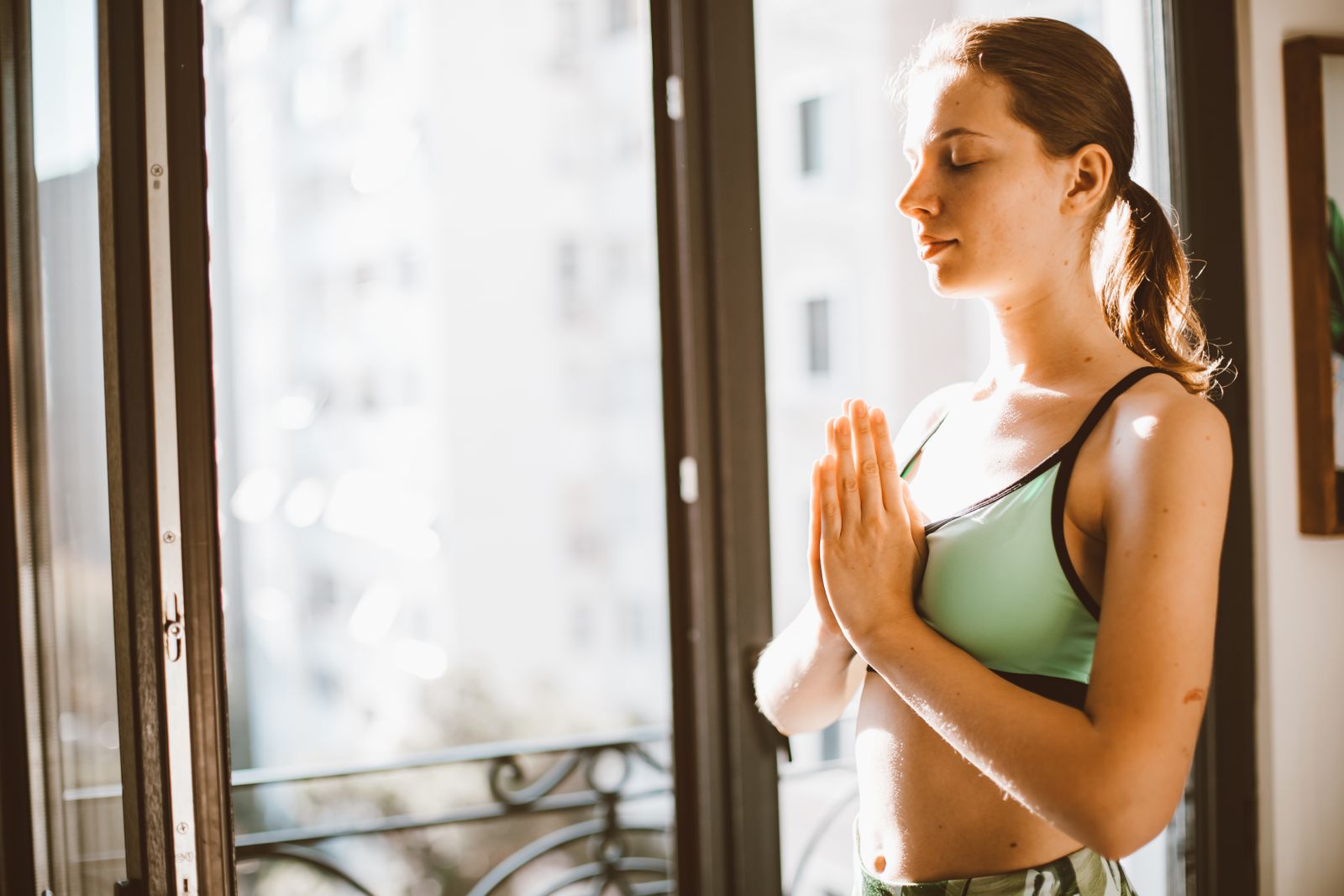
Breath is arguably the single most important tool in a self-care yoga routine, more so than any pose. Slow, extended exhales are one of the most direct ways to signal safety to the nervous system, because a longer exhale relative to the inhale is associated with parasympathetic activation. A simple technique to try is a 4-7-8 pattern: inhale for four counts, hold for seven, exhale for eight, repeated four to six times.
Alternate nostril breathing, known in Sanskrit as Nadi Shodhana, is another accessible option that many practitioners find balances mental energy without requiring any physical flexibility at all, making it usable even on days when getting onto a mat feels like too much. For a fuller walkthrough of specific patterns and when to use each one, see our guide to pranayama breathing techniques.
How Long Should a Self-Care Yoga Session Be?
Duration matters far less than consistency. A five-minute breathing and stretching practice done daily builds more nervous system resilience over months than a single ninety-minute class done once and then abandoned. For most people building a new habit, 15 to 20 minutes is the sweet spot: long enough to feel a genuine shift, short enough that skipping it feels like a real loss rather than an easy trade-off on a busy day.
If you’re short on time, a three-pose sequence, one hip opener, one forward fold, one restorative hold, paired with five minutes of breathwork, still delivers a meaningful reset. The goal of self-care yoga isn’t to maximize minutes on the mat; it’s to interrupt a stress cycle before it compounds.
What’s the Best Time of Day for a Self-Care Yoga Practice?
There isn’t one universally correct time, but each option serves a different function. A practice done first thing in the morning sets a calmer baseline for the whole day and pairs naturally with a broader morning routine for wellness that might also include hydration, light movement, or journaling. A midday practice, even five minutes at a desk or in a quiet room, interrupts accumulating stress before it peaks. An evening practice, especially one weighted toward restorative poses and Savasana, helps the body transition toward sleep.
Many people eventually build two touchpoints: a brief morning grounding sequence and a longer evening wind-down. If you only have room for one, choose based on when your stress tends to spike hardest, mornings for anticipatory anxiety, evenings for an overstimulated nervous system that struggles to switch off.
How Does Self-Care Yoga Connect to Gratitude and Emotional Wellbeing?
Physical practice and emotional processing aren’t separate tracks in yoga; they’re deliberately linked. Ending a self-care session with even sixty seconds of naming something you’re grateful for reinforces the calming physiological state you just built through movement and breath, rather than letting your mind immediately jump back into a to-do list. This isn’t a spiritual add-on so much as a practical technique for extending the benefit of the practice past the moment you roll up your mat.
Our piece on yoga and gratitude explores this connection in more depth, including simple prompts you can use if journaling doesn’t come naturally to you. Pairing movement with a brief gratitude practice is one of the most evidence-supported ways to shift a session from purely physical to genuinely restorative.
What Mistakes Undermine a Self-Care Yoga Routine?
Three patterns quietly sabotage this practice more than anything else. The first is treating the routine as another performance metric, tracking streaks, comparing your flexibility to an instructor’s, or feeling guilty about a missed day in a way that recreates the exact stress the practice was meant to relieve. The second is over-scheduling the session, stacking it right before a demanding meeting so you rush the stillness portion, which is often where the actual benefit lives. The third is skipping the closing stillness entirely, rolling straight from movement into the next task without giving the nervous system time to settle.
A fourth, subtler mistake is choosing an intense style, like power yoga or fast-paced vinyasa yoga, for a self-care slot when your body actually needs down-regulation. Both styles have real benefits, but they serve a fitness or energizing goal more than a calming one; save them for a different part of your week.
Can Self-Care Yoga Help With Specific Concerns Like Back Pain or Poor Sleep?
Yes, and this is where a self-care routine can double as targeted relief. Gentle, sustained holds are frequently recommended for people managing back pain, since slow movement combined with awareness of alignment reduces the guarding and tension that often makes pain worse. Similarly, a short pre-bed sequence weighted toward forward folds and Legs-Up-The-Wall pose is commonly used as part of a wind-down routine to support better sleep, since it lowers physiological arousal before you get into bed.
Self-care yoga can also be adapted for specific life stages and needs, including gentler sequences for yoga for seniors or modified practices for prenatal yoga, where the same self-care principles, slow pacing, breath awareness, permission to rest, apply with adjusted poses.
How Do You Stay Consistent With a Self-Care Yoga Practice?
Consistency comes from lowering the barrier to entry, not from willpower. Keep your mat visible rather than stored away, so starting doesn’t require a setup step. Anchor the practice to an existing habit, right after brushing your teeth, right before your first coffee, so you’re not relying on memory alone. Give yourself an explicit “minimum viable” version, even three minutes of Child’s Pose and breathing counts as showing up, so a busy day doesn’t turn into a skipped week.
It also helps to connect this individual habit to a broader sense of intention. Many practitioners find that framing their practice around yoga philosophy for daily life makes the routine feel less like a chore and more like an expression of how they want to move through their day generally, which tends to outlast any motivation-based approach.
Does Self-Care Yoga Work as Well Online as In a Studio?
For self-care purposes specifically, an online format often works better than an in-person class, not worse. Self-care yoga benefits from privacy, your own pace, and the ability to skip a pose that doesn’t feel right that day without self-consciousness. A live or on-demand online yoga class gives you expert sequencing and cueing while keeping the practice in your own space, at your own time, which removes several common barriers, commute time, class schedules, comparison with other students, that otherwise reduce consistency.
If you’re deciding between formats, our comparison of online yoga vs. studio yoga walks through the tradeoffs in more detail, including where in-person guidance still has an edge, particularly for hands-on alignment correction in more physically demanding styles.
Questions People Ask About Self-Care Yoga Routines
How often should I do a self-care yoga routine?
Most people benefit from three to five short sessions a week rather than one long weekly class. Frequency matters more than duration for building nervous system resilience. Even ten minutes, four times a week, tends to produce a more noticeable calming effect over a month than a single sixty-minute session, because the nervous system responds to repeated, predictable signals rather than occasional intense ones.
Do I need any equipment to start a self-care yoga routine?
No. A mat helps with comfort and grip, but a folded blanket or towel works for most floor poses. A cushion or block under the hips makes seated poses more comfortable, and a wall is genuinely useful for Legs-Up-The-Wall pose. None of this is required to begin; your breath and a quiet few minutes are the only true essentials.
Is self-care yoga suitable for complete beginners?
Yes, arguably more suitable than a fast-paced fitness class. Self-care yoga emphasizes slow movement, generous modifications, and permission to skip anything uncomfortable, which makes it a gentler entry point than styles built around building heat or holding challenging poses. Beginners often find it easier to stay consistent with a self-care approach precisely because there’s no performance pressure attached.
Can self-care yoga replace therapy or other mental health support?
No. Self-care yoga is a supportive practice that can reduce day-to-day stress and support emotional regulation, but it isn’t a substitute for professional mental health care when you’re dealing with clinical anxiety, depression, or trauma. Many people use it alongside therapy as one part of a broader wellbeing routine, and it’s worth mentioning to a therapist if you’re already working with one.
What if I don’t feel anything different after a few sessions?
That’s common and doesn’t mean the practice isn’t working. Nervous system changes from repeated practice tend to build gradually and are often noticed indirectly first, sleeping slightly better, reacting a bit less sharply to minor frustrations, rather than as a dramatic shift during the session itself. Give a consistent routine three to four weeks before judging whether it’s a fit for you.
Try This for Yourself
Reading about a self-care yoga routine only gets you so far; the actual benefit comes from doing it, ideally with guidance that adjusts to how your body feels on a given day. FitStrot’s online yoga classes pair you with real instructors who can build exactly this kind of grounding, restorative practice into your week, whether you have five minutes or fifty.
Related reading: Yoga and Gratitude, Morning Routine for Wellness, Yoga for Stress Relief, Restorative Yoga Poses, and FitStrot’s Online Yoga Classes.