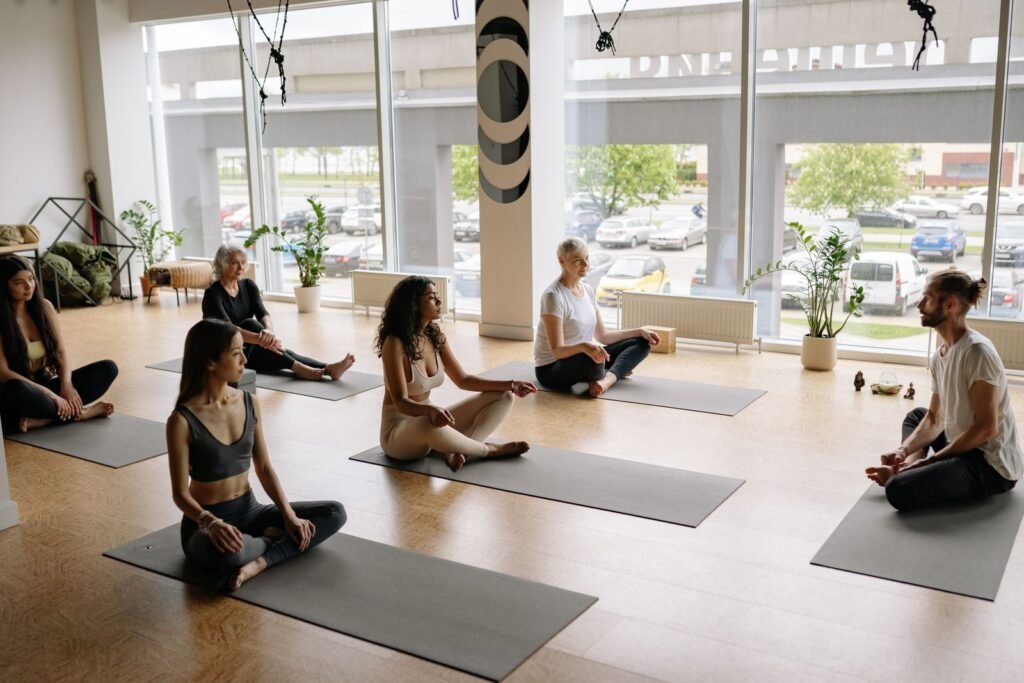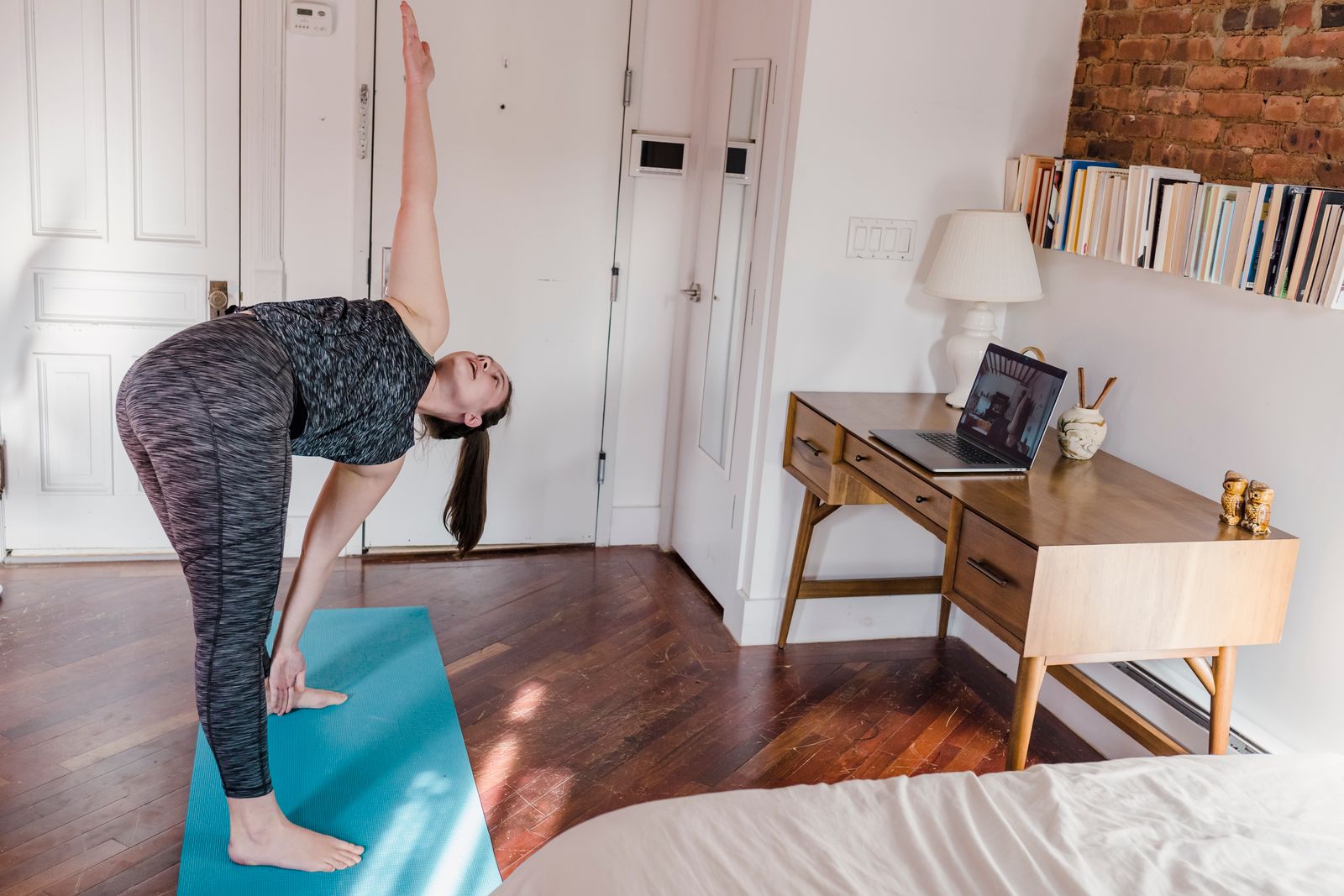
Yoga for work from home means short, targeted stretches and breathing routines you can do at or near your desk to undo the physical and mental strain of remote work: stiff hips from prolonged sitting, rounded shoulders from typing, eye fatigue from screens, and the mental fog that comes from back-to-back video calls. A 10-15 minute practice combining seated twists, neck and shoulder release, hip openers, and a few minutes of conscious breathing between meetings can noticeably reduce pain, improve focus, and help you mentally separate “work mode” from “home mode” even though both happen in the same room.
Why Remote Work Puts Extra Strain on Your Body
When you worked from an office, your day naturally included movement you probably never noticed: walking to a meeting room, standing at the printer, commuting on foot or by transit, chatting at someone’s desk. Remote work strips most of that incidental movement away. You wake up, walk a few steps to a chair, and can stay there for eight or more hours with only bathroom and coffee breaks. The result is prolonged static loading on the same muscles and joints: hip flexors shorten, the upper back rounds forward toward the screen, the neck juts ahead in “tech neck” posture, and the deep core muscles that should stabilize your spine switch off. Unlike an office chair you might have chosen for support, home setups are often improvised — a dining chair, a sofa, or a bed — which compounds the strain. This is precisely why a specific, targeted practice like desk yoga for office workers was developed, and why a work-from-home version needs to go further, since home workers typically move even less than their office counterparts.
What Makes Yoga Different From Just “Stretching”?
Stretching alone lengthens a muscle temporarily. Yoga combines that stretch with controlled breath and present-moment attention, which changes how your nervous system responds to the movement. When you pair a hip-opening pose with slow diaphragmatic breathing, you are not only releasing tight tissue, you are also signalling to your parasympathetic nervous system that it is safe to downshift out of the low-grade “always-on” stress many remote workers carry. This is one reason yoga is used across such different contexts, from yoga for exam stress in students to corporate wellness programs, and why a short work-from-home sequence can feel disproportionately restorative compared to its length.
How Long Should a Work-From-Home Yoga Break Be?
You do not need a full 60-minute class to get meaningful benefit. Three structures work well depending on your schedule:
- Micro-breaks (2-5 minutes): Done every 60-90 minutes between calls — a standing forward fold, a seated spinal twist, or a few rounds of shoulder rolls. These interrupt static posture before it becomes painful.
- A mid-morning or mid-afternoon reset (10-15 minutes): A short flow covering the neck, shoulders, spine, and hips, ideally done away from your screen, even in the same room.
- A bookend practice (20-30 minutes): Either first thing before you log on, to set intention and mobilize the body, or at the end of the day to consciously close out “work mode,” similar in spirit to the transition rituals used in a self-care yoga routine.
A Simple 10-Minute Yoga Sequence for Between Meetings
This sequence needs no mat and can be done in office clothes, right next to your laptop.
- Seated Cat-Cow (1 minute): Sit tall, hands on knees. Inhale, arch your back and lift your chest (cow); exhale, round your spine and drop your chin (cat). This is one of the fastest ways to release tension that builds up along the entire spine from sitting, and it’s a staple opening move in vinyasa yoga for exactly this reason.
- Neck Rolls and Side Bends (1 minute): Slowly drop your ear toward one shoulder, hold for a few breaths, then roll gently forward and to the other side. Avoid forcing the neck backward, which can compress the cervical spine.
- Seated Spinal Twist (1-2 minutes): Sitting sideways in your chair, hold the backrest and rotate your torso, holding for 4-5 breaths each side. Twists rehydrate the discs of the spine and counter the forward-hunched posture typing creates, similar to the twisting poses covered in yoga for digestion.
- Wrist and Forearm Stretch (1 minute): Extend one arm, palm up, and gently pull the fingers back with the other hand, then flip and repeat palm down. This directly addresses the repetitive strain risk of constant typing and mousing.
- Standing Forward Fold (1-2 minutes): Stand, feet hip-width apart, and hinge forward from the hips, letting your head and arms hang. This decompresses the lower back and increases blood flow to the brain, which can help with the mental fog that follows long screen sessions, much like the grounding poses used in hatha yoga.
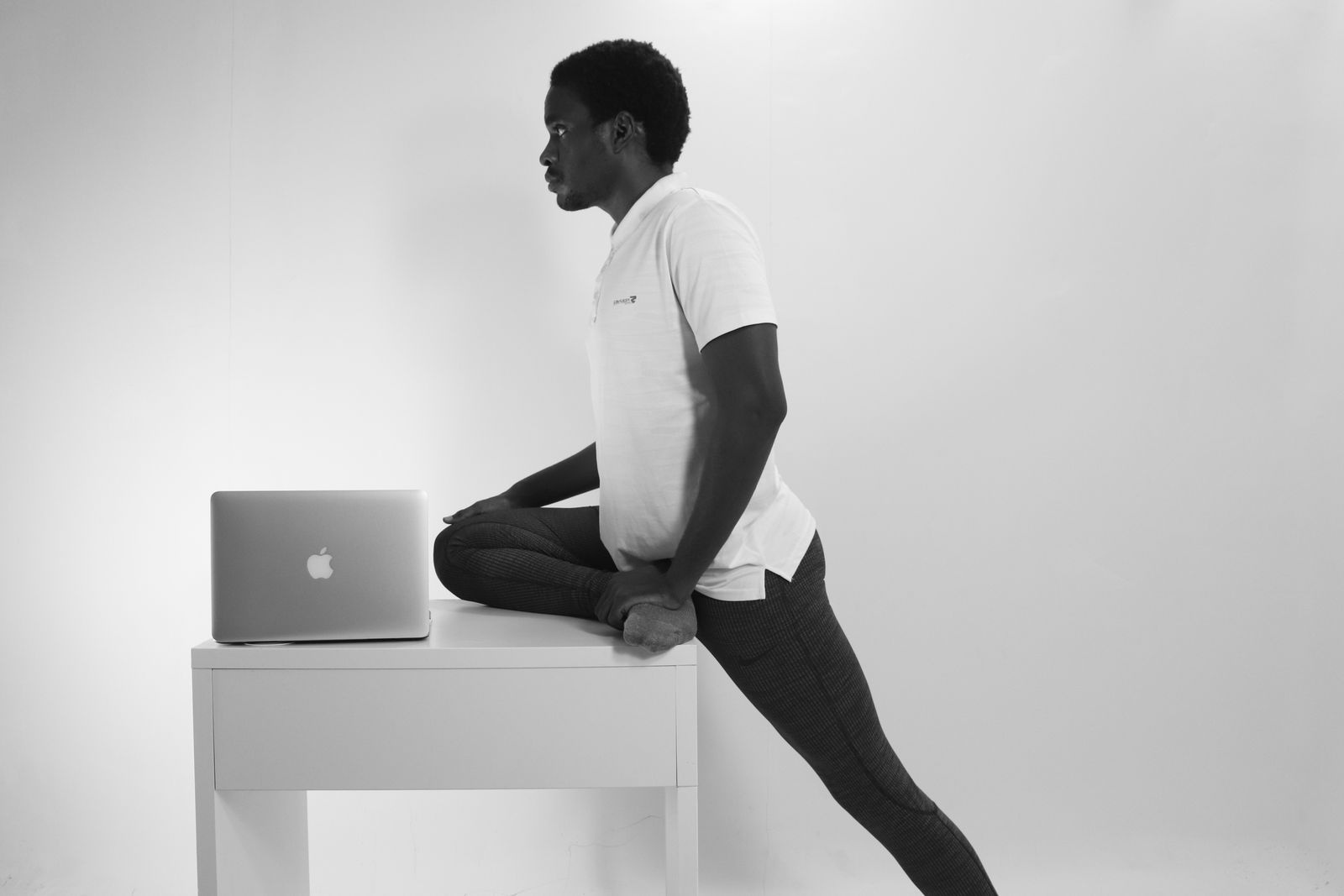
- Hip Flexor Lunge Stretch (1-2 minutes per side): Step one foot forward into a low lunge, keeping the back knee down or lifted depending on comfort, and gently press the hips forward. Because sitting shortens the hip flexors more than almost any other muscle group, this pose is essential for anyone doing yoga for work from home, and it overlaps with several of the best yoga poses for beginners to learn first.
- Legs-Up-The-Wall or Chair (2-3 minutes): Lie on the floor with your calves resting on your chair seat, or your legs up against a wall. This mildly inversive position calms the nervous system and is a favorite closing pose in many online yoga for stress relief classes.
How Can Yoga Help With Screen Fatigue and Eye Strain?
Remote work often means more consecutive screen time than office work did, because there is no natural interruption from walking between meeting rooms. Yoga will not fix eye strain by itself, but a few habits borrowed from yogic practice help: palming (rubbing the palms warm and cupping them gently over closed eyes for 30-60 seconds), slow eye movements tracing a large circle or figure-eight in the air, and simply blinking fully and deliberately for ten breaths, since screen focus reduces natural blink rate. Combine these with the well-known 20-20-20 rule — every 20 minutes, look at something 20 feet away for 20 seconds — and you have a simple, low-effort habit stack that complements your physical practice, alongside the eye and breath techniques taught in most pranayama breathing exercises.
Can Yoga Improve Focus and Productivity During Work Hours?
Many remote workers report that a short movement break makes them more, not less, productive, because sustained sitting and screen focus gradually reduce attentional capacity. Physiologically, gentle movement increases circulation and oxygen delivery to the brain, while slow breathing reduces the sympathetic “fight or flight” activation that builds during a stressful call or a tight deadline. Practically, stepping away from the screen for even three minutes of conscious movement also interrupts unhelpful mental loops, such as rereading the same email five times without absorbing it. This mental-clarity benefit is one reason yoga-based breaks are increasingly recommended in workplace wellness programs, and it mirrors why practices like yoga for exam stress emphasize the same short-practice, high-frequency approach for sustained mental tasks.
What Yoga Poses Should You Avoid at a Standard Desk?
Not every pose translates safely to a desk chair. Avoid deep backbends using a chair with wheels or no lock, since it can roll out from under you. Skip any pose requiring you to put significant weight through your wrists on a hard, unpadded floor unless you have a mat, as this can aggravate carpal tunnel-type symptoms that are already common among people who type all day. Be cautious with deep forward folds if you have lower-back disc issues; a gentler cat-cow or half-fold with hands on the desk is usually a safer substitute, similar to the modifications recommended in yoga for beginners with back pain. As with any physical practice, if a pose causes sharp or shooting pain rather than a mild stretch sensation, stop and consult a qualified professional.
How Do You Build a Sustainable Daily Habit Instead of a One-Off Session?
The single biggest reason people abandon a work-from-home yoga routine is trying to do too much, too soon. Instead of committing to a 45-minute practice you will skip on busy days, anchor a much smaller habit to something that already happens every day: two minutes of neck and shoulder release right after your first coffee, or a standing fold every time you close your laptop for lunch. Habit research consistently points to consistency over intensity as the more reliable path to a lasting routine — the same principle underlying a well-designed self-care yoga routine. Block the time on your calendar exactly as you would a meeting, since remote workers without that visual cue on their schedule are far more likely to let a movement break get swallowed by “just one more email.”
Does Your Home Office Setup Affect How Much You Need Yoga?
Yes, significantly. A dedicated desk with an adjustable chair, monitor at eye level, and keyboard at elbow height will produce far less strain than working from a laptop on a couch or bed, where the neck flexes forward and the wrists sit at an awkward angle for hours. If your setup isn’t ideal, weight the yoga sequence above toward neck, shoulder, and upper-back release, since that’s where poor ergonomics concentrates the most tension. If you can, alternate positions throughout the day too; even standing for part of your work, if you have or can improvise a standing desk, reduces the total static load your yoga practice has to counteract. Better posture habits built through yoga can also carry over into your evening routine, complementing practices like yoga for better sleep if screen time has been disrupting your rest.
Is Online or Video-Guided Yoga Better Than Doing It Alone for Remote Workers?
Both have a place. Practicing alone with poses you already know is faster and more flexible around your schedule, which suits the two-minute micro-break format well. A guided, instructor-led online class adds real value for the longer bookend sessions, because a teacher can correct alignment you cannot see yourself, adapt the sequence to complaints like a stiff neck or lower-back tightness, and provide the accountability of a scheduled class rather than an easily-skipped solo session. This is the same reason many people researching the benefits of online yoga classes find live instruction more sustainable than following videos alone. Many remote workers find that mixing the two — quick self-guided breaks through the day, plus one or two live or recorded classes a week — covers both the frequency and the depth a sustainable practice needs, an approach also common among people exploring types of yoga for the first time.
How Is Yoga for Work From Home Different From General Desk Yoga?
Desk yoga for office workers is typically designed around the constraints of a shared office: limited privacy, professional dress, and a desk you may not fully control. Yoga for work from home has more freedom (you can lie on the floor, use a wall, or wear stretchy clothes) but also more risk of being skipped entirely, since there’s no colleague glancing over and no visible office culture nudging you to move. Home practitioners can also incorporate longer floor-based poses like legs-up-the-wall, deeper hip openers, or even a short seated meditation, none of which are realistic in most shared workplaces.
Questions People Ask About Yoga for Work From Home
Do I need a yoga mat to do yoga while working from home?
No. Most desk-adjacent poses — seated twists, neck rolls, wrist stretches, and standing forward folds — need no mat at all. A mat becomes useful only for floor-based poses like legs-up-the-wall or gentle hip openers, and even then a folded blanket or towel works as a reasonable substitute.
How often should I take a yoga break during my workday?
A commonly recommended pattern is a 2-3 minute micro-break every 60-90 minutes, plus one longer 10-15 minute session around the midpoint of your day. The exact frequency matters less than consistency; short, frequent breaks generally outperform one long session for reducing stiffness.
Can yoga help with the “Zoom fatigue” from back-to-back video calls?
Yes, at least partially. Slow breathing and brief movement between calls reduce the sympathetic nervous system activation that video calls tend to trigger, and stepping away from the screen for even a minute gives your eyes and attention a genuine reset before the next meeting.
What is the single best yoga pose for someone working from home?
There’s no universal answer, but a seated spinal twist is a strong all-rounder: it takes under a minute, needs no space or equipment, releases tension along the whole spine, and can be done without leaving your chair between calls.
Is it better to do yoga before, during, or after my remote workday?
All three serve different purposes. A short practice before logging on mobilizes the body and sets intention; micro-breaks during the day prevent stiffness from accumulating; and an end-of-day practice helps mentally close out work, which is especially useful for remote workers who find it hard to “leave the office” when home and work share the same room.
Can desk yoga actually help with back pain from working at home?
For pain caused primarily by poor posture and prolonged static sitting, yes, and this is a documented benefit of postures explored in yoga for back pain. If pain is sharp, radiating, or persistent, treat these poses as a complement to, not a replacement for, professional medical evaluation.
Try This for Yourself
Reading about a routine and actually feeling the difference in your shoulders, hips, and focus are two very different things. If you want real guidance on breath, alignment, and pacing rather than piecing a routine together from an article, join a live, instructor-led class built for exactly this kind of practice at FitStrot’s online yoga classes, and start turning a few scattered stretches into a routine you’ll actually keep.
Related reading: Desk yoga for office workers | Self-care yoga routine | Yoga for exam stress | Online yoga for stress relief | Yoga for back pain | Pranayama breathing exercises | Explore FitStrot’s online yoga classes.