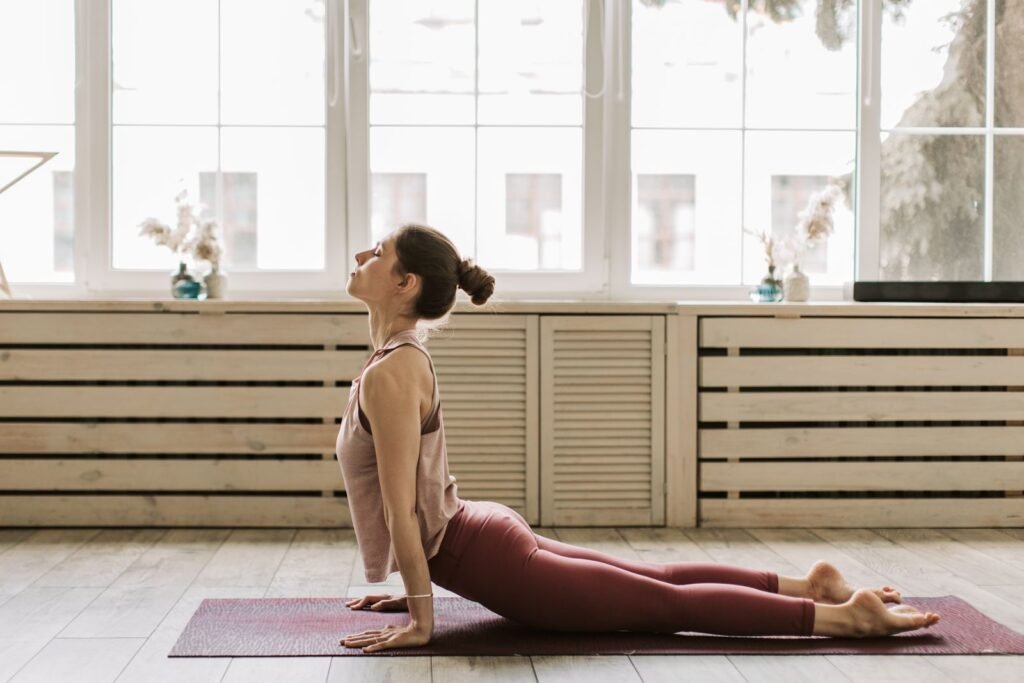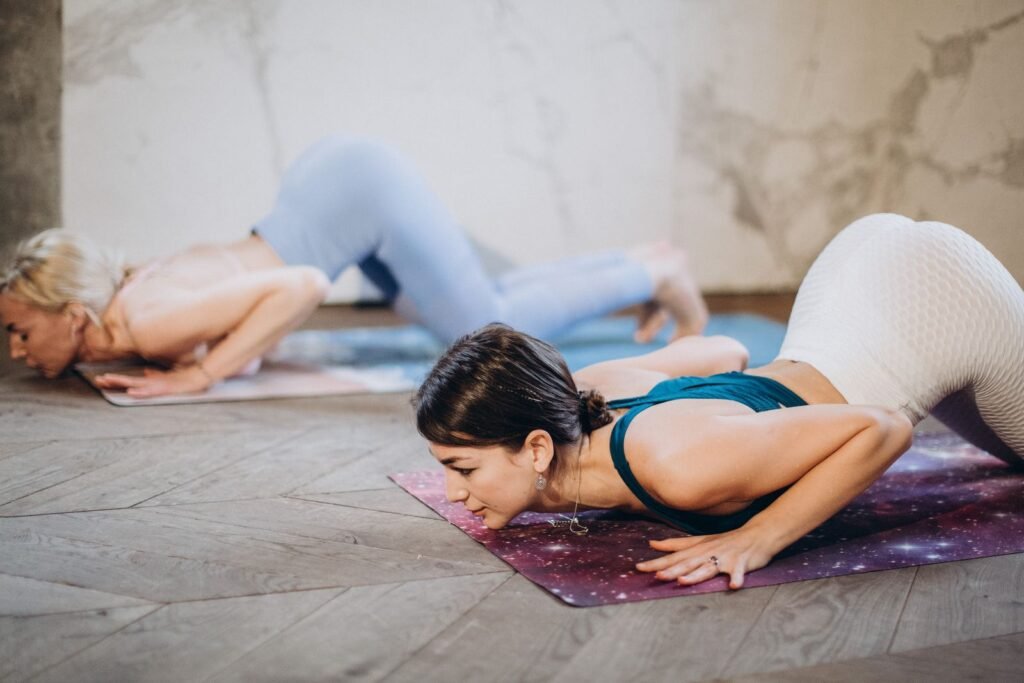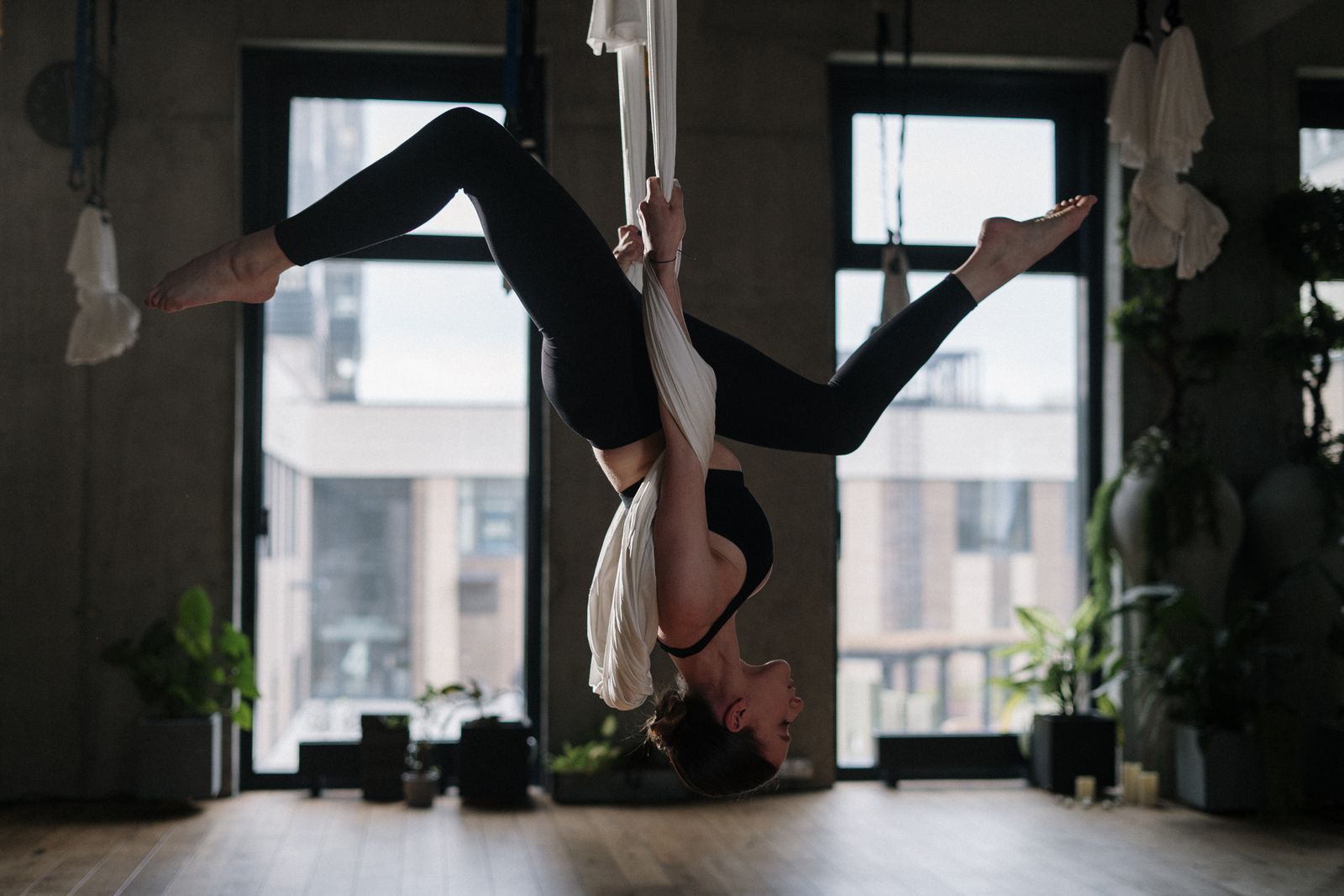
Aerial yoga is a style of yoga that uses a fabric hammock suspended from the ceiling to support, assist, and deepen traditional yoga postures. Instead of relying only on the floor, practitioners use the hammock to hang, invert, swing, and stretch, which takes pressure off the spine and joints while building core strength and flexibility. Classes typically blend familiar poses like downward dog and pigeon with hammock-supported inversions, gentle back extensions, and a final restorative “cocoon” hang. It suits both complete beginners looking for a low-impact, playful way into yoga and experienced practitioners wanting to explore inversions safely. Most first-timers can do a beginner class without any prior yoga or gymnastics background.
What Exactly Is Aerial Yoga?
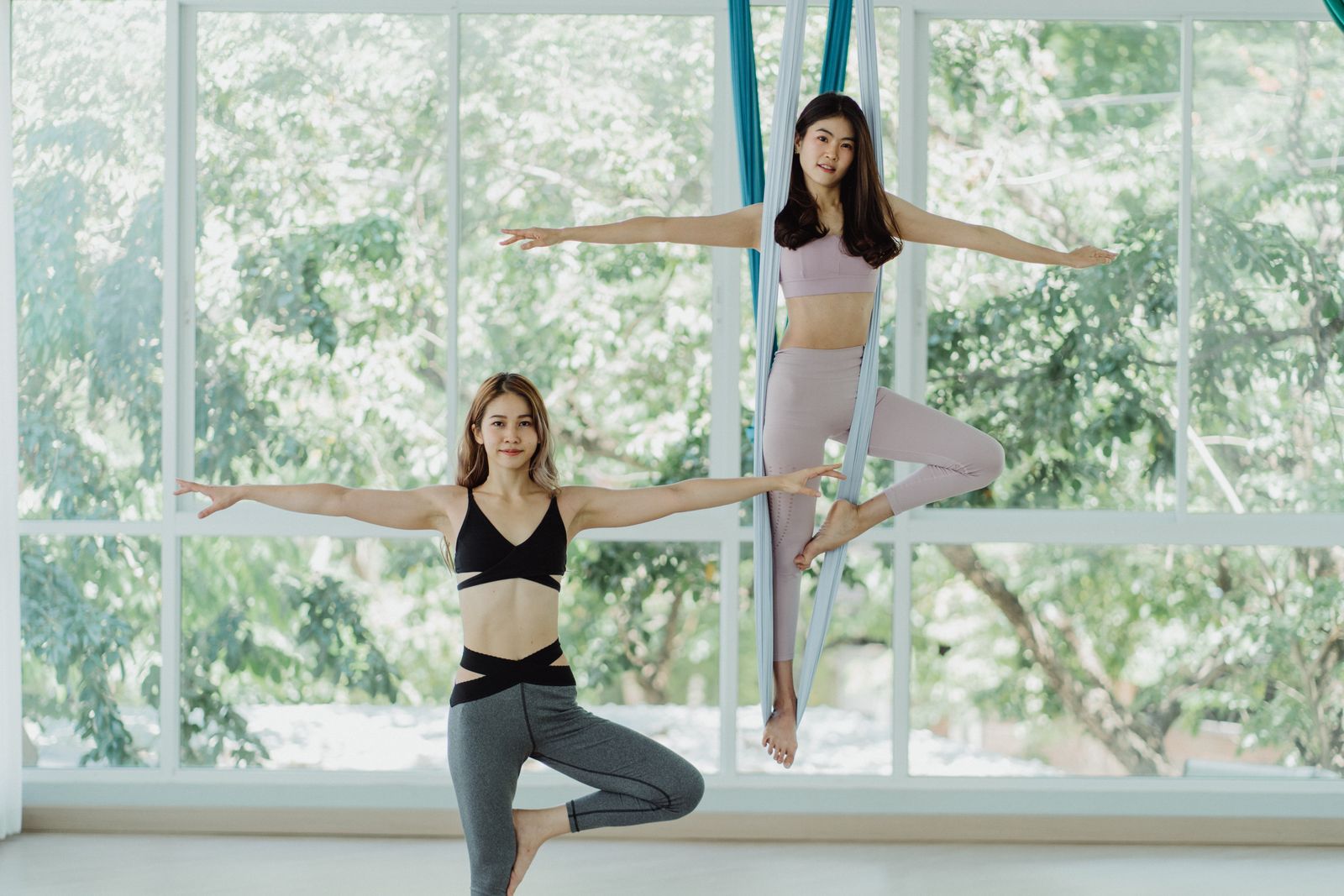
Aerial yoga combines traditional hatha yoga postures, elements of Pilates, and light circus-style aerial arts, all performed with the help of a soft fabric hammock (sometimes called a sling or a swing) anchored to a ceiling rig or freestanding frame. The hammock is rated to hold significant body weight and is set at a height that lets a standing practitioner reach it comfortably. During a class, the hammock might cradle your hips while you fold forward into an assisted version of downward dog, or it might wrap around your thighs to let you hang fully inverted with your head near the floor. Unlike acrobatic aerial silks or aerial dance, aerial yoga keeps the pace slow and breath-focused, closer in spirit to hatha yoga than to circus training. The goal isn’t tricks — it’s using gravity and suspension as tools to access positions that would otherwise require far more strength, flexibility, or years of practice.
Where Did Aerial Yoga Come From?
Aerial yoga’s modern form is commonly traced to the mid-2000s. Choreographer and yoga teacher Michelle Dortignac is widely credited with developing the practice around 2006, blending yoga postures, Pilates, and dance with a fabric hammock. Around the same period, former Broadway performer and gymnast Christopher Harrison launched AntiGravity Fitness, a brand built on a hammock system adapted from aerial acrobatics, which helped popularize the format internationally. A handful of other hammock-based brands, including Fly Yoga in France and AeroYoga in Spain, emerged around 2009 and helped the practice spread across Europe. Because several practitioners were developing similar ideas around the same time, aerial yoga is best understood as a lineage of related methods rather than a single, centrally invented style — much like how vinyasa yoga evolved from multiple teachers refining Ashtanga sequencing in parallel.
What Happens in a Typical Aerial Yoga Class?
A standard aerial yoga class runs 50 to 75 minutes and follows a rhythm most yoga students will find familiar even though the equipment is new. Classes usually open with a grounded warm-up on the mat, similar to what you’d do before Ashtanga yoga or a slow flow, to prepare the shoulders, hips, and spine. The hammock is then introduced gradually: first as light support around the hips or lower back for standing poses, then for deeper stretches, and only later in the class for inversions if the studio’s format includes them. A cocoon-style restorative hang, where the hammock wraps fully around the body like a swaddle, is a near-universal closing element, often replacing a floor-based savasana. Beginners should expect to spend most of a first class learning to trust the fabric and adjust hammock height rather than attempting advanced inversions.
What Are the Benefits of Aerial Yoga?
Aerial yoga’s core appeal is decompression: hanging inverted or semi-inverted lets gravity gently traction the spine, which many practitioners report as relief from the compression that builds up from sitting and standing all day. Beyond spinal decompression, the practice builds functional core strength, since stabilizing your body in a moving hammock demands constant engagement from the deep abdominal and back muscles in a way a static mat pose doesn’t. It also improves flexibility, particularly in the shoulders, hamstrings, and hip flexors, because the hammock lets you ease into a stretch’s end range rather than forcing it. Because it’s low-impact, aerial yoga can be a gentler option for people managing joint pain, similar in intent to how yoga for back pain programs use gentle, supported positions rather than high-load movement. Note that clinical research specifically on aerial yoga remains limited, so these benefits are best understood as widely reported by practitioners and instructors rather than confirmed by large controlled studies.
Is Aerial Yoga Good for Beginners?
Yes — most studios design their introductory classes specifically for people who have never touched a hammock or a yoga mat before. A good beginner class spends significant time on orientation: how to sit safely in the hammock, how to exit a pose if something feels wrong, and how much of your body weight the fabric can actually support (commercial aerial yoga hammocks are typically rated well beyond an average adult’s body weight). Beginners are not expected to invert on day one. Most instructors build toward inversions over several classes, once a student is comfortable with basic hammock-supported poses like a supported forward fold or a hip-supported backbend. If you already have an established mat practice, whether that’s power yoga or yin yoga, you’ll likely progress through the beginner curriculum faster, but no prior experience is required to start.
What Are the Risks and Who Should Avoid It?
Aerial yoga is generally considered low-impact, but inversions and suspended positions aren’t appropriate for everyone. You’re commonly advised to skip inversions, or the class entirely, without a doctor’s clearance if you:
- Are pregnant
- Have uncontrolled high blood pressure
- Have glaucoma or another eye pressure condition
- Have a recent injury to the neck or shoulders
- Experience vertigo
Because blood flow shifts significantly when you’re upside down, even healthy practitioners are usually told to come out of an inversion slowly rather than dropping quickly back to standing, to avoid dizziness. As with any new physical practice, it’s worth telling your instructor about any existing injuries before class starts, the same precaution that applies before trying Bikram yoga or other physically demanding styles. Reputable studios will also inspect their hammocks and rigging regularly, and it’s reasonable to ask a new studio how often their equipment is checked.
What Should You Wear to Aerial Yoga?
Clothing matters more in aerial yoga than in most other yoga styles because the hammock fabric makes direct contact with bare skin uncomfortable and can pinch. The general guidance is to cover your knees, elbows, and underarms — think leggings or fitted joggers rather than shorts, and a well-fitted t-shirt or long-sleeve top rather than a loose tank. Avoid clothing with zippers, exposed buttons, or metal clasps, since these can snag or tear the fabric. Bare feet or grip socks are standard, since regular sneakers reduce your ability to feel the hammock’s tension. Long hair is usually tied back to prevent it from tangling in the fabric during inversions. Most studios sell or rent basic aerial-appropriate gear if you’re attending your first class without the right outfit.
How Is Aerial Yoga Different From Regular Yoga?
The core difference is the equipment and the resulting range of motion. In floor-based styles, whether that’s hatha, vinyasa, or Iyengar yoga using blocks and straps as props, your body weight is always borne by the ground. Aerial yoga replaces some or all of that ground contact with a moving, elastic support, which changes both the physical demand and the sensation of a pose.
| Aspect | Floor-Based Yoga | Aerial Yoga |
|---|---|---|
| Body weight support | Borne entirely by the ground | Partially or fully borne by the hammock |
| Forward fold stretch | You actively release tension to go deeper | Gravity pulls you deeper with no muscular effort |
| Inversions | Reserved for advanced students, usually with a wall or hands-on spotting | A routine, structured part of most classes |
| Equipment & portability | Just a mat, practice almost anywhere | Requires a rigged hammock and a trained instructor |
The trade-off is that aerial yoga requires specific equipment and trained instructors, so it’s less portable than a mat practice you can do anywhere.
How Often Should You Practice Aerial Yoga?
Most instructors recommend one to two aerial yoga classes per week for beginners, giving the body time to adapt to the new demands on the core, shoulders, and grip strength between sessions. Because a single class engages muscles differently than floor-based yoga, soreness in the forearms, shoulders, and obliques after a first or second class is common and typically fades within a few sessions as strength builds. Practitioners who want the spinal decompression benefits specifically, rather than a full workout, sometimes attend shorter, restorative-focused sessions more frequently, similar to how some students combine an active practice like power yoga with more frequent slow sessions like restorative yoga for balance. There’s no strict rule, and frequency should scale with how quickly your body recovers.
Can You Practice Aerial Yoga at Home?
It’s possible, but it requires far more caution than starting a mat-based practice like vinyasa yoga at home. A home aerial setup needs a structurally sound ceiling anchor point (rated for dynamic, not just static, load) or a dedicated freestanding aerial rig, plus a hammock and rigging hardware rated for the practitioner’s weight with a safety margin. Because incorrect installation is the single biggest risk factor in aerial yoga injuries, most instructors strongly recommend learning the fundamentals in a supervised studio setting before ever practicing solo, and even then, avoiding unsupervised inversions at home. If a dedicated setup isn’t feasible, many studios also offer live online aerial-adjacent sessions that teach ground-based prep work, breathing, and mobility drills you can safely do without a hammock at all.
How Much Do Aerial Yoga Classes Cost?
Pricing varies widely by city and studio, but a single drop-in aerial yoga class commonly runs somewhere in the range of a premium group fitness class, often priced higher than a standard mat yoga session because of the specialized equipment and smaller class sizes most studios maintain for safety. Many studios sell class packs or monthly unlimited memberships that bring the effective per-class cost down significantly compared to drop-ins. If you’re searching for aerial yoga near you, whether that’s aerial yoga in Bangalore, aerial yoga in Delhi, aerial yoga in Mumbai, aerial yoga in Chennai, aerial yoga in Pune, or aerial yoga in Gurgaon, it’s worth comparing a few studios directly, since pricing, hammock quality, and instructor certification can differ noticeably even within the same city.
What Should You Look for in an Aerial Yoga Studio?
Instructor training is the single most important factor to check before booking a class, given how much of the practice depends on correctly spotting inversions and adjusting hammock height. Look for instructors certified through a recognized aerial yoga training program, not just a general yoga teacher training, since the risk profile and rigging knowledge required are genuinely different. Ask how the studio’s rigging is inspected and how often hammocks are replaced, since fabric wears from repeated stretching and friction. Smaller class sizes are also worth prioritizing for your first few sessions, since a crowded aerial class limits how closely an instructor can supervise your form during an inversion. Reading recent reviews that specifically mention safety and instructor attentiveness is generally more useful than reviews focused only on the studio’s atmosphere or décor.
What Muscles Does Aerial Yoga Work?
Aerial yoga is a genuine full-body practice because the hammock removes the floor as a stable reference point, forcing stabilizing muscles to work continuously even during poses that look passive. The deep core, including the obliques and transverse abdominis, engages constantly to control rotation and swing. Grip and forearm strength build quickly since many poses involve holding the hammock’s fabric directly. Shoulder stabilizers and the muscles around the shoulder blades work hard in inverted positions, where they’re supporting a meaningful share of body weight. The glutes and hip flexors are engaged in almost every transition between poses. Because of this broad muscular demand, many practitioners notice strength gains, particularly in the core and upper body, faster than they do with a purely floor-based practice like hatha yoga.
Questions People Ask About Aerial Yoga
Is aerial yoga hard for beginners?
No, most beginner classes are designed around zero prior experience. Instructors spend early sessions on hammock orientation, basic supported poses, and safe entry and exit rather than inversions. Soreness in the shoulders, core, and forearms after a first class is common because different muscles are engaged, but this fades as strength builds over a few sessions, similar to starting any new physical practice.
Do I need to be flexible to try aerial yoga?
No. The hammock is specifically designed to support your body weight and assist stretches, which means it can make certain positions more accessible for inflexible beginners than an equivalent floor pose would be. Flexibility develops with consistent practice, much like with yin yoga or other slow, stretch-focused styles, rather than being a prerequisite to start.
Is aerial yoga safe during pregnancy?
Most instructors and studios advise against aerial yoga, particularly inversions and swinging movements, during pregnancy without explicit medical clearance, and many studios decline to enroll pregnant students in standard classes entirely. If you’re pregnant and want to stay active with yoga, a prenatal-specific, floor-based class is generally considered the safer route until after delivery.
What’s the difference between aerial yoga and aerial silks?
Aerial silks is an acrobatic and performance discipline focused on climbing, wrapping, and dynamic drops using fabric, often performed at height for artistic or circus-style shows. Aerial yoga uses a similar hammock but stays close to the ground, moves slowly, and borrows its postures and pacing from yoga rather than from acrobatics or performance art.
Can aerial yoga help with back pain?
Many practitioners report relief from back tension after aerial yoga, largely attributed to the gentle spinal traction that happens during supported inversions and hangs. It isn’t a substitute for medical treatment of a diagnosed back condition, and anyone with an existing spinal injury should get clearance from a doctor or physical therapist before trying inversions.
How long does it take to learn aerial yoga?
Most students feel comfortable with foundational hammock-supported poses within their first two or three classes. Building toward confident, independent inversions typically takes several weeks to a few months of regular practice, depending on prior core and upper-body strength and how often you attend class.
Try This for Yourself
Reading about aerial yoga can only explain so much — the sensation of the hammock taking your weight, and the calm that comes with a supported inversion, only really makes sense once you feel it. If you’d rather build strength, flexibility, and confidence on the ground first, FitStrot’s online yoga classes pair you with real instructors who can guide your foundational practice, prepare your core and shoulders for aerial work, and tailor sessions to your current level.
Related reading: Vinyasa yoga, Ashtanga yoga, Bikram yoga, face yoga, and FitStrot’s online yoga classes.