Hot yoga is any yoga class practiced in an artificially heated room, typically between 80°F and 105°F (27°C-41°C), designed to increase sweating, loosen muscles, and intensify a standard yoga sequence. Unlike Bikram yoga, which follows one fixed sequence of 26 postures and 2 breathing exercises at a locked 105°F with 40% humidity, “hot yoga” is a broader umbrella term that covers heated vinyasa, heated Hatha, heated power yoga, and studio-specific formats with varying sequences, music, and instructor styles. The heat is the defining feature: it raises heart rate, encourages deeper stretching, and produces a sweat-drenched, high-intensity version of familiar poses.
If you’ve practiced vinyasa yoga or ashtanga yoga in a regular room, hot yoga takes the same movement vocabulary and adds a heat variable that changes how your body responds to every pose. Below, we break down exactly what happens in a hot yoga class, how it differs from related styles, what the research actually says about its benefits and risks, and how to know if it’s the right fit for your practice.
What Is Hot Yoga, Exactly?
Hot yoga refers to any style of yoga performed in a heated room, generally between 80°F and 100°F, sometimes higher, often paired with elevated humidity to increase perspiration. The format was popularized in the West by Bikram Choudhury in the early 1970s, who is commonly credited with raising studio temperatures to represent the climate of India, where hatha yoga traditionally developed. Today, “hot yoga” is used both as a generic descriptor for any heated class and, informally, as shorthand for heated vinyasa-style flows that borrow the temperature concept without following Bikram’s rigid 26-posture sequence.
Most studios that advertise “hot yoga” run heated versions of vinyasa flow, power yoga, or Hatha yoga, choreographed by the instructor rather than fixed. This distinguishes generic hot yoga from Bikram yoga, which is trademarked and standardized down to the pose order, dialogue, and room temperature.
What Is Hot Yoga Called? (Bikram, Hot Vinyasa, and Other Names)
Hot yoga goes by several names depending on the studio and sequence used. The most recognized variant is Bikram yoga, the original trademarked 26-posture, 90-minute sequence performed at 105°F with 40% humidity. When studios use Bikram’s format without the trademark license, they often call it “26 & 2” or simply “traditional hot yoga.” Other common names include hot vinyasa or hot flow (a heated version of vinyasa’s breath-linked movement), power yoga in a heated room, and hot Hatha. Some studios brand their own proprietary heated sequences with unique names, which is why searches for terms like “mandeep hot yoga” often refer to a specific studio’s branded class rather than a universally recognized style. Whatever the name, the shared thread is the artificially elevated room temperature.
What Happens in a Hot Yoga Class?
A typical hot yoga class runs 60 to 90 minutes in a room heated by professional heaters and often humidified. Expect a sequence that includes standing poses, forward folds, backbends, and floor-based stretches, generally moving faster than a restorative or yin yoga class but with more static holds than a pure cardio workout. You’ll sweat heavily within the first 10-15 minutes, which is part of the intended experience. Studios typically ask students to bring a non-slip towel, a well-absorbent mat, and at least one liter of water. Because the room is hot, instructors usually build in more water breaks and encourage students to rest in child’s pose if they feel dizzy or overheated.
What Is Hot Yoga Like for a First-Timer?
For a first-timer, hot yoga feels intense almost immediately. The heat hits within the first few standing poses, and many new students report their heart rate climbing faster than expected, even during poses that would feel gentle in a room-temperature class. Expect flushed skin, heavy sweating, and a slightly disoriented feeling in the first 10 minutes as your body adjusts to regulating temperature while moving. Most instructors recommend pacing yourself: sit out any pose that feels unstable, keep sipping water, and resist the urge to compete with your flexibility against neighbors, since heated muscles stretch further than usual, raising the risk of overstretching. By the end of a first class, most students describe feeling wrung out, calmer, and unusually clear-headed.
How Hot Is a Hot Yoga Studio, and Why That Range?
Temperature varies by studio and style, but there is a broad convention:
- Warm yoga: roughly 75-85°F, a gentle heat bump used in some vinyasa or power yoga studios.
- Standard hot yoga: 90-100°F, the most common range for heated vinyasa and flow classes.
- Bikram yoga: a fixed 105°F with 40% humidity, following the original 26-posture sequence.
The heat serves a few practical purposes: it raises core body temperature so muscles, tendons, and connective tissue become more pliable, it accelerates sweating (which many practitioners associate with a feeling of detoxification, though the body’s actual detox work is done by the liver and kidneys, not sweat glands), and it increases cardiovascular demand, since the body has to work harder to cool itself while also moving through poses.
What Are the Most Common Hot Yoga Poses?
Hot yoga poses overlap heavily with standard hatha and vinyasa asanas; the heat changes the intensity, not the pose library. Common poses across most hot yoga classes include:
- Standing Deep Breathing (Pranayama) – the warm-up used to regulate breath before the heat ramps up intensity.
- Half Moon Pose (Ardha Chandrasana) – a standing side-bend that builds balance and opens the waistline.
- Eagle Pose (Garudasana) – a balance-focused twist that also stretches the shoulders and hips.
- Standing Forehead-to-Knee Pose – a balancing forward fold that challenges hamstring flexibility, amplified by the heat.
- Camel Pose (Ustrasana) – a deep backbend often considered the signature “hot yoga pose” because of how much it opens the chest and front body under heat.
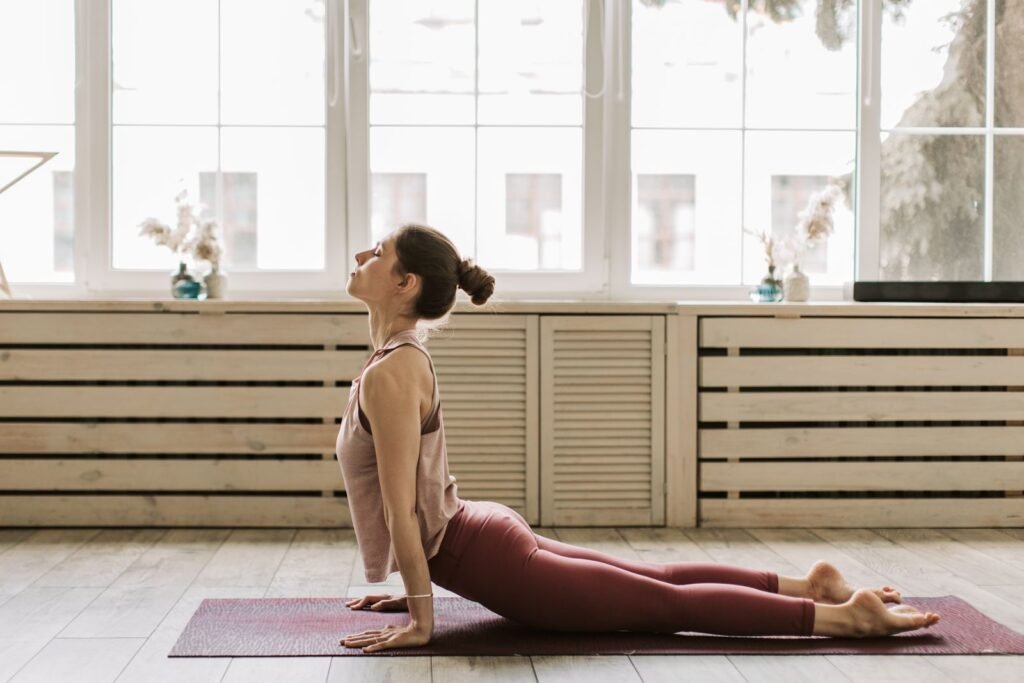
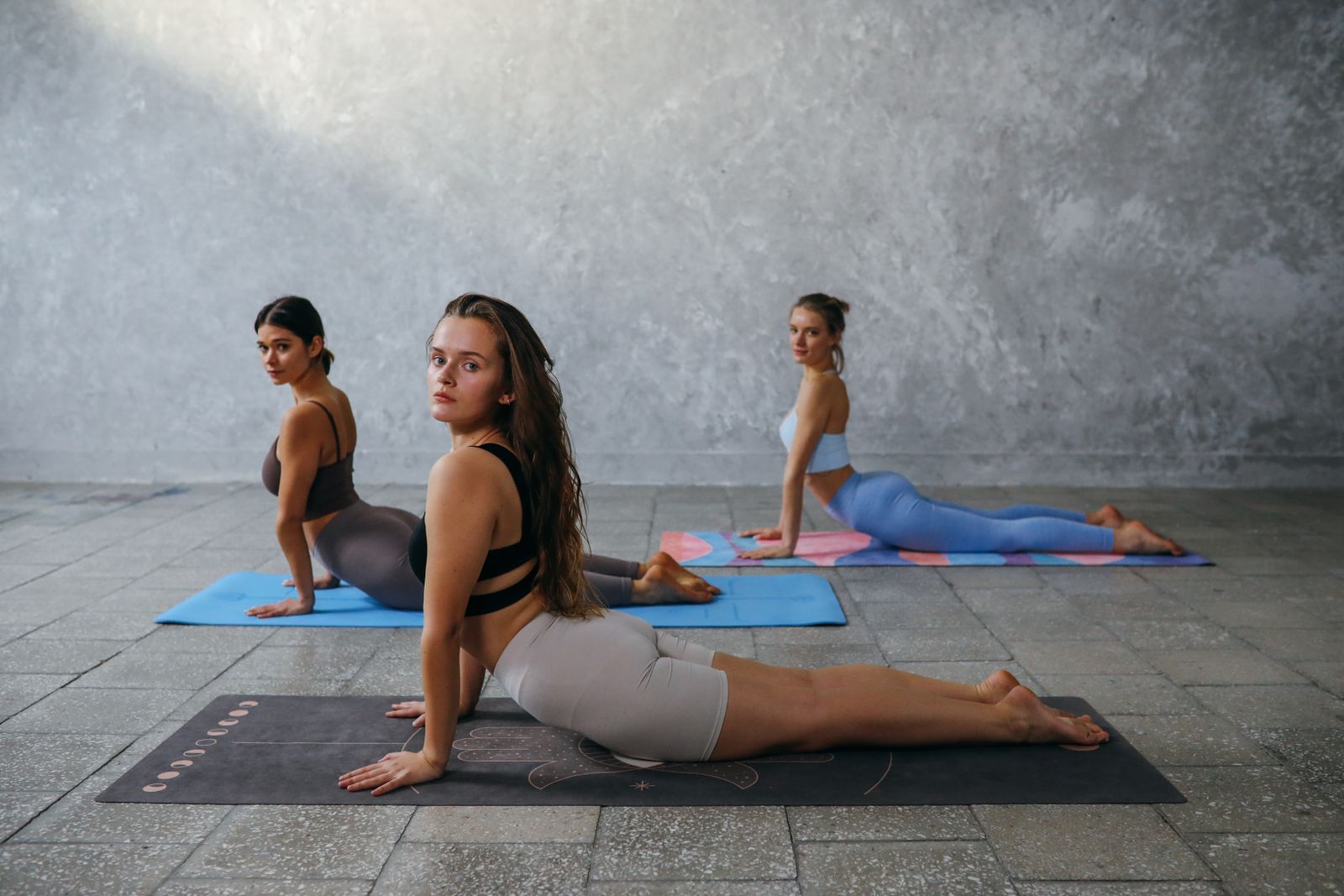
- Cobra Pose (Bhujangasana) and Locust Pose (Salabhasana) – spine-strengthening backbends done from the floor.
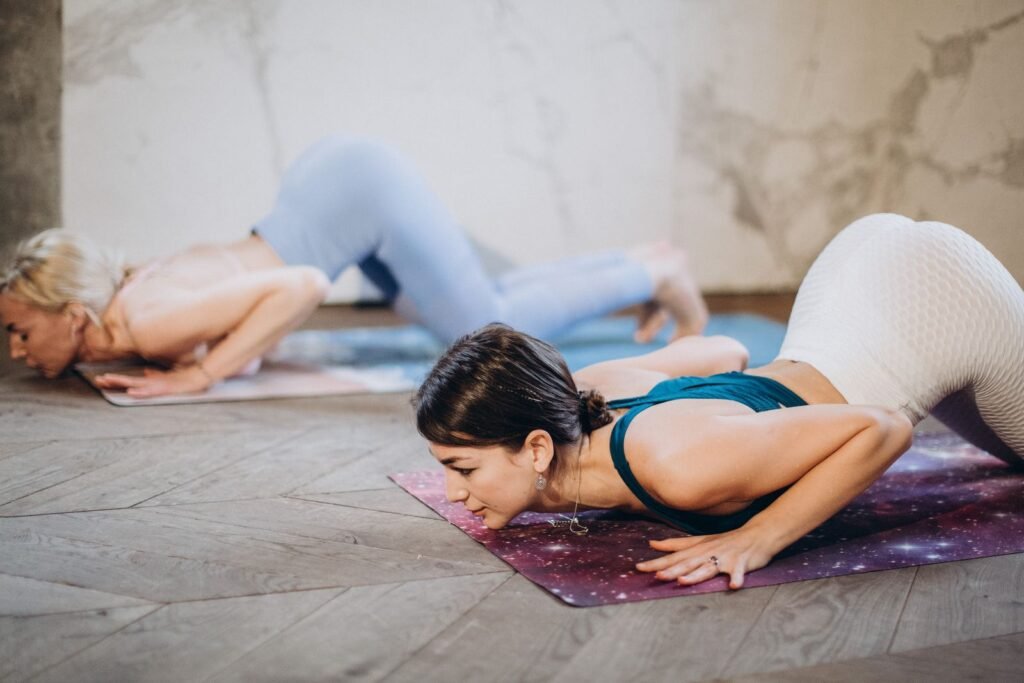
- Rabbit Pose (Sasangasana) – a forward-folding counterpose to camel, stretching the entire spine.
- Corpse Pose (Savasana) – the closing relaxation pose, especially important after a heated class to allow heart rate and body temperature to normalize gradually.
If you’re newer to these shapes, our guides on backbend yoga poses and yoga poses for beginners break each one down with alignment cues you can apply whether the room is heated or not.
What Does the Research Say About Hot Yoga Benefits?
Research specifically on heated yoga is still limited compared to yoga research overall, and most existing studies use small sample sizes, but a handful of findings are commonly cited:
- Flexibility: a small 2013 study found that participants who practiced Bikram yoga for eight weeks showed greater flexibility in the lower back, shoulders, and hamstrings compared to a control group.
- Cardiovascular response: research has suggested that a single Bikram-style session can raise heart rate to a level comparable with a brisk 3.5 mph walk, indicating a moderate-intensity cardiovascular effect.
- Bone density: a study following premenopausal women over several years reported increased bone density in the neck, hips, and lower spine among regular practitioners.
- Stress reduction: a 16-week hot yoga program for stressed, physically inactive adults was associated with significantly reduced self-reported stress levels.
- Calorie burn: Colorado State University researchers measured calorie expenditure during 90-minute Bikram sessions and found it can reach roughly 460 calories for men and 330 calories for women, though this varies widely with body size and effort level.
These findings are encouraging but should be read cautiously: none of them prove hot yoga is superior to unheated yoga for the same outcomes, and researchers routinely flag the need for larger, longer studies. For a broader look at what yoga does for the body generally, see our guide on the benefits of yoga.
Is Hot Yoga Safe? Risks and Who Should Avoid It
Hot yoga is generally safe for healthy adults who hydrate properly and pace themselves, but the heat introduces risks that room-temperature yoga doesn’t carry. The most common concerns are dehydration, heat exhaustion, and dizziness, especially in students new to exercising in high heat. Because heated muscles stretch more easily, there’s also a higher risk of overstretching ligaments and joints beyond a safe range, particularly in poses like camel pose or forward folds.
Certain groups are commonly advised to avoid or modify hot yoga: pregnant women, due to the risk of elevated core body temperature affecting fetal development, and people with cardiovascular conditions, low blood pressure, or heat-sensitive conditions such as multiple sclerosis, since heat can temporarily worsen MS symptoms. If you have any of these conditions, or you’re simply unsure, check with a physician before your first class, and consider starting with an unheated style like gentle yoga or restorative yoga instead.
Hot Yoga vs. Bikram Yoga: What’s the Real Difference?
The terms get used interchangeably, but there is a real distinction. Bikram yoga is a specific, trademarked method: 26 postures and 2 breathing exercises, performed in the same order, in a room fixed at 105°F and 40% humidity, over 90 minutes, with a scripted verbal dialogue and no music. “Hot yoga” is the broader category: any heated class, which may follow a completely different sequence, use music, allow instructor variation, and run at a lower temperature (often 90-100°F rather than 105°F). Every Bikram class is hot yoga, but not every hot yoga class is Bikram. If you want the exact traditional sequence, look specifically for a studio advertising Bikram or “26 & 2” classes; if you want variety, heated vinyasa or power flow studios are the more common modern option.
How Does Hot Yoga Compare to Other Heated or Dynamic Styles?
Hot yoga sits within a wider ecosystem of dynamic and specialty styles, and it’s worth knowing where it overlaps and where it diverges:
- Ashtanga yoga follows a fixed, athletic sequence like Bikram does, but at room temperature, making it a useful comparison for anyone who likes structure without the heat.
- Aerial yoga uses a suspended hammock for support and inversion work, which is a completely different equipment-based approach rather than a temperature-based one.
- Power yoga is a faster, strength-focused flow that’s frequently taught heated, making it one of the closest cousins to modern hot yoga.
- Face yoga targets facial muscles specifically and isn’t temperature-dependent at all, illustrating just how broad the “yoga” umbrella has become.
If you’re mapping out which style suits your goals, our overview of types of yoga covers the full landscape from gentle to intense.
What Should a Hot Yoga Teacher Know and Do Differently?
A qualified hot yoga teacher needs more than standard yoga instructor training; they need to actively manage a room where overheating is a real risk. This typically includes monitoring students for signs of heat distress (pale or flushed skin, confusion, stopping sweating unexpectedly), enforcing hydration breaks, adjusting room temperature and humidity based on class size and season, and knowing modifications for students who are new to heat exposure. Many studios require additional heated-class certification on top of a standard 200-hour yoga teacher training before instructors are cleared to teach hot classes independently. If you’re training to teach, or simply choosing a studio, ask whether instructors have specific hot yoga certification rather than assuming a general teaching certificate covers it.
Can You Practice Hot Yoga at Home, and What About Hot Yoga Apps?
Practicing hot yoga at home is possible but requires deliberately heating the room, typically with a space heater and a humidifier, plus a thermometer to keep temperatures in a safe range. Many practitioners instead use a hot yoga app or streamed class to follow a guided heated sequence while managing their own room temperature, which gives more control over pacing than a studio class but removes the safety net of an instructor watching the room. If you’re building a home practice, start at a lower temperature than a studio (around 80-85°F) until you know how your body responds, keep the door accessible in case you need to step out, and always have water within reach. For guided sessions you can do anywhere, on any schedule, explore FitStrot’s online yoga classes, which pair live instruction with the flexibility of practicing from home.
How Do I Find Hot Yoga Near Me?
Searching “hot yoga near me” will usually surface a mix of independent studios and franchise locations offering heated vinyasa, power yoga, or Bikram-style classes. When comparing options, check three things: the exact temperature and humidity they run (ask directly, since “hot yoga” branding varies widely), whether the sequence is fixed or varies by instructor, and whether they offer a trial class, since heat tolerance is individual and the only way to know if a studio’s format suits you is to try one session. Many studios also list temperature and class length on their schedule page, which is worth checking before you book if you’re heat-sensitive or brand new to the format.
What Should You Bring to Your First Hot Yoga Class?
Preparation matters more in hot yoga than in most other styles, because the heat amplifies the consequences of being underprepared. A practical checklist:
- A non-slip towel to place over your mat, since sweat makes standard mats dangerously slick.
- At least one liter of water, ideally with electrolytes if the class runs 75 minutes or longer.
- Lightweight, moisture-wicking clothing rather than cotton, which stays wet and heavy.
- A light meal 2-3 hours beforehand, since practicing on a completely empty or overly full stomach in heat can cause lightheadedness.
- A willingness to rest in child’s pose whenever needed, without judgment, since even experienced practitioners sit out poses in extreme heat.
Questions People Ask About Hot Yoga
What is hot yoga?
Hot yoga is any yoga class practiced in an artificially heated room, usually between 80°F and 105°F, sometimes with added humidity. The heat increases sweating, raises heart rate, and makes muscles more pliable, intensifying whatever sequence of poses the class follows, whether that’s vinyasa, power yoga, or Bikram’s fixed 26-posture format.
What is hot yoga called?
The most recognized name is Bikram yoga, the original trademarked 105°F sequence. Untrademarked versions of the same 26-posture sequence are often called “26 & 2.” Other common names include hot vinyasa, hot flow, and hot Hatha, depending on which base style the studio heats.
What is a hot yoga class like?
A hot yoga class typically runs 60-90 minutes in a room heated to 90-105°F. Expect standing poses, backbends, forward folds, and floor stretches, heavy sweating within the first 10-15 minutes, and regular water breaks. Most classes close with several minutes of savasana to let your heart rate and body temperature return to normal gradually.
What is hot yoga like for beginners?
For beginners, hot yoga feels significantly more intense than a standard class within the first few minutes. Expect a faster heart rate, heavy sweating, and occasional lightheadedness as your body adjusts. Most instructors recommend resting in child’s pose whenever needed, hydrating continuously, and avoiding comparison with more experienced students, since heated flexibility can be deceptive.
Is hot yoga good for weight loss?
Hot yoga can support weight loss as part of a broader calorie-controlled routine, since a 90-minute session can burn roughly 330-460 calories depending on body size and intensity, per Colorado State University research. However, most of the immediate weight lost during class is water weight from sweating, not fat loss, so results depend on consistent practice over weeks, not single sessions.
Try This for Yourself
Reading about the heat, the poses, and the science is one thing; feeling how your body responds to a guided flow is another. If you want structured, expert-led sessions without needing to find (or heat) a studio, explore FitStrot’s online yoga classes and build a practice that fits your schedule, your space, and your pace.
Related reading: Explore the traditional roots of the format in our Bikram yoga guide, compare it with a fixed unheated sequence in Ashtanga yoga, try a completely different equipment-based practice with aerial yoga, or see how the “yoga” umbrella stretches even further with face yoga. Ready to build a consistent home practice? Start with FitStrot’s online yoga classes.