Bikram yoga is a fixed sequence of 26 postures and two breathing exercises, practiced in a room heated to around 105°F (40.5°C) with roughly 40% humidity, over a set 90-minute class. Developed by Bikram Choudhury in the 1970s from techniques taught by his own teacher, Bishnu Charan Ghosh, it is one of the most standardized styles of yoga in the world — every class follows the identical order of poses, in the identical heat, regardless of studio or country. The heat is meant to loosen muscles and encourage sweating, while the fixed sequence lets students track their own progress class after class, much like the structured repetition found in ashtanga yoga.
What Is Bikram Yoga?
Bikram yoga is a copyrighted-in-name, trademarked style of hot yoga built around one unchanging 26-posture sequence performed in strict order. Unlike vinyasa yoga, where sequences vary by teacher and class, or ashtanga yoga, which progresses through multiple defined series, bikram yoga never changes its script. Every certified bikram class anywhere in the world moves through the same standing poses, the same floor poses, and the same two breathing exercises, in the same 90-minute window, at the same room temperature. That rigidity is the entire point: it turns the class into a controlled, repeatable environment where the only variable left is you.
Who Created Bikram Yoga, and What Is Its History?
Bikram Choudhury, born in Calcutta in 1944, trained from around 1962 under Bishnu Charan Ghosh, a well-known Kolkata yoga teacher. Around 1969, Choudhury assembled his signature 26-posture sequence by drawing on postures and teaching methods from Ghosh’s much larger body of work. He moved to the United States in 1971 and opened his first studio in Los Angeles in 1974, and the style expanded internationally through the 1990s as he began running nine-week teacher training courses that certified instructors worldwide. In 2011, Choudhury attempted to copyright the sequence itself; courts ruled that copyright protects the specific words and instructions used to teach it, not the underlying idea of the sequence, since a series of yoga postures functions more like an exercise routine than a creative work. Separately, and more seriously, Choudhury became the subject of multiple lawsuits alleging sexual harassment and assault, and a civil court awarded a former employee a multimillion-dollar judgment against him in 2016. He left the United States that year and has continued teaching abroad since. Many studios that still teach his 26-posture sequence today have distanced themselves from his name, branding classes simply as “hot yoga” or “26 and 2” instead.
What Are the 26 Poses of Bikram Yoga?
The bikram yoga sequence is built from 26 postures plus two pranayama (breathing) exercises, always performed in this order:
- Pranayama breathing (standing deep breathing)
- Half moon pose with hands-to-feet pose
- Awkward pose
- Eagle pose
- Standing head-to-knee pose
- Standing bow pulling pose
- Balancing stick pose
- Standing separate leg stretching pose
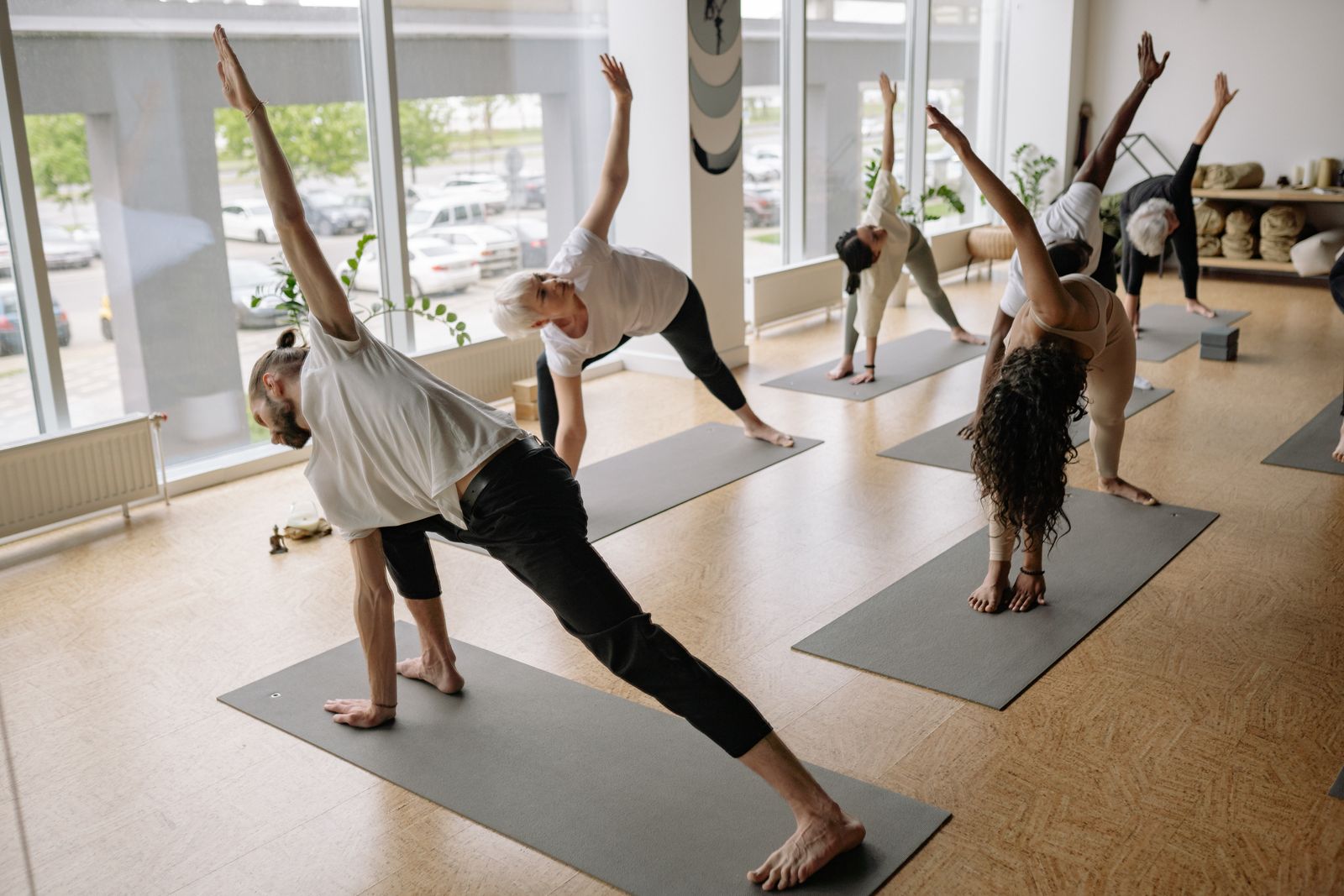
- Triangle pose
- Standing separate leg head-to-knee pose
- Tree pose
- Toe stand pose
- Dead body pose (savasana)
- Wind-removing pose
- Sit-up
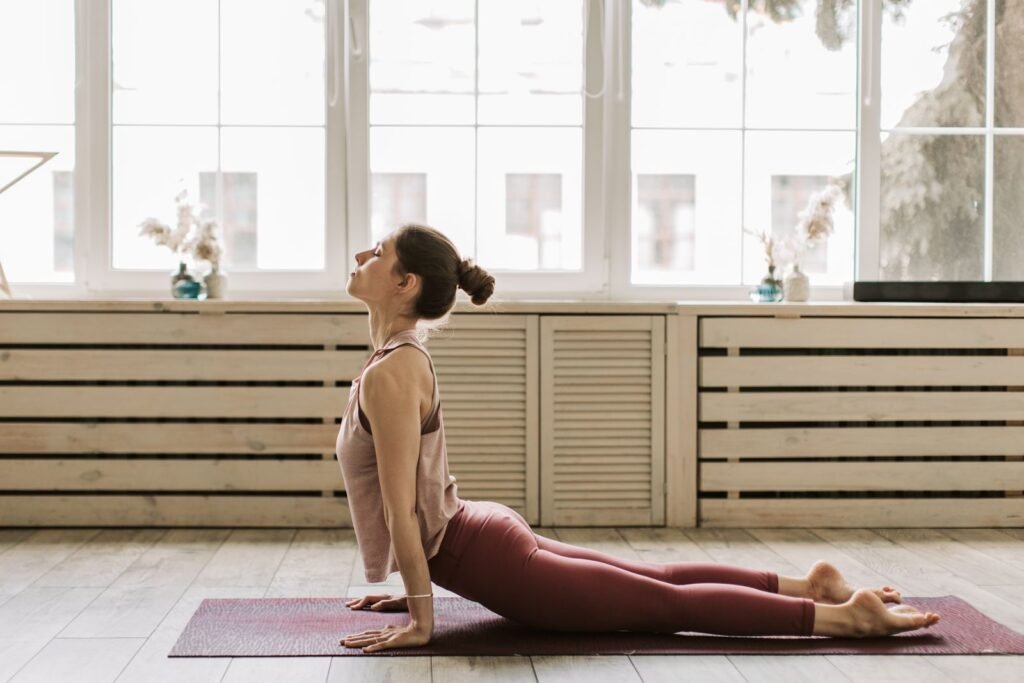
- Cobra pose
- Locust pose
- Full locust pose
- Bow pose
- Fixed firm pose
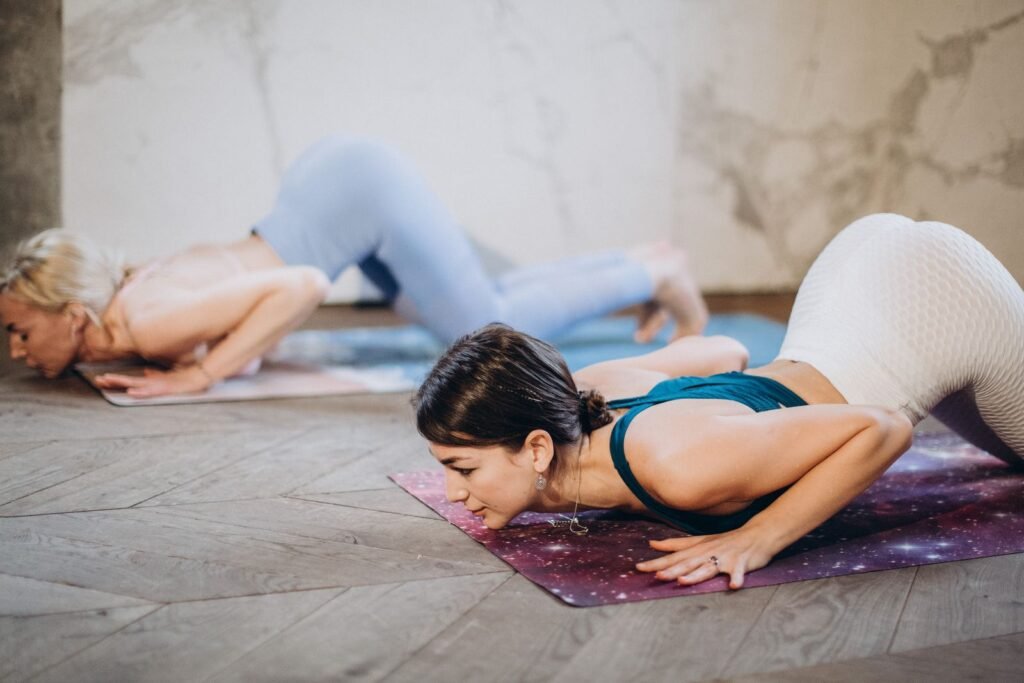
- Half tortoise pose
- Camel pose
- Rabbit pose
- Head-to-knee pose with stretching pose
- Spine-twisting pose
- Blowing in firm pose (kapalbhati breathing)
Each posture is done twice, with a brief rest in between, and the entire class always starts standing and finishes on the floor. The sequence design is deliberate: standing poses first to build heat and stability, then floor poses to deepen the stretch once muscles are warm.
What Happens During a Typical Bikram Yoga Class?
A bikram class runs for exactly 90 minutes, and the room is heated before students arrive so the temperature is already at target when class starts. Students typically bring a non-slip towel and a water bottle, since sweating is heavy and continuous throughout. The instructor calls the poses verbally in a set dialogue — a scripted set of instructions that certified bikram teachers memorize — rather than demonstrating each pose themselves, which keeps the pace consistent across every class taught anywhere in the world. New students are usually encouraged to stay in the room even if they need to sit out a pose, since leaving and returning disrupts the body’s adjustment to the heat. This is different from a typical hatha yoga class, where a teacher walks the room adjusting individual students throughout.
What Are the Benefits of Bikram Yoga?
The heat and the fixed structure of bikram yoga combine to produce several practical benefits reported by regular practitioners:
- Improved flexibility — warmed muscles and connective tissue allow a deeper stretch than the same poses performed cold, which is why many students report faster gains in range of motion compared to unheated classes.
- Cardiovascular conditioning — holding static poses in high heat raises heart rate similarly to moderate aerobic exercise, since the body works to cool itself while holding position.
- Mental focus and stress relief — the discipline of holding a difficult pose in an uncomfortable environment for a fixed count builds a specific kind of concentration that carries over into daily stress tolerance.
- Detoxification through sweating — while sweating itself does not “detoxify” organs (the liver and kidneys handle that job), heavy sweating does support skin health and fluid regulation when paired with proper rehydration.
- Predictable progress tracking — because the sequence never changes, students can directly compare how a pose feels month over month, which is harder to do in styles like vinyasa yoga where the sequence varies every class.
These are the benefits most commonly cited by long-term practitioners and instructors; individual results vary based on health status, hydration, and consistency of practice. For a broader look at what consistent practice does for the body and mind across styles, see our overview of the benefits of yoga.
Is Bikram Yoga Safe? What Should Beginners Know?
Bikram yoga asks more of the cardiovascular system than most other yoga styles because of the added heat load, so a few precautions matter more here than in a typical hatha yoga or yoga class. Hydrate well before class, not just during it, since drinking large amounts of water mid-class while lying in poses can cause discomfort. People with heart conditions, uncontrolled blood pressure, or a history of heat intolerance should get medical clearance before attending. Pregnant practitioners are generally advised to avoid heated yoga altogether, since raising core body temperature is a specific concern during pregnancy. Beginners should also expect the first few classes to feel disorienting — dizziness and nausea are common in week one as the body adjusts to sustained heat exposure, and this typically settles within three to five sessions for most healthy adults. If you carry existing joint or back issues, it’s worth reading up on yoga for back pain before attempting deep backbends like camel or full locust in a heated room.
Can You Practice Bikram Yoga at Home?
Practicing the full bikram sequence at home is possible but genuinely difficult to do properly, because the defining variable — a room reliably held at 105°F with 40% humidity — is hard to replicate without commercial heating and humidity equipment. Some home practitioners approximate it with a space heater, a humidifier, and a smaller room, but this rarely reaches true studio conditions safely. A more realistic at-home approach is to learn the 26-posture sequence itself without the extreme heat, focusing on the order, alignment, and breath pairing, and treating the temperature as optional rather than essential. This gets you the structural and mental-focus benefits of the sequence even if the deep-heat cardiovascular effect is reduced. For guided instruction that adapts pacing and correction to your actual environment, an online yoga class with a live instructor is a safer starting point than following a static video, since a real teacher can flag form issues before they become injuries. This is especially true if you’re coming to bikram from a gentler background like online yoga for mental wellness rather than an athletic one.
How Is Bikram Yoga Different From Other Hot Yoga Styles?
“Hot yoga” is the broader category; “bikram yoga” is one specific, trademarked style within it. Many studios that once taught bikram now teach what they call “hot yoga” or “26 and 2” instead, using the same 26-posture sequence but without licensing the Bikram name, largely because of the controversy around its founder. Other heated styles, like hot vinyasa yoga, keep the room warm (often 90-100°F) but do not follow a fixed sequence, letting the instructor vary poses class to class. The key distinguishing features of true bikram-style classes are the exact 105°F/40% humidity target, the unchanging 26-posture order, and the scripted verbal dialogue instructors use instead of physical demonstration. If flexibility and strength gains are your main goal rather than heat exposure specifically, it’s worth comparing this against online yoga for strength and flexibility, which achieves similar physical outcomes without the heated-room requirement.
How Does Bikram Yoga Compare to Ashtanga and Vinyasa Yoga?
All three styles build heat and structure into the practice, but they do it differently. Ashtanga yoga generates internal heat through continuous breath-linked movement (vinyasa) across a memorized series, without needing a heated room at all. Vinyasa yoga is the most flexible of the three, with instructors free to design new sequences every class, and heat is optional rather than built into the format. Bikram yoga is the most rigid: it standardizes both the room temperature and the pose order, removing sequence variation entirely so the external heat becomes the primary driver of intensity rather than movement pace. If you tend to get bored by repetition, ashtanga or vinyasa will likely suit you better; if you want a completely predictable, trackable practice, bikram’s sameness is a feature rather than a limitation.
Where Can You Find Bikram Yoga Classes Near You?
Availability varies significantly by city and country. In India, cities like Hyderabad and Pune have a small but growing number of studios offering the 26-posture heated sequence, often branded as “hot yoga” rather than using the Bikram name directly. In the US, UK, and Australia, dedicated bikram and hot yoga studios are more common in larger metro areas, though many have rebranded away from the founder’s name while keeping his sequence. When searching for a studio, look specifically for the 90-minute, 26-posture, 105°F format rather than assuming any class labeled “hot yoga” follows the same script, since studios use that term loosely for a range of heated formats that don’t match the original sequence.
What Do Bikram Yoga Poses Look Like in Practice?
If you search for bikram yoga images or bikram yoga pictures before your first class, you’ll typically see rows of students in a mirrored, carpeted studio holding standing balance poses like standing head-to-knee or standing bow pulling, since these are the most visually striking and commonly photographed parts of the sequence. Photos rarely capture the floor-based back-bending poses like camel or full locust as often, even though these make up roughly half the sequence. If you’re new to the style, expect the standing half of class to look far more athletic and balance-focused than most people anticipate, and the floor half to look more like a deep, static stretching session punctuated by short backbends.
Is There a Reliable Bikram Yoga Book or Resource to Learn From?
Bikram Choudhury published a book, “Bikram Yoga,” that walks through the 26-posture sequence with photographs and instructional cues, and it remains one of the most detailed printed references for the exact pose order and alignment points. That said, a book cannot replicate the heat, the pacing of the verbal dialogue, or real-time correction of your form, so it works best as a supplement to in-person or live-guided instruction rather than a replacement for it. If you’re building a home reference library, pair a pose-sequence book with a live online yoga class so you get both the structural reference and real-time feedback on your alignment.
How Does Bikram Yoga Fit Into a Broader Yoga Practice?
Bikram yoga works well as a dedicated, standalone practice rather than something you blend heavily with other styles, precisely because its value comes from repetition and consistency. That said, many practitioners layer other yoga into their week around it: gentler, unheated sessions like hatha yoga or restorative yoga on non-bikram days to balance the intensity, or a dedicated stress-relief practice to build the calm that heavy sweating and heat exposure can otherwise undercut. If your interest in bikram grew out of a broader curiosity about types of yoga, it’s worth knowing that bikram sits at the far structured-and-heated end of the spectrum, with styles like aerial yoga and face yoga occupying very different niches entirely, one adding equipment and suspension, the other targeting facial muscles specifically rather than full-body conditioning.
Questions People Ask About Bikram Yoga
What is bikram yoga in simple terms?
Bikram yoga is a set routine of 26 yoga poses and two breathing exercises, done in the same order every time, inside a room heated to about 105°F with 40% humidity, over a fixed 90-minute class. The heat and the unchanging sequence are what separate it from most other yoga styles.
How many calories does a bikram yoga class burn?
Estimates vary widely by body weight, effort, and individual heat tolerance, and no single number applies to everyone. What’s consistent across research on heated exercise is that sustained effort in high heat raises heart rate and energy expenditure compared to the same movements performed at room temperature, though sweating heavily is not the same as burning proportionally more fat.
Is bikram yoga good for weight loss?
Bikram yoga can support weight loss as part of a broader routine that includes proper nutrition, since the heat raises heart rate and the 90-minute session burns meaningful energy. However, most of the immediate weight change you’ll notice after a class is water loss through sweat, not fat loss, and that water returns once you rehydrate.
Can beginners do bikram yoga?
Yes, most bikram studios welcome complete beginners and expect a learning curve in the first several classes as your body adjusts to the heat. Arrive well-hydrated, know that dizziness in week one is common and usually temporary, and don’t hesitate to rest in child’s pose or savasana if a pose feels like too much.
Why do some studios call it “hot yoga” instead of “bikram yoga”?
Many studios that teach the same 26-posture sequence have moved away from the “Bikram” name because of the serious lawsuits and misconduct allegations against founder Bikram Choudhury, rebranding their classes as “hot yoga” or “26 and 2” instead. The poses and format are frequently unchanged; only the branding has shifted.
What is the difference between bikram yoga and regular hot yoga?
Bikram yoga specifically refers to the fixed 26-posture, 90-minute, 105°F sequence created by Bikram Choudhury, taught with a scripted verbal dialogue. “Hot yoga” is a broader umbrella term for any heated yoga class, including styles like hot vinyasa, which don’t follow a fixed pose order and may run at different temperatures.
Try This for Yourself
Reading about the 26 postures is a reasonable start, but the heat, the pacing, and the balance work only make sense once you’re actually moving through the sequence with someone watching your form. If you want structured, real-time guidance while you build toward a full practice, you can book a live online yoga class with FitStrot and work with an instructor who can adapt pacing, correct alignment, and help you progress safely, heat or no heat.
Related reading: Explore more on ashtanga yoga, vinyasa yoga, aerial yoga, and face yoga, or go ahead and try an online yoga class to put what you’ve learned into practice.