Yoga for kids is a simplified, playful version of adult yoga that uses fun poses, storytelling, animal names, and breathing games to help children build strength, flexibility, focus, and emotional balance. Unlike adult practice, kids’ yoga is short (10-20 minutes), highly visual, and rarely holds a pose for more than a few breaths. It can be practiced at home, in schools, or through structured yoga for children programs, and most poses need nothing more than a mat and open floor space.
What Is Yoga for Kids?
Yoga for kids adapts the postures, breathing techniques, and relaxation methods of traditional yoga into a format that suits a child’s shorter attention span and love of play. Instead of Sanskrit names and long holds, a kids’ class might call Downward Dog “the puppy stretch” or Cobra Pose “the hissing snake.” The goal isn’t perfect alignment; it’s introducing body awareness, calm breathing, and movement in a way that feels like a game rather than exercise. Most kids’ yoga sessions blend physical poses (asana), simple breathing exercises (pranayama), and short relaxation or visualization segments, often themed around animals, nature, or a story arc that keeps a child engaged from the opening pose to the final rest.
Why Yoga for Kids Matters
Childhood is when motor skills, emotional regulation, and self-confidence are still forming, and yoga touches all three at once. Regular practice helps children notice tension in their bodies, learn to pause before reacting, and build core strength and balance that support other physical activities. Teachers and parents who introduce yoga early often report that children fall asleep more easily, transition between activities with less resistance, and have an early vocabulary for feelings like frustration or excitement. It also plants a habit: a child who learns to associate movement with feeling calmer is more likely to carry that association into the teenage years covered in guides like yoga for students.
What Are the Core Benefits of Yoga for Kids?
The importance of yoga for kids shows up across several developmental areas rather than a single benefit.
- Physical strength and flexibility — poses like Tree Pose and Cobra build core stability, balance, and joint mobility during a period of rapid bone and muscle growth.
- Focus and attention — holding a pose, even briefly, asks a child to concentrate on their body instead of external distractions, a skill that transfers to classroom attention.
- Emotional regulation — breathing exercises give children a concrete tool to use when they feel angry, anxious, or overstimulated, rather than just being told to “calm down,” similar to the calming techniques described in yoga for anxiety.
- Better sleep and reduced restlessness — a short wind-down sequence before bed can settle a nervous system that’s been on all day, echoing the approach in yoga for better sleep.
- Confidence and body awareness — mastering a new pose, even an imperfect one, gives children a small, repeatable sense of achievement.
- Social skills — partner poses and group sequences in a class setting teach patience, turn-taking, and cooperation.
These benefits compound with consistency; a single session helps a child feel calmer for an afternoon, but two or three short sessions a week over a few months is where the gains become noticeable to parents and teachers.
How to Do Yoga for Kids: A Step-by-Step Approach
Getting started doesn’t require a studio, special clothing, or prior experience. Here is a simple structure that works for most children aged 3 to 12.
- Set the scene. Roll out a mat or towel in a space with enough room to stretch arms and legs fully. Dim harsh lighting if possible and remove obvious distractions like screens or toys.
- Start with three to five deep breaths. Ask the child to place a hand on their belly and feel it rise and fall. This single step signals that “yoga time” has begun.
- Move through 5-8 poses. Pick a theme (animals, a jungle story, a trip to the beach) and link poses to it: Cat-Cow becomes “the stretching cat,” Warrior II becomes “the brave knight.” Hold each pose for 3-5 breaths, not minutes.
- Add one balance pose. Tree Pose or Airplane Pose builds focus and gives the session a small challenge to master.
- Include a partner or group pose if more than one child is present. This keeps siblings or classmates engaged with each other instead of competing for attention.
- End with rest. One to two minutes lying still in a simple relaxation pose, eyes closed, teaches the body what “settling down” feels like.
The entire sequence typically runs 10-20 minutes for younger children and can extend to 30 minutes for kids aged 8 and up who can hold focus longer. For a broader progression that works well once a child moves into more structured practice, see yoga for beginners.
What Are the Best Simple Poses to Start With?
Simple yoga for kids works best when poses are named after things children already recognize. A handful of foundational poses cover most of what a beginner needs.
- Mountain Pose (Tadasana) — standing tall, feet grounded, arms relaxed; teaches basic posture awareness.
- Downward Dog (the “puppy stretch”) — an inverted V-shape that stretches the hamstrings and shoulders while building arm strength.
- Cat-Cow — an easy flow on hands and knees, arching and rounding the spine, great for warming up.
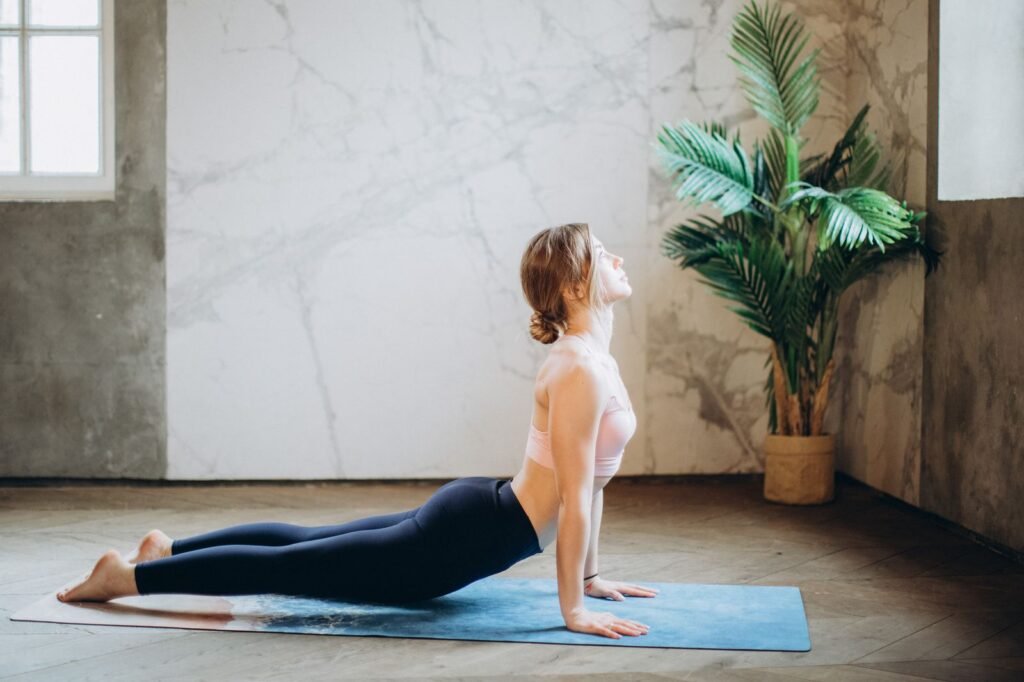
- Cobra Pose (“hissing snake”) — a gentle backbend lying on the stomach that opens the chest and strengthens the lower back.
- Tree Pose — standing balance on one leg, arms raised like branches; a favorite for building focus.
- Butterfly Pose — seated with soles of the feet together, knees flapping like wings; opens the hips gently.
- Child’s Pose — a resting position, kneeling with arms stretched forward, used between more active poses or at the end, closely related to the benefits of child’s pose in adult practice too.
A deeper library of poses, cues, and modifications by age is covered in yoga poses for kids, which pairs well with this guide once a child is ready to expand beyond the basics. Families who want to build a broader foundation can also look at general benefits of yoga that apply across every age group.
How Does Morning Yoga for Kids Set Up the Day?
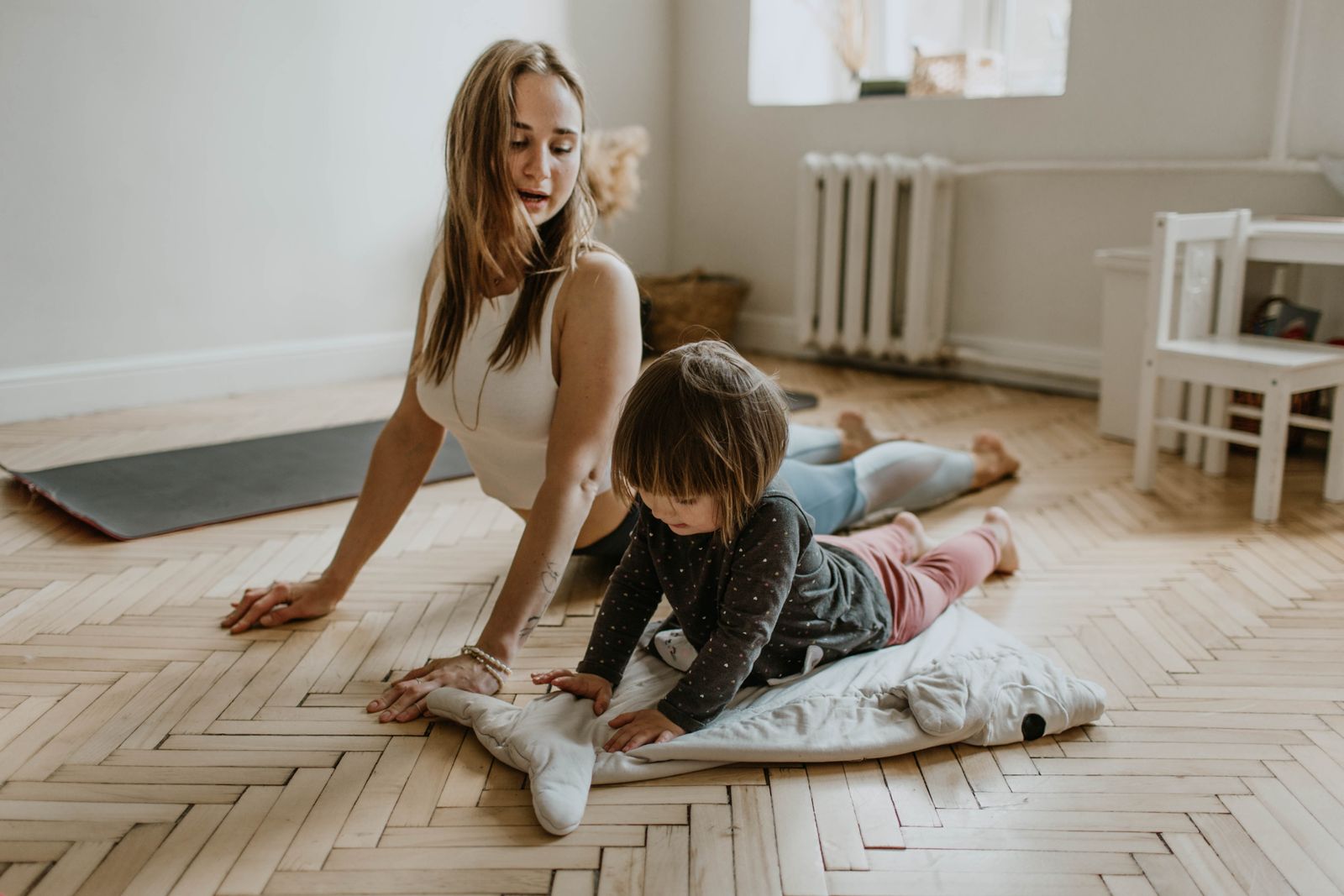
Morning yoga for kids works differently from an evening wind-down: the goal is gentle activation rather than relaxation. A short 5-10 minute sequence inspired by sun salutation stretches, a few standing poses like Warrior I, and three rounds of deep belly breathing can wake up the body without the jolt of screen time or sugary breakfast excitement. Many parents find that a consistent morning sequence, done at the same time each day, becomes a predictable ritual that reduces morning meltdowns and improves focus for the first hour of school. Keeping it under 10 minutes matters here — mornings are rushed, and a routine that feels like one more obligation will get abandoned within a week.
How Can Yoga Be Made Fun for Kids?
Fun yoga for kids leans on imagination rather than instruction. A few tactics that consistently work in classrooms and living rooms:
- Storytelling sequences — link poses into a narrative (“we’re walking through the jungle and see a snake, then a tree, then a mountain”) so the flow feels like play, not exercise.
- Yoga games — freeze-frame games where children hold a pose until music stops, or yoga-themed musical chairs, keep energy high.
- Animal sounds and movements — Lion’s Breath (sticking out the tongue and exhaling loudly) or Cat Pose meowing turns breathing exercises into giggles.
- Partner poses — Double Boat Pose or Partner Tree Pose with a sibling or friend builds cooperation and turns balance work into a shared challenge.
- Props — feathers to practice slow breathing, stuffed animals balanced on the belly during relaxation, or colored mats for each pose station.
The more a session feels like a game, the more likely a child is to ask for it again the next day, which matters more for long-term benefit than any single “perfect” class.
What Is the Best Age to Start Yoga for Kids?
There’s no strict minimum age; toddlers as young as 3 can follow simple animal-pose imitation games, while structured breathing and longer holds tend to suit children aged 6 and up better. Best yoga for kids programs typically group by rough developmental stage: ages 3-5 focus almost entirely on movement and imagination with very short attention spans; ages 6-9 can hold poses longer, follow multi-step sequences, and start basic breathing techniques; ages 10-12 can handle more structured classes closer to a teen or beginner adult format, including brief stillness and simple meditation. Matching the format to the age group, rather than using one style for every child, is the biggest factor in whether kids stay engaged.
How Can Yoga Help Kids With Asthma?
Breathing-focused yoga practices have been studied specifically in children with asthma, and the research is cautiously encouraging rather than a cure-all claim. Several clinical studies have examined structured yoga breathing programs in asthmatic children and found improvements in reported quality of life and, in some cases, better asthma control alongside standard medical treatment — research in this area generally frames yoga as a complementary practice, not a replacement for prescribed medication or a pulmonologist’s guidance. The mechanism is straightforward: slow, controlled breathing techniques like alternate nostril breathing or extended exhale practices train the respiratory muscles and may reduce the shallow, rapid breathing pattern that can accompany anxiety around asthma symptoms. Any child with a formal asthma diagnosis should continue their prescribed treatment plan, and parents should loop in their pediatrician or pulmonologist before adding a new breathing practice, especially during flare-ups.
How Do You Teach Yoga for Kids in Hindi or Regional Languages?
Yoga for kids in Hindi often follows the same pose sequences but uses familiar Hindi names and rhymes to make the practice feel rooted in home culture, which matters for many families across India and the diaspora. Common approaches include naming poses with simple Hindi words (Vrikshasana taught alongside “ped ki mudra,” or tree pose), using Hindi nursery rhymes as the backing rhythm for a flow, and framing breathing exercises like Bhramari (bee breath) by their traditional names, since the humming sound itself is part of what makes the exercise engaging for young children. Many schools across India already teach a basic version during morning assembly or PE periods, so many children arrive at a formal class with some pose vocabulary already in place, a natural bridge into practices like pranayama breathing techniques later on.
What Equipment Do You Actually Need?
Very little. A yoga mat or a folded blanket on a non-slip floor is enough for most home sessions; a classroom setting might add lightweight foam blocks for younger children who can’t yet reach the floor comfortably in certain poses, plus a simple speaker for calming background music. Bare feet work better than socks, which can slip on hard flooring, and loose, stretchy clothing matters more than any specific “kids’ yoga outfit” marketed online. This pairs naturally with the low-equipment setup covered in guides on setting up a home yoga space and general yoga equipment basics.
How Often Should Kids Practice Yoga?
Two to three sessions a week of 10-20 minutes each is a realistic starting cadence for most families, building up to daily short sequences if a child enjoys it. Unlike adult practice, where longer, less frequent sessions are common, children benefit more from short and frequent exposure since it reinforces the habit without asking for sustained focus they haven’t developed yet. A five-minute breathing-only session on a busy day still counts and keeps the routine alive; consistency over time matters more than the length of any single practice.
How Does Kids’ Yoga Compare to Adult Practice?
The differences go beyond just “easier poses.” Kids’ yoga typically skips Sanskrit terminology in favor of playful English or regional-language names, shortens pose holds from the 30-60 seconds common in adult classes to just a few breaths, and replaces silent meditation with short, guided visualizations or stories. Structure also differs: an adult vinyasa yoga class links poses to breath in a continuous flow aimed at building heat and stamina, while a kids’ class deliberately breaks up the flow with games, songs, and pauses to match shorter attention spans. As children move into their teenage years, classes gradually shift toward the format described in yoga for students, which introduces longer holds and more structured breathing work suited to exam stress and growth-related aches.
What Common Mistakes Should Parents Avoid?
A few missteps show up repeatedly when parents introduce yoga at home.
- Forcing stillness too early — expecting a 4-year-old to hold a pose or sit in silent meditation for minutes leads to frustration and disengagement.
- Overcorrecting alignment — perfect form matters far less than movement and body awareness at this age; constant correction turns play into a chore.
- Making it feel like a mandatory chore — framing yoga as “you have to calm down now” instead of an invitation removes the playfulness that makes it work.
- Skipping the relaxation close — ending abruptly without a brief settling period misses one of the biggest emotional-regulation benefits.
- Copying an adult class format directly — a 45-minute sequence with long holds and Sanskrit cues will lose most children within ten minutes.
How Can Schools and Group Settings Use Kids’ Yoga?
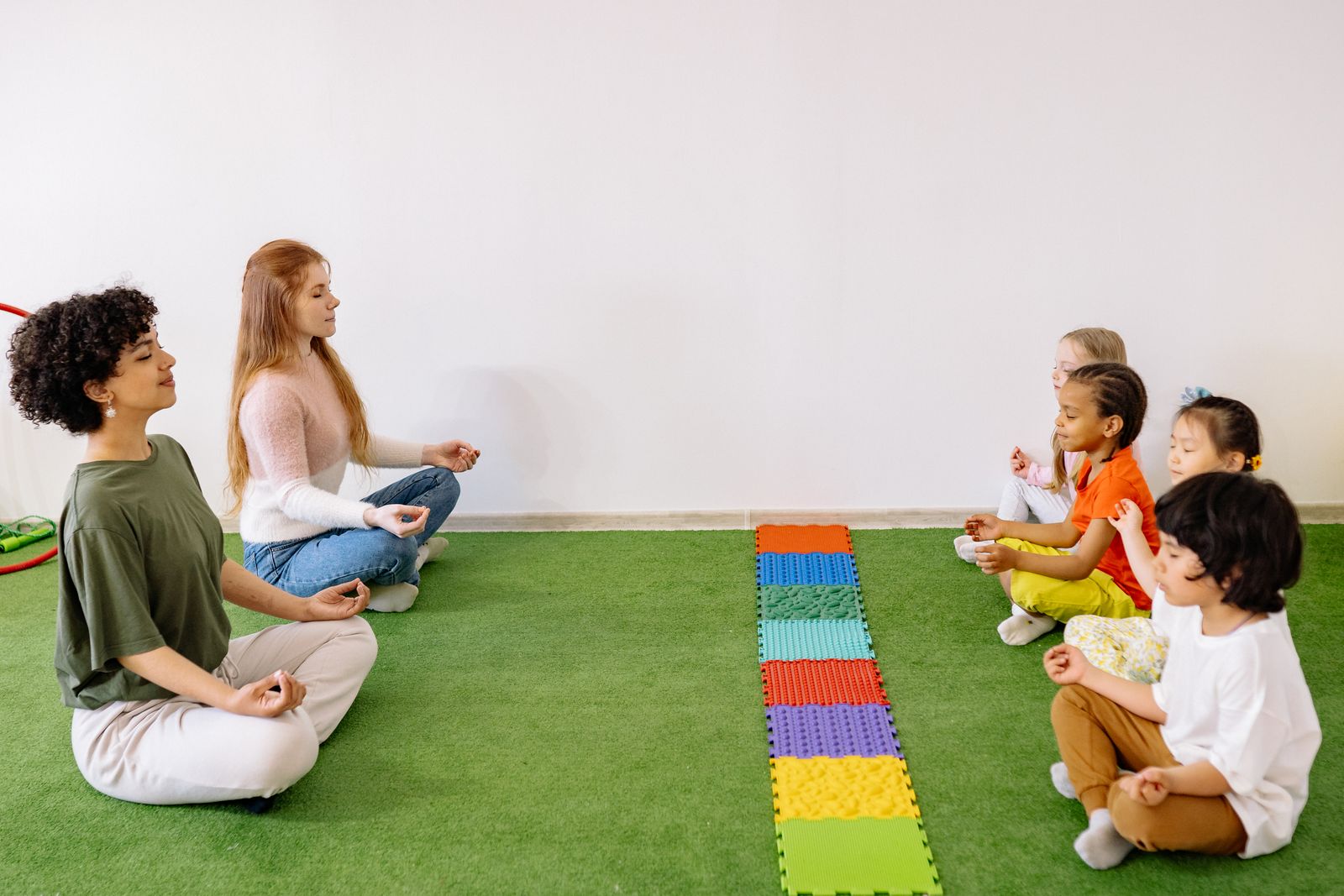
Many schools now weave short yoga breaks into the day, whether as a dedicated PE unit, a five-minute reset between subjects, or a calming ritual before test periods. Group settings add benefits that solo home practice can’t fully replicate: partner poses that require cooperation, the mild social pressure of trying a new pose alongside classmates, and a shared calming ritual that can settle an entire room faster than individual efforts. Teachers often start with a two-minute breathing reset rather than a full pose sequence, since it requires no floor space and can be done seated at a desk.
Questions People Ask About Yoga for Kids
How to do yoga for kids?
Start with a few deep breaths, move through 5-8 simple poses linked to a story or animal theme, hold each for a few breaths rather than minutes, add one balance pose, and finish with a short relaxation period lying still. Keep sessions to 10-20 minutes and let imagination, not precision, drive the practice.
What is yoga for kids?
Yoga for kids is a child-friendly adaptation of traditional yoga that uses playful pose names, short holds, storytelling, and simple breathing games to build strength, flexibility, focus, and emotional regulation, typically delivered in sessions of 10-20 minutes suited to a child’s attention span.
Why yoga for kids?
Yoga gives children tools for physical development and emotional self-regulation at a stage when both are still forming. It builds core strength and balance, teaches breathing techniques kids can use when upset, and creates an early, positive association between movement and feeling calm.
How to control asthma by yoga for kids?
Some clinical research suggests structured yoga breathing programs may support quality of life and asthma control in children when used alongside standard medical treatment, though it should never replace prescribed medication. Slow breathing techniques train respiratory muscles and reduce shallow breathing; any use for asthma should be discussed with a pediatrician first.
Try This for Yourself
The easiest way to see whether yoga fits your child’s routine is to try a guided session designed for real bodies and real attention spans. Explore FitStrot’s online yoga classes for structured sessions that adapt across age groups and can be practiced from home on your own schedule.
Related reading: yoga for beginners, yoga poses for kids, yoga for children, yoga for students, and FitStrot’s online yoga classes.