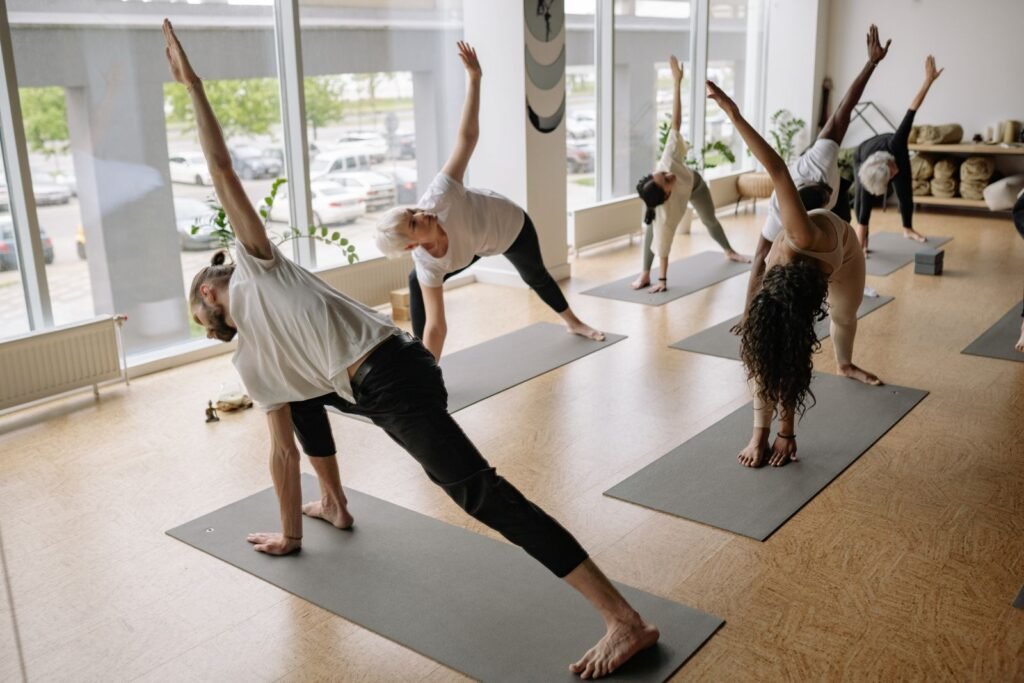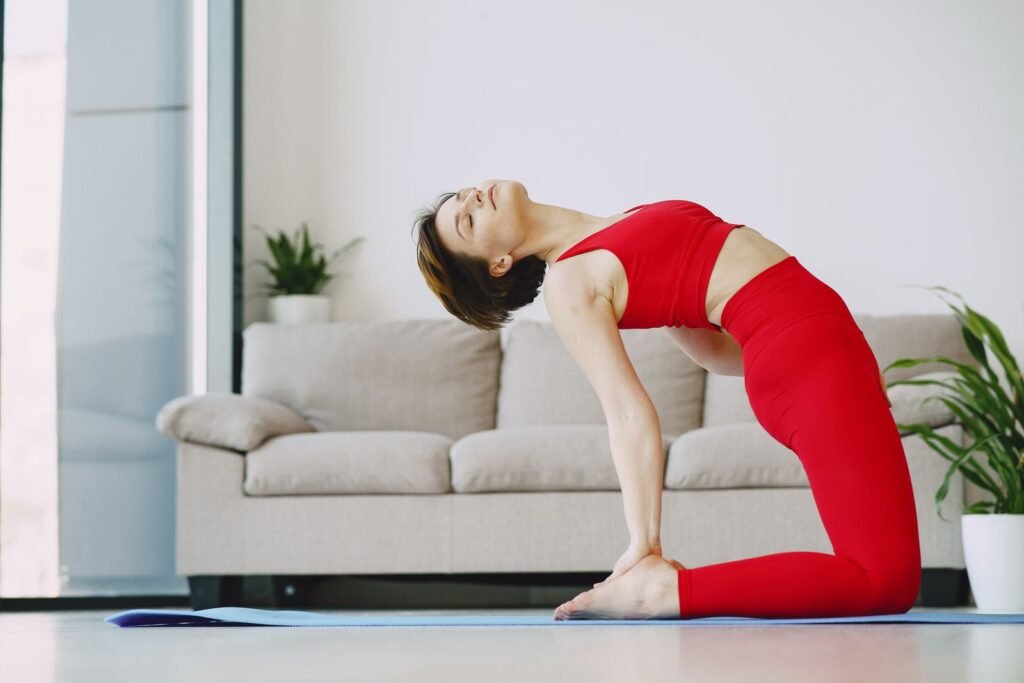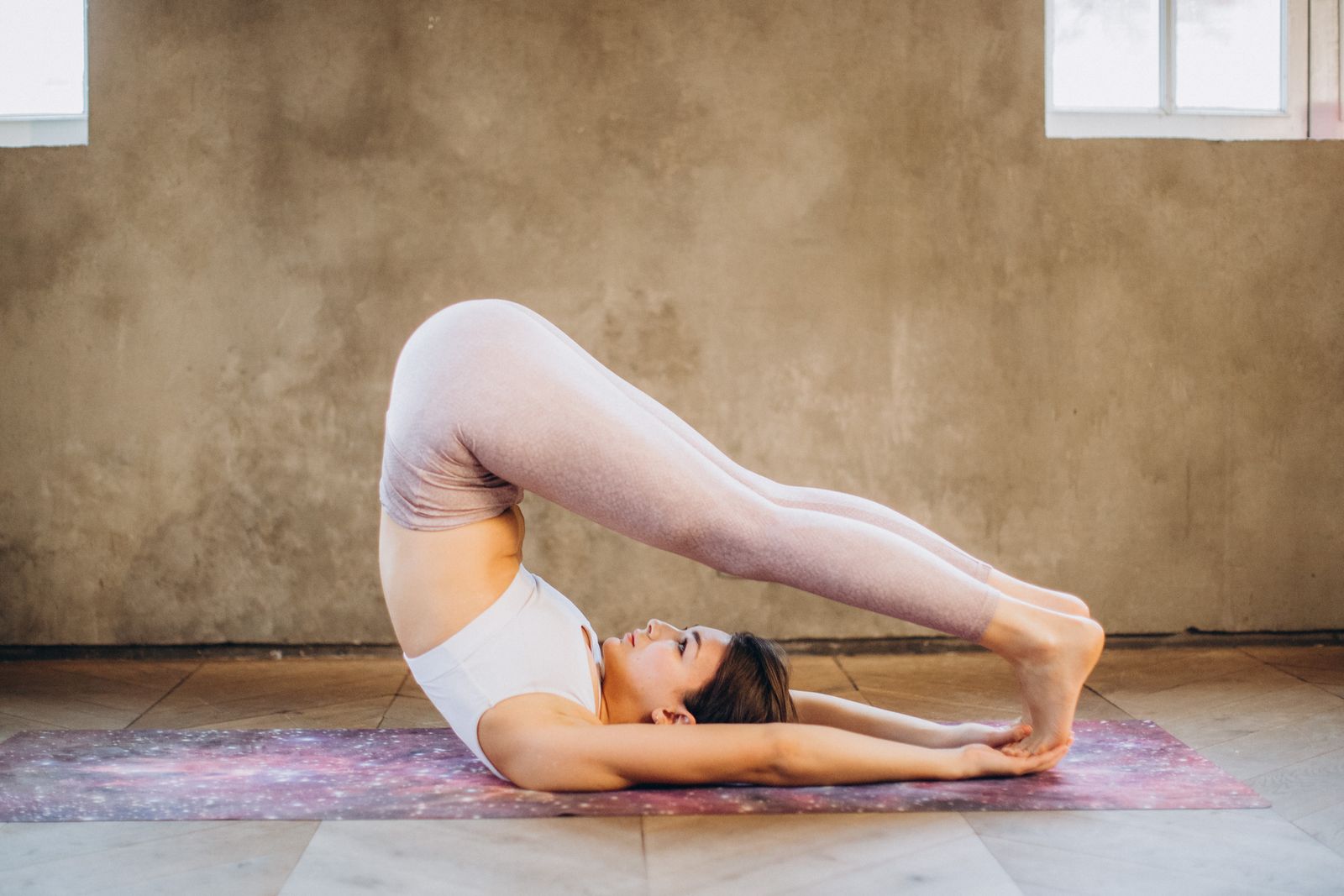
10-minute yoga is a short, focused practice that combines a handful of stretches, a breathing exercise, and sometimes a brief relaxation or yoga nidra segment into a single session lasting exactly the time you have. It works because consistency matters more than duration: a daily 10-minute habit that mobilizes the spine, hips, and shoulders and calms the nervous system produces more lasting benefit than an occasional 60-minute class squeezed in once a month. You don’t need a studio, special equipment, or advance planning — a mat, a quiet corner, and a timer are enough. Depending on the day, a 10-minute session can be an energizing morning flow, a seated stretch for neck and shoulder tension, or a lying-down yoga nidra script that guides you into deep rest.
What Can You Actually Achieve in 10 Minutes of Yoga?
Ten minutes is enough time for one clear objective, not several. A focused session might move through 3 rounds of Sun Salutation A to warm the whole body, or it might stay seated and target a single problem area like tight hips or a stiff neck. The physiological logic is straightforward: joints loosen and muscles release tension within the first few minutes of movement, and the nervous system shifts toward a calmer state within a similar window when paired with slow breathing. What you won’t get from 10 minutes is the deep, sustained stretching needed to meaningfully change long-term flexibility, or the cardiovascular load of a longer vinyasa yoga class. Treat a 10-minute practice as maintenance and reset, not as a replacement for a longer session when you have the time.
How Do You Structure a 10-Minute Yoga Session?
A reliable structure divides the ten minutes into three unequal blocks: roughly 1 to 2 minutes of settling and breath awareness, 6 to 7 minutes of movement, and 1 to 2 minutes of stillness at the end. For a general full-body routine, start seated with a few rounds of deep breathing, move into Cat-Cow for spinal mobility, transition through a round or two of sun salutations, add one standing pose like Warrior II per side, and close in Savasana. This structure works whether you’re doing a morning yoga session before work or an evening yoga wind-down, because the underlying sequence — warm, move, settle — applies regardless of time of day.
What Is a Good 10-Minute Yoga Routine for Beginners?
Beginners benefit from a routine that removes decision-making, since the goal in the first few weeks is building the habit, not perfecting form. A simple beginner sequence: 1 minute of seated breathing, 2 minutes of Cat-Cow and Child’s Pose to introduce spinal movement, 3 minutes of a slow Sun Salutation A repeated twice, 2 minutes holding a supported forward fold and a gentle seated twist, and a final 2 minutes lying in Savasana. If you’re brand new to the practice, it’s worth pairing this with a broader yoga for beginners guide and reading up on the different types of yoga so you understand what style you’re actually practicing and why the pacing feels the way it does.
What Is Yoga Nidra and How Does a 10-Minute Version Work?
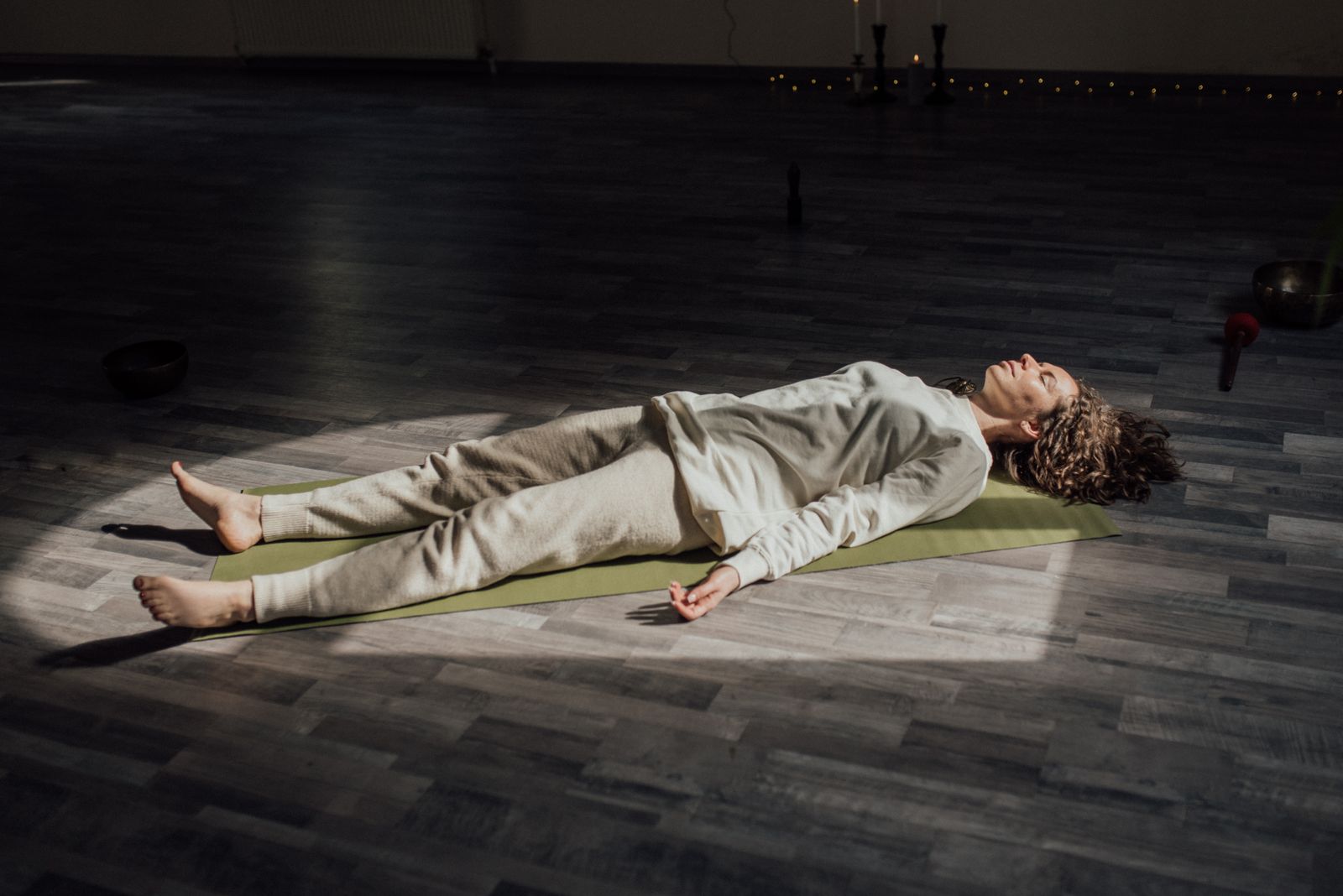
Yoga nidra, often translated as “yogic sleep,” is a guided relaxation practice done lying down in Savasana while a teacher’s voice leads you through body awareness, breath observation, and visualization — the body stays still while attention moves systematically through different sensations. A full traditional session can run 20 to 45 minutes, but a 10-minute yoga nidra script condenses the same structure: a brief settling period, a fast body scan instead of a slow one, a shortened breath-awareness section, and a simple intention or visualization before gently returning attention to the room. Research on short-form yoga nidra has found associations with improved sleep quality, reduced perceived stress, and better next-day memory performance in some studies, though results vary between individuals and most existing research has used longer sessions than 10 minutes. It’s reasonable to expect a 10-minute version to produce a milder version of the same calming effect rather than an identical one.
How Do You Write a 10-Minute Yoga Nidra Script?
A basic 10-minute yoga nidra script follows five stages, each given roughly two minutes:
- Opening and intention: Guide the listener into a comfortable lying position, invite a few deep breaths, and offer a simple intention or “sankalpa” to hold for the practice.
- Rotation of consciousness (body scan): Name body parts quickly in sequence — right hand, right arm, right shoulder, and so on — without lingering on any one part.
- Breath awareness: Invite the listener to simply notice the natural rhythm of inhale and exhale for several rounds without changing it.
- Visualization: Offer a single calming image, such as a beach, a forest clearing, or floating on still water, held for about a minute.
- Return: Bring awareness back to the body, invite small movements of fingers and toes, and guide the listener to open their eyes slowly.
Reading the script slowly, with pauses, naturally stretches these five stages into a full 10 minutes.
What Is a Good 10-Minute Yoga Routine for Neck and Shoulders?
Tight neck and shoulder muscles respond well to a short, targeted sequence, especially after long hours at a desk. A 10-minute neck-and-shoulder routine can start with 1 minute of seated neck rolls and slow side-to-side tilts, move into 2 minutes of shoulder rolls and cross-body arm stretches, add 3 minutes of Cat-Cow combined with Thread the Needle on each side to release the upper back, include 2 minutes of seated eagle arms or a gentle chest opener to counteract forward-hunched posture, and finish with 2 minutes of supported Savasana with a rolled towel under the neck. This kind of routine pairs naturally with a desk-break habit and works well alongside guidance on yoga for back pain, since neck, shoulder, and upper-back tension are frequently connected to the same postural habits.
What Do the Popular 10-Minute Yoga Videos on YouTube Look Like?
Two names come up repeatedly when people search for short home yoga sessions: Yoga With Adriene and Yoga With Kassandra. Adriene Mishler’s channel is known for approachable, beginner-friendly short practices, including dedicated 10-minute morning and beginner sequences that emphasize breath and self-compassion over precise alignment. Kassandra Reinhardt’s channel leans toward flowing, aesthetically calm sequences and offers a range of 10-minute options covering morning stretches, evening wind-downs, and gentle full-body practices. Neither channel requires equipment beyond a mat, and both are commonly used as a starting point by people testing whether a daily short practice is sustainable before committing to a longer yoga routine or a live class format. If you find a particular instructor’s pacing or voice doesn’t suit you, that’s a normal part of finding the right fit — it doesn’t mean the format itself won’t work.
How Is a Live 10-Minute Class Different from a Recorded Video?
Recorded 10-minute yoga videos are convenient because they’re available any time and never require scheduling, but they can’t see your alignment or adjust to how your body feels that day. A live instructor, even in a short session, can spot a knee that’s collapsing inward, suggest a modification for tight hamstrings, or slow down a transition you’re rushing through. This distinction matters more for beginners and for anyone recovering from an injury, where an unnoticed alignment issue repeated daily can turn a helpful habit into a source of strain. FitStrot’s online yoga classes offer this real-time feedback in a format that still fits into a tight schedule, which is often the best middle ground between a recorded video and an in-studio class.
Can 10 Minutes of Yoga a Day Actually Make a Difference?
Ten minutes daily adds up to roughly an hour a week, which is a meaningful and sustainable dose when compared with the more common pattern of one long class followed by several days of nothing. The compounding effect comes from frequency: joints that move a little every day tend to stay more mobile than joints that move a lot once a week and then sit still. Many practitioners report noticing reduced morning stiffness and a calmer baseline mood within the first one to two weeks of daily short practice, with more noticeable gains in flexibility and strength appearing over four to eight weeks — a timeline broadly consistent with what’s seen in other forms of regular movement. Building this into a repeatable habit is really the whole goal, and our guide to daily yoga covers how to make a short practice stick over months rather than weeks.
Should You Do 10-Minute Yoga in the Morning or at Night?
The right time depends on what you want the session to do for you. A 10-minute morning yoga practice works best as an activating sequence — sun salutations, a standing pose, and a short breath practice to sharpen focus for the day ahead. A 10-minute session at night works better as a downshift: slower stretches, longer holds, forward folds, and a closing yoga nidra or Savasana to prepare the body for sleep. If you can only commit to one daily slot, evening practice has a slight edge for people whose main complaint is trouble winding down, while morning practice has a slight edge for people whose main complaint is sluggishness or stiffness at the start of the day. Some people eventually do both — a five-minute morning activator and a five-minute evening nidra — splitting the same ten minutes across the day instead of in one block.
How Do You Fit a 10-Minute Practice into a Busy Corporate Schedule
Short yoga sessions are particularly well suited to workplace wellness because they don’t require changing clothes, blocking out a full hour, or leaving the building. A 10-minute seated or standing sequence can be done at a desk, in a meeting room, or in a quiet corner between calls, using chair-based variations of forward folds, twists, and shoulder openers. Companies increasingly build short movement breaks into the workday specifically because sustained sitting is linked to stiffness and reduced focus, and a brief guided session breaks up that pattern without disrupting the schedule. This is one of the reasons corporate wellness programs, including FitStrot’s, often start employees with short guided sessions before introducing longer yoga flow classes — the low time commitment makes the habit easier to adopt in the first place.
What Poses Show Up Most Often in 10-Minute Yoga Routines?
Certain poses appear repeatedly across 10-minute sequences because they deliver broad benefit for minimal time investment. Cat-Cow mobilizes the entire spine in under a minute. Child’s Pose offers a resting stretch for the hips and lower back that can be dropped into between any two more active poses. A single round of Sun Salutation A engages the shoulders, hamstrings, and core in one continuous sequence. Downward-Facing Dog lengthens the calves and hamstrings while also relieving mild shoulder tension. Seated spinal twists release tension along the entire back in both directions with one simple shape. And Savasana, even shortened to a single minute, gives the nervous system a clear signal that the session is complete. Understanding why these specific poses recur — rather than memorizing them as an arbitrary list — makes it easier to build your own 10-minute sequence for whatever your body needs that day, whether that’s a full yoga sequence or a single targeted stretch.
What Mistakes Should You Avoid in a Short Yoga Practice?
A few mistakes show up repeatedly in short yoga practices:
- Rushing transitions: Trying to cram a 30-minute routine into 10 minutes increases the risk of strain and defeats the calming purpose of the practice in the first place.
- Skipping the closing stillness: Cutting the final minute because time feels tight removes much of the benefit — it’s often the most valuable part of a short session for stress reduction.
- Dismissing it as “not counting”: Comparing a 10-minute home session to a full 60-minute studio class misses the point; they serve different purposes and both have real value.
- Repeating the exact same sequence for months: This can lead to plateaus — rotating between a few different short routines, such as alternating a hip-focused sequence with a neck-and-shoulder sequence, keeps the practice responsive to what your body actually needs.
Questions People Ask About 10 Minute Yoga
Is 10 minutes of yoga a day enough to see results?
Yes, for mobility, stress reduction, and building a consistent habit, 10 minutes daily is enough to notice real change, especially compared with irregular longer sessions. Reduced stiffness and a calmer baseline mood are commonly reported within one to two weeks, while flexibility and strength gains typically take four to eight weeks of consistent daily practice to become noticeable.
What should a 10-minute yoga nidra script include?
A 10-minute yoga nidra script should include an opening settling period, a quick body scan touching each major area briefly, a short breath-awareness segment, one simple visualization held for about a minute, and a gentle return to full awareness. Keeping transitions slow and using pauses between stages naturally stretches these five elements into a full ten minutes.
Is Yoga With Adriene or Yoga With Kassandra better for a 10-minute practice?
Neither is objectively better; they suit different preferences. Yoga With Adriene tends toward a conversational, beginner-friendly tone focused on breath and self-compassion. Yoga With Kassandra tends toward smoother, more flowing sequences with a calmer visual style. Trying a session from each is the fastest way to find which pacing and voice keep you coming back daily.
Can a 10-minute yoga routine help with neck and shoulder pain?
A short, targeted routine combining neck rolls, shoulder rolls, Cat-Cow, and a gentle chest opener can meaningfully reduce tension built up from desk work or phone use. It won’t resolve an underlying structural issue, but for the common pattern of tightness from prolonged sitting, 10 minutes of consistent daily movement often brings noticeable relief within a week or two.
Do I need any equipment for a 10-minute yoga session?
No special equipment is required. A yoga mat helps with grip and comfort, but a folded towel or carpeted floor works in a pinch. A rolled blanket or cushion can support the knees or lower back during seated poses, and a chair is useful for a desk-based or workplace routine when getting down to the floor isn’t practical.
What’s the best time of day for a 10-minute yoga practice?
The best time depends on your goal. Morning sessions work well for building energy and mobilizing a stiff body after sleep, while evening sessions work well for winding down before bed, especially when they end with a short yoga nidra or Savasana. Both are valid; consistency at whichever time you’ll actually keep matters more than the specific hour chosen.
Try This for Yourself
A short routine you read about is a starting point, not the finished habit — the real difference comes from having someone guide your breath, pacing, and alignment in real time. If you want a 10-minute practice (or a longer one) built around your actual schedule and body, explore FitStrot’s online yoga classes and turn a quick daily habit into something that genuinely sticks.
Related reading: morning yoga, daily yoga, yoga flow, yoga for beginners, and FitStrot’s online yoga classes.