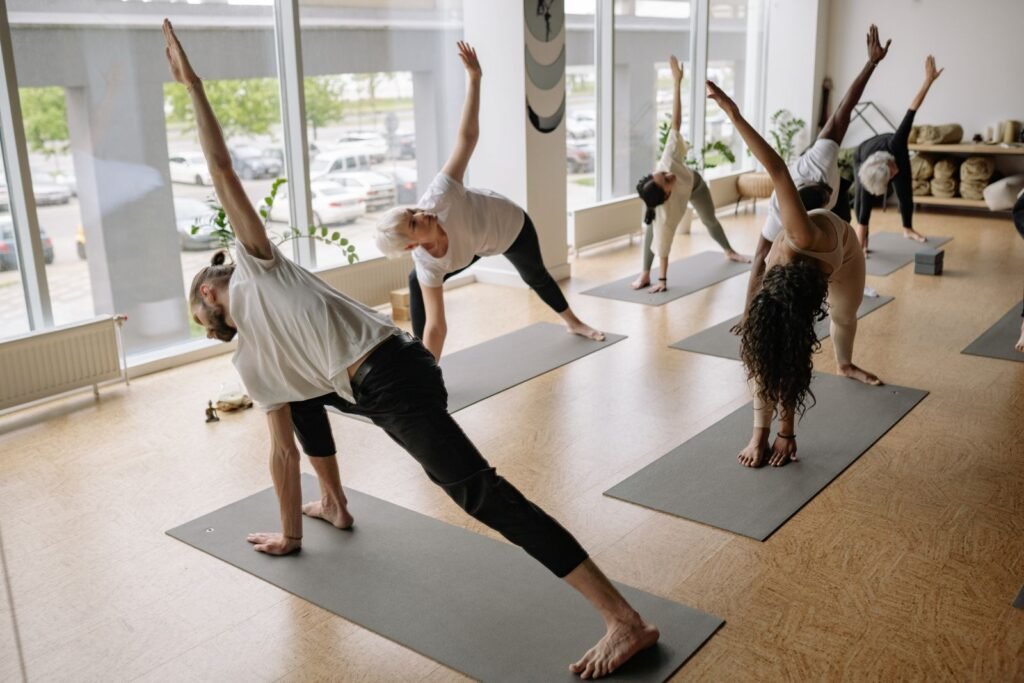
A yoga sequence is a deliberately ordered series of poses (asanas) practiced in a specific arrangement to warm up the body, build toward a peak posture, and cool down safely. Unlike randomly picking poses, a well-built sequence follows a logical arc: centering and breath work, gentle warm-ups, sun salutations, standing poses, a peak pose (a backbend, balance, or inversion), counter-poses, seated work, and a final relaxation in savasana. The right sequence depends on your goal, whether that’s a 20-minute morning wake-up, a 60-minute hatha class, a chakra-focused practice, or a gentle flow for kids, and understanding the underlying structure lets you build or adapt one for almost any need.
What Makes a Yoga Sequence Different From a Random Set of Poses?
The difference is intention and order. A true yoga sequence is built around a physiological and energetic arc: it prepares the joints and muscles before asking them to do harder work, it builds heat gradually rather than shocking the body, and it includes counter-poses that undo the effects of the peak posture. For example, a sequence that ends in a deep backbend like Urdhva Dhanurasana (Wheel Pose) should be followed by a gentle forward fold or twist to neutralize the spine. Random pose selection skips this logic and raises injury risk, especially around the lower back, hamstrings, and shoulders. If you’re new to structuring practice, our guide to types of yoga is a useful starting point for understanding how different styles approach sequencing differently.
How Do You Build a Beginner Yoga Sequence?
A beginner yoga sequence should prioritize alignment education over intensity. A solid 20-30 minute structure looks like this: 2-3 minutes of seated breath awareness, 5 minutes of gentle warm-ups (cat-cow, neck rolls, seated twists), 5-8 minutes of a slowed-down sun salutation (Surya Namaskar A, moving one breath per movement rather than flowing quickly), 8-10 minutes of foundational standing poses such as Warrior I, Warrior II, and Triangle Pose held for 5-8 breaths each, a simple seated forward fold, and 5 minutes of savasana. Avoid stacking multiple balance poses or deep backbends in early sequences; the goal is teaching the nervous system that yoga is safe and repeatable before adding complexity. Pairing a beginner sequence with a consistent time of day, many people choose mornings, helps it stick; see our piece on morning yoga for how to structure that habit.
What Does a Hatha Yoga Sequence Typically Include?
Hatha yoga sequences are generally slower-paced than vinyasa, with poses held for longer, often 5-10 breaths or more, and more time spent on alignment cues between postures. A classic hatha sequence follows: centering and pranayama (breathing exercises), warm-up movements for the spine, one or two rounds of sun salutations, standing poses (Warrior poses, Triangle, Extended Side Angle), a balance pose, a seated series (forward folds, twists, hip openers), a mild backbend such as Bridge Pose, and a closing relaxation with savasana. Because hatha moves slower, it’s well suited to people newer to yoga, those recovering from injury, or anyone who wants to focus on precise alignment rather than continuous movement. Many students search for a hatha yoga sequence pdf to keep on hand during home practice, printing or saving a sequence card with pose names and hold times is a simple way to replicate this at home without needing to memorize an entire class structure.
What Should a 1-Hour Hatha Yoga Sequence Look Like?
A full 60-minute hatha class typically breaks down into roughly six phases: 5 minutes of centering and breath awareness, 10 minutes of warm-ups and joint rotations, 10 minutes of sun salutations (2-3 rounds, held longer than in vinyasa), 20 minutes of standing and balancing poses building toward a peak posture, 10 minutes of seated poses, twists, and a counter-pose sequence, and a closing 5 minutes of savasana. The extra time compared to a 20-30 minute practice allows for longer holds (which build more strength and flexibility per pose) and a wider variety of standing poses like Half Moon Pose, Extended Hand-to-Big-Toe Pose, and Warrior III. If you’re building your own hour-long class, resist the temptation to add more poses than time allows; it’s better to hold 12-15 poses well than to rush through 25.
How Do You Structure a Backbend Yoga Sequence Safely?
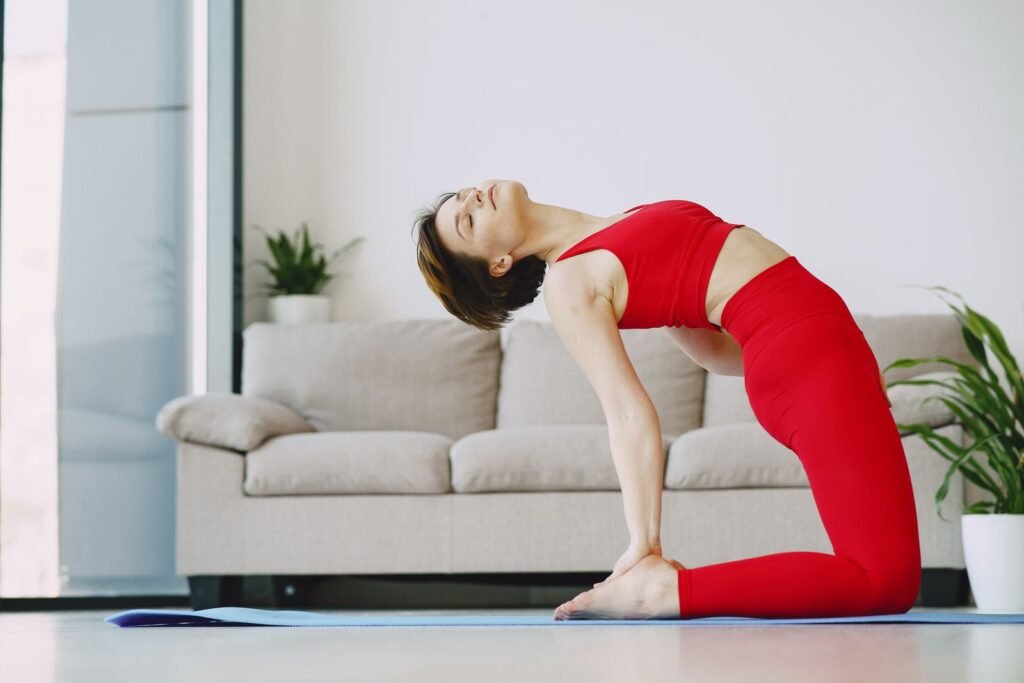
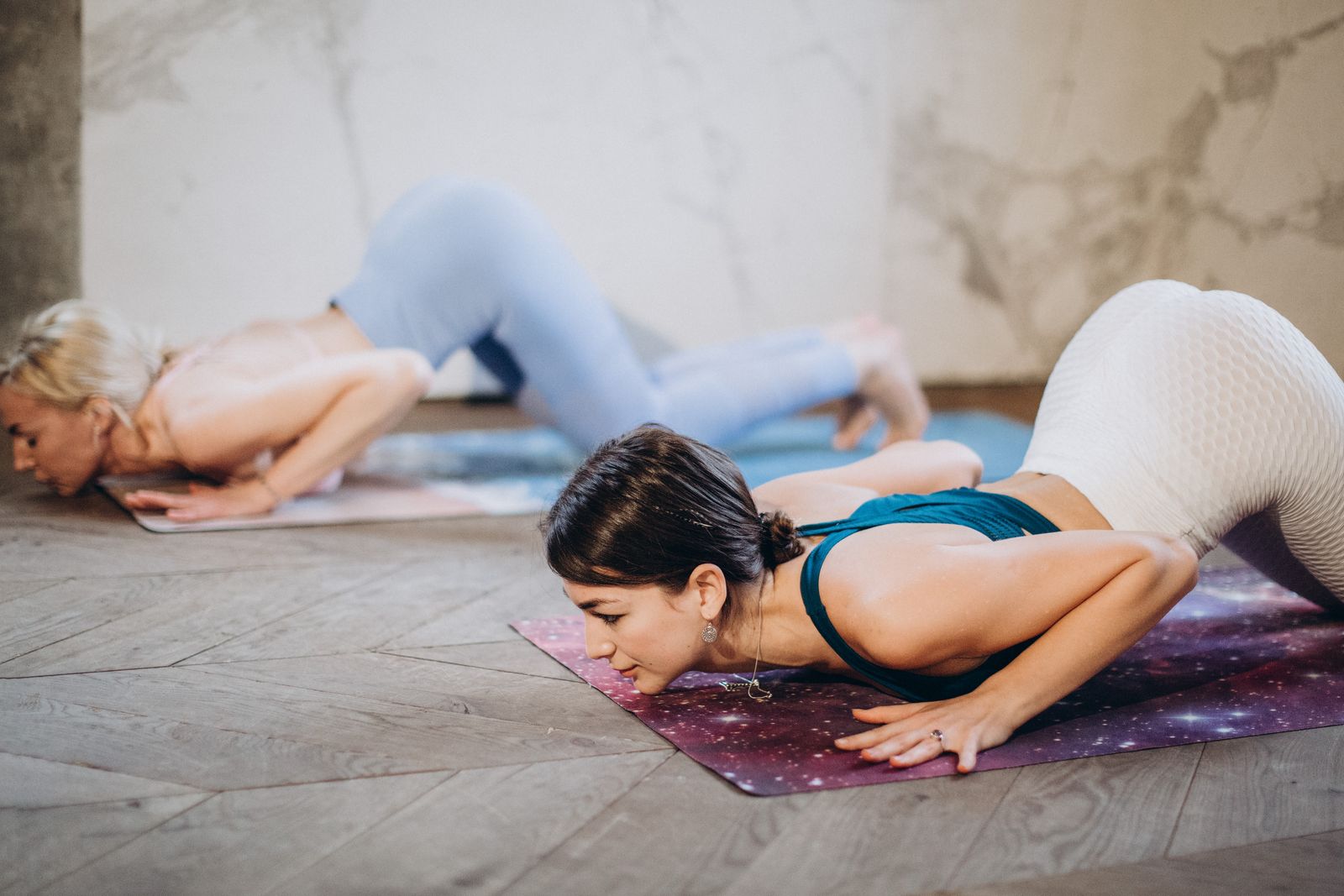
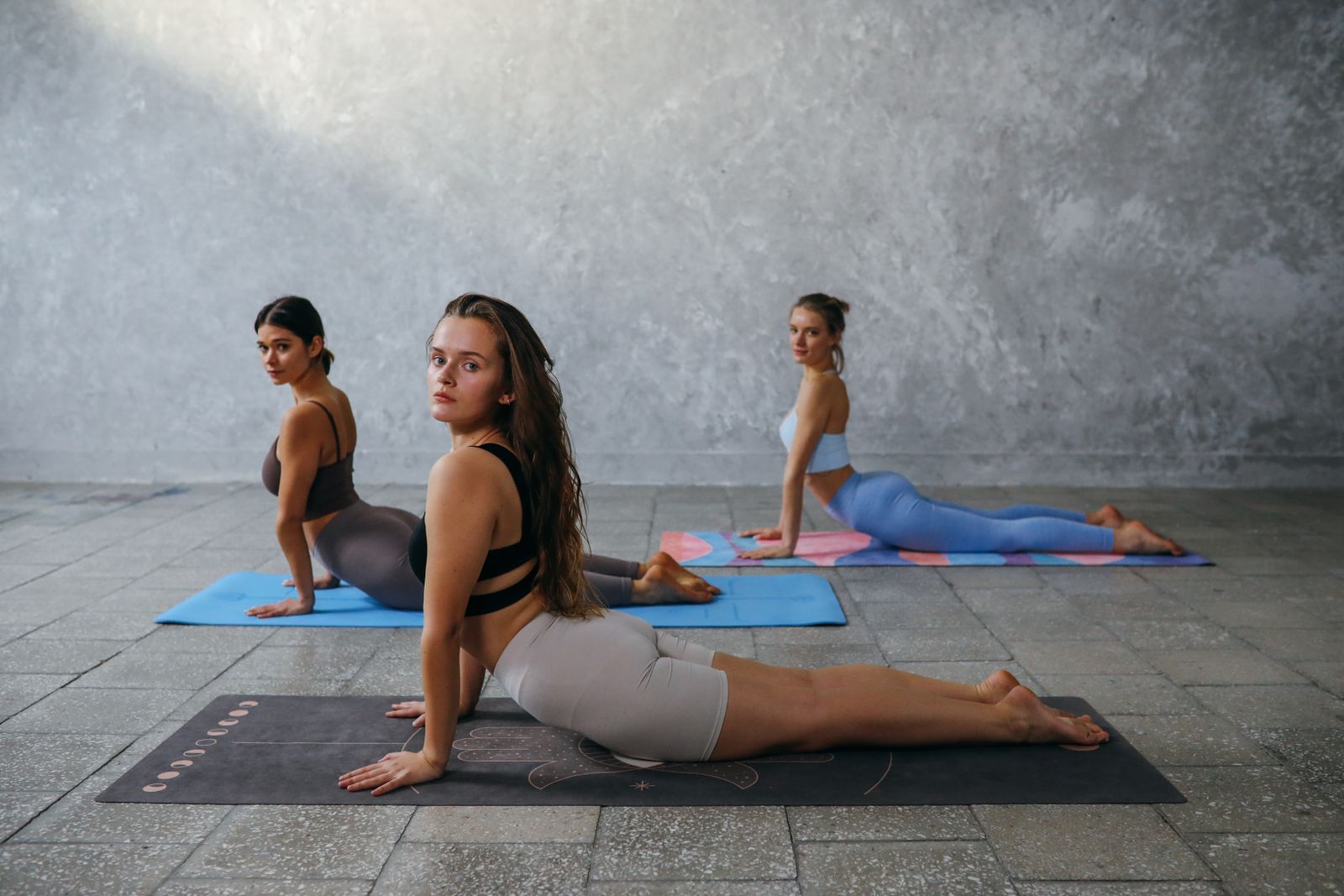
Backbends should never be the first deep pose of a practice. A safe backbend yoga sequence spends at least 15-20 minutes preparing the spine, shoulders, and hip flexors before attempting anything like Camel Pose (Ustrasana) or Wheel Pose (Urdhva Dhanurasana). A reasonable build looks like: gentle warm-ups and cat-cow, sun salutations, low lunges to open the hip flexors, Cobra or Sphinx Pose to introduce spinal extension gradually, Bridge Pose as an intermediate step, then the chosen peak backbend, followed immediately by a counter-pose such as a supine twist or a forward fold like Child’s Pose to release the lower back. Backbends compress the lumbar spine, so anyone with existing lower back issues should hold each preparatory pose longer and consider skipping the deepest peak poses. Pairing backbend work with core-strengthening poses earlier in the sequence, since core strength supports the lower back during extension, also reduces strain.
What Is a Root Chakra Yoga Sequence and When Would You Practice One?
A root chakra yoga sequence is built around poses that emphasize grounding, stability, and connection to the earth, reflecting the root chakra’s (Muladhara, in the yogic energy system) traditional association with security, stability, and the body’s foundation. This isn’t a medical framework, it’s drawn from yogic philosophy, but many practitioners use it as a lens for choosing poses when they want to feel more physically and mentally grounded. A typical yoga sequence for root chakra work favors standing poses with a strong base (Mountain Pose, Warrior I and II, Chair Pose), seated grounding poses (Easy Pose, Garland Pose/Malasana), and poses that keep contact low to the ground, avoiding excessive backbends or inversions that might feel destabilizing. Slower breathing, longer holds, and a grounding visualization (imagining roots extending from the feet into the floor) are often layered in. This pairs naturally with a broader look at chakra yoga if you want to explore how each energy center maps to different pose families.
Which Poses Belong in a Yoga Sequence for Root Chakra Balance?
Beyond the general grounding poses mentioned above, a more complete root chakra sequence often includes: Tadasana (Mountain Pose) for postural awareness, Virabhadrasana I and II (Warrior I and II) for strength and stability through the legs, Utkatasana (Chair Pose) for building heat in the lower body, Uttanasana (Standing Forward Fold) to bring attention downward, Malasana (Garland Pose) as a deep grounding squat, Balasana (Child’s Pose) for a resting grounding shape, and a supported Savasana with a blanket or bolster under the knees to signal safety to the nervous system. Many teachers also recommend ending with a few minutes of seated stillness and slow nasal breathing rather than rushing straight out of the practice, since the root chakra’s themes are about settling rather than energizing.
How Do You Sequence a Vinyasa Flow Compared to Hatha?
Vinyasa sequences link breath to movement continuously, meaning transitions between poses (like moving through Chaturanga Dranga and Upward-Facing Dog between standing poses) happen on every inhale or exhale, creating a moving meditation rather than a series of held static shapes. This makes vinyasa more cardiovascular and typically faster-paced than hatha, though hold times and pacing vary by teacher and studio. Because of this constant movement, many students look for a vinyasa yoga sequence pdf that maps out the breath-to-movement cues (inhale-reach, exhale-fold) alongside the pose names, since remembering both the shape and the timing is harder than in a slower hatha class. If you’re deciding which approach suits you, our comparison of vinyasa yoga versus other styles breaks down the pacing differences in more depth, and our yoga flow guide covers how to link poses smoothly without stopping.
What Is a Half Moon Yoga Sequence Built Around?
A half moon yoga sequence is built around Ardha Chandrasana (Half Moon Pose), a standing balance posture where one leg and the opposite arm extend outward while the standing leg supports the body’s full weight. Because this pose demands hip opening, balance, and core stability simultaneously, sequences leading into it typically include: Warrior II and Extended Side Angle Pose to open the hips and build leg strength, Triangle Pose (Trikonasana) as the direct precursor since Half Moon evolves from a Triangle Pose transition, and a wall or block nearby for support, since even experienced practitioners often use a block under the bottom hand. After Half Moon, sequences typically move into a counter-balance pose on the other side, then a grounding pose like Mountain Pose to reset before moving to seated work. Practicing near a wall is a legitimate long-term modification, not just a beginner’s crutch, since balance varies day to day based on fatigue, hydration, and even inner-ear factors.
How Does a Kids Yoga Sequence Differ From an Adult Practice?
A kids yoga sequence trades long holds and precise alignment cues for shorter, playful segments, usually 15-30 minutes total, that keep attention through movement, imagery, and animal-themed poses. A typical structure: a short greeting or breathing game (like “balloon breath,” where kids inhale and spread their arms wide, then exhale and hug themselves), 3-5 minutes of animal poses (Cat, Cow, Downward Dog as “puppy,” Cobra as “snake”), a simple balance pose like Tree Pose framed as a game, a partner or group pose for social connection, and a short, guided relaxation using storytelling rather than silent stillness, since young children rarely settle into a quiet savasana the way adults do. Holds are typically 3-5 breaths rather than 8-10, and instructors usually rotate poses more frequently to match shorter attention spans. If you’re introducing a child to a home practice, keeping sessions playful and short is more effective long-term than trying to replicate an adult class structure.
What Are the Main Types of Yoga Sequences?
Sequences are generally categorized by their organizing principle rather than just their style. Knowing which category you’re working with helps you evaluate whether a sequence you find online actually matches your goal, a restorative sequence won’t build strength, and a vinyasa flow won’t necessarily calm an anxious nervous system the way a slower practice will. The main types include:
- Linear sequences build steadily toward one peak pose, common in hatha and Iyengar-influenced classes.
- Flow sequences link many poses together through continuous movement, as in vinyasa and power yoga.
- Thematic sequences are organized around a body part or goal, such as hip-opening, backbends, or twists.
- Chakra or energy-based sequences are organized around the seven energy centers in yogic philosophy.
- Restorative sequences use long-held, supported poses with props to activate the parasympathetic nervous system.
- Therapeutic sequences are adapted for a specific condition, such as lower back pain or limited mobility.
For a deeper look at how injury recovery changes sequencing choices, see our guide to yoga for back pain.
How Long Should a Home Yoga Sequence Be?
Home practice length should match consistency goals more than ambition. A 15-20 minute daily sequence, covering a brief warm-up, one sun salutation round, three to four standing poses, and a short relaxation, builds habit strength faster than an ambitious 60-minute sequence practiced sporadically. Research on habit formation consistently points to consistency mattering more than session length when building a new routine, which is why many teachers recommend starting smaller than feels impressive. Once a short sequence is a fixed part of the day, extending it to 30 or 45 minutes becomes far easier because the habit itself is already established. Our guide to daily yoga covers how to structure practice length as consistency builds over weeks and months.
How Should You Adapt a Sequence for Different Goals?
The same basic sequencing structure, warm-up, peak work, counter-pose, cool-down, can be adapted toward very different goals just by changing which poses fill each slot. For flexibility, prioritize longer holds (45-90 seconds) in hip openers and hamstring stretches like Pigeon Pose and Seated Forward Fold. For strength, favor standing poses held for multiple breaths and slower transitions that keep muscles under tension, such as extended Warrior II holds or Chair Pose. For stress relief, reduce the number of standing poses, extend the relaxation phase, and add supported poses like Legs-Up-The-Wall (Viparita Karani). For energy, favor more sun salutation rounds and a faster-paced flow with fewer long holds. Being clear about the goal before selecting poses prevents the common mistake of building a sequence that looks impressive but doesn’t actually serve what you came to practice for. Our article on the benefits of yoga breaks down which physical and mental outcomes map to which practice styles.
What Common Sequencing Mistakes Should You Avoid?
The most frequent sequencing mistakes include:
- Skipping the warm-up and moving straight into deep poses, which raises strain risk on cold muscles and joints.
- Stacking peak poses back-to-back without a counter-pose or rest between them.
- Ignoring symmetry, working one side of the body without repeating the sequence on the other.
- Ending abruptly without any cool-down or savasana, which skips the nervous system’s transition back to a resting state.
- Copying an online sequence built for an experienced practitioner without modifying hold times or offering easier variations.
A well-built sequence should feel like a story with a beginning, middle, and end, not a checklist of impressive poses performed in whatever order they were memorized.
Questions People Ask About Yoga Sequences
How many poses should be in a typical yoga sequence?
Most 30-45 minute sequences include 10-15 distinct poses, not counting the repeated movements within sun salutations. Fewer, well-held poses with proper alignment and counter-poses generally offer more benefit than a longer list of poses rushed through without adequate holds or transitions between them.
Can I create my own yoga sequence, or should I follow a set one?
You can build your own sequence once you understand the basic arc: warm-up, building poses, a peak posture, a counter-pose, and cool-down. Following an established sequence is a good way to learn this structure first; once it feels intuitive, adapting or building sequences for your own goals becomes much easier.
What’s the difference between a yoga sequence and a yoga flow?
A yoga sequence refers to the overall ordered set of poses in a practice, including how they’re structured from warm-up to cool-down. A yoga flow specifically describes continuous, breath-linked movement between poses, most flows are a type of sequence, but not every sequence involves continuous flowing movement, hatha sequences, for example, often hold poses statically rather than flowing between them.
Do I need props to follow a yoga sequence at home?
Props like blocks, straps, and blankets aren’t mandatory but make many sequences more accessible, especially for balance poses, backbends, and restorative holds. A block under the hand in Half Moon Pose or a blanket under the knees in kneeling poses reduces strain without changing the sequence’s overall structure or benefit.
How often should I repeat the same yoga sequence?
Repeating the same sequence several times a week for two to four weeks is a common approach, since familiarity with the poses allows you to focus more on alignment and breath rather than remembering what comes next. After that period, gradually varying poses or increasing hold times keeps the practice progressing rather than plateauing.
Is it safe to follow a yoga sequence video or PDF without an instructor?
For beginner and general wellness sequences, following a well-designed video or PDF is generally safe if you listen to your body and skip poses that cause sharp pain. For deeper backbends, inversions, or if you have an existing injury, getting feedback from a live instructor, even occasionally, helps catch alignment issues that are hard to self-correct from a screen.
Try This for Yourself
Reading about sequencing structure is useful, but nothing replaces having a real instructor guide you through the pacing, alignment cues, and modifications in real time. If you want a personalized sequence built around your goals, whether that’s a gentle hatha class, a backbend-focused flow, or a grounding root chakra practice, try a live online yoga class with FitStrot and get sequencing guidance tailored to your body and schedule.
Related reading: Morning Yoga, Daily Yoga, Yoga Flow, Beginner Yoga Poses, and explore FitStrot’s online yoga classes to build a sequence suited to your practice.