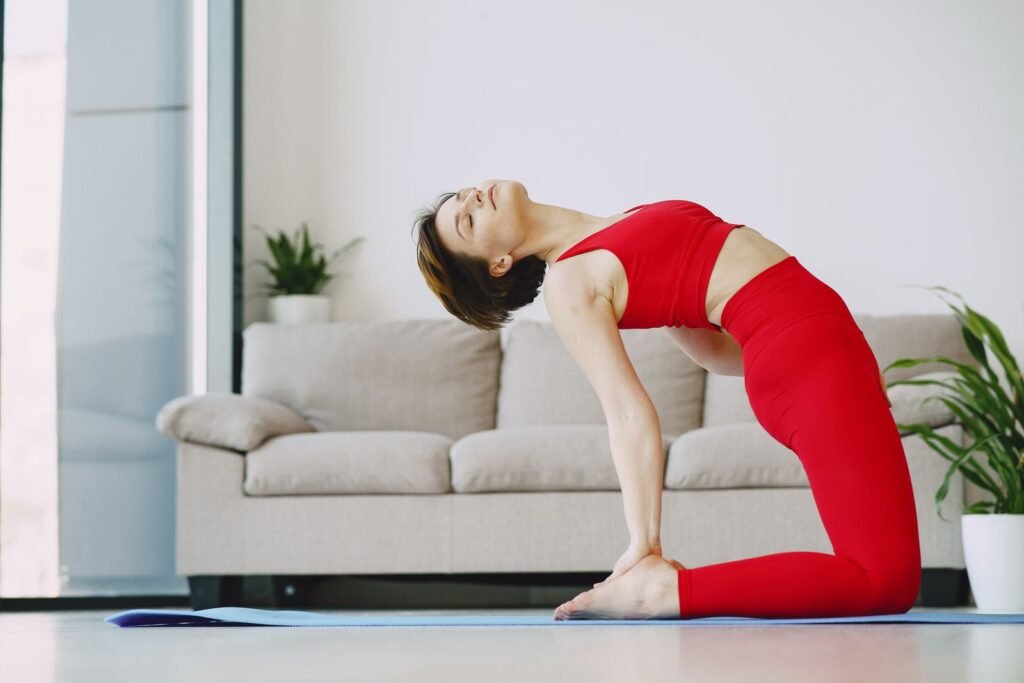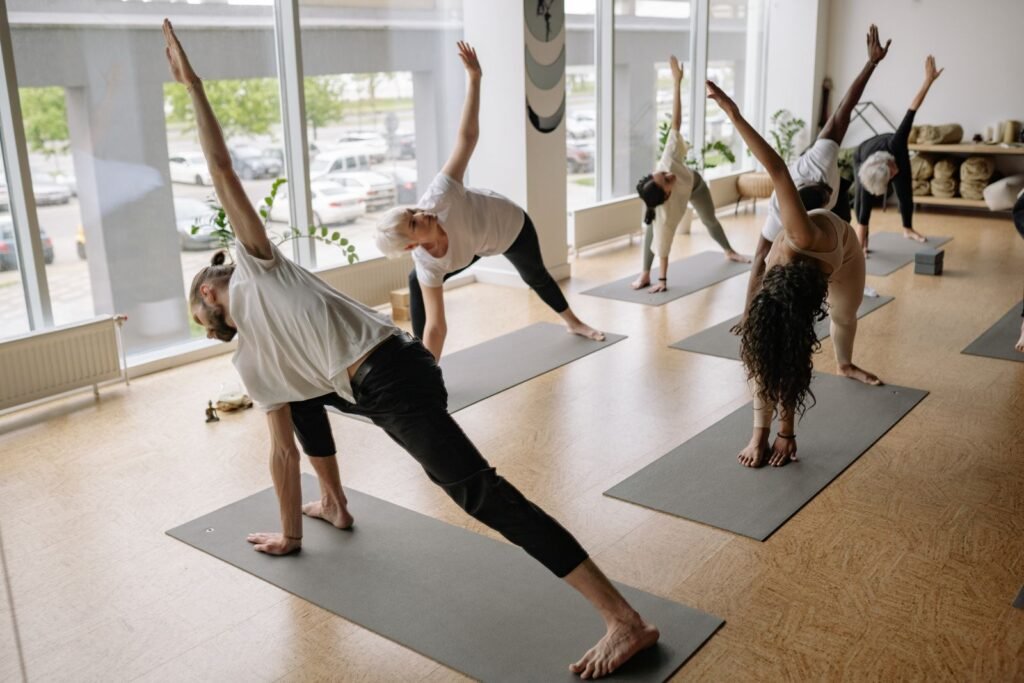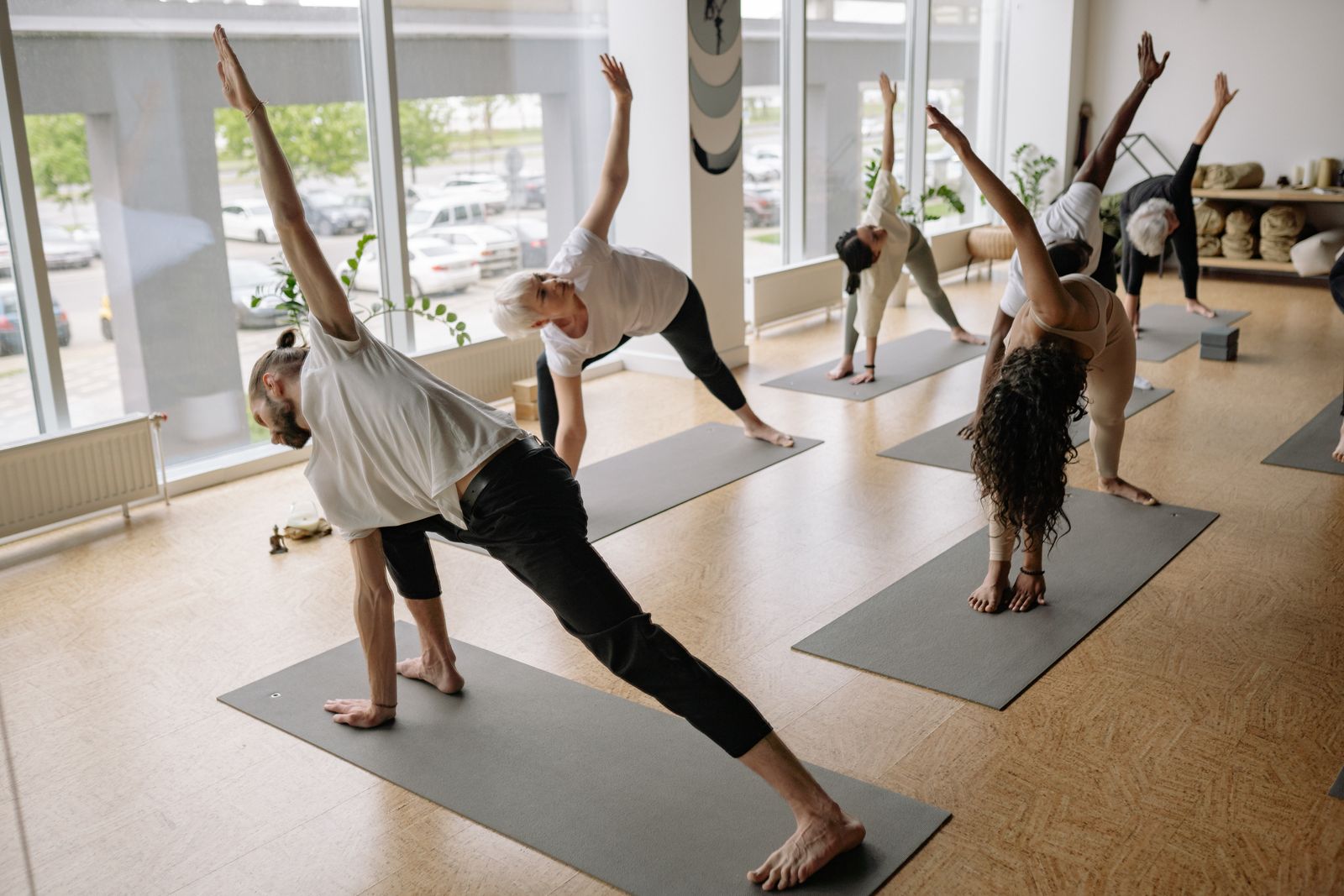
To do yoga, start with a stable seated or standing position, breathe slowly through the nose, and move into simple poses like Child’s Pose, Cat-Cow, and Mountain Pose while keeping your attention on your breath rather than how “perfect” the shape looks. You don’t need flexibility, special equipment, or prior experience to begin — just a few feet of floor space, a mat or towel, and 10 to 15 minutes. The goal in the beginning isn’t to master postures; it’s to learn how your breath and body move together, then build from there one pose at a time.
What Do You Actually Need to Start Doing Yoga?
You need far less than most people assume. A yoga mat helps with grip and joint padding, but a folded blanket or towel on a non-slip floor works fine for your first sessions. Wear anything that lets you move freely — leggings, joggers, or loose shorts. You don’t need blocks, straps, or bolsters to begin, though a thick book can stand in for a yoga block if a pose ever asks you to “reach” further than your body currently allows. Most importantly, you need 10 to 20 minutes of uninterrupted time and enough space to stretch your arms overhead and out to the sides without hitting furniture. If you’re setting up a dedicated corner at home, our guide on yoga at home walks through building a simple, distraction-free practice space.
How Do You Do Yoga Correctly as a Beginner?
Doing yoga correctly has less to do with how a pose looks and more to do with three fundamentals: alignment, breath, and pacing. Alignment means keeping joints stacked where possible — knees over ankles in lunges, wrists under shoulders in tabletop position — to protect the body rather than to look a certain way. Breath means inhaling and exhaling through the nose in a steady rhythm, roughly matching the length of each inhale to each exhale, and never holding the breath through effort. Pacing means moving slowly enough that you could pause at any point in a pose without losing balance. A common beginner mistake is rushing to imitate the deepest version of a shape seen online; correct practice is finding the version of the pose where your breath stays smooth and your body feels supported, then holding that for five to eight breaths before moving on.
How Do You Do Yoga for Beginners Step by Step?
A beginner-friendly session follows a simple arc: settle, warm up, move, and rest. Start seated or lying down for one minute of quiet breathing to shift out of “task mode.” Next, warm the spine with a few rounds of Cat-Cow on hands and knees. Then move into two or three standing or floor poses — Mountain Pose, Child’s Pose, and a gentle forward fold are reliable starting points. Hold each for five to eight breaths. Finish with two to three minutes lying flat on your back in Savasana (Corpse Pose) to let your nervous system register the practice before you stand up and return to your day. This entire sequence takes under 15 minutes and is a complete practice on its own — you don’t need to add more to get a benefit from it. For a ready-made version of this arc, see our how to start yoga guide, which lays out a first-week schedule.
How Do You Do Yoga Poses Without Getting Hurt?
Injury in beginner yoga almost always comes from one of three habits: forcing a stretch past a comfortable range, locking a joint under load, or copying an advanced variation before the basic shape feels stable. To avoid this, treat every pose as adjustable. If a forward fold is described as “touching your toes” but your hamstrings are tight, bend your knees generously — the pose is still valid and still effective. If a balance pose like Tree Pose feels wobbly, keep your raised foot on your ankle or calf instead of your inner thigh, and stand near a wall until your balance improves. Never push into sharp or shooting pain; mild muscular effort or a gentle stretch sensation is normal, but pain that spikes or radiates is a signal to back off immediately. If you’re recovering from an injury or managing a chronic condition, our articles on yoga for back pain and yoga for knee pain cover pose modifications in more detail.
How Do You Do Yoga Stretches for Tight Muscles?
Yoga stretches work best when they’re held long enough for muscle tissue to actually release, which generally means 30 seconds to a full minute per stretch, repeated on both sides of the body. For tight hips, a low lunge with the back knee down opens the hip flexors; for tight hamstrings, a seated forward fold with slightly bent knees is safer than a standing version for beginners; for a tight upper back and shoulders, Thread the Needle from tabletop position is one of the most effective beginner stretches available. The key technique across all of these is to breathe into the stretch rather than tense against it — an inhale that expands the ribcage, followed by a slow exhale that allows the muscle to soften a little further, tends to produce a deeper release than simply forcing the position. Pair these with our morning yoga routine if you tend to wake up stiff.
How Do You Do Yoga Properly When You’re Not Flexible?
Flexibility is a result of consistent yoga practice, not a prerequisite for starting it. Doing yoga “properly” with limited flexibility simply means using props and modifications rather than forcing your body into the full expression of a pose. If your hands don’t reach the floor in a forward fold, let them rest on your shins or a stack of books. If you can’t sit cross-legged comfortably, sit on the edge of a folded blanket to tilt your pelvis forward and take pressure off your knees and lower back. Props aren’t a beginner crutch you eventually graduate from — many experienced practitioners use blocks and straps for years because they make poses more precise, not less legitimate. Consistency, not flexibility, is what determines your progress; practicing 15 minutes three times a week for a month will do more for your range of motion than one long, forced session.
How Do You Do Yoga Sitting Position for Meditation and Breathing?
A stable seated position is the foundation for pranayama (breathing exercises) and meditation, and it doesn’t require full cross-legged flexibility. Sit on the front edge of a cushion or folded blanket so your hips are slightly higher than your knees — this single adjustment removes most of the strain people feel in seated poses. From there, cross your shins loosely in front of you (Sukhasana, or Easy Pose), rest your hands on your knees or in your lap, and lengthen your spine as if a string were gently lifting the crown of your head. If sitting on the floor is uncomfortable for your knees or lower back, sitting upright in a chair with both feet flat on the ground is an equally valid seated position for breathing practice. The point of the seated position isn’t the shape itself; it’s creating a base stable enough that you can stay still and breathe for several minutes without shifting or straining.
What Are the Best Beginner Yoga Poses to Learn First?
Five poses form a reliable foundation for almost any beginner practice:
- Mountain Pose (Tadasana) — teaches standing alignment: feet grounded, spine tall, shoulders relaxed away from the ears.
- Child’s Pose (Balasana) — a resting shape you can return to anytime you need a break.
- Cat-Cow (Marjaryasana-Bitilasana) — mobilizes the spine and is often used as a warm-up.
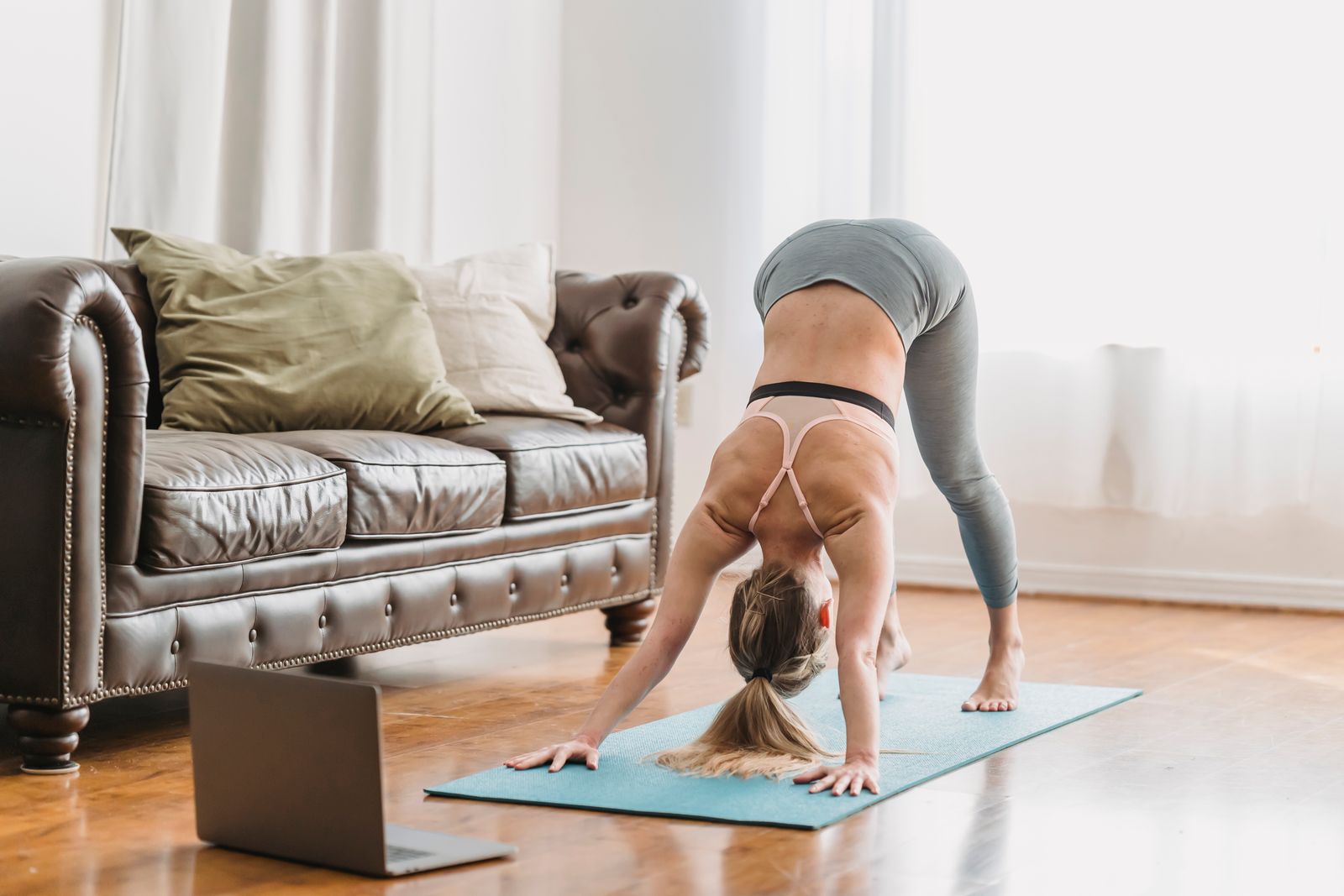
- Downward-Facing Dog (Adho Mukha Svanasana) — stretches the hamstrings, calves, and shoulders simultaneously and appears in nearly every yoga style.
- Corpse Pose (Savasana) — closes almost every practice and teaches the body what full relaxation feels like.
Learning these five poses well — including their modifications — gives you a vocabulary you can draw on in any class or style you try afterward, whether that’s vinyasa yoga, hatha yoga, or a gentler restorative yoga class.
How Long Should a Beginner Yoga Session Last?
A beginner session can be effective at 10 minutes and still deliver measurable benefits like reduced muscle tension and calmer breathing. Most beginner-focused classes run 20 to 30 minutes, which is enough time to include a warm-up, four to six poses, and a short relaxation at the end. There’s no requirement to reach the 60- to 90-minute length common in studio classes until your body and schedule are ready for it. What matters far more than duration is frequency: three 15-minute sessions a week build a habit and physical adaptation faster than one 60-minute session every other week. If you’re building a weekly rhythm, our yoga schedule for beginners breaks down how to structure a realistic first month.
How Do You Do Yoga at Home Without a Teacher Watching You?
Practicing without in-person guidance is entirely workable if you build in a few self-checks. Record yourself occasionally (even just for a minute) to see whether your alignment matches what you’re aiming for — most people are surprised by what they see the first time. Use a wall as a feedback tool: standing with your back against a wall in Mountain Pose tells you immediately whether your shoulders and hips are stacked. Go slowly enough that you can feel which muscles are working, and stop adding new poses until the current ones feel stable and familiar. Online yoga classes with live or recorded instructor cues bridge much of this gap, offering real-time verbal alignment corrections even when you’re practicing alone in your living room. For breath-focused sessions specifically, our guide to pranayama breathing exercises pairs well with a home pose practice.
What Breathing Technique Should Beginners Use During Yoga?
The default breath for most beginner yoga is simple nasal breathing: inhaling and exhaling through the nose, without forcing the breath to be unnaturally deep or loud. As you hold or move through poses, aim to keep the inhale and exhale roughly equal in length and never hold your breath through effort — if you notice you’re holding it, that’s usually a sign you’re pushing too hard into a stretch. Some styles introduce Ujjayi breath (a slight constriction at the back of the throat that creates a soft ocean-like sound), but this is optional for beginners and can be added later once basic nasal breathing feels automatic. The breath is the actual “practice” in yoga; the poses are simply a structure that gives the breath something to move through.
What Are Common Mistakes Beginners Make When Learning Yoga?
Beginners tend to repeat a handful of avoidable missteps early on:
- Comparing your body’s shape in a pose to an image online instead of tuning into what your own body feels.
- Holding the breath during effort, which increases tension rather than releasing it.
- Skipping the warm-up and moving straight into deeper stretches, which raises injury risk in cold muscles.
- Practicing on a slippery surface without a mat, leading to unstable footing in standing poses.
- Quitting within the first two weeks because of expecting visible flexibility gains right away.
Realistic progress in range of motion and strength typically becomes noticeable after four to six weeks of consistent practice, not four to six days.
How Is Yoga Different From Regular Stretching or Exercise?
Yoga combines physical postures with controlled breathing and focused attention, which distinguishes it from stretching alone or from cardio-based exercise. A standard stretch routine targets flexibility in isolation; a yoga practice layers breath control and body awareness on top of the same movements, which is part of why practitioners often report calmer mood and better focus, not just looser muscles. Unlike many gym-based workouts, yoga rarely relies on external resistance or repetition counts — the “resistance” is your own body weight and the challenge of holding a position with steady breath. This is also why yoga sits comfortably alongside other fitness routines rather than replacing them; many people pair a few weekly yoga sessions with strength training or cardio for a well-rounded routine. For a broader look at how the practice compares to other movement styles, see our overview of types of yoga and benefits of yoga.
Can Kids Learn How to Do Yoga Too?
Yes, and children often pick up basic yoga poses faster than adults because they’re less concerned with “doing it right.” Kids’ yoga typically uses playful, animal-themed names for poses — Cat-Cow, Downward Dog, Cobra — and shorter sessions of 10 to 15 minutes that hold attention better than longer practices. Breathing games, like pretending to blow out birthday candles on a slow exhale, teach breath control in a way that feels like play rather than instruction. Balance poses such as Tree Pose are particularly good for kids because they build focus and body awareness while feeling like a fun challenge rather than exercise. Supervision matters mainly for spacing and safety around furniture, not because the poses themselves are risky for children. See our dedicated guide to yoga for kids for age-specific sequences.
Questions People Ask About How to Do Yoga
How do you do yoga?
Begin in a comfortable seated or standing position, breathe steadily through your nose, and move through a few simple poses like Cat-Cow, Child’s Pose, and Mountain Pose, holding each for five to eight breaths. Focus on how your body feels rather than matching an image exactly. A 10 to 15 minute session is enough to start; consistency over several weeks builds the skill and flexibility that make longer sessions comfortable later.
How do you do yoga for kids?
Keep sessions short (10-15 minutes), use playful animal-named poses like Cat-Cow and Downward Dog, and turn breathing exercises into games, such as slow exhales that mimic blowing bubbles. Balance poses like Tree Pose build focus in a way that feels like play. Supervise mainly for space and safety, and let kids move at their own pace without pressure toward a “correct” shape.
How do you do yoga stretches?
Hold each stretch for 30 seconds to a minute, breathing slowly through the nose rather than tensing against the stretch. Target tight areas gently — a low lunge for hip flexors, a seated forward fold with bent knees for hamstrings, and Thread the Needle for the shoulders. Repeat on both sides. Stop at a mild stretching sensation; sharp or shooting pain means you’ve gone too far.
How do you do yoga correctly?
Correct yoga prioritizes alignment, breath, and pacing over how deep a pose looks. Keep joints stacked (knees over ankles, wrists under shoulders), breathe steadily through the nose without holding your breath, and move slowly enough to stay in control throughout each pose. The “correct” version of any pose is the modified version that keeps your breath smooth and your body supported.
How do you do yoga for beginners?
Start with a short 10 to 15 minute routine: a minute of quiet breathing, a few rounds of Cat-Cow to warm the spine, two or three simple poses like Mountain Pose and Child’s Pose held for five to eight breaths each, and a few minutes of Savasana to finish. No flexibility or equipment beyond a mat is required to begin.
How do you do yoga poses?
Move into each pose slowly, checking that your joints are stacked correctly (for example, knees over ankles in a lunge), then hold the position for five to eight steady breaths. Use modifications freely — bent knees, a wall for balance, or a folded blanket for seated poses — rather than forcing the “full” version of a shape before your body is ready for it.
Try This for Yourself
Reading about yoga poses only goes so far — the fastest way to actually learn correct alignment, breathing, and pacing is with real-time guidance from an instructor who can see how your body moves. Join a FitStrot online yoga class and get structured, beginner-friendly sessions with live cues on posture, breath, and modifications, all from home.
Related reading: how to start yoga, yoga at home, morning yoga, benefits of yoga, and explore FitStrot’s online yoga classes to get started with expert guidance.